Vestibular Disease in Dogs: Symptoms, Diagnosis, and Recovery Timeline
Understand sudden balance loss in dogs, how vets investigate vestibular signs, and the feeding, movement, and recovery observations that help guide safe care and follow-up.

BVMS MRCVS
Medically reviewed by Dr. Pippa Elliott, BVMS MRCVS · Last reviewed

This article contains affiliate links. Webvet may earn a commission when you buy through them, at no extra cost to you.
Vestibular disease in dogs affects the system that maintains balance. A dog may suddenly tilt its head, stumble, circle, or struggle to stand. Some dogs with idiopathic vestibular syndrome improve substantially over the following days, but an owner cannot safely identify that diagnosis from the first frightening episode. Sudden balance loss needs prompt veterinary assessment, including in an older dog.
 Sponsored
Have a health question about your dog?
Talk to a licensed vet at Dutch over video or message, including nights and weekends.
Use code Pets30
Plans start at $11/month · covers up to 5 pets
- Licensed vets in most states
- Rx for 150+ conditions
- 4.7 on Trustpilot
Sudden balance loss: what to do first
- 1Sudden balance loss requires veterinary assessment before assuming it is harmless old-dog disease.
- 2Prevent falls and ask the clinic how to move the dog safely; do not force it to demonstrate walking.
- 3Recovery expectations depend on the cause. Worsening signs, inability to eat or drink, or new neurologic changes need reassessment.
An acute vestibular syndrome is a sudden-onset group of balance-related signs, not the name of a single cause. A geriatric dog having a vestibular attack still needs assessment; age does not prove a benign cause. The first job is to arrange care and prevent another injury. A dog repeatedly falling or rolling cannot be made safe simply by encouraging it to keep trying. Call the clinic, describe what happened, and explain whether the dog can remain upright.
While arranging the examination:
- Keep the dog on one floor, away from stairs, pools, balconies, and furniture edges.
- Reduce crowding from children and other animals, and allow a quiet place to rest.
- Ask how to lift and transport the dog, including whether another person or a particular support is needed.
- Note when the episode began and any recent illness, injury, ear treatment, or medication change.
- Report collapse, seizures, breathing difficulty, or a marked change in awareness immediately.
Do not delay the call while searching for a matching video. Nor should a previous vestibular episode become the diagnosis for a new one. Tell the team what is similar and what is different. If the regular clinic cannot see the dog, ask where to go for urgent evaluation and how to keep it supported during the journey.
Once care is arranged, plan the space the dog may use if home nursing is appropriate. A correctly installed KidCo Safeway mounted gate can restrict access to a stairway or doorway. Check the opening, mounting requirements, and whether the dog could get around it. A gate blocks access; it cannot keep a dog upright or replace direct assistance.
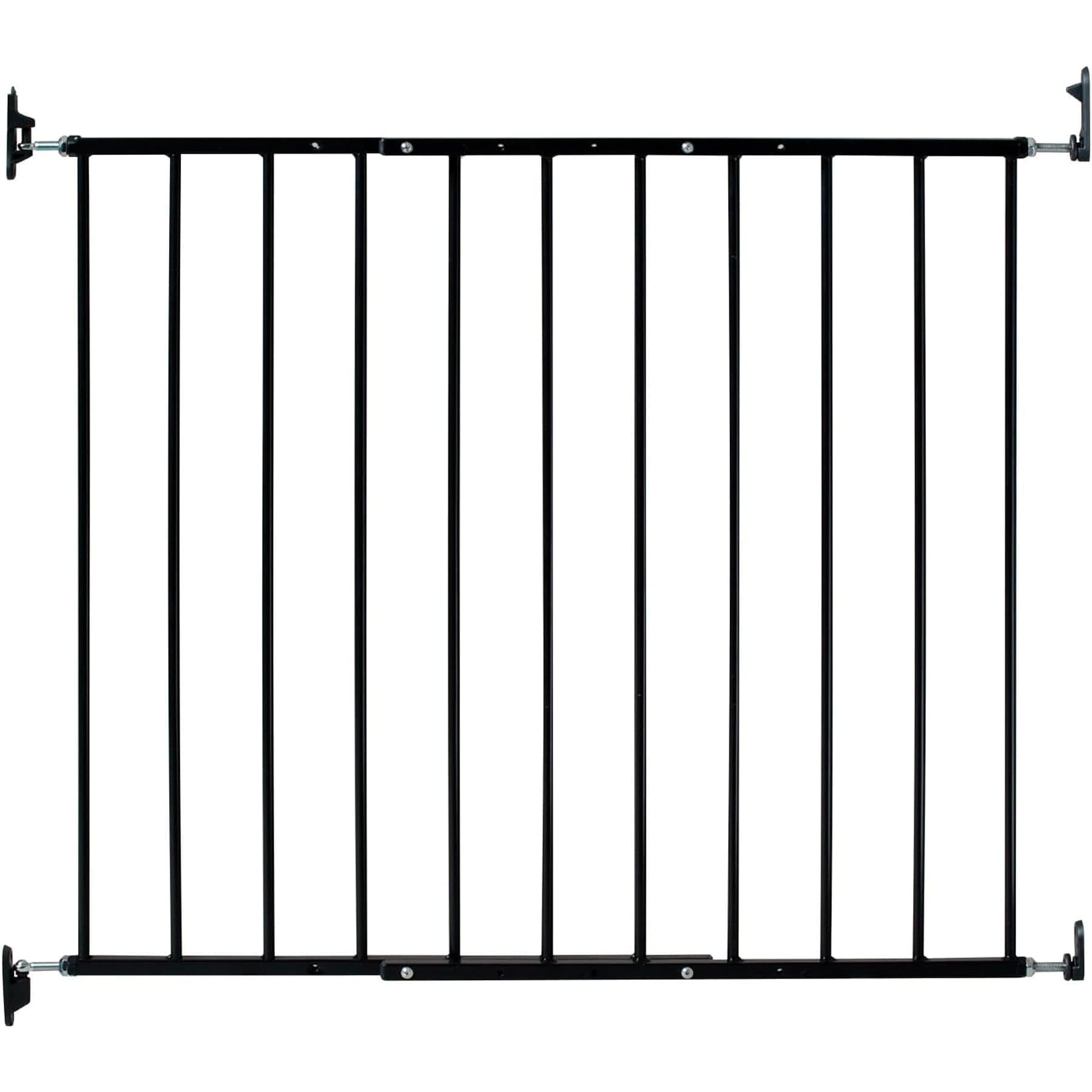
Use a correctly mounted gate to restrict stairs or unsafe rooms as part of the prescribed home setup.
Webvet may earn a commission when you click through to Chewy, at no extra cost to you.
Vestibular signs and what else can look similar
The first signs of vestibular disease often include an unusual head position and difficulty balancing. Watch what happens naturally rather than turning the dog's head or testing whether it falls. Head tilt and abnormal eye movements are observations to report, not proof of a particular lesion. Their combination, timing, and the rest of the examination matter.
Useful descriptions include:
- Head tilt: one ear is consistently lower than the other.
- Nystagmus: the eyes repeatedly flick or move involuntarily.
- Balance changes: drifting, circling, falling, rolling, or reluctance to stand.
- Nausea or difficulty eating: vomiting, reduced appetite, or trouble reaching food.
- Other changes: altered alertness, facial movement, hearing, or limb strength.
A video can help show an intermittent sign to the veterinarian, but only if someone can record it without delaying care or provoking movement. Capture the dog where it already is. Do not walk it down a slippery hallway, move its head to trigger eye movements, or repeat an unsafe event for a clearer recording. An online video of another dog cannot establish your dog's diagnosis.
If the clinic recommends home nursing, a washable Pet Parents Pawtect blanket can protect the resting area from wetness and make changes easier. The small blanket must fit the actual space, and it needs suitable padding underneath when advised. Keep spare clean layers nearby so the dog does not have to remain on damp bedding while laundry is running.

Keep spare washable layers ready so a recovering dog can rest on clean, dry bedding with appropriate padding.
Webvet may earn a commission when you click through to Chewy, at no extra cost to you.

Dizziness, distress, and apparent seizures
Vestibular dysfunction can be distressing. Balance-system signals interact with the brain pathways involved in nausea, while stress can influence nausea too. A dog that cannot orient itself may pant, struggle, or appear anxious. This can become a combination of dizziness, nausea, and fear rather than an isolated behavior problem. That relationship does not mean anxiety caused a new head tilt or loss of balance, or that calming the dog removes the need to investigate it.
The Merck Veterinary Manual explains the relationship between vestibular stimulation, nausea, and stress. Tell the veterinarian whether the dog responds normally to you during the episode and whether there are periods of altered awareness. Do not label every jerky movement a vestibular seizure or epilepsy. A suspected seizure or another neurologic change needs its own assessment.
Look-alikes need an examination
Stroke, other brain disorders, weakness from systemic illness, intoxication, and some movement problems can overlap with the way vestibular disease appears to an owner. Some are also underlying causes of vestibular signs rather than completely separate alternatives. The distinction depends on examination and testing, not on choosing the closest-looking internet example.
Our dog stroke guide explains that differential in more detail. A sudden episode is not automatically a stroke, and an older dog's age does not make idiopathic vestibular syndrome certain. Even mild signs deserve a clear plan for assessment and follow-up rather than an unsupported reassurance that they will pass.
 Sponsored
Vet care that's always there
Unlimited video calls and messaging with licensed vets for less than a typical vet visit. One membership covers up to five pets.
Use code Pets30
Plans start at $11/month · covers up to 5 pets
- Licensed vets in most states
- Rx for 150+ conditions
- 4.7 on Trustpilot
How a vet finds the cause
An ear examination and neurologic examination guide further testing. The veterinarian combines these findings with the history to decide where the problem may be. Bring all medication and supplement names, including ear products, and describe any recent changes. Mention previous episodes and whether recovery was complete. A written sequence of events is often easier to use than several conflicting recollections.
Peripheral, central, and idiopathic causes
Common causes considered in a dog with a vestibular disorder include middle- or inner-ear infection, inflammation, trauma, tumors, and certain drug effects; some cases remain unexplained. Peripheral vestibular disease involves the inner ear or its associated nerve pathways; central disease involves structures in the brain. Idiopathic vestibular syndrome means no specific cause has been identified after assessment. It does not mean every potential cause was visible on a routine ear examination.
Vet Oracle's neurologist-written vestibular factsheet explains that disease can affect the ear, connecting nerve, or brain. It also notes that some affected dogs lack the usual outward signs of ear inflammation. A clean-looking ear or absence of scratching therefore cannot rule out a deeper problem. The dedicated dog ear infection guide provides background on ear disease without substituting for this examination.
Tests answer different questions
Depending on the findings, the team may discuss blood and urine tests, blood pressure, a closer ear examination, sampling, advanced imaging, or referral. Ask what each proposed test is intended to rule in or out. A recommendation for MRI does not by itself mean the veterinarian has diagnosed a tumor; it may be a way to investigate an uncertain location or cause.
Use these questions when comparing the next steps:
- Does the examination currently suggest a peripheral or central problem, and how certain is that impression?
- What would the test result change about treatment or prognosis?
- If a test is deferred, what must be monitored and what would trigger reconsideration?
- Who should receive an update, and when is the next examination planned?
The dog MRI cost guide can help separate imaging from consultation, anesthesia, and other services in an estimate. This article does not supply a universal cost for investigating vestibular disease. Tests and nursing needs differ, so an estimate should describe the actual proposed work and possible next decisions.
Understand a working diagnosis
Ask whether the team is describing a confirmed underlying condition or a working diagnosis based on the findings so far. If advanced testing is not performed immediately, understand what uncertainty remains. A monitoring plan should name the observations that would change the recommendation, rather than leaving you to decide whether the dog looks sufficiently recovered.
For example, “send an update tomorrow” is easier to follow when you know whether the team wants a food-intake record, a description of supported standing, or both. Ask for these details in a client handout or discharge record. Confirm how to send that update and when to expect a response. Ask for an alternative contact if the usual clinician is unavailable. That planning is particularly helpful before a weekend or when different family members share care.
When discussing discharge needs, ask what food access will work at home. For a dog cleared to eat and drink safely, an accessible OurPets Durapet stainless-steel bowl, Small may be useful. This version holds 0.75 cups, so it is not the right size for every dog or every use. Plan a location the dog can reach without crossing a slippery surface.

Choose a stable bowl sized for the dog and place it within safe reach once the team has cleared normal swallowing.
Webvet may earn a commission when you click through to Chewy, at no extra cost to you.
Less common labels require clinical interpretation
Terms such as paradoxical vestibular signs, oculovestibular reflex, or vestibular schwannoma belong to the clinician's examination or diagnostic discussion. Ask what the term means for the suspected location, next test, and treatment. Do not attempt reflex tests or infer a nerve tumor from head position. A technical label found online is not a substitute for those findings.
Similarly, a French Bulldog or a dog with signs from a young age should not be assigned the same explanation as every geriatric dog. Congenital, inherited, ear-related, and acquired problems require the appropriate history. Breed and age can inform the investigation, but neither gives an owner a reliable diagnosis on its own.
Treatment and supportive care
Treatment depends on the underlying cause and how well the dog can manage basic functions. The veterinarian may need to address infection or another identified disease while also controlling nausea, maintaining hydration, and supporting nutrition. A dog that cannot stand, drink, or eat safely may need hospital care. Home nursing is appropriate only when the patient's needs and available support make it workable.
Medication choices are not interchangeable
Veterinarians may use medicines for nausea or motion-related discomfort. Owners often ask about meclizine, Bonine, Dramamine, or Benadryl, but a familiar human brand does not establish the ingredient, formulation, dose, or suitability for this dog. Ask the prescriber to identify the exact product and purpose. Do not combine motion-sickness products or add a sedating medicine on your own.
Prednisone and other steroids are not a default cure for idiopathic vestibular disease. Antibiotics likewise need an appropriate indication, rather than being added because an ear problem seems possible. If a medicine is prescribed for an identified cause, ask how response will be judged and what adverse signs to report. Do not stop or alter an existing prescription without the team's instructions.
For CBD oil, supplements, or a product such as Vivitonin, ask what evidence supports the proposed use in the diagnosed condition. “For older dogs” is not evidence that a product treats an acute vestibular episode. The useful distinction is between treating the cause, relieving a symptom, and providing nursing support; one does not automatically replace the others.
Prepare the resting area
A low-access resting area can reduce unnecessary climbing during approved home care. The FurHaven NAP full-support bed is one option if its jumbo dimensions and surface suit the dog and available space. Check that it stays in place and that the dog can enter without stumbling. A comfortable bed supports nursing; it does not speed nerve recovery or treat the underlying cause.
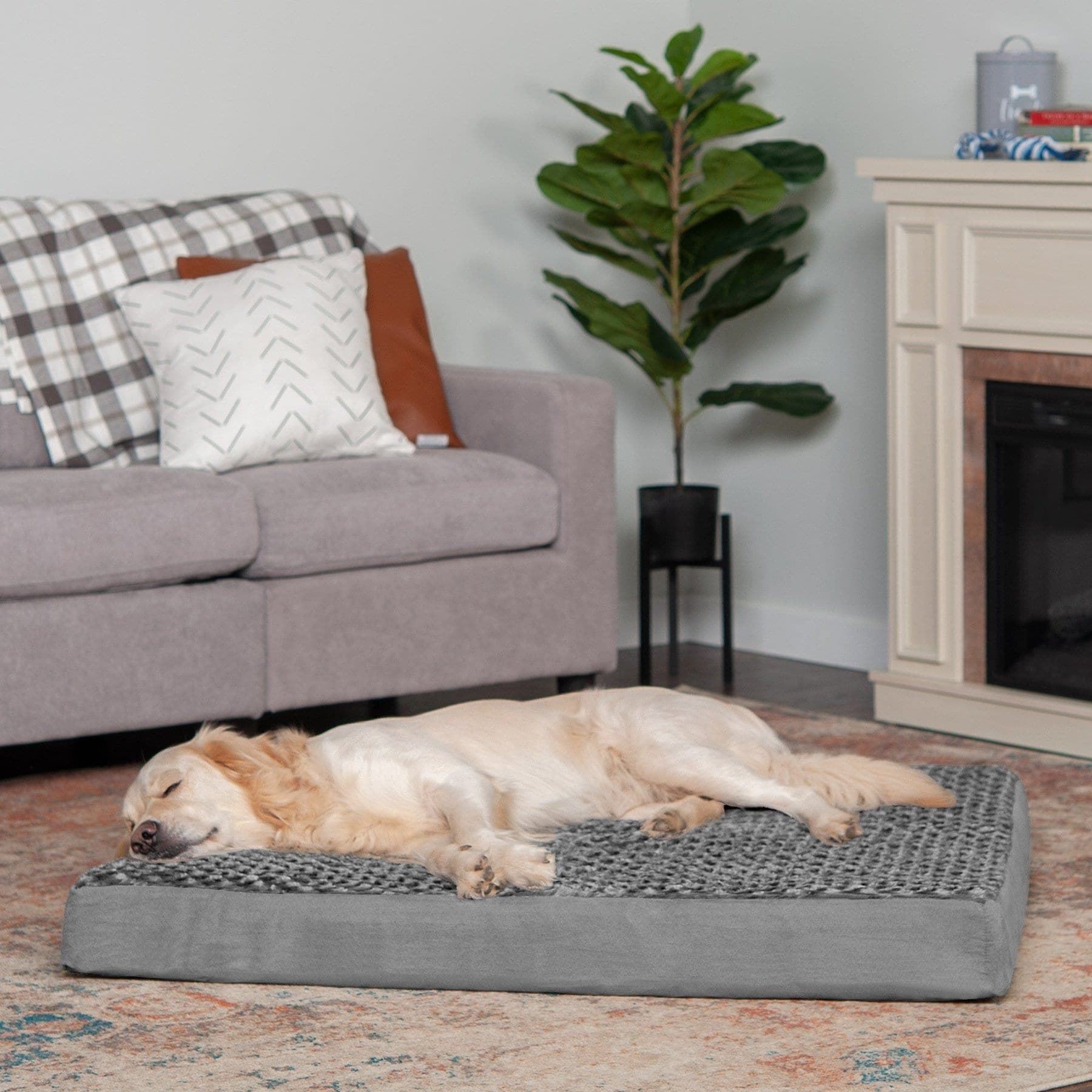
A correctly sized low-access bed can support rest without unnecessary climbing during clinician-approved home care.
Webvet may earn a commission when you click through to Chewy, at no extra cost to you.
Decide whether home support is enough
Describe your home and available help honestly before discharge. A large dog that needs two people to move safely presents a different practical problem from a small dog that can walk with light assistance. Ask the team to watch you carry out the proposed support method. If it cannot be done safely, discuss another plan instead of relying on instructions you cannot implement.
Clarify who supplies medicines, when refills or rechecks are needed, and whether ongoing care changes the estimate. Financial or transport limits should be part of that conversation early. They do not make forced feeding, unattended stair access, or an unsuitable handling method safe. A workable plan accounts for the dog's actual needs and the caregiver's actual capacity.
A conditional recovery timeline

Recovery observations guide reassessment rather than proving a benign diagnosis. For diagnosed idiopathic cases, VCA describes signs often being most severe during the first 24 to 48 hours, with improvement commonly beginning within 72 hours. Improvement may continue over the next one to three weeks, and some deficits can last longer. These are expectations to discuss with the clinic, not permission to wait through deterioration.
The underlying cause can change that course substantially. Ask what improvement should look like for your dog: less nausea, easier standing, safer movement, or better food intake. A dog that is eating better but falling more needs that mixed picture reported. Write down the change rather than simplifying every update to “better” or “worse.”
| Observation | Useful daily note | Reason to contact the clinic |
|---|---|---|
| Standing ability | What help was needed for the same permitted task | More falling, new weakness, or loss of a previously possible movement |
| Food intake and drinking | What was offered and what was actually consumed | Inability to swallow, persistent refusal, or inadequate intake under the discharge plan |
| Nausea and vomiting | Time, frequency, and relation to prescribed medication | Repeated vomiting or discomfort despite the plan |
| Eye movements and alertness | Changes seen while the dog rests naturally | New neurologic changes, reduced responsiveness, or worsening signs |
| Underlying cause and follow-up | Diagnosis or working diagnosis, next visit, and contact number | Lack of the expected improvement or uncertainty about the plan |
When the trend does not fit
If vestibular signs are getting worse, or the expected improvement is absent, contact the treating team. Further investigation or specialist referral may be appropriate. Do not reset a three-day countdown every time the dog briefly seems brighter, and do not decide that persistent signs must be permanent before reassessment. The next step depends on the whole clinical picture.
Some dogs have another episode after recovering. Record the new onset and contact the clinic even if it resembles the previous one. Recurrence can have different explanations, and a new episode may need a different workup. Do not restart leftover medicine without checking whether it is appropriate and still usable.
Quality of life and difficult decisions
Severe presentation alone does not determine euthanasia; the underlying cause and achievable comfort matter. Discuss treatment options, nutrition, safe movement, and realistic nursing needs with the veterinarian. If suffering cannot be controlled or acceptable daily function cannot be maintained, an end-of-life discussion may be appropriate. That decision should not be based on an arbitrary day of recovery or head tilt alone.
Helping a dizzy dog eat, rest, and move safely
Home nursing needs safe footing, blocked stairs, assisted toileting, and clean bedding. Ask the clinical team to demonstrate support rather than improvising a sling or lifting technique. A blind dog or one with another mobility problem may need additional environmental planning. Keep the room layout predictable and describe those extra needs before discharge.

Food and water access
Place permitted food and water close enough to reach comfortably, using the height and support recommended for the dog. Offer the prescribed diet and record what is consumed. A dog with vestibular disease that will not eat may still be nauseated, unable to reach the bowl, or have another unresolved problem. Changing flavors repeatedly is not a substitute for reporting inadequate intake.
Ask how long the team is comfortable with reduced intake, what constitutes enough drinking for this individual, and whom to contact after hours. Do not assume that a few licks meet the plan. If the dog cannot safely swallow, further veterinary support is needed. Home nursing separates safe food access from swallowing difficulty; these are different problems with different solutions.
Toileting, bedding, and rest
Use a short, uncluttered route for permitted toilet trips, with the prescribed support and close supervision. Stay away from uneven ground and other dogs until the team agrees that outings can expand. Report a dog that will not pee, repeatedly tries without producing urine, or cannot be positioned safely; do not dismiss every toileting problem as dizziness.
Keep bedding dry and check the areas that rest against it, especially when the dog cannot reposition normally. Ask whether help changing position is needed and how to do it. Clean up accidents gently, and record new sores or persistent wetness. Arrange caregiver shifts if one person cannot reliably provide the required support, including overnight.
Use one record for every caregiver
A brief shared record helps prevent contradictory updates. Note the time, food and water actually taken, medicines actually given, supported toilet trips, and changes you observed. Include the clinic's contact details and the next planned check. Mark a dose when it is given rather than assuming someone else will remember it later.
At a handoff, show the next caregiver the approved route and support method. Explain what changed during your shift and what still needs to be done. If a dose is uncertain or the dog vomits after medication, contact the clinic for instructions instead of automatically repeating it. Consistency makes the observations more useful and avoids an unnecessary treatment error during an already difficult recovery.
Rehabilitation and home remedies
Vestibular rehabilitation, physical therapy, and exercise should be selected for the dog's condition and current ability. Ask which movements are useful, how much assistance is needed, and which changes mean stop. Avoid balance challenges, repetitive head maneuvers, or unsupported walking from online demonstrations. Ordinary safe movement under the discharge plan is different from a rehabilitation exercise prescription.
Massage, acupuncture, homeopathy, or Cocculus indicus should not be presented as established replacements for diagnosis, nausea control, hydration, or treatment of an identified cause. Ask the veterinarian about any proposed adjunct and its evidence before using it. For longer-term planning, our senior dog health guide covers broader care; sudden dizziness still needs its own assessment.
Vestibular disease questions
Frequently Asked Questions
How long does it take for a dog to recover from vestibular disease?
In diagnosed idiopathic cases, improvement often starts within the first few days and recovery commonly takes two to three weeks, although some dogs take longer or retain a head tilt. Other causes follow different courses. Ask for the expected trend in your dog's standing ability, nausea, and intake, and report deterioration or absent expected improvement rather than waiting for a calendar deadline.
Will vestibular disease go away on its own?
Idiopathic vestibular syndrome may improve without a treatment directed at a specific underlying cause, but the dog still needs assessment and may need supportive care for nausea, hydration, and feeding. Infection, inflammatory disease, tumors, and other causes require their own management. An owner cannot tell which situation applies simply because the episode appeared suddenly or the dog is old.
Can a dog have a lasting head tilt after recovering?
Yes. A lasting head tilt or some imbalance may remain after other signs improve. Its importance depends on daily function and comfort, including eating, resting, moving safely, and interacting normally. Discuss persistent limitations with the veterinarian. A new or worsening tilt after a stable period needs reassessment rather than being assumed to be the same harmless residual sign.
Veterinarian · BVMS MRCVS
Dr. Pippa Elliott, BVMS, MRCVS, is a veterinarian with nearly 30 years of experience in companion animal practice. Dr. Elliott earned her Bachelor of Veterinary Medicine and Surgery from the University of Glasgow. She was also designated a Member of the Royal College of Veterinary Surgeons. Married with 2 grown-up kids, Dr. Elliott has a naughty Puggle named Poggle, 3 cats and a bearded dragon.
Related reading

Best Dog Boots for Traction, Weather, and Paw Protection

In Home Pet Euthanasia: Cost, What Happens, and How to Choose a Provider

Dog Dementia: Signs, Stages, Treatment, and When to Say Goodbye
