Dog MRI Cost: What the Quote Includes and What Costs Extra
A dog MRI estimate may cover much more than the scan. Compare consultation, anesthesia, interpretation, recovery, and possible extras, then ask how the results could change your dog’s care.

BVMS MRCVS
Medically reviewed by Dr. Pippa Elliott, BVMS MRCVS · Last reviewed

This article contains affiliate links. Webvet may earn a commission when you buy through them, at no extra cost to you.
Dog MRI cost is often a bill for an anesthetized diagnostic visit, not simply a charge for time inside a scanner. The total may include a specialist consultation, preliminary tests, anesthesia, imaging, interpretation, and supervised recovery. Ask for a written estimate that identifies those services before comparing prices.
One named-provider example gives useful context: Southeast Veterinary Neurology lists an average all-in cost of around US$5,000. That figure describes its service, not a national average or a guaranteed quote for your dog. The practical question is what the recommended visit will include, what remains optional, and what treatment decisions the results could change.
How much does a dog MRI cost?
- 1Compare the complete written estimate, including anesthesia and interpretation, rather than assuming a scan-only price covers the whole visit.
- 2A provider's published example is a starting point for questions, not an individualized quote.
- 3Ask what the MRI is expected to answer and what additional care might be recommended afterward.
The Southeast Veterinary Neurology cost guide, checked October 2, 2026, describes its average all-in dog MRI cost as approximately US$5,000. It also explains that the region being examined, the dog's size, and additional testing can affect the bill. Confirm the current estimate directly with the hospital, including which location and services it covers.
A brain MRI, spinal MRI, and study of a different body region need not involve identical scanning time or clinical work. A small dog does not necessarily have a low-cost appointment: the specialist assessment, scanner, trained staff, anesthesia equipment, and interpretation are still needed. Likewise, a quoted average cannot tell you the cost of an emergency admission or surgery following the scan.
Get the price for the visit you are actually considering
Tell the hospital the referral reason, which tests have already been performed, and whether the request is for a consultation or an already recommended MRI. Ask whether the estimate assumes one body region, routine recovery, and no additional procedures. A receptionist's general price range may need to be refined after the veterinarian examines your dog.
Record these three amounts separately:
- The estimated consultation and diagnostic visit total.
- The deposit or payment required before the appointment.
- Possible later treatment charges that are outside the MRI estimate.
For a planned visit, transport is another practical consideration. An appropriately sized Petmate Vari hard carrier may suit a dog that already travels comfortably in one. The listed size is not appropriate for every dog. Ask the clinic how to transport a painful or weak dog before lifting or loading them, and choose a setup that allows a natural resting position.
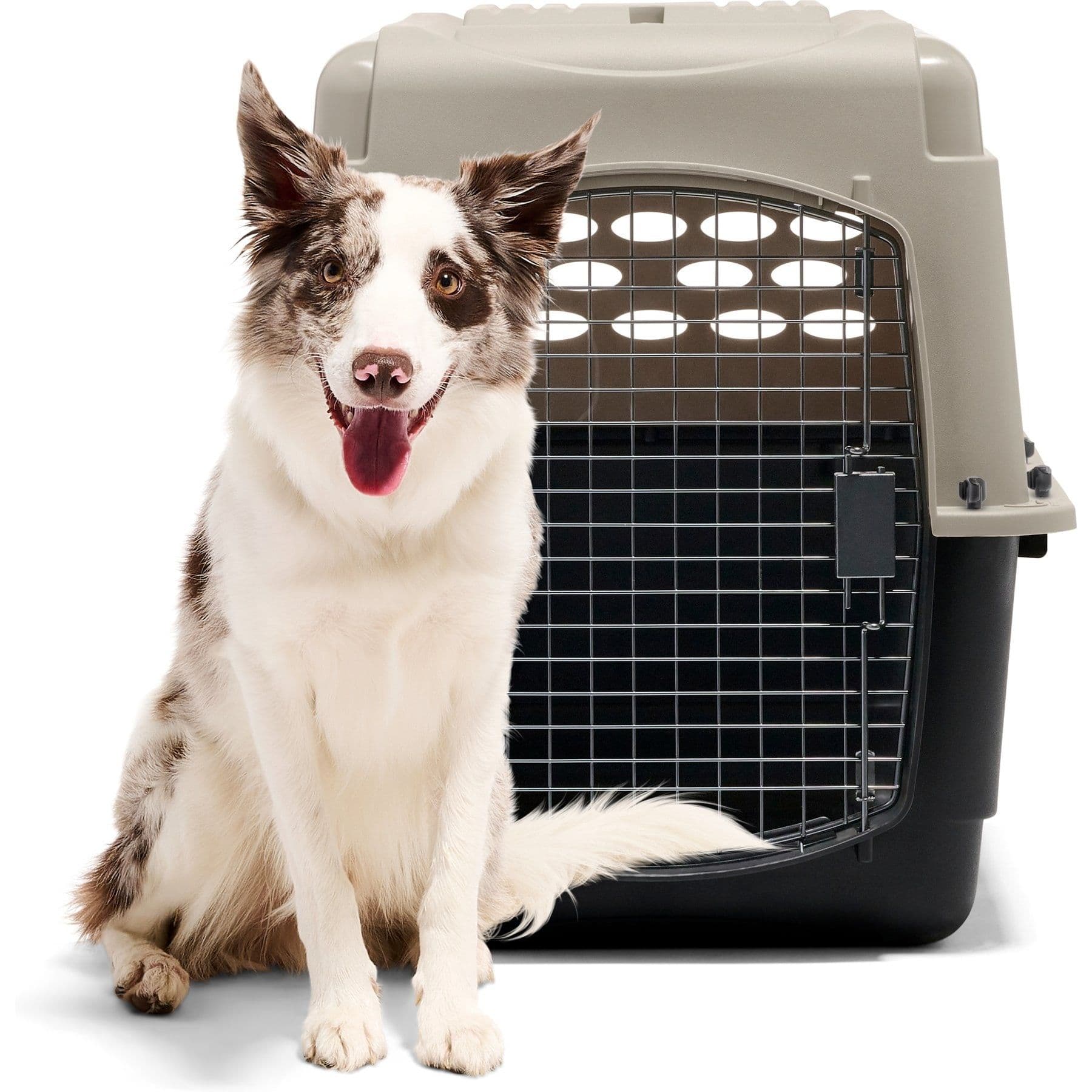
An appropriately sized carrier can support clinic-approved transport; ask the team how to move this dog safely.
Webvet may earn a commission when you click through to Chewy, at no extra cost to you.
Do not delay urgent assessment while searching for a lower imaging price. The treating veterinarian should determine whether comparison shopping or travel is medically reasonable. If your dog is stable and a planned referral is appropriate, a complete written estimate makes the comparison much more useful than a search for the cheapest advertised scan.
What the MRI quote includes and what may cost extra

Start by asking whether the number you received is scan-only or the expected total for the diagnostic visit. The words “MRI package” do not have a universal meaning. A scan-only charge may exclude consultation, anesthesia, or interpretation. A package may include some services and exclude others, while a separately itemized estimate may ultimately cover the same care. Compare the line items before drawing conclusions from the headline price.
The consultation is especially important. A specialist may recommend a different test, a different region to scan, or additional evaluation before anesthesia. Ask whether the consultation fee is charged separately even if an MRI is not performed. Also ask what records the hospital needs to decide whether recent bloodwork or previous imaging can be used.
| Service to compare | Written estimate A | Written estimate B | Question to resolve |
|---|---|---|---|
| Scan-only charge versus complete visit | Record the stated scope | Record the stated scope | Does this price cover imaging alone or the full anesthetized visit? |
| Specialist consultation | Mark included, extra, or unclear | Mark included, extra, or unclear | Is it charged if the MRI is not performed? |
| Bloodwork or other preliminary tests | Record tests and any separate charges | Record tests and any separate charges | Can recent results be used, and which tests remain necessary? |
| Anesthesia monitoring and recovery | Record what is included | Record what is included | Who monitors the dog, and is routine recovery covered? |
| MRI region and contrast agent | Record the planned region and contrast terms | Record the planned region and contrast terms | Would another region or contrast change the estimate? |
| Specialist interpretation | Record report and discussion arrangements | Record report and discussion arrangements | Is veterinary radiologist interpretation or another specialist review included, and when are results discussed? |
| Additional procedures or hospitalization | Record possible additions separately | Record possible additions separately | What requires further authorization or an overnight stay? |
| Follow-up and treatment | Record included follow-up | Record included follow-up | Does the total exclude surgery, medicines, or another consultation? |
Separate required services from possible additions
Request clarification about each uncertain line. “Included,” “additional if needed,” and “not part of this visit” mean different things. An estimate should also explain whether it represents the low and high ends of an expected range. If the total is a ceiling for the planned work, ask what circumstances would require a new conversation and authorization.
Useful categories include:
- Pre-anesthetic evaluation: Examination and any required laboratory tests.
- Anesthesia: Drugs, airway support, monitoring, staff, and recovery supervision.
- Imaging: The planned region, scan sequences, and whether contrast is anticipated.
- Interpretation: Who reviews the study and provides the report.
- Other procedures: For example, whether cerebrospinal fluid collection is being considered separately.
- Follow-up: Discussion of results, medicines, hospitalization, or another appointment.
A familiar resting surface may help with the journey or waiting period if the hospital permits it. The Kurgo Loft Wander travel bed is one option to consider when it fits the dog and transport setup. Confirm what belongings to bring; ordinary bedding and equipment should stay out of the MRI room unless staff explicitly approve them. A product purchase is not a requirement for receiving diagnostic care.

Familiar travel bedding can support the journey or waiting area if the hospital permits it; keep ordinary items out of the MRI room.
Webvet may earn a commission when you click through to Chewy, at no extra cost to you.
Reading the named-provider example correctly
The approximately $5,000 Southeast Veterinary Neurology example is described as all-in. That makes it more informative than an unexplained scanner-only charge, but it still does not establish the exact services your dog will receive. Use it to ask what “all-in” means for the proposed appointment. Do not divide the figure into invented anesthesia, imaging, and interpretation prices.
If another clinic gives a lower initial figure, send both providers the same questions. One may have quoted imaging alone, while another included consultation and anesthesia. Alternatively, both may provide comparable services at different prices. The worksheet helps identify what differs; it cannot determine clinical quality from price alone.
Keep a copy of the estimate and note the name of the person who clarified it. Ask how long the estimate is valid, whether a deposit is refundable or transferable, and how cancellation or rescheduling works. Those administrative terms can matter when coordinating travel, time off work, and a referral appointment.
Why estimates differ between hospitals
An MRI machine is only part of the service. The appointment also requires the people and equipment that prepare the patient, manage anesthesia, obtain the study, interpret it, and oversee recovery. Hospitals may organize those services differently. Location, operating costs, scanner type, staffing, appointment timing, and the complexity of the case can all influence an estimate.
Veterinary MRI systems may be described as low-field or high-field. Those terms refer to characteristics of the equipment; they do not tell an owner, by themselves, which hospital is the right choice. Ask whether the available scanner and protocol can answer the particular clinical question. A useful answer explains the proposed study, anticipated limitations, and who will interpret it.
Compare the clinical service as well as the equipment
Ask the referring veterinarian to help assess differences that are hard to judge from a website:
- Does the hospital commonly evaluate the suspected condition?
- Is a consultation required before the scan can be approved?
- Who manages anesthesia and who interprets the images?
- Can necessary treatment be offered there, or would another transfer be needed?
- How are unexpected findings, complications, or an extended recovery handled?
An emergency appointment may involve stabilization and hospitalization beyond the planned imaging visit. A routine estimate for a stable outpatient should not be compared directly with that emergency bill. Conversely, a higher price does not automatically prove that a hospital provides better care. Clarify the service and ask your veterinarian about suitability.
Factor in travel and record transfer
For a stable dog, a more distant referral center may be an option, but consider the whole trip. Travel, lodging, missed work, and a return visit can change the practical cost. Ask whether results can be discussed remotely and whether follow-up can take place with your regular veterinarian. Confirm which hospital would handle a complication after you return home.
Arrange for previous imaging and reports to reach the receiving team before the appointment. Sending a phone photograph of an X-ray may not provide the original image data needed for review. Ask each clinic how records should be transferred. Existing tests may prevent unnecessary duplication when they are clinically adequate, but the new team may still need updated information.
 $65 · no membership
Have a health question about your dog?
A licensed vet can assess your dog over video and prescribe online when it's appropriate.
 Talk to a vet
- Licensed vets
- All 50 states
- same-day Rx
Webvet may earn a commission if you book.
When an MRI can change the treatment plan
An MRI is most useful when the veterinarian can name the question it is intended to answer. It provides detailed information about internal tissues and is often considered for problems involving the brain or spinal cord. The decision starts with the history and examination, not with the assumption that the most advanced available scan must be the best next test.

For example, a neurologic examination helps localize where a problem may be occurring. That localization guides whether the brain, a particular spinal region, or another structure should be investigated. A head MRI and a spinal MRI are not interchangeable appointments. Shoulder or other musculoskeletal concerns also require a clinician to decide which imaging method best answers the suspected problem.
Ask the veterinarian to complete this sentence: “The MRI could distinguish between these possibilities, and the result would change our next step in these ways.” The answer might involve treatment selection, surgical planning, prognosis, or deciding that a different investigation is needed. A scan may reduce uncertainty without providing a complete diagnosis on its own.
For routine clinic arrivals and permitted toilet outings, a fixed-length Leash Boss standard leash can help keep movement controlled. Choose an appropriate length and fit. If your dog has weakness, severe pain, or trouble balancing, ask the team about assistance and transport rather than relying on a leash alone. Plan the route from the vehicle before the appointment.
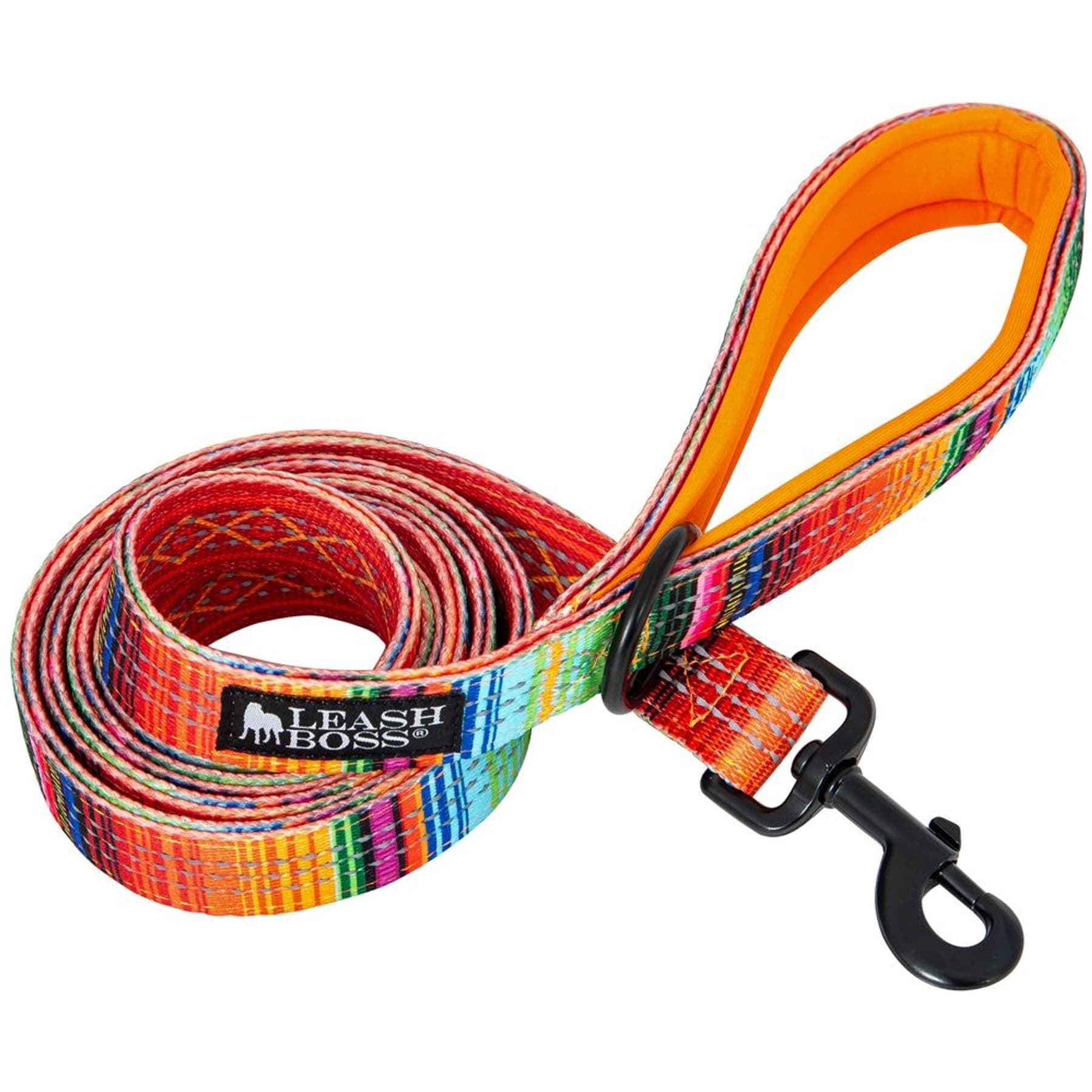
A standard leash helps keep clinic arrivals and permitted toilet outings controlled; ask about assistance for a dog with weakness or pain.
Webvet may earn a commission when you click through to Chewy, at no extra cost to you.
Questions that make the value discussion concrete
- What does the examination suggest, and what remains uncertain?
- Which result would change treatment immediately?
- Would the result affect whether surgery is recommended?
- If the scan is normal or inconclusive, what would happen next?
- Could another test answer the question sufficiently well?
- How does waiting affect the options for this particular dog?
The same breed label does not establish the same imaging need. A Pug, a large dog, and a small dog each need an individual examination and anesthetic assessment. Similarly, suspected intervertebral disc disease does not mean every dog requires the same scan or treatment. Ask which spinal region is suspected and why MRI, CT, or another approach is recommended in this case.
Three signs of suffering that need prompt advice
Three signs that a dog may be suffering or seriously ill are severe or uncontrolled pain, new inability to stand or walk, and a seizure or marked change in awareness. Report these changes promptly. They do not identify one disease or prove that an MRI is required, but they can change how urgently the dog needs assessment. Call the treating or emergency clinic for instructions instead of waiting for a routine imaging slot.
Tell the team about the timeline, medicines already given, and any change since the referral was made. A new symptom may change the recommended visit. The guide to pain medicines for dogs explains why adding a human or leftover medicine is not an appropriate substitute for contacting the veterinarian.
MRI versus CT, X-rays, and ultrasound
The best imaging test depends on the clinical question and the structures being evaluated. Computed tomography (CT) and magnetic resonance imaging (MRI) have different strengths for different clinical questions. CT provides cross-sectional X-ray images useful for problems such as trauma and surgical planning; MRI distinguishes soft tissues, including the brain, spinal cord, muscles, and ligaments. Ordinary radiographs and ultrasound answer other useful questions. These tests should not be ranked simply from cheapest to most advanced.
Cornell's veterinary imaging service explains that MRI patients are almost always given general anesthesia, while CT patients may be sedated or anesthetized. Its service uses several imaging methods because different questions call for different tools. Ask which method can answer the suspected problem with an appropriate balance of information, time, risk, and cost.
A lower-priced test is useful only if it answers the question
An X-ray may be an appropriate first test but may not settle a brain or spinal-cord question. That does not mean the X-ray was necessarily wasted: it may answer a different question or help direct the next step. Likewise, CT may be the appropriate study for a particular condition. Do not assume it is an inferior substitute merely because MRI was mentioned elsewhere.
If cost is a barrier, ask what the veterinarian can reasonably learn from the available alternatives and what uncertainty would remain. A staged diagnostic plan may be possible for some stable patients. For others, delay or repeated incomplete testing may be disadvantageous. The clinician should explain the tradeoff for your dog, including the consequences of acting without definitive imaging.
MRI is also not the usual starting point for every internal medical problem. For suspected intestinal obstruction, the examination and other imaging may lead to a different pathway. The guide to intestinal blockage surgery costs addresses that separate estimate. An owner should not choose MRI simply because the word “blockage” or “soft tissue” appears in a description.
Anesthesia, preparation, and the trip home

Dogs need to remain still for diagnostic MRI, so general anesthesia is usually part of the appointment. General anesthesia uses medicines to produce controlled unconsciousness while the veterinary team supports and monitors the patient. “Put to sleep” means anesthesia in this setting, not euthanasia. The pre-anesthetic assessment considers the dog's health and the proposed procedure. Ask who will monitor your dog, how recovery is supervised, and what might change the plan before scanning starts.
Prepare the home recovery area before leaving for the appointment. A flat Drymate playpen mat with slip-resistant backing is one option for the clinician-approved resting area. Check it on the actual floor, smooth out folds, and make sure the dog cannot chew or swallow it. Its backing does not guarantee that a drowsy or unsteady dog will not slip; supervision and the discharge instructions still matter.

A flat mat with slip-resistant backing can help prepare the clinician-approved discharge area; test it on the actual floor and supervise the dog.
Webvet may earn a commission when you click through to Chewy, at no extra cost to you.
Before the appointment
Ask for preparation instructions in writing and read them early enough to resolve questions. Give the team a complete list of medicines, supplements, allergies or previous reactions, and any prior anesthetic problems. Report implants, previous operations, or possible retained metal so the hospital can assess MRI safety. Ordinary collars, tags, leads, and other belongings may need to be removed by staff.
The strong magnetic field makes the scanner room a controlled environment. Do not carry a carrier, leash, phone, or other equipment into it unless the MRI team directs you. Visitors may not be permitted in the scanning area. Bring the items requested for check-in and transport, then follow the hospital's storage and handling instructions.
Clarify the expected check-in and collection times. The scan itself is only one part of the visit: examination, preparation, anesthesia, imaging, interpretation, and recovery all take time. An appointment described as a morning MRI does not necessarily mean your dog will be ready to leave at a fixed hour. Keep a working phone number available for updates and consent discussions.
Additional tests and consent
The team may discuss contrast or another procedure, such as collection of cerebrospinal fluid, depending on the suspected condition. These are distinct decisions with their own reasons, risks, and charges. Ask whether they are already included in the plan or would require a separate conversation. Do not assume that consenting to an MRI automatically explains every possible additional test.
Agree on how the team will reach you if findings change the recommendation. Ask whether treatment could occur during the same admission or whether a separate consultation and estimate would follow. This is particularly useful when a scan might lead to a surgical discussion. The diagnostic bill and the cost of treating a discovered problem should remain distinguishable.
Plan for the result as well as the appointment
Ask when you should expect an initial explanation and whether a final specialist report follows later. Those may be separate conversations. Before making another major decision, clarify whether the interpretation is complete, which findings are considered important, and whether they explain the symptoms that prompted the referral. A list of abnormalities is not the same as a treatment recommendation.
If the MRI does not answer the original question, ask what has been ruled out, what remains possible, and whether another test would add useful information. Request an updated estimate before additional elective work is authorized. An inconclusive result does not automatically justify repeating the scan or adding every available test; the next step should still have a clear purpose.
If surgery, hospitalization, or long-term treatment is recommended, ask for that plan and estimate separately. Confirm who will deliver the care and whether transfer to another hospital would be necessary. This helps you understand the financial commitment beyond diagnosis and avoids treating the MRI total as the price of resolving the entire illness. Ask which decisions are urgent and which allow time for another discussion.
After discharge
Have an adult available to listen to the discharge explanation and help with transport if needed. Follow the instructions about food, water, medicines, supervision, and activity. Ask which changes are expected as anesthesia wears off and which require an immediate call. Do not use a generic online recovery schedule for a dog whose underlying neurologic or medical condition may affect mobility.
Before leaving, confirm:
- Who to contact during the day and after hours.
- When results will be explained and by whom.
- Whether your regular veterinarian receives the report and images.
- What activity and feeding are allowed that evening.
- Which symptoms should prompt urgent reassessment.
If your dog is not recovering as the team described, call them. Do not assume that severe weakness, breathing difficulty, marked distress, or a worsening neurologic sign is simply normal sleepiness. The discharge team has the information needed to judge the concern in context.
Keep the report and the care plan together
Request the written interpretation and ask how the images can be shared with your regular veterinarian or another specialist. A screenshot on a phone may not contain the study needed for a second opinion. Confirm whether the hospital sends the original imaging data directly, provides a secure link, or uses another transfer method. Keep the contact details with the discharge instructions.
Write down who is responsible for the next step. For example, the referral team may explain the MRI findings while the regular veterinarian manages a medication recheck. Ask when that visit is due and whether it is included in the original estimate. Clear responsibility matters when several clinics have been involved and each reasonably expects another team to follow up.
For a second opinion, ask whether reviewing the existing study could answer the question before arranging another anesthetic appointment. The receiving clinician must decide whether the images are adequate and sufficiently current. A review may still have a fee, but knowing what records are available allows a more informed estimate than starting the process without them.
Insurance, payment, and questions to ask the hospital

Insurance coverage depends on the actual policy and the circumstances of the illness. An MRI recommended for a covered condition may be eligible, but exclusions, the policy deductible, reimbursement percentage, limits, and claim requirements affect what you ultimately pay. A clinic's willingness to provide records does not guarantee that an insurer will approve the claim.
Ask the insurer about the specific proposed diagnostic visit. Find out whether prior authorization or a pre-estimate is available, which documents are needed, and whether consultation, anesthesia, interpretation, and related testing are treated together or separately. Keep the written estimate and clinical recommendation available. Do not assume a new policy will cover a condition that has already produced symptoms.
Coverage and cash flow are different questions
Even when a claim may be covered, the hospital may require payment before reimbursement arrives. Ask about the deposit, the remaining balance, and whether the clinic supports any direct-payment arrangement with your insurer. Confirm these terms with both parties. A reimbursement percentage alone does not tell you the amount needed on the appointment day.
Keep the financial questions specific:
- Is the deposit applied to the final invoice, and what happens if the scan is canceled after examination?
- Which services require separate consent and payment?
- Who supplies the itemized invoice and medical records for a claim?
- Does an insurer's preliminary estimate remain conditional on the final records and policy terms?
- How will you be contacted if the expected cost changes during the visit?
The comparison of pet wellness plans and pet insurance explains why a routine-care plan should not be assumed to provide illness coverage. Bring the policy documents or contact details rather than relying on the product name. If a claim is uncertain, ask what your obligation would be if reimbursement is denied.
If the proposed visit is unaffordable
Tell the veterinarian the amount you can realistically manage and ask which decisions are most time-sensitive. Request an itemized estimate and discuss a clinically appropriate alternative diagnostic plan, referral options, or a staged approach when reasonable. This conversation is more useful than silently canceling a test that the clinician believes is urgent.
Ask the hospital which payment arrangements or assistance resources it currently accepts. Approval, available funds, and eligibility vary, so do not treat a financing application or charity inquiry as guaranteed care. Read the terms of any borrowing before committing, including interest, promotional deadlines, and required payments. The veterinary team can explain medical priorities while you assess the financial terms.
There is no universal free MRI program for dogs, and a teaching hospital is not automatically cheaper. Clinical studies sometimes provide specific tests for eligible participants, but eligibility, study procedures, timing, and costs are particular to each study. Do not delay necessary treatment while assuming a research opportunity will become available.
Leave the conversation with a workable next step
Before ending the call or consultation, write down the agreed plan, the expected cost, the timing, and whom to contact if the dog's condition changes. If MRI is deferred, ask what care is recommended now and which finding would change that decision. Deferring a test should still leave you with clear instructions rather than an unexplained gap in care.
Dog MRI questions
Frequently Asked Questions
Is it worth getting an MRI for a dog?
It can be worthwhile when the result is expected to change a treatment decision, prognosis, or surgical plan. Ask what the neurologic examination suggests and which uncertainty the MRI will address. The answer depends on the dog and the available options; a high price or sophisticated scanner alone does not establish value.
What if I can't afford an MRI for my dog?
Ask for a written estimate and explain the budget to the veterinarian. Discuss an alternative diagnostic plan, an appropriate referral, and any payment or assistance options the hospital actually accepts. Also ask how urgently the decision must be made. Do not assume that a cheaper test answers the same question or that assistance will be approved.
Will pet insurance cover an MRI?
An MRI may be covered when a veterinarian recommends it for an accident or illness covered by your policy. Eligibility still depends on the reason for the scan, pre-existing condition exclusions, and claim requirements. The policy deductible, reimbursement rate, and limits affect your share. Confirm the proposed services with the insurer and ask the hospital what must be paid before any reimbursement arrives.
Does a dog have to be put to sleep for an MRI?
Diagnostic MRI in dogs usually requires general anesthesia so the patient remains still. In this context, “put to sleep” does not mean euthanasia. Ask about the pre-anesthetic assessment, anesthetic monitoring, recovery supervision, and instructions specific to your dog's health and current medicines.
Which is better for dogs, a CT scan or an MRI?
Neither is universally better. MRI distinguishes soft tissues, helping evaluate the brain, spinal cord, and some musculoskeletal problems. CT is useful for trauma and planning certain operations, among other indications. Ask which test can answer your dog's specific clinical question and what uncertainty an alternative would leave.
$65 · no membershipHave a health question about your dog?
A licensed vet can assess your dog over video and prescribe online when it's appropriate.
Talk to a vet- Licensed vets
- All 50 states
- same-day Rx
Webvet may earn a commission if you book.
Veterinarian · BVMS MRCVS
Dr. Pippa Elliott, BVMS, MRCVS, is a veterinarian with nearly 30 years of experience in companion animal practice. Dr. Elliott earned her Bachelor of Veterinary Medicine and Surgery from the University of Glasgow. She was also designated a Member of the Royal College of Veterinary Surgeons. Married with 2 grown-up kids, Dr. Elliott has a naughty Puggle named Poggle, 3 cats and a bearded dragon.
Related reading

Dog Broken Nail: What to Do, When to See a Vet, and Healing

Best Enzyme Cleaner for Cat Urine: Choosing by Surface

Are Cat Nail Caps Safe? Pros, Cons, Fit and Alternatives
