Toltrazuril for Dogs and Cats

BVMS MRCVS
Medically reviewed by Dr. Pippa Elliott, BVMS MRCVS · Last reviewed

Drug facts
Toltrazuril
Toltrazuril is an anticoccidial drug in the triazinetrione class, used off-label in dogs and cats to treat coccidiosis. It targets all intracellular stages of coccidia, providing rapid clinical improvement and reducing oocyst shedding.
Treats
 $65 · no membership
Need a prescription for Toltrazuril?
A licensed vet can assess your pet over video and prescribe Toltrazuril online when it's appropriate.
 Talk to a vet
- Licensed vets
- All 50 states
- same-day Rx

Webvet may earn a commission if you book.
What is Toltrazuril for Dogs and Cats
Overview
Toltrazuril is an anticoccidial drug in the triazinetrione class, widely used in veterinary medicine as an off-label treatment for coccidiosis in dogs and cats. It is valued for its ability to target all intracellular stages of coccidia, making it more complete and more effective than older medications like sulfonamides.
Because it is not FDA-approved for dogs or cats in the United States, Toltrazuril is typically obtained through compounded formulations. Veterinarians often choose it when infections are severe, recurrent, or unresponsive to the only FDA-approved option (sulfadimethoxine).
Explore more parasite-control medications in our Parasites section.
What Is Toltrazuril for Dogs and Cats Used For
| Condition | Notes |
|---|---|
| Coccidiosis (Cystoisospora spp.) in dogs | Highly effective; studies show rapid reduction or elimination of oocysts. |
| Coccidiosis (Isospora felis, I. rivolta) in cats | Multiple protocols result in up to 100 percent treatment success. |
| Infections in puppies/kittens | Often used in breeding facilities; early treatment reduces symptoms and environmental contamination. |
| Resistant or persistent infections | Chosen when sulfadimethoxine is ineffective. |
| Use with combination products (e.g., Procox®) | Often used for routine control in young animals. |
How Toltrazuril for Dogs and Cats Works
Toltrazuril interferes with the intracellular development of coccidia, damaging structures like the endoplasmic reticulum and Golgi apparatus and blocking essential enzymes in the parasite’s respiratory chain. This leads to destruction of parasite stages at multiple points of their lifecycle, eliminating infection rather than suppressing it.
Drug Facts
Toltrazuril is a broad-action antiprotozoal used off-label in dogs and cats. It provides rapid clinical improvement and reduces oocyst shedding.
Compare coverage choices for your pet, then request a quote directly on Lemonade.
- Check a price for your pet
- Review available coverage choices
- See the terms before you decide
Eligibility, waiting periods, limits and exclusions apply.
Webvet may earn a commission when you click through to Lemonade, at no extra cost to you.
Common Brands
Baycox®
Drug Class
Anticoccidial (triazinetrione class)
Substance Classification
Not a controlled medication
Generic Status
Generic widely available
Availability
Prescription; not FDA-approved
Available forms
Toltrazuril for Dogs and Cats Dosage Forms
Toltrazuril is available primarily as an oral liquid suspension (commonly 5 percent or 30 mg/mL). Most veterinary use relies on compounded suspensions.
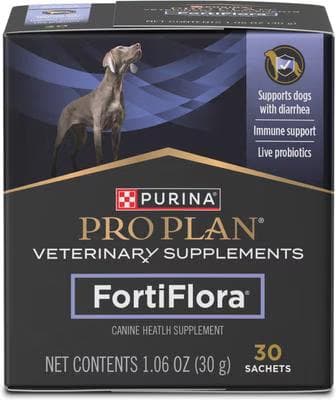
The #1 vet-recommended probiotic for dogs. Daily powder sachets with live probiotics support healthy digestion and firmer stools, and can help dogs coping with diarrhea or GI upset.
Webvet may earn a commission when you click through to Chewy, at no extra cost to you.
Oral Liquid Suspension
| Qty/Size | Price as low as | Price per unit |
|---|---|---|
| 15 mL | $25.00 | $1.66 |
| 30 mL | $45.00 | $1.50 |
| 60 mL | $80.00 | $1.33 |
Typical Dosing For Toltrazuril for Dogs and Cats
Toltrazuril dosing varies by species, age, and severity. All information below comes from clinical and experimental protocols in the document.
Oral Dosing
| Group | Typical Dose | Notes |
|---|---|---|
| Dogs (General canine dose) | 9–14 mg/lb (approx. 20–30 mg/kg) | Given daily for 2–3 days. |
| Dogs (Procox combination) | 9 mg/kg at 3rd, 5th, and 7th week | Used in breeding facilities. |
| Dogs (Single-dose protocols) | Single dose in 3rd–4th week of age | Reduces environmental contamination and symptoms. |
| Cats (Standard) | 30 mg/kg orally | Once daily × 2 days gives 83.3 percent success. |
| Cats (Extended Protocol) | 30 mg/kg × 3 consecutive days per week × 2 weeks | Achieved 100 percent success rate. |
Risks and Warnings for Toltrazuril for Dogs and Cats
Toltrazuril is generally well tolerated, including in very young puppies and kittens. Across multiple studies, adverse effects were not reported.
Webvet may earn a commission when you click through to Chewy, at no extra cost to you.
Safety Notes
- Puppy studies showed no vomiting or salivation.
- Kitten studies showed no adverse reactions at any dose tested.
- Poultry tolerate overdoses of 3–5× with minimal signs.
Toltrazuril
Uncertain Safety
- Safety in pregnant dogs is unknown, as reproductive studies are lacking.
Other Considerations
- Combining with imidocarb dipropionate did not improve outcomes in Hepatozoon canis infections.
- Human exposure should be avoided; gloves are recommended.
Toltrazuril for Dogs and Cats Warnings and Precautions
Use Toltrazuril only under veterinary guidance:
- Not for human use; avoid skin contact with concentrated product.
- Wear gloves when handling.
- Safety in pregnant/nursing animals is not established.
- Repeat dosing may be needed to prevent re-shedding of oocysts.
- Follow exact mg/kg dosing to avoid underdosing or resistance risk.
Disclaimer: This information is for educational purposes only and should not replace professional veterinary advice. Always consult your veterinarian before using or combining any medications for your pet.
Frequently Asked Questions (FAQ)
Does Toltrazuril work faster than other coccidia treatments?
Yes. Most animals improve within 2–3 days because Toltrazuril kills the parasite instead of slowing it.
Is Toltrazuril safe for puppies and kittens?
Yes, studies show excellent tolerance even in very young animals.
Do I need to repeat the dose?
Often yes, especially in cats; repeat dosing helps prevent oocysts from returning.
Why is Toltrazuril not FDA-approved for dogs or cats?
Its labeled use is in poultry, but veterinarians use compounded forms off-label due to proven effectiveness.
Can it be combined with other parasite medications?
Yes, though combinations (such as imidacarb) do not always improve outcomes.
Related Medications & Supplements
Dogs being treated for coccidia or other intestinal parasites may require additional antiparasitic options to fully manage infections or prevent reinfection. These related treatments are commonly discussed alongside Toltrazuril.
Webvet may earn a commission when you click through to Chewy, at no extra cost to you.
- Ponazuril - Antiprotozoal medication frequently used as an alternative treatment for coccidia.
- Pyrantel pamoate - Common dewormer effective against roundworms and hookworms, sometimes used alongside coccidia treatment.
- Praziquantel - Tapeworm medication often paired with broad parasite-control protocols.
- Moxidectin - Broad-spectrum antiparasitic used for intestinal worms, mites, and heartworm prevention.
- Nitenpyram - Fast-acting oral flea treatment that can help reduce parasite load in multi-parasite cases.
- Selamectin - Topical preventive effective against several internal and external parasites.
References
- Bayer Limited, Animal Health Division (2010), Baycox 2.5% Oral Solution - Summary of Product Characteristics, Marketing Authorization Number VPA 10021/019/001.
- Canine Health Center [n.d.], ‘Toltrazuril vs Albon: The Ultimate Guide to Coccidia Treatment in Dogs’, Canine Health Center. Available at: http://caninehealthcenter.com/en/blog/coccidiosis-treatment-with-toltrazuril/
- Daugschies, A., Mundt, H.C. & Letkova, V. (2000), ‘Toltrazuril treatment of cystoisosporosis in dogs under experimental and field conditions’, Parasitology Research, 86(10), pp. 797–799. Available at: https://doi.org/10.1007/s004360000217; PMID: 11068811.
- Hirose, K., Takashima, K., Yamane, T. & Yamane, Y. (2016), ‘Effectiveness of Toltrazuril for Coccidiosis in Cats’, Journal of Animal Clinical Medicine, 25(1), pp. 12–15. Available at: https://doi.org/10.11252/dobutsurinshoigaku.25.12.
- Ibarra-Velarde, F., Vera-Montenegro, Y., Saldaña-Hernández, N. & Ochoa-Galván, P. (2014), ‘Comparison of the Efficacy of Two Commercial Coccidicidal Compounds on Experimentally Infected Dogs’, Pharmacology & Pharmacy, 5, pp. 1163–1170. Available at: http://dx.doi.org/10.4236/pp.2014.513127.
- Pasa, S., Voyvoda, H., Karagenc, T., Atasoy, A. & Gazyagci, S. (2011), ‘Failure of combination therapy with imidocarb dipropionate and toltrazuril to clear Hepatozoon canis infection in dogs’, Parasitology Research, 109(3), pp. 919–926. Available at: https://doi.org/10.1007/s00436-011-2334-3; PMID: 21472405.
- Petry, G., Kruedewagen, E., Kampkoetter, A. & Krieger, K. (2011), ‘Efficacy of Emodepside/Toltrazuril Suspension (Procox® Oral Suspension for Dogs) against Mixed Experimental Isospora felis/ Isospora rivolta Infection in Cats’, Parasitology Research, 109, pp. S29–S36. Available at: 10.1007/s00436-011-2400-x.
- Price, M. & Fung, C. (2023), ‘Toltrazuril for Dogs and Cats’, PetMD, 15 September.
- Rauscher, B.A., Schäfer-Somi, S., Ehling-Schulz, M., Möstl, K., Handl, S., Hinney, B., Spergser, J. & Schaper, R. (2013), ‘Control of Canine Endoparasites, Especially Isospora spp., with Procox® in Naturally Infected Puppies: Parasitological, Bacteriological and Health Parameters’, Open Journal of Veterinary Medicine, 3(2), pp. 121–130. Available at: http://dx.doi.org/10.4236/ojvm.2013.32020.
$65 · no membershipNeed a prescription for Toltrazuril?
A licensed vet can assess your pet over video and prescribe Toltrazuril online when it's appropriate.
Talk to a vet- Licensed vets
- All 50 states
- same-day Rx
Webvet may earn a commission if you book.

Editor
The Webvet Editorial Team is the in-house group of pet-care editors and writers behind Webvet, operated by Smart Pet Collective. The team researches, writes, and maintains Webvet's pet health, behavior, and medication content. Every article follows a defined editorial process: research from reputable veterinary and scientific sources, careful drafting, mandatory review of medical content by a credentialed veterinarian, and dated publication. Health and medication articles are medically reviewed by a licensed veterinary professional before they go live and are kept current over time.
Veterinarian · BVMS MRCVS
Dr. Pippa Elliott, BVMS, MRCVS, is a veterinarian with nearly 30 years of experience in companion animal practice. Dr. Elliott earned her Bachelor of Veterinary Medicine and Surgery from the University of Glasgow. She was also designated a Member of the Royal College of Veterinary Surgeons. Married with 2 grown-up kids, Dr. Elliott has a naughty Puggle named Poggle, 3 cats and a bearded dragon.


