Moxidectin for Dogs and Cats

BVMS MRCVS
Medically reviewed by Dr. Pippa Elliott, BVMS MRCVS · Last reviewed

Drug facts
Moxidectin
Moxidectin is a long-acting macrocyclic lactone (milbemycin) antiparasitic used in dogs and cats for heartworm prevention and control of intestinal parasites.
Treats
 $65 · no membership
Need a prescription for Moxidectin?
A licensed vet can assess your pet over video and prescribe Moxidectin online when it's appropriate.
 Talk to a vet
- Licensed vets
- All 50 states
- same-day Rx

Webvet may earn a commission if you book.
What is Moxidectin for Dogs and Cats
Overview
Moxidectin is a macrocyclic lactone (ML) in the milbemycin subclass, developed as a safer and more potent alternative to older MLs like ivermectin. It has a high volume of distribution, meaning it spreads efficiently through tissues and fat, allowing long-lasting parasite control even after a single dose.
Because of its strong safety profile, including in dogs with the ABCB1 (MDR1) gene mutation, moxidectin has become one of the most trusted heartworm preventives available. It is used in injectable, topical, and oral formulations depending on patient needs and parasite risk.
Explore more parasite-control medications in our Parasites section.
What Is Moxidectin for Dogs and Cats Used For
| Condition | Notes |
|---|---|
| Heartworm prevention | Effective against resistant strains; lasts 1–12 months depending on dose/form. |
| Hookworms (Ancylostoma, Uncinaria) | Labeled for treatment and control. |
| Roundworms (Toxocara, Toxascaris) | Controlled through topical and oral formulas. |
| Whipworms (Trichuris vulpis) | Controlled by topical combinations. |
| Tapeworms (with praziquantel) | Achieves 100 percent clearance in combination products. |
| Lungworms (T. brevior, A. abstrusus) | Effective in cats via topical formulas. |
| Demodex mites | Limited effect; significantly less effective than isoxazolines. |
How Moxidectin for Dogs and Cats Works
Moxidectin interferes with the parasite’s nerve transmission by binding to glutamate-gated chloride channels. This causes paralysis and death of susceptible nematodes and arthropods. Its high lipophilicity allows it to store in fat tissue and release slowly, giving long-lasting protection—even weeks or months after treatment.
Drug Facts
Moxidectin is a long-acting antiparasitic used in dogs and cats for heartworm prevention and control of intestinal parasites.
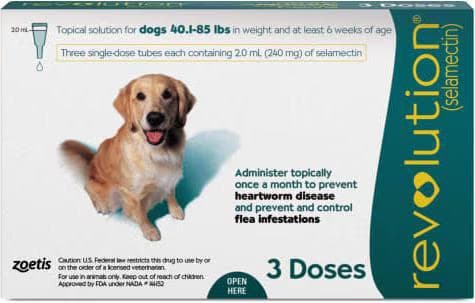
A monthly topical (selamectin) that prevents heartworm and controls fleas, and is well tolerated in herding breeds at the label dose. A prescription pick for dogs who need a non-isoxazoline option.
Webvet may earn a commission when you click through to Chewy, at no extra cost to you.
Common Brands
ProHeart, Simparica Trio, CORAXIS
Drug Class
Macrocyclic lactone (milbemycin)
Substance Classification
Not a controlled medication
Generic Status
Generics are limited
Availability
Prescription
Available forms
Moxidectin for Dogs and Cats Dosage Forms
Moxidectin is available as injectables, topical spot-ons, and oral combinations. Dose and duration depend heavily on the formulation.
Webvet may earn a commission when you click through to Chewy, at no extra cost to you.
Injectable Formulations (Dogs)
| Qty/Size | Price as low as | Price per unit |
|---|---|---|
| 6-month injectable | $55.00 | $55.00 |
| 12-month injectable | $95.00 | $95.00 |
Topical Formulations (Dogs & Cats)
| Qty/Size | Price as low as | Price per unit |
|---|---|---|
| Single dose | $15.00 | $15.00 |
| 6-pack | $85.00 | $14.00 |
| 12-pack | $150.00 | $12.00 |
Oral Formulations (Combination Products)
| Qty/Size | Price as low as | Price per unit |
|---|---|---|
| Single dose | $22.00 | $22.00 |
| 6-pack | $120.00 | $20.00 |
| 12-pack | $220.00 | $18.00 |
Typical Dosing For Moxidectin for Dogs and Cats
Moxidectin dosing depends on species, product type, and target parasite.
Dogs
| Formulation | Typical Dose | Notes |
|---|---|---|
| ProHeart 6 | 0.17 mg/kg SQ once every 6 months | Long-acting injection. |
| ProHeart 12 | 0.5 mg/kg SQ once yearly | For dogs ≥12 months. |
| Simparica Trio | ≥24 µg/kg PO monthly | Used for heartworm + intestinal parasites. |
| Moxidectin + Praziquantel | 0.25 mg/kg moxidectin + 5 mg/kg praziquantel | Twice dosing 10–14 days apart. |
| Moxidectin/Imidacloprid | 2.5 mg/kg topical monthly | Controls heartworm + GI parasites. |
| CORAXIS | 2.5 mg/kg topical monthly | For dogs ≥7 weeks old. |
Cats
| Formulation | Typical Dose | Notes |
|---|---|---|
| Moxidectin/Imidacloprid | 1% moxidectin topical | Controls lungworms and GI parasites. |
| Inspector Mini | 1 mg/kg moxidectin topical | For kittens <2 kg. |
| Moxidectin + Praziquantel | 0.25 mg/kg moxidectin + 5 mg/kg praziquantel | Used for helminths and tapeworms. |
Risks and Warnings for Moxidectin for Dogs and Cats
Moxidectin has a very wide safety margin, even in MDR1-mutant breeds, but overdose or inappropriate use of MLs can lead to neurologic toxicity.
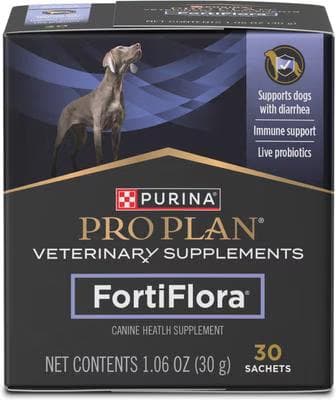
The #1 vet-recommended probiotic for dogs. Daily powder sachets with live probiotics support healthy digestion and firmer stools, and can help dogs coping with diarrhea or GI upset.
Webvet may earn a commission when you click through to Chewy, at no extra cost to you.
Macrocyclic Lactone Toxicity
- Ataxia
- Tremors
- Coma
- Seizures
- Blindness
- Mydriasis
Safety Data
- Sensitive collies tolerated up to 30× heartworm dose orally with no symptoms.
- PH12 caused no adverse effects at up to 5× the recommended dose.
- Young puppies given 3 mg/kg showed only temporary CNS signs that resolved within 24 hours.
Injectable Formulation Cautions
- Rare allergic-type reactions reported but occur at rates similar to vaccines and oral preventives.
- Common reactions for PH12:
Moxi-Doxy Heartworm Adulticide Protocol
- Mostly mild or no respiratory complications.
- Only one dog required hospitalization in field data.
Moxidectin for Dogs and Cats Warnings and Precautions
Use moxidectin under veterinary guidance and observe the following:
- Do not overdose; ML toxicity can be life-threatening.
- Use caution in very young puppies or kittens.
- Dogs with severe neurologic disease may be more sensitive.
- Avoid using multiple ML drugs simultaneously unless directed.
- Monitor MDR1-mutant breeds, though moxidectin is generally safe.
- Report any sudden coughing in heartworm-positive dogs during treatment.
Disclaimer: This information is for educational purposes only and should not replace professional veterinary advice. Always consult your veterinarian before using or combining any medications for your pet.
Frequently Asked Questions (FAQ)
Is moxidectin safer than ivermectin?
Yes. Studies show it has a wider safety margin, especially in MDR1-mutant breeds.
How long does moxidectin last?
Depending on the product, it lasts
1 month to 12 months
.
Can moxidectin treat adult heartworms?
It is used with doxycycline in the
moxi-doxy protocol
, but melarsomine is the gold standard.
Is moxidectin safe for collies?
Yes. Collies tolerated very high doses without side effects.
Does moxidectin prevent all intestinal worms?
Topical and oral combinations cover hookworms, roundworms, whipworms, and tapeworms (when combined with praziquantel).
$65 · no membershipNeed a prescription for Moxidectin?
A licensed vet can assess your pet over video and prescribe Moxidectin online when it's appropriate.
Talk to a vet- Licensed vets
- All 50 states
- same-day Rx
Webvet may earn a commission if you book.

Editor
The Webvet Editorial Team is the in-house group of pet-care editors and writers behind Webvet, operated by Smart Pet Collective. The team researches, writes, and maintains Webvet's pet health, behavior, and medication content. Every article follows a defined editorial process: research from reputable veterinary and scientific sources, careful drafting, mandatory review of medical content by a credentialed veterinarian, and dated publication. Health and medication articles are medically reviewed by a licensed veterinary professional before they go live and are kept current over time.
Veterinarian · BVMS MRCVS
Dr. Pippa Elliott, BVMS, MRCVS, is a veterinarian with nearly 30 years of experience in companion animal practice. Dr. Elliott earned her Bachelor of Veterinary Medicine and Surgery from the University of Glasgow. She was also designated a Member of the Royal College of Veterinary Surgeons. Married with 2 grown-up kids, Dr. Elliott has a naughty Puggle named Poggle, 3 cats and a bearded dragon.


