Afoxolaner for Dogs and Cats

BVMS MRCVS
Medically reviewed by Dr. Pippa Elliott, BVMS MRCVS · Last reviewed

Drug facts
Afoxolaner
Afoxolaner is a systemic, orally administered flea and tick control medication for dogs, given once monthly. It is effective against fleas and multiple tick species, including those associated with Lyme disease.
Treats
 $65 · no membership
Need a prescription for Afoxolaner?
A licensed vet can assess your pet over video and prescribe Afoxolaner online when it's appropriate.
 Talk to a vet
- Licensed vets
- All 50 states
- same-day Rx

Webvet may earn a commission if you book.
What is Afoxolaner for Dogs and Cats
Overview
Afoxolaner is a systemic insecticide and acaricide formulated for oral administration in dogs. After being consumed, it is absorbed into the bloodstream, where fleas and ticks ingest it during feeding. Because it works internally, its effectiveness is not reduced by bathing or swimming.
This medication is best known under the NexGard brand and is widely used in veterinary medicine due to its rapid onset of action and reliable monthly protection. It is effective against multiple tick species, including those associated with Lyme disease, and has demonstrated excellent speed of kill against adult fleas.
Explore more parasite-control medications in our Parasites section.
What Is Afoxolaner for Dogs and Cats Used For
| Condition | Notes |
|---|---|
| Fleas | Kills adult fleas quickly, preventing egg laying. |
| Ticks | Effective against multiple species, including black-legged ticks. |
| Demodectic mange | Used off-label; shown effective in cases of generalized demodicosis. |
| Sarcoptic mange | Used off-label; improves symptoms and clears mites. |
| Flea allergy dermatitis support | Helps eliminate active flea bites that trigger irritation. |
How Afoxolaner for Dogs and Cats Works
Afoxolaner interferes with the nervous system of fleas and ticks by blocking ligand-gated chloride channels, specifically GABA receptors. This causes uncontrolled nerve stimulation that leads to parasite paralysis and death.Because it circulates in the dog’s bloodstream, parasites must bite to be affected, but once they do, death occurs rapidly.
Drug Facts
Afoxolaner is a systemic flea and tick control medication given orally once monthly. It begins working within hours and maintains effectiveness for a full 30 days.
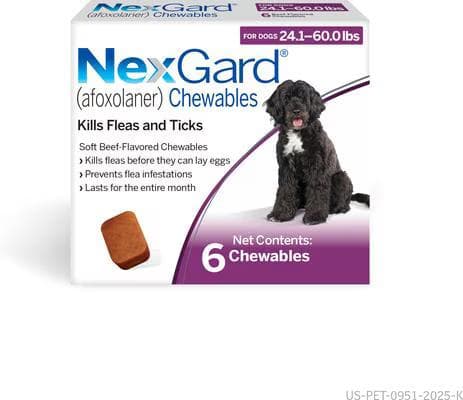
A monthly beef-flavored prescription chew (afoxolaner) that kills fleas before they lay eggs and kills ticks. A popular oral pick for dogs who do better with a chew than a topical.
Webvet may earn a commission when you click through to Chewy, at no extra cost to you.
Common Brands
NexGard
Drug Class
Isoxazoline parasiticide
Substance Classification
Not a controlled medication
Generic Status
Branded formulations only
Availability
Prescription
Available forms
Afoxolaner for Dogs and Cats Dosage Forms
Afoxolaner is available as a chewable oral tablet for dogs. Tablets come in different strengths based on body weight and are flavored for easier administration.
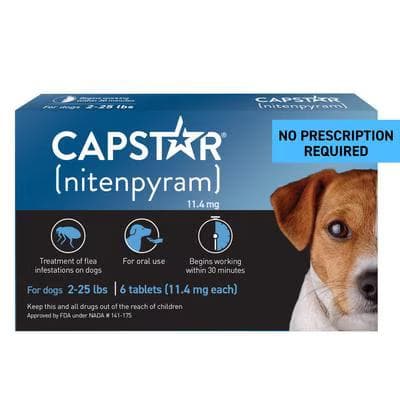
An over-the-counter nitenpyram tablet that starts killing adult fleas within 30 minutes. A fast knockdown for an active infestation, no prescription required, useful alongside a longer-term preventive.
Webvet may earn a commission when you click through to Chewy, at no extra cost to you.
Chewable Tablets (6-pack)
| Group | Price as low as | Price per unit |
|---|---|---|
| Small dog (4–10 lbs) | $120.00 | $20.00 |
| Medium dog (10–24 lbs) | $125.00 | $20.00 |
| Large dog (24–60 lbs) | $130.00 | $21.00 |
| Extra-large (>60 lbs) | $135.00 | $22.00 |
Typical Dosing For Afoxolaner for Dogs and Cats
Afoxolaner is given once monthly, with the tablet strength chosen based on the dog’s weight. It should be administered with food for optimal absorption.
Oral Dosage
| Group | Typical Dose | Notes |
|---|---|---|
| Dogs (all sizes) | 2.5 mg/kg orally once monthly | Standard label dose. |
| Demodex cases (off-label) | 2.5 mg/kg every 2–4 weeks | Used until mites clear and hair regrowth occurs. |
| Sarcoptic mange (off-label) | 2.5 mg/kg monthly × 2–3 months | Reduces clinical signs and mite counts. |
Afoxolaner is not labeled for cats.
Reported side effects
Risks and Warnings for Afoxolaner for Dogs and Cats
Afoxolaner is considered safe for most dogs, but as with other isoxazolines, neurological side effects are possible, especially in dogs with a history of seizures.
Observed Side Effects
- Vomiting
- Diarrhea
- Lethargy
- Itching
- Loss of appetite
These reactions are generally mild and temporary.
Neurologic Concerns
Afoxolaner may cause:
- Tremors
- Ataxia
- Seizures
These events are rare but have been reported, particularly in dogs predisposed to neurologic disease.
Compare coverage choices for your pet, then request a quote directly on Lemonade.
- Check a price for your pet
- Review available coverage choices
- See the terms before you decide
Eligibility, waiting periods, limits and exclusions apply.
Webvet may earn a commission when you click through to Lemonade, at no extra cost to you.
Use in Sensitive Populations
- Safe for puppies 8 weeks and older weighing at least 4 lbs.
- Not evaluated in breeding, pregnant, or lactating dogs.
Afoxolaner for Dogs and Cats Warnings and Precautions
Use afoxolaner carefully and follow veterinary guidance:
- Do not use in dogs with a history of seizures unless cleared by a veterinarian.
- Use with caution in dogs with existing neurologic disorders.
- Store tablets safely away from children and other animals.
- Give the full monthly dose for consistent protection.
- Report any persistent vomiting, tremors, or unusual behavior to your veterinarian.
Disclaimer: This information is for educational purposes only and should not replace professional veterinary advice. Always consult your veterinarian before using or combining any medications for your pet.
Frequently Asked Questions (FAQ)
How fast does afoxolaner start working?
It begins killing fleas within hours of ingestion.
Does afoxolaner require the parasite to bite?
Yes. Fleas and ticks must feed to ingest the medication.
Can afoxolaner be given with other medications?
Typically yes, but always check with your veterinarian to avoid interactions.
Is afoxolaner safe for dogs with allergies?
Most dogs tolerate it well, but monitor for stomach upset or itching after the first dose.
Does afoxolaner kill flea eggs?
It kills adult fleas before they can lay eggs, stopping the flea life cycle.
Related Medications & Supplements
Dogs treated for fleas and ticks may also use other parasite control medications for broader protection or faster relief. These related treatments are commonly used alongside products like afoxolaner.
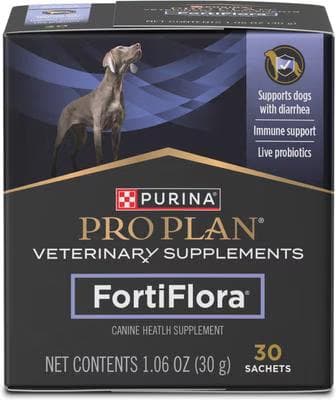
The #1 vet-recommended probiotic for dogs. Daily powder sachets with live probiotics support healthy digestion and firmer stools, and can help dogs coping with diarrhea or GI upset.
Webvet may earn a commission when you click through to Chewy, at no extra cost to you.
- Fluralaner - long lasting oral flea and tick medication
- Selamectin - topical parasite preventive covering fleas, mites, and some worms
- Nitenpyram - fast acting oral flea treatment providing rapid kill
- Moxidectin - topical or injectable broad spectrum parasite control
- Permethrin - topical flea and tick preventive used in combination products
References
- Chávez, F. (2016). Case Report of Afoxolaner Treatment for Canine Demodicosis in Four Dogs Naturally Infected with Demodex Canis. Available at: https://jarvm.com/articles/Vol14Iss2/Vol14%20Iss2%20Chavez.pdf
- Dodds, W. J. & Kimball, J. P. (2021). Updated Summary on Use and Safety of Flea and Tick Preventives for Animals. Journal of Veterinary Medicine & Surgery, 5 (S2): 005. Available at: https://www.primescholars.com/articles/updated-summary-on-use-and-safety-of-flea-and-tick-preventives-for-animals-94239.html
- Drag, M., Tielemans, E. & Mitchell, E. (2022). Safety of oral afoxolaner formulated with or without milbemycin oxime in homozygous MDR1‐deficient collie dogs. Journal of Veterinary Pharmacology and Therapeutics, 45 (4), pp. 373–379. doi: 10.1111/jvp.13064.
- Machado, M. A., Campos, D. R., Lopes, N. L., et al. (2019). Efficacy of afoxolaner in the flea control in experimentally infested cats. Revista Brasileira de Parasitologia Veterinária, 28 (4), pp. eS1984-29612019064. doi: 10.1590/S1984-29612019064.
- Panarese, R., Iatta, R., Mendoza‑Roldan, J. A., Zatelli, A., Beugnet, F. & Otranto, D. (2021). Efficacy of afoxolaner (NexGard®) in preventing the transmission of Leishmania infantum and Dirofilaria immitis to sheltered dogs in a highly endemic area. Parasites & Vectors, 14, p. 381. doi: 10.1186/s13071-021-04883-3.
- Pfister, K. & Armstrong, R. (2016). Systemically and cutaneously distributed ectoparasiticides: a review of the efficacy against ticks and fleas on dogs. Parasites & Vectors, 9, p. 436. doi: 10.1186/s13071-016-1719-7.
- U.S. Food and Drug Administration. (2013). FREEDOM OF INFORMATION SUMMARY ORIGINAL NEW ANIMAL DRUG APPLICATION NADA 141-406 NEXGARD Afoxolaner Chewable Tablet Dogs. Available at: https://animaldrugsatfda.fda.gov/adafda/app/search/public/document/downloadFoi/14165
- Walden, L. A. (2016). Effectiveness of Fluralaner and Afoxolaner Against Flea Infestations in Dogs. dvm360, 5 August. Available at: https://www.dvm360.com/view/effectiveness-of-fluralaner-and-afoxolaner-against-flea-infestations-in-dogs
$65 · no membershipNeed a prescription for Afoxolaner?
A licensed vet can assess your pet over video and prescribe Afoxolaner online when it's appropriate.
Talk to a vet- Licensed vets
- All 50 states
- same-day Rx
Webvet may earn a commission if you book.

Editor
The Webvet Editorial Team is the in-house group of pet-care editors and writers behind Webvet, operated by Smart Pet Collective. The team researches, writes, and maintains Webvet's pet health, behavior, and medication content. Every article follows a defined editorial process: research from reputable veterinary and scientific sources, careful drafting, mandatory review of medical content by a credentialed veterinarian, and dated publication. Health and medication articles are medically reviewed by a licensed veterinary professional before they go live and are kept current over time.
Veterinarian · BVMS MRCVS
Dr. Pippa Elliott, BVMS, MRCVS, is a veterinarian with nearly 30 years of experience in companion animal practice. Dr. Elliott earned her Bachelor of Veterinary Medicine and Surgery from the University of Glasgow. She was also designated a Member of the Royal College of Veterinary Surgeons. Married with 2 grown-up kids, Dr. Elliott has a naughty Puggle named Poggle, 3 cats and a bearded dragon.


