Permethrin for Dogs

BVMS MRCVS
Medically reviewed by Dr. Pippa Elliott, BVMS MRCVS · Last reviewed

Drug facts
Permethrin
Permethrin is a topical pyrethroid insecticide used in dogs for flea and tick prevention. Applied as a spot-on solution, it forms a protective barrier across the skin and coat to kill and repel external parasites.
Treats
 $65 · no membership
Need a prescription for Permethrin?
A licensed vet can assess your dog over video and prescribe Permethrin online when it's appropriate.
 Talk to a vet
- Licensed vets
- All 50 states
- same-day Rx
Webvet may earn a commission if you book.
What is Permethrin for Dogs
Overview
Permethrin is a pyrethroid insecticide that mimics natural compounds found in chrysanthemum flowers. It has been widely used in topical parasite preventives for dogs because of its strong ability to kill and repel external parasites. When applied as a spot-on solution, it spreads across the skin and coat to form a protective barrier.
Veterinarians often use permethrin in combination products that include other active ingredients, giving dogs broad-spectrum protection. It is important to remember that Permethrin is safe for dogs but toxic to cats, meaning it should never be used on or around cats.
Explore more parasite-control medications in our Parasites section.
What Is Permethrin for Dogs Used For
Fluralaner is mainly used for flea and tick control in dogs and cats.
| Condition | Notes |
|---|---|
| Flea infestations | Helps kill adult fleas and repels new fleas from landing on the dog. |
| Tick protection | Effective against common ticks such as deer ticks, American dog ticks, and brown dog ticks. |
| Mosquito and fly repellent | Reduces insect bites and prevents mosquito-borne diseases. |
| Lice infestations | Helps eliminate chewing lice on dogs. |
How Permethrin for Dogs Works
Permethrin works by disrupting the nervous system of insects, causing paralysis and death. It acts on contact, meaning parasites do not have to bite the dog to be affected. Once applied, the medication distributes across the skin surface through natural skin oils, creating a month-long protective layer.
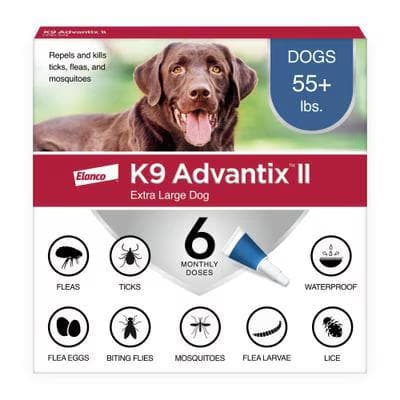
A monthly topical for dogs over 55 lbs that repels and kills ticks, fleas, and mosquitoes. Repelling ticks before they bite is a useful layer in heavy tick season.
Webvet may earn a commission when you click through to Chewy, at no extra cost to you.
Drug Facts
Permethrin is a topical insecticide used exclusively in dogs for parasite prevention. It is often combined with ingredients like imidacloprid or pyriproxyfen to expand coverage. The medication protects against multiple insects, works on contact, and offers long-lasting surface activity.
Common Brands
K9 Advantix II, Vectra 3D
Drug Class
Pyrethroid insecticide
Substance Classification
Not a controlled medication
Generic Status
Generics widely available
Availability
Over the counter for dogs only
Available forms
Permethrin for Dogs Dosage Forms
Permethrin is available mainly as a topical spot-on solution for dogs. Each tube comes premeasured based on body weight, with monthly application recommended. The liquid volume of each tube is standardized by the manufacturer.
Compare coverage choices for your pet, then request a quote directly on Lemonade.
- Check a price for your pet
- Review available coverage choices
- See the terms before you decide
Eligibility, waiting periods, limits and exclusions apply.
Webvet may earn a commission when you click through to Lemonade, at no extra cost to you.
Topical Spot On Solutions
| Qty/Size | Price as low as | Price per unit |
|---|---|---|
| 0.4 mL | $13.00 | $32.50 |
| 1.0 mL | $25.00 | $15.00 |
| 2.5 mL | $17.00 | $6.80 |
| 4.0 mL | $19.00 | $4.75 |
Typical Dosing For Permethrin for Dogs
Permethrin is normally applied once monthly for continuous protection. The entire contents of the tube should be applied directly to the skin, usually between the shoulder blades or in multiple spots along the back for large dogs. Dosing depends strictly on the dog's weight.
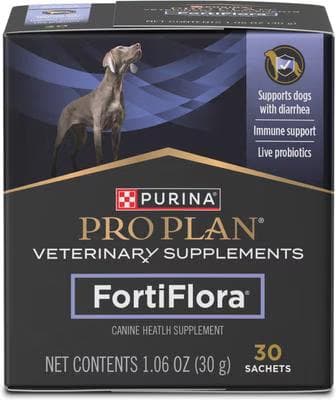
The #1 vet-recommended probiotic for dogs. Daily powder sachets with live probiotics support healthy digestion and firmer stools, and can help dogs coping with diarrhea or GI upset.
Webvet may earn a commission when you click through to Chewy, at no extra cost to you.
Topical Dosage
| Group | Typical Dose | Notes |
|---|---|---|
| Small dogs (under 10 lb) | Entire 0.4 to 0.8 mL tube | Apply at one spot on the skin. |
| Medium dogs (11 to 20 lb) | Entire 1.0 to 1.6 mL tube | Apply at one or two skin locations. |
| Large dogs (21 to 55 lb) | Entire 2.5 to 3.6 mL tube | Apply in two to three locations along back. |
| Extra large dogs (over 55 lb) | Entire 4.0 to 8.0 mL tube | Multiple application points recommended. |
Reported side effects
Risks and Warnings for Permethrin for Dogs
Permethrin is considered safe for dogs when used as directed, but misuse can cause side effects. The most serious risk is toxicity to cats, who cannot metabolize pyrethroids. Exposure may occur through close contact with treated dogs, shared bedding, or accidental application.
Dogs may experience mild skin irritation after application. Rarely, neurological signs like tremors or drooling can occur if the dose is too high or if the dog ingests the product. Seek veterinary care immediately if severe symptoms appear.
Cat Toxicity
Because cats are extremely sensitive to permethrin, even small exposures can cause shaking, seizures, or collapse. Cats in the household must be kept away from dogs until the application site is dry.
Permethrin for Dogs Warnings and Precautions
Use these warnings and precautions when handling or applying permethrin:
- Do not use on cats.
- Keep cats away from treated dogs until fully dry.
- Apply only the full tube meant for your dog's weight.
- Avoid contact with the dog's eyes or mouth.
- Wash hands thoroughly after use.
- Do not allow children to touch the application site right after treatment.
- Store tubes in a cool, dry place out of reach of pets.
Disclaimer: This information is for educational purposes only and should not replace professional veterinary advice. Always consult your veterinarian before using or combining any medications for your pet.
Frequently Asked Questions (FAQ)
How long does permethrin last on dogs?
About 30 days per application.
Is permethrin waterproof?
Yes, after it dries, but bathing immediately after application may weaken its effect.
Can I use permethrin products on cats?
No, it is extremely dangerous for cats.
How fast does permethrin work?
It begins killing and repelling parasites within several hours.
Can permethrin be used with other flea medications?
Only under veterinary guidance, especially with oral flea preventives.
Related Medications & Supplements
Dogs receiving permethrin for flea and tick control may also benefit from additional parasite-targeting treatments. These medications are commonly used to manage or prevent infestations.
Webvet may earn a commission when you click through to Chewy, at no extra cost to you.
- Afoxolaner – oral insecticide used to kill fleas and ticks
- Fluralaner – long-lasting flea and tick control chew or topical
- Nitenpyram – fast-acting oral flea killer providing rapid relief
- Moxidectin – topical or injectable parasiticide for internal and external parasites
- Selamectin – topical parasite prevention covering fleas, mites, and some internal worms
References
- Boland, L.A. & Angles, J.M. (2010). Feline permethrin toxicity: Retrospective study of 42 cases. Journal of Feline Medicine and Surgery, 12(2), 61–71. Available at: https://pubmed.ncbi.nlm.nih.gov/19897392/
- Bossard, R.L., Hinkle, N.C. & Rust, M.K. (1998). Review of Insecticide Resistance in Cat Fleas (Siphonaptera: Pulicidae). Journal of Medical Entomology, 35(4), 415–422. Available at: https://pubmed.ncbi.nlm.nih.gov/9701921/
- Ceva Santé Animale (2018). ANNEX I SUMMARY OF PRODUCT CHARACTERISTICS: Vectra 3D spot-on solution for dogs. European Medicines Agency (EMA). Available at: https://ec.europa.eu/health/documents/community-register/2013/20131204127161/anx_127161_en.pdf
- Di Pietro, S., Falcone, A., Arfuso, F., Pennisi, M., Piccione, G. & Giudice, E. (2022). Treatment of Permethrin Toxicosis in Cats by Intravenous Lipid Emulsion. Toxics, 10(4), 165. Available at: https://pubmed.ncbi.nlm.nih.gov/35448426/
- Endris, R.G., Hair, J.A., Katz, T.L., Zobre, E., Pennington, R.G. & Meyer, J.A. (2002). Efficacy of three dose volumes of topically applied 65% permethrin against Ctenocephalides felis and Rhipicephalus sanguineus on dogs weighing 30 kg or more. Veterinary Therapeutics, 3(4), 435-440. Available at: https://pubmed.ncbi.nlm.nih.gov/12584681/
- Ibarra-Velarde, F., Vera-Montenegro, Y., Alcala-Canto, Y., Flores-Ramos, M. & Saldaña-Hernández, N. (2019). Comparative Efficacy of Three Commercial Ectoparasiticides against Fleas in Naturally Infested Dogs. Pharmacology & Pharmacy, 10, 234–243. Available at: https://www.scirp.org/journal/paperinformation?paperid=92446
- Linnett, P.J. (2008). Permethrin toxicosis in cats. Australian Veterinary Journal, 86(1/2), 32–35. Available at: https://pubmed.ncbi.nlm.nih.gov/18271821/
- Pfister, K. & Armstrong, R. (2016). Systemically and cutaneously distributed ectoparasiticides: a review of the efficacy against ticks and fleas on dogs. Parasites & Vectors, 9(436). Available at: https://link.springer.com/article/10.1186/s13071-016-1719-7
- Vega, N.M., Case, K.M.,YES Gupta, R.C., Doss, R.B. & Canerdy, T.D. (2016). Safety of Permethrin and Pyriproxyfen in Dogs Treated With VetGuard Plus®. Journal of Veterinary Science & Animal Husbandry, 4(3), 306. Available at: https://www.researchgate.net/publication/314070367_Safety_of_Permethrin_and_Pyriproxyfen_in_Dogs_Treated_With_VetGuard_PlusR
$65 · no membershipNeed a prescription for Permethrin?
A licensed vet can assess your dog over video and prescribe Permethrin online when it's appropriate.
Talk to a vet- Licensed vets
- All 50 states
- same-day Rx
Webvet may earn a commission if you book.

Editor
The Webvet Editorial Team is the in-house group of pet-care editors and writers behind Webvet, operated by Smart Pet Collective. The team researches, writes, and maintains Webvet's pet health, behavior, and medication content. Every article follows a defined editorial process: research from reputable veterinary and scientific sources, careful drafting, mandatory review of medical content by a credentialed veterinarian, and dated publication. Health and medication articles are medically reviewed by a licensed veterinary professional before they go live and are kept current over time.
Veterinarian · BVMS MRCVS
Dr. Pippa Elliott, BVMS, MRCVS, is a veterinarian with nearly 30 years of experience in companion animal practice. Dr. Elliott earned her Bachelor of Veterinary Medicine and Surgery from the University of Glasgow. She was also designated a Member of the Royal College of Veterinary Surgeons. Married with 2 grown-up kids, Dr. Elliott has a naughty Puggle named Poggle, 3 cats and a bearded dragon.


