Pyrantel Pamoate for Dogs and Cats: Dosage Chart and Side Effects
Pyrantel Pamoate for Dogs and Cats explained: see the vet-reviewed dosage-by-weight chart, side effects, safety warnings, cost, and when to call your veterinarian.

BVMS MRCVS
Medically reviewed by Dr. Pippa Elliott, BVMS MRCVS · Last reviewed

Drug facts
Pyrantel Pamoate
Pyrantel pamoate is a broad-spectrum anti-helminthic (dewormer) used in dogs and cats to treat gastrointestinal worms, particularly hookworms and roundworms. It is often used in combination dewormers for broader parasite control.
Treats
 $65 · no membership
Need a prescription for Pyrantel Pamoate?
A licensed vet can assess your pet over video and prescribe Pyrantel Pamoate online when it's appropriate.
 Talk to a vet
- Licensed vets
- All 50 states
- same-day Rx

Webvet may earn a commission if you book.
Pyrantel pamoate for dogs should only be used under a veterinarian-confirmed plan for that animal. Pyrantel pamoate is a dewormer that veterinarians use mainly against roundworms and hookworms in dogs and cats. The correct amount depends on the animal's current body weight, species, parasite, and the concentration and active ingredients in the exact product. Confirm the dose with your veterinarian before giving any number from a chart, because two bottles can contain very different amounts per milliliter and combination tablets follow their own labels.
Pyrantel Pamoate Dosage for Dogs and Cats by Weight
When considering pyrantel pamoate for dogs, use the veterinarian-confirmed product and plan for that animal. The veterinary doses in the cited clinical references are 5 mg/kg orally for cats and, for a named dog combination product, 14.4 mg/kg of pyrantel embonate. These figures are not interchangeable. The prescription label or veterinarian must identify which form applies before an owner converts body weight into tablets or milliliters.
| Patient and weight basis | Veterinary dose framework | What the owner must confirm |
|---|---|---|
| Cat, any body weight | 5 mg/kg orally | Current weight, exact suspension or tablet concentration, age, health, and repeat schedule |
| Dog receiving the named Drontal Tasty combination | 14.4 mg/kg pyrantel embonate as one component of the combination | Exact product label, the other active ingredients, current weight, and the prescribed tablet count |
| Puppy or kitten | No amount should be inferred from age alone | Current measured weight and a veterinary deworming schedule |
Confirm with your vet before giving any dose. Do not convert milligrams to milliliters unless the product's concentration is legible and the clinic has confirmed the calculation.
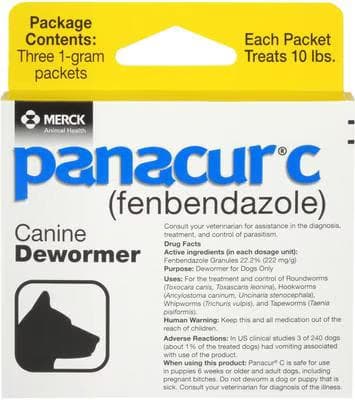
Broad-spectrum dog dewormer (fenbendazole) that treats roundworms, hookworms, whipworms, and Taenia tapeworms. Three daily 1-gram packets dosed by weight.
Webvet may earn a commission when you click through to Chewy, at no extra cost to you.

The chart is a framework for checking a veterinary instruction, not a home-prescribing tool. A liquid labeled with milligrams per milliliter cannot be measured safely from a tablet instruction. A product that combines pyrantel with praziquantel, febantel, or another dewormer must be dosed from that combination's label, not from a pyrantel-only chart.
Before the first dose, write down:
- The pet's weight measured recently, not an estimate from months ago.
- The full product name and every active ingredient.
- The concentration, such as milligrams per milliliter, or the strength per tablet.
- The amount prescribed for one dose.
- Whether the dose is repeated and on which date.
- Whether a fecal test or follow-up check is planned.
Do not give extra medication because worms are still visible right after treatment. Do not repeat a dose early because a puppy has a pot belly or diarrhea. Those signs can come from parasites, but they can also come from other illness, and pyrantel does not treat every worm.
What Worms Does Pyrantel Treat?
Pyrantel pamoate acts at the neuromuscular junction of susceptible intestinal worms. It produces rigid paralysis, so the parasites lose their grip and are expelled through the digestive tract. Veterinarians most often use it against roundworms and hookworms. It is commonly included in puppy and kitten deworming protocols because these parasites are frequent in young animals, but the schedule still belongs to the veterinary team.
- 1Pyrantel is prescribed mainly for susceptible roundworms and hookworms.
- 2Pyrantel alone does not treat whipworms.
- 3A product needs praziquantel or another appropriate active ingredient to treat tapeworms.
- 4A veterinary diagnosis or deworming protocol controls the product, dose, and repeat timing.
- 5Pyrantel is not a substitute for fecal testing or diagnosis when signs continue.
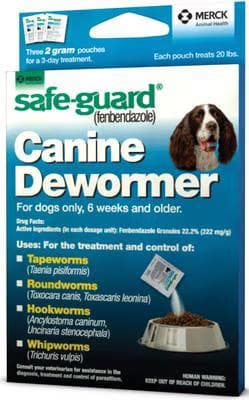
Fenbendazole 3-day dewormer that treats tapeworms (Taenia), roundworms, hookworms, and whipworms. Over the counter, for dogs 6 weeks and older.
Webvet may earn a commission when you click through to Chewy, at no extra cost to you.

Does pyrantel treat roundworms?
Yes. Roundworms are a core pyrantel target. The response can vary with worm species, burden, dose, and resistance. A dog or cat can also carry more than one parasite, so clearing roundworms does not prove that all intestinal parasites are gone.
Why did the vet give my dog pyrantel pamoate?
The most likely reason is treatment or routine control of roundworms or hookworms. Puppies may acquire roundworms before birth or through nursing, and hookworms can cause intestinal blood loss. A veterinarian may choose pyrantel alone when those worms are the target or use a combination product when broader coverage is needed.
Do you give pyrantel three days in a row?
Not as a universal rule. The number and spacing of doses depend on the product, parasite, age, and exposure risk. Cited veterinary guidance supports repeat treatment in some protocols but not a single three-day schedule for every dog or cat. Follow the written label and call the clinic if the next date is unclear.
Do tapeworms come out after deworming?
Tapeworm segments may be seen around the anus or in bedding, but pyrantel alone is not a tapeworm treatment. A combination product must contain an active ingredient that targets tapeworms, commonly praziquantel. After effective treatment, whole worms are not always visible because parasite material may be digested. Persistent rice-like segments justify a veterinary call and a flea-control review.
Pyrantel also has important limits:
- It has no activity against whipworms when used alone.
- Tapeworm coverage depends on another active ingredient.
- Documented hookworm resistance can reduce effectiveness in some regions and dog populations.
- Reinfection can occur when eggs or larvae remain in the environment.
- Vomiting or diarrhea may have another cause even when worms are present.
The right follow-up is not always another dose. The veterinarian may recommend a fecal examination, a different dewormer, treatment for anemia or dehydration, or environmental control.
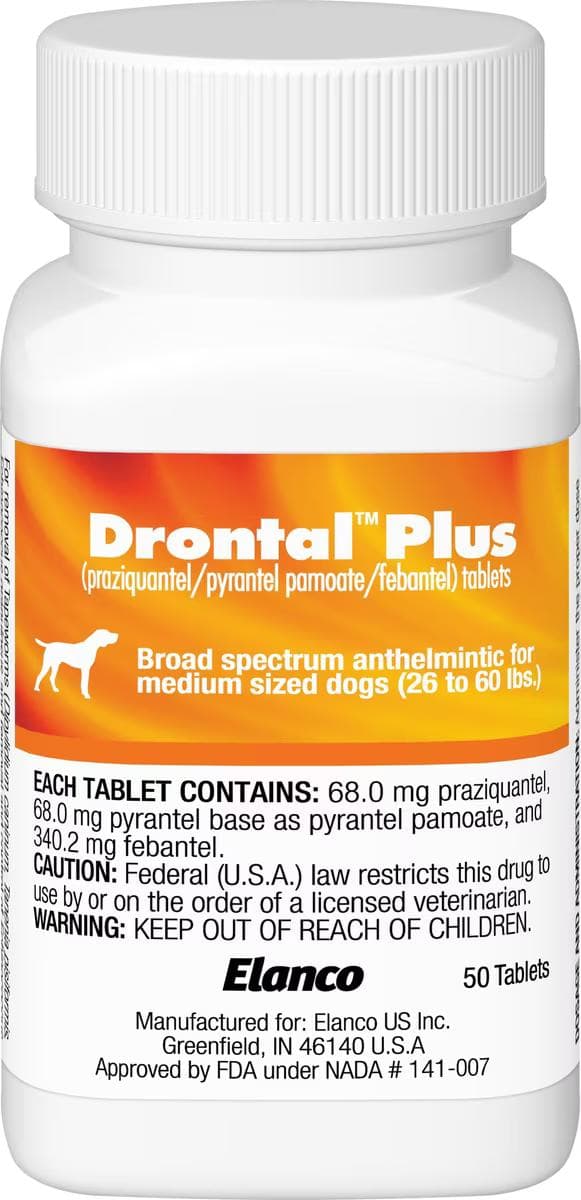
Broad-spectrum prescription dewormer (praziquantel, pyrantel, febantel) that clears tapeworms, roundworms, hookworms, and whipworms in one dose. Prescription required.
Webvet may earn a commission when you click through to Chewy, at no extra cost to you.
Pyrantel Side Effects, Overdose, and Safety
Pyrantel is generally well tolerated when the correct product is given at the correct dose. Mild vomiting is the main side effect documented in cited veterinary guidance. Digestive upset can also reflect the parasite burden or another ingredient in a combination product, so report the timing and the full product name rather than assuming pyrantel caused every sign.
How safe is pyrantel pamoate for dogs? It has a wide history of veterinary use and is often well tolerated, but safety depends on accurate weight, the formulation, other active ingredients, and the animal's health. Use extra caution when the pet is very young, debilitated, pregnant, nursing, receiving other medication, or showing significant vomiting, diarrhea, pale gums, or lethargy.
The most useful safety check is the packaging:
- Is it labeled for the correct species?
- Is it pyrantel alone or a combination dewormer?
- Does the concentration match the clinic's written instruction?
- Has another household member already given a dose?
- Is the expiration date current?
- Can you account for every tablet or the amount missing from the bottle?
Resistance is a different safety and effectiveness issue. Giving more pyrantel does not reliably solve a resistant hookworm infection and may expose the pet to an unnecessary dose. Veterinarians use fecal testing and treatment history to decide whether another drug is needed.


Broad-spectrum chewable dewormer (praziquantel, pyrantel, febantel) that treats tapeworms, roundworms, hookworms, and whipworms in one course. For large dogs 45 lbs and over.
Webvet may earn a commission when you click through to Chewy, at no extra cost to you.
Pyrantel Cost and Prescription Options
Pyrantel can be inexpensive, but the honest cost is not just the shelf price. Earlier veterinary pricing references recorded example prices of $8 for 15 mL, $12 for 30 mL, and $20 for 60 mL liquid bottles, plus $15 for six tablets and $35 for twenty tablets. Prices change by concentration, active ingredients, pharmacy, region, and date. A cheaper bottle can cost more per effective dose if its concentration is lower or if it does not cover the parasite found.
Some pyrantel formulations are sold over the counter, while combination products or treatment plans may require a prescription. Veterinary involvement still matters because a store shelf cannot identify the parasite, assess anemia, or confirm that treatment worked. The visit or fecal test may be the larger immediate expense, but it can prevent paying for the wrong dewormer repeatedly.
When comparing access, ask for:
- The full course cost, including any repeat dose.
- Whether fecal testing is included or billed separately.
- The concentration and total number of usable doses in a liquid.
- Whether a combination product is necessary.
- The follow-up plan if worms or signs continue.
Avoid a product with an unreadable concentration, missing lot information, or directions for another species. Do not buy a livestock formulation and improvise a companion-animal dose.
Choosing a Dewormer for Your Dog
Pyrantel is one tool, not the universal best dewormer. Choosing among pyrantel, fenbendazole, praziquantel combinations, and preventive products depends on the parasite and the dog's history. WebVet's dog dewormer guide covers the product-selection and comparison decision. For cat-specific product choices, see the cat dewormer guide.
This page keeps the boundary deliberately narrow: pyrantel treats susceptible roundworms and hookworms, but product picks and broad-spectrum comparisons belong to those hubs. A veterinarian should select the treatment when the pet is ill, parasites persist, or resistance is possible.
Pyrantel Pamoate for Dogs and Cats FAQs
Frequently Asked Questions
Can I touch my dog if it has tapeworms?
You can touch a dog that has tapeworms, but use normal hygiene around the dog, stool, and bedding. Wash your hands after handling them, remove feces promptly, and keep children from contaminated areas. Tapeworm transmission depends on the species. The common flea tapeworm generally requires swallowing an infected flea, so effective flea control matters. Ask your veterinarian about the parasite identified rather than assuming every visible segment has the same risk.
How long after deworming a dog are the worms gone?
After deworming a dog, susceptible worms may be paralyzed and passed, but there is no single time when every worm is guaranteed gone. Owners may not see worms leave. Eggs or larvae in the environment can lead to reinfection, and some protocols require a repeat dose. If vomiting, diarrhea, a pot belly, weight loss, pale gums, or visible worms continue, contact the veterinarian for a fecal check instead of repeating medication on your own.
What are the first signs that you have a tapeworm?
The first signs of a tapeworm in a dog or cat may be rice-like segments around the anus, on stool, or in bedding, although some pets have no obvious signs. Pyrantel alone does not treat tapeworms. A veterinarian should identify the likely species, select a tapeworm-active medicine, and address flea exposure when relevant. If this question concerns a person, contact a human medical professional rather than using veterinary medication.
$65 · no membershipNeed a prescription for Pyrantel Pamoate?
A licensed vet can assess your pet over video and prescribe Pyrantel Pamoate online when it's appropriate.
Talk to a vet- Licensed vets
- All 50 states
- same-day Rx
Webvet may earn a commission if you book.

Editor
The Webvet Editorial Team is the in-house group of pet-care editors and writers behind Webvet, operated by Smart Pet Collective. The team researches, writes, and maintains Webvet's pet health, behavior, and medication content. Every article follows a defined editorial process: research from reputable veterinary and scientific sources, careful drafting, mandatory review of medical content by a credentialed veterinarian, and dated publication. Health and medication articles are medically reviewed by a licensed veterinary professional before they go live and are kept current over time.
Veterinarian · BVMS MRCVS
Dr. Pippa Elliott, BVMS, MRCVS, is a veterinarian with nearly 30 years of experience in companion animal practice. Dr. Elliott earned her Bachelor of Veterinary Medicine and Surgery from the University of Glasgow. She was also designated a Member of the Royal College of Veterinary Surgeons. Married with 2 grown-up kids, Dr. Elliott has a naughty Puggle named Poggle, 3 cats and a bearded dragon.


