Rodent Ulcers in Cats: Causes, Treatment, and Recurrence
Learn what an indolent upper-lip ulcer can look like, why other mouth sores need a different diagnosis, and how treatment, feeding support, and follow-up fit together.

BVMS MRCVS
Medically reviewed by Dr. Pippa Elliott, BVMS MRCVS · Last reviewed

This article contains affiliate links. Webvet may earn a commission when you buy through them, at no extra cost to you.
Rodent ulcers in cats are usually called indolent ulcers: inflammatory lesions most often found on the upper lip. Despite the name, they are not caused by a rodent bite. They belong to a group of inflammatory reaction patterns called the eosinophilic granuloma complex. A similar-looking lip sore still needs veterinary diagnosis because infection, injury, and other diseases can resemble it.
Arrange an examination for a new or persistent lip ulcer. Seek prompt advice if your cat is struggling to eat, bleeding, drooling markedly, or becoming unwell. Treatment should address the lesion and investigate what is driving it, rather than repeatedly suppressing the appearance without a follow-up plan.
What is a rodent ulcer in a cat?
- 1An upper-lip lesion may be an indolent ulcer, but location and appearance do not establish the diagnosis.
- 2Treatment may involve inflammation, infection, and allergy investigation. The right combination depends on the individual findings.
- 3Recurrence is a reason to review the underlying cause and treatment response, not simply restart leftover medicine.
A rodent ulcer can affect one side of the upper lip or both sides, often near an upper canine tooth. Ulceration means a break in the surface tissue; the area may look red, swollen, crusted, or have a raised edge. Early changes can be subtle. Many cats show little obvious discomfort, but that does not mean the sore should be ignored.
For a planned appointment, use secure transport sized to your cat. The Frisco Travel Safety Dog & Cat Carrier, Medium is one option. Bring photographs showing changes over time if they can be taken without handling the sore. Keep the food and medicine history ready, and do not delay urgent care to buy new equipment.

Prepare secure transport for a planned examination. Check the carrier dimensions against your cat and bring the treatment and feeding history.
Webvet may earn a commission when you click through to Chewy, at no extra cost to you.
Lip sores that need a veterinary exam
Not every mouth ulcer is a rodent ulcer. A sore on the tongue, lower or bottom lip, chin, throat, or deeper inside the mouth may involve a different process. Even an upper-lip lesion can have another explanation. Do not label a swollen lip or a sore near the nose from its location alone, or assume an online picture rules out a tumor.
Record voluntary eating while arranging the examination. A shallow washable bowl such as the OurPets Durapet Premium Stainless Steel Bowl, Small can make portions and leftovers easy to check. Its 0.75-cup capacity is not a prescribed meal size. Changing the bowl will not treat the lesion or make difficulty swallowing safe to watch at home.
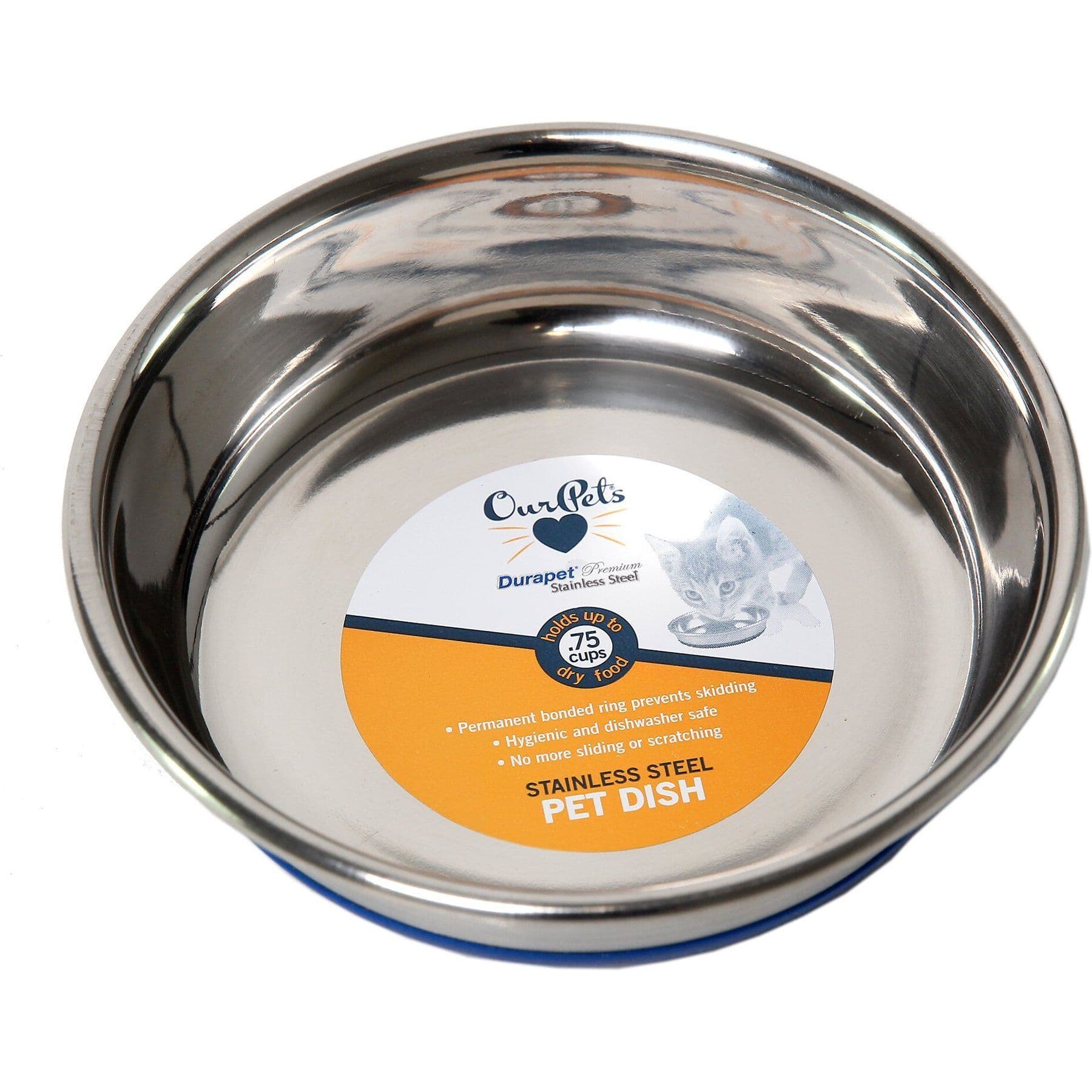
Use a washable shallow bowl to check portions and leftovers. The linked small size holds 0.75 cups; it does not prescribe a meal size.
Webvet may earn a commission when you click through to Chewy, at no extra cost to you.
Why the differential diagnosis matters
Mouth ulcers can accompany dental or oral inflammation, trauma, infection, and systemic illness. Kidney disease can cause oral problems in an unwell cat, and viral illness may also need investigation in the right clinical context. FIV status, herpesvirus history, or an upper respiratory infection does not prove that a particular lip lesion has the same cause. Tell the veterinarian about those conditions rather than treating the sore independently.

Photo 1: Noah's Arkive contributors Latimer, Harrington, Vtscharner, Prestwood and Luginbuhl, via Pathology and Ponies, CC BY-SA 4.0. This documented upper-lip example illustrates a possible appearance, not every form of mouth ulcer. A photograph cannot identify the cause of a different cat's sore.
Our stomatitis-in-cats guide explains a different inflammatory mouth condition. General mouth-ulcer photographs cannot reliably distinguish stomatitis, an indolent ulcer, a tongue injury, or a cancerous lesion. Pain, bleeding, and reduced intake also need assessment even though a classic indolent ulcer may appear surprisingly comfortable.
A confirmed indolent ulcer is not usually a life-threatening diagnosis by itself. The risk comes from the actual disease, complications, and effects on eating and wellbeing. Asking whether rodent ulcers can kill cats should lead back to those concrete findings: a cat who cannot eat or is deteriorating needs care, regardless of the label applied to the lip.
Causes and the eosinophilic granuloma complex
The eosinophilic granuloma complex describes related inflammatory patterns, including indolent ulcers, eosinophilic plaques, and eosinophilic granulomas. Eosinophils are a type of white blood cell involved in these reactions. Recognizing the pattern does not by itself reveal the trigger. The Merck Veterinary Manual describes the relationship between these lesions and allergic disease.
Possible contributors to investigate include:
- Flea-bite hypersensitivity or other insect-related reactions.
- Food-responsive allergic disease.
- Environmental allergy.
- Secondary infection that may complicate the lesion.
Rodent ulcers are not ordinarily considered contagious between cats or from cats to people. A different infectious disease can resemble one, which is another reason to confirm the diagnosis. Stress is not a diagnosis for every recurrent ulcer, and neither a rodent encounter nor a particular food brand can be assumed to explain the sore without evidence.
Bring information about all household animals and their parasite prevention. An indoor cat can still need appropriate flea control, and a brief inspection without finding fleas does not rule out flea allergy. Our guide to finding and managing fleas on cats covers that separate practical task. Use only products appropriate for the species and the veterinary plan.
 $65 · no membership
Is your cat's itching or skin issue getting worse?
A licensed vet can examine your cat over video and prescribe treatment online when it's appropriate.
 Talk to a vet
- Licensed vets
- All 50 states
- same-day Rx
Webvet may earn a commission if you book.
How vets confirm the diagnosis
The clinician examines the lips, the rest of the mouth, and the skin, then selects tests from the history and findings. Cytology examines collected cells and can help assess inflammation or bacteria. A biopsy for histopathology may be needed to distinguish an indolent ulcer from another lesion, particularly when the appearance is unusual, the diagnosis is uncertain, or response to treatment is poor.
A veterinary dermatologist's review explains why a characteristic appearance should prompt investigation rather than end it. Relevant alternatives can include infection, trauma, and cancer such as squamous cell carcinoma. Antibiotic selection or duration may be guided by the lesion and testing; an antibiotic is not automatically needed for every red lip.
Ask what each step is intended to establish:
- Does the examination suggest an indolent ulcer or another oral lesion?
- Is there evidence of secondary infection, and would culture change treatment?
- Is a biopsy recommended, and what would its result change?
- Which allergy investigations should begin now, and how will their results be judged?
Keep previous treatment names and dates, including short-lived improvements and adverse effects. Our guide to how vets diagnose cat skin problems explains the role of sampling and examination. A response to a medicine can guide the next decision, but temporary improvement does not always establish the original cause.
Treatment and feeding support
Treatment is selected for the individual lesion and underlying problem. The clinician may use anti-inflammatory or immune-modulating medication, treat a confirmed or clinically relevant infection, and address parasites or allergy. Glucocorticoids and ciclosporin, including feline Atopica when appropriate, have different risks and monitoring needs. Do not copy a dose or repeat an old prescription because a new sore looks familiar.
During a prescribed food trial, preventing access to another cat's meal can be important. The SureFeed Microchip Small Dog & Cat Feeder is one option when the veterinary plan requires individual food access. Introduce it gradually and confirm the intended cat eats comfortably. It does not identify an allergy or prevent every accidental treat or food exposure.
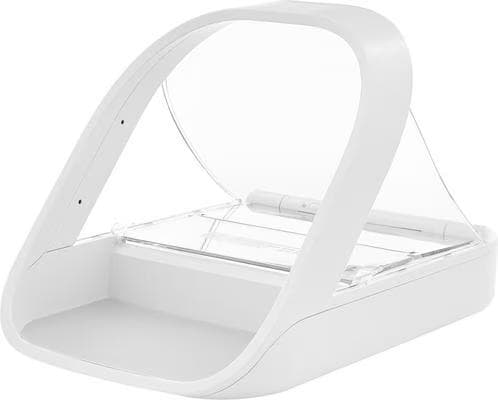
Manage individual meal access during a veterinarian-directed food trial. Introduce the feeder gradually and verify comfortable eating.
Webvet may earn a commission when you click through to Chewy, at no extra cost to you.

How do you treat rodent ulcers in cats?
Start with veterinary diagnosis, then treat the inflammation and any relevant infection while investigating triggers such as flea allergy or food-responsive disease. The plan may include appropriate parasite prevention, a controlled food trial, and prescribed medication. Rechecks establish whether the lesion is healing and whether treatment can change. Surgery is not the automatic first step for a typical inflammatory ulcer; a persistent or unusual lesion may instead need further testing or referral.
What to feed a cat with mouth ulcers?
Offer the complete diet recommended for your cat in a form it can eat comfortably, and report inadequate intake promptly. A softer texture may be useful for some cats, but it does not treat the cause of a mouth ulcer. If a food trial is prescribed, use the exact permitted diet and treats. Ask before changing texture, flavor, or brand, and do not force-feed a cat who is struggling to swallow.
A camera can help show when a cat visits the bowl while you are elsewhere. The INSTACHEW Purrsight 360 Degree Wi-Fi Security Cat & Dog Pet Camera is one option for that limited observation. Check portions directly as well: a bowl visit does not prove how much was eaten. Video cannot measure ulcer depth or replace a mouth examination.

Observe meal visits when you are elsewhere, then check actual portions directly. A camera does not diagnose a lip lesion or establish adequate intake.
Webvet may earn a commission when you click through to Chewy, at no extra cost to you.
Choosing food and avoiding home remedies
There is no single best food for every cat with a rodent ulcer, including a product described as suitable for sensitive skin. A veterinarian may select a hydrolyzed or novel-protein elimination diet for a structured trial. UK versus US availability changes product choices, not the need for a controlled plan. Our food and flea allergy guide explains why casual food changes can be difficult to interpret.
Before leaving the clinic, confirm medicine timing, expected response, possible adverse effects, and the date of the next review. Ask whom to call if the cat refuses food or treatment is difficult to administer. A workable plan should explain what improvement looks like and what would trigger a change; “continue until it looks better” may leave important questions unanswered.
Make the prescribed plan workable
Explain any difficulty giving tablets, handling the mouth, or separating meals before going home. Ask whether the team can demonstrate the prescribed method and what to do if a dose is missed or vomited. Do not crush a medicine into the entire meal without checking whether that is appropriate: refusal could leave both intake and the dose uncertain. Record what was actually given, and contact the clinic about an incomplete dose rather than automatically repeating it.
Keep the written plan available to everyone feeding or medicating the cat. During a food trial, that includes treats offered by visitors and food accessible from another pet's bowl. A simple record of the permitted food and who gives each dose helps prevent accidental changes. It also makes a follow-up discussion more useful than trying to reconstruct several weeks from memory.
Preventing recurrence and checking progress
A rodent ulcer may appear to go away on its own, but improvement does not establish a diagnosis or show that the cause is controlled. It can return if the underlying contributor remains active. Keep the recheck even when the lip looks better, and ask before reducing prescribed treatment. There is no universal number of days in which every indolent ulcer resolves.
| Recurrence check and next step | What to record | What the record cannot prove |
|---|---|---|
| Parasite prevention | Products and dates for relevant household animals, missed doses, and new exposures | Not seeing fleas does not exclude flea allergy |
| Prescribed food trial | Exact food, treats, flavored medicines, accidental access, and actual intake | Improvement after an uncontrolled brand change does not confirm food allergy |
| Lesion progress | Consistent photographs when tolerated, swelling, bleeding, and new affected areas | A photograph cannot confirm the diagnosis or exclude deeper disease |
| Appetite changes | Portions offered and eaten, chewing difficulty, drooling, and weight concerns | Visiting the bowl does not establish adequate intake |
| Recheck date | Examination findings, test results, treatment response, and next decision | A quiet week does not establish that recurrence is impossible |
Use a consistent observation routine without repeatedly handling the lip. A photograph taken from a similar angle can help show change, but do not force the mouth open to reproduce a clinical image. Record eating and behavior alongside appearance. A smaller lesion with worsening appetite still deserves a call; the photograph is only one part of the cat's condition.
A useful entry might say, “Breakfast: most of the measured portion eaten; no food dropped; lip looks unchanged; prescribed medicine given.” That distinguishes eating comfort from lesion appearance and records treatment separately. If more than one cat shares a feeding area, verify whose leftovers you are measuring. Report uncertainty honestly instead of assuming an empty bowl means the affected cat ate normally.
When the ulcer keeps returning
Review what was actually completed: parasite control, any prescribed diet trial, infection assessment, and the full medication plan. A gap in one part may matter, but recurrence is not automatically an owner's mistake. The clinician may need to reconsider the diagnosis, investigate another allergy contributor, or seek dermatology input rather than simply repeat the same course indefinitely.
VCA's eosinophilic granuloma complex guidance describes why ongoing management can be needed. Ask which part of treatment controls the current lesion and which part aims to reduce future episodes. Keeping those goals separate makes it easier to understand why follow-up can continue after the visible sore has healed.
At the next review, bring the previous test reports and a short list of unresolved questions. Clarify whether the lesion has fully healed, which treatment continues, whether any planned testing still matters, and the circumstances that should prompt an earlier visit. If another episode occurs later, those records help the clinician compare it with the original diagnosis instead of assuming every future mouth sore is identical.
Rodent ulcer questions
Frequently Asked Questions
Can a rodent ulcer heal itself in a cat?
Some lesions may wax and wane, but waiting for a sore to disappear is not a substitute for veterinary diagnosis. Other diseases can look similar, and lesions can recur when the underlying contributor remains active. Have a new or persistent ulcer examined and follow the agreed recheck plan. Poor intake, bleeding, or a cat becoming unwell warrants earlier advice.
How much does it cost to treat rodent ulcers in cats?
Cost depends on the diagnostic tests, severity, treatment, and number of follow-up visits. An examination with a straightforward plan is different from a biopsy, culture, or extended allergy investigation. Ask for an itemized estimate for the individual treatment plan and what additional findings could change it. A single online price cannot establish the care your cat needs or your insurance coverage.
What is the prognosis for cats with mouth ulcers?
It depends on the underlying diagnosis because mouth ulcers have different causes. A confirmed indolent ulcer often responds well when the driving problem is identified and controlled, although recurrence may require continuing management. That outlook cannot be applied to a tumor, severe stomatitis, or systemic disease. Ask what the examination and tests show, how eating will be supported, and when response will be reviewed.
$65 · no membershipIs your cat's itching or skin issue getting worse?
A licensed vet can examine your cat over video and prescribe treatment online when it's appropriate.
Talk to a vet- Licensed vets
- All 50 states
- same-day Rx
Webvet may earn a commission if you book.
Veterinarian · BVMS MRCVS
Dr. Pippa Elliott, BVMS, MRCVS, is a veterinarian with nearly 30 years of experience in companion animal practice. Dr. Elliott earned her Bachelor of Veterinary Medicine and Surgery from the University of Glasgow. She was also designated a Member of the Royal College of Veterinary Surgeons. Married with 2 grown-up kids, Dr. Elliott has a naughty Puggle named Poggle, 3 cats and a bearded dragon.


