Pica in Cats: Why Cats Eat Nonfood Items and What to Do
Start with the swallowed-object risk, then investigate medical and behavioral causes and make a practical plan to prevent further ingestion.

BVMS MRCVS

This article contains affiliate links. Webvet may earn a commission when you buy through them, at no extra cost to you.
Pica in cats means repeatedly eating nonfood material, such as plastic, fabric, paper, or string. The first decision is whether something may already have been swallowed. Contact your veterinarian promptly about a suspected ingestion, especially string, a sharp object, or a potentially poisonous substance. Do not wait for an established pica diagnosis before asking for help.
Longer-term care combines medical assessment, preventing access to dangerous objects, and an individualized feeding and behavior plan. A new toy or supplement cannot make swallowed material safe. Start with the immediate risk, then investigate why the behavior keeps happening.
What counts as pica in cats?
- 1Pica involves eating nonfood material. Licking, chewing, and wool sucking are related observations, but they do not always involve swallowing.
- 2A swallowed object can cause obstruction or toxic exposure even before obvious symptoms develop. Contact the veterinary team about the item and timing.
- 3Remove access to the material while the cause is investigated. Do not pull visible string, induce vomiting, or rely on punishment to prevent another incident.
A cat who mouths a blanket and leaves it intact presents a different history from one who bites off and swallows pieces. Check for missing material, damaged objects, and repeated visits to particular items. Do not offer a dangerous object again to prove what the cat does with it. Pica is a description of behavior, not a diagnosis of the underlying cause or an acronym for a particular disease.
A camera can help identify patterns in a room that has already been made safe. The INSTACHEW Purrsight 360 Degree Wi-Fi Security Cat & Dog Pet Camera is one option for observing an accessible area. Keep the device and cords out of reach. Recording supports an incident diary; it does not replace removing hazards or checking the cat directly.

Record behavior in a room already made safe, with cords secured and hazards removed.
Webvet may earn a commission when you click through to Chewy, at no extra cost to you.
How to tell if your cat has pica?
Repeatedly swallowing nonfood material is the key observation. Chewed plastic, holes in fabric, or material in vomit may raise suspicion, but they do not show how much remains inside. Record what you saw, what is missing, and whether appetite, stool, or activity changed. A veterinarian can assess complications and possible causes. Licking one surface or sucking a blanket without ingestion does not establish the same problem.
Pica can be dangerous and potentially fatal through complications such as intestinal obstruction or poisoning. That does not mean every chewed object causes an obstruction. It means the object, amount, timing, and cat's condition deserve an individual assessment instead of an assumption that “they always pass it.”
If your cat swallowed string, plastic, or another object
Call the clinic and describe the item, approximate amount, and time of ingestion. Mention attached needles, hooks, batteries, chemicals, or other concerning components. Save packaging or an identical sample somewhere the cat cannot reach. The team can tell you whether to come straight in and what to do about food or water before the visit.
For veterinary transport, use a secure carrier that fits the cat. The Frisco Travel Safety Dog & Cat Carrier, Medium is one option when its dimensions suit your cat. Have the clinic's instructions and safely contained sample ready. Use the carrier you already have when care is urgent; obtaining a new one should not delay departure.

A secure carrier for veterinary visits when its size suits your cat.
Webvet may earn a commission when you click through to Chewy, at no extra cost to you.

String, ribbon, yarn, and thread can act as a linear foreign body. If one end becomes anchored, intestinal movement can gather bowel along it and cause severe injury. Never pull string protruding from the mouth or anus. Do not give oil, laxatives, or a home vomiting remedy to try to move an object through.
Seek urgent care for repeated vomiting, marked lethargy, abdominal pain, inability to keep food down, collapse, or breathing difficulty. A cat can need assessment even without these signs. VCA's foreign-body guidance explains why examination and imaging may be needed and why treatment depends on the object and its location.
Keep the immediate report simple:
- What was swallowed or may be missing?
- When was the cat last known not to have access to it?
- Was the material sharp, long, attached to something, or contaminated?
- What has changed in eating, vomiting, stool, comfort, or activity?
Why cats eat nonfood items
Medical and behavioral contributors can overlap. A cat does not need to be hungry to eat fabric, and a well-fed cat can still have a medical problem. New behavior in an older cat deserves assessment rather than a presumption that the cat has suddenly become mischievous. Age or breed alone cannot determine the cause.
What are the common causes of pica in cats?
Possible contributors include gastrointestinal disease, nutritional problems, and behavioral conditions such as anxiety or compulsive behavior. The pattern and examination guide which possibilities need investigation. Some cats have strong material preferences, including wool or plastic. Do not diagnose an iron or vitamin deficiency from the object chosen; supplementation should follow evidence of a specific need, not an online description of human pica.
UC Davis's guide to abnormal eating habits discusses fabric eating and wool sucking, including a tendency in some Oriental breeds such as Siamese cats. Any breed can be affected; a Bengal or mixed-breed cat still needs the same assessment. Published descriptions of predisposition do not provide a reliable percentage for how common pica is in all pet cats.
Boredom or stress may be relevant, but they should not become catch-all explanations. Consider whether the behavior occurs around absences, conflict with another animal, changes in routine, or access to a particular texture. Share the pattern with the veterinarian. Our guide to signs an indoor cat is bored can help describe activity needs without assuming they explain ingestion.
The veterinary workup
Bring a diet history, medication and supplement list, incident diary, and photographs of damaged objects. Include normal meals and treats, whether another animal steals food, and whether the cat is losing weight. The clinician may examine the mouth and teeth as well as the abdomen. Missing fabric and tooth damage can provide useful clues even when nobody witnessed swallowing.
Testing follows the findings. Blood, urine, or fecal tests may investigate illness or nutritional concerns; imaging may investigate swallowed material. Further gastrointestinal testing is sometimes appropriate. Not every object is clearly visible on a plain X-ray, so an unrevealing image does not always end the investigation. VCA's pica overview describes the medical and behavioral assessment and potential complications.
If cats compete for meals, separating food access can make intake records more meaningful. The SureFeed Microchip Small Dog & Cat Feeder is one option for an individual feeding plan in a multi-cat home. Introduce it gradually and confirm that the intended cat uses it. It controls access to a meal; it cannot prevent eating objects elsewhere or diagnose a deficiency.
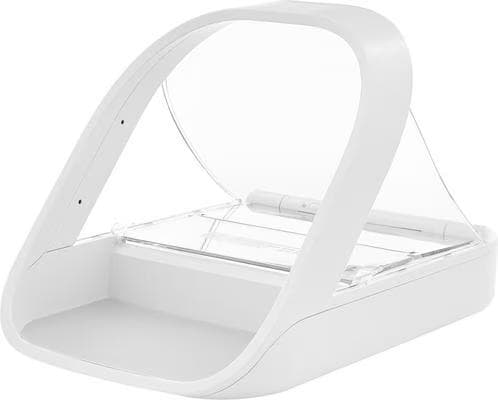
Separate individual meals in a multi-cat home while monitoring actual intake.
Webvet may earn a commission when you click through to Chewy, at no extra cost to you.
Ask the clinic to distinguish three decisions: whether an object needs removal now, whether an underlying disease needs treatment, and how to reduce repeated ingestion. Those decisions may require different steps. A behavioral explanation does not undo an obstruction, and successful object removal does not establish why the cat swallowed it.
A room-by-room prevention plan
Environmental management begins immediately. Walk through the home at the cat's level and remove access to favored materials. A high shelf is not necessarily inaccessible to a climbing cat. Use closed, secure storage and check doors or lids after use. Give every caregiver the same rules so one open sewing basket does not defeat the rest of the plan.
| Material and prevention action | Where to remove access | Incident diary after possible nonfood ingestion |
|---|---|---|
| String, thread, ribbon, and dental floss | Close sewing supplies, gift wrap, and bathroom waste inside secure containers | Swallowed string, attached needles, missing length, and time; call the clinic and do not pull visible ends |
| Fabric, wool, and stuffing | Put favored clothes and blankets away; check beds and soft toys for damage | Missing pieces, chewing versus swallowing, and any appetite or vomiting change |
| Plastic and rubber | Secure bags, packaging, hair ties, and small household parts | The material, approximate size and amount, and whether chemicals or food residues were present |
| Plants and potting material | Remove unsafe plants and prevent access to soil and loose decorative material | Plant identity, part eaten, timing, and possible chemical exposure |
| Litter | Prevent access to a concerning type while obtaining an individual veterinary plan | Type and amount eaten, product packaging, and when the behavior began |
Use this checklist with an incident diary. For example, “Tuesday, 7 p.m.: chewed a sleeve during laundry sorting; swallowing uncertain; sleeve removed; normal dinner afterward” gives the clinic more useful information than “pica again.” Normal dinner is part of the record, not proof that an object is harmless. Call about uncertain ingestion rather than using the diary as a reason to wait.
Offer appropriate scratching outlets as part of a varied environment. The SmartCat Ultimate 32-in Sisal Scratching Post is one option only if this cat scratches it without swallowing fibers. Check it regularly and remove it if material is being eaten. A scratching post supports normal activity; it is not a treatment or a substitute for secure storage.
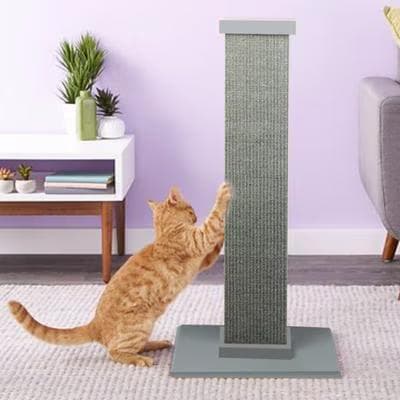
A scratching outlet for cats who use sisal without swallowing its fibers.
Webvet may earn a commission when you click through to Chewy, at no extra cost to you.
How to stop cats with pica?
Interrupt access calmly, put the material away, and redirect to an activity the cat can safely enjoy. Do not chase, frighten, or punish the cat, and do not test deterrents by leaving the object available. For unsupervised periods, use a comfortable room that has been checked for the specific materials this cat eats, with appropriate food, water, litter, rest, and enrichment. Continue veterinary assessment alongside prevention.
How do you fix pica in cats?
Fixing the problem means addressing the cause as well as the opportunity. Treat any diagnosed illness, review nutrition, and build a practical behavior plan when indicated. Then reassess actual incidents rather than assuming a quiet week proves a cure. A cat may stop chewing one material and choose another, so prevention must cover the individual pattern. Persistent or escalating ingestion warrants follow-up and sometimes veterinary behavior referral.
Check electrical cords, window-blind cords, toys, and rubbish containers as well as obvious craft materials. Our guide to poison-proofing a cat's home covers additional toxic exposures. Do not coat objects with essential oils, irritating household mixtures, or another unverified deterrent. A product's unpleasant taste does not make it safe for a cat to swallow.
Feeding, litter, and enrichment decisions
A complete diet, appropriate amount, and reliable access to meals are the starting point. Ask whether meal timing, food texture, or a veterinary diet trial is useful for this cat. Do not repeatedly change diets, add fiber, or start iron, vitamins, digestive enzymes, or other supplements without a reason tied to the workup. More nutrients are not automatically the answer to nonfood ingestion.

Keep hazardous materials securely stored while testing safer activities. A feeding or enrichment change does not make accessible thread or fabric safe.
What can I give my cat for pica?
There is no universal food, chew, vitamin, or natural remedy that safely fixes pica. Give the complete diet and any treatment recommended for the individual cat, and offer supervised enrichment chosen around what the cat tends to swallow. If a medical deficiency is confirmed, the veterinarian can prescribe an appropriate supplement. Do not offer another stringy, shreddable, or swallowable object as a substitute for the first one.
For safe enrichment, inspect the whole toy, including attachments, seams, and pieces that could detach. A toy appropriate for one cat may be unsuitable for a cat who eats rubber or stuffing. Begin under supervision and stop using anything that is being dismantled or swallowed. Our interactive cat toy guide offers activity ideas to adapt to that individual limitation.
Cat grass is not a cure or a way to push a foreign body through the gut. If your veterinarian agrees it is appropriate, our cat-grass growing guide covers the separate growing task. Keep unsafe plants, fertilizers, and accessible soil out of the prevention plan; providing one permitted plant does not make other plants safe.
Monitoring progress and when to seek behavior help
Judge progress by fewer attempts, fewer access failures, and better participation in ordinary eating, play, and rest. Continue recording the material and circumstances, including attempts you prevented. Do not deliberately leave a hazard out to see whether treatment worked. A change in preferred material is useful information to report, not a reason to abandon the investigation.
There is no single cure for pica in cats. Treating a specific medical cause may resolve the behavior, while anxiety or compulsive ingestion can require continuing management. Improvement means fewer incidents and a better daily life, not simply changing which object the cat swallows. Keep prevention in place until the veterinary team has reviewed the response.
How do you treat pica in cats?
Treatment combines management of swallowed-object complications, treatment of any underlying medical cause, and prevention of further access. Some cats also need a structured behavior plan and prescribed medication for anxiety or compulsive behavior. Follow-up matters because those needs can change. If another object may have been swallowed, return to the ingestion advice even while the longer-term plan is working.
The MSD Veterinary Manual's feline behavior guidance discusses compulsive behavior, environmental management, and medical treatment. Fluoxetine, often known by the brand name Prozac, may be considered by a veterinarian in selected behavioral cases. It is not an automatic prescription for every cat with pica. Never use a human or another pet's medicine; ask about expected benefit, adverse effects, and the review schedule.
At the recheck, review what changed:
- Which objects remain attractive, and where access still occurs.
- Whether eating, weight, stool, vomiting, or activity has changed.
- Which enrichment the cat uses safely and which needs removing.
- Whether the household can consistently follow the plan.
- What would justify additional tests or referral to a veterinary behaviorist.
Pica questions
Frequently Asked Questions
Does pica in cats go away?
It can improve, but the course depends on the underlying cause and whether access and behavior are successfully managed. A kitten exploring objects does not make persistent swallowing safe, and you should not assume the cat will outgrow it. Some cats need ongoing management. Continue prevention and the agreed follow-up even when incidents decrease, and contact the clinic about any new suspected ingestion.
What food is good for cats with pica?
Start with a complete balanced diet suitable for the cat's life stage and health, with enough food and reliable access. A veterinary diet review can identify whether an adjustment or specific therapeutic food is appropriate. No single brand treats every form of pica. Choose changes based on the medical findings and actual intake rather than assuming unusual chewing proves a deficiency or requires supplements.
What is the best cat litter for cats with pica?
There is no universally safe litter to eat. Tell the veterinarian which type and how much the cat may be ingesting, and seek advice about changing the setup to prevent ingestion. “Natural,” plant-based, paper, or nonclumping does not mean harmless when swallowed. Keep a usable litter arrangement while following the individual plan, and investigate the behavior rather than repeatedly switching products without assessment.
Veterinarian · BVMS MRCVS
Dr. Pippa Elliott, BVMS, MRCVS, is a veterinarian with nearly 30 years of experience in companion animal practice. Dr. Elliott earned her Bachelor of Veterinary Medicine and Surgery from the University of Glasgow. She was also designated a Member of the Royal College of Veterinary Surgeons. Married with 2 grown-up kids, Dr. Elliott has a naughty Puggle named Poggle, 3 cats and a bearded dragon.
Related reading

Cat Zoomies: Why They Happen and When to Be Concerned

How to Introduce Cats: A Step-by-Step Plan and Troubleshooting Guide

Cat Separation Anxiety: Signs and a Step-by-Step Management Plan
