Pepto Bismol for Dogs: Is It Safe, and What to Give Instead
Pepto Bismol contains a salicylate, the same drug family as aspirin, so vets are cautious with it in dogs, and it should never be given to a cat at home. Which dogs must never get it, how a vet decides, the warning signs, and what to give instead.

BVMS MRCVS
Medically reviewed by Dr. Pippa Elliott, BVMS MRCVS · Last reviewed

This article contains affiliate links. Webvet may earn a commission when you buy through them, at no extra cost to you.
Pepto Bismol for dogs: is it safe? The vet answer, and which dogs must never get it
Pepto Bismol for dogs is not a safe home remedy to reach for on your own. A vet may occasionally okay it for a short course in a healthy adult dog, at a dose the vet sets. It must never go to puppies, dogs on NSAIDs or steroids, dogs with bleeding, ulcer, or kidney problems, pregnant or nursing dogs, or any cat.
The reason is the active ingredient, bismuth subsalicylate. It is a salicylate, the same drug family as aspirin, and the Merck Veterinary Manual notes that practically all of that salicylate is absorbed into a dog's body. Pepto also turns stool black, which can hide bleeding. The safer first step is a call to your vet.
- 1Pepto Bismol is bismuth subsalicylate, an aspirin-family drug; why the salicylate matters is that almost all of it is absorbed.
- 2A vet may okay a short course for a healthy adult dog, at a dose and formula the vet chooses.
- 3The dogs that must never get it: puppies, dogs on NSAIDs or steroids, dogs with bleeding, ulcer, or kidney problems, and pregnant or nursing dogs.
- 4Cats in the home must never get Pepto Bismol; they clear salicylate very slowly.
- 5Black stool after Pepto can hide internal bleeding, so call the vet before giving it.
VCA Animal Hospitals says bismuth products should not be used in pets with stomach or intestinal ulcers or an allergy to aspirin or other NSAIDs, and advises caution in young, debilitated, pregnant, or nursing pets, pets with bleeding disorders, and pets taking NSAIDs, aspirin, or corticosteroids. Because the salicylate acts like aspirin, which can also harm the kidneys, Pepto for dogs is off the table at home for:
- Puppies and young dogs, and debilitated dogs that are already weak
- Dogs taking NSAIDs (carprofen, meloxicam, and similar), aspirin, or corticosteroids such as prednisone
- Dogs with stomach or intestinal ulcers, a bleeding disorder, or kidney disease
- Pregnant or nursing dogs
- Dogs allergic to aspirin or other NSAIDs

Size matters too. Pepto Bismol for small dogs carries less room for error, because a measuring slip of a few milliliters is a much bigger share of a tiny dog's dose. If a vet does okay it for a small dog, ask for the amount in milliliters and measure it with an oral syringe, since VCA advises measuring liquids carefully. Small and toy breeds are also overrepresented in sudden bloody diarrhea that needs fluids, not a stomach coater.
For a bright adult dog with a single soft stool and no other signs, vets commonly suggest time, a bland diet, or a pet-labeled probiotic such as Purina Pro Plan Veterinary Diets FortiFlora Dog Supplement, 30 count. None of these carries a salicylate load, and none darkens the stool.
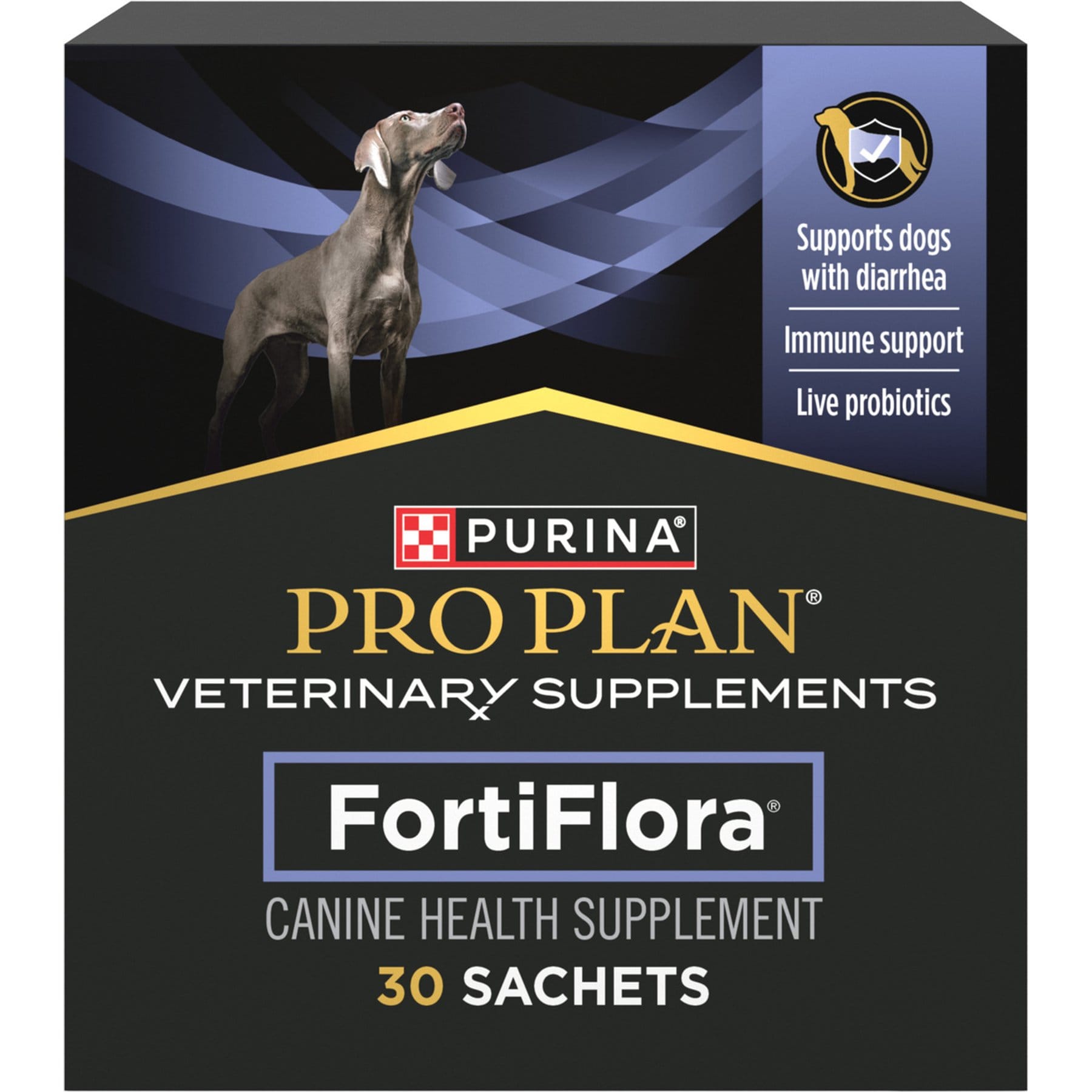
A pet-labeled probiotic powder vets often suggest for mild loose stool in an otherwise bright adult dog.
Webvet may earn a commission when you click through to Chewy, at no extra cost to you.
What is in Pepto Bismol, and why the salicylate matters for dogs
Pepto Bismol is a human stomach medicine, not a dog product, and every Pepto-Bismol product has one active ingredient: bismuth subsalicylate. The original liquid label on DailyMed lists 525 mg of bismuth subsalicylate in each 30 mL dose, and states that each dose contains 261 mg of salicylate. The label carries an allergy alert telling anyone allergic to aspirin, or already taking another salicylate product, not to take it.
So what does Pepto Bismol do for dogs? In short, it can help settle a mild, short-lived bout of loose stool. Merck explains the two halves. Bismuth may bind some bacterial toxins and protect the gut lining, and the salicylate part is thought to calm inflammation. That combination can firm up a simple diarrhea. It does nothing to fix the cause, whether that is a scavenged meal, a parasite, a virus, or pancreatitis.
The salicylate half is what makes vets cautious. Once absorbed, it acts like aspirin in the body, with the same risks: stomach irritation and ulcers, slower blood clotting, and kidney strain. Pet Poison Helpline names Pepto-Bismol as a source of aspirin exposure. A dog already on an NSAID or a steroid is getting a second hit to the same stomach lining. The aspirin for dogs and cats guide covers that drug family in more detail.
Why cats in the home must never get Pepto Bismol
Cats handle salicylate far worse than dogs. The Merck Veterinary Manual explains that cats are deficient in glucuronyl transferase, an enzyme that clears aspirin, giving a half-life in cats of 37.5 hours. Pet Poison Helpline states plainly that cats are much more sensitive to aspirin poisoning than dogs. Keep the bottle and any spilled tablets away from cats, and never share a dog's dose with the household cat.
If a vet wants to coat the gut without any salicylate at all, there are products made for pets. Vetoquinol Pro-Pectalin Anti-Diarrheal Oral Gel Dog & Cat 30cc is a pet-labeled gel built on kaolin, pectin, and a beneficial bacterium rather than bismuth subsalicylate; ask your vet whether it is worth using for your dog.
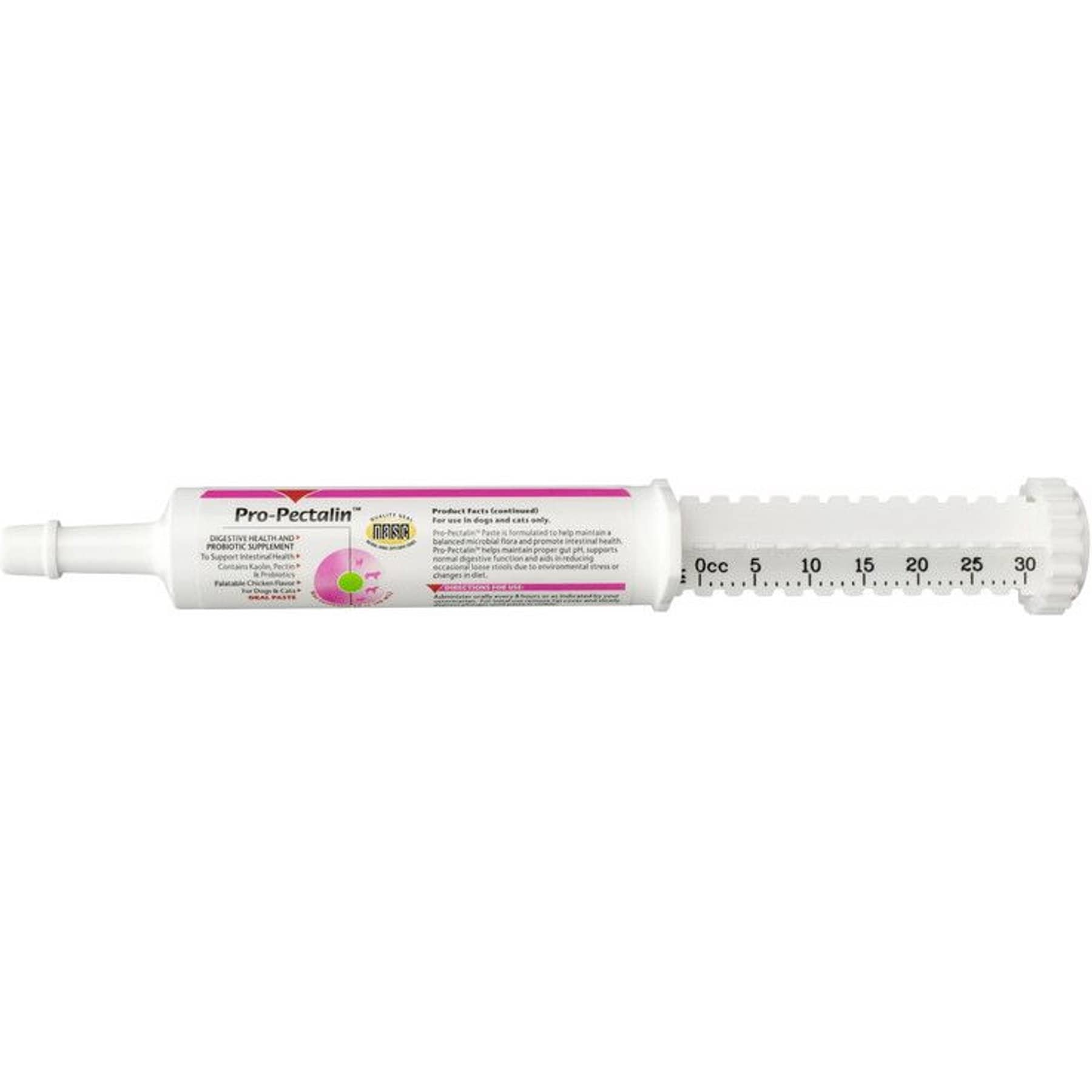
A salicylate-free, pet-labeled anti-diarrheal gel with kaolin, pectin, and a probiotic, for mild loose stool.
Webvet may earn a commission when you click through to Chewy, at no extra cost to you.
When a vet might okay Pepto Bismol, and when it can hide a serious problem
Can you give dogs Pepto for diarrhea or an upset stomach? Sometimes, with your vet's okay, and only for the right dog. Vets weigh the dog's age, weight, medicines, and medical history, then the stool and the dog's energy. For diarrhea, Pepto can ease a simple, short-lived diarrhea, but it does not treat the cause, and it can mask the signs a vet needs to see.
Is Pepto-Bismol ok for dogs?
Pepto-Bismol is ok for some dogs only when a vet approves it for a short course at a vet-set dose. It is a salicylate, so it is not safe for puppies, dogs on NSAIDs or steroids, or dogs with ulcers, bleeding problems, or kidney disease. Off-label use in dogs has not been reviewed by the FDA, according to VCA.
A vet is most likely to okay Pepto Bismol for dogs with diarrhea or an upset stomach when all of these are true:
- The dog is an adult in otherwise good health, eating and drinking
- The diarrhea or upset stomach is mild, recent, and has no blood
- The dog is bright, alert, and not vomiting repeatedly
- The dog takes no NSAIDs, steroids, or other drugs that interact with salicylate
- There is no chance the dog ate a toxin, a toy, or bones

Here is where it can hide a serious problem. Merck notes that bismuth subsalicylate turns the feces black. Black, tarry stool, called melena, is also the classic sign of bleeding high in the gut. After Pepto, neither you nor your vet can easily tell harmless bismuth staining from a bleeding ulcer.
That is why the human label itself says not to use it with a bleeding problem or with bloody or black stool. A dog that is already on an anti-inflammatory, or that has eaten something sharp, is exactly the dog where that difference matters.
Can I give my dog Pepto Bismol if he's throwing up?
No, not without speaking to your vet first, whether you have the liquid or the chewable tablets. A dog that is throwing up may not keep the dose down, and VCA advises care when a pet has vomited more than twice in 24 hours. Vomiting can signal pancreatitis, a blockage, bloat, or poisoning, and Pepto treats none of these.
A short phone call usually settles whether a dog can stay home. Having the details ready helps your vet decide quickly whether Pepto, a bland diet, or a visit is the right next step:
- Your dog's age and current weight
- How many times the dog has vomited or had diarrhea, and over how many hours
- What the stool looks like: soft, watery, mucousy, bloody, or black
- Whether the dog is drinking, keeping water down, and acting normally
- Every medicine and supplement, especially NSAIDs, steroids, or antibiotics
- Anything the dog may have eaten: garbage, bones, toys, plants, human food, or medicines
- The exact Pepto product in the house, if you were thinking of using it
How long can you wait and watch at home? Not long. VCA advises a vet visit if diarrhea lasts more than three days on a bland diet or the dog gets worse at any point, and right away if the dog is lethargic, refusing food, vomiting, or has blood in the stool. A dog that is too nauseated to drink water needs to be seen.
Is it safe to give dogs Pepto Bismol while you wait for the vet? The safer move is to hold all medicines and describe the signs on the phone. For the mild cases a vet is happy to manage at home, the dog upset stomach guide explains what helps soothe nausea and what settles a dog's stomach quickly, from small, frequent meals to the signs that mean the home plan has failed.
The usual first step is food, not medicine. VCA suggests several small meals of boiled white rice and boiled chicken breast, with diarrhea expected to improve over the next one to three days. The bland diet for dogs guide walks through it, and a ready-made canned option is Dave's Pet Food Restricted Bland Diet Sensitive Stomach Digestive Care Chicken & Rice Canned Wet Dog Food, 13.2-oz, case of 12, listed at $39.99 on Chewy when checked in November 2026.
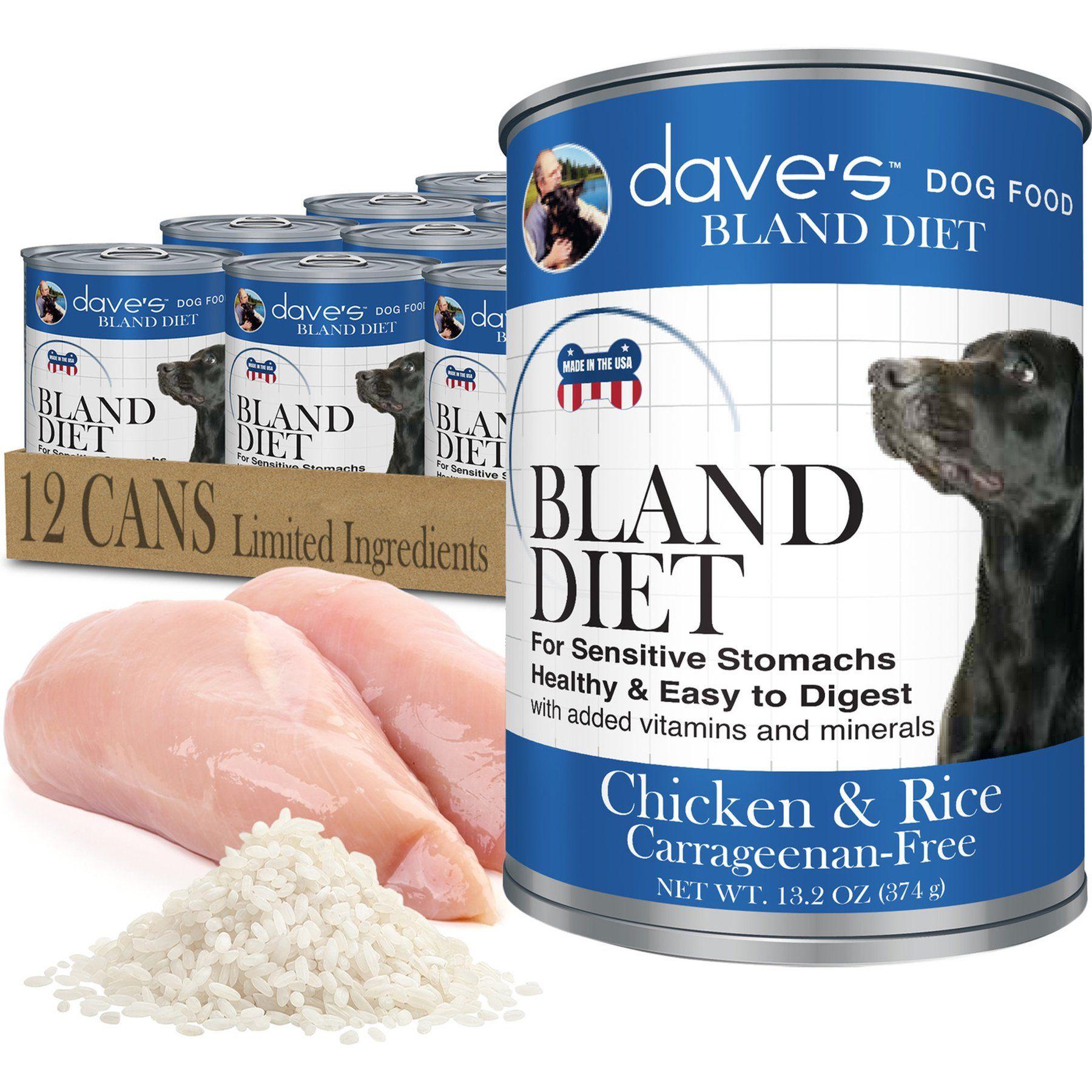
A ready-made chicken and rice bland canned food for short-term feeding while a mild tummy upset settles.
Webvet may earn a commission when you click through to Chewy, at no extra cost to you.
How a vet decides whether and how much Pepto to give, and why the formulas differ
How much Pepto Bismol can I give my dog? Only the amount your vet names, for the exact product in your cupboard. The Merck Veterinary Manual lists bismuth subsalicylate for dogs at 1–3 mL/kg by mouth per 24 hours, split into divided doses, and states that there is no precise dose for animals. A vet decides where in that range a dog falls, or whether to use it at all.
Before giving a number, a vet checks:
- The dog's current weight, since dosing is by weight
- Every medicine and supplement the dog takes
- Whether the dog is a puppy, pregnant or nursing, or has kidney, bleeding, or ulcer history
- Which product you have, and its strength
- How long the vet wants it given, which is usually short
How much Pepto to give my dog for diarrhea?
Your vet sets the amount for diarrhea after hearing your dog's weight, medicines, and signs. Merck's reference range is 1–3 mL/kg per 24 hours in divided doses of a liquid bismuth subsalicylate, with no precise animal dose. That figure only fits the strength the vet names, and there is no home Pepto dose for a puppy or any dog who must never get salicylate.
The formula is where home dosing most often goes wrong. The right amount depends on concentration, and the products differ:
- Original liquid: 525 mg bismuth subsalicylate per 30 mL dose, with 261 mg salicylate (DailyMed)
- Ultra liquid: 525 mg per 15 mL dose, twice as concentrated, with 230 mg salicylate per 15 mL (DailyMed)
- Chewable tablets: 262 mg bismuth subsalicylate per tablet, with 117 mg salicylate (DailyMed)
A milliliter of the Ultra liquid carries double the drug of the original. A tablet dose cannot be worked out from a liquid amount either. Tell your vet the exact name on the box, and use a syringe, since VCA advises owners to measure liquids carefully.
What kind of Pepto is safe for dogs?
No kind of Pepto is made or approved for dogs. If your vet approves a bismuth subsalicylate, it will be one specific plain product at a stated strength. Avoid any version with added ingredients or flavors your vet has not checked, and never give a Pepto formula alongside another salicylate or an NSAID.
When the vet would rather skip salicylate for a mild, soft stool, a fiber supplement is a common choice. Diggin' Your Dog Firm Up! Pumpkin Dog & Cat Supplement, 4-oz bag combines pumpkin, apple fiber, and cranberry, and its maker describes it as supporting normal stool consistency.
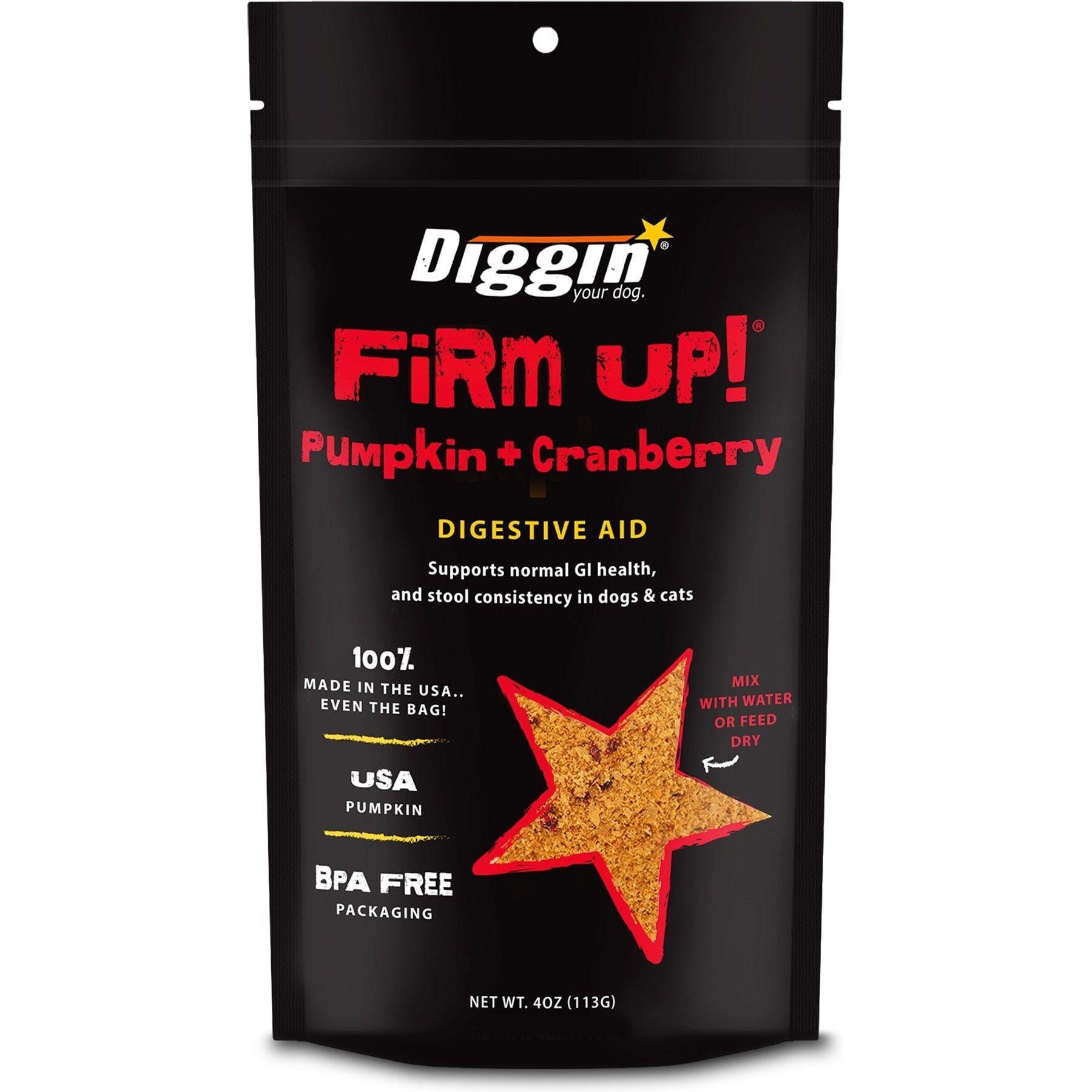
A pumpkin and apple fiber supplement for mild loose stool in a bright dog, with no salicylate in it.
Webvet may earn a commission when you click through to Chewy, at no extra cost to you.
Pepto Bismol side effects in dogs: black stool, salicylate toxicity, and drug interactions
Why is Pepto Bismol bad for dogs in some cases? Even at a vet-set dose, it has expected side effects, and in the wrong dog or at too high a dose it becomes dangerous. VCA lists grey-black or green-black stool and constipation as the common side effects of bismuth products. The effects to know are:
- Grey-black or green-black stool
- Constipation
- A darkened tongue, which the human Pepto label mentions
- Allergic reactions such as irregular breathing, rash, fever, or facial swelling, which need the vet immediately

Salicylate toxicity
Is Pepto Bismol dangerous for dogs? It can be when salicylate builds up. The Merck Veterinary Manual lists the acute signs of aspirin-type toxicity as listlessness, weakness, poor appetite, vomiting with or without blood, fever, and fast breathing. It adds that prolonged use in dogs can lead to stomach ulcers.
Salicylate toxicity is more likely with repeated doses, a concentrated formula given by mistake, a small dog, or a dog that already takes an aspirin-family drug. A dog that chews open a bottle or a pack of chewable tablets is a poison case, not a dosing question.
Drug interactions, including metronidazole
VCA advises caution when bismuth products are combined with antacids, aspirin, some heart and blood pressure drugs, corticosteroids, insulin, NSAIDs, opioids, and tetracycline or other antibiotics. Tell your vet about every medicine and supplement first.
Vets sometimes pair metronidazole with Pepto Bismol on purpose. Merck lists bismuth subsalicylate with metronidazole, an antibiotic, and an acid reducer for 2–3 weeks as a vet-directed regimen for Helicobacter stomach infections. That is a prescribed plan, not a reason to add Pepto to a metronidazole course on your own.
 Sponsored
Need a prescription or refill for your dog?
A licensed vet at Dutch can assess your dog over video and prescribe treatment when it's appropriate, delivered to your door.
Use code Pets60
Plans start at $12/month · covers up to 5 pets
- Licensed vets in most states
- Rx for 150+ conditions
- 4.7 on Trustpilot
Poison control and emergency signs: when vomiting or diarrhea cannot wait
The ASPCA Animal Poison Control Center is available 24/7, and a consultation fee may apply. Pet Poison Helpline is also available 24/7, with a $99 per incident fee. Pet Poison Helpline's advice for suspected aspirin poisoning is to call your veterinarian or the helpline immediately. Have the box, the strength, the amount missing, and your dog's weight ready.
Can Pepto Bismol kill a dog? A large accidental dose can be dangerous, especially in a small dog, which is why an exposure is treated as a poison call. Some dogs that get into the bottle will be fine, but only a toxicology team or your vet can judge that from the numbers. The activated charcoal for dogs guide explains why poison treatment is a vet decision, not a home one.

Signs that need a vet tonight, not Pepto
Pepto Bismol is the wrong tool for a dog that keeps vomiting or has bloody diarrhea, and no home dose changes that. Giving it only delays the care these conditions need. VCA and Merck point to these signs:
- Vomiting more than twice in 24 hours, or vomiting with diarrhea
- Bloody diarrhea, black tarry stool, or vomiting blood
- Lethargy, weakness, refusing food, or difficulty standing or walking
- Nonproductive retching with a swelling belly in a large or deep-chested dog, a sign of bloat (GDV), which Merck calls acute and life-threatening
- A puppy or unvaccinated young dog with vomiting or diarrhea, since parvovirus commonly affects young, unvaccinated dogs
- Vomiting, belly pain, and weakness that can point to pancreatitis, which Merck treats mainly with fluids
- Any dog with kidney failure, colitis flare-ups, or another diagnosed condition, whose vet should guide every medicine
Sudden bloody diarrhea deserves special mention. Merck notes that acute hemorrhagic diarrhea syndrome is overrepresented in small and toy breeds, and that fluid loss can cause shock before dehydration is obvious. Prompt IV fluids are the main treatment. The dog vomiting and diarrhea guide covers the causes and what the vet will do.
 Sponsored
Vet care that's always there
Unlimited video calls and messaging with licensed vets for less than a typical vet visit. One membership covers up to five pets.
Use code Pets60
Plans start at $12/month · covers up to 5 pets
- Licensed vets in most states
- Rx for 150+ conditions
- 4.7 on Trustpilot
What to give a dog for an upset stomach instead of Pepto Bismol
Instead of Pepto Bismol, most mild upset stomachs in dogs start with a bland diet, a pet probiotic, or a fiber supplement, with your vet's okay. Go symptom by symptom to see when a vet might okay Pepto and when the vet wants the dog seen tonight.
| Situation | Is Pepto reasonable? | Risk | What to do instead |
|---|---|---|---|
| One soft stool in a bright adult dog | Rarely needed; only with a vet's okay | Low, but black stool can confuse later checks | Bland diet, fiber or a pet probiotic, watch for 24 hours |
| Repeated vomiting | No | Dose will not stay down; may hide pancreatitis, blockage, or bloat | Call the vet now |
| Blood in stool or black stool | No | Bismuth darkens stool and hides bleeding | Same-day vet visit |
| Puppy with diarrhea | No | Young dogs are at higher risk; parvo possible | Call the vet today |
| Dog on NSAIDs or steroids | No | Added salicylate raises ulcer and bleeding risk | Ask the vet about a salicylate-free option |
| Dog that ate something | No | Pepto does not treat poisoning or a swallowed object | Call poison control or the vet |
| Cat in the home | Never | Cats clear salicylate very slowly | Ask the vet for a cat-safe plan |
Is there a Pepto Bismol for dogs? No product is a canine version of Pepto, but several pet-labeled and vet-prescribed options target the same everyday problems without a salicylate. The right one depends on whether the main issue is loose stool, acid, or a dog that needs a gentler diet for a few days.

What is the equivalent of Pepto-Bismol for dogs?
There is no exact dog equivalent of Pepto-Bismol. For mild loose stool, vets often suggest a bland diet, a pet probiotic, or a kaolin-pectin gel, none of which contains salicylate. For a sour stomach, a vet may prescribe famotidine. The choice depends on the signs, so ask your vet which fits.
What medicine can I give my dog for an upset stomach?
Give only a medicine your vet has approved for this dog. Common vet choices include famotidine to reduce stomach acid and pet-labeled probiotics for mild diarrhea. Human anti-diarrheals such as loperamide can be dangerous for collies and other herding breeds with the MDR1 gene, and for diarrhea caused by an infection or a toxin.
Here is how the common human products compare with Pepto Bismol for dogs:
- Pepcid or Pepto Bismol: Pepcid is famotidine, which VCA says is used to reduce stomach acid production. It has no salicylate. Use is off label, so the vet sets the dose; see famotidine for dogs and cats.
- Imodium or Pepto Bismol: Imodium is loperamide. VCA says dogs with the MDR1 gene should not receive it, and Merck says it should not be used in ivermectin-sensitive breeds without genetic testing.
- Kaopectate vs Pepto Bismol: Neither is better for a dog at home. Current Kaopectate in the US is bismuth subsalicylate too, so it carries the same salicylate concerns. Kaolin pectin is a different, older ingredient; Merck notes clinical studies have not shown a clear benefit from it.
- Pedialyte and Pepto Bismol: A dog too nauseated to drink needs the vet, who can give fluids. Neither product fixes dehydration from ongoing vomiting or diarrhea.
Pet probiotics are a common vet suggestion for mild diarrhea. VCA notes that probiotics are most often used to support the gut in dogs and cats, while also cautioning that few supplements have had rigorous trials. Besides FortiFlora, Nutramax Proviable Probiotics & Prebiotics Digestive Health Supplement for Dogs & Cats, 30 count combines probiotics with prebiotics. The probiotics for dogs with diarrhea guide compares the evidence.
For diet, a dry bland option is KOHA Limited Ingredient Bland Diet Sensitive Stomach Chicken & Brown Rice with Pumpkin Dry Food Dog Food, 3.5-lb bag. Dogs with ongoing digestive disease may need a prescription diet such as Hill's Prescription Diet i/d Canned Premium Dog Food, 13-oz, 12 ct, which needs a veterinarian's authorization; Chewy asks for it at checkout.
Pepto Bismol for dogs questions
Frequently Asked Questions
Can Pepto Bismol kill a dog?
It can in a large overdose. The salicylate in Pepto acts like aspirin, and Merck lists liver damage, seizures, coma, and prolonged bleeding among the severe effects of aspirin-type toxicity. Pet Poison Helpline adds kidney failure and bone marrow suppression to the possible signs. Treat any suspected overdose as an emergency and call poison control or your vet.
Can I give my puppy Pepto Bismol?
No. VCA lists young pets among those that need special caution with bismuth products, and its puppy guidance says not to use human products for pets at all. Puppies with vomiting or diarrhea can also have parvovirus. Call your vet, and have the puppy seen if diarrhea lasts more than 2 days or comes with lethargy or vomiting.
Is Kaopectate or Pepto Bismol better for dogs?
Neither is better for home use, because current US Kaopectate liquid lists bismuth subsalicylate as its active ingredient, the same as Pepto. Its label carries the same salicylate allergy alert, and the Kaopectate liquid on DailyMed contains 525 mg per 15 mL, matching the stronger Pepto formula. Ask your vet before giving either.
Is Pepcid or Pepto Bismol better for dogs?
They do different jobs. Pepcid is famotidine, an acid reducer with no salicylate, while Pepto coats the gut and adds aspirin-family salicylate. VCA describes famotidine as a drug used to reduce stomach acid, and the right choice and dose depend on the cause, so your vet should decide.
Does Pepto Bismol turn a dog's stool black?
Yes. Bismuth commonly turns stool grey-black or green-black, and the tongue may darken too. The concern is that black stool is also the sign of bleeding in the upper gut. If your dog has black stool and is weak, pale, vomiting, or on an NSAID, call your vet the same day.
Can dogs have Pepto Bismol tablets or only the liquid?
Both tablets and liquid contain bismuth subsalicylate, but the strengths differ: a chewable tablet holds 262 mg, while liquids range from 525 mg per 30 mL to 525 mg per 15 mL. VCA advises measuring liquids carefully, and a tablet cannot be split to a precise dose for a tiny dog. Only use the form your vet names, at the amount given.
Can I give my dog Pepto Bismol for vomiting?
Not without a vet's okay. A vomiting dog may bring the dose straight back up, and vomiting can come from pancreatitis, a blockage, bloat, or poisoning. Call your vet if vomiting happens more than twice in a day, comes with diarrhea, or your dog seems weak or uninterested in food.
Veterinarian · BVMS MRCVS
Dr. Pippa Elliott, BVMS, MRCVS, is a veterinarian with nearly 30 years of experience in companion animal practice. Dr. Elliott earned her Bachelor of Veterinary Medicine and Surgery from the University of Glasgow. She was also designated a Member of the Royal College of Veterinary Surgeons. Married with 2 grown-up kids, Dr. Elliott has a naughty Puggle named Poggle, 3 cats and a bearded dragon.


