Feline Hyperesthesia: Signs, Possible Causes, and Treatment
Understand rippling skin and episodic behavior in cats, what the veterinary workup investigates, and how an episode diary and individualized care plan can help.

BVMS MRCVS
Medically reviewed by Dr. Pippa Elliott, BVMS MRCVS · Last reviewed

This article contains affiliate links. Webvet may earn a commission when you buy through them, at no extra cost to you.
Feline hyperesthesia describes episodes of unusual sensitivity and behavior that may include rippling skin, sudden grooming or biting, tail chasing, agitation, or frantic running. It is a syndrome, not one proven disease with one standard treatment. A veterinarian needs to consider skin disease, pain, neurological conditions, and behavioral contributors before deciding what is happening.
Arrange an assessment for repeated episodes, especially if your cat is injuring its skin or tail. Seek urgent advice for severe self-injury, collapse, prolonged seizure-like activity, or failure to recover normally. While waiting for advice, keep the surroundings calm and safe, avoid touching a sensitive area, and record naturally occurring behavior without provoking it.
What feline hyperesthesia can look like
- 1Skin rippling and episodic behavior can occur with feline hyperesthesia, but a single twitch or reaction to touch does not establish the diagnosis.
- 2Exclusion of other causes matters: itching, pain, and neurological disease may produce overlapping signs and need different care.
- 3An episode diary and a naturally occurring video can help the veterinarian. Do not repeatedly touch the cat's back to demonstrate a reaction.
The word hyperesthesia means increased sensitivity. Owners may also encounter names such as twitchy cat syndrome or rippling skin disorder. Those names describe what someone sees, but they do not identify why it happens. A brief skin movement in an otherwise comfortable cat is different from recurring bouts of agitation, biting, or apparent distress.

Figure 1: de Moraes and colleagues (2026), CC BY 4.0. This cat in a published presumptive hyperesthesia case appeared normal between episodes. The photograph cannot show the movement or establish the diagnosis in another cat; the same report provides supplementary videos of lumbar tremors and tail chasing.
What does FHS look like in cats?
An episode may involve rippling or twitching over the back, sudden intense grooming, self-directed tail biting, tail chasing, vocalization, dilated pupils, or running and hiding. Cats can look comfortable between events, and some also develop hair loss or wounds from repeated licking or biting. The combination, recurrence, and context matter. None of these observations alone proves FHS, and a still photograph cannot capture the full sequence.
For actual moving examples, the case report's first supplementary video documents lumbar tremors and its second video documents tail chasing. These are observations from one presumptive case, not a test for diagnosing your cat. Show your own veterinarian the behavior that concerns you rather than trying to reproduce what another cat does.
A camera can help capture naturally occurring events while you stay at a distance. The INSTACHEW Purrsight 360 Degree Wi-Fi Security Cat & Dog Pet Camera is one option for an area your cat normally uses. Keep cords inaccessible and check that the view includes the whole cat. A camera supports observation; it cannot distinguish a seizure, pain, itching, or a behavioral episode by itself.

Record naturally occurring behavior from a safe distance and share useful clips with your veterinarian. Keep the camera and cords inaccessible to the cat.
Webvet may earn a commission when you click through to Chewy, at no extra cost to you.
Notice the beginning and the recovery
Record more than the most dramatic few seconds. Note what your cat was doing immediately before the event, which body part moved first, and how it returned to ordinary activity. A cat that briefly turns toward its tail and then resumes resting presents a different history from one that repeatedly attacks the tail and remains unsettled afterward.
Episodes are often brief, but there is no safe universal duration that lets an owner diagnose a harmless event. Record actual start and finish times when possible, and describe any uncertainty. “I noticed it halfway through” is useful information. Do not wait for an episode to reach a particular length before calling about severe injury or a cat who is not recovering normally.
Use neutral descriptions rather than deciding the cause in advance:
- “The skin moved in waves over the lower back, then the cat bit the tail.”
- “The cat ran under the bed and came out to eat several minutes later.”
- “The cat looked toward my voice but would not stop grooming the flank.”
- “There is now a bald patch or broken skin where the cat repeatedly bites.”
Mild-looking behavior can still deserve a discussion if it is new, frequent, or affecting sleep and ordinary activity. Conversely, ordinary play, a startle, or a brief skin twitch is not automatically a neurological syndrome. Our cat body-language guide can help describe posture in context without turning every movement into a diagnosis.
When an episode needs urgent veterinary help
Contact a veterinarian urgently if your cat is causing an open wound, repeatedly mutilating its tail, collapsing, struggling to breathe, or showing sustained seizure-like activity. A sudden severe change, inability to walk normally, or failure to return to its usual awareness also deserves immediate advice. Tell the clinic what you can actually see rather than reporting only that the cat is “having hyperesthesia.”
Do not assume a known FHS history explains every later event. A cat can develop another illness or injury while being treated for a longstanding syndrome. New weakness, a toxin exposure, or a different pattern may change the urgency. Have the medication names and last doses ready when you call, including anything bought without a prescription.
During a concerning episode:
- Reduce noise and keep children and other animals away.
- Leave the cat a safe route away from people; avoid chasing or cornering it.
- Do not put your hands near the mouth, restrain the tail, or repeatedly stroke the back.
- Remove nearby hazards only if you can do so without approaching an agitated cat.
- Follow the clinic's instructions about transport and any already prescribed emergency plan.
A cat may bite or scratch defensively when frightened or uncomfortable. Protecting yourself is part of helping the cat. Do not interpret aggression during an episode as disobedience, and do not punish it afterward. If safe movement or transport is difficult, explain that to the clinic so the team can guide the next step.
Seizures belong on the differential list, but not every FHS-like event is a seizure. Similarly, severe self-directed tail biting does not make tail amputation a routine treatment. An injured tail needs assessment of the wound, pain, and the process driving repeated injury. Treating the visible damage without addressing that process may leave the main problem unresolved.
Possible causes and conditions that resemble FHS
There is no single established mechanism that explains every cat described as having feline hyperesthesia syndrome. The same outward behavior can arise from different problems, and more than one contributor may be present. The practical question is which explanation best fits this cat's history, examination, and response to carefully selected treatment.
For a planned appointment, prepare secure, comfortable transport. The Frisco Travel Safety Dog & Cat Carrier, Medium is one option when its dimensions suit your cat. Use familiar bedding if tolerated and ask the clinic about handling needs in advance. A carrier is preparation for assessment, not a way to confine a frightened cat during an episode or delay urgent care.

Prepare comfortable, secure transport for a planned examination. Choose the carrier by your cat’s measurements and follow the clinic’s handling advice.
Webvet may earn a commission when you click through to Chewy, at no extra cost to you.

For your own recording, stay far enough away that the phone does not become another source of pressure. If safe, include the full body and a little surrounding space, then keep recording through recovery. Say the time aloud or make a note afterward. Stop filming whenever calling the clinic or helping the cat safely is more important.
Skin disease and itching
Fleas, flea allergy, other parasites, and inflammatory skin conditions can cause licking, biting, agitation, and damage that resembles FHS. An indoor lifestyle does not exclude a flea-related problem. Not seeing a flea during a brief check also does not settle the issue. The clinician may recommend appropriate parasite control and skin testing before attributing the behavior to a primary behavioral disorder.
Our guide to food and flea allergies in cats explains the separate allergy workup. A food-responsive problem requires a planned assessment, not a series of casual brand changes. Keep the names of current foods, treats, parasite products, and topical preparations available so the veterinarian can evaluate what has already been tried.
Are cats with hyperesthesia in pain?
Some may have painful or uncomfortable conditions contributing to the episodes, including skin inflammation or problems affecting the back, tail, muscles, or nerves. A cat cannot tell us whether a sensation is painful, itchy, or otherwise abnormal. Behavior and examination must be interpreted together. Do not test sensitivity by pressing or repeatedly stroking the area; ask the veterinarian to assess pain and decide whether a treatment trial is appropriate.
The guide to signs a cat is in pain covers changes in movement, posture, appetite, and interaction. Explain any reluctance to jump, difficulty using the litter tray, or reaction to ordinary handling. A skin ripple does not localize a painful structure, and a cat that purrs or eats can still need assessment.
What triggers hyperesthesia in cats?
Some episodes appear after touching a particular area, conflict with another animal, excitement, or environmental stress, while others begin without an obvious trigger. A trigger is not necessarily the underlying cause. For example, handling may reveal a painful or itchy area rather than create a purely behavioral problem. Record repeated patterns, avoid provoking them, and let the veterinarian interpret them alongside physical findings.
Breed and age do not provide a shortcut. FHS is often discussed in relation to Siamese and other Oriental cats, but a mixed-breed or older cat can show similar signs. There is no dependable population percentage an owner can use to rule it in or out. New behavior in an older cat especially needs a broad assessment rather than a familiar internet label.
Other changes should not be explained away
Vomiting, weight loss, increased drinking, urination changes, altered stool, or defecation during an event belong in the history. They do not prove that hyperesthesia caused a digestive, urinary, or metabolic problem. A cat with diabetes or another known disease needs that condition considered when the plan changes. Report the timing and pattern instead of combining every symptom into one presumed diagnosis.
FHS itself is not treated as a contagious infection. However, an infectious or parasitic skin problem can resemble it, so another household cat's itching is useful information. Do not share prescriptions between animals or assume that every cat needs the same treatment. The reason for any household-wide parasite plan should be explained by the treating team.
 $65 · no membership
Have a health question about your cat?
A licensed vet can assess your cat over video and prescribe online when it's appropriate.
 Talk to a vet
- Licensed vets
- All 50 states
- same-day Rx
Webvet may earn a commission if you book.
The veterinary assessment and episode diary
For a feline hyperesthesia syndrome diagnosis, a vet needs the episode record, a short video, and a complete list of medicines, supplements, foods, and parasite preventives. Include when the first event happened, whether it is becoming more frequent, and what your cat is like between episodes. The assessment considers the skin, movement, pain, neurological function, and other systems indicated by the history.
A diary need not be elaborate. A few consistent fields make separate events easier to compare and help the clinician see changes that memory alone can miss. Use the same definitions for every caregiver. Distinguish what was witnessed from what was inferred from a wet patch of fur, missing hair, or a disturbed room.
- Context: sleeping, eating, grooming, playing, being touched, or interacting with another animal.
- Movement: the first body area involved, skin rippling, tail activity, biting, running, or vocalization.
- Episode duration: actual timing, or a clear note that only part of the episode was seen.
- Responsiveness during an episode: what happened naturally when you spoke or moved, without testing or restraining the cat.
- Self-injury: redness, hair loss, broken skin, bleeding, or repeated attention to one area.
- Recovery: when eating, walking, resting, and ordinary interaction resumed.
For example, “8:10 p.m., resting after dinner; back rippled, then tail biting for about 20 seconds; owner stayed still; cat hid briefly and later returned to its bed” separates the sequence from an interpretation. The example is a recording format, not a definition of a normal episode or a safe duration. Add a note if the timing is uncertain.
No single test confirms all cases of FHS. Testing is selected to investigate plausible alternatives and complications. Skin examinations and appropriate parasite control may be high priorities in an itchy cat. Blood or urine testing may be relevant when weight, thirst, appetite, or general health has changed. Neurological findings or progressive signs may justify referral and more specialized investigations.
Treatment depends on the findings
Treatment for feline hyperesthesia is individualized. A plan may address itching or parasites, pain, suspected seizure activity, anxiety or compulsive behavior, and the cat's environment. The diagnosis and treatment plan may become clearer over time. Improvement with a medicine is valuable, but it does not always prove which underlying mechanism was responsible.
| Possible explanation and veterinary next step | Observations that matter | What the assessment can clarify |
|---|---|---|
| Skin disease | Itching, hair loss, lesions, parasite history, and affected household animals | Skin examination and targeted testing or parasite treatment investigate dermatological contributors |
| Pain assessment | Reaction to handling, reduced jumping, altered posture, or attention to the back or tail | Physical and movement assessment guide pain investigation and any supervised treatment trial |
| Neurologic assessment | Repetitive stereotyped events, altered awareness, abnormal recovery, or other neurological changes | The clinician decides whether seizure or nervous-system investigation and referral are appropriate |
| Behavioral assessment | Repeated associations with conflict, frustration, environmental changes, or arousal | History and environmental assessment help build a plan after physical contributors are considered |
The comparison is a way to organize questions, not a home diagnostic score. A cat can have both a painful condition and heightened arousal, or skin disease and household stress. Ask the team which possibilities remain open, what the initial treatment is intended to address, and what finding would prompt the next step rather than another identical trial.
Environmental support can begin alongside that workup. A pheromone diffuser such as the Feliway Optimum Enhanced Calming Pheromone 30 Day Diffuser Start Kit is an optional adjunct to discuss with the veterinarian. Individual response varies. Follow the product instructions and measure your cat's actual comfort and episodes; the diffuser is not a treatment for seizures, a substitute for pain relief, or proof that stress is the cause.
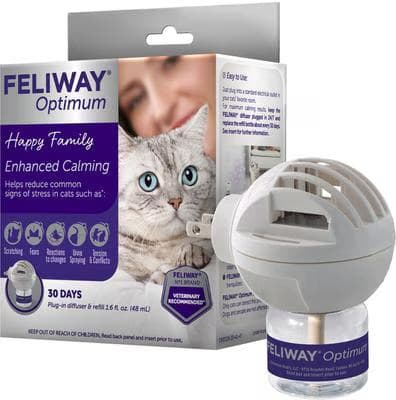
Discuss a pheromone diffuser as an optional environmental adjunct. It does not replace investigating pain, skin disease, or neurological signs.
Webvet may earn a commission when you click through to Chewy, at no extra cost to you.
Prescription medicines and treatment trials
Cornell's hyperesthesia overview describes approaches that may include medication and environmental changes. Gabapentin is one medicine a veterinarian may consider, particularly when pain or abnormal sensitivity is suspected. Other cats may need a different approach, including treatment aimed at skin inflammation, suspected seizures, or a behavioral condition.
Steroids are not a general FHS cure. They may be considered for selected inflammatory or itchy conditions after assessment. Behavioral medicines, including options such as fluoxetine or amitriptyline, likewise have individual indications and monitoring needs. An online drug list cannot tell you which explanation fits your cat, and the same outward behavior is not a reason to copy another cat's prescription.
Before starting a medicine, ask for a clear written plan:
- The problem the medicine is intended to address and the response being monitored.
- The exact formulation, prescribed schedule, and how it should be given.
- Expected adverse effects and signs that require a call.
- What to do after a missed or vomited dose.
- When the first review should occur and whether any testing is needed.
- How changes or discontinuation will be handled by the prescriber.
Do not start, increase, combine, or abruptly stop prescription medicines on your own. Sedation alone is not the same as successful control: the cat's ability to eat, walk, rest, interact, and use resources also matters. Report marked sleepiness, unsteadiness, appetite changes, or any new behavior rather than assuming these are the necessary price of fewer visible episodes.
Diet, treats, and food-responsive disease
There is no universally best cat food for feline hyperesthesia. The starting point is a complete diet that meets the cat's individual nutritional and medical needs. A veterinarian may recommend a properly controlled elimination diet if the history suggests a food-responsive condition. That is a specific diagnostic and treatment process, not simply changing from one supermarket brand to another.
During a prescribed food trial, ask what is allowed as a treat, flavored medicine, or supplement. Access to another animal's meal can make the result difficult to interpret. Record what the cat actually eats, not just what was offered. A cat refusing the trial food needs prompt advice; leaving it hungry in an attempt to enforce the trial is not an acceptable solution.
Questions about Temptations or another named treat brand need the same careful approach. A temporal association is worth reporting, but the brand name alone does not establish that it causes or cures FHS. Keep the packaging and ingredient information, note when the treat was given, and follow the clinician's plan for any exclusion or reintroduction. Do not conduct a challenge that previously caused a severe reaction without advice.
Build ordinary activity into the treatment plan
Appropriate scratching, play, hiding, and resting opportunities can make the environment more usable while medical care proceeds. Choose activities the cat can approach voluntarily and leave easily. A plan should not require touching the sensitive area or repeatedly exciting a cat who becomes uncomfortable after intense play. Observe whether the activity helps the cat settle or increases agitation.
A stable SmartCat The Ultimate 32-in Sisal Cat Scratching Post can provide a separate scratching resource when its height and surface suit your cat. Put it where the cat already spends comfortable time, with a clear route away. Check stability and wear. A scratching post is an environmental resource, not a device that treats abnormal nerve sensation or prevents every episode.
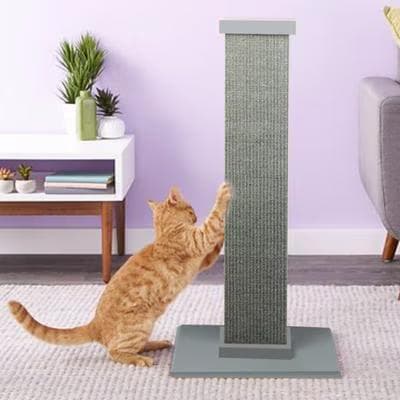
Offer a stable, accessible scratching resource as part of an individual environment plan. Let the cat use it voluntarily and keep a clear route away.
Webvet may earn a commission when you click through to Chewy, at no extra cost to you.
Natural remedies and supplements
Trying to treat hyperesthesia naturally should not postpone investigating pain, skin disease, or neurological signs. Homeopathy, Rescue Remedy, CBD oil, and a collection of calming supplements are not established replacements for a veterinarian-directed FHS plan. Products also differ in ingredients, concentration, and quality. Tell the clinician exactly what you are considering, including a photograph of the label, before giving it.
Zylkene and other products marketed for stress may be discussed as adjuncts for an individual cat, but a calming-product label does not demonstrate that it treats FHS. The question is whether there is a plausible role in this cat's plan, whether it can be used safely with current medicines, and what improvement would justify continuing it. Avoid introducing several products at once and then assuming the last one added caused any change.
Do not apply essential oils, concentrated household preparations, or diatomaceous earth to a sensitive cat as an improvised treatment. Products described as natural can still irritate skin, be inhaled, or be swallowed during grooming. Coconut or other oils are not a substitute for diagnosing the reason for biting or itching. Ask about any proposed topical product, including where it will be applied and how grooming exposure will be prevented.
Complementary approaches
Acupuncture or another complementary approach should be considered, if at all, within the broader veterinary plan and with a clear treatment goal. Limited evidence for a particular syndrome should be stated plainly rather than converted into a promise of a cure. Continue monitoring wounds, function, and episodes, and do not abandon effective prescribed care because a method is described as holistic.
When the initial plan does not help
An incomplete response is a reason to reassess, not automatically increase every medicine. Check whether the prescribed treatment was given as intended, whether the cat tolerated it, and whether the events being counted are the same behavior as before. A change in pattern, new injury, or a new medical sign can justify a different investigation rather than another month of the same approach.
Referral may involve dermatology, neurology, pain management, or veterinary behavior, depending on the findings. A veterinary behaviorist's clinical review emphasizes considering physical contributors and tailoring treatment rather than classifying every case as behavioral. Ask the primary veterinarian what the proposed specialist could add and which records, videos, and previous test results should accompany the referral.
Reducing stress and protecting a cat at home

Create a predictable environment with choices. A cat should be able to rest, hide, eat, drink, scratch, and use the litter tray without being approached or blocked by another animal. A quiet retreat should remain accessible even on good days. It is most useful when the cat can choose it, rather than being chased into it after behavior has escalated.
Start with one practical walk through the home. Look at the routes between essentials from the cat's perspective. A bowl technically available in the kitchen may be difficult to reach if another cat watches the doorway. A high perch may be unusable for a cat with pain or poor balance. More objects do not necessarily provide more choices if all of them sit in the same contested corner.
Make handling predictable
Let the cat initiate ordinary contact when possible. Keep interactions brief enough to end before discomfort develops, and avoid body areas associated with episodes. Ask the veterinary team how necessary grooming and medication should be handled. Do not use repeated stroking as a test of whether treatment has worked; that can provoke distress and makes the record harder to interpret.
Children and visitors need a simple consistent rule: give the cat space when it turns away, hides, or becomes tense. Do not make one person responsible for “calming” it by holding it still. If household members disagree about what an episode looks like, review the same video and written instructions together so they respond consistently rather than trying competing techniques.
A fitted pressure garment or Thundershirt is not automatically suitable for a cat whose body is sensitive. Touch or pressure may be uncomfortable, and forcing a garment onto a distressed animal can increase the problem. Discuss it before trying one, and stop if the cat freezes, struggles, hides, or cannot move normally. Equipment should be judged by the individual response, not by whether another owner reports success.
Match enrichment to the cat
Environmental enrichment should offer control and ordinary feline activity, not constant stimulation. Try short, predictable play opportunities that the cat enjoys, safe foraging appropriate to its diet, separate scratching locations, and comfortable resting places. Let the cat leave. Stop an activity if agitation builds instead of assuming that more exercise will exhaust the syndrome away.
Useful adjustments may include:
- Separate resources and visual space between household cats.
- A quiet sleeping place away from unpredictable noise or busy passages.
- Low, accessible resting options when climbing is uncomfortable.
- Predictable meal and play routines without forcing participation.
- Gradual changes rather than repeatedly rearranging the entire environment.
- Reducing a consistently observed trigger while investigating why it matters.
Catnip is not a universal calming tool. Some cats become more active or excited around it, and individual responses differ. If a particular activity or product repeatedly precedes agitation, record the pattern and leave it out while discussing the plan. Do not deliberately trigger another episode to be certain that the association is real.
Night-time episodes and household routines
If events happen at night, record what changes then: access to people or rooms, meal timing, noises, another animal's activity, or the cat's usual sleeping arrangement. Night-time behavior is a pattern to investigate, not a separate diagnosis. A new change in an older cat also merits a medical review rather than simply adding evening play or a supplement.
Prepare the safe resting area before bedtime, keep necessary resources accessible, and follow the agreed plan for an event. A camera can help establish timing if its use does not replace direct care. Do not shut the cat into an unsuitable empty room or use punishment to suppress noise. Our cat stress-relief guide covers environmental choices to discuss alongside the medical assessment.
There is no special hyperesthesia kit that replaces these decisions. The useful tools are those that solve a specific problem: a diary for consistent observations, a safe recording setup, prescribed medicines when indicated, appropriate transport, and resources the individual cat can use comfortably. Buying more equipment is not a measure of how well the condition is being managed.
Living with feline hyperesthesia

The outlook depends on the underlying contributors, the severity of self-injury, and the response to treatment. Many cats improve with an individualized plan, but improvement and cure are different claims. Some need continuing medication or environmental management. A cat who appears comfortable between events still needs the agreed follow-up if episodes recur or treatment is ongoing.
There is no reliable life-expectancy figure that applies to all cats labeled with FHS, with or without treatment. Nor should the syndrome automatically be described as fatal. Severe self-injury, an untreated painful condition, or another disease can pose serious risks. Decisions should be based on the cat's actual problems and response rather than a frightening label or another owner's outcome.
Measure function as well as episode counts
At the start of care, choose a few outcomes that matter to your cat. An episode count is useful, but it is incomplete if the cat has stopped playing, avoids essential resources, or is excessively sedated. Keep the measures simple enough to use consistently. Discuss what amount of change would count as improvement and when the team wants an update.
Review these points together:
- Frequency and duration of observed episodes, including uncertainty when nobody was home.
- Intensity of biting, grooming, agitation, and any new wounds.
- Comfortable sleep, ordinary movement, and participation in preferred activities.
- Food intake, body weight when monitored, and litter-tray use.
- Ability to give treatment without repeated distress.
- Adverse effects, missed doses, and practical barriers to the plan.
A useful update might say that tail biting has decreased but the cat is too unsteady to reach a favorite bed. That identifies both a benefit and a problem for the prescriber to address. “Better” alone can conceal important tradeoffs, just as one unusual evening can obscure an otherwise improving pattern. Bring the diary rather than changing the plan after every isolated event.
Recurrence, treatment changes, and quality of life
Ask in advance what to do if episodes return after a quiet period. The answer may involve checking for a new trigger, reassessing skin or pain, reviewing medicine administration, or arranging another examination. Do not restart an old prescription at a remembered dose without checking. The cat's weight, health, and other treatments may have changed since it was first supplied.
Online success stories can offer reassurance, but they cannot establish what will work for another cat. Published case reports are also limited: one improvement after an environmental change does not prove that the same change treats every cause of FHS. A useful lesson is to document the sequence carefully and keep reassessing, rather than copy every component of another household's routine.
When quality of life remains poor
If symptoms worsen, ask whether a different specialist or combined approach is appropriate. Severe injury, persistent distress, inability to eat or rest normally, or a treatment plan that cannot be delivered safely needs a direct welfare discussion. Explain financial and practical constraints honestly so the veterinary team can prioritize a feasible plan and identify what cannot safely be postponed.
Euthanasia is not an inevitable outcome of a hyperesthesia diagnosis. If quality of life remains poor despite appropriate investigation and care, the veterinarian can discuss the individual prognosis and options with you. That conversation should account for pain, injury, daily function, treatment burden, and realistic alternatives. An internet severity label or a single difficult episode cannot make that decision for your cat.
Feline hyperesthesia questions
Frequently Asked Questions
How long can a cat live with hyperesthesia?
There is no fixed lifespan for the syndrome. Individual prognosis depends on the underlying cause, severity, injuries, other health problems, and response to care. Many cats can have a good quality of life with an appropriate management plan, sometimes long term. Ask the veterinarian about your cat's specific risks and follow-up rather than applying a survival number from another case.
Can you cure feline hyperesthesia?
A treatable cause may be controlled or resolved, but there is no single guaranteed cure for every cat with FHS-like episodes. Some cats improve substantially while needing continuing medication or environmental management. The aim is comfortable daily function with fewer and less severe episodes and no self-injury. Review the response and any adverse effects before changing the plan.
Can I give my cat Benadryl to relax?
Do not self-medicate a cat with Benadryl to suppress unexplained episodes. Diphenhydramine is not a general treatment for FHS, and the appropriate use, formulation, and risks require veterinary assessment. Sedating the cat can also make it harder to evaluate what is happening. Tell the clinic what you observed and ask for an individual plan, particularly if the cat takes other medicines.
Does hyperesthesia always mean a cat has seizures?
No. FHS-like episodes are not always seizures; skin disease, pain, and behavioral contributors can produce overlapping signs. Neurologic assessment may be appropriate when awareness, recovery, repetitive event patterns, or other findings raise concern. A video helps describe the event but does not make a diagnosis by itself. Seek urgent advice for prolonged seizure-like activity or abnormal recovery.
Should I touch my cat during an episode?
Avoid the sensitive area and avoid physical restraint unless the veterinary team has given specific instructions for an immediate safety problem. Touch can aggravate some episodes, and an uncomfortable cat may bite defensively. Keep people and other animals away, reduce stimulation, and allow a safe route to retreat. Call the clinic when injury, severe signs, or abnormal recovery makes the event urgent.
Is tail amputation a routine treatment for hyperesthesia?
No. It is not routine treatment for the syndrome. Severe self-injury can require wound care and, in exceptional cases, a surgical discussion, but the cause of repeated tail-directed behavior still needs investigation. Removing tissue does not automatically resolve the process driving the behavior. Seek prompt assessment for a damaged tail and discuss pain control, protection, and the broader management plan.
$65 · no membershipHave a health question about your cat?
A licensed vet can assess your cat over video and prescribe online when it's appropriate.
Talk to a vet- Licensed vets
- All 50 states
- same-day Rx
Webvet may earn a commission if you book.
Veterinarian · BVMS MRCVS
Dr. Pippa Elliott, BVMS, MRCVS, is a veterinarian with nearly 30 years of experience in companion animal practice. Dr. Elliott earned her Bachelor of Veterinary Medicine and Surgery from the University of Glasgow. She was also designated a Member of the Royal College of Veterinary Surgeons. Married with 2 grown-up kids, Dr. Elliott has a naughty Puggle named Poggle, 3 cats and a bearded dragon.


