Papilloma Dog Warts: Pictures, Causes, and When They Go Away
Dog warts (canine papillomas) are viral, contagious only to other dogs, and usually resolve within 1 to 2 months. See pictures of mouth, eyelid, and paw warts, the immune timeline, and the red flags that mean a growth is not a wart.

BVMS MRCVS
Medically reviewed by Dr. Pippa Elliott, BVMS MRCVS · Last reviewed

This article contains affiliate links. Webvet may earn a commission when you buy through them, at no extra cost to you.
If you just found a lumpy, cauliflower-like growth on your puppy's lip, you are almost certainly looking at a papilloma dog wart, one of the most common and least dangerous growths in veterinary medicine. Dog warts are caused by canine papillomavirus, they spread from dog to dog (never to people), and in most healthy dogs the immune system clears them on its own within one to two months. This guide shows you what warts look like in the mouth, on the eyelid, and on the paw, exactly how contagious they are, how long they take to fall off, when treatment is actually worth doing, and the red flags that mean the growth is not a wart at all.
 Sponsored
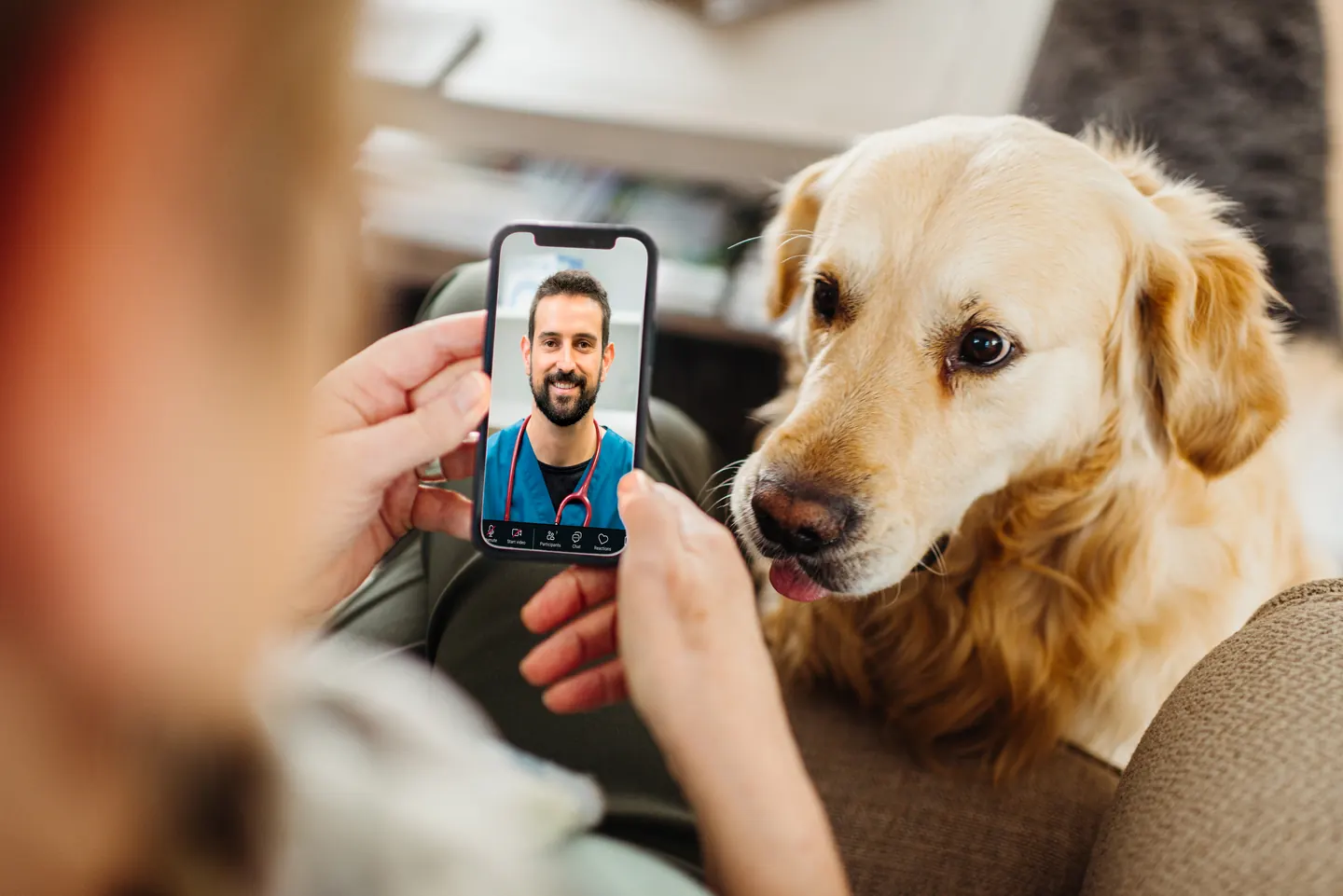
Want a vet's take on your dog's skin or coat?
Talk to a licensed vet at Dutch over video, often the same day. They can recommend treatment and prescribe it when it's appropriate.
Use code Pets30
Plans start at $11/month · covers up to 5 pets
- Licensed vets in most states
- Rx for 150+ conditions
- 4.7 on Trustpilot
What Are Dog Warts? The Canine Papillomavirus Explained
- 1Dog warts are benign growths caused by canine papillomavirus (CPV-1 and related strains), not by dirt, diet, or toads.
- 2They are contagious dog-to-dog but not contagious to humans, cats, or any other species.
- 3In healthy dogs, warts usually resolve on their own within 1 to 2 months as immunity develops, occasionally taking up to about 5 months.
- 4Any wart-like growth on a middle-aged or senior dog deserves a vet exam, because look-alikes include mast cell tumors.
Canine papillomavirus is a species-specific DNA virus that infects the surface layer of a dog's skin and mucous membranes. When the virus gets into a tiny break in the skin or the lining of the mouth, it hijacks skin cells and makes them multiply into the classic wart: a raised, rough, fringed growth that vets often describe as looking like a tiny piece of cauliflower or a sea anemone.
The strain matters mostly for location. CPV-1, the most common strain, causes oral papillomatosis, the crops of mouth warts seen in puppies and young dogs. Other strains cause cutaneous papillomas on the skin, eyelids, and feet. According to the papilloma overview from VCA Animal Hospitals, all of these behave the same way: they are benign, they do not invade deeper tissue, and they regress once the immune system mounts a response.

Sponsored Lemonade pet insurance link. Webvet may earn a commission.
Age is the biggest risk factor. Puppies and dogs under about 2 years old get the majority of viral warts because their immune systems have never met the virus before. Dogs on immunosuppressive medication (such as long-term steroids or cyclosporine) and dogs with immune-compromising illness are the other high-risk group, and their warts can be more numerous and slower to clear, as noted in the papillomavirus coverage in the Merck Veterinary Manual.
That is also why the word "wart" on an older dog should make you pause. A true viral papilloma in a healthy 9-year-old is uncommon. Growths that look warty on senior dogs are more often skin tags, sebaceous adenomas, or occasionally something serious, which is why the look-alike sections later in this article matter as much as the pictures.
Dog Wart Pictures: Mouth, Eyelid, and Paw
Most owners find this article because they need to match what they are seeing on their own dog. Papillomas have a distinctive look once you know it: a pale pink, white, or gray growth with a rough, fringed, cauliflower texture. Searches like warts on dogs paws pictures and pictures of warts on dogs legs are all trying to make the same match, so here are the three classic locations, starting with a mouth wart photo and ending with a paw wart photo.
This guide combines three things owners usually have to hunt for separately: location photo ID for the mouth, eyelid, and paw, an age-based weeks-to-regression timeline table, and a wart vs skin tag vs mast cell tumor visual compare. So whether you searched for photos of warts on dogs, images of warts on dogs, or pictures of skin warts on dogs, the pictures, the timeline table, and the look-alike compare are all on this one page.
Location searches follow the virus's own habits. Warts on a dog's mouth and tongue, often white or pale gray, are the classic young-dog crop, while warts on the face, nose, and chin come from the same play-biting contact. Skin warts on a dog's back or legs are sparser, and yes, dogs can get warts on their paws and feet: a wart on the foot, toe, or pad is the presentation most likely to make a dog limp.

The eyelid presentation below is the one owners most often mistake for a tumor.

And paw-pad and toe papillomas are the ones that cause limping.

Mouth warts (oral papillomas)
Oral papillomas are the signature presentation in puppies and young dogs. They show up on the lips, gums, tongue, inner cheeks, and sometimes the roof of the mouth or throat. They start as small smooth bumps and develop the classic cauliflower texture over a few weeks, often appearing in crops of several warts at once.
Most oral warts cause no symptoms at all. Signs that a crop has gotten severe enough to need a vet visit include:
- Bad breath that appeared alongside the warts
- Drooling more than usual, or blood-tinged saliva
- Dropping food, chewing on one side, or reluctance to eat hard kibble
- Pawing at the mouth
- So many warts that they interfere with swallowing (rare, but documented in severe oral papillomatosis cases reviewed by North Bay Animal Dentistry)
Eyelid warts
Eyelid papillomas grow right on the eyelid margin and are the location owners most often mistake for a tumor or a stye. A viral eyelid wart is a small, fringed, pale growth sitting on the lid edge. Because even a benign growth on the eyelid margin can rub the cornea with every blink, eyelid warts are one location where your vet may recommend removal sooner rather than waiting out the immune timeline.
Paw and toe warts
Paw papillomas grow on the paw pads, between the toes, and around the nail beds. Because dogs put weight on them, paw warts are the most likely to cause obvious symptoms: licking one foot obsessively, mild limping, or a wart that bleeds because it keeps getting scuffed on pavement. A firm, hardened wart on a paw pad (sometimes called an inverted papilloma) can look like a callus or corn, and warts between the toes are commonly mistaken for cysts or foreign bodies like foxtails. Until they regress, protective dog boots cushion a weight-bearing wart on walks.
Breed does not change the diagnosis, but coat and skin type change how quickly owners notice. Searches for warts on bichon frise dogs are common for exactly this reason: warts on curly or long-coated breeds like Bichons Frises and Maltese often go undiscovered until grooming, at which point a groomer's "found a wart" note sends owners here.

A collar-mounted sensor and app for activity, rest, sleep, respiratory rate, heart-rate trends, itch behaviors, and more.
- Builds a personalized baseline over time
- Tracks trends between veterinary visits
- Generates a month-long shareable report
Health monitoring for dogs and cats
Webvet may earn a commission when you click through to Maven Pet, at no extra cost to you.
How Dogs Catch Papillomas (and Whether People Can)
How is papilloma transmitted in dogs? Directly and simply: the papilloma virus passes from an infected dog to an uninfected dog through contact with a wart or with saliva and surfaces carrying the virus. The virus needs a small break in the skin or mouth lining to establish infection, which is why mouthy, playful young dogs are the classic patients. Common transmission routes include:
- Direct dog-to-dog contact: mouth wrestling, face licking, and play biting
- Shared toys, chew items, and balls that pass from mouth to mouth
- Shared water bowls and food bowls at parks, daycares, and boarding facilities
- Shared bedding, kennels, and grooming equipment
- Insect bites and abrasions that give the virus an entry point on the skin
Two more facts shape how you should think about exposure. First, the incubation period is long: 1 to 2 months can pass between exposure and a visible wart, so the dog that infected yours may have looked wart-free at the time, per the transmission overview from VCA Animal Hospitals. Second, susceptibility is not equal. Adult dogs with healthy immune systems often resist infection entirely, while puppies, adolescent dogs, and immunosuppressed dogs of any age are the ones that break out in crops.
Now the question every household asks: are warts on dogs contagious to humans, and can you catch warts from your dog? No. Canine papillomavirus is a species-specific virus, and it cannot infect people. It also cannot infect cats. Human warts come from human papillomavirus strains, and dog warts come from dog strains; the viruses do not cross between species in either direction. You do not need gloves, separate laundry, or any distance from a warty puppy. The only members of the household at risk are the other dogs.
 Sponsored
Vet care that's always there
Unlimited video calls and messaging with licensed vets for less than a typical vet visit. One membership covers up to five pets.
Use code Pets30
Plans start at $11/month · covers up to 5 pets
- Licensed vets in most states
- Rx for 150+ conditions
- 4.7 on Trustpilot
Dog Parks, Daycare, and Isolation Guidance
Because papillomas are contagious to other dogs, the practical question is what your dog's social calendar should look like while warts are visible. Dog park and daycare isolation guidance usually gets a single buried sentence, so here it is as its own section. You do not need to quarantine your dog inside the house, but you should pause dog-to-dog contact until the warts are gone.
Sensible rules while warts are active:
- Skip the dog park, daycare, and group classes until warts are fully gone, not just shrinking
- Do not share toys, chews, or bowls between your infected dog and other dogs, including housemate dogs
- Wash bowls, toys, and bedding your dog has used; papillomaviruses are hardy on surfaces
- Tell your daycare or boarding facility; reputable facilities exclude visibly warty dogs the same way they exclude coughing dogs
- Keep walking your dog normally on leash; passing another dog on the sidewalk is not meaningful exposure
Housemate dogs deserve a realistic expectation: by the time you spot warts, your other dogs have already been exposed for weeks. Separate bowls and toys anyway to reduce the viral dose, but do not be surprised if a second young dog in the house sprouts warts a month later. Adult housemates with prior exposure usually never develop any.
If this risk calculus feels familiar, it is the same one that applies to kennel cough in dogs: a highly contagious, usually self-limiting infection of social young dogs, managed by temporarily opting out of group settings rather than by panic.
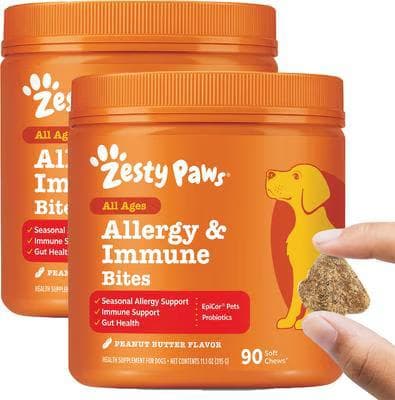
Webvet may earn a commission when you click through to Chewy, at no extra cost to you.
How Long Until Dog Warts Go Away? The Immune Timeline
The single most reassuring fact about dog warts is that the immune system cures them. Once a dog's immune system recognizes the papillomavirus and mounts a cell-mediated response, the warts shrink, darken or dry up, and fall off on their own. In most healthy dogs this takes 1 to 2 months from the time warts appear, and veterinary dermatology sources report that stubborn cases can take up to about 5 months before the last wart is gone, per VCA Animal Hospitals and the wart regression coverage from Whole Dog Journal. Once regression starts it usually moves quickly, with visible shrinkage week over week. A bonus of doing it the natural way: dogs that clear the infection develop lasting immunity to that strain, which is why adult dogs so rarely get oral warts twice.
The immune timeline to spontaneous regression is typically 1 to 2 months, up to about 5 in stubborn cases, and that is the honest answer to how long a papilloma stays on a dog before the warts fall off. Instead of a vague "they usually go away," the age-based immune timeline table below gives realistic weeks to regression by age and immune status: healthy puppies, first-exposure adults, previously exposed adults, and immunosuppressed dogs each run a different clock.
| Dog | Typical weeks to regression | What to expect |
|---|---|---|
| Puppy or adolescent (under 2 years), healthy | 4 to 8 weeks | Crops may briefly multiply first, then shrink and fall off together |
| Healthy adult with first exposure | 4 to 8 weeks | Often fewer warts and a faster course than puppies |
| Adult with prior exposure | Usually no warts at all | Existing immunity blocks infection in most dogs |
| Immunosuppressed dog (steroids, cyclosporine, chemotherapy, immune disease) | 8 to 20 or more weeks, may persist | Needs vet involvement; persistent warts may warrant treatment and a medication review |
| Any dog, any wart still present past 3 months | Overdue for a recheck | Persistent growths should be re-examined and possibly sampled |
Watch the trend, not the day count. Warts that are stable or shrinking are on schedule. A "wart" that keeps growing steadily past the 3-month mark, ulcerates, or changes character has stepped outside the expected papilloma story and needs a recheck, both to consider treatment and to confirm the diagnosis was right in the first place.
Dog Wart Treatment and Removal
How do you treat papillomavirus in dogs, and how to get rid of warts on dogs at all? Treatment for warts on dogs starts with a hard truth: the best way of treating warts, whether you want to remove warts on a dog's mouth, treat warts on the skin, or get rid of a paw wart, is usually not to treat them at all. In most cases, you do not intervene: the standard of care for typical warts in a healthy dog is watchful waiting while the immune system does the work, with photos every week or two so you and your vet can track the trend. Treatment or surgical removal is actually indicated only in the minority of cases where warts are causing real problems or refusing to leave. Your vet may recommend intervention when:
- Oral warts are numerous enough to interfere with eating, swallowing, or breathing
- A wart is in a bad location, such as an eyelid margin rubbing the cornea or a paw pad that bleeds with every walk
- The dog keeps chewing or traumatizing a wart, creating infection risk
- Warts persist past roughly 3 months, or keep multiplying in an immunosuppressed dog
- The diagnosis is uncertain and the growth needs to come off for biopsy
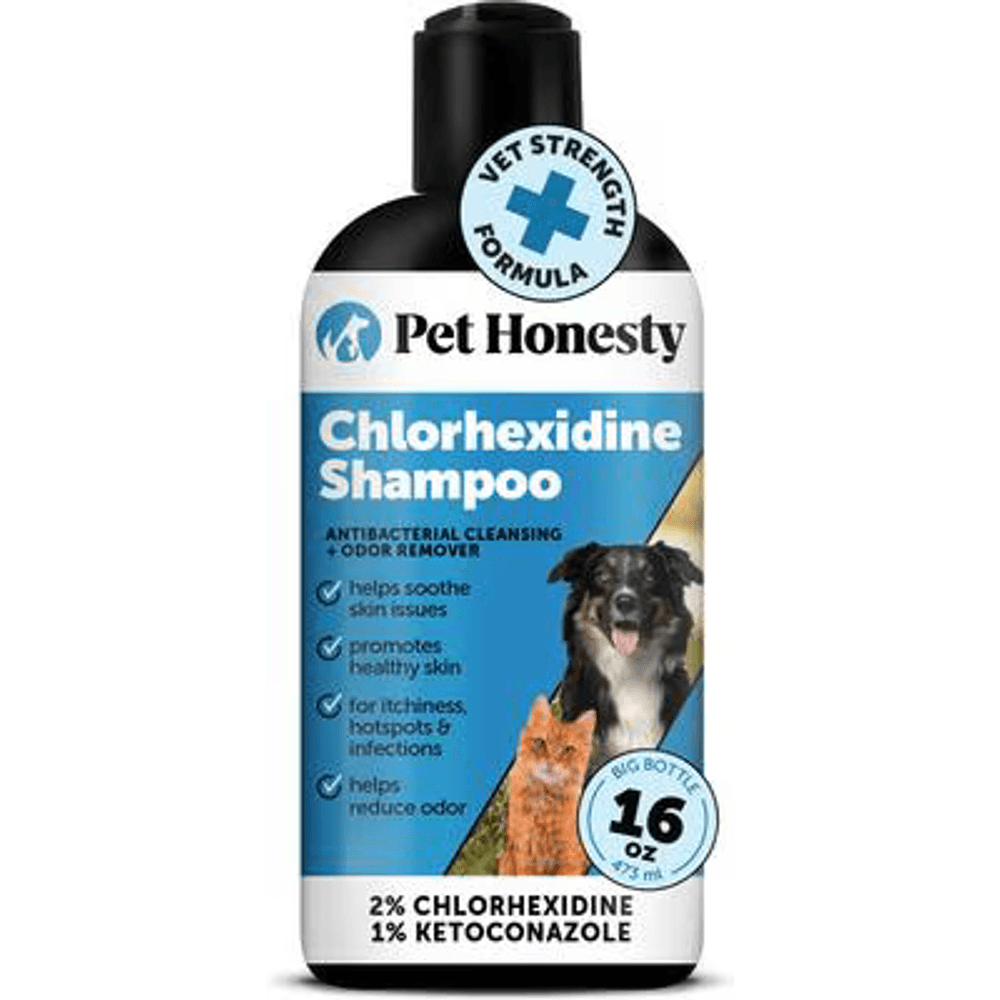
A vet-strength medicated shampoo with 2% chlorhexidine and 1% ketoconazole, the antifungal and antibacterial combination vets use to help clear ringworm and skin infections and to cut fungal spore shedding during treatment.
Webvet may earn a commission when you click through to Chewy, at no extra cost to you.
When treatment is indicated, veterinary options include:
- Surgical removal under sedation or anesthesia, the definitive fix for one or a few problem warts, with biopsy confirming the diagnosis
- Cryotherapy (freezing), a quick option for small accessible warts
- Crushing selected warts by a veterinarian, which can release viral particles and stimulate the immune system against the rest of the crop (this is strictly a vet procedure, never a home one)
- Azithromycin, an oral antibiotic that some clinical reports associate with faster wart regression, though evidence is mixed
- Interferon or other immune-modulating therapy for severe, persistent oral papillomatosis in immunocompromised dogs
Cost-wise, watchful waiting is free, and that is the honest reason vets recommend it so often: for a benign, self-resolving infection, anesthesia and surgery are usually more burden than the warts themselves. The calculus flips only when function, comfort, or diagnostic certainty is on the line, a framework consistent with the severe-case treatment review from North Bay Animal Dentistry.
Home Remedies for Dog Warts: What Actually Works
Search results for natural treatment for warts on dogs are full of home remedies: thuja pellets, castor oil, apple cider vinegar, vitamin E, crushed garlic. Here is the honest read. No home remedy has clinical evidence that it clears canine papillomas faster than the immune system already does, and because most warts vanish within 1 to 2 months on their own, every remedy applied during that window looks like it worked. That is the whole trick.
A few specifics worth knowing:
- Thuja, a homeopathic remedy, has anecdotal support and no controlled evidence in dogs; it is generally harmless at homeopathic dilutions, and that is the most that can be said for it
- Castor oil and vitamin E are safe to dab on a skin wart and may soften a dry, cracked one, but they do not kill the virus
- Apple cider vinegar is a mild acid; applied repeatedly it can burn and ulcerate the skin around a wart, and it stings on broken tissue; skip it
- Anything caustic sold as a "wart remover" for humans (salicylic acid products) does not belong on a dog, especially near the mouth or eyes
The one hard rule: never crush, cut, or DIY-remove a wart yourself, whether by popping, tying off, or freezing. Home removal hurts, bleeds more than expected, invites bacterial infection, and can spread viral particles to new sites on your dog. Every legitimate removal technique is a veterinary procedure. If you want to do something at home, do this instead: take clear weekly photos, keep the wart clean and dry, stop your dog from chewing at it (a cone helps for paw warts), and support the basics of immune health, decent nutrition and sleep, while the timeline runs.
Dog Wart vs Skin Tag: Telling Them Apart
The most common wart impostor, especially on dogs past middle age, is the humble skin tag. The two are easy to separate once you know what to feel for. A viral wart is rough, fringed, and cauliflower-textured, sits on a broad base, and shows up mostly in young dogs, often in multiples. A skin tag is the opposite: soft, smooth, and floppy, usually hanging from a narrow stalk, the same color as the surrounding skin, and it appears on middle-aged and older dogs as a slow, permanent fixture. Skin tags are not viral, not contagious, and they do not regress on their own the way warts do; they just quietly persist for years.
Location offers another clue. Skin tags favor friction zones: armpits, chest, belly, eyelids, and anywhere a collar or harness rubs. If your senior dog has a soft dangly growth in one of those spots, a tag is the leading candidate, and our full guide to skin tags on dogs covers when tags need removal and what they cost to deal with. The rule of thumb for any growth you cannot confidently sort: rough and fringed on a young dog leans wart, smooth and stalked on an older dog leans tag, and anything that does not fit either picture goes to the vet.
Dog Wart vs Mast Cell Tumor: Cancer Red Flags
This is the comparison that actually matters, because the scariest wart look-alike is a mast cell tumor, the most common malignant skin cancer in dogs. Mast cell tumors are shapeshifters: they can be raised, pink or red, sometimes ulcerated, and some are small and innocent-looking enough to pass for a wart or an insect bite. They also classically swell, redden, and shrink again over days as they release histamine, a behavior no papilloma shows.

The side-by-side compare above puts all three on one line: the cauliflower texture of a viral wart, the smooth stalk of a skin tag, and the red raised lump of a mast cell tumor.
| Feature | Viral wart | Skin tag | Mast cell tumor |
|---|---|---|---|
| Texture | Rough, fringed, cauliflower texture | Smooth, soft, floppy | Smooth to ulcerated, often a red raised lump |
| Typical age | Under 2 years | Middle-aged and senior | Middle-aged and senior (any age possible) |
| Behavior over time | Grows briefly, then regresses in 1 to 2 months | Stable for years | Grows, may swell and shrink day to day, may ulcerate |
| Color | Pale pink, white, or gray | Skin-colored | Pink to red, sometimes bruised-looking |
| Contagious | Yes, to other dogs only | No | No |
| Action | Monitor with photos; vet if persistent | Vet check at next visit | Same-week vet visit and FNA |
Owners searching for pictures of cancerous warts on dogs, or pictures of cancerous warts on dogs legs, are really asking this question: is this growth actually not a wart? Papillomas themselves do not turn cancerous, but a malignant growth can wear a wart costume convincingly. These are the red flags that a growth is not a wart and needs same-week vet triage with a fine needle aspiration (FNA):
- The dog is middle-aged or older, where true viral warts are uncommon
- The growth is red, inflamed, ulcerated, or bleeds without trauma
- It changes size day to day, or keeps growing past a month
- It is a single firm lump rather than a fringed crop
- The dog is bothered by it, or nearby lymph nodes feel enlarged
An FNA is a quick, inexpensive needle sample your vet can often read the same day, and it is the only way to tell a benign growth from a mast cell tumor with confidence; caught early, most mast cell tumors are curable with surgery. Our guide to mast cell tumors in dogs covers grading, staging, and treatment, and if you are still at the "what is this bump" stage, the full lump on your dog triage guide walks every type of growth in one place.
Dog Wart FAQ
Our sister site Petful also answers the everyday version of this question in Why Your Dog Has Warts, a quick companion read.
Frequently Asked Questions
Are dog warts contagious to humans?
No. Canine papillomavirus is a species-specific virus and it cannot infect people, no matter how much face licking happens. It cannot infect cats either. Human warts are caused by entirely different human papillomavirus strains, and neither virus crosses between species. The only individuals at risk from a warty dog are other dogs, especially puppies and immunosuppressed adults.
Can old dogs get papilloma warts?
It is possible but uncommon, mostly seen in seniors whose immune systems are suppressed by medication or illness. Most wart-like growths on older dogs are actually skin tags or sebaceous adenomas, benign non-viral growths that look warty but never regress. Because senior dogs are also the age group for mast cell tumors, any new wart-like growth on an older dog should get a vet exam and possibly an FNA rather than a wait-and-see approach.
Should I pop or crush a dog wart?
No, never. Crushing or popping a wart at home hurts your dog, bleeds heavily, creates a real infection risk, and can spread viral particles that seed new warts on the same dog. Vets do sometimes deliberately crush a wart to stimulate the immune response, but that is a controlled procedure done with proper restraint and aftercare. At home, your only jobs are keeping the wart clean, stopping your dog from chewing it, and photographing it weekly.

Editor
The Webvet Editorial Team is the in-house group of pet-care editors and writers behind Webvet, operated by Smart Pet Collective. The team researches, writes, and maintains Webvet's pet health, behavior, and medication content. Every article follows a defined editorial process: research from reputable veterinary and scientific sources, careful drafting, mandatory review of medical content by a credentialed veterinarian, and dated publication. Health and medication articles are medically reviewed by a licensed veterinary professional before they go live and are kept current over time.
Veterinarian · BVMS MRCVS
Dr. Pippa Elliott, BVMS, MRCVS, is a veterinarian with nearly 30 years of experience in companion animal practice. Dr. Elliott earned her Bachelor of Veterinary Medicine and Surgery from the University of Glasgow. She was also designated a Member of the Royal College of Veterinary Surgeons. Married with 2 grown-up kids, Dr. Elliott has a naughty Puggle named Poggle, 3 cats and a bearded dragon.


