Cat Zoomies: Why They Happen and When to Be Concerned
Learn how to interpret familiar running bursts, recognize changes that deserve veterinary attention, and build a practical play routine with a safer route through the home.

This article contains affiliate links. Webvet may earn a commission when you buy through them, at no extra cost to you.
Cat zoomies are sudden bursts of running, chasing, or darting around the house. A familiar short episode followed by normal eating, resting, and litter-box use can be ordinary play. A new pattern, difficulty settling, or signs of discomfort deserve a closer look. The useful question is what happens before, during, and after the sprint.
What cat zoomies look like
- 1Familiar brief bursts can be normal play; speed alone does not tell you whether a cat is happy or distressed.
- 2Look for a behavior change, trouble settling, or accompanying health signs.
- 3Provide safe play opportunities, but seek veterinary advice about discomfort or urinary changes.
“Zoomies” is an informal name, sometimes called a frenetic random activity period or FRAP. A cat may race along a hallway, make quick turns, or chase a toy in predatory play. Cats and dogs can both have running bursts, but the label does not identify either animal's motivation. Kittens often have conspicuous bursts; there is no fixed age when every cat grows out of zoomies.
For supervised play, a Frisco Bird teaser wand provides a catchable target away from hands and feet. Keep the string under your control, allow successful catches, and put the entire toy away afterward. Replace damaged parts before feathers or string can be swallowed. A toy offers an outlet; it does not explain a new medical or behavioral change.
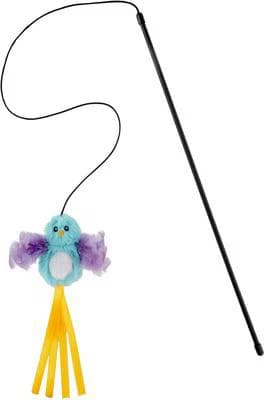
Use a catchable wand toy for supervised play, then store the wand and string securely out of reach.
Webvet may earn a commission when you click through to Chewy, at no extra cost to you.

Watch the whole cat rather than interpreting one sign in isolation. Meowing during zoomies can accompany activity, but new or distressed vocalizing deserves attention. Is the movement voluntary and coordinated? Can the cat pause and return to usual activities? Familiar playful bursts can be a good part of normal activity; frightened escape can also involve running, so the surroundings matter.
Why cats get zoomies at night or after the litter box
Cats often become active around dawn and dusk, a pattern called crepuscular activity. A cat that has rested through a quiet day may be ready to play when the household is winding down. A regular evening burst is different from new nighttime restlessness, repeated crying, or disorientation. Record the timing before deciding that the cat needs a different bedtime routine.
A catchable KONG Kickeroo Cuddler can be part of that planned play time if your cat enjoys grasping and kicking toys. Offer it on a clear surface and check its condition after use. Some cats prefer a wand or another style of play; enthusiasm for one toy is individual, and a new toy is not a reason to ignore a change in behavior.

Offer this kicker toy when it suits your cat's play style, and inspect it for damage after use.
Webvet may earn a commission when you click through to Chewy, at no extra cost to you.
Running before or after using the litter box
Some cats sprint after pooping or peeing, and others run shortly before entering the box. Timing alone cannot establish a single cause. Check whether elimination itself looks comfortable: normal output, no repeated unsuccessful attempts, and no crying, prolonged straining, or persistent licking afterward. An apparently cheerful exit does not cancel out a problem inside the box.
Keep track of changes in litter-box behavior, including accidents, small urine clumps, or a different stool pattern. Tell the veterinarian about those changes instead of assuming that every post-poop dash means relief or happiness. A video of a naturally occurring episode may help, provided recording does not delay care or encourage extra activity.
After meals, catnip, or a household change
An episode after eating may coincide with the cat's usual active period. If zoomies begin when you come home, note whether your arrival brings play, feeding, noise, or another change. The timing does not prove separation distress or one specific emotion. The same applies to visitors or a catnip toy: record the context and whether the cat settles. Vomiting, pain, or unusual agitation calls for veterinary advice.
When a change in running behavior needs a vet
A cat getting zoomies more often, running for hours without settling, or becoming less active deserves attention to the whole pattern. Dilated eyes or a puffed tail alone cannot distinguish play from fear or distress. Report new biting, vocalizing, or changes in appetite, weight, thirst, urination, grooming, or awareness. These observations help the veterinarian choose an examination; “zoomies” itself is not a diagnosis.
| What to record | Useful observation | Next step |
|---|---|---|
| Episode timing | Time of day, preceding meal, play, noise, or litter-box visit | Look for a repeated pattern rather than assigning a cause from one event |
| Settling afterward | Return to normal rest and interaction, or persistent agitation | Discuss a new inability to settle with the veterinarian |
| Litter-box changes | Straining, frequent attempts, crying, or little urine | Seek prompt veterinary advice; suspected inability to urinate is an emergency |
| Other signs | Weight loss, thirst change, itching, apparent pain, or disorientation | Arrange assessment and share the timeline |
| Recent treatment | Surgery, injury, a cast, or prescribed activity restriction | Follow the treating team's restrictions and report unexpected running |
For familiar play without concerning changes, a stable Frisco crinkle play tunnel can add somewhere to explore or pause during play. Set it on secure footing, leave the exits clear, and supervise the first sessions. Check that its size suits the cat and remove it if damaged or repeatedly chewed. A tunnel should offer choice, not force a nervous cat toward another pet.
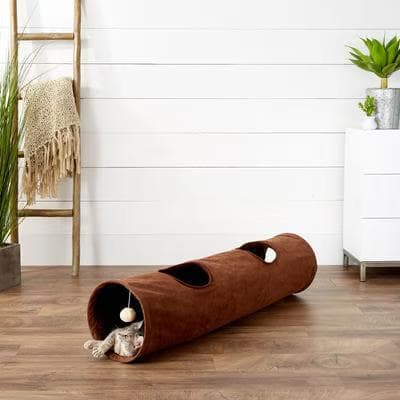
A stable tunnel can add an optional play route; check its size, footing, condition, and clear exits.
Webvet may earn a commission when you click through to Chewy, at no extra cost to you.
This observation record cannot diagnose a disease. For example, Cornell's feline health guidance identifies hyperactivity among possible signs of hyperthyroidism. A newly restless older cat with weight or appetite changes needs assessment; one playful sprint does not establish thyroid disease. The guide to hyperthyroidism in cats explains that separate clinical question.
Cornell's urinary guidance describes repeated attempts with little or no urine as a possible obstruction pattern. Its breathing-difficulty guidance also emphasizes prompt care. Do not dismiss panting as normal zoomies when breathing looks difficult or does not settle.
Zoomies after a spay, injury, or cast
A cat's willingness to run does not mean an incision or injury has healed. Follow the prescribed activity restriction and call the treating team if the current setup does not contain the bursts safely. Ask about a suitable recovery space and any change in discomfort. Do not remove a cast, improvise sedation, or introduce vigorous play to tire the cat out.
A practical play and feeding routine
Feeding enrichment can be one part of the daily routine. A Catit Play Treat Puzzle can hold a measured part of the normal daily ration when its design suits the food and the cat. Start with an easy task on stable flooring and confirm the cat actually eats enough. Account for treats in the food allowance; a puzzle is not a substitute for an accessible meal, especially when appetite is reduced.

Start this puzzle with an easy task using a measured food portion, and confirm your cat still eats an adequate meal.
Webvet may earn a commission when you click through to Chewy, at no extra cost to you.
Environmental enrichment means giving the cat useful opportunities to play, explore, and rest. If you want to make your cat zoom, invite voluntary play with a catchable toy around its usual active time, allow breaks, and accept that the cat may prefer a quieter activity. Cats Protection recommends distributed play sessions with catchable toys. The aim is a satisfying outlet, not exhaustion or a promise to eliminate every nighttime sprint.
Build a repeatable evening sequence
- Invite play with a catchable toy, keeping movement within your cat's comfortable ability.
- Let the cat pause or stop; do not chase it to continue the session.
- Offer the planned meal or portion at the usual time.
- Leave a comfortable resting place available when the activity ends.
For a cat that is lively at 3 a.m., compare several nights rather than changing everything after one disrupted sleep. Keep a simple record of daytime activity, evening play, food timing, and overnight events. If the cat has a medical feeding schedule or activity restriction, that plan takes priority. Do not keep a resting cat awake all day to enforce your preferred sleep schedule.
Redirect safely instead of punishing
There is no universal way to say “no” in cat language. Use safe redirection: stop an unsafe interaction, create space, and offer an appropriate activity when the cat can engage calmly. Reward the behavior you want. Avoid punishment, startling, spraying, grabbing, or chasing, which can add fear or turn your response into another chase game.
If feet are becoming a target, use toys that keep hands and feet out of the game. Recurrent biting, conflict between pets, or difficulty settling merits veterinary or qualified behavior support. The guides to interactive cat toys and reducing household stress provide more detail for those distinct next steps.
Make the running route safer

Cats may zoom around the house because that is the space available for an active burst or chase. Check the route from the cat's height. Remove fragile objects, loose cords, sharp edges, and swallowable items. Secure windows and screens, and provide nonslip footing where the cat turns or lands. Avoid a chase route into stairs, another animal, or someone carrying hot food.
Shared spaces and older cats
In a multicat home, watch whether every participant can leave. A cat hiding, being cornered, or repeatedly blocked from resources is not necessarily enjoying a mutual game. Provide separate resting places and ways to move through the room. Supervise children around an excited cat and let the cat disengage.
Older cats may enjoy shorter or less acrobatic play. A cat that does not get zoomies anymore is not automatically ill, but a sudden loss of interest, reluctance to jump, or changed gait deserves discussion. Adapt play to the cat in front of you: a clear floor-level route can be more useful than a tall, unstable obstacle course.
Keep the setup simple enough to maintain. Put string toys away, inspect play equipment, and review the observation notes if the pattern changes. The purpose is to support comfortable ordinary activity while noticing when your cat needs a different kind of help.
Cat zoomies questions
Frequently Asked Questions
Do zoomies mean cats are happy?
They can accompany playful behavior, but fast running alone does not prove happiness. Read body language alongside the situation: whether the cat chooses the activity, can pause, and returns to normal behavior. Fear, discomfort, or another cat's pursuit can also produce sudden movement. A new pattern or accompanying health signs deserves assessment.
Should you ignore cat zoomies?
You can allow familiar, safe running when your cat settles normally and nobody is being hurt. Keep the route clear and avoid turning every burst into a chase with you. Do not ignore a behavior change, distress, injury risk, or altered litter-box habits. Those observations may call for a veterinary discussion rather than more toys.
Why does my cat get zoomies after using the litter box?
There is no single established explanation for every cat's post-box sprint. Watch for litter-box changes, including straining, repeated visits, crying, or abnormal output, and report them. Suspected urinary obstruction requires urgent care, even if the cat runs afterward. A comfortable, familiar episode with otherwise normal behavior can be observed without treating the sprint itself as a diagnosis.

Editor
The Webvet Editorial Team is the in-house group of pet-care editors and writers behind Webvet, operated by Smart Pet Collective. The team researches, writes, and maintains Webvet's pet health, behavior, and medication content. Every article follows a defined editorial process: research from reputable veterinary and scientific sources, careful drafting, mandatory review of medical content by a credentialed veterinarian, and dated publication. Health and medication articles are medically reviewed by a licensed veterinary professional before they go live and are kept current over time.
Related reading

How to Introduce Cats: A Step-by-Step Plan and Troubleshooting Guide

Cat Separation Anxiety: Signs and a Step-by-Step Management Plan

Pica in Cats: Why Cats Eat Nonfood Items and What to Do
