Cat Dandruff: Causes, Safe Care, and When to Call a Vet
Cat dandruff can signal grooming problems, parasites, or illness. Compare common patterns, learn gentle coat care, and recognize the signs that call for veterinary attention.

BVMS MRCVS
Medically reviewed by Dr. Pippa Elliott, BVMS MRCVS · Last reviewed

This article contains affiliate links. Webvet may earn a commission when you buy through them, at no extra cost to you.
Cat dandruff is a buildup of visible skin flakes in the coat. A few loose flakes can accompany ordinary grooming problems, but persistent dandruff can also reflect parasites, inflammation, pain, or another illness. The most useful first step is checking the skin and your cat’s behavior before choosing a shampoo.
White specks alone cannot tell you which cause is responsible. Notice where the flakes collect, whether the coat feels oily, and whether your cat is scratching or struggling to groom. Those details help separate a routine coat-care question from a problem that needs veterinary attention.
What cat dandruff looks like
A cat that has a lot of dandruff may have an underlying cause that needs attention. Visible skin flakes are not a normal finding to ignore when they come with discomfort. Photos or images can document clumpy hair and skin problems, but they cannot reveal all the reasons behind the change.
Pictures of cat dandruff can help illustrate loose flakes, but they cannot tell why a cat is getting them. Check whether the material sits on the fur or forms attached crusts. Photograph unusual yellow or orange debris, chin changes, or a flaky patch before applying anything that alters its appearance.
Cat dandruff usually appears as irregular white or gray skin flakes caught among the hairs or left on bedding. It can be more obvious on a black cat because pale flakes contrast with dark fur. Coat color makes it easier to see; it does not establish the underlying cause.
- 1Skin flakes are a sign, not a diagnosis. Treating the underlying cause matters more than brushing away every speck.
- 2Itching, bald patches, sores, or a change in appetite make a veterinary examination more important.
- 3Use gentle cat-safe grooming. Avoid human dandruff products and home pesticide mixtures.
Dandruff and dander are related but different. Dander includes tiny shed skin particles that may be too small to notice. Dandruff refers to visible accumulated flakes. Neither the amount of visible dandruff nor a clean-looking coat reliably measures how much a cat will trigger a person’s allergies.
Make a skin-check appointment easier
A familiar Frisco Travel Safety carrier can help with a planned veterinary visit when dandruff is new or persistent. The link opens the Medium model, so check fit. Bring photographs and a list of products already used. The carrier supports transport; the examination determines whether the flakes need more than routine grooming.

Soft-sided travel safety carrier that keeps a stressed cat secure and well-ventilated on the way to the vet, with mesh panels for airflow and a seat-belt loop.
Webvet may earn a commission when you click through to Chewy, at no extra cost to you.
Look at the material without picking at the skin:
- Loose pale flakes: compatible with dandruff, but not proof of simple dry skin.
- Greasy flakes or clumped fur: may accompany excess skin oils, poor grooming, or inflammation.
- Black specks: may be flea dirt or another material rather than white skin scale.
- Attached crusts, bleeding, or raw patches: need a skin assessment rather than more brushing.
Some cats have both dry-looking scale and an oily coat. VCA describes dry and oily forms of seborrhea in cats, often occurring together. Yellowish, waxy debris or an unpleasant smell is another reason to have the skin checked rather than assuming the coat needs moisturizing.
Why does my cat have dandruff?
Use grooming reach and symptoms to decide when to see a vet
Common explanations include reduced grooming, dry indoor air, and skin disease. The pattern and next-step chart separates grooming reach, oily skin, parasites, and illness before choosing a shampoo. Several causes can occur together. For example, an older cat may have limited grooming reach because of arthritis and also have fleas.
A visible flake does not identify either problem.
| Pattern you notice | Possibilities to discuss | Next step |
|---|---|---|
| Flakes on the lower back or near the tail, difficult grooming | Obesity, stiffness, matted undercoat | Ask about body condition, pain, and a gentle grooming plan |
| Fine flakes during heated indoor weather, otherwise comfortable | Low humidity may contribute | Review the environment and arrange care if flakes persist |
| Itching, broken hairs, scabs, or bald patches | Fleas, mites, allergy, infection | Veterinary skin examination |
| Greasy coat, odor, or thick scale | Seborrhea or secondary infection | Veterinary assessment before medicated products |
| Flakes with weight, thirst, appetite, or activity changes | Illness affecting skin or grooming | Prompt veterinary appointment |
| Painful sores, marked weakness, or not eating | More urgent illness or skin complications | Call your veterinarian promptly |
Grooming reach, weight, and aging
Dandruff near the base of the tail, matted long hair, or a cat that sheds a lot can make a grooming problem easier to notice. In old or geriatric cats, new coat changes deserve a mobility assessment. Seasonal shedding may add loose hair, but it does not explain painful or inflamed skin.
Cat dandruff on the back near the tail often draws attention because this area can become harder to reach. Obesity can limit flexibility. Arthritis or another painful condition can make turning and stretching uncomfortable. A senior cat that stops grooming may be showing discomfort, not simply becoming less tidy.
Check for changes in everyday movements:
- Hesitating before jumping onto a familiar chair.
- Difficulty turning to groom the lower back.
- Flinching when a particular area is touched.
- New mats, clumpy fur, or litter stuck to the coat.
Tell your veterinarian about those changes. Help with grooming can improve comfort, but it will not resolve untreated pain. Do not put a cat on a crash diet to improve grooming reach. Weight management needs a measured feeding plan that preserves adequate nutrition.
Dry air, diet, and underlying disease
Heated indoor air can contribute to a dry coat, including in indoor cats. Indoor living does not rule out parasites, allergy, or illness, however. The timing of winter flakes is a useful clue to report, not a reason to ignore itching, hair loss, or a change in behavior.
Choose a tool for the coat you have
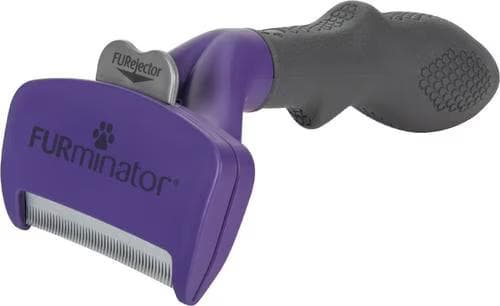
If your cat has intact, comfortable skin and a long coat, the FURminator Long Hair Cat Deshedding Tool is one loose-undercoat option. This is the Medium long-hair variant, not a universal brush for every cat. Use gentle handling and follow its instructions; painful skin and tightly attached mats need a different plan.
Webvet may earn a commission when you click through to Chewy, at no extra cost to you.
A complete, balanced diet supports the skin. That does not mean every flaky cat needs a new food or fish oil. Cornell’s discussion of skin disorders explains that nutrition is less likely to be the cause when a cat eats a nutritionally complete diet and absorbs nutrients normally.
Other possibilities include allergies, infections, and illnesses that interfere with grooming. Texas A&M’s veterinary guidance on feline dandruff identifies both minor coat-care problems and more serious medical causes. Dandruff alone cannot distinguish among them, so a change affecting the whole cat deserves attention.
 $65 · no membership
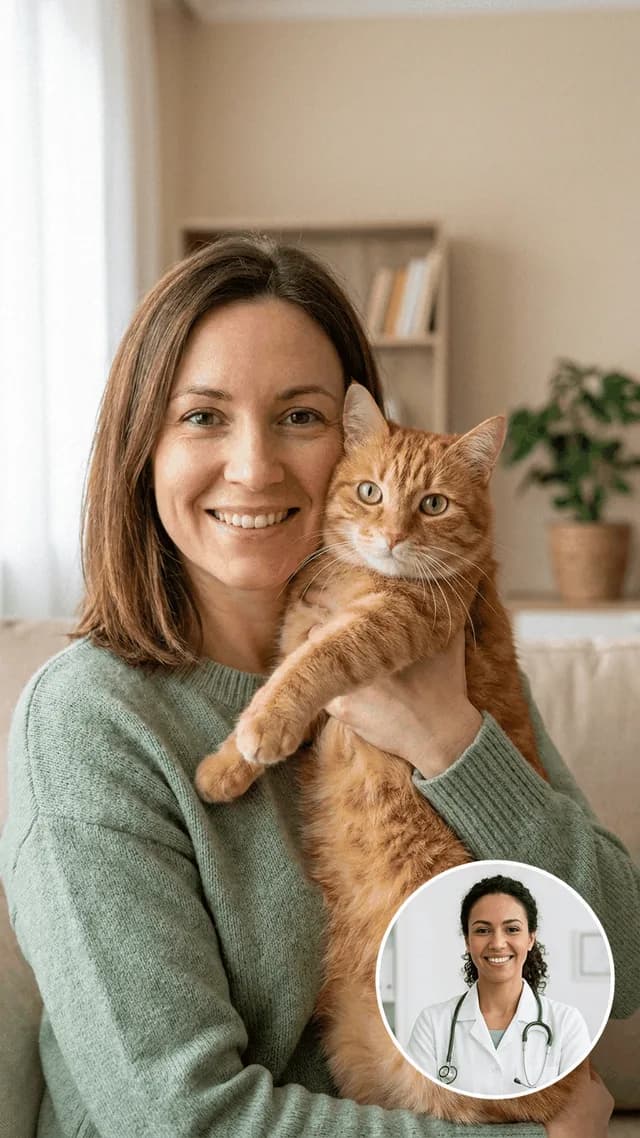
Is your cat's itching or skin issue getting worse?
A licensed vet can examine your cat over video and prescribe treatment online when it's appropriate.
 Talk to a vet
- Licensed vets
- All 50 states
- same-day Rx
Webvet may earn a commission if you book.
Cat dandruff treatment and safe home care
To get rid of cat dandruff, first find out what is causing it. Gentle grooming can reduce loose flakes, but a home remedy cannot cure every underlying problem. Avoid vinegar and coconut oil as substitutes for a diagnosis. Lasting prevention depends on comfortable grooming, suitable nutrition, and treating any identified disease.
Cat dandruff treatment should address the cause. When the skin is intact and the cat is comfortable, gentle coat care can help remove loose flakes while you arrange advice. Avoid trying several remedies at once. A sudden mix of sprays, supplements, and bathing can irritate the skin and obscure what helped.
Use this simple starting routine:
- Check the skin gently. Part the coat without scratching, scraping, or lifting attached crusts. Stop if your cat resists or appears painful.
- Note the pattern. Record where flakes are most visible and whether there is itching, matting, odor, or hair loss.
- Use an appropriate soft brush. Keep sessions short and comfortable. Let your cat move away.
- Review parasite prevention. Give your veterinarian the exact product, species label, and last application date.
- Keep normal food and water available. Make diet changes or supplements part of a veterinary plan rather than an experiment.
Regular brushing removes loose hair and skin debris and helps distribute skin oils. VCA’s coat-care guidance also recommends checking for tangles, especially in areas that mat easily. Long-haired cats often need more frequent grooming than short-haired cats, but comfort and skin condition determine the right routine.
Avoid turning grooming into skin irritation
Do not scrub until every flake disappears. Repeated passes with a deshedding blade can aggravate sore skin, and scissors can injure a cat when a mat sits close to the body. Dense mats, painful areas, and grooming that your cat cannot tolerate are reasons to ask for professional help.
For cat dandruff on the lower back, a gentle brush may help with loose coat buildup while the veterinarian assesses mobility. This applies to long-haired and short-haired cats alike. A Maine Coon, Bengal, or other breed can develop the same everyday problems; breed alone does not identify a treatment.
Use grooming shampoo only when bathing is appropriate
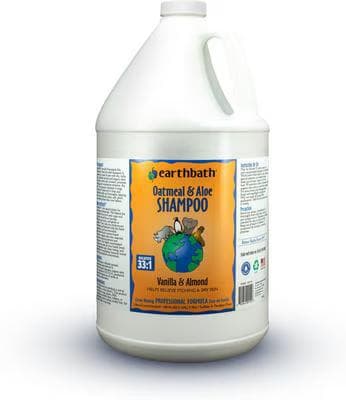
Earthbath Oatmeal & Aloe shampoo is a dog-and-cat grooming product, not a cure for mites or another cause of dandruff. This offer is the 128-fluid-ounce Vanilla Almond bottle, a large size best suited to households that actually need it. Ask your veterinarian whether bathing is appropriate for this cat before choosing a product.
Webvet may earn a commission when you click through to Chewy, at no extra cost to you.

Track improvement instead of counting flakes
The goal is to treat the cause and prevent recurrence, not simply find a stronger dandruff remover. Discuss solutions with the clinic if your cat has persistent flakes. The best treatments depend on the examination. Trying to eliminate every speck by scrubbing can create irritation without solving the original skin problem.
A useful home record includes grooming comfort, scratching, appetite, and whether new sore areas appear. Photograph the same location in similar light. Bring that record if the dandruff persists or returns quickly after grooming. A cleaner coat for one evening does not prove that parasites or inflammation have resolved.
If flakes appeared after a new product
Write down whether the change followed a flea treatment, bath, grooming session, or new supplement. Include where the product was applied and whether redness is concentrated in that area. Timing can help the veterinarian investigate a possible reaction, but it does not prove that the product caused the problem.
Do not apply a second parasite product to compensate for flakes that remain. Check the package and contact the prescribing clinic for instructions if you think the first application caused irritation. Bring the product name and ingredients rather than relying on its package color or a general description such as “monthly flea medicine.”
Keep track of these separate outcomes:
- Loose debris may disappear after brushing even when the underlying skin problem remains.
- Comfortable grooming may improve before the coat looks completely normal.
- New redness, sores, or worsening itch means the plan needs reassessment.
If your cat seems well but you are unsure whether the flakes are increasing, keep one dated photograph and arrange routine advice. If symptoms are persisting or expanding, see a vet instead of repeatedly changing products. A stable record helps the clinic compare progress more clearly than memory alone.
If your home feels unusually dry, discuss a clean, well-maintained humidifier as an environmental measure. It is not a treatment for mites or infection. Keep the cat’s normal routine predictable, wash bedding as appropriate, and avoid fragranced products that could add another irritant while you are assessing the original problem.
Cat dandruff shampoo, brushes, and supplements
Choose products for a specific job. A brush removes loose coat; a grooming shampoo cleans; a prescribed medicated product treats a diagnosed problem. These jobs are not interchangeable. The “best cat dandruff shampoo” depends on whether a bath is appropriate at all and what the examination finds.
Keep medicated shampoo diagnosis-specific
MiconaHex+Triz shampoo is labeled for dogs, cats, and horses and contains miconazole and chlorhexidine. A veterinarian may select it for a responsive bacterial or fungal skin problem. It is not a default dandruff shampoo or a mite treatment; use it only when its purpose and bathing instructions match the diagnosis.
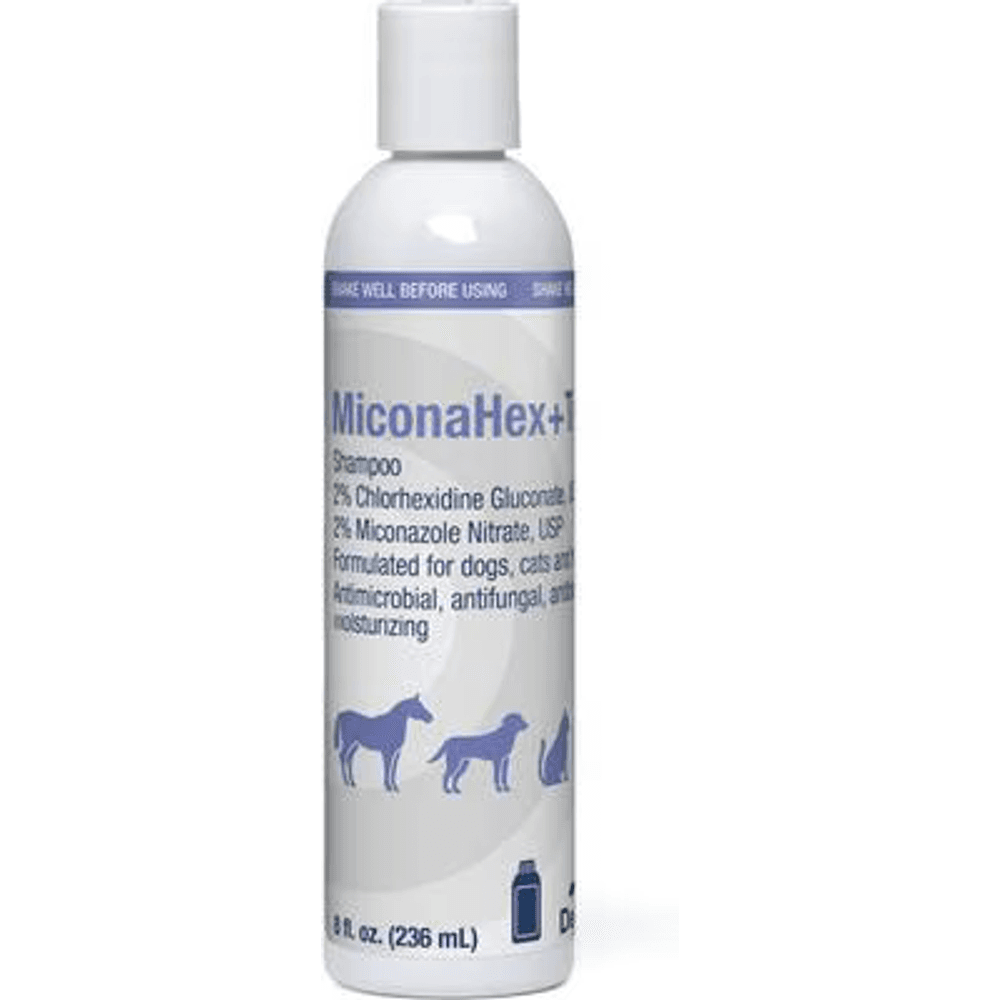
A vet-strength medicated shampoo pairing 2% chlorhexidine and 2% miconazole, a potent antifungal and antibacterial combination widely used to help clear ringworm and yeast or bacterial skin infections.
Webvet may earn a commission when you click through to Chewy, at no extra cost to you.
Brushes for an intact, comfortable coat
An appropriate cat brush can be useful when loose undercoat contributes to flakes. The FURminator Long Hair Cat Deshedding Tool is a long-coat tool, not a treatment for dermatitis. Select the correct coat type and follow the instructions. Do not use it across sores, inflamed skin, or tight mats.
Start with light pressure and short sessions. A soft brush or comb may be more comfortable than a deshedding tool for a sensitive cat. If brushing appears to create more redness or discomfort, stop. A cat that needs help with coat care should not have to endure repeated painful grooming.
Shampoo is optional, not the starting diagnosis
Your veterinarian may recommend a cat-labeled grooming shampoo or a medicated wash when appropriate. Earthbath Oatmeal & Aloe Dog & Cat Shampoo is a grooming option to discuss for a cat that tolerates bathing. It does not treat mites, ringworm, or the medical reason behind greasy scaling.
Follow the exact product label and your veterinarian’s instructions, including age restrictions. Keep products out of the eyes and ears. Do not substitute a human dandruff shampoo or assume a dog shampoo is safe for cats. Avoid bathing a sick, distressed, very young, or painful cat without veterinary direction.
Food and fish oil decisions
Cat food for dandruff is not a single category with one correct formula. Bring the food label, treats, and supplement list to the appointment. A veterinarian can assess nutritional balance and decide whether a specific diet trial or supplement makes sense. Frequent unplanned food changes make those decisions harder to interpret.
Fish oil can be part of an individualized plan, but it is not a universal dandruff cure. Product strength and serving directions vary. Ask about a cat-appropriate formulation and amount rather than borrowing a dog’s serving instructions or adding oil because the package says “pet.” More is not automatically better.
Dandruff or flea eggs?
A cat can have dandruff and parasites at the same time. If you wonder whether the coat contains lice, eggs, or flakes after a flea treatment, save a clear photo for the clinic. Do not apply another insecticide based on that comparison alone. The veterinarian can identify the material and review product coverage.
Dandruff and flea eggs can both look pale, but loose skin flakes tend to be irregular rather than uniformly oval. Flea dirt often looks like dark specks. Appearance alone is unreliable, especially in a moving cat or a phone photograph.
Check the parasite history
Do not decide that a cat is flea-free just because you cannot see adult fleas.
Our guide to flea eggs on cats explains that specific comparison and the flea life cycle. Share what you find with your veterinarian, including any dark debris, scratching, or recent flea treatment. The safest next step is a cat-appropriate control plan when fleas are suspected, not repeated household insecticides on the coat.
Walking dandruff and mange
Walking dandruff symptoms in a cat may include excessive scale and itching, but a cat with these symptoms does not necessarily have parasites. Mites are one possible explanation among several. A skin examination is the useful next step when flakes keep returning, especially if other animals in the household are itchy too.
“Walking dandruff” refers to an infestation with Cheyletiella mites, not ordinary dry skin. These mites may cause scale and itching, although signs vary. You cannot reliably rule them out by watching whether the flakes move. A veterinarian may examine material collected by combing, tape testing, or skin scraping.
Mange in cats explains mite types, contagion, and the treatment decisions. Tell the clinic if another pet or a person in the household has developed itchy lesions. Ordinary dandruff is not contagious, but an underlying parasite or infection may spread and can require a coordinated household plan.
When dandruff needs veterinary attention
A cat that has dandruff and bald spots, is losing hair, or suddenly has a bad coat needs more than a cosmetic fix. Some possible causes are contagious; ordinary shed skin is not. Tell the vet about changes in other pets as well as the affected cat. Avoid diagnosing the cause from flakes alone.
Arrange an examination when dandruff is persistent, extensive, or accompanied by other changes. Flakes plus hair loss can have several causes, including ringworm in cats. Ringworm is a fungal infection, not a worm or mite, and it may need different testing and household precautions.
Bring a short history rather than an extensive list of internet diagnoses:
- When the flakes started and where you first noticed them.
- New itching, hair loss, smell, mats, or ear debris.
- Changes in appetite, thirst, urination, weight, or movement.
- Exact foods, parasite products, shampoos, and supplements used.
- Whether other animals or people have skin symptoms.

The veterinarian may examine hairs, skin cells, or scrapings and recommend other tests if your cat’s history points to illness. Our guide to how vets diagnose cat skin problems explains the process. Treatment may be simple, but choosing it after an examination avoids chasing the wrong cause.
Frequently asked questions
Should I wash my cat if it has dandruff?
Do not automatically wash a cat because it has dandruff. Brushing may be enough for minor loose flakes on comfortable, intact skin, while itching, sores, or greasy buildup may need a veterinary diagnosis first. If bathing is advised, use a cat-safe shampoo and follow the label.
A stressful bath or an unsuitable product can make an already uncomfortable cat harder to handle.
Can coconut oil help with cat dandruff?
Coconut oil does not reliably help cat dandruff or treat its underlying cause. Rubbing it onto the coat can encourage licking and leave greasy residue, and swallowing extra fat can cause stomach upset. Ask your veterinarian what the skin actually needs.
Avoid using household oils to mask flakes while itching, bald areas, or other symptoms continue.
Is it okay if my cat licks coconut oil?
The amount swallowed, the product’s other ingredients, and your cat’s health determine what advice is needed. Do not deliberately give coconut oil for dandruff. If your cat licks a product you applied, contact your veterinarian for guidance, especially if vomiting, diarrhea, reduced appetite, or unusual behavior follows.
Keep the package available when seeking veterinary advice.
What can I put on my cat's dermatitis at home?
Before putting anything on a cat’s dermatitis at home, ask your veterinarian about the exact product. Avoid human creams, essential oils, and unapproved medicated products. Cats lick their skin and may ingest what you apply. Prevent licking or scratching only with a protective device recommended for your cat, and arrange an examination.
Inflamed skin needs a cause-specific plan rather than a general household remedy.
$65 · no membershipIs your cat's itching or skin issue getting worse?
A licensed vet can examine your cat over video and prescribe treatment online when it's appropriate.
Talk to a vet- Licensed vets
- All 50 states
- same-day Rx
Webvet may earn a commission if you book.

Editor
The Webvet Editorial Team is the in-house group of pet-care editors and writers behind Webvet, operated by Smart Pet Collective. The team researches, writes, and maintains Webvet's pet health, behavior, and medication content. Every article follows a defined editorial process: research from reputable veterinary and scientific sources, careful drafting, mandatory review of medical content by a credentialed veterinarian, and dated publication. Health and medication articles are medically reviewed by a licensed veterinary professional before they go live and are kept current over time.
Veterinarian · BVMS MRCVS
Dr. Pippa Elliott, BVMS, MRCVS, is a veterinarian with nearly 30 years of experience in companion animal practice. Dr. Elliott earned her Bachelor of Veterinary Medicine and Surgery from the University of Glasgow. She was also designated a Member of the Royal College of Veterinary Surgeons. Married with 2 grown-up kids, Dr. Elliott has a naughty Puggle named Poggle, 3 cats and a bearded dragon.


