Cat Asthma: Symptoms, Diagnosis, Treatment, and Home Management
Cat asthma can cause coughing and dangerous breathing attacks. Learn when to seek urgent care, how veterinarians diagnose it, and what a practical long-term care plan involves.

BVMS MRCVS
Medically reviewed by Dr. Pippa Elliott, BVMS MRCVS · Last reviewed

This article contains affiliate links. Webvet may earn a commission when you buy through them, at no extra cost to you.
Cat asthma is an inflammatory disease of the lower airways. Inflammation, mucus, and bronchoconstriction (the tightening of muscles around the airways) make moving air more difficult. It can cause repeated coughing, wheezing, or difficulty breathing, and a severe attack can be life-threatening. If your cat is breathing with an open mouth, struggling for air, or collapsing, seek emergency veterinary care now. Keep handling to a minimum and call the hospital while arranging transport.
For a cat who is comfortable between episodes, the next step is still a veterinary assessment. A cough that looks like an unsuccessful attempt to bring up a hairball deserves investigation. Once asthma is diagnosed, prescribed medication, an individualized action plan, and practical home monitoring help you manage it over time.
Cat asthma symptoms and breathing emergencies
- 1Open-mouth breathing, pronounced breathing effort, collapse, or blue-gray gums indicate a breathing emergency requiring urgent veterinary care. Do not delay to count breaths, record a video, or try a home remedy.
- 2Recurrent coughing needs veterinary assessment even when your cat appears normal afterward; emergency breathing signs require immediate care.
- 3For diagnosed asthma, follow the clinic's written controller and rescue instructions. A quieter cough does not automatically mean the airway inflammation is controlled.

A coughing cat may settle into a low crouch with an extended neck, sometimes making a dry hacking sound. You may notice the abdomen moving forcefully with breathing or episodes after activity. This posture is a useful observation to describe to the clinic, but it cannot establish asthma by itself. Do not press your cat's throat or provoke activity to reproduce the cough.
Preparation happens when your cat is comfortable. If inhaled medication is prescribed, ask the team to demonstrate a feline aerosol chamber such as the Trudell Animal Health AeroKat Cat Asthma Aerosol Chamber. The chamber helps deliver the prescribed medicine through a fitted mask; purchasing a chamber alone does not treat asthma.
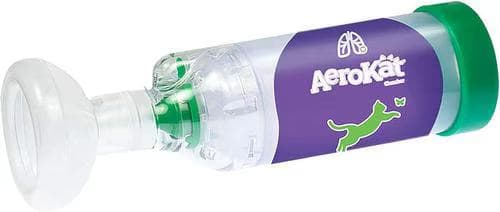
A feline aerosol chamber for prescribed inhaled medication. Ask your veterinary team to demonstrate the mask fit and breathing indicator.
Webvet may earn a commission when you click through to Chewy, at no extra cost to you.
| What you notice | What to do | What it does not tell you |
|---|---|---|
| Open-mouth breathing, marked effort, collapse, or abnormal blue-gray gum color | Seek urgent veterinary care; minimize handling and call ahead | Whether asthma, heart disease, or another emergency is responsible |
| Repeated coughing or wheezing, with comfortable breathing between episodes | Contact your veterinarian for an assessment and describe the pattern | Whether the airways are normal between visible episodes |
| A persistent increase in sleeping breathing rate | Contact the clinic and follow your cat's action plan | Whether a rate change comes from asthma or another problem |
| An episode that stops after prescribed rescue medicine | Follow the clinic's instructions about follow-up and emergency care | Whether the underlying inflammation is adequately controlled |
Early signs can be intermittent: a brief cough, reduced activity, or breathing that looks harder than usual. Asthma that seems worse at night still needs assessment; the time of day does not identify the cause or make an attack safe to watch. Report weight loss, a cat that will not eat, sneezing, vomiting, or repeated lip licking separately. These are not specific asthma signs and may indicate another illness or a concurrent problem. Do not assume that apparent fluid in the lungs is asthma; fluid within or around the lungs requires veterinary investigation.
What are the symptoms of a silent asthma attack?
“Silent asthma attack” is not a reliable home diagnosis. A cat can have serious breathing difficulty without an obvious wheeze. Watch for increased effort, an extended neck, reluctance to move, or open-mouth breathing rather than waiting for a particular sound. Noise level cannot establish severity. If breathing looks difficult, obtain urgent veterinary advice even when the cat is quiet or has never been diagnosed with asthma.
Asthma, hairballs, or another breathing problem?
A cough may end with swallowing or gagging, which makes it easy to mistake for a hairball. Repeated unproductive episodes should not be dismissed as normal grooming.
A camera in a room your cat normally uses can capture intermittent events you might otherwise miss. The INSTACHEW Purrsight 360 Degree Wi-Fi Security Cat & Dog Pet Camera is one option for that recording task. It does not measure oxygen levels or establish why a cat is coughing. Review useful clips with the clinic rather than using alerts as a medical assessment.

Capture intermittent episodes for your veterinarian with a pet camera. Recordings support the history but do not measure oxygen or diagnose asthma.
Webvet may earn a commission when you click through to Chewy, at no extra cost to you.
If an episode occurs while your cat is otherwise stable, a short video can help the veterinarian understand the movement and sound you mean. Record naturally occurring behavior from a distance. Note when it happened, how long it lasted, and what your cat was doing beforehand. Stop filming and arrange care if breathing becomes difficult.
Even bringing up a hairball once does not explain every later cough. Our guide to helping a cat pass a hairball covers that separate problem; ongoing respiratory signs need their own assessment.
What can mimic feline asthma?
Chronic bronchitis, lung parasites, pneumonia, and other respiratory diseases can produce similar signs. Heart disease and fluid around the lungs can also cause breathing difficulty. Distinguishing these conditions matters because their treatments differ. The veterinarian considers the history, examination, and appropriate tests together. A recording, a cough sound, or improvement after one medicine cannot reliably rule out these alternatives on its own.
Reverse sneezing in cats describes another type of respiratory episode owners may confuse with coughing. Sneezing, snoring, drooling, vomiting, or appetite loss should also be reported, but none specifically identifies asthma. Tell the clinic about all changes instead of fitting every sign into an asthma explanation. Bring information about parasite prevention, outdoor access, previous illnesses, and current medication.
How veterinarians diagnose feline asthma
There is no single definitive asthma test. The veterinarian builds a diagnosis from your cat's history, examination, and test results while considering other causes. If your cat is in respiratory distress, stabilization may come before a detailed examination or imaging. Ask what needs to happen immediately and which investigations can wait until breathing is safer.
A chest X-ray, also called a radiograph, shows the lungs and surrounding structures. Chest radiographs can reveal a bronchial pattern: airway walls appear more conspicuous, sometimes as branching lines or small rings. They may also show overinflation from trapped air. Some cats with asthma have less obvious radiographic changes, however, and similar findings can occur with other diseases. A normal-looking X-ray does not automatically exclude asthma; an abnormal one does not establish it alone.

Image credit: Abboud and colleagues, 2025, Figure 3, reproduced unmodified under CC BY 4.0. The published radiograph shown here comes from a cat with suspected asthma in a study of feline breathing emergencies. The authors interpreted the image with the clinical history, exclusion of other causes, and treatment response. It is an example of a veterinary investigation, not a picture owners can use to diagnose their own cat.
Depending on the case, further assessment may include blood testing, parasite investigations, or sampling airway secretions. Examining these samples can help characterize inflammation and investigate infection. Airway sampling and bronchoscopy require an assessment of anesthesia or sedation risk, especially in a cat with unstable breathing. Ask how a proposed test would change treatment and whether referral is appropriate if the diagnosis remains uncertain.
Bring a concise episode history rather than only the most dramatic clip. Useful details include:
- The first occurrence and the current frequency.
- Whether episodes are becoming longer, more frequent, or harder to recover from.
- Any relationship to litter changes, smoke, cleaning products, or another illness.
- Treatments already tried, including supplements and someone else's inhaler.
That information helps the team interpret findings and avoid unsuitable combinations.
 $65 · no membership
Have a health question about your cat?
A licensed vet can assess your cat over video and prescribe online when it's appropriate.
 Talk to a vet
- Licensed vets
- All 50 states
- same-day Rx
Webvet may earn a commission if you book.
Cat asthma treatment and inhalers
Treatment usually addresses airway inflammation with a corticosteroid. A bronchodilator may also be prescribed to help open narrowed airways.
Reducing irritating exposures belongs alongside the prescription plan. If scented litter is part of your cat's environment, an unscented option such as Dr. Elsey's Ultra Unscented Clumping Clay Cat Litter removes that fragrance exposure. Assess the dust produced during actual use; unscented does not mean dust-free, and a litter change cannot replace medication.
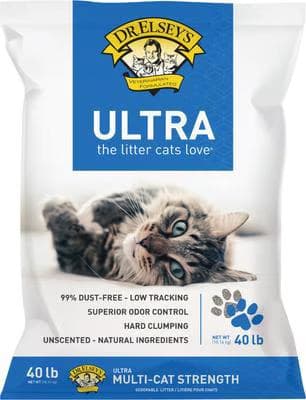
An unscented litter option when reducing fragrance exposure. Check the dust during use and your cat's tolerance; no litter replaces asthma treatment.
Webvet may earn a commission when you click through to Chewy, at no extra cost to you.
These medicines have different jobs: a rescue medicine that eases an episode does not replace the prescribed controller used to manage inflammation. The route, medicine, and schedule depend on the individual cat. Do not stop or taper treatment because the coughing has improved unless the veterinarian directs that change.
Building a workable inhaler routine: Inhaled treatment uses a prescribed metered-dose inhaler with an aerosol chamber and a mask designed to fit a cat. The inhaler and chamber are separate items. The AeroKat chamber is made by Trudell Medical International; its purpose is medication delivery, not a treatment without the prescribed inhaler. Have the clinic check the exact drug, strength, and device, then demonstrate the routine with you. Human inhaler products can be prescribed for cats, but that does not make unsupervised use of a person's inhaler appropriate.
Start acclimation while your cat is comfortable. Let the cat investigate the mask, reward brief calm contact, and build gradually toward the seal the veterinary team demonstrates. Avoid pinning down a frightened cat to force a practice session. If treatment cannot be delivered reliably, tell the clinic promptly so it can adjust the plan while you work on handling. Follow the prescription and device instructions each time:
- Prepare the exact prescribed inhaler and chamber as demonstrated.
- Check the mask seal and deliver the prescribed actuation and breaths. Ask the team what correct movement of the chamber's breathing indicator looks like.
- Record doses, check the counter or manufacturer's tracking method, and arrange refills before the medicine runs out. A container that still makes a spraying sound is not a dependable dosing record.
- Clean the device according to its instructions, letting components dry as directed.
VCA's inhaler instructions explain why delivery technique and prescription-specific directions matter. Ask about expected side effects and what to report, including changes in thirst, urination, appetite, or behavior.
Can home remedies replace asthma treatment? Trying to treat asthma naturally should never mean withholding prescribed medicine: no established natural, herbal, or homeopathic remedy replaces asthma treatment. CBD oil and products marketed for respiratory support, including Lung Gold, should not be assumed effective or safe for this cat simply because they are sold without a prescription. Bring the exact ingredients to the veterinarian before using them. Essential oils are not an asthma treatment, and adding scented products to the cat's air defeats efforts to reduce irritants.
Treating asthma at home means following a diagnosis-specific plan, not choosing an over-the-counter medicine to stop an attack. Untreated inflammation can persist even when coughing is occasional, and a severe attack can be fatal. If no rescue medicine has been prescribed, call for urgent instructions rather than improvising with a person's inhaler. If prescribed rescue treatment does not work as expected, follow the emergency plan and seek care.
| Part of the plan | What to write down or check |
|---|---|
| Prescribed controller | Exact medicine, strength, schedule, and the clinic's instructions for missed doses |
| Rescue instructions | Which signs trigger its use, the prescribed directions, and when to go directly to emergency care |
| Aerosol chamber routine | Mask size and seal, prescribed technique, breathing indicator, and cleaning instructions |
| Supply check | Doses remaining, refill contact, and replacement requirements for the device |
| Review | Episode record, delivery problems, side effects, and the next recheck date |
Reducing triggers at home
Keep a comfortable carrier available for planned visits and rechecks. A Frisco Travel Safety Dog & Cat Carrier may suit this job if its medium size and design fit your cat. Leave it accessible with familiar bedding and practice calm entry between appointments. This preparation is easier when breathing is comfortable and transport is not urgent.

Prepare for planned clinic visits with a correctly sized carrier. Check the medium size against your cat's measurements and practice calm entry at home.
Webvet may earn a commission when you click through to Chewy, at no extra cost to you.
What are the common triggers for asthma?
Inhaled allergens and irritants are relevant to feline asthma, but the trigger is not always identifiable for an individual cat. Review tobacco smoke, vaping aerosols, scented sprays, dusty litter, and strongly fragranced household products with your veterinarian. Reduce avoidable exposure and record whether episodes change. Do not deliberately expose your cat to a suspected trigger to test the theory; an apparent association still needs clinical interpretation.
Make environmental changes thoughtfully. Keep the cat away while dusty litter is poured or cleaning sprays are used, follow product ventilation instructions, and avoid spraying fragrances near resting areas. When changing litter, preserve a familiar, accessible toilet area and watch that your cat continues using it. The low-dust cat litter guide can help compare options, but individual tolerance matters more than a claim on the bag.
Air purifiers and cleaning routines may reduce some airborne particles, but they should not be presented as a cure or a replacement for prescribed treatment. Avoid devices that deliberately add fragrances or ozone to the air. Ask the veterinarian about your particular home rather than buying several products at once and losing track of what changed.
A trigger reduction checklist
Use changes in exposure as clues to discuss with the clinic, without assuming every flare has an obvious trigger:
- Record whether coughing changes in spring or summer, during cold winter weather, or when heating and indoor routines change. A seasonal pattern may help the workup; it does not justify stopping medicine during a quieter season.
- Report damp areas or visible mold and remove the cat from dusty cleanup work. Avoid deliberately testing suspected allergens on the cat.
- Mention dusty catnip products if episodes follow their use, and stop that exposure while seeking advice. Catnip is not an asthma remedy.
- Keep parasite prevention current as directed. Fleas are associated with skin allergy; a flea problem does not establish the cause of lower-airway disease. Ask about appropriate parasite testing when respiratory signs persist.
Are humidifiers or steam helpful?
A humidifier is not an established treatment for feline asthma. Cats Protection's asthma guidance notes that steam inhalation lacks evidence of effectiveness and may irritate the condition. Ask your veterinarian whether changing room humidity is appropriate for your cat rather than assuming more moisture will help. If a device is recommended, obtain instructions for its use, cleaning, and placement. Do not add oils or fragrances, and never delay emergency care for a steam session.
Does food choice help an asthmatic cat?
There is no proven best wet, canned, dry, or grain-free cat food that treats asthma. Select a complete balanced food suited to the cat's life stage and other medical needs, and discuss maintaining a healthy body weight with the veterinarian. A suspected food allergy requires its own assessment; switching foods repeatedly is not a way to diagnose an inhaled allergen. Monitor appetite and weight because a cat that stops eating needs additional attention, not just another food trial.
Monitoring symptoms and planning rechecks

A simple record makes rechecks more useful. Bring these details so the team can distinguish a delivery problem from a need to reassess treatment or diagnosis:
- Coughing episodes, their duration, and your cat's activity beforehand.
- Rescue treatment given under the prescribed plan and the response.
- Doses missed, trouble obtaining a mask seal, or uncertainty about doses remaining.
- Appetite, weight, activity, and changes in sleeping breathing rate.
Learn to count breathing while your cat is asleep and comfortable. Avoid counting during purring, activity, stress, or a coughing episode. The normal cat breathing rate guide explains the method and how to interpret changes. One complete chest rise and fall counts as one breath. Count for 30 seconds and double the result. VCA advises contacting the veterinary team if sleeping breathing is over 30 breaths per minute or consistently increasing; ask the clinic to set the threshold for your individual cat. Breathing effort matters as well as the number; never wait for a count if your cat is visibly struggling.
At the recheck, review three practical questions:
- Is the cat comfortable?
- Is the treatment actually reaching the cat as intended?
- Is the plan still appropriate?
Bring the inhaler and chamber if the team wants to check technique. Discuss any increase in rescue use, continued night-time coughing, reduced activity, or repeated flare-ups. These changes deserve assessment rather than an automatic increase in medication at home.
Keep the written emergency plan where every caregiver can find it. It should identify the prescribed medicines, when to use them, the regular clinic, and the after-hours hospital. Arrange refill cover before travel and show a sitter the routine in advance. Clear instructions are especially helpful when one person normally handles all medication and another has to take over unexpectedly.
Long-term control and planning
Asthma is generally managed over the long term rather than cured. Cornell's feline asthma guidance emphasizes monitoring and appropriate treatment because flare-ups can vary greatly in severity. A cat who seems well between episodes still needs the agreed plan and follow-up.
A cat can die from a severe asthma attack, but an asthma diagnosis does not mean every cat will die early. Long-term control and the response to treatment matter more than a single lifespan number. If attacks are becoming more frequent, discuss that change promptly rather than relying on a previous reassuring examination. The absence of an attack today is not proof that treatment is unnecessary.
For ongoing costs, ask the clinic to separate the initial diagnostic workup, regular prescriptions, rechecks, and potential emergency care in its estimate. Pet insurance coverage depends on the actual policy, exclusions, and whether signs predated coverage. Ask the insurer directly about the diagnosis and medicines; do not assume that a newly purchased policy will cover existing asthma.
Cat asthma questions
Frequently Asked Questions
What is the life expectancy of a cat with asthma?
There is no dependable lifespan estimate that applies to every affected cat. Cornell's feline health guidance describes cats living happily for years with appropriate monitoring and medication, while recognizing that flare-ups can be life-threatening. Individual prognosis depends on disease severity, response to treatment, other illnesses, and reliable delivery of medication. Ask your veterinarian what successful control should look like for your cat and which changes need reassessment.
Is it expensive to treat a cat with asthma?
It can be a substantial ongoing expense, especially if emergency stabilization or hospitalization is needed. Costs vary with diagnostic testing, ongoing prescriptions, and rechecks. Ask what one month and one year of the proposed maintenance plan would cost, separately from an emergency estimate. An inhaler chamber is a separate expense from the medicine used with it. Ask for an itemized initial estimate and an ongoing-care estimate, including refills and monitoring. If the plan is difficult to afford, raise that before doses run out so the veterinarian can discuss suitable alternatives.
Is asthma contagious in cats?
Asthma itself does not spread between cats. However, other respiratory diseases can cause coughing or breathing changes, and some infectious conditions can affect multiple animals. Do not assume that a second coughing cat has the same noninfectious disease as the first. Contact your veterinarian, describe which cats are affected and when signs began, and follow advice about testing and separating them if needed.
Does my cat need a special asthma diet?
There is no established asthma-curing food. A complete balanced diet and a healthy body weight support general care, but they do not replace airway medication. Ask the veterinarian to assess body condition and recommend any weight-management plan; do not sharply restrict food on your own. Discuss food changes, supplements, or suspected allergies individually, especially if another medical condition already determines what your cat should eat.
$65 · no membershipHave a health question about your cat?
A licensed vet can assess your cat over video and prescribe online when it's appropriate.
Talk to a vet- Licensed vets
- All 50 states
- same-day Rx
Webvet may earn a commission if you book.
Veterinarian · BVMS MRCVS
Dr. Pippa Elliott, BVMS, MRCVS, is a veterinarian with nearly 30 years of experience in companion animal practice. Dr. Elliott earned her Bachelor of Veterinary Medicine and Surgery from the University of Glasgow. She was also designated a Member of the Royal College of Veterinary Surgeons. Married with 2 grown-up kids, Dr. Elliott has a naughty Puggle named Poggle, 3 cats and a bearded dragon.


