Reverse Sneezing in Cats: Normal or Worry? (Vet Guide)
A reverse sneezing cat snorts, honks, and freezes with its neck stretched out. It looks alarming, but it is usually harmless. Here is how to tell a normal episode from a red flag, what triggers it, how to help in the moment, and exactly when to call your vet.

BVMS MRCVS
Medically reviewed by Dr. Pippa Elliott, BVMS MRCVS · Last reviewed

This article contains affiliate links. Webvet may earn a commission when you buy through them, at no extra cost to you.
Reverse sneezing in cats can look alarming, but it is usually harmless. Here is what it sounds like, what triggers an episode, how to help, and the rare red flags that mean a vet visit.
Your cat suddenly freezes, stretches its neck forward, and starts making a loud snorting or honking sound, as if it is trying to inhale a sneeze rather than push one out. It is jarring the first time you see it. The good news: a reverse sneezing cat is, in the large majority of cases, dealing with something brief and harmless.
A reverse sneezing cat is pulling air rapidly inward through the nose, the mirror image of a normal sneeze. The episode usually lasts a few seconds to under a minute, then stops as suddenly as it started, and your cat goes right back to normal. This guide walks through what reverse sneezing in cats actually is, what it sounds and looks like, why it happens, how to tell it apart from coughing and asthma, and the specific warning signs that mean it is time to see a vet.
One thing worth saying up front: reverse sneezing is far more common in dogs than in cats. Because it is genuinely less typical in cats, a true reverse sneezing episode in a feline deserves a little more attention than the same thing in a dog. That does not mean panic. It means pay attention, and we will show you exactly what to watch for.
A single, brief reverse sneezing episode in an otherwise healthy, happy cat is almost always harmless and needs no treatment. What matters is the pattern: how often it happens, how long it lasts, and whether it comes with other signs like discharge, blood, labored breathing, or weight loss. Those companions, not the snort itself, are what decide whether you need a vet.
What Is Reverse Sneezing in a Cat?

Reverse sneezing, known clinically as inspiratory paroxysmal respiration, is a sudden, repeated pulling of air inward through the nose. Where a normal sneeze forcefully pushes air out, a reverse sneeze rapidly draws air in, producing that distinctive snorting, honking, or pig-like grunting sound. It is triggered by irritation or a brief spasm in the nasopharynx, the area at the back of the nose and top of the throat, near the soft palate.
When your cat is reverse sneezing, the soft palate and the nasopharyngeal passage are reacting to something, an irritant, a tickle, a bit of mucus, and the body responds with this rapid inward-air reflex to try to clear it. According to the Cornell University College of Veterinary Medicine, reverse sneezing is generally harmless and self-resolving, even though it looks dramatic.
So when you find yourself thinking "my cat is reverse sneezing" and wondering whether something is wrong, the mechanism itself is benign. A cat reverse sneezing fit is a reflex, not a disease. The reflex can be set off by many ordinary things, which we cover below.
What Does a Cat Reverse Sneeze Sound and Look Like?
This is the part that scares owners most, so let us describe it plainly. The cat reverse sneezing sound is usually a rapid series of loud snorts, snuffles, or honks, sometimes compared to a goose honk, a snore, or a pig snorting. It repeats quickly for a few seconds, then stops.
The posture is just as recognizable as the sound. During an episode you will typically see your cat:
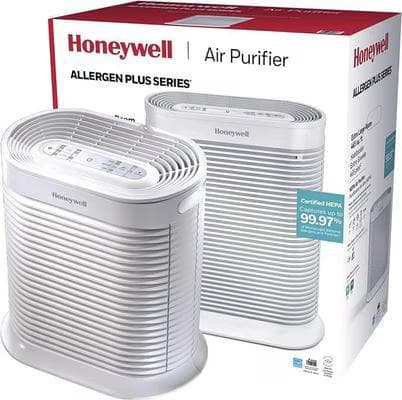
Certified True HEPA air purifier that captures 99.97% of airborne dust, dander, pollen, and smoke, reducing the airborne triggers behind feline asthma and respiratory irritation.
Webvet may earn a commission when you click through to Chewy, at no extra cost to you.
- Stand or crouch and go suddenly still
- Extend its neck and head forward, often pointing the nose down or out
- Brace its elbows out slightly, planting itself
- Pull the lips back or, in some cats, sit with the tongue out
- Make rapid, snorting inhalations, then stop abruptly
A cat reverse sneezing with tongue out can look especially alarming, but it is part of the same reflex and not a separate emergency on its own. The whole thing is usually over in under a minute.
When people search for a cat reverse sneezing video or a reverse sneezing cat video on YouTube, they are almost always trying to confirm one thing: "Is what my cat just did the same as this?" Comparing your cat to a known clip is genuinely useful, and recording your own episode is even more useful, because you can show it to your vet (more on that below).
Reverse sneeze versus a true emergency
A reverse sneezing cat is pulling air in and is otherwise comfortable between snorts. A cat in real respiratory distress looks very different: open-mouth breathing at rest, blue or gray gums, belly heaving with each breath, or obvious panic. Those are emergencies, not reverse sneezing. If you are ever unsure whether your cat is reverse sneezing or actually struggling to breathe, read our guide on cat open-mouth breathing and call a vet immediately if any of those signs are present.
Why Do Cats Reverse Sneeze? Common Triggers

So why is my cat reverse sneezing in the first place? In most cases, something is briefly irritating the nasopharynx. The most common cat reverse sneezing causes are everyday environmental irritants and a few situational triggers.
Common reverse sneezing cat causes include:
- Airborne irritants: dust, pollen, mold spores, and household particulates
- Strong scents and aerosols: scented candles, air fresheners, perfume, cleaning sprays, smoke
- Litter dust: fine, dusty clay litters that kick up when your cat digs
- Dry or conditioned air: very dry indoor air or air-conditioning that dries the nasal passages
- Allergens: seasonal or household allergens (cat reverse sneezing allergies are a real and common trigger)
- Excitement or rapid breathing: some cats reverse sneeze when worked up, playing hard, or startled
- Eating and drinking: a cat reverse sneezing after eating or a cat reverse sneezing after drinking water is often reacting to a crumb, a drop, or a fast gulp that tickles the back of the throat
- Foreign material: a blade of grass, a bit of fluff, or a tiny particle caught at the back of the nose
Here is a quick way to think about which triggers are benign versus which deserve follow-up.
| Trigger type | Examples | Usually benign? |
|---|---|---|
| Environmental irritant | Dust, pollen, scented candle, litter dust | Yes, if brief and occasional |
| Situational | Excitement, fast eating or drinking | Yes, if cat is fine afterward |
| Allergic | Seasonal or household allergens | Often, but worth managing if frequent |
| Mechanical | Foreign material caught in the nose | Usually resolves; see vet if persistent |
| Underlying disease | Polyps, infection, masses | No, needs veterinary workup |
People also ask why do cats reverse sneeze while sleeping, or report a cat reverse sneezing while resting. A cat waking from sleep into an episode is usually responding to mucus shifting or a position change that briefly irritates the soft palate. By itself, an occasional episode around sleep is not a red flag.
Because reverse sneezing is less common in cats than dogs, persistent or worsening episodes are more likely to have an underlying cause than they would in a dog. Nasal polyps, upper respiratory infections, allergies, and rarely masses can all keep the nasopharynx irritated. The Merck Veterinary Manual covers these upper-airway and nasal conditions in cats. We keep that here at a summary level on purpose, because the deeper "why does my cat keep sneezing" question is fully covered in our pillar guide, why does my cat keep sneezing.
Reverse Sneezing vs Coughing vs Asthma: How to Tell Them Apart

This is the most valuable distinction in this entire guide, because the thing many owners describe as reverse sneezing is sometimes actually a cough or an asthma attack, and those are managed very differently. The simplest tell is the direction of air.
A cat reverse sneezing vs coughing comparison comes down to this: a reverse sneeze pulls air in (the snorting happens on the inhale), while a cough pushes air out (the sound and effort happen on the exhale). A cough often ends with a swallow or a productive sound. Reverse sneezing does not.
The cat reverse sneezing vs asthma question is the one that matters most for your cat's health. Feline asthma and lower-airway disease cause coughing, wheezing, and labored breathing, often with the cat hunched low to the ground, neck extended, abdomen pumping, sometimes producing a wheeze on the way out. The Cornell Feline Health Center notes that asthma involves the lower airways and presents with that distinct cough-wheeze pattern, very different from the brief inward snort of a reverse sneeze. So when someone asks about cat asthma vs reverse sneezing, the key is that asthma is an ongoing, lower-airway breathing problem, while reverse sneezing is a short, upper-airway reflex.
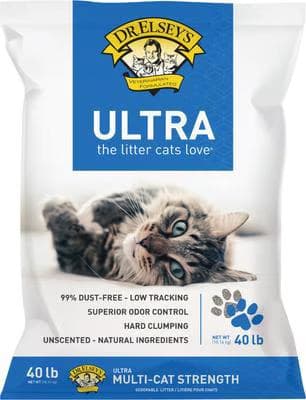
99% dust-free, low-tracking clumping clay litter with superior odor control and hard clumping. Unscented, natural ingredients, multi-cat strength.
Webvet may earn a commission when you click through to Chewy, at no extra cost to you.
Here is a decoder for the four things owners most often confuse, which answers the common question of what can be mistaken for reverse sneezing.
| What it is | Air direction | Sound | Body posture | Worry level |
|---|---|---|---|---|
| Reverse sneeze | Pulled IN | Snorting, honking, snuffling | Neck extended, elbows braced, still | Low (if brief and occasional) |
| Cough | Pushed OUT | Hacking, often ends in a swallow | Hunched, neck down | Moderate; persistent cough needs a vet |
| Asthma / wheeze | Labored exhale | Wheeze, prolonged effort to breathe out | Crouched low, belly pumping | High; can be an emergency |
| Hairball / gagging | Out, with retching | Gagging, retching, then expulsion | Hunched, abdominal heaving | Low if a hairball comes up |
A cat reverse sneezing and coughing in the same period is worth noting for your vet, because the combination is less typical and may point to airway disease rather than a simple irritant reflex. Film both if you can.
 $65 · no membership
Have a health question about your cat?
A licensed vet can assess your cat over video and prescribe online when it's appropriate.
 Talk to a vet
- Licensed vets
- All 50 states
- same-day Rx
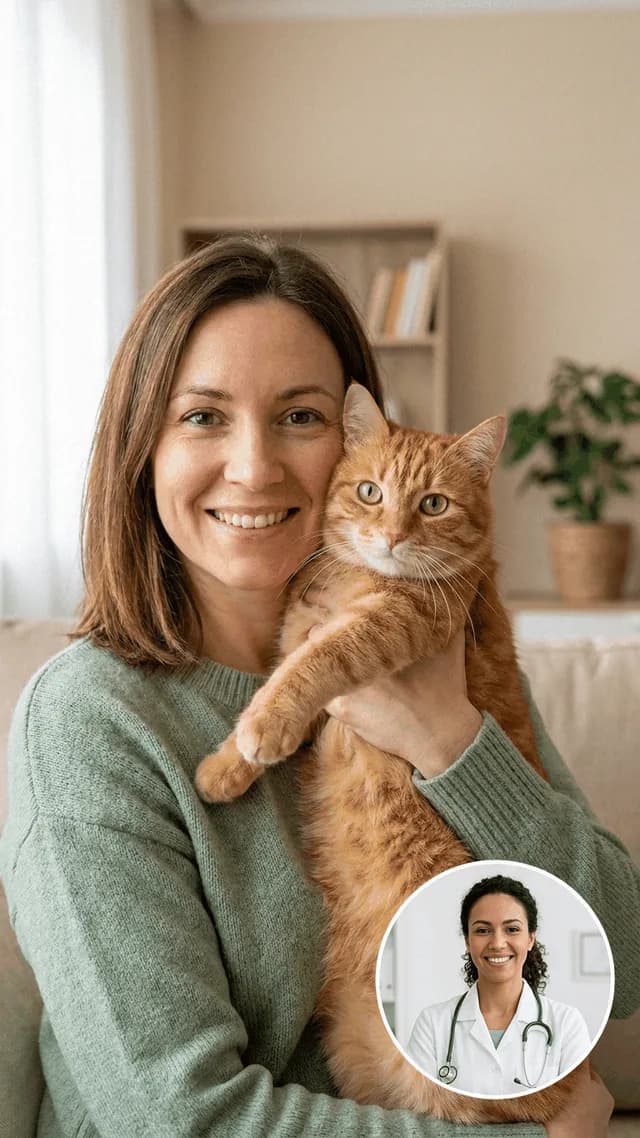
Webvet may earn a commission if you book.
Is Reverse Sneezing in Cats Dangerous?
For most cats, no. The honest answer to "is reverse sneezing in cats dangerous" is that the reflex itself does not harm your cat. Episodes are self-limiting, your cat keeps getting enough oxygen, and they resolve on their own without intervention. A relaxed cat that has one short episode and immediately goes back to grooming or napping is fine.
The reality check is the one we have flagged twice already: reverse sneezing is meaningfully less common in cats than in dogs. So while any single episode is harmless, a cat that reverse sneezes frequently is statistically more likely to have an underlying reason than a dog doing the same thing. That is not a reason to be scared. It is a reason to track the pattern and not just dismiss it.
A cat reverse sneezing and vomiting in the same window is one combination worth flagging to your vet, since it can occasionally point to throat or upper-airway irritation that needs a closer look. On its own, after a single isolated episode, occasional vomiting (like a hairball) is not alarming, but the pairing is worth mentioning.
When My Cat Reverse Sneezes a Lot: Frequency and Red Flags

This is the section that decides whether you wait and watch or pick up the phone. A cat reverse sneezing a lot is a different situation from a one-time snort. When owners ask "why is my cat reverse sneezing so much" or "why does my cat keep reverse sneezing," frequency and accompanying signs are everything.
Use these rough thresholds. A normal, benign episode:
- Lasts seconds to under a minute
- Resolves completely on its own
- Leaves your cat acting totally normal afterward
- Happens rarely or is clearly tied to a trigger (dust, a candle, a fast drink)
Now the red flags. See a veterinarian if a cat keeps reverse sneezing and you also notice any of the following:
- Nasal discharge (clear, colored, or thick), especially from one nostril
- Any blood from the nose
- Labored, fast, or open-mouth breathing, or breathing that looks hard between episodes
- Episodes lasting longer than a minute or coming in tight clusters
- Lethargy, hiding, or a drop in appetite
- Facial swelling or asymmetry around the nose or face
- Weight loss over time
- Pawing at the face or signs of pain
- Episodes that started recently and keep getting more frequent
An old cat reverse sneezing a lot deserves a lower threshold for a vet visit than a young, healthy adult, because senior cats are more prone to the underlying nasal conditions (polyps, masses, dental-related issues) that keep the nasopharynx irritated.
For the bigger picture on persistent sneezing of all kinds and how often is too often, our pillar guide on why your cat keeps sneezing goes deeper on frequency and underlying causes.
How to Help a Cat During a Reverse Sneezing Episode

The first rule of how to help a cat reverse sneezing is to stay calm, because your cat reads your energy and most episodes end before you have done anything at all. There is no urgent at-home treatment needed for a normal episode. Still, a few gentle techniques can help shorten one and reassure your cat.
What you can do in the moment:
- Stay calm and speak softly. Panic can prolong an episode by stressing your cat.
- Gently stroke the throat. Lightly stroking down the front of the throat can prompt a swallow, which often interrupts the reflex.
- Offer a brief, gentle distraction. Calmly calling your cat or a soft touch can break the cycle.
- Improve the air. If you can, move your cat away from the obvious trigger (dust, a candle, a freshly sprayed cleaner).
- Film it. Record a short clip for your vet, especially if episodes are recurring.
What NOT to do:

Probiotic supplement formulated to help cats maintain calm behavior, with the BL999 strain. 30 daily sachets.
Webvet may earn a commission when you click through to Chewy, at no extra cost to you.
- Do not clamp or cover the nostrils. Pinching a cat's nose to force a swallow (a trick some people use on dogs) is not appropriate for cats and can frighten or stress them. Let the reflex run its short course.
- Do not give any human cold or allergy medication. Many are toxic to cats. Never medicate without a vet's direction.
- Do not force water or food mid-episode.
People search for a cat reverse sneezing home remedy or how to treat reverse sneezing in cats expecting a product or a dose. The honest answer is that a single benign episode needs no treatment at all. The "remedy" is reducing triggers (covered in prevention below) and, when episodes are frequent, getting a diagnosis so any cat reverse sneezing treatment targets the actual cause rather than the symptom. Treatment of an underlying condition (an infection, allergies, or a polyp) belongs with your veterinarian, and the specific medications are beyond the scope of this benign-versus-worry guide.
For a normal episode there is nothing to treat. Stay calm, optionally stroke the throat to prompt a swallow, remove the obvious irritant, and film it. Skip the nostril-pinching trick (that is a dog tip, not a cat one) and never give human medicine. If episodes are frequent, the real fix is a vet diagnosis, not a home remedy.
Are Some Cats More Prone to Reverse Sneezing?
Yes, to a degree. While any cat can reverse sneeze, a few groups tend to do it more, and this is an angle most articles skip.
- Brachycephalic (flat-faced) breeds: Persians, Himalayans, and Exotic Shorthairs have shortened nasal passages and altered soft-palate anatomy, which can make the nasopharynx more reactive and prone to irritation.
- Senior cats: Older cats are more likely to have the underlying nasal conditions (polyps, dental disease affecting the nasal area, masses) that keep that region irritated, which is why an old cat reverse sneezing a lot warrants closer attention.
- Cats in allergen-heavy or multi-pet homes: More dust, dander, litter, and airborne particulates mean more chances for the nasopharynx to be triggered.
- Cats exposed to smoke or heavy fragrance: Households with smokers, frequent candle or incense use, or strong cleaning products give the airway more to react to.
If you own a flat-faced breed and wonder why do cats reverse sneeze more in some cats than others, the anatomy is a big part of the answer. It does not mean something is wrong; it means the trigger threshold is lower.
How Vets Diagnose Reverse Sneezing (and What to Expect)
Owners who have been reading cat reverse sneezing Reddit threads often arrive at the vet worried about the worst case. Here is what actually happens, so you know what to expect.
Because episodes rarely happen on cue in the exam room, your veterinarian relies heavily on your description and, ideally, your video. How veterinarians diagnose reverse sneezing usually follows this path:
- History and video review. Your vet asks how often, how long, what seems to trigger episodes, and watches any clip you brought.
- Physical exam. Listening to the chest, examining the nose, mouth, throat, and lymph nodes, and checking breathing at rest.
- Ruling things out. If episodes are frequent or paired with red flags, your vet works to exclude other causes: upper respiratory infection, allergies, feline asthma, dental disease, foreign material, polyps, and (rarely) masses.
- Further testing if warranted. Depending on findings, this may include bloodwork, nasal or chest imaging, or a sedated exam of the nasopharynx. Most benign cases never need this.
What to expect at the vet for reverse sneezing, in most uncomplicated cases, is reassurance: a normal exam, a benign read on your video, and advice on reducing triggers. Testing scales up only when the pattern or accompanying signs suggest something underlying. The detailed disease-specific workups (for infections, asthma, or polyps) sit with your vet and in our broader sneezing pillar, not in this guide.
Can You Prevent Reverse Sneezing in Cats?
You cannot eliminate the reflex entirely, but you can absolutely reduce how often it fires by lowering the irritant load in your cat's environment. This is the practical answer to how can you prevent reverse sneezing in cats, and it doubles as good management for cat reverse sneezing allergies.
- Cut the dust. Switch to a low-dust or dust-free litter and pour it slowly. Vacuum and dust regularly with cat-safe methods.
- Go fragrance-light. Reduce scented candles, plug-in air fresheners, aerosol sprays, and strong cleaners, especially near your cat's favorite spots.
- Manage indoor air. A HEPA air purifier helps with pollen, dust, and dander, and a humidifier can ease very dry winter or air-conditioned air that dries the nasal passages.
- Eliminate smoke. Keep your home smoke-free; secondhand smoke is a known airway irritant for cats.
- Address allergens. If episodes track with seasons or specific exposures, talk to your vet about an allergy management plan.
- Slow down fast eaters and drinkers. A slow-feeder bowl or a wider water dish can cut down on the gulping that tickles the throat.
If your cat's reverse sneezing seems clearly allergy-driven and overlaps with other signs like itchy skin or watery eyes, our overview of allergies in cats covers food, flea, and environmental triggers in more depth.
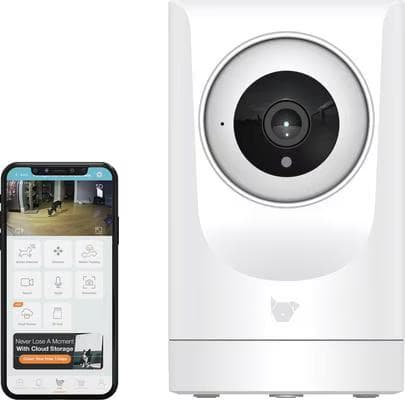
360-degree Wi-Fi pet camera so you can watch your cat's resting breathing rate and behavior from your phone and catch worrying changes early.
Webvet may earn a commission when you click through to Chewy, at no extra cost to you.
This article is for general informational purposes and is not a substitute for veterinary care. If your cat shows any of the red-flag signs described above, or you are unsure whether you are seeing reverse sneezing or real breathing difficulty, contact your veterinarian. For guidance on when respiratory signs need urgent care, the AVMA and AAHA offer pet-owner resources on seeking veterinary help.
Frequently Asked Questions
What does a cat reverse sneeze sound like?
A cat reverse sneeze sounds like a rapid series of loud snorts, honks, or snuffling pulls of air, often compared to a goose honk, a snore, or a pig snorting. The sound happens on the inhale and repeats quickly for a few seconds before stopping abruptly. It is louder and more dramatic than a normal sneeze but is over fast.
Is reverse sneezing in cats dangerous?
In most cases, no. A brief, occasional reverse sneezing episode in an otherwise healthy, comfortable cat is harmless and self-resolving. It becomes a concern when it is frequent, prolonged, or paired with red flags like nasal discharge, blood, labored breathing, lethargy, or weight loss. Because reverse sneezing is less common in cats than dogs, persistent episodes deserve a vet's attention.
Why does my cat reverse sneeze so much all of a sudden?
A sudden increase in reverse sneezing usually points to a new or stronger irritant (a new litter, candle, cleaner, season change, or allergen) or, less often, an underlying issue like an infection, polyp, or foreign material. If your cat is reverse sneezing a lot and it started recently and keeps escalating, or comes with discharge or one-sided signs, have your vet evaluate it rather than waiting.
Is it reverse sneezing or asthma in cats?
The direction of effort is the giveaway. Reverse sneezing is a short burst of snorting on the inhale, with your cat normal between episodes. Feline asthma causes coughing, wheezing, and labored breathing on the exhale, often with the cat crouched low and the belly pumping, and it is an ongoing lower-airway problem. Asthma can be an emergency; reverse sneezing is not. When in doubt, film it and see your vet.
Is my cat reverse sneezing or coughing?
A reverse sneeze pulls air in (the snort happens as your cat breathes in), while a cough pushes air out and often ends with a swallow or a hacking sound. Watch the chest and belly: if the dramatic effort is on the way in, it is likely reverse sneezing; if it is on the way out, think cough. A persistent cough should be checked by a vet.
Why does my cat reverse sneeze while sleeping?
Cats sometimes reverse sneeze when waking or resting because mucus shifts or a change in head position briefly irritates the soft palate and nasopharynx. An occasional episode around sleep, with your cat otherwise fine, is not a red flag. If it is frequent or disrupts rest along with other signs, mention it to your vet.
Can allergies cause reverse sneezing in cats?
Yes. Environmental and seasonal allergens (pollen, dust, mold, dander) are a common trigger for reverse sneezing in cats by irritating the nasal passages and nasopharynx. Reducing allergen exposure with low-dust litter, HEPA filtration, and a fragrance-light home often cuts down episodes. If allergies seem to be the driver, your vet can help with a management plan.
Why does my cat reverse sneeze after eating or drinking?
A cat reverse sneezing after eating or after drinking water is usually reacting to a crumb, a drop of water, or a fast gulp that tickles the back of the throat, briefly triggering the reflex. It is generally harmless if your cat recovers immediately and acts normal. Slowing down fast eaters and drinkers with a slow-feeder bowl or wider dish can help.
Do certain cat breeds reverse sneeze more?
Flat-faced (brachycephalic) breeds like Persians, Himalayans, and Exotic Shorthairs tend to reverse sneeze more because their shortened nasal passages and soft-palate anatomy make the nasopharynx more reactive. Senior cats also do it more often due to a higher chance of underlying nasal conditions. More episodes in these cats is not automatically a problem, but the threshold for triggering the reflex is simply lower.
How long should a reverse sneezing episode last?
A typical episode lasts from a few seconds up to about a minute, then stops on its own and your cat returns to normal immediately. Episodes that regularly run longer than a minute, come in tight back-to-back clusters, or leave your cat distressed afterward are worth a veterinary check rather than waiting them out.
Can you prevent reverse sneezing in cats?
You cannot stop the reflex entirely, but you can reduce how often it happens by lowering irritants: use low-dust litter, keep the home fragrance-light and smoke-free, run a HEPA air purifier, add humidity to very dry air, and manage known allergens. Slowing down fast eaters and drinkers helps with food- and water-triggered episodes. Frequent episodes despite these steps warrant a vet visit.
Should I record my cat's reverse sneezing for the vet?
Absolutely, yes. A short phone video of an episode is one of the most useful diagnostic tools you can give your veterinarian, because episodes almost never happen on cue in the exam room. Capture the sound, the posture, and how it resolves, ideally 15 to 30 seconds, and bring a rough log of how often and how long episodes last.
What is the silent killer in cats?
The phrase silent killer in cats most often refers to conditions like chronic kidney disease, hyperthyroidism, or heart disease that progress quietly with subtle early signs. Reverse sneezing is not one of these and is not a silent killer; it is a visible, dramatic, and usually benign reflex. The truly dangerous feline diseases are the quiet ones, which is why regular veterinary checkups matter.
When should I worry about reverse sneezing?
Worry, and see a vet, when reverse sneezing is frequent, prolonged, escalating, or paired with other signs: nasal discharge, blood, labored or open-mouth breathing, lethargy, reduced appetite, facial swelling, weight loss, or one-sided nasal signs. A single brief episode in a happy, healthy cat is not a worry. The pattern and the company it keeps are what matter, and senior cats warrant a lower threshold for getting checked.
$65 · no membershipHave a health question about your cat?
A licensed vet can assess your cat over video and prescribe online when it's appropriate.
Talk to a vet- Licensed vets
- All 50 states
- same-day Rx
Webvet may earn a commission if you book.

Editor
The Webvet Editorial Team is the in-house group of pet-care editors and writers behind Webvet, operated by Smart Pet Collective. The team researches, writes, and maintains Webvet's pet health, behavior, and medication content. Every article follows a defined editorial process: research from reputable veterinary and scientific sources, careful drafting, mandatory review of medical content by a credentialed veterinarian, and dated publication. Health and medication articles are medically reviewed by a licensed veterinary professional before they go live and are kept current over time.
Veterinarian · BVMS MRCVS
Dr. Pippa Elliott, BVMS, MRCVS, is a veterinarian with nearly 30 years of experience in companion animal practice. Dr. Elliott earned her Bachelor of Veterinary Medicine and Surgery from the University of Glasgow. She was also designated a Member of the Royal College of Veterinary Surgeons. Married with 2 grown-up kids, Dr. Elliott has a naughty Puggle named Poggle, 3 cats and a bearded dragon.


