Can Dogs Eat Raw Meat? What the Safety Evidence Says
Review evidence on raw-meat pathogens, household exposure, nutritional completeness, safer handling, and gently cooked alternatives.

BVMS MRCVS
Medically reviewed by Dr. Pippa Elliott, BVMS MRCVS · Last reviewed

This article contains affiliate links. Webvet may earn a commission when you buy through them, at no extra cost to you.
This article is sponsored by JustFoodForDogs. WebVet maintains editorial control over its medical content and may earn a commission from qualifying purchases, at no extra cost to you.
Can dogs eat raw meat? They can physically consume it, but that does not make it the safest choice. The Centers for Disease Control and Prevention does not recommend raw pet food or treats for dogs or cats because raw animal protein may carry disease-causing germs, including Salmonella and Listeria. Exposure can affect the dog and the people who handle the food, bowl, stool, or contaminated surfaces.
Raw food is not automatically more nutritious, either. A raw or cooked diet can be complete and balanced or nutritionally inadequate. Pathogen risk and nutrient adequacy are separate questions, and both matter.
Raw meat can expose dogs and households to foodborne pathogens. Thorough cooking reduces that microbial hazard. Choose a complete-and-balanced diet and discuss any raw-feeding plan with your veterinarian, especially when a dog or household member is medically vulnerable.

Can dogs eat raw meat safely?
Raw meat may contain bacteria even when it looks and smells fresh. Dogs can become ill, but visible illness is not the only concern. A pet may carry or shed organisms and contaminate hands, clothing, utensils, counters, floors, food-storage areas, bowls, and feces.
No raw meat can be guaranteed free of pathogens by appearance, smell, source, price, or freezing. A dog may eat a contaminated portion without immediate signs, while the same organism can still be spread through saliva, stool, bowls, or the preparation area.
The CDC does not recommend feeding raw pet food or treats to dogs or cats. Its guidance includes raw frozen, freeze-dried, and dehydrated animal protein because those processes do not reliably kill every germ. The raw-meat risk-by-household matrix starts with two evidence-based facts: raw meat may contain bacteria, and food cooked or heated appropriately reduces that hazard. Raw meat can expose dogs and households to foodborne pathogens even when the dog shows no immediate illness.
What the safety evidence says about raw dog food
In an FDA sampling project, 15 of 196 commercial raw pet foods tested positive for Salmonella and 32 tested positive for Listeria monocytogenes. The study does not mean every raw product is contaminated, but it shows that commercial preparation and freezing do not guarantee the absence of pathogens.
The CDC also notes that freezing, freeze-drying, and dehydrating can reduce germs without reliably eliminating all of them. “Frozen raw” and “freeze-dried raw” therefore remain raw from a food-safety perspective.
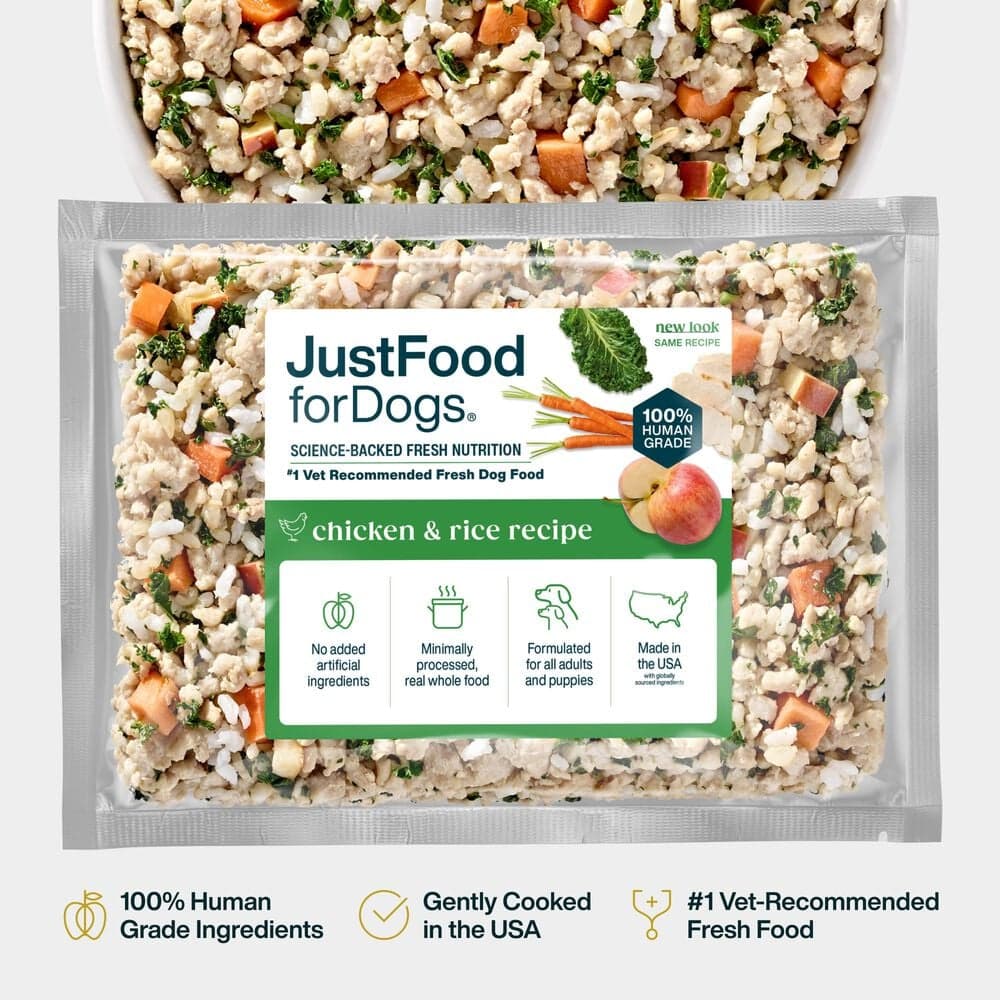
Want fresh food without raw-meat risk? Explore the gently cooked recipes mentioned in this guide.
- #1 vet-recommended fresh food
- 10+ years of feeding trials & studies
- Recipes for all breeds, needs and life stages
Webvet may earn a commission when you click through to JustFoodForDogs, at no extra cost to you.
The FDA’s results can also be expressed as approximately 7.7% of the sampled raw foods positive for Salmonella and 16.3% positive for Listeria monocytogenes. These percentages describe that study sample, not the contamination rate of every product on the market. Their value is in demonstrating that pathogens were present in commercially available raw pet foods despite normal retail handling.
| Evidence point | What it supports | What it does not prove |
|---|---|---|
| CDC does not recommend raw pet food or treats | Public-health agencies recognize preventable risk to pets and people | That every exposed dog will become visibly ill |
| 15 of 196 FDA samples were positive for Salmonella | Commercial raw food can contain Salmonella | That all brands or batches have the same rate |
| 32 of 196 FDA samples were positive for Listeria monocytogenes | Listeria contamination can occur in commercial raw food | That a clean-looking package is contaminated or safe |
| Freezing and freeze-drying do not kill all germs | Frozen and freeze-dried formats remain a raw-food exposure | That processing has no effect on germ levels |
The practical conclusion is not that cooked food can never be contaminated. Recalls and handling errors can affect many food types. The conclusion is that using uncooked animal protein removes the validated cooking step that ordinarily reduces the raw-meat pathogen hazard.
Is raw meat safe for dogs? The evidence does not support calling it risk-free. What raw meat should dogs not eat? No raw animal protein can be cleared by appearance or category alone, because pathogen risk varies by batch and contamination is invisible. The raw-meat risk-by-household matrix and veterinary decision points below help separate a dog's nutritional needs from the avoidable exposure created for people, surfaces, and other animals.
How raw-food germs move through a household
Exposure is not limited to touching meat directly. A preparation knife can contaminate a counter; a bowl can contaminate a sink; a dog can carry food away from the feeding area; and stool can expose people who never prepared the meal.
Common pathways include:
- hands touching raw food, packaging, utensils, or bowls;
- splashes from washing bowls or preparation equipment;
- raw food stored above or beside human food;
- leaked thawing liquid in a refrigerator;
- a dog licking faces, hands, open wounds, furniture, or toys after eating;
- children touching the feeding area;
- feces contaminating yards, litter tools, floors, fur, or cleanup supplies;
- unfinished raw food left at room temperature.
Cleaning lowers exposure but cannot make a raw diet equivalent to one that received an effective cooking step. A household has to maintain the controls every day and for every person who feeds or cleans up after the dog.
Who faces the highest risk?
Any household can experience foodborne illness, but consequences may be more serious for:
- children younger than 5;
- adults 65 and older;
- pregnant people;
- people with weakened immune systems;
- dogs that are very young, elderly, pregnant, or immunocompromised;
- dogs with serious gastrointestinal or systemic illness.
If someone in the household falls into a higher-risk group, tell the veterinarian before choosing a diet. The exposure decision extends beyond the dog.
| Household or pet factor | Why the consequence may be greater | Safer planning question |
|---|---|---|
| Child younger than 5 | Developing immune system and frequent hand-to-mouth behavior | Can raw animal protein be kept entirely out of the feeding environment? |
| Adult 65 or older | Foodborne illness may be more serious | Is a complete cooked diet available instead? |
| Pregnancy | Certain foodborne infections can have serious consequences | Has the obstetric and veterinary risk been discussed? |
| Weakened immune system | Lower ability to control infection | Should raw food be avoided in the household? |
| Puppy or medically fragile dog | Greater vulnerability to illness or dehydration | What complete cooked diet fits the dog’s life stage and condition? |
| Therapy, service, or facility-visiting dog | The dog interacts with people beyond the home | Could feeding raw increase avoidable exposure for vulnerable contacts? |
Higher risk does not mean lower-risk adults and healthy dogs have no risk. It means the same contamination event may have more serious consequences and may affect more people.
Gently cooked food vs raw food
| Question | Raw meat or raw pet food | Gently or conventionally cooked food |
|---|---|---|
| Are foodborne bacteria killed by the preparation step? | Not reliably | Thorough cooking to a safe internal temperature kills Salmonella, Listeria, and other foodborne bacteria |
| Can the diet be complete and balanced? | Yes, if properly formulated | Yes, if properly formulated |
| Is it automatically healthier because of the format? | No | No |
| Does handling hygiene still matter? | Yes, with heightened raw-protein precautions | Yes; cooked food is still perishable and needs clean handling |
| Does the format treat disease? | No | No |
Cooking is a food-safety control, not a guarantee that every cooked diet suits every dog. Nutrient formulation, storage, portioning, and the individual dog’s medical needs still matter.
JustFoodForDogs Fresh Frozen foods are gently cooked rather than raw, giving families a fresh-food format with a cooking step that raw diets do not include. The exact recipe still needs to be complete and balanced for the dog's life stage and appropriate for the individual dog's health.
Why don't dogs get sick from raw meat every time? Exposure does not guarantee visible illness, and the result depends on the organism, dose, and dog. That uncertainty does not make raw meat for dogs a controlled safety choice. Gently cooked food adds a pathogen-reduction step while preserving a fresh format, but the finished recipe must still be complete and balanced, stored cold, portioned correctly, and selected for the individual dog's health.
Raw formats are still raw
The word “raw” can describe more than refrigerated pieces of meat. CDC includes uncooked muscle meat, organs, bones, eggs, and unpasteurized milk, as well as raw frozen, freeze-dried, dehydrated, treat, and topper formats.
| Format | Has the animal protein received a standard cooking step? | Main safety point |
|---|---|---|
| Fresh raw or refrigerated raw | No | Requires raw-meat controls and may contain pathogens |
| Frozen raw | No | Freezing does not reliably eliminate all germs |
| Freeze-dried raw | No | Removing moisture does not make the animal protein cooked |
| Dehydrated raw | Not necessarily | Warm-air drying is not automatically a validated kill step |
| High-pressure processed raw | No heat-based cooking step | CDC still considers these products raw because facility performance and pathogen control can vary |
| Gently or conventionally cooked | Yes | Cooking reduces the raw-meat microbial hazard; safe handling and storage still matter |
Read the label and ask the manufacturer when the processing method is unclear. A product can look like kibble or a dry treat and still contain raw animal protein. Raw coatings and raw inclusions also make an otherwise cooked-looking product a raw exposure.
Cooking, freezing, and high-pressure processing
Cooking uses heat to kill foodborne bacteria when an appropriate internal temperature is reached throughout the food. This is different from warming the surface or searing only the outside. Ground meat distributes surface organisms through the mixture, so thorough cooking matters.
Freezing can slow microbial growth and may reduce some organisms, but it is not sterilization. Thawing can also release liquid that contaminates refrigerator surfaces, containers, sinks, and hands.
High-pressure processing is used by some manufacturers to reduce pathogens without heat. CDC notes that there is not enough information about how consistently pet-food facilities use these processes, so the products remain categorized as raw. A process claim should not be interpreted as a zero-pathogen guarantee.

Nutritional completeness is a separate decision
Meat by itself is not a complete long-term diet. Dogs require appropriate amounts and proportions of amino acids, fats, vitamins, minerals, and other nutrients. A bowl that contains muscle meat alone can be deficient or imbalanced even when the meat is high quality.
For a commercial food, check the nutritional-adequacy statement and life stage. For a home-prepared diet, use a recipe formulated for the exact dog by a qualified veterinary nutrition professional. Do not improvise substitutions or add a general supplement and assume the result is balanced.
This point applies to raw and cooked food alike. The presence of fresh ingredients does not replace formulation.
Muscle meat is not a complete diet
Muscle meat can supply protein, fat, phosphorus, and other nutrients, but it does not provide every required nutrient in the right proportion. Adding an organ, bone, egg, vegetable, or general supplement does not prove that the complete diet is balanced.
Want fresh food without raw-meat risk? Explore the gently cooked recipes mentioned in this guide.
- Chicken with rice and whole-food ingredients
- Fresh Frozen recipe
- View the recipe and feeding guide
Webvet may earn a commission when you click through to JustFoodForDogs, at no extra cost to you.
Calcium and phosphorus are one obvious formulation issue. Meat-heavy mixtures can contain substantial phosphorus without enough calcium. Adding bone or eggshell by eye can create a different imbalance. Vitamins, trace minerals, fatty acids, amino acids, and total calories also need to be evaluated.
Raw bones add physical risks
Bones are not a reliable shortcut to nutritional balance. Raw bones can fracture teeth, become lodged, cause choking, injure the mouth or gastrointestinal tract, and create obstruction. Bone size and a dog’s chewing style do not remove every risk.
Cooked bones are also unsafe because they can splinter. If a dog swallows a bone, contact a veterinarian for advice based on the type, size, amount, timing, and the dog’s signs. Do not induce vomiting unless instructed.
Homemade raw recipes need professional formulation
A home-prepared diet should be formulated for the dog’s life stage, calorie needs, and medical status by a qualified veterinary nutrition professional. The written formula should specify exact ingredients, weights, supplements, preparation, daily amount, and monitoring.
Substituting another cut of meat, changing fat percentage, adding extra organs, scaling inaccurately, or omitting a supplement changes the diet. A recipe that was complete on paper is not complete when its formula is not followed.
WebVet’s guide to vet-safety guidelines for homemade dog food provides additional context for evaluating a home-prepared formula.
Commercial foods still need a label check
For a main commercial diet, look for a nutritional-adequacy statement that matches the dog’s life stage. “Intermittent or supplemental feeding only” does not represent the food as a complete long-term diet.
Check the exact product rather than assuming every item in a brand line has the same intended use. Toppers, treats, and supplemental products can be useful for a limited purpose without being suitable as the whole diet.
What raw meat should dogs not eat?
There is no raw meat that can be declared risk-free. Pathogens are not visible, and sourcing alone cannot prove a portion is uncontaminated. Spoiled meat adds further risk and should never be fed.
Seasoned or marinated meats can contain ingredients unsafe for dogs, and fatty scraps may trigger gastrointestinal upset or be unsuitable for dogs with pancreatitis history. Packaging, skewers, absorbent pads, and other foreign material are also hazards if a dog raids the kitchen or trash.
Call a veterinarian after a raw-meat ingestion if the dog is very young, elderly, immunocompromised, pregnant, medically fragile, or develops vomiting, diarrhea, fever, marked lethargy, abdominal pain, blood in the stool, or refusal to eat.
What kind of raw meat can dogs eat?
There is no type that can be declared pathogen-free for routine feeding. Raw beef, poultry, pork, lamb, game, fish, organs, eggs, and bones each carry their own microbial, physical, and nutritional considerations. A meat that is not toxic as an ingredient can still be contaminated or inappropriate as a complete diet.
Want fresh food without raw-meat risk? Explore the gently cooked recipes mentioned in this guide.
- #1 vet-recommended fresh food
- 10+ years of feeding trials & studies
- Recipes for all breeds, needs and life stages
Webvet may earn a commission when you click through to JustFoodForDogs, at no extra cost to you.
Do not use “human grade,” organic, grass-fed, locally sourced, or frozen as a safety guarantee. Those descriptions do not show that the portion is free of Salmonella, Listeria, or other pathogens. Cooking and safe handling remain the more reliable food-safety controls.
What kind of raw meat can dogs eat without risk? No beef, poultry, pork, lamb, fish, game, organ, egg, or bone category comes with that guarantee. A veterinarian can discuss nutritional fit, but the meat's name cannot rule out microbial contamination, physical hazards, or an incomplete overall diet.
Why don't dogs get sick from raw meat?
Some dogs do get sick. Others may be exposed without obvious signs, and the likelihood of illness varies with the organism, dose, dog, and health status. Absence of vomiting or diarrhea after one meal does not prove the food was uncontaminated or that the dog did not shed organisms.
Dogs are not immune to foodborne disease because their ancestors ate prey or because their stomachs are acidic. Domestic dogs live in close contact with people, bowls, furniture, yards, and shared indoor surfaces, so household exposure is part of the risk assessment.
Why don't dogs get sick from raw meat after every meal? Some exposures involve too few organisms to cause signs, some dogs may carry organisms without obvious illness, and some effects appear later or are attributed to another cause. A normal-looking dog does not show that the food was pathogen-free or that household surfaces and stool were not contaminated.
What are the three toxic meats for dogs?
There is no scientifically useful list of “three toxic meats.” The question mixes several hazards: pathogens in raw meat, toxic seasonings or additives, high-fat foods, spoiled food, bones and packaging, and ingredients that are unsuitable for a dog’s medical condition.
Onion, garlic, and some other seasonings can be harmful to dogs; xylitol in a sauce or marinade is an emergency; and spoiled meat should never be fed. Fatty scraps may be inappropriate for dogs with pancreatitis risk. Identify the exact meat, seasoning, packaging, and amount, then contact a veterinarian or pet poison service for case-specific advice.
Signs of foodborne illness in dogs
Signs can include vomiting, diarrhea, fever, lethargy, reduced appetite, abdominal discomfort, and dehydration. Blood in stool, repeated vomiting, weakness, collapse, or inability to keep water down calls for prompt veterinary care.
Puppies, seniors, pregnant dogs, immunocompromised dogs, and dogs with chronic disease may become more seriously ill. Tell the clinic about the raw-food exposure, product and lot information, timing, amount, and whether people in the household are sick.
Do not give leftover antibiotics, human anti-diarrheal medication, or home remedies unless the veterinarian directs them. Treatment and testing depend on the dog’s condition and the suspected exposure.
Human illness and veterinary communication
If a person develops symptoms after handling raw pet food or caring for a dog with diarrhea, contact a medical professional and mention the animal and food exposure. Keep the product packaging and lot information if available.
The veterinary clinic should also know that raw food is used in the home. This affects infection-control decisions and the interpretation of gastrointestinal signs. Clean up stool promptly, wash hands, and keep the dog away from vulnerable people while guidance is obtained.
Pets and people are treated by different medical professionals. The veterinarian cannot diagnose a human illness, and the human clinician cannot assess the dog. Sharing the same exposure timeline with both teams can help them make informed decisions.
If you already feed raw food
The safest option is to discuss a transition to a complete-and-balanced cooked diet with the veterinarian. If raw food remains in the home, follow strict hygiene:
- Keep raw pet food separate from human food.
- Wash hands with soap and water after handling the food, bowls, or feces.
- Clean and disinfect preparation surfaces and bowls after each use.
- Do not let the dog lick faces or open wounds after eating.
- Store and thaw food according to the manufacturer’s directions.
- Dispose of uneaten portions promptly.
- Tell the veterinarian that the dog eats raw food when gastrointestinal illness occurs.
Freezing, dehydrating, or freeze-drying should not be treated as sterilization.
A raw-food sanitation workflow
If raw pet food remains in the home, establish a dedicated process rather than relying on visual cleanliness.
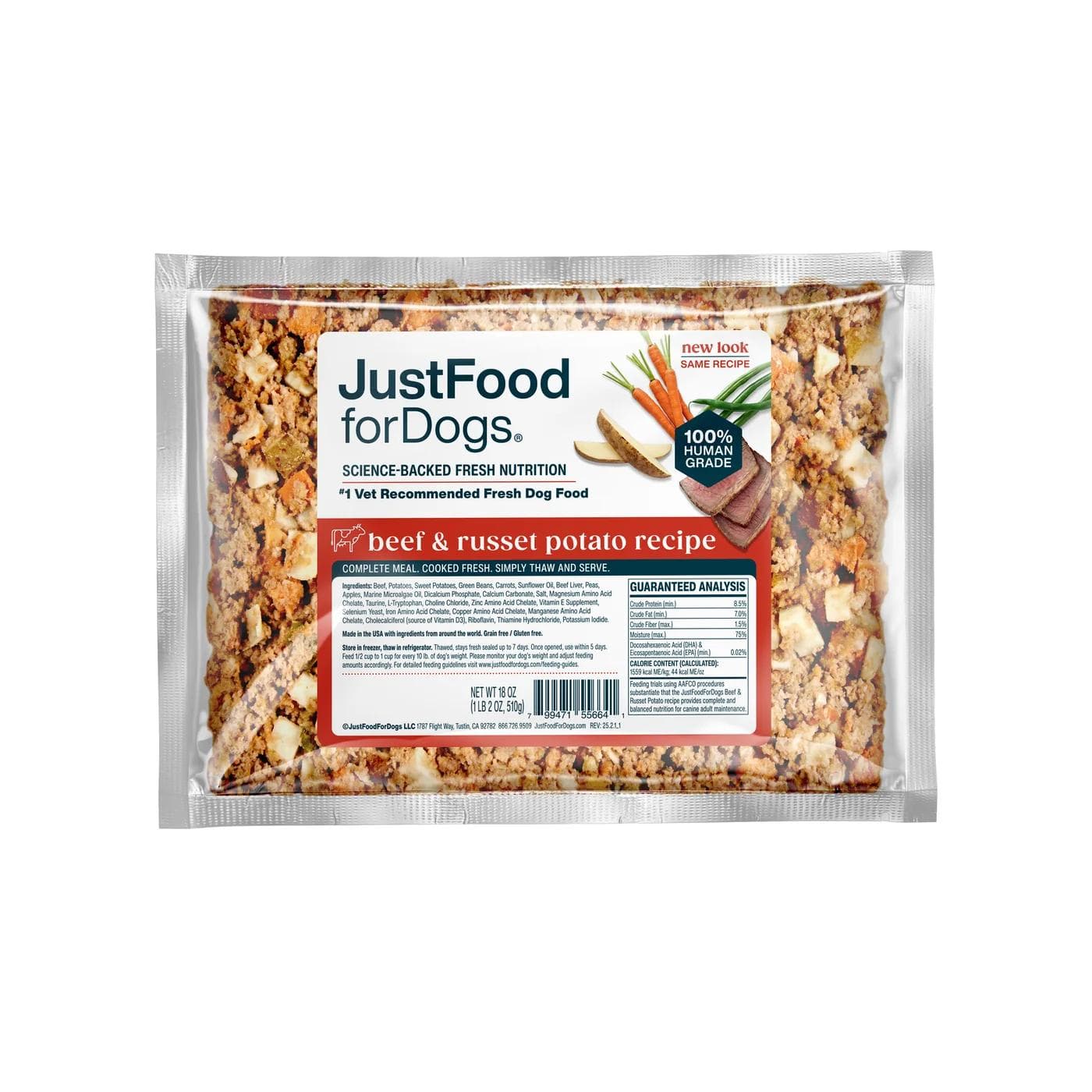
Want fresh food without raw-meat risk? Explore the gently cooked recipes mentioned in this guide.
- Beef and russet potato recipe
- Gently cooked, then frozen
- View ingredients and feeding guidance
Webvet may earn a commission when you click through to JustFoodForDogs, at no extra cost to you.

Storage
Keep raw pet food sealed and separated from human food. Store it low in the refrigerator so leaks cannot drip onto other items. Thaw it in a dedicated container in the refrigerator, never on a counter or in a sink.
Preparation
Use dedicated utensils and a preparation surface that can be cleaned and disinfected. Keep children and other pets away. Avoid splashing water from raw-food bowls or packages onto nearby surfaces.
Feeding
Serve the measured portion in a clean bowl and keep it in one washable area. Remove leftovers promptly. Do not let the dog carry raw pieces onto carpets, furniture, beds, or outdoor areas where they will be difficult to disinfect.
Cleanup
Wash hands with soap and water after touching the food, package, utensils, bowl, dog’s mouth area, or feces. Clean and disinfect every contacted surface according to the disinfectant instructions. Launder contaminated cloths separately and do not use the same sponge or towel for human dishes.
After the meal
Do not allow face licking or licking of open wounds. Clean stool promptly and wash hands after handling waste. Continue precautions even when the dog appears healthy.
These steps reduce exposure but do not remove the underlying raw-protein risk. A complete cooked diet is the simpler risk-control option.
What to do if a dog steals raw meat
Remove the remaining food and packaging, note the meat type and approximate amount, and check whether seasonings, skewers, absorbent pads, or spoiled material were involved. Call the veterinarian promptly if any foreign object or toxic seasoning may have been swallowed.
For plain raw meat, monitor closely and ask the veterinarian whether the dog’s age or health warrants proactive care. Do not induce vomiting unless a veterinary professional instructs you to do so.
Use this triage checklist when calling:
- What animal and cut was the meat?
- Was it raw, spoiled, seasoned, marinated, or attached to a bone?
- How much may be missing, and when did the dog eat it?
- Could packaging, an absorbent pad, string, foil, plastic, or a skewer be missing?
- What does the ingredient label say about onion, garlic, xylitol, alcohol, or other additives?
- What is the dog’s age, weight, medical history, and current medication list?
- Is the dog vomiting, having diarrhea, painful, weak, bloated, or behaving abnormally?
Keep the package and lot information. If the food was a commercial pet product, check the manufacturer’s notice and current recall information, but do not delay a veterinary call while searching online.
Raw meat, raw fish, and parasites
Bacterial contamination is not the only issue. Some raw animal tissues can carry parasites, and the risk depends on species, origin, handling, and preparation. Freezing requirements used for certain human-food applications should not be improvised into a universal pet-food safety rule.
Raw fish can also create species-specific hazards, including bones and, in some regions, organisms associated with serious canine illness. Hunting scraps and wild game add source and parasite uncertainty. Ask a veterinarian familiar with the local risks rather than assuming wild or freshly caught meat is safer.
Routine parasite prevention does not make raw feeding pathogen-free and may not cover every organism associated with raw animal products. Report diet history when a dog develops gastrointestinal signs.
Raw diets for puppies, seniors, and sick dogs
Puppies need a complete growth diet with appropriate nutrient balance. A raw mixture that is incomplete or contaminated creates both nutritional and infectious concerns during a vulnerable life stage.
Senior dogs vary widely. An older dog with stable health is not protected from pathogens by age, while a senior with kidney disease, cancer, endocrine disease, poor digestion, or immune suppression may have less ability to tolerate an infection or dehydration.
Dogs receiving chemotherapy, immune-suppressing medication, or treatment for serious disease require especially careful discussion. The same applies when a household member is pregnant, very young, older, or immunocompromised. The safest feeding choice considers every person and animal exposed.
Raw food claims to evaluate carefully
“Dogs are built to eat raw meat”
Dogs can consume raw meat, but capability is not a complete risk assessment. Domestic dogs share indoor environments with people and need a nutritionally complete diet suited to modern life stage and health requirements.
“A healthy dog can handle the bacteria”
Health does not guarantee that exposure will be harmless or prevent shedding into the household. Contamination level, organism, and individual response vary.
“Freezing kills everything”
CDC guidance specifically says freezing reduces germs without reliably eliminating all of them. Frozen raw food remains raw.
“Raw food is always more nutritious”
Raw and cooked diets can each be complete or inadequate. Ingredient freshness and processing format do not replace nutrient formulation.
“The bowl was washed, so the risk is gone”
Exposure can occur before the bowl is washed and through hands, counters, packages, refrigerator drips, the dog’s mouth, and feces. Cleaning helps but cannot recreate a cooking kill step.
Choosing a complete cooked alternative
A complete cooked food offers a way to avoid raw animal protein while still choosing a fresh, wet, or dry format. Check the nutritional-adequacy statement, life stage, calories, storage directions, and medical fit.
For families who want a fresh-food format without serving raw animal protein, gently cooked JustFoodForDogs Fresh Frozen recipes offer a clear alternative. The dog still needs the right complete recipe, measured portion, cold storage, clean handling, and veterinary input for medical needs, but the cooking step directly addresses the raw-versus-cooked distinction at the center of this decision.
When transitioning from raw food, tell the veterinarian what the dog currently eats, including bones, organs, supplements, treats, and calories. Unless another plan is prescribed, change foods gradually and monitor appetite, vomiting, stool, weight, and body condition.
How to evaluate a raw-food safety claim
A precise claim should identify the process, the hazard it addresses, and the limits that remain. “Frozen,” “natural,” “human grade,” “high pressure processed,” and “tested” do not all mean the same thing, and none should be translated automatically into pathogen-free. Ask the manufacturer for the current processing description and handling directions, then compare the answer with public-health guidance and the household's risk factors.
| Claim or label wording | What to verify | What it cannot establish by itself |
|---|---|---|
| Frozen or freeze-dried | Whether the animal protein was cooked before freezing or drying | That all bacteria or parasites were eliminated |
| High-pressure processed | Which product and batch receive the process and how performance is monitored | A universal zero-pathogen guarantee |
| Human grade or inspected ingredients | The finished product's processing and storage controls | That a raw final product is free of contamination |
| Complete and balanced | The nutritional-adequacy statement and intended life stage | Microbial safety or household suitability |
| Pathogen tested | Sampling method, lot definition, timing, and action after a positive result | That every portion in a lot was directly tested |
Also verify the thawing window, refrigerator temperature, leftover policy, bowl-cleaning directions, lot code, best-by date, and recall contact. A safety plan has to work on an ordinary rushed morning, not only when one caregiver follows an ideal demonstration. If the household cannot maintain separation from human food and vulnerable people, a complete cooked option removes the raw-protein step from that daily chain.
Prepare for a veterinary diet discussion
Bring the exact product label or home recipe, processing method, daily amount, supplements, treats, and reason for considering raw food. Tell the veterinarian about every person and animal in the household who may face higher consequences from exposure. Include pregnancy, young children, older adults, immune suppression, therapy or facility visits, and pets with chronic disease.
Ask separate questions about nutrition and safety:
- Is the diet complete and balanced for this dog's life stage?
- Does the calorie amount fit current body and muscle condition?
- Do bones, fat level, supplements, or ingredients create individual risks?
- Which processing step reduces pathogens, and which hazards remain?
- How would raw feeding affect a vulnerable person or animal in the home?
- What cooked formats meet the same nutrition and practical goals?
- Which gastrointestinal or systemic signs require prompt testing?
This conversation keeps preference from becoming a false medical claim. A dog may prefer a texture without needing raw animal protein, and a caregiver may value ingredient visibility without accepting the same handling burden. Fresh gently cooked, canned, dry, and professionally formulated home-cooked diets can all be evaluated on their own nutritional adequacy, calorie density, tolerance, storage, and cost.
A raw-versus-cooked decision matrix
Use the matrix to separate safety, nutrition, and practical fit instead of treating “raw” or “fresh” as a complete recommendation.
| Decision | Raw option | Complete cooked option |
|---|---|---|
| Pathogen control | No reliable cooking kill step; freezing and drying do not eliminate all germs | Cooking reduces the raw-animal-protein microbial hazard |
| Household exposure | Requires daily raw-meat controls for food, bowls, surfaces, saliva, and stool | Standard pet-food hygiene and perishable-food storage still apply |
| Nutritional adequacy | Must be verified for the exact product or professionally formulated recipe | Must also be verified through the adequacy statement or formulation |
| High-risk household | CDC guidance supports avoiding raw food | Removes the avoidable raw-protein exposure while preserving format choices |
| Medical fit | Needs veterinary review and may be inappropriate for a vulnerable dog | Also needs veterinary review when disease changes nutrient targets |
| Convenience | Requires separation, thawing controls, and raw cleanup | Fresh cooked food needs refrigeration; shelf-stable cooked formats may be simpler |
The decision is not raw meat versus highly processed food. Complete cooked choices include fresh, canned, dry, and shelf-stable formats. The veterinarian can help select among them using life stage, health, calorie needs, tolerance, storage, and household risk.
Reporting a suspected pet-food problem
Keep the package, lot code, best-by date, purchase record, and remaining food when a dog becomes ill after a commercial product. Contact the veterinarian first for the dog’s care, then follow current FDA reporting instructions if a pet food may be involved.
Do not continue feeding the suspected batch while waiting for a recall announcement. Store it securely away from people and animals unless the veterinarian or regulator provides different handling instructions. Photograph the label and product condition, and write down when the food was opened, stored, served, and first associated with signs.
If people are ill, contact a human medical professional and describe the shared pet-food exposure. Coordinated facts are more useful than assumptions about whether the dog or food was the source.

Frequently Asked Questions
Why do some dogs seem fine after eating raw meat?
Exposure does not always cause visible illness, and the amount and organism vary. A dog that appears normal can still create a household-handling concern. One uneventful meal does not prove that future raw meals are safe.
Does freezing raw meat make it safe for dogs?
No. CDC guidance says freezing can reduce germs but does not reliably eliminate all of them. Frozen raw food remains raw from a pathogen-risk standpoint.
Is gently cooked dog food the same as raw dog food?
No. Gently cooked food undergoes a cooking step; raw food does not. The finished diet must still be complete and balanced, properly stored, and appropriate for the individual dog.
Can dogs eat raw beef?
Raw beef can carry pathogens and is not risk-free. A plain cooked beef ingredient may fit some complete diets, but allergies, fat tolerance, portion, and the full formulation still matter.
Can dogs eat raw chicken?
Raw chicken can carry foodborne bacteria and may include bones that create physical hazards. Cook chicken thoroughly, remove unsafe bones, and use it within a complete diet rather than treating plain chicken as a balanced long-term food.
Can dogs eat raw pork?
Raw pork carries microbial and potential parasite concerns and should not be treated as safe. Pork also needs to be unseasoned and appropriately lean for the individual dog when cooked. See WebVet’s pork guide for the broader preparation and portion context.
Can dogs eat freeze-dried raw food?
Freeze-dried animal protein remains raw unless the manufacturer states that it received an effective cooking step. CDC says freeze-drying does not reliably kill all germs, so raw-food handling precautions still apply.
Is raw meat better for a dog’s teeth?
There is no need to accept pathogen or bone injury risk to support dental health. Bones can fracture teeth or cause choking and gastrointestinal injury. Use veterinarian-recommended dental care, tooth brushing, and products selected for the individual dog.
What should I do if my dog develops diarrhea after raw food?
Contact the veterinarian, especially for a puppy, senior, medically fragile dog, bloody stool, repeated vomiting, weakness, fever, pain, or dehydration. Mention the raw-food exposure and keep the package and lot information. Use strict cleanup and hand hygiene because the illness may also pose a household risk.

Editor
The Webvet Editorial Team is the in-house group of pet-care editors and writers behind Webvet, operated by Smart Pet Collective. The team researches, writes, and maintains Webvet's pet health, behavior, and medication content. Every article follows a defined editorial process: research from reputable veterinary and scientific sources, careful drafting, mandatory review of medical content by a credentialed veterinarian, and dated publication. Health and medication articles are medically reviewed by a licensed veterinary professional before they go live and are kept current over time.
Veterinarian · BVMS MRCVS
Dr. Pippa Elliott, BVMS, MRCVS, is a veterinarian with nearly 30 years of experience in companion animal practice. Dr. Elliott earned her Bachelor of Veterinary Medicine and Surgery from the University of Glasgow. She was also designated a Member of the Royal College of Veterinary Surgeons. Married with 2 grown-up kids, Dr. Elliott has a naughty Puggle named Poggle, 3 cats and a bearded dragon.
Related reading

Matted Cat Fur: How to Remove Mats Safely

Pet Safe Roach Killer: What Works Without Poisoning Your Pet

Pet Safe Pest Control: What Is Safe to Use Around Dogs and Cats
