Benadryl for Cats: Is It Safe, Dosage, and When to Call the Vet
Plain diphenhydramine (Benadryl) is sometimes used in cats, but only at a dose a vet sets for that cat, and combination boxes with a decongestant, pain reliever, alcohol, or xylitol are never safe. When vets use it, side effects, and overdose help.

BVMS MRCVS
Medically reviewed by Dr. Pippa Elliott, BVMS MRCVS · Last reviewed

This article contains affiliate links. Webvet may earn a commission when you buy through them, at no extra cost to you.
Can cats have Benadryl? Yes: Benadryl for cats can be safe, but only as plain diphenhydramine at a dose a vet works out for that particular cat. Boxes that add a decongestant, a pain reliever, or alcohol are never safe for a cat, and a dose guessed from a human tablet is a common route to an overdose.
Kittens and cats that have reacted to an antihistamine before should never be given Benadryl. Cats with glaucoma, heart disease, high blood pressure, or an overactive thyroid need their own vet's judgment first. Bitter tablets often cause drooling or foaming, and a cat with facial swelling or trouble breathing needs a vet now.
 Sponsored
Need a prescription or refill for your cat?
A licensed vet at Dutch can assess your cat over video and prescribe treatment when it's appropriate, delivered to your door.
Use code Pets60
Plans start at $12/month · covers up to 5 pets
- Licensed vets in most states
- Rx for 150+ conditions
- 4.7 on Trustpilot
Benadryl for cats: is it safe, and when a vet would and would not use it
- 1Know when a vet uses Benadryl in cats: mild allergic reactions, hives, insect bite swelling, and as a mild sedative, always at a dose set for the cat.
- 2Use plain diphenhydramine products only, with no decongestant, pain reliever, alcohol, or xylitol on the label.
- 3Never give it to kittens or to a cat that has reacted to an antihistamine before.
- 4Facial swelling, trouble breathing, or collapse means an emergency clinic, not a tablet at home.
- 5After any accidental overdose or wrong product, call your vet or a pet poison control line right away.
Yes, you can give a cat Benadryl, and it is safe only once a vet has approved it and set the dose. Diphenhydramine is an older H1 antihistamine. VCA Animal Hospitals lists its animal uses as allergic reactions, motion sickness, and vomiting, plus a role as a mild sedative and as one of the therapies for mast cell tumors.
Vets use it off label in cats, as they do many human drugs, and VCA asks owners to follow the vet's directions over anything printed on the box. That is the honest answer to whether Benadryl suits a cat: sometimes, in the right cat, at the right dose.
Giving cats Benadryl is reasonable when a vet has confirmed that histamine is driving the problem. Typical examples:
- A mild allergic reaction with hives or itchy welts
- Puffiness after an insect bite once the vet has seen it (bee and wasp stings have their own guide on what to do when a cat is stung by a bee)
- A short-term itch flare while the cause is being found
- Premedication the vet chooses before certain treatments, sometimes given as a Benadryl shot at the clinic

For an itchy cat waiting on its vet check, some owners add a skin supplement while the vet works on the cause. The Liquid-Vet Itch & Allergy Support Chicken Flavor Cat Supplement, 8-fl oz bottle contains hyaluronic acid and fish oil omega-3s, according to its maker, and is listed at $14.10 on Chewy when checked in November 2026. It is not an antihistamine.
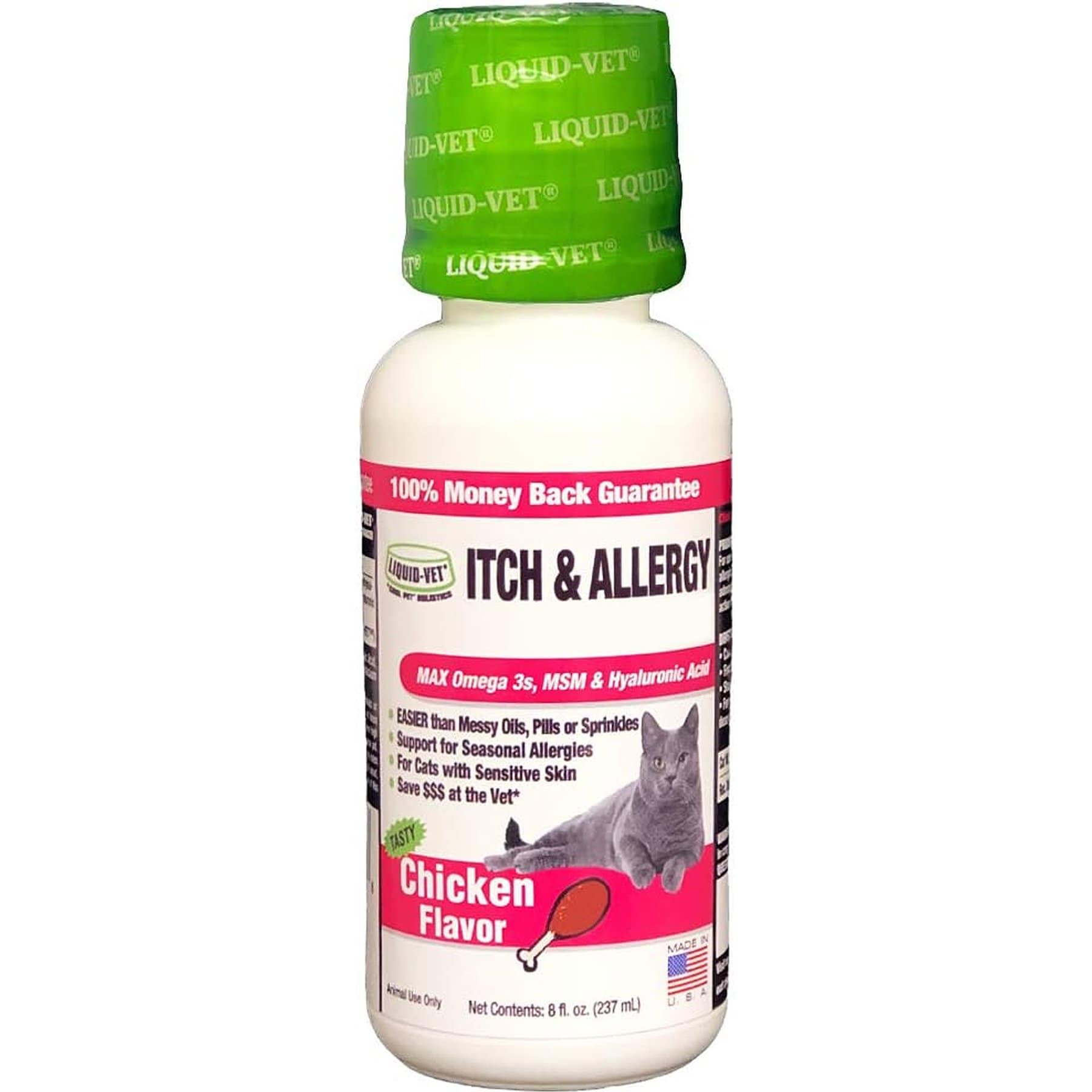
A chicken-flavored skin and coat supplement for cats, used alongside the vet's itch plan rather than instead of it.
Webvet may earn a commission when you click through to Chewy, at no extra cost to you.
A cat that keeps scratching one spot can break the skin. A soft collar such as the PawsPik Adjustable Dog & Cat Recovery Soft-Cone, Peach, Small stops paws and tongue reaching it, and the guide to choosing a cat cone covers fit and comfort.
There are also clear times a vet would not reach for diphenhydramine:
- Kittens. VCA says it should not be used in pediatric or neonatal pets, so no young kitten should be given it at home.
- Cats allergic to antihistamines. A cat that reacted to one before should not get it again.
- Certain health problems. VCA advises caution with glaucoma, an overactive thyroid, heart disease, high blood pressure, urinary or bowel obstruction, pregnancy, and older age.
- Other sedating drugs. VCA flags caution with sedatives, anesthetics, and pain medications, which matters around neutering or any other surgery.
- Coughing, a stuffy nose, or a cold. These have causes an antihistamine does not treat, so a coughing cat needs an exam first.
Benadryl is also not a fix for a cat in heat: heat behavior is not among its uses, and it will not settle a calling cat. Owners weighing melatonin against Benadryl should start neither without the vet, who knows the cat's other medicines.
For a cat that is tense or unsettled rather than itchy, a drug-free step at home is often a better first move than any tablet. The Feliway Classic 30 Day Starter Kit Calming Pheromone Diffuser for Cats is a plug-in made to help cats feel secure, according to its maker, and is listed at $24.99 on Chewy when checked in November 2026.
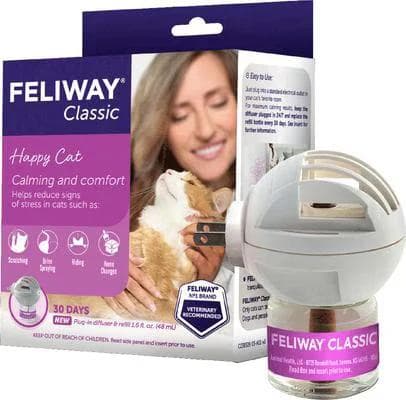
A drug-free plug-in pheromone diffuser for a calmer home, tried before anyone reaches for a sedating antihistamine.
Webvet may earn a commission when you click through to Chewy, at no extra cost to you.
Daily Benadryl is only for a cat whose vet has planned it. VCA notes the drug is short acting and wears off within 24 hours, so daily use is a treatment plan, not a home habit. When regular doses are planned, a little wet food or a soft treat can hide the taste of Benadryl, which cats dislike. Whether a cat gets it around a vaccine appointment is likewise decided by the vet at the clinic.
A swollen lip or face is not a wait-and-see problem: VCA lists facial swelling with irregular breathing as an allergic reaction needing the vet immediately.
What Benadryl does in cats, and how it compares with Zyrtec and other antihistamines
Benadryl can ease allergy signs in cats, such as hives and itching, but it rarely controls long-running allergic itch on its own. Diphenhydramine blocks H1 histamine receptors. The Merck Veterinary Manual explains that H1 blockers stop the histamine effects that cause leaky capillaries, wheals, and swelling. They do not stop histamine being released, so they work best before a reaction peaks.
That is why antihistamines help with hives and some bite swelling, and why they are weaker for long-running itch. Merck notes that H1 blockers may be less effective for allergic skin disease such as atopy, because chemicals other than histamine drive much of the itch and inflammation.
What that means for common reasons owners give cats Benadryl:
- Allergies and itchy skin. It can take the edge off itching for some cats, but Merck's skin pharmacology chapter says responses vary considerably and several trials may be needed.
- Scratching from fleas. Flea allergy dermatitis needs strict flea control. Cornell Feline Health Center describes flea bites causing intense itching in sensitive cats and advises using flea products only with a vet's guidance.
- Sneezing or a cold. A sneezing cat with a stuffy nose needs the vet to find the cause, because histamine is only one possible driver.
- Swelling. Mild bite swelling may respond; facial swelling with breathing changes is an emergency.
- Pain. Benadryl does not relieve pain, and human pain relievers are dangerous for cats.
- A snake bite. A cat bitten by a snake needs an emergency clinic, not a home antihistamine.
The bigger picture on allergies in cats from food and fleas explains how vets find the trigger, and crusty, scabby skin along the back is often miliary dermatitis in cats, which usually has an allergic cause.

Is cetirizine safe for cats?
Cetirizine (Zyrtec) can be safe for cats when a vet prescribes it, and VCA Animal Hospitals describes it as an off-label antihistamine for itching from atopic dermatitis, hives, and insect bite reactions. Side effects are uncommon: occasional vomiting, extra drooling, or sleepiness at high doses. Never use the cetirizine plus pseudoephedrine product (Zyrtec-D).
Is Benadryl or Zyrtec better for cats?
Neither is better for every cat; the choice depends on the cat and the reason. Diphenhydramine is a first-generation antihistamine that sedates more and can cause excitement in cats. Cetirizine is a newer one that sedates less, though Merck notes newer antihistamines have not proved useful so far for controlling itch in small animals.
What is the best antihistamine to give a cat?
There is no single best antihistamine for cats. Merck lists several for cats, including cetirizine, chlorpheniramine, fexofenadine, and diphenhydramine, and says responses vary so much that a vet may try more than one to find the drug that helps a particular cat. The vet picks the drug and the dose.
Which Benadryl products are safe for cats: plain diphenhydramine, no decongestants, no xylitol
| Formula on the shelf | Active ingredient line | Cat verdict |
|---|---|---|
| Plain diphenhydramine tablet or capsule (25 mg) | Diphenhydramine HCl only | Possible, only at a dose the vet sets; usually more than a cat needs per tablet |
| Children's liquid (12.5 mg per 5 mL) | Diphenhydramine HCl only | Possible with vet approval; check inactive ingredients for sweetener and alcohol |
| Any product with -D, Sinus, Congestion, or Cold on the box | Diphenhydramine plus a decongestant such as phenylephrine or pseudoephedrine | Never for cats |
| Allergy plus pain or Severe Cold formulas | Diphenhydramine plus acetaminophen or ibuprofen | Never for cats |
| Nighttime or PM products | Diphenhydramine plus a pain reliever | Never for cats |
| Liquids with alcohol or xylitol listed | Diphenhydramine plus alcohol or xylitol in inactive ingredients | Never for cats |
| Itch cream, gel, or spray | Topical diphenhydramine | Only on vet advice; cats lick it off |
The safe choice comes down to one line on the box: the active ingredient list. If diphenhydramine is the only active ingredient, the product is a candidate for the vet to dose. If anything else is listed, put it back.
Here is how to read a Benadryl box before anything goes near a cat:
- Active ingredient line. It should say diphenhydramine HCl and nothing else.
- Letters and words after the name. Pet Poison Helpline explains that a letter D after an allergy medicine name means a decongestant has been added.
- Pain relievers. The Merck Veterinary Manual notes that cold and allergy products often pair antihistamines with acetaminophen or ibuprofen.
- Inactive ingredients in liquids and chewables. Look for alcohol, xylitol, and other sweeteners.
- Strength. Note the milligrams per tablet or per 5 mL, because that is what the vet needs to know.
Decongestants are the most dangerous add-on. The ASPCA warns that an antihistamine with an added ingredient such as pseudoephedrine can cause severe hyperactivity, hallucinations, and seizures, and that it does not take much to become life-threatening.
Pain relievers are just as serious. Merck says cats are especially susceptible to acetaminophen, with some cats showing signs at 10 mg/kg, and are poisoned by ibuprofen at about half the dose that harms dogs.
The form a vet chooses often depends on how small the dose needs to be. How each form compares:
- Pills. Plain tablets are the simplest form to check, but an adult 25 mg tablet is usually more than a cat's dose.
- Liquid. The DailyMed label for Children's Benadryl Allergy lists 12.5 mg of diphenhydramine in each 5 mL, sucrose and flavors among the inactive ingredients, and an alcohol-free panel. That makes measured small doses possible when the vet approves it.
- Grape, cherry, or unflavored liquid. The flavor name tells you nothing about decongestants or sweeteners. The FDA lists cough syrups and over-the-counter medicines among products that may contain xylitol, so the inactive ingredient list is what matters.
- Cream, gel, or spray. VCA's topical diphenhydramine guide says pets should not lick the site for at least 30 minutes and urges caution in small animals or over large areas. If a cat licked Benadryl cream, call the vet with the tube in hand.
Dog owners can read the separate guide to Benadryl for dogs, since doses and risks differ between species.
What brand of Benadryl is safe for cats?
No brand is safe for cats on its own name; the safe choice is any product whose only active ingredient is diphenhydramine, used at a vet-set dose. Name-brand Benadryl and store-brand diphenhydramine are the same drug. Brand lines with decongestants, pain relievers, alcohol, or xylitol are never safe for cats.
SponsoredVet care that's always there
Unlimited video calls and messaging with licensed vets for less than a typical vet visit. One membership covers up to five pets.
Use code Pets60
Plans start at $12/month · covers up to 5 pets
- Licensed vets in most states
- Rx for 150+ conditions
- 4.7 on Trustpilot
How a vet decides a Benadryl dose for a cat, and how to give it
How much Benadryl should I give my cat? The Benadryl dosage for cats is set by the vet, working from the Merck Veterinary Manual range of 2 to 4 mg of diphenhydramine per kilogram for dogs and cats, every 8 hours. Merck's skin chapter lists every 8 to 12 hours as needed.
The exact dose depends on the cat's weight, health, other medicines, and the reason for giving it. A dosage chart by weight or an online calculator cannot check for heart disease, glaucoma, or a drug interaction. Here is how the vet sets a dose by weight:
- Weighs the cat and checks its health, other medicines, and the reason for treatment.
- Picks a point in that range suited to this cat.
- Converts it into tablets or milliliters of the product you actually have.
For car travel, vets often advise against Benadryl altogether. Merck's motion sickness chapter explains that cats lack histamine receptors in the brain's vomiting center, lists diphenhydramine as not effective for motion sickness in cats, and says motion sickness can be overcome by conditioning the animal to travel.
Conditioning starts with a sturdy carrier. The Frisco Travel Safety Dog & Cat Carrier, Medium straps to a car seat headrest, according to its maker, and is listed at $41.29 on Chewy when checked in November 2026.
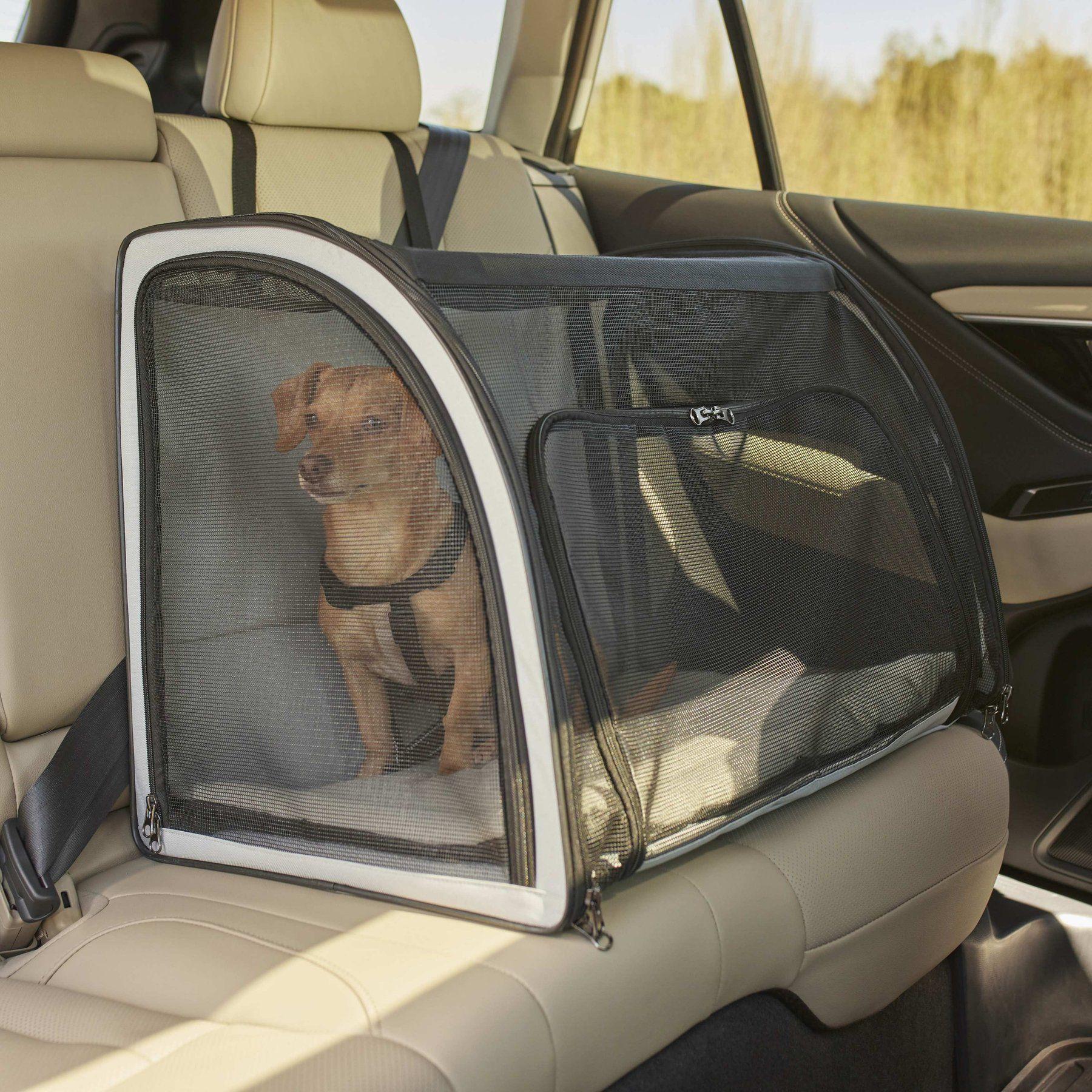
A car-seat travel carrier that can live open at home first, so car trips start from a familiar space.
Webvet may earn a commission when you click through to Chewy, at no extra cost to you.
Leaving the carrier open at home, with bedding and treats inside, turns it into a normal resting spot. Short practice trips come next: carrier closed for a minute, then a drive around the block, then longer drives, with treats at each step. Cats that drool, cry, or vomit in the car are showing nausea or fear, and Merck lists salivation and vocalization among those signs.
Whatever the reason for the dose, converting the vet's figure at home is where mistakes happen:
- Per pound versus per kilogram. Dosage per pound is a different number from dosage per kilogram, and mixing them up more than doubles the dose.
- Milliliters of liquid. How many mL of liquid Benadryl a cat gets depends on the concentration on the label, so the vet gives you a volume for that bottle only.
- Per day versus per dose. The number of doses a day is part of the vet's plan, not a figure to stretch.
- Tablet size. Most cats need a fraction of an adult tablet, which is hard to split accurately.
Giving the dose matters as much as setting it. VCA says oral doses can be given with or without food, and that the liquid has a bad taste to cats. If a cat won't take Benadryl, these steps from VCA's guide to giving pills to cats help:
- Hide the tablet in a small amount of wet food, tuna, or a soft treat the cat will finish.
- Follow a pill with a little water from a syringe so it does not sit in the mouth.
- Ask the vet before crushing a tablet, since VCA advises checking whether each medicine can be crushed.
- Ask about a compounded flavored liquid or treat if pills are a fight.
- If a dose is missed, VCA says give it when you remember and never give two doses at once.
On a travel or vet-visit day, scent can help the carrier feel familiar. The Feliway Classic Calming Pheromone Spray for Cats, 60-mL is sprayed into the carrier before a trip and mimics a mother cat's pheromones, according to its maker. It is listed at $24.99 on Chewy when checked in November 2026.
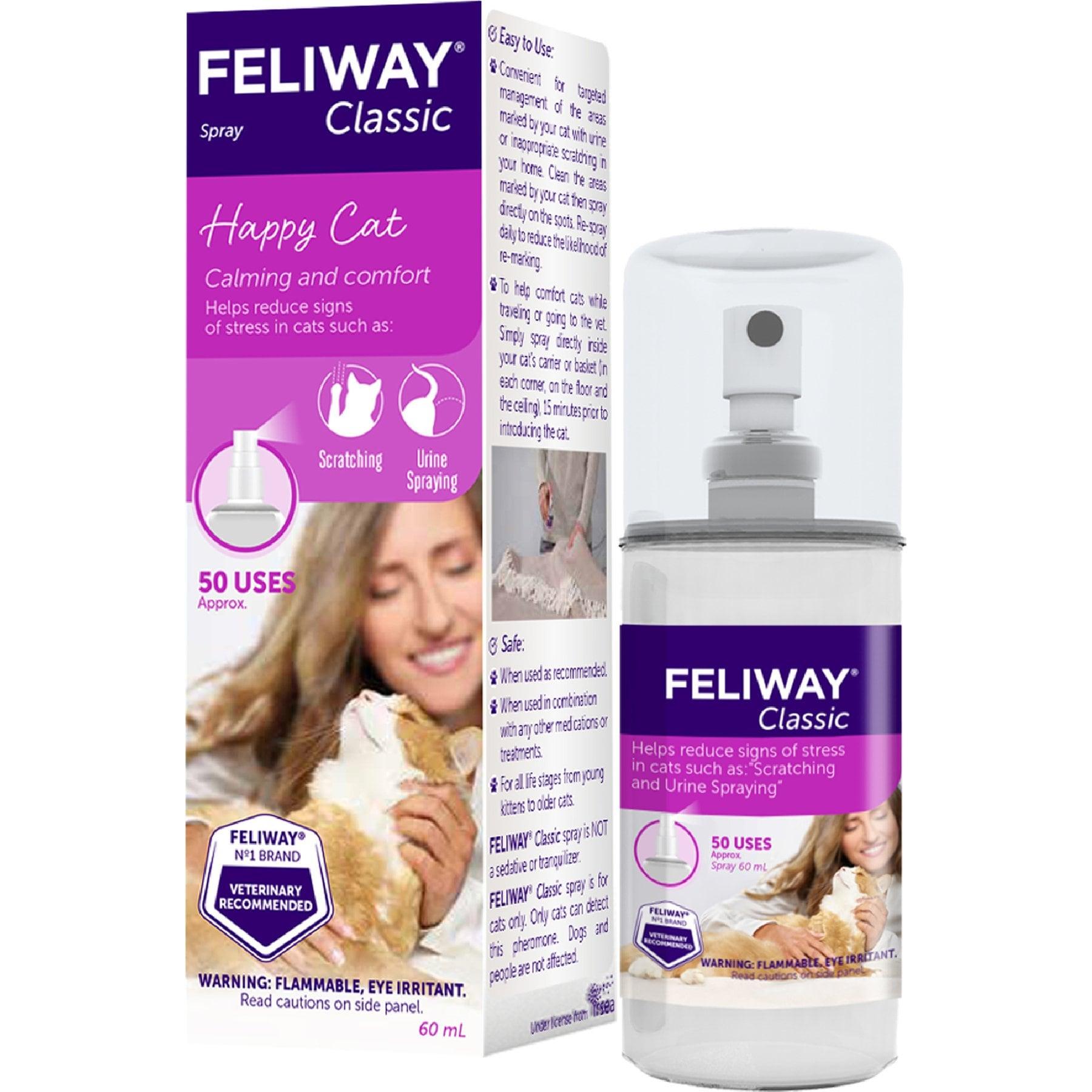
A pheromone spray for the carrier and car, part of a calmer travel routine before any drug is considered.
Webvet may earn a commission when you click through to Chewy, at no extra cost to you.
If a cat is still distressed after conditioning, the Benadryl dose is the wrong question to ask. The better question for the vet is which travel medicine suits this cat.

How much Benadryl for a 10 lb cat?
A 10 lb cat weighs about 4.5 kg, and a vet sets its dose from Merck's range of 2 to 4 mg per kilogram. The vet first confirms the cat is healthy enough, then gives a milligram dose and schedule for your product. Do not work it out from a chart.
Is 25 mg Benadryl safe for a cat?
A whole 25 mg tablet is usually too much for a typical cat. Measured against Merck's 2 to 4 mg per kilogram range, 25 mg sits above the top of the range for a 10 lb cat. Vets usually prescribe a fraction of a tablet or a measured liquid instead.
How long does it take for Benadryl to kick in for a cat?
Benadryl usually starts working in about 1 to 2 hours in cats, according to VCA. VCA describes it as short acting, so the effect should wear off within 24 hours. If signs are worsening rather than easing in that window, call the vet.
Benadryl side effects in cats: drooling, foaming, sleepiness, and excitement
The side effects of Benadryl for cats are mostly predictable: drowsiness, or excitement in some cats, plus dry mouth and stomach upset. VCA lists:
- Lethargy and sleepiness
- Excitement, especially in cats
- Dry mouth
- Urinary retention
- Vomiting and diarrhea
- Reduced appetite
Does Benadryl make cats sleepy? Usually, yes. Diphenhydramine is a first-generation antihistamine, and Merck notes these drugs can cause drowsiness. The drowsiness tracks how long the drug lasts, so most cats are back to normal within a day.
Some cats do the opposite. Paradoxical excitation, where a cat becomes restless, vocal, or agitated instead of drowsy, is why VCA singles out excitement in cats. A cat that reacts this way should not be given more to calm it down.
A single vomit after a dose can be a stomach upset, and VCA notes that giving the dose with a little food can help. Repeated vomiting, weakness, or a racing heart is a reaction that needs the vet.

Why does my cat foam at the mouth after taking Benadryl?
Cats foam at the mouth after Benadryl mostly because of the taste. VCA notes the liquid has a bad taste to cats, and the Merck Veterinary Manual's cat owner guide lists giving medicine among causes of heavy drooling. A bitter tablet that dissolves on the tongue makes saliva that the cat whips into foam.
Drooling from the taste usually settles within minutes once the cat swallows or drinks. A foaming kitten is a different matter, because kittens should not have been given it at all. Foaming with tremors, wobbling, dilated pupils, or a fast heartbeat points to an overdose and needs a call to the vet or poison line now.
Side effects that mean a same-day call to the vet:
- Little or no urine. VCA lists urinary retention as a side effect. A cat straining in the litter box and passing little or no urine is an emergency, whatever the cause.
- Agitation that builds. Restlessness that keeps rising after a dose can be paradoxical excitation or the start of an overdose.
- Not eating. VCA lists reduced appetite; a cat that skips meals for more than a day needs the vet to look again.
- Repeated vomiting or diarrhea. One episode can be the taste; more than that needs advice.
- Swelling or breathing changes. These suggest an allergic reaction to the drug itself and need the vet immediately.
One more effect is easy to miss. VCA notes that diphenhydramine can alter the results of skin allergy testing and should be stopped at least 2 weeks before testing, so tell the vet if a cat has had any antihistamine before an allergy workup.
Benadryl overdose or the wrong product: what to do and when to call poison control
Is Benadryl toxic to cats? At a vet-set dose it is a routine drug; in overdose it can be dangerous. The ASPCA says some antihistamines are safe at therapeutic doses but that an overdose can be dangerous. Merck notes antihistamine overdoses may cause nervous system overexcitement and may be fatal.
In overdose, Benadryl can kill a cat, and there is no known safe ceiling to aim under: Merck states the toxic dose is unknown. That is the reason any amount beyond the vet's dose, or any amount a cat helped itself to, is a call to make right away rather than wait out.
Symptoms of a Benadryl overdose in cats can start within 30 to 60 minutes. The Merck Veterinary Manual lists:
- Lethargy and heavy sedation
- Agitation and restlessness
- Fast heart rate
- Vomiting
- Low blood pressure, with weakness
- Dilated pupils
- Tremors
- Seizures
The ASPCA describes smaller exposures as making pets tired, quiet, or queasy, while larger exposures cause agitation, restlessness, and a faster heart rate. With large overdoses, pets usually need veterinary care, and signs can last one to two days.
What to do if your cat ate Benadryl:
- Move the cat and the packaging away from any remaining tablets or liquid.
- Do not try to make the cat vomit; Merck notes inducing vomiting is not appropriate for most animals that swallowed these antihistamines.
- Call your own vet, an emergency clinic, or a poison control line, with the box in hand.
- Tell them the product name, active ingredients, strength, how much is missing, and the cat's weight.
The poison control lines:
- ASPCA Animal Poison Control Center: (888) 426-4435, available 24/7, 365 days a year, per the ASPCA; a consultation fee may apply.
- Pet Poison Helpline: (855) 764-7661, available 24/7, per Pet Poison Helpline; an incident fee applies.
The wrong product raises the stakes. Merck reports pseudoephedrine signs from 5 to 6 mg/kg and deaths at 10 to 12 mg/kg, and acetaminophen harms cats at small doses. A grape or other flavor is not the danger; the active ingredients are, so read them out to the poison line.
Can cats be allergic to Benadryl? Yes; VCA says it should not be used in pets allergic to it or similar antihistamines. If a cat has died after a dose, still call the vet or poison line, so the cause can be worked out and other pets kept safe.
Prevention is simpler than treatment. Merck's owner guide says to store medicines where pets cannot reach them, and the guide to poison-proofing your cat's home covers medicine cabinets, purses, and nightstands.
Benadryl for cat travel and anxiety, and calmer options to ask the vet about
Can you give cats Benadryl for anxiety or as a sedative? Vets rarely use it this way. VCA calls diphenhydramine a mild sedative, but it can cause excitement in cats instead, and Merck lists it as not effective for motion sickness in cats. Sedating cats for car travel with Benadryl can backfire.
The same applies to using it to quiet a cat for bathing, grooming, or nail trims. Because some cats become excited rather than drowsy, the drug can make handling harder. For these jobs, vets suggest these steps instead:
- Short, frequent handling sessions with treats, so nail trims and brushing become routine.
- A groomer or vet clinic for a full bath or mat removal in cats that fight it.
- Calming the home before stressful events, so the cat starts from a lower stress level.
- Asking the vet about a prescribed pre-visit medicine for cats that stay distressed.

Calmer travel without sedation starts days before the trip, with practice drives, a covered carrier, and a familiar blanket. At home, a plug-in pheromone diffuser running before and after the trip helps keep the cat's surroundings familiar.
Some owners also ask the vet about a calming supplement. The Licks Pill-Free ZEN Calming Cat Supplement, 30 count is a chicken flavored supplement its maker describes for stress from house guests, new cats, and vet visits. It is not a sedative, and the vet should know about it.
For cats that still struggle, vets have prescription options with better evidence in cats than Benadryl:
- Gabapentin. VCA says it has been used in cats for fear and anxiety around vet visits, takes effect in about 1 to 2 hours, and can cause sleepiness and wobbliness.
- Trazodone. Merck lists it as a pre-event option for cats, and VCA notes this use is off label.
- Maropitant. Merck says vets treating motion sickness in cats are better off prescribing it.
What to raise with the vet a week or two before a trip:
- What happens now. Drooling, crying, vomiting, or soiling in the carrier tells the vet whether the problem is nausea, fear, or both.
- Every other medicine and supplement. VCA asks owners to tell the vet about all medicines, vitamins, supplements, and herbal products, including calming supplements.
- Age. Merck notes cats should be 16 weeks old before receiving maropitant, and kittens should not get diphenhydramine at all.
- Timing. Merck lists maropitant for cats given 2 hours before travel, and VCA says gabapentin works in about 1 to 2 hours, so the vet will set when each dose is given.
- A calm start. VCA advises keeping a cat as calm as possible when gabapentin is given and for the hour after, because excitement can blunt its effect.
Merck also warns that oral diazepam should be avoided in cats. For flying, airlines and destinations set their own rules, so book the vet visit early enough to plan the medicine, the carrier, and any paperwork together.
Benadryl for cats questions
Frequently Asked Questions
Can I give my cat liquid Benadryl?
Only if the vet approves it and gives you a dose in milliliters for that exact bottle. Choose a liquid with diphenhydramine as the only active ingredient, no alcohol, and no xylitol or other sweetener of concern listed. Cats dislike the taste, so expect some drooling.
Will Benadryl make my cat sleepy?
Most cats get drowsy for several hours, and the effect should be gone within about a day. Some cats show excitement instead and become restless or vocal. If that happens, call the vet before giving another dose.
Can I give my cat Benadryl for travel?
It is rarely the best choice, because diphenhydramine does not prevent motion sickness in cats. Carrier training, short practice drives, and a covered carrier help more. A vet can prescribe a travel medicine if the cat still struggles.
Can kittens have Benadryl?
No, not at home. A kitten should not be given Benadryl unless a veterinarian has examined it and chosen the drug, because young animals are on the list of pets it should not be used in.
Can I give my cat Benadryl for itching?
Sometimes, with the vet's go-ahead, but it often only takes the edge off an itch. Fleas can cause intense itching, so vet-guided flea control matters more than any antihistamine, and persistent itch needs a vet to find the trigger.
Veterinarian · BVMS MRCVS
Dr. Pippa Elliott, BVMS, MRCVS, is a veterinarian with nearly 30 years of experience in companion animal practice. Dr. Elliott earned her Bachelor of Veterinary Medicine and Surgery from the University of Glasgow. She was also designated a Member of the Royal College of Veterinary Surgeons. Married with 2 grown-up kids, Dr. Elliott has a naughty Puggle named Poggle, 3 cats and a bearded dragon.


