Why Does My Cat Meow So Much? A Vet Explains Normal vs. Concerning
Some meowing is normal cat conversation; a sudden spike can signal pain, hyperthyroidism, or feline dementia. Here is how to tell the difference and when to call your vet.

BVMS MRCVS

This article contains affiliate links. Webvet may earn a commission when you buy through them, at no extra cost to you.
Why does my cat meow so much? Cats meow mainly to communicate with people, so some chatter is normal. A sudden or out-of-character increase, though, can signal a problem.
Common causes include hunger, attention-seeking, stress, pain, hyperthyroidism, and feline dementia in seniors.
That short answer covers most cats, but the right response depends entirely on which cause you are dealing with, and meowing is only one channel. Reading your cat's full body language (posture, tail, ears, and eyes) alongside the sound tells you far more than the meow alone.
Below, we walk through what is normal, the eight most common reasons cats meow, the medical and age-related causes you should never ignore, and a clear checklist for when to call your veterinarian.
- 1Cats meow at humans far more than at each other, so some meowing is normal communication, not a problem to fix.
- 2What matters is change: meowing that is new, escalating, or happening at night for THIS cat deserves attention.
- 3A sudden spike in vocalizing can be a sign of pain, hyperthyroidism, kidney disease, urinary trouble, or feline dementia, especially in cats over 10.
- 4See your vet first if meowing changed suddenly or comes with weight loss, increased thirst, hiding, or litter box changes. Treat it as a behavior to manage only after illness is ruled out.
Is It Normal for Cats to Meow a Lot?

Yes, a lot of meowing can be perfectly normal. Here is a fact that surprises most owners: adult cats rarely meow at other cats.
Kittens meow to their mothers, and adult cats do occasionally vocalize to each other (during conflict, mating, or a mother calling her kittens), but grown cats reserve the meow primarily for humans.
Over thousands of years of living alongside us, cats learned that this particular sound gets our attention. So when your cat meows, she is usually talking to you.
How Much Meowing Is Normal?
How much is normal varies enormously from cat to cat. Breed plays a big role: Siamese, Bengal, Oriental Shorthair, and other Oriental-type breeds are famously talkative and will hold long conversations with you.
A quiet cat who barely makes a sound is also completely normal. There is no universal correct amount of meowing.
So the useful question is not whether your cat meows, but whether the amount has changed for your individual cat. A cat who has always been chatty and stays chatty is just being herself. A cat who was quiet for years and suddenly will not stop is telling you something.
Do Happy Cats Meow a Lot?
Often, yes. Relaxed, social, conversational meows, especially the short ones your cat gives when you walk in the door or sit down next to her, are usually a good sign of a bonded, content cat.
What is not a good sign is a distressed, loud, drawn-out yowl, or a clear change from your cat's baseline. The tone and the trend matter more than the volume.
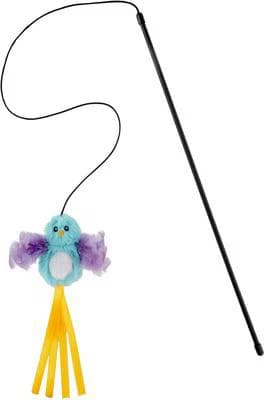
Teaser wand with a feathered bird charm and catnip to trigger your cat's chase-and-pounce instinct.
Webvet may earn a commission when you click through to Chewy, at no extra cost to you.
What About Kittens?
Kittens are a special case. They meow to their mothers from birth to signal that they are hungry, cold, or separated. A newly adopted kitten will often meow a great deal in the first days and weeks as it adjusts to a strange home without its littermates.
As a kitten weans, settles in, and learns your routine, most of this extra vocalizing fades on its own.
Why Does My Cat Meow So Much? 8 Common Reasons
Excessive meowing falls into two buckets: behavioral causes (your cat wants something or feels a certain way) and medical causes (something is physically wrong).
Before you try to change the behavior, it is worth running through this list to see whether you can spot the trigger. If nothing here fits, or your cat is a senior, or other symptoms are present, the medical sections below come first.
- Hunger, thirst, and routine. Cats are creatures of habit with a sharp internal clock. An empty bowl, a late meal, or simply the approach of the usual feeding time will set off a vocal reminder. This is one of the most common reasons for predictable, scheduled meowing.
- Attention-seeking (a learned behavior). If meowing has ever gotten your cat what she wanted, including food, play, a lap, or even a frustrated "be quiet," she learned that meowing works. To a cat, any response is a reward, and scolding still counts as attention.
- Boredom and under-stimulation. Young, energetic, and solo indoor cats often meow because they are asking for something to do. A cat who sleeps all day with no outlet for hunting and play will look for engagement, and your attention is the easiest target.
- Greeting and social meows. The little chirpy meows when you come home, wake up, or sit down are connection-seeking, not a problem. This is your cat acknowledging you and asking for interaction, the feline equivalent of a friendly hello.
- Stress and household change. Cats dislike disruption. A new pet or baby, a move, houseguests, a schedule shift, rearranged furniture, or nearby construction can all increase vocalizing as your cat processes the change and seeks reassurance.
- Wanting access. Meowing at a closed door, a window, or a cupboard is a simple request: let me in, let me out, or let me reach that. Cats are persistent about doors, and a closed one is often an irresistible invitation to complain.
- Mating behavior. Unspayed females in heat and intact males produce a loud, unmistakable caterwaul that can go on for hours, day and night. A female cat's heat cycle typically lasts several days to a week or more and can recur every few weeks during breeding season. Spaying or neutering resolves this almost entirely and carries major health benefits as well.
- Medical and age-related causes. This is the bucket you cannot afford to miss. Pain, hyperthyroidism, kidney disease, urinary problems, high blood pressure, and feline cognitive dysfunction can all drive a real increase in meowing. The next two sections cover these in detail.
Medical Causes of Excessive Meowing (When Meowing Means Pain or Illness)
Here is the part most casual advice skips. Cats are masters at hiding illness, an instinct inherited from wild ancestors who could not show weakness.
A sudden or steadily escalating change in vocalization is one of the clearest windows we get into a cat who is unwell. When the meowing pattern changes and you cannot tie it to a behavioral trigger, a medical cause should be on your mind.
- 1Pain, hyperthyroidism, kidney disease, urinary problems, high blood pressure, and respiratory or throat conditions can all change or increase meowing.
- 2The meow that worries a vet is rarely meowing alone: it is meowing plus a second change such as weight loss, increased thirst, hiding, or litter box changes.
- 3Straining in the litter box with little or no urine is an emergency in ANY cat, male or female: get to a vet within hours.
Pain
Arthritis, dental disease, an injury, or abdominal discomfort can all make a cat cry out, especially when moving, jumping, climbing stairs, or being touched in a sore spot. Pain is easy to miss in cats because they rarely limp dramatically the way dogs do.
Learning the quieter signs your cat is in pain (reduced grooming, hiding, a hunched posture, irritability when handled) helps you connect new vocalizing to discomfort.
Hyperthyroidism
An overactive thyroid is one of the most common hormonal diseases in middle-aged and senior cats, and loud, restless vocalizing, often at night, is a classic sign. The hallmark combination is a ravenous appetite paired with weight loss, along with restlessness, a racing heart, and sometimes a poor or greasy coat.
It is manageable once diagnosed, but it is not a one-and-done fix: left untreated it strains the heart and can be fatal, and treating it can unmask underlying chronic kidney disease. A vet manages it with ongoing monitoring rather than a single treatment, which is exactly why catching that nighttime howling early matters.
Kidney Disease (CKD)
Chronic kidney disease is widespread in older cats, and early on it is frequently silent. Increased thirst and urination are the signs owners notice, but these only appear after roughly two-thirds of kidney function is already lost, so a cat in the early stages often shows nothing obvious at all.
Affected cats may also vocalize more as they feel unwell, nauseated, or disoriented. Because the early disease hides so well, routine senior bloodwork (not waiting for thirst changes) is how it gets caught in time, which is one reason a vocal older cat needs a full workup rather than a guess.
Urinary Problems (FLUTD)
Feline lower urinary tract disease causes straining, frequent litter box trips, and crying in or near the box. It can escalate into a urinary blockage, where a cat cannot pass urine at all. This is more common in male cats because of their longer, narrower urethra, but females can block too.
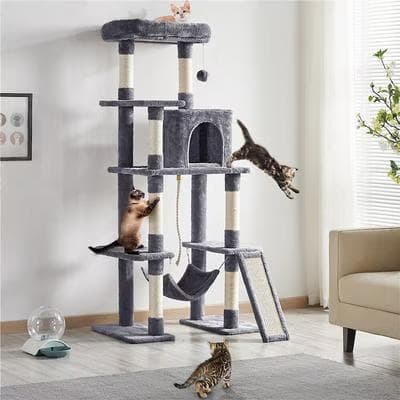
63-inch multi-level cat tree with plush perches, a condo, a hammock, sisal scratching posts, and a dangling toy. Dark gray.
Webvet may earn a commission when you click through to Chewy, at no extra cost to you.
Respiratory and Throat Conditions
Less commonly, an upper respiratory infection, laryngitis, laryngeal paralysis, or (rarely) a tumor affecting the voice box or airway can change or increase a cat's vocalization, sometimes making the meow sound hoarse, raspy, or different from usual. A noticeably altered-sounding voice, especially with coughing, nasal discharge, or labored breathing, is worth a veterinary look.
High Blood Pressure (Hypertension)
Feline hypertension is often secondary to hyperthyroidism or kidney disease, so it tends to travel with the conditions above. It can cause vocalizing, disorientation, and in severe cases sudden blindness from retinal damage. It is invisible without a blood pressure check, which is part of why senior cats benefit from one.
| Usually normal | Call your vet |
|---|---|
| A consistently chatty cat who has always been talkative | Meowing that started suddenly or is steadily escalating |
| Short, social greeting meows when you come home or wake up | A new yowl, cry, or hoarse or altered voice |
| Predictable meowing around mealtimes | Meowing plus weight loss, increased thirst, hiding, or appetite change |
| A talkative kitten settling into a new home | New, loud nighttime howling in a cat over 10 |
| A relaxed, conversational tone | Crying at the litter box with little or no urine (emergency) |
Notice the theme: the meowing that worries a veterinarian is rarely meowing alone. It is meowing paired with another change, such as weight loss, increased drinking, hiding, a shift in appetite, or altered litter box habits.
When you see vocalizing plus any second symptom, that pairing is your cue to book a visit.
Why Is My Senior Cat Meowing So Much? Cognitive Dysfunction and Aging

A senior cat, roughly 10 years and older, who suddenly meows more, particularly with loud howling at night, is such a common and distinct scenario that it deserves its own section.
Feline Cognitive Dysfunction (Feline Dementia)
This is the cat equivalent of age-related cognitive decline, and one of its most recognizable signs is loud, aimless yowling, especially after dark. Affected cats may seem disoriented, stare at walls or into corners, get "stuck" in rooms, have disrupted sleep-wake cycles, and call out as if lost in a familiar home.
Importantly, cognitive dysfunction is a diagnosis of exclusion: it is confirmed only after your vet has ruled out hyperthyroidism, high blood pressure, pain, kidney disease, and hearing or vision loss, because every one of those can look almost identical and several are treatable. It is not a label to apply at home.
Once diagnosed, it cannot be cured, but with veterinary guidance it can often be slowed and managed to keep your cat comfortable.
Sensory Loss
Age-related hearing loss or declining vision makes cats vocalize louder, partly because a deaf cat cannot hear and modulate her own volume, and partly because reduced senses leave her feeling disoriented and seeking reassurance. A cat who has gone partly deaf will often meow at a startling volume in the small hours.
Overlapping Conditions
Senior cats are also the ones most likely to have hyperthyroidism, kidney disease, and hypertension, sometimes all at once. That is precisely why a senior cat with new meowing needs a proper veterinary workup, not just reassurance that "old cats get noisy." The noise is often the first clue to a treatable condition.
Comforting a Senior Cat While You Wait
While your vet investigates, you can make an older cat more comfortable with practical steps:
- Leave a night light on to help a disoriented or dim-sighted cat navigate.
- Keep routines predictable.
- Place food, water, and litter boxes within easy reach (low-sided boxes help stiff joints).
- Provide warm, accessible resting spots.
These do not replace a workup with bloodwork and a blood pressure check, but they ease the distress that drives a lot of senior nighttime calling.
Why Does My Cat Meow So Much at Night?

Nighttime is the single most-asked-about version of this problem, and the morning variant (the 5 a.m. wake-up meow) runs a close second. Both often share a root cause: cats are crepuscular, meaning they are naturally wired to be most active at dawn and dusk.
That instinct is the same dawn-and-dusk wiring behind other 2 a.m. behaviors. A burst of pre-dawn energy and a hungry stomach after a long night make early-hours meowing extremely common in healthy cats.

Lickable cat treats with real chicken, made to support comfort and tranquility. 12 single-serve 0.5-oz tubes.
Webvet may earn a commission when you click through to Chewy, at no extra cost to you.
- Hunger and routine. An empty stomach overnight, or a learned cue that meowing at dawn produces breakfast, is the classic driver of the pre-sunrise serenade.
- Boredom and pent-up energy. A cat who naps all day with no evening play has energy to burn at night and may go looking for company or entertainment.
- Medical and senior flags. Nighttime yowling is a hallmark of both hyperthyroidism and feline cognitive dysfunction. Your cat's age and any other symptoms are what decide whether night meowing is simply behavioral or a medical red flag.
Practical Fixes Once Illness Is Ruled Out
- Serve a substantial meal right before bed, or use a timed automatic feeder set for the early hours so your cat stops associating you with food.
- Run a vigorous wand-toy play session in the evening to burn energy and mimic a hunt.
- Avoid reinforcing the 4 a.m. demands so your cat does not learn that calling out brings you running.
For a full routine, see our guide to keep your cat quiet so you can sleep.
When to See a Vet About Your Cat's Meowing

This is the decision that small-clinic blogs tend to gloss over, so here is a clear checklist. When in doubt, a vet visit is never the wrong call, but these situations make it a clear yes.
See a vet promptly if any of these apply:
- The meowing started suddenly or is steadily escalating.
- Your cat is a senior (roughly 10 or older) and the vocalizing is new.
- The tone has changed to yowling, crying, a distressed sound, or a hoarse or altered voice.
- The meowing is paired with any other symptom: weight loss, increased thirst or urination, hiding, not eating, vomiting, disorientation, limping, or changes in litter box habits.
What the Vet Will Likely Do
Expect a thorough physical exam, blood tests (including thyroid and kidney values), a blood pressure check, and a urinalysis. This combination catches the big drivers of excessive meowing, hyperthyroidism, kidney disease, urinary disease, and hypertension, most of which are very manageable once identified.
And the reassuring part: if the workup comes back clean, you can confidently treat the meowing as a behavior to manage rather than a symptom to fear. That clearance is exactly what lets the behavioral strategies below actually work.
How to Get Your Cat to Stop Meowing So Much
With a clean bill of health, here is how to turn down the volume.

Probiotic supplement formulated to help cats maintain calm behavior, with the BL999 strain. 30 daily sachets.
Webvet may earn a commission when you click through to Chewy, at no extra cost to you.
- Never reward the meow, only the quiet. Do not feed, pet, talk to, or even make eye contact with your cat while she is meowing for attention. Wait for a pause, then respond to the silence. Remember that scolding is still attention, so reacting at all can reinforce the noise.
- Feed on a consistent schedule. Set fixed mealtimes, ideally with a timed automatic feeder, so your cat learns that food appears on a clock, not in response to meowing at you. This single change defuses a huge share of food-driven vocalizing.
- Add enrichment. Aim for two daily interactive play sessions with a wand toy, plus puzzle feeders, window perches with a view, and a rotation of toys to fight boredom. A tired, mentally satisfied cat is a quieter cat.
- Address stress. Keep routines stable, provide safe hiding and perching spots, and consider a feline pheromone diffuser during disruptive periods such as a move or a new arrival.
- Spay or neuter. If your cat is intact, this ends mating-related caterwauling and delivers significant long-term health benefits.
- Never punish the meowing. Do not scold, squirt, or shout at your cat for vocalizing. Punishment does not teach her to be quiet (she cannot connect it to the behavior the way you intend), it adds stress that can make vocalizing worse, and it erodes the trust between you. Redirecting to quiet and rewarding calm is both kinder and far more effective.
- Be consistent and expect a flare first. When you stop rewarding a behavior, it often gets worse before it gets better. This temporary spike, called an extinction burst, is a sign the plan is working, so do not give in during it or you teach your cat that louder and longer eventually pays off.
What Your Cat's Different Meows Mean
Once you start listening closely, you will notice your cat has a small vocabulary. Decoding it helps you respond to the right need and recognize the sounds that signal trouble.
| Sound | What it usually means |
|---|---|
| Short, frequent meows | Greeting or excitement, often when you come home or wake up. Friendly and social. |
| Drawn-out "mrrrooow" | A demand or complaint, usually for food, a door, or attention. The classic insistent ask. |
| Loud, persistent yowl | Distress, pain, mating behavior, or a confused senior cat. Always take this one seriously. |
| Chirps and trills | Friendly, attention-getting greetings rather than meows. A happy, sociable sound. |
| Purr blended with a meow | The "solicitation purr," a persuasive feed-me blend cats use to get our attention. Normal. |
Those chirps and trills are worth singling out, because owners often mistake them for distress. They are the opposite: a chirp or trill is a friendly, upbeat greeting, frequently aimed at you or at birds outside the window.
A loud, drawn-out yowl is the sound to worry about, especially if it is new for your cat.
And remember that the meow is only one instrument in the orchestra. To read what your cat is truly feeling, pair the sound with her posture, tail position, and ears.
Our full guide to cat body language puts the whole picture together so you can tell a content conversational cat from a stressed or hurting one.
Frequently Asked Questions
Why does my indoor cat meow so much?
Indoor cats often meow more because they rely entirely on you for food, play, and stimulation, so meowing becomes their main tool for asking. Boredom and under-exercise are common drivers, especially in young or solo cats. Address it with consistent mealtimes, daily interactive play, and enrichment like puzzle feeders and window perches. If the increase is sudden or your cat is older, rule out a medical cause with your vet first.
Do happy cats meow a lot?
Many happy cats are chatty, and short, social, conversational meows (the kind you get as a greeting) are usually a sign of a content, bonded cat. Talkative breeds like Siamese tend to meow even more when relaxed. The meows that signal a problem are loud, drawn-out yowls or a clear change from your cat's normal pattern, not friendly everyday chatter.
How do I get my cat to stop meowing all the time?
First, have your vet rule out a medical cause. Then stop rewarding the meow: do not feed, pet, or even make eye contact while your cat is meowing, and respond only when she is quiet (scolding counts as attention, and punishment only adds stress). Feed on a fixed schedule, ideally with an automatic feeder, and add two daily play sessions plus enrichment. Be consistent: a temporary increase in meowing before it fades is normal, so do not give in.
Why does my cat meow so much at night?
Cats are naturally most active at dawn and dusk, so nighttime energy and pre-dawn hunger drive a lot of healthy night meowing. A big pre-bed meal (or a timed feeder), a vigorous evening play session, and not responding to nighttime demands usually help. But nighttime yowling is also a hallmark of hyperthyroidism and feline dementia, so if your cat is older or has other symptoms, see your vet before treating it as behavioral.
Why is my old cat meowing so much all of a sudden?
A sudden increase in meowing in a senior cat should be checked by a vet, not assumed to be normal aging. Common causes include hyperthyroidism, kidney disease, high blood pressure, pain, hearing or vision loss, and feline cognitive dysfunction (dementia), which often causes nighttime howling and disorientation. Many of these are treatable or manageable, so an exam with bloodwork and a blood pressure check is the right first step.
Why is my male cat meowing loudly all of a sudden, and is it different for female cats?
Sex can point to different causes. In an intact male, sudden loud howling is often mating-driven; far more urgently, a male straining in the litter box with little or no urine may have a urinary blockage, which is a same-day, within-hours emergency. In an unspayed female, the classic cause is heat: a loud caterwaul that recurs every few weeks in breeding season, lasting several days to a week per cycle. That said, the big medical drivers (pain, hyperthyroidism, kidney disease, dementia) and urinary trouble affect both sexes, so do not assume a straining female cat is fine. Any cat with a sudden change plus other symptoms needs a vet.
Why does my cat meow so much when she sees me?
Meowing when she sees you is usually a greeting and a request for connection, food, or attention, and it is generally a good sign of a bonded cat. Cats reserve the meow primarily for humans, so she is genuinely talking to you. If you would like fewer demand-meows, respond when she is calm rather than mid-meow, and keep mealtimes on a predictable schedule so you are not her walking food cue.
Why does my cat meow when I pet her?
A short, soft meow during petting is often a contented, conversational response, your cat answering your attention. But meowing while being petted can also be a solicitation (asking for more, or for food) or an early "that is enough" signal, especially if it comes with a twitching tail, flattening ears, skin rippling, or turning toward your hand. If she escalates from meowing to swatting or nipping, she is likely overstimulated, so stop and give her space. Pairing the sound with her body language tells you which it is. If the meowing seems painful or she reacts as if a specific spot hurts when touched, have your vet check for pain.
How do I say "I love you" in cat?
Cats show and read affection through body language more than sound. The classic "I love you" gesture is the slow blink: meet your cat's gaze, then slowly close and open your eyes, and many cats will slow-blink back. Other ways to return the feeling are letting her head-bunt or rub against you, answering her chirps and trills and greeting meows in a soft voice, blinking calmly rather than staring, and respecting when she wants space. A relaxed cat who seeks you out, greets you, and slow-blinks is telling you she feels safe and bonded.
Are cats happier if they sleep with you?
Many cats genuinely enjoy sleeping with their people: it is warm, secure, and a sign they trust you, and a bonded cat often chooses to curl up with her favorite human. It is not required for a cat to be happy, though, and plenty of content cats prefer their own perch. The main downside is sleep disruption, since cats are wired to stir at dawn and may wake you with early-morning meowing or activity. If co-sleeping is costing you sleep, an evening play session and a pre-bed meal usually help, and it is fine to give your cat a cozy bed of her own instead.
Can excessive meowing be a sign my cat is sick?
Yes. Because cats hide illness, a sudden or escalating change in meowing is one of the clearest signs something may be wrong. Pain, hyperthyroidism, kidney disease, urinary problems, high blood pressure, and even throat or respiratory conditions can all increase or change vocalizing. The biggest red flag is meowing paired with another symptom such as weight loss, increased thirst, hiding, appetite changes, or litter box changes. When that pattern shows up, see your vet.
What is the 3-3-3 rule for cats?
The 3-3-3 rule is a rough guide for a newly adopted cat's adjustment: about 3 days to feel less overwhelmed and start coming out of hiding, 3 weeks to settle into a routine and show more personality, and 3 months to feel fully at home. Extra meowing during the first days and weeks is common as a new cat adjusts, so keep routines calm and predictable while she settles in.

Editor
The Webvet Editorial Team is the in-house group of pet-care editors and writers behind Webvet, operated by Smart Pet Collective. The team researches, writes, and maintains Webvet's pet health, behavior, and medication content. Every article follows a defined editorial process: research from reputable veterinary and scientific sources, careful drafting, mandatory review of medical content by a credentialed veterinarian, and dated publication. Health and medication articles are medically reviewed by a licensed veterinary professional before they go live and are kept current over time.
Veterinarian · BVMS MRCVS
Dr. Pippa Elliott, BVMS, MRCVS, is a veterinarian with nearly 30 years of experience in companion animal practice. Dr. Elliott earned her Bachelor of Veterinary Medicine and Surgery from the University of Glasgow. She was also designated a Member of the Royal College of Veterinary Surgeons. Married with 2 grown-up kids, Dr. Elliott has a naughty Puggle named Poggle, 3 cats and a bearded dragon.


