Why Do Cats Knock Things Over? 4 Reasons and What to Do
Cats may knock objects over while hunting, exploring, seeking attention, or creating activity. Learn how to identify the pattern, remove hazards, and redirect safely.

This article contains affiliate links. Webvet may earn a commission when you buy through them, at no extra cost to you.
Why do cats knock things over? Cats commonly paw objects to test movement, explore their surroundings, start a hunting-like game, get a familiar human reaction, or create activity when daily stimulation is limited. The action may be deliberate, but that does not make it revenge or spite.
Watch what happens before and after the paw touch. The target, time, body posture, nearby person, and result can help you choose between hazard control, interaction, or a safer outlet.
- 1The four useful starting explanations are hunting or testing, exploration, learned attention, and under-stimulation.
- 2Observe whether the cat acts alone, checks for your reaction, repeats after you respond, or targets objects that move like prey.
- 3Remove dangerous objects before testing any enrichment strategy.
- 4Redirect and reward a safe alternative without yelling, chasing, startling, or spraying water.
 Sponsored
Want a vet's help with your cat's anxiety or behavior?
Talk to a licensed vet at Dutch over video, often the same day. They can recommend treatment and prescribe it when it's appropriate.
Use code Pets60
Plans start at $12/month · covers up to 5 pets
- Licensed vets in most states
- Rx for 150+ conditions
- 4.7 on Trustpilot
Why Do Cats Knock Things Over?
Cats use their paws to investigate and manipulate the environment. A light push reveals whether something rolls, tips, makes noise, changes texture, or falls. That feedback can be interesting by itself, or the action can become part of play, a learned request, or an activity during a quiet period.
Why do cats knock over things or knock stuff over? Object knocking is commonly exploratory or play behavior. Paw investigation tests whether an object moves, rolls, makes noise, or resembles prey. Compare movement, reaction, and activity context before choosing among hunting or paw testing, curious environmental exploration, learned attention, and limited daily stimulation.
Searches about cats knocking things over often describe knocking things off tables, pushing stuff from surfaces or ledges, or throwing small objects on the floor in a home. Why cats knock things over depends on the result: movement, sound, prey-like batting, a human reaction, or activity that interrupts a quiet period.
| Object-knocking cause and response matrix: observed clue and low-risk test | Likely driver | Context check | Matched humane response |
|---|---|---|---|
| Cat bats a small movable object and follows it | Hunting or paw testing | Compare object movement with prey-like batting | Use short interactive play away from breakables |
| Cat touches several new objects while alone | Exploration | Compare behavior when alone versus watching a person | Provide safe novelty and remove hazards |
| Cat looks at you, touches the object, then repeats after your reaction | Learned attention | Compare reaction timing and repetition | Give predictable attention for the alternative |
| Cat repeats the behavior during long quiet periods or at night | Under-stimulation | Compare movement, reaction, and activity context | Rotate activities and track whether frequency changes |
Lead with a context-to-cause verdict table instead of treating instinct, attention, and boredom as interchangeable list items. Compare behavior when alone versus after eye contact, object movement and prey-like batting, reaction timing and repetition, and safe hazard control before redirection. Each visible clue supports a low-risk test and matched humane response.
These causes can overlap. A cat may first discover that an object moves, then learn that moving it makes a person jump up. The response should address both parts: make the object safe or unavailable, then teach a more appropriate way to obtain play or attention.
Hunting, Testing, or Exploring: How to Tell
A paw touch provides immediate sensory information. The object may roll, wobble, scrape, bounce, or disappear over an edge. That sequence can resemble the way a cat tests and controls a small moving target during predatory play.
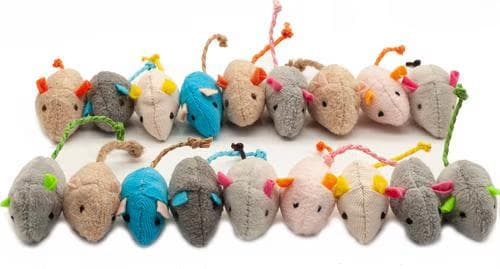
Pack of 18 soft plush mice filled with catnip to spark batting, pouncing, and play.
Webvet may earn a commission when you click through to Chewy, at no extra cost to you.
Why do cats push things off tables, edges, or ledges? A cat pushing things may be exploring object movement, while a cat knocking things off a table and following them may be engaging in prey-like batting. Watch whether the cat keeps pushing objects on the floor after the exciting drop is removed.

Here, the cat paw is touching a safe lightweight object on a stable broad surface away from a drop in the final rendered scene. That photograph shows controlled paw investigation without glass, a ledge, or staged breakage. Compare harmless contact with object movement, the cat's body posture, and whether prey-like batting follows.
Clues That Point to Hunting or Paw Testing
Hunting-like play is more likely when the cat focuses on a small object, lowers the front of the body, tracks movement closely, and follows after the object moves. The cat may repeat the touch even when no person reacts.
Look for a sequence rather than one pose:
- visual focus on a small movable target
- a controlled reach or tap with one paw
- following, pouncing, or grabbing after movement
- repetition while the cat is alone or quietly observed
- loss of interest when the object stops moving or becomes inaccessible
Do not test this theory with glass, batteries, medicine, string, coins, or objects small enough to swallow. Use a sturdy cat-safe item on the floor or a broad stable surface, and supervise anything that could break apart.
Clues That Point to Exploration
Exploratory pawing is more likely when the cat investigates several unfamiliar objects, textures, sounds, or locations. The goal may be information rather than a chase. A new cup, bag, box, decoration, or item moved to a different shelf can attract a careful touch.
Exploration often appears without a dramatic body posture. The cat may sniff, touch, pause, and move on. If the object changes in a surprising way, the cat may return to test it again.
Safe novelty can satisfy this interest without sacrificing household objects. Offer an empty cardboard box, a paper ball too large to swallow, or another cat-safe item in a clear floor area. Remove handles, staples, strings, and loose pieces first.
Is Your Cat Doing It for Attention?
Why does my cat purposely knock things over? Purposeful paw movement may test an object or seek a response, but it does not prove a human-like motive such as spite. The most useful clue is whether your reaction predicts repetition.
Do cats knock things over on purpose or for attention? Learned reinforcement is likely when a cat intentionally touches an object, watches you, and repeats after a fast response. A cat that knocks things over to wake you up may have learned that sound reliably starts interaction, food, or play.

360-degree Wi-Fi pet camera so you can watch your cat's resting breathing rate and behavior from your phone and catch worrying changes early.
Webvet may earn a commission when you click through to Chewy, at no extra cost to you.
The same visible act can be reinforced by an immediate human reaction. Timing, gaze, location, and what happens next distinguish attention seeking from solitary exploration. Look for whether the cat acts alone, watches the person first, repeats after a reaction, targets moving objects, or escalates when activity is scarce during repeated incidents.

Watch the Reaction Loop
Attention is more likely to be part of the pattern when the cat looks toward you before touching the object, pauses after the sound, or repeats the action after you speak, stand, chase, or offer food. A fast, exciting response can become the consequence that keeps the behavior useful.
Record three details for several incidents:
- what the cat was doing immediately before the touch
- whether the cat checked your location or face
- what you did, and whether the cat repeated the behavior
This observation separates learned attention from solitary investigation. It also shows which response may be reinforcing the pattern, even when you meant to stop it.
Make a Better Request Pay Off
First, place the tempting object out of reach so safety does not depend on ignoring the cat. Then respond quietly. Avoid rushing, shouting, or turning the moment into a chase.
Reward an alternative that is easy for the cat to repeat. That might be approaching a perch, sitting near a toy, or waiting at a predictable play area. Offer attention for the alternative before the usual object-knocking time when possible.
Consistency matters more than intensity. If one family member ignores the behavior but another offers food after a crash, the mixed result can keep the pattern persistent. Agree on one calm response and one safe behavior that earns attention.
SponsoredVet care that's always there
Unlimited video calls and messaging with licensed vets for less than a typical vet visit. One membership covers up to five pets.
Use code Pets60
Plans start at $12/month · covers up to 5 pets
- Licensed vets in most states
- Rx for 150+ conditions
- 4.7 on Trustpilot
Could Your Cat Be Bored?
Under-stimulation becomes more plausible when object knocking clusters during long inactive periods, when the cat repeatedly scans for something to do, or when daily opportunities for movement, hunting-like play, climbing, hiding, and foraging are limited. One broken cup cannot diagnose boredom.
Why do cats knock things over at night, and why does my cat keep knocking things over at night? Night activity can expose under-stimulation when a cat scans for movement after the home becomes quiet. Compare the pattern with daytime sleep, daily play opportunities, access to foraging, and whether a human reaction rewards repetition.
Nighttime repetition, repeated scanning for activity, and limited daily play opportunities can point to under-stimulation, but behavior context matters more than a single label. Compare the cat's daytime sleep, evening play, access to movement and foraging, and response to quiet periods across several nights in the same room before drawing conclusions.
Why Nighttime Can Expose the Pattern
Some cats become active when the home is quiet and people are unavailable. A shelf, nightstand, dresser, or water cup may provide movement and sound. If a person wakes and responds, nighttime activity can also acquire an attention payoff.
Compare coverage choices for your pet, then request a quote directly on Lemonade.
- Check a price for your pet
- Review available coverage choices
- See the terms before you decide
Eligibility, waiting periods, limits and exclusions apply.
Webvet may earn a commission when you click through to Lemonade, at no extra cost to you.
Track timing for one week before changing everything at once. Note:
- when the cat sleeps, plays, eats, and knocks objects
- whether the usual target is movable, noisy, wet, or near you
- the amount and timing of interactive play
- changes in household schedule or access
- whether an evening activity changes the overnight pattern
This log turns “my cat knocks over everything” into a pattern you can test. It can also reveal that the behavior follows a predictable quiet period rather than occurring throughout the day.
Add Variety Without Constant Excitement
Enrichment should match the individual cat. Some cats prefer chasing a moving toy, while others prefer batting, climbing, searching, or working for part of a meal. Rotate a small selection rather than leaving every option available all the time.
The AAFP and ISFM feline environmental needs guidelines emphasize safe resources, opportunities for play and predatory behavior, positive human interaction, and respect for feline sensory needs. Enrichment works best as a predictable part of care, not a punishment after damage.
For deeper toy selection after you identify limited stimulation, see WebVet's guide to cat toys for bored indoor cats. A toy is an optional outlet, not proof of the cause and not a guaranteed fix.
How to Stop a Cat From Knocking Things Over Safely
Start with environmental safety. Remove or secure anything fragile, toxic, hot, sharp, heavy, electrical, or small enough to swallow. Do this before testing play schedules or changing your response, because learning takes time and one failed trial can cause injury.
How to stop cats from knocking things over depends on the target. Clear counters, tables, shelves, dressers, and nightstands of glass, cups, plants, food, cords, and swallowable items in the home. Anchor the television, secure the trash can, and stabilize the litter box, water fountain, water dispenser, food bowl, and water bowl.
If a cat keeps knocking over a water bowl, knocks food out of her bowl, or pushes a cup off a table, start with stability and access. A broad non-slip base helps with water, while closed storage prevents knocking glass, plants, and small things down from a shelf or counter.
Questions such as “why do cats knock glasses over,” “why does my cat knock everything down,” or “will my cat knock over my TV?” point to different hazards but the same first step. Remove glass, clear edges, anchor the television, and block unsafe access before choosing any enrichment or reward-based redirection.
Management starts by removing fragile, sharp, toxic, hot, or heavy objects and securing unavoidable hazards before testing enrichment strategies. Anchor televisions and furniture, cover cords, stabilize bowls, and store glass, medicine, batteries, and plants safely. Only after hazard control should you test redirection and reward without startling, yelling at, or chasing the cat.
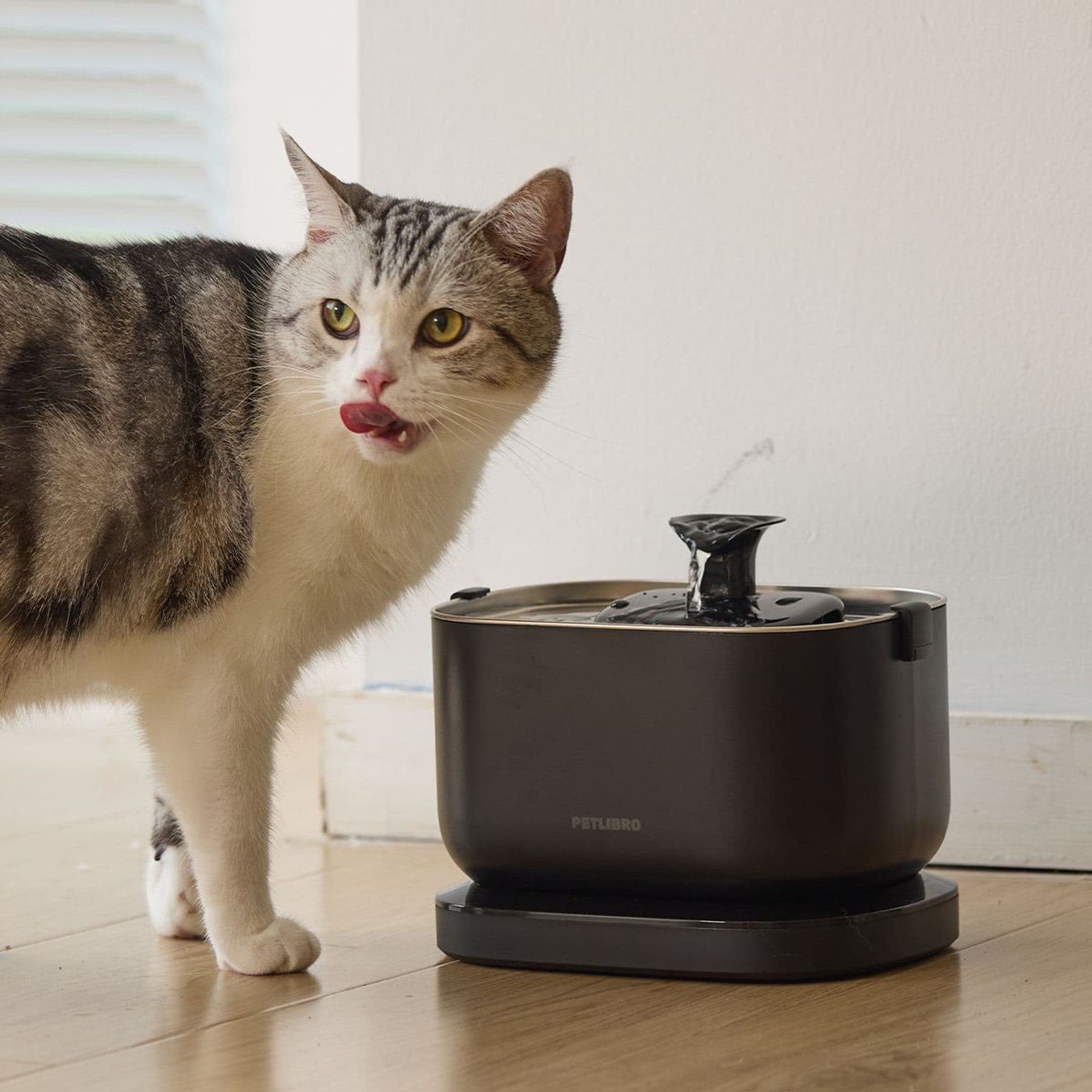
Webvet may earn a commission when you click through to Chewy, at no extra cost to you.

Match the Control to the Target
Different objects create different risks. The safest control removes the consequence before asking the cat to choose another activity.
| Common target | Immediate risk | First control | Safer outlet |
|---|---|---|---|
| Glass or ceramic cup | Cuts and swallowed fragments | Store away or use a closed cabinet | Bat a sturdy toy on the floor |
| Hot drink or pan | Burns | Keep the cat out of the area and never leave unattended | Schedule play outside cooking time |
| Houseplant | Toxicity, soil, broken pot | Confirm plant safety and relocate securely | Offer cat-safe grass if appropriate |
| Cord or small electronic item | Shock, entanglement, swallowing | Cover, route, or lock away | Use supervised chase play |
| Television or heavy decor | Crushing injury | Anchor securely and block access | Add a stable climbing or viewing area |
| Food or water bowl | Spills and loss of access | Use a wide stable vessel on a washable mat | Offer a separate safe pawing activity |
| Shelf or counter object | Breakage or ingestion | Clear the edge and store the item | Provide a safe object on a low broad surface |
Protect Food and Water Access
A cat knocking over a water bowl may be testing the moving surface, reacting to the bowl, playing with reflections, or simply tipping an unstable vessel. Use a wide, stable bowl on a non-slip washable mat and keep fresh water continuously available.
Do not withhold water to prevent spills. If drinking, urination, appetite, or litter-box habits have changed, contact your veterinarian. A water fountain that tips should be stabilized or replaced with a safer setup, not repeatedly returned to the same risky location.
A cat that pushes food out of a bowl may be manipulating pieces, avoiding an uncomfortable bowl shape, or engaging in foraging behavior. Try a clean, wide dish and observe what changes. Ask your veterinarian about appetite loss, mouth pain, difficulty eating, or weight change.
Make Shelves, Counters, and Nightstands Boring
Clear tempting edges instead of covering them with deterrent hazards. Store medicine, cosmetics, batteries, jewelry, and small electronics in closed drawers. Place plants only where both the plant and the container are safe and secure.
Do not use unstable barriers, sharp mats, essential oils, shock devices, or startling traps. Yelling, chasing, or spraying water may increase fear and still leave the interesting object in place.
Provide an acceptable nearby location, such as a stable perch or cleared observation spot, when the cat is seeking height or a view. Reward use of that space during ordinary moments, not only after an object falls.
Redirect the Behavior Into Safe Play
Redirection works best when it matches the observed reason. A cat motivated by movement may prefer batting or chase play. A cat searching for activity may benefit from rotating novelty and foraging. A cat seeking you needs a predictable way to obtain interaction.
Use environmental enrichment as conditional redirection, not a product promise. Match interactive play to chasing, sturdy batting toys to pawing, and foraging to food search. Rotate novelty and use reward-based redirection for the alternative behavior. Keep play short and safe, without yelling, spraying water, chasing, or claiming any toy will stop knocking.
- 1Use short interactive play for stalking, chasing, and pouncing motivation.
- 2Offer sturdy batting options on the floor for cats that enjoy object movement.
- 3Use part of the normal food allowance in a suitable foraging activity when that fits the cat.
- 4Rotate options, supervise, and reward engagement with the safe alternative.
- 5Treat toys as optional outlets, not products proven to stop object knocking.
Match the Outlet to the Clue
For prey-like batting, move an appropriate interactive toy across the floor and let the cat stalk, chase, and capture it. Keep hands out of the target role. Put string-like toys away after supervised use so they cannot become ingestion or entanglement hazards.

For investigative pawing, offer one or two sturdy objects that roll or wobble safely in an open floor area. Check them regularly for cracks, loose pieces, or damage. Remove anything small enough to swallow.
For under-stimulation, use part of the cat's normal daily food in a suitable puzzle or scatter activity, if appropriate for that cat's diet and mobility. Start easy so the task does not become frustrating.

VCA's indoor-cat enrichment guidance describes object play, predatory-sequence play, food puzzles, novelty rotation, and matching activities to the individual cat. Choose an activity the cat can use safely rather than assuming one toy fits every motivation.
WebVet's guides to interactive play that engages a cat and choosing toys by how cats play can help after you identify the likely outlet. Keep the behavior decision first, and select only options suited to the cat's size, health, and play style.
Reinforce the Alternative
Reward the safe behavior when it occurs. Attention, a brief play session, or a food reward from the cat's normal allowance can strengthen a perch, mat, toy, or waiting area as a better request.
Try to respond before the usual problem time. A short play session before bed may be more useful than a dramatic reaction after a nightstand item hits the floor. If the pattern continues, adjust one variable at a time and keep the environment safe.
Related Cat Communication
Object knocking does not explain every posture, gaze, or petting response. Read the cat's ears, eyes, tail, muscle tension, distance, and access to an exit alongside the immediate behavior.
Use WebVet's guide to cat body language and communication for eye contact, petting postures, affection signals, and broader whole-body interpretation. This guide stays focused on the object, the reaction loop, and the safest next response.
When a Behavior Change Needs a Veterinarian
A stable, long-running play habit differs from a sudden broad change. Arrange veterinary assessment if object knocking begins abruptly and appears with apparent vision trouble, loss of balance, weakness, marked restlessness, disorientation, pain, appetite change, altered drinking, or another health change.
A sudden broad behavior change, loss of coordination, apparent vision trouble, marked restlessness, or another health change warrants veterinary assessment, not a behavior-only assumption. Watch for disorientation, weakness, pain, appetite or drinking changes, missed jumps, and unusual sleep. Secure all hazards immediately while the veterinarian investigates what changed and why.
Useful observations include:
- when the change began and whether it is increasing
- which objects and locations are involved
- whether the cat appears to miss jumps or bump into things
- changes in sleep, appetite, drinking, urination, or litter-box use
- recent falls, injuries, medicines, household changes, or possible toxin exposure
Record a short video only if you can do so without recreating danger. Do not place objects near an edge or provoke the behavior for the camera. A veterinarian can use the history and examination to decide whether the change is behavioral, medical, or both.
Frequently Asked Questions
Why does my cat purposely knock things over?
A cat may purposely knock things over when paw movement tests an object or solicits a learned response. Notice whether the cat looks toward a person before or after touching the object and repeats after a fast human reaction. This is not spite. Remove the hazard, respond calmly, and reward a safer request.
Why do cats knock things over at night?
Cats may be active when the home is quiet, so night activity can make movable objects interesting. Track the timing, then increase daytime and evening play based on the individual cat. Add suitable foraging when appropriate, and keep nightstands and shelves clear. Avoid a dramatic reaction that rewards repeated noise.
Why does my cat keep knocking over the water bowl?
Pawing may test movement or the water surface, especially when the vessel slides or tips easily. Use a stable wide vessel on a non-slip mat and protect continuous access to fresh water. Ask your veterinarian about changes in thirst, urination, appetite, mouth comfort, movement, or the cat's ability to drink normally.
How do I stop my cat from knocking things over?
Remove hazards first, including fragile, toxic, hot, sharp, heavy, and swallowable items. Observe when and where the cat acts, match a safe activity to the likely driver, then redirect and reward a safe alternative without punishment. Avoid yelling, chasing, startling, or spraying water, which can add fear without controlling the hazard.
Sources

Editor
The Webvet Editorial Team is the in-house group of pet-care editors and writers behind Webvet, operated by Smart Pet Collective. The team researches, writes, and maintains Webvet's pet health, behavior, and medication content. Every article follows a defined editorial process: research from reputable veterinary and scientific sources, careful drafting, mandatory review of medical content by a credentialed veterinarian, and dated publication. Health and medication articles are medically reviewed by a licensed veterinary professional before they go live and are kept current over time.


