Can Dogs Have Tums? Dosage Risks, Side Effects, and Safer Antacids
Can Dogs Have Tums? Dosage Risks, Side Effects, and Safer Antacids explained: see the vet-reviewed dosage-by-weight chart, side effects, safety warnings, cost, and when to call your veterinarian.

BVMS MRCVS
Medically reviewed by Dr. Pippa Elliott, BVMS MRCVS · Last reviewed

Drug facts
Rx Database sponsored by
Calcium carbonate
Calcium carbonate is the medication or medication group covered in this vet-reviewed WebVet consumer safety guide.
 Sponsored
Is Calcium carbonate right for your dog?
Ask a licensed vet at Dutch over video before you start Calcium carbonate. Unlimited calls and messaging are included.
Use code Pets30
Plans start at $11/month · covers up to 5 pets
- Licensed vets in most states
- Rx for 150+ conditions
- 4.7 on Trustpilot
Can dogs have tums? Your veterinarian should confirm the exact product, amount, timing, and reason before you give it. Dogs should not receive Tums for stomach symptoms without veterinary direction. Tums contains calcium carbonate, which has specific veterinary uses, but a flavored human antacid is not a reliable treatment for vomiting, gas, diarrhea, or reflux-like behavior. Product formula, amount swallowed, dog weight, health, other medication, and symptoms all change the response.
Tums Dosage for Dogs by Weight: Why There Is No Safe DIY Chart
When considering can dogs have tums, use the veterinarian-confirmed product and plan for that animal. There is no safe universal Tums dose chart for dogs. Confirm the exact product and situation with a veterinarian or animal poison service. A dog that accidentally ate one plain tablet presents a different decision from a dog receiving veterinarian-prescribed calcium carbonate or a dog that swallowed a combination product.
| Dog and exposure situation | Dose answer | Safest next step |
|---|---|---|
| Any weight, owner considering Tums for upset stomach | No DIY amount | Call the veterinary team for symptom-based advice |
| Any weight, veterinarian prescribed calcium carbonate | Only the written product, strength, amount, and schedule | Follow the prescription and monitoring plan exactly |
| Small dog or puppy after accidental ingestion | No amount can be cleared from weight alone | Check every ingredient and call promptly with the package |
| Medium or large dog after one accidental tablet | Do not assume size makes the product safe | Report strength, ingredients, time, health history, and symptoms |
| Any dog after several tablets, an unknown amount, or a missing bottle | Treat as a possible overdose | Contact a veterinarian or poison service immediately |
| Any dog when the label lists xylitol | Emergency toxicology guidance | Do not wait for symptoms or induce vomiting unless directed |
This chart is a safety guide, not a milligram or tablet calculation. The exact formulation and medical reason control the advice.
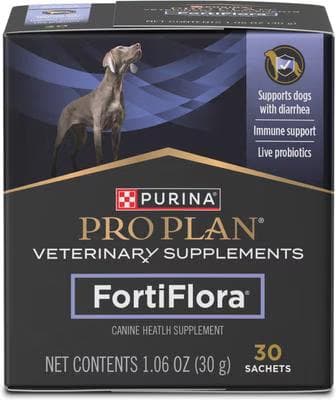
The #1 vet-recommended probiotic for dogs. Daily powder sachets with live probiotics support healthy digestion and firmer stools, and can help dogs coping with diarrhea or GI upset.
Webvet may earn a commission when you click through to Chewy, at no extra cost to you.

How much Tums can you give a dog? Only the specific calcium carbonate product and amount a veterinarian directs for that dog. Tablet strengths, flavors, sweeteners, kidney function, blood calcium, pregnancy, nursing, and interacting medication cannot be handled by a generic per-pound formula.
If calcium carbonate is prescribed, ask for:
- The exact product and active ingredient.
- The strength per tablet or measured liquid concentration.
- Amount, frequency, duration, and treatment purpose.
- Timing around every other oral medicine.
- Required blood or urine monitoring.
- Missed-dose and vomiting instructions.
Do not switch regular and extra-strength tablets, change flavors, or use a different antacid brand without checking. Do not repeat an accidental exposure as a home treatment because the dog seemed unaffected the first time.
Can Tums Help a Dog With an Upset Stomach?
- 1Tums briefly neutralizes existing acid but does not diagnose the cause of stomach signs.
- 2Calcium carbonate can be prescribed for selected calcium or phosphorus problems.
- 3Tums is not a substitute for diagnosis of obstruction, pancreatitis, bleeding, toxin exposure, or bloat.
- 4Human antacids are not interchangeable.
- 5Repeated vomiting, a swollen abdomen, severe pain, weakness, blood, or collapse needs prompt care.

Calcium carbonate neutralizes some acid already in the stomach. That effect may be brief and may not address why a dog is nauseated, vomiting, eating grass, swallowing repeatedly, or refusing food. Gastritis, pancreatitis, a foreign object, an ulcer, medication irritation, infection, kidney disease, liver disease, toxin exposure, and bloat can look like simple indigestion at first.
What can I give my dog for an upset stomach?
The safest first step is veterinary advice, not a human medication. Describe when signs began, everything the dog may have eaten, current medication, stool appearance, water intake, energy, pain, and whether food or water stays down. The clinic can decide whether home observation, an examination, hydration support, nausea control, a veterinary diet, fecal testing, bloodwork, or imaging is appropriate.
If home care is approved, the veterinarian may recommend small amounts of water and a specific feeding plan. Do not automatically fast puppies, toy breeds, seniors, pregnant or nursing dogs, diabetic dogs, or dogs with chronic disease. They can deteriorate faster or have different nutritional needs.
Can dogs have Tums or Pepto-Bismol?
Neither should be a default home treatment. Bismuth products can contain a salicylate-related ingredient, while Tums introduces calcium and formulation concerns. Both can complicate evaluation or interact with medication. Ask what the dog's symptoms require instead of choosing between familiar human brands.
Can Tums settle a dog's stomach?
It may briefly change stomach acidity, but that does not make it a dependable remedy for nausea, diarrhea, gas, or vomiting. A dog can appear quieter while the underlying disease continues. Improvement after a tablet also does not prove that acid was the cause.
Use a symptom-based decision path:
- One mild sign in a bright adult dog may justify a call and close monitoring.
- Repeated vomiting or diarrhea, poor appetite, dehydration, or worsening lethargy needs same-day advice.
- Black stool, blood, severe pain, a swollen abdomen, unproductive retching, collapse, or toxin exposure is an emergency.
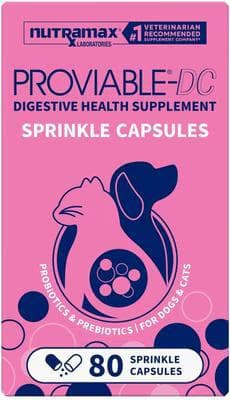
Multi-strain probiotic plus prebiotic sprinkle capsules for dogs and cats; supports digestive balance during diarrhea, diet changes, and antibiotic courses.
Webvet may earn a commission when you click through to Chewy, at no extra cost to you.
Tums Side Effects, Overdose, and Unsafe Ingredients
Too much calcium carbonate or repeated unsupervised use can contribute to constipation, vomiting, appetite loss, weakness, changes in thirst or urination, high blood calcium, or kidney complications. Calcium can also reduce absorption of some antibiotics, thyroid medication, iron, and other drugs.

Why the exact formulation matters
Tums varieties and other antacid brands can differ in tablet strength, flavoring, colors, sweeteners, and added active ingredients. Do not assume every sugar-free product contains xylitol, but never assume a human product is safe without reading both ingredient panels. Formulas can change.
After accidental ingestion, collect:
- Full product name and tablet strength.
- Active and inactive ingredients.
- Estimated number missing.
- Time of exposure.
- Dog weight, age, health conditions, and current medication.
- Vomiting, diarrhea, constipation, thirst, urination, weakness, tremors, or behavior changes.
Keep the package available during monitoring or bring it to the clinic. A tiny dog, kidney patient, dog on interacting medication, or dog that ate a mixed-ingredient product may need different advice from a healthy large dog after a plain tablet.
My dog ate one Tums: what should I do?
First, take the container away and find every part of the packaging. Do not rely on color or flavor to identify the tablet. Record the product name, strength, active ingredients, inactive ingredients, estimated number missing, and time of exposure.
Then call the veterinarian, emergency clinic, or animal poison service. A single plain calcium carbonate tablet may be handled differently from repeated tablets, but a general statement cannot clear an individual dog. Size, kidney health, other medication, symptoms, and product formulation still matter.
Do not induce vomiting unless a professional tells you to. Home peroxide use can cause aspiration, stomach injury, or additional complications. Do not give another antacid, milk, oil, salt, or a large meal to dilute the exposure.
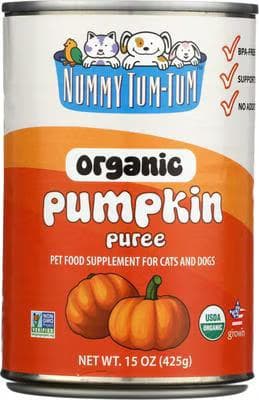
Pure USDA-organic pumpkin puree, no fillers or additives. Adds gentle soluble fiber to firm up loose stool and settle a mildly upset stomach. A simple vet-favorite topper.
Webvet may earn a commission when you click through to Chewy, at no extra cost to you.
Monitor at home only if the professional says that is appropriate. Watch for:
- Vomiting, diarrhea, or constipation.
- Refusal to eat.
- Unusual thirst or urination.
- Weakness, tremors, poor coordination, or behavior change.
- Abdominal pain or swelling.
- Signs that prompted the original antacid question.
Set a specific monitoring period and escalation plan with the veterinary team. Keep the package because new symptoms may change the advice.
Repeated use creates a different problem
A dog that receives Tums repeatedly is not simply having the same small exposure over and over. Calcium intake accumulates, constipation can worsen, and interactions can repeatedly reduce absorption of another medicine. Recurrent stomach signs also suggest an untreated disease rather than a one-time dietary upset.
If Tums has already been given for several days, tell the veterinarian:
- Product and strength.
- Amount and time of every dose.
- The dog's diet and supplements.
- Antibiotics, thyroid medicine, iron, and other oral drugs.
- Changes in stool, appetite, thirst, urination, and energy.
- Whether the original symptom improved only briefly.
Do not hide unsupervised dosing out of embarrassment. Accurate exposure history helps the team interpret calcium, kidney, gastrointestinal, and medication-absorption concerns.
Dogs who need earlier veterinary advice
Some patients have less reserve or a greater risk that apparently mild stomach signs represent something important. Call earlier for puppies, toy breeds, senior dogs, pregnant or nursing dogs, and dogs with diabetes, kidney disease, liver disease, heart disease, cancer, or a history of pancreatitis or obstruction.
Earlier advice also matters when the dog:
- Takes several prescriptions.
- Recently began an NSAID, steroid, antibiotic, or chemotherapy drug.
- Has swallowed trash, bones, toys, fabric, medication, or a toxin.
- Cannot keep water down.
- Has lost weight or has recurring nighttime signs.
- Shows pain when the abdomen is touched.
A bland-looking symptom can be the first sign of dehydration, bleeding, obstruction, or metabolic disease. Human antacid use can make the owner wait while the dog becomes sicker.
 Sponsored
Vet care that's always there
Unlimited video calls and messaging with licensed vets for less than a typical vet visit. One membership covers up to five pets.
Use code Pets30
Plans start at $11/month · covers up to 5 pets
- Licensed vets in most states
- Rx for 150+ conditions
- 4.7 on Trustpilot
How to monitor a mild upset stomach safely
If the veterinarian agrees that home observation is appropriate, ask for exact feeding, water, and reassessment instructions. A useful plan says what to offer, how often, how long to observe, and which change ends home care.
Record:
- Each vomiting or diarrhea episode.
- Whether water stays down.
- Appetite and food offered.
- Urination frequency.
- Stool color and presence of blood or black material.
- Energy, posture, and abdominal comfort.
- Every medication or supplement.
Photographs of unusual stool or vomit can help. Save a fresh stool sample if the clinic requests one. Improvement should be steady, not a brief pause followed by worsening signs.
Do not apply generic fasting advice to every dog. Young, tiny, diabetic, pregnant, nursing, or chronically ill dogs can need a different plan. Prolonged fasting is not a substitute for nausea control, hydration, or diagnosis.
Vomiting versus regurgitation
Owners often describe both as throwing up, but the distinction can guide testing. Vomiting usually involves nausea and abdominal effort. Regurgitation is often more passive and may bring up undigested food or fluid from the esophagus.
Tell the veterinarian:
- Whether the abdomen heaves.
- How soon the material appears after eating or drinking.
- Whether food looks digested.
- Whether coughing, gagging, gulping, or trouble swallowing occurs.
- Whether the dog loses weight or develops breathing signs.
Tums does not diagnose or reliably treat either process. Repeated regurgitation can create aspiration risk, while repeated vomiting can rapidly dehydrate a dog.
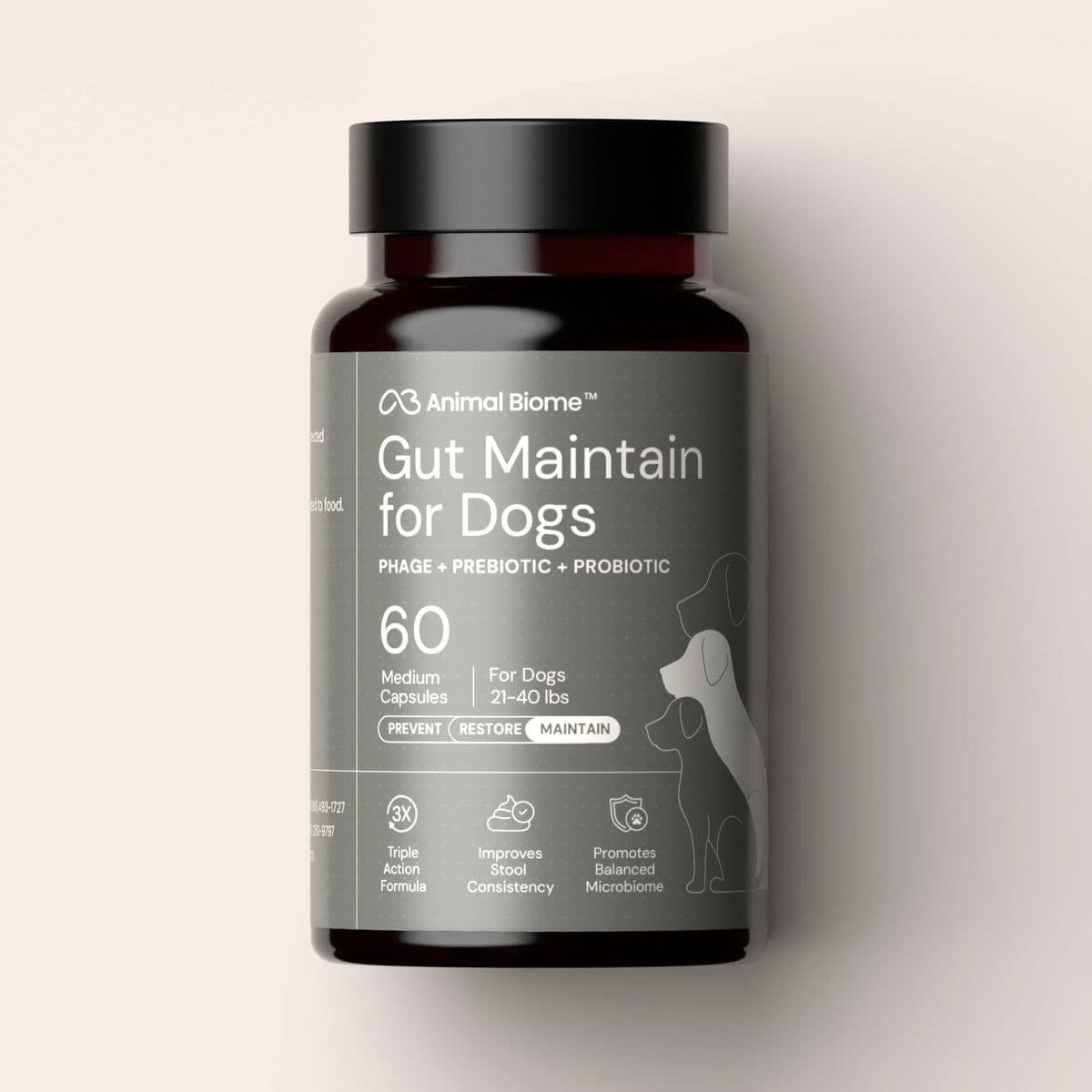
Triple-action phage, prebiotic, and probiotic capsules for everyday maintenance of a balanced gut microbiome once a dog's digestive flare has settled.
Webvet may earn a commission when you click through to Animal Biome, at no extra cost to you.
Why Pepto-Bismol, Rolaids, and baking soda are not substitutes
Human stomach products use different active ingredients and concentrations. Bismuth products can involve salicylate concerns. Other antacids can combine calcium, magnesium, aluminum, sodium, or gas-relief ingredients. Baking soda adds a concentrated sodium and acid-base risk.
Do not build a home comparison based on which product seems milder for people. The veterinary team first decides whether the problem calls for acid reduction, mucosal protection, nausea control, diet, fluids, testing, or surgery. A familiar brand cannot make that diagnostic choice.
Immediate acid reflux relief is not a medicine-cabinet decision
Lip licking, gulping, grass eating, regurgitation, coughing, nausea, or nighttime restlessness can have several causes. True reflux may require meal changes, testing, and prescription treatment, while similar signs can come from esophageal disease, airway disease, nausea, or pain.
There is no responsible over-the-counter promise of immediate relief. Repeated regurgitation, inability to swallow, breathing changes, severe discomfort, or weight loss needs veterinary evaluation. Do not give Tums, famotidine, or omeprazole simply because the dog appears to have heartburn.
Tums Cost vs. Veterinary Stomach Medicines
Tums is inexpensive and easy to buy, but shelf price is not treatment value. The wrong antacid can delay diagnosis, interact with medication, or add an unnecessary mineral load. Costs vary by product, pharmacy, examination, testing, and prescribed treatment, so a national price estimate would be misleading.
The honest comparison includes:
- The price of the exact veterinarian-approved medication.
- Examination and diagnostic costs needed to identify the cause.
- Monitoring when calcium carbonate is used medically.
- Hydration, nausea control, diet, or hospitalization when illness is more serious.
- The cost of delay if obstruction, bleeding, pancreatitis, or bloat is missed.
A veterinarian may prescribe calcium carbonate for a mineral-related reason, not heartburn. A prescription acid reducer, gastroprotectant, anti-nausea medicine, or diet addresses a different problem. Cheapest does not mean interchangeable.
Veterinary calcium carbonate is not the same as casual antacid use
Calcium carbonate may be used when a veterinarian is managing a documented calcium or phosphorus problem. That plan can depend on laboratory values, kidney function, diet, other mineral sources, and timing around medication. The treatment goal may have little to do with heartburn.
When calcium carbonate is prescribed medically, ask:
- Which laboratory result or diagnosis it targets.
- Whether it is given with food or separated from food.
- Which antibiotics, thyroid medicine, iron, or other drugs need spacing.
- Whether diet or supplements already provide calcium.
- Which blood or urine tests will be repeated.
- What constipation, weakness, thirst, urination, or appetite changes to report.
Do not use a chewable Tums product as a substitute for a veterinary calcium supplement unless the prescriber approves the exact formulation. Flavors, tablet strengths, sweeteners, and added ingredients can differ even when the front label emphasizes calcium carbonate.
What a stomach workup may include
The veterinary team chooses tests based on symptoms, duration, age, and examination. A bright adult dog after one dietary indiscretion may need less testing than a puppy that cannot hold down water or a senior dog losing weight.
Possible steps include:
- Physical examination and hydration assessment.
- Review of every medicine and possible toxin.
- Fecal testing when parasites or infection are possible.
- Bloodwork for organ function, electrolytes, inflammation, or metabolic disease.
- Imaging when obstruction, bloat, pancreatitis, or another structural problem is suspected.
- A diet trial or feeding plan.
- Nausea control, fluids, gastroprotection, or cause-directed treatment.
Testing is not simply an expensive alternative to a cheap antacid. It answers whether an antacid is relevant at all and whether waiting at home is safe.
Preparing for the veterinary call
A concise timeline helps triage. Write down when the dog last ate normally, each vomiting or diarrhea episode, whether water stays down, urination, stool color, abdominal swelling, and everything the dog could have swallowed.
Have these items ready:
- Clear photographs of both package labels.
- Dog weight and age.
- Medical conditions and current prescriptions.
- Estimated amount and exposure time.
- Photos of unusual vomit or stool.
- The location of the nearest emergency clinic.
If the dog has repeated unproductive retching, a swollen abdomen, breathing difficulty, collapse, seizure, severe weakness, or known xylitol exposure, travel to emergency care while calling. Do not spend time trying Tums to see whether the signs improve.
Which Antacid Is Right for a Dog?
For help choosing among acid-reducing medicines, see the omeprazole for dogs and cats guide for the antacid-choice framework. The famotidine for dogs and cats guide explains that separate H2-blocker option.
Do not start either drug from a home medicine cabinet. Diagnosis, dose, timing, duration, interactions, and whether acid should be reduced belong to the veterinarian. No antacid should postpone care for repeated vomiting, abdominal distension, severe pain, weakness, black stool, toxin exposure, or possible foreign-body ingestion.
- Keep the plan in writing: It should name the diagnosed problem, exact medication, amount, timing around meals and other drugs, expected improvement, and recheck point. If the dog is not improving within that window, call rather than adding Tums or another stomach product.
- Handle leftovers safely: When a prescription ends, discard or store leftovers according to clinic or pharmacy instructions. Do not save them as a household stomach kit. The next vomiting episode may have a different cause, and a drug that once helped can be unsafe after a new diagnosis or medication change.
Can Dogs Have Tums FAQs
Frequently Asked Questions
Is there any human medication you can give a dog for an upset stomach?
There is no human medication that should be given to a dog for an upset stomach without veterinary direction. Products for people can contain unsafe active ingredients, sweeteners, sodium, minerals, or coatings, and they may delay diagnosis. Call with the dog's symptoms and medication list so the clinic can recommend patient-specific care and tell you whether home management is appropriate.
Is scrambled egg good for a dog's upset stomach?
Plain scrambled egg is not automatically good for a dog's upset stomach because the cause of illness and the rest of the diet matter. Fat, seasoning, dairy, food sensitivity, and pancreatitis risk also matter. If the veterinarian approves home feeding, use the specific diet and portion plan provided. Do not add butter, oil, salt, onion, garlic, or seasoning.
How to get gas out of a dog's belly?
Gas in a dog's belly should not be treated with home medication or massage until dangerous abdominal distension is ruled out. A swollen hard abdomen, repeated unproductive retching, drooling, restlessness, pain, or collapse can indicate bloat and requires emergency care. Mild gas still deserves veterinary guidance when it persists, recurs, or occurs with vomiting, diarrhea, appetite loss, or pain.

Editor
The Webvet Editorial Team is the in-house group of pet-care editors and writers behind Webvet, operated by Smart Pet Collective. The team researches, writes, and maintains Webvet's pet health, behavior, and medication content. Every article follows a defined editorial process: research from reputable veterinary and scientific sources, careful drafting, mandatory review of medical content by a credentialed veterinarian, and dated publication. Health and medication articles are medically reviewed by a licensed veterinary professional before they go live and are kept current over time.
Veterinarian · BVMS MRCVS
Dr. Pippa Elliott, BVMS, MRCVS, is a veterinarian with nearly 30 years of experience in companion animal practice. Dr. Elliott earned her Bachelor of Veterinary Medicine and Surgery from the University of Glasgow. She was also designated a Member of the Royal College of Veterinary Surgeons. Married with 2 grown-up kids, Dr. Elliott has a naughty Puggle named Poggle, 3 cats and a bearded dragon.


