Simparica Trio vs NexGard Plus: Key Differences
Compare Simparica Trio and NexGard Plus using current US labels: parasite coverage, age and weight limits, shared safety precautions, clinical evidence and the cost of a complete prevention plan.

BVMS MRCVS
Medically reviewed by Dr. Pippa Elliott, BVMS MRCVS · Last reviewed

This article contains affiliate links. Webvet may earn a commission when you buy through them, at no extra cost to you.
Simparica Trio vs NexGard Plus comes down to your dog's weight, particular parasite needs, medical history and the cost of a complete prevention plan. Both are monthly prescription chews for dogs that prevent heartworm disease, treat fleas and ticks, and treat certain intestinal worms. Neither suits every dog.
The current US labels are more similar than some older comparisons suggest. Both now cover six tick species and help prevent the infection associated with Lyme disease by killing its vector ticks. Important differences remain in minimum weight, intestinal-worm indications and flea tapeworm prevention.
This comparison is primary-source analysis of current US labels and published research. No products were obtained or administered for this article, and we have not tested them. Purchase links may earn WebVet a commission. Manufacturer-funded studies are identified individually. This source-based comparison does not replace an individualized veterinary review of your dog's medical history; your veterinarian should choose the prescription and dose.
Simparica Trio vs NexGard Plus: the key differences
Both are monthly prescriptions for dogs at least 8 weeks old. Simparica Trio's minimum weight is 2.8 lb; NexGard Plus starts at 4 lb. Both share an isoxazoline neurologic precaution. Compare the exact coverage and your dog's needs before comparing prices.
| Decision point | Simparica Trio | NexGard Plus |
|---|---|---|
| Active ingredients | Sarolaner, moxidectin, pyrantel | Afoxolaner, moxidectin, pyrantel |
| Minimum age and weight | 8 weeks; 2.8 lb | 8 weeks; 4 lb |
| Dosing interval | Monthly, with or without food | Monthly, with or without food |
| Fleas and ticks | Fleas and six tick species | Fleas and the same six tick species |
| Heartworm | Prevention; does not kill adult heartworms | Prevention; does not kill adult heartworms |
| Lyme-associated infection | Prevents Borrelia burgdorferi infection through killing vector ticks | Prevents Borrelia burgdorferi infection through killing vector ticks |
| Roundworms and hookworms | Specified adult and immature stages; species detailed below | Adult worms, including the additional hookworm species A. braziliense |
| Flea tapeworm prevention | Labeled D. caninum prevention through killing infected fleas | No D. caninum indication on the current US label |
| Existing tapeworm or whipworm treatment | Not indicated | Not indicated |
The comparison table uses the current Simparica Trio label and current NexGard Plus label, checked September 17, 2026. Both products are monthly prescriptions for dogs at least 8 weeks old. Trio's minimum weight is 2.8 lb; Plus starts at 4 lb. These are current US labeled formulations, with exact prescription weight bands selected by your veterinarian. Claims about original Simparica, original NexGard or Australian NexGard Spectra cannot replace this dated label comparison.
For a puppy weighing between 2.8 lb and less than 4 lb, the minimum weight alone distinguishes the two options. Both combinations cover six tick species: sarolaner supplies Trio's flea-and-tick component, while afoxolaner supplies Plus's; both also contain moxidectin and pyrantel. For an eligible larger dog, the answer to which is better depends on other factors. A prescription that has been well tolerated, meets the veterinarian's parasite-control goals and can be given reliably may be a sensible choice without switching brands.
Before buying, confirm these three details:
- The full product name includes Trio or Plus.
- The prescribed weight band matches your dog's current weight.
- The number of chews represents the same number of monthly doses you are comparing.
Parasite coverage under the current US labels
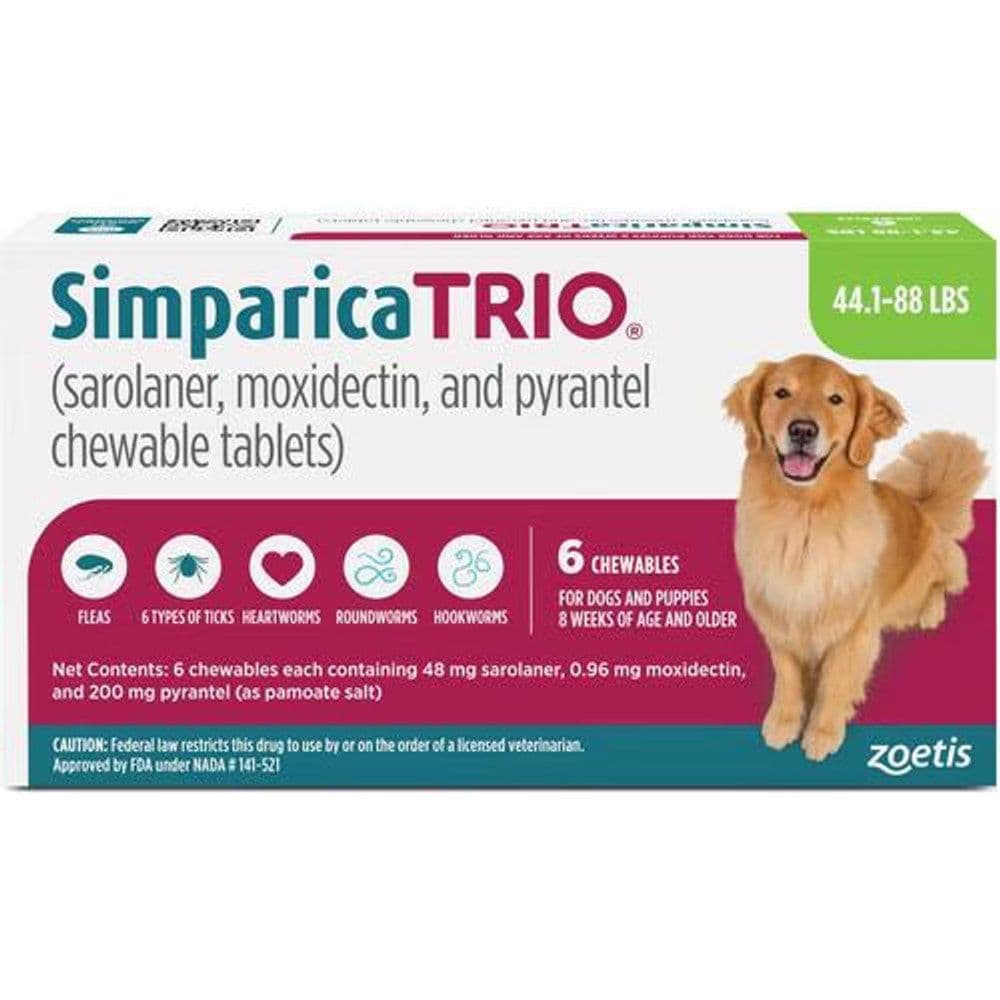
Both products cover lone star, Gulf Coast, American dog, black-legged, brown dog and Asian longhorned ticks for one month. Both also prevent Borrelia burgdorferi infection through killing black-legged ticks. Older statements that NexGard Plus covers only four ticks, or that this infection-prevention indication belongs only to Trio, do not match the current labels.
The intestinal-worm differences require more than a yes-or-no “worms” column. NexGard Plus adds adult Ancylostoma braziliense to its labeled hookworm species. Simparica Trio includes specified immature roundworm and hookworm stages, including L4 larvae and immature adults of Ancylostoma caninum. Which distinction matters depends on the veterinarian's assessment of the dog's parasites and exposure; “more species” and “more life stages” are different comparisons, not universal measures of better treatment.
- Simparica Trio: treats immature adult and adult Toxocara canis roundworms, adult Toxascaris leonina roundworms, L4 larvae/immature adult/adult Ancylostoma caninum hookworms, and adult Uncinaria stenocephala hookworms.
- NexGard Plus: treats adults of both named roundworm species and three hookworm species: A. caninum, A. braziliense and U. stenocephala.
- Neither: is indicated to treat whipworms or an existing tapeworm infection.
The coverage table separates Trio's flea tapeworm prevention from treating an existing tapeworm infection. Its indication concerns Dipylidium caninum infection resulting from fleas on the treated dog. Killing those fleas interrupts transmission; it does not treat tapeworms already in the intestine or cover every tapeworm species. Neither product treats whipworms. Your veterinarian may prescribe another treatment for an existing intestinal infection.
Both prevent heartworm disease; neither kills adult heartworms. Keep monthly prevention consistent. If a veterinarian uses a seasonal plan, the labels differ: Trio continues for at least one month after the last mosquito exposure, while Plus continues for at least six months. That means continued monthly doses, not six months of protection from one chew. The American Heartworm Society recommends year-round prevention.
Before either prescription starts, the veterinarian should establish an age- and history-appropriate heartworm testing plan. An owner should not interpret a negative test as permission to stop future screening or assume that giving a preventive treats an existing adult infection. Tell the veterinarian about gaps in prior prevention, uncertain dose consumption and recent travel. Those details may affect follow-up testing even when the choice of chew remains unchanged. A positive result requires a veterinary treatment plan beyond choosing between these two products.
 $65 · no membership
Need a prescription or refill for your dog?
A licensed vet can assess your dog over video and prescribe online when it's appropriate.
 Talk to a vet
- Licensed vets
- All 50 states
- same-day Rx

Webvet may earn a commission if you book.
Monthly cost, rewards and rebates
There is no dependable universal lowest-price winner for Simparica Trio vs NexGard Plus. Use a same-weight monthly cost comparison that separates checkout prices, conditional veterinary rebates and restricted rewards. Current manufacturer rewards depend on supply and seller eligibility. Compare the same dog's weight, number of monthly doses and purchase conditions; an introductory autoship discount and a future reward credit do not reduce today's payment in the same way.
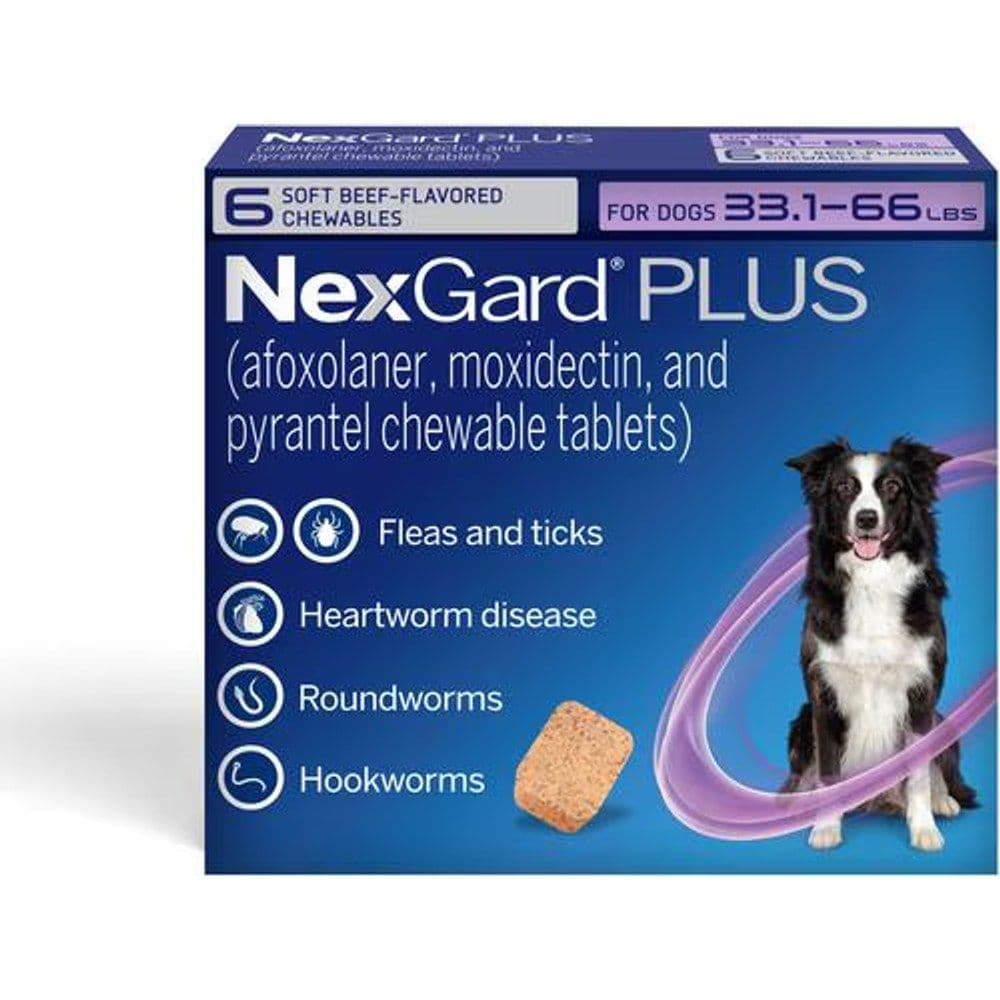
One September 17, 2026 indexed Chewy listing showed $235.59 for six NexGard Plus chews for dogs weighing 33.1–66 lb, equivalent to $39.27 per monthly dose after rounding. This is a dated search-listing snapshot, not a guaranteed checkout price. A comparable Trio quote for the same dog and supply was not verified, so that figure cannot establish which brand is cheaper.

Use the current listings for Simparica Trio and NexGard Plus to confirm the prescribed strength and supply before comparing the total. These links may open a particular weight-band selection; change it only to the strength your veterinarian prescribed.
| Cost item | How to compare it |
|---|---|
| Cost per monthly dose | Product price plus applicable shipping and tax, divided by monthly doses |
| Immediate discounts | Apply only a discount you qualify for on this purchase |
| Trio quote | Obtain the correct prescribed weight band and the same number of doses |
| Plus six-dose snapshot | $235.59 ÷ 6 = $39.27 per monthly dose, before any additional checkout charges |
| Manufacturer rebate | Verify eligible veterinary purchase and current terms before subtracting it |
| Restricted rewards | Record future reward value separately from cash paid today |
As checked September 17, the NexGard Plus rebate offers $25 for six doses or $65 for twelve doses purchased at one time from a veterinarian, with the displayed offer expiring January 31, 2027. Do not subtract that rebate automatically from a Chewy quote.
Zoetis Trio rewards depend on membership tier and supply. At the Bronze tier, six chews earn 250 points, equivalent to $25 in reward value, and twelve earn 600 points, equivalent to $60. This is future value with program restrictions, not automatic cash off checkout. The program terms describe eligible veterinary or retail purchases with a valid prescription, invoice submission within 30 days and restricted veterinary-merchant spending.
Original Simparica and NexGard are different products
The difference between original NexGard and Simparica is not the same question as Trio versus Plus. Original Simparica contains sarolaner alone; original NexGard contains afoxolaner alone. They are flea-and-tick products without the added heartworm and intestinal-worm coverage of the combinations discussed here.
That distinction changes more than the box name:
- Original Simparica has a six-month minimum age, while Trio starts at eight weeks.
- Comparing original Simparica vs NexGard for ticks does not establish the cost of complete heartworm protection.
- Comparing original Simparica vs NexGard Plus pairs a flea-and-tick product with a broader combination, so an apparently cheaper price may omit needed coverage.
Dose strengths and instructions also belong to the exact formulation. Do not borrow a tablet strength, vomiting instruction or age threshold from a similarly named product. Bring the full name and package to your veterinarian if a previous prescription and a new shopping listing look different.
Alternatives need a complete prevention plan
A useful comparison of Simparica Trio vs Heartgard Plus and NexGard must include both separate prescriptions and their combined costs. Heartgard Plus supplies heartworm prevention and labeled roundworm/hookworm treatment, but no flea-and-tick control. It is not an equivalent standalone replacement for either combination chew.
Similarly, considering Simparica Trio vs NexGard Plus vs Bravecto requires identifying the exact Bravecto formulation. Standard Bravecto dog chews do not provide heartworm prevention or intestinal-worm treatment. They also contain an isoxazoline, so switching to them does not avoid the class neurologic precaution.
Ask the veterinarian whether a different dosing interval would help you keep to the schedule, and make sure refills for every component remain affordable throughout the year.
What is a cheaper alternative to Nexgard Plus?
A cheaper alternative to NexGard Plus may be another combination or a plan with separate heartworm prevention and separate flea and tick protection. It requires matched veterinary quotes for a complete prevention plan. Include every prescribed product, the supply length and the likelihood of remembering separate schedules. Buying one cheaper flea product while leaving a heartworm-prevention gap is not an equivalent saving. Do not combine medicines yourself to recreate a prescription chew.
Choosing beyond a single brand
There is no single most vet-recommended flea treatment that suits every dog. Age, weight, parasite exposure, medical history and adherence all affect the prescription. A veterinarian may reasonably recommend different plans for two dogs in the same household. Our flea, tick and heartworm prevention guide explains the broader options and why each plan needs to cover the relevant parasites throughout the year.
Dogs do not inherently need the NexGard brand. They need an appropriate parasite-prevention plan, and NexGard Plus is one possible way to provide several parts of it. Whether its particular combination is suitable depends on the individual dog and the veterinarian's assessment. See the NexGard Plus for dogs guide for product-specific uses, weight bands and administration details before discussing it with the prescriber.
Safety and side effects: what the warning means
Simparica Trio and NexGard Plus both contain an isoxazoline flea-and-tick ingredient. The FDA class warning describes muscle tremors, loss of coordination and seizures, including reports in animals without a previous seizure history. The FDA also considers these drugs safe and effective and notes that most treated pets have not had neurologic reactions.
Reported side effects also include gastrointestinal signs such as vomiting or diarrhea. Both products share the isoxazoline neurologic precaution, even without a seizure history. Separate field-study adverse-event percentages do not rank safety: different groups and study conditions do not provide a reliable head-to-head comparison. Online anecdotes and product dose size also cannot identify a safety winner. A smaller amount of one ingredient does not prove that Simparica Trio or NexGard Plus is safer.
Why do some vets not recommend Simparica Trio?
Some vets do not recommend Simparica Trio for an individual dog because of a seizure history, previous reaction, age, weight or parasite-control needs. That is an individualized prescribing decision, not evidence of a universal veterinary recommendation against Trio. NexGard Plus shares the isoxazoline precaution, so it is not automatically a safer substitute for a dog with neurologic disease. Discuss the reason for the recommendation before switching or stopping prevention.
Dogs needing an individual safety discussion
Dogs below Trio's labeled age or weight should not receive it under its labeled instructions. A history of seizures or other neurologic disorders calls for caution; safe use in breeding, pregnant or lactating dogs has not been evaluated. Both labels list no known contraindications, but that does not mean every dog is a suitable candidate. The Simparica Trio for dogs guide explains these eligibility and precaution distinctions in detail.
If you are deciding what flea treatment to avoid for a dog, start with the exact species, weight and medical history rather than a blanket blacklist. Neither canine product belongs in a cat's prevention plan. Previous reactions and concurrent medicines also matter. Our guide to safer flea-treatment choices covers the broader decision; your veterinarian can apply it to your dog's circumstances.
What comparative studies and owner reviews can tell you
Reddit discussions about Simparica Trio vs NexGard Plus can reveal practical concerns, such as whether a dog accepts a chew or an owner can afford refills. They cannot establish comparative safety, diagnose a reaction or measure the number of protected dogs. A report that a symptom followed a dose needs veterinary assessment; it does not by itself prove causation.
Two small manufacturer-funded laboratory studies provide more specific comparative heartworm evidence. Read these resistant-isolate studies together, including their sponsor, sample-size and worm-count endpoint limitations. They tested different drug-resistant isolates, with six monthly doses in each comparison. The 2024 study found no statistically significant difference in worm counts; the 2026 study found lower worm counts with Trio against its tested isolate. Neither experiment measured real-world household protection.
| Laboratory studies | Design and sponsor | Bounded finding |
|---|---|---|
| 2024, JYD-34 isolate | Six dogs per treatment group; Boehringer Ingelheim funded | No significant between-product difference in worm-count reduction |
| 2026, ZoeLA isolate | Eight dogs per treatment group; Zoetis funded | Lower Trio worm counts under that study's protocol |
The distinction between worm-count reduction and complete infection prevention matters. In 2024, worms were recovered from two of six Plus dogs and one of six Trio dogs. In 2026, worms were recovered from six of eight Plus dogs and two of eight Trio dogs. Those different denominators reflect each experiment's treatment-group size, not thousands of household pets. The impressive reported percentage reductions are not real-world percentages of dogs completely protected.
The 2024 trial was funded by Boehringer Ingelheim, which makes Plus; the 2026 trial was funded by Zoetis, which makes Trio. Both used controlled infections in small groups of Beagles. The design, resistant isolate and study population matter when interpreting the results. A lack of statistical significance in one small experiment does not prove the products equivalent in every setting, just as a difference in another does not prove universal superiority.
Neither experiment establishes a universal effectiveness or safety winner across every heartworm strain and household. Your veterinarian can weigh those findings alongside local heartworm risk and your dog's needs. Consistent dosing and the recommended testing schedule remain important whichever prescription is chosen.
Questions about choosing and buying
Frequently Asked Questions
Why is Nexgard so expensive?
NexGard may seem expensive when comparing its package price with a smaller supply or a product with different coverage. First check whether the quote is for original NexGard or NexGard Plus and whether it covers one, six or twelve doses. Plus contains three active ingredients and supplies broader parasite coverage than a flea-only product, but that does not explain every seller's price. Compare complete prevention, and ask the veterinarian for equivalent prescription options if the total is difficult to afford.
What is the cheapest way to buy NexGard?
To find the cheapest eligible way to buy NexGard, obtain a valid prescription and compare your veterinary practice and legitimate pharmacies using the same weight band, exact product and supply length. Include shipping, tax and immediate discounts. Check manufacturer rebate terms separately because veterinary-purchase eligibility may exclude a pharmacy quote. There is no verified single cheapest seller for every dog; seek the lowest eligible total for the prescription your dog actually needs.
Is Simparica Trio as good as NexGard Spectra?
Whether Simparica Trio is as good as NexGard Spectra for a particular dog requires comparing the locally approved indications. That is a different question from Trio versus US Plus. NexGard Spectra contains afoxolaner and milbemycin oxime, while Plus contains afoxolaner, moxidectin and pyrantel. Different national labels can specify different parasites, doses and minimum weights. Do not use an international Spectra comparison to choose a US Plus dose or assume the names are interchangeable.
Can you give Simparica Trio and NexGard Plus together?
Do not give Simparica Trio and NexGard Plus together as a self-directed prevention plan. They duplicate active ingredients, including moxidectin and pyrantel, and each already contains a flea-and-tick isoxazoline. More medication does not establish better protection and can create unnecessary exposure. If both were given accidentally, contact your veterinarian with your dog's weight, both strengths and the times administered. Do not wait for a symptom before asking what to do next.
Can I switch from Simparica Trio to NexGard Plus?
You can discuss a switch from Simparica Trio to NexGard Plus with your veterinarian when the new prescription fits your dog. Provide the last dose date, exact prior product, reaction history and any missed doses so the prescriber can set the transition and heartworm testing plan. There is no universal do-it-yourself washout schedule. The American Heartworm Society advises testing based on age and prevention history; puppies under seven months have a different initial testing pathway from older dogs.
$65 · no membershipNeed a prescription or refill for your dog?
A licensed vet can assess your dog over video and prescribe online when it's appropriate.
Talk to a vet- Licensed vets
- All 50 states
- same-day Rx
Webvet may earn a commission if you book.
Veterinarian · BVMS MRCVS
Dr. Pippa Elliott, BVMS, MRCVS, is a veterinarian with nearly 30 years of experience in companion animal practice. Dr. Elliott earned her Bachelor of Veterinary Medicine and Surgery from the University of Glasgow. She was also designated a Member of the Royal College of Veterinary Surgeons. Married with 2 grown-up kids, Dr. Elliott has a naughty Puggle named Poggle, 3 cats and a bearded dragon.

