Do Dogs Smile? What That Grin Really Means
A behavior-first guide to dog smiles, relaxed open-mouth expressions, submissive grins, stress cues, and the body-language context owners need for safer daily interactions.

This article contains affiliate links. Webvet may earn a commission when you buy through them, at no extra cost to you.
Dogs can make expressions that people call smiles, but a human-looking grin is not a universal canine happiness signal. Do dogs smile? Sometimes an open mouth appears during relaxed, comfortable interaction. The same visible teeth can also accompany appeasement, stress, fear, or a warning. Read the eyes, ears, body tension, movement, and situation before deciding what the mouth means.
 Sponsored
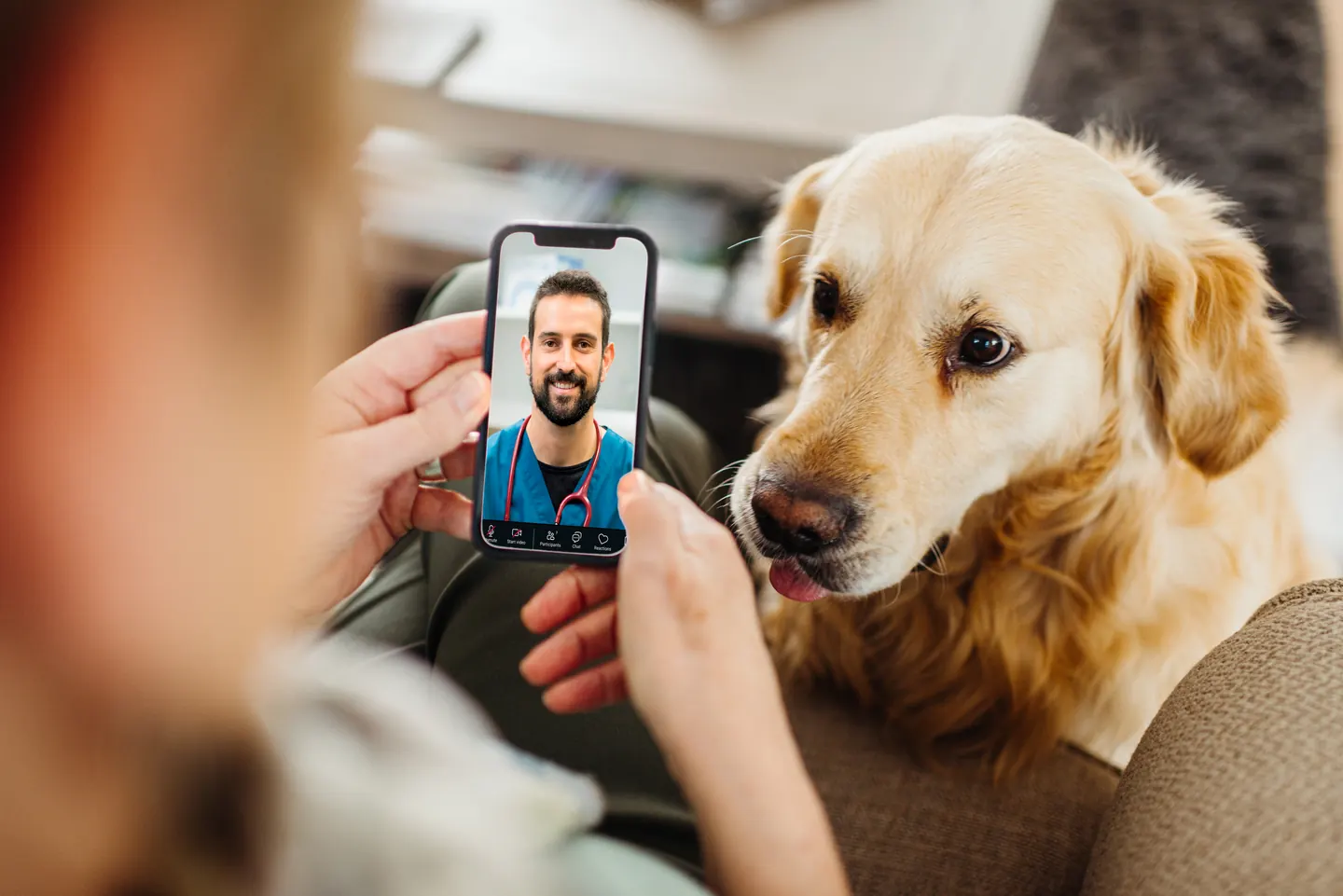
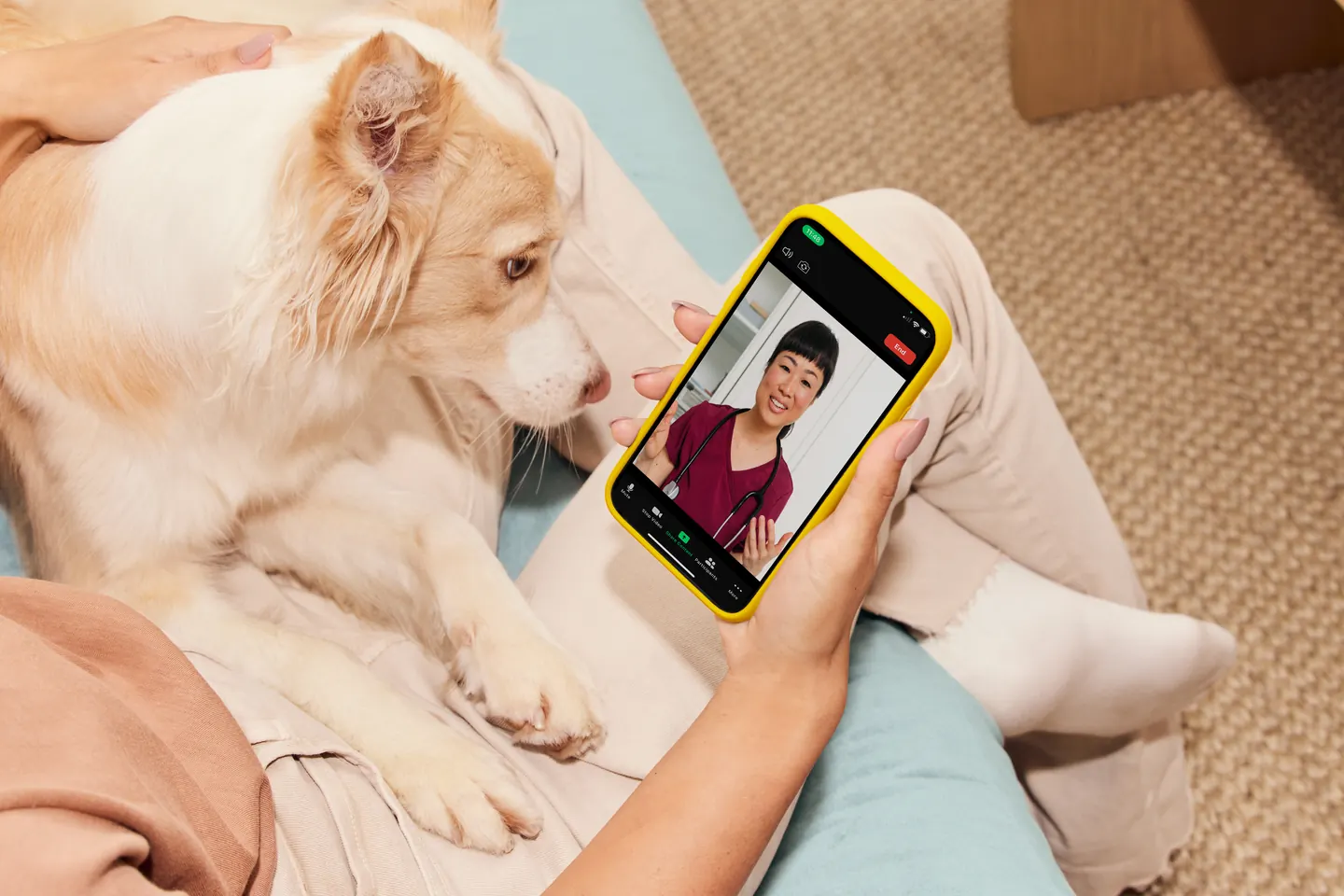
Want a vet's help with your dog's anxiety or behavior?
Talk to a licensed vet at Dutch over video, often the same day. They can recommend treatment and prescribe it when it's appropriate.
Use code Pets60
Plans start at $12/month · covers up to 5 pets
- Licensed vets in most states
- Rx for 150+ conditions
- 4.7 on Trustpilot
Do dogs smile like people do?
A dog smile does not have one fixed meaning. Whole-body context matters: a loose body, soft eyes, easy movement, and voluntary interaction support a relaxed reading. Lowered posture and averted gaze suggest appeasement. Freezing, hard staring, forward weight, lip lifting, or growling mean give the dog space. When cues conflict, choose the safer interpretation and let the dog disengage.
Dogs make measurable facial movements, but an open mouth does not have one fixed meaning or translate one-to-one into human emotion. Researchers therefore compare the mouth with the eyes, ears, posture, movement, and immediate context. A relaxed-looking mouth is meaningful only when the rest of the body and the dog's choices support the same interpretation.
Researchers can code those movements with the Dog Facial Action Coding System, or DogFACS. The system records movement in:
- The lips and jaws.
- The cheeks, eyes, and brows.
- The ears.
DogFACS describes visible movement; it does not prove that one facial action always equals happiness, fear, guilt, or another private state.
Do dogs actually smile? A dog smile can look different from one dog to another. You might see:
- An open or closed mouth.
- A loose grin or visible teeth.
- Subtle movement at the lips and eyes.
The expression alone does not prove that dogs laugh, understand every human smile, know its social rule, or pose on purpose. First recognize what the face is doing, then use posture, movement, and context to interpret it.
For relaxed, supervised play, a soft squeaky toy can encourage positive interaction.
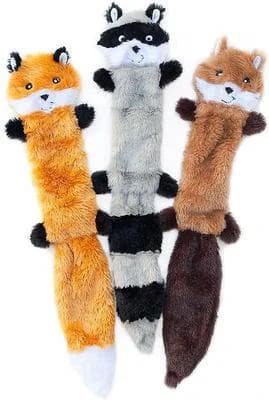
No-stuffing squeaky plush toys that satisfy a dog's urge to shake and carry prey, with no stuffing to shred and scatter.
Webvet may earn a commission when you click through to Chewy, at no extra cost to you.
Can dogs smile, and do dogs really smile? Dogs can produce a dog grin or open-mouth expression that people call smiling. What does it mean when a dog smiles? The answer depends on the complete expression, body, choice, and setting rather than the mouth alone.
What facial-coding research can show
A peer-reviewed DogFACS study found that dogs produced more facial movements when a person attended to them than when the person turned away. The inner-brow raise was among the movements observed. Human attention can affect canine facial movement, so facial expression is communication within context rather than mind reading. The finding does not establish a simple translation such as "open mouth equals happy" or "raised brow equals sad."
Dogs and people also have different facial anatomy, social signals, and reasons for showing teeth. A human smile is shaped by human culture and communication. A dog's open mouth may be related to heat regulation, physical activity, arousal, social play, stress, or comfort. Calling it a smile is useful shorthand only when the rest of the dog supports that interpretation.
That is why photographs of a smiling pit bull, retriever, corgi, or mixed-breed dog cannot be interpreted by breed or mouth shape alone. Look at what happened before the photo, whether the dog chose the interaction, and what the entire body is doing.
What a relaxed dog smile can look like

A relaxed open-mouth expression often includes several compatible cues:
A rope-and-ball toy and an interactive slow feeder offer two different ways to build calm engagement.
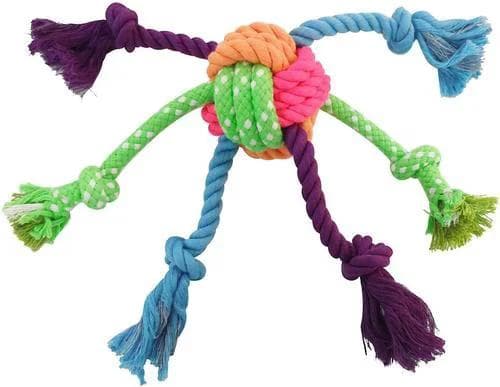
A durable rope-and-knot fetch toy that channels chewing, tugging, and fetch energy into safe play, and the woven rope gives teeth a light scrub.
Webvet may earn a commission when you click through to Chewy, at no extra cost to you.
- The lips and muzzle look loose rather than pulled tight.
- The eyes appear soft, with no sustained hard stare.
- The ears rest in a neutral position for that individual dog.
- The body is loose, curved, or wiggly rather than rigid.
- Movement is fluid, and the dog can pause or disengage.
- The dog voluntarily approaches, stays, or returns to interaction.
- The context is comfortable, such as calm social contact or easy play.
The phrase "for that individual dog" matters. Ear shape, facial folds, coat, age, and breed can change what a neutral face looks like. Learn the dog's ordinary resting expression before judging one moment.
Do dogs smile when happy? They can show this relaxed pattern during comfortable interaction. Can dogs smile when happy with the mouth closed? Some dogs soften the eyes, cheeks, and posture without opening the jaw, so an open mouth is not required for a relaxed social expression.
Do dogs smile out of happiness? A relaxed dog smile is a reasonable description when the mouth is loose and the eyes, body, movement, choice, and situation all support comfort. The same mouth shape can appear during panting, appeasement, stress, or a tense interaction. That is when a dog grin does not mean happiness, and the surrounding cues should guide the response.
Is my dog smiling or panting?
Panting can look like a grin because the mouth is open and the tongue is visible. A dog may pant after exercise or when warm. Panting can also occur with pain, fear, nausea, or other stress.
Check the setting. A dog who just finished a comfortable game, has loose muscles, drinks normally, cools down, and settles is different from a dog who pants intensely in a cool room while pacing, trembling, hiding, or refusing food. WebVet's guide to how dogs cool themselves explains why panting and limited sweating matter for temperature regulation.
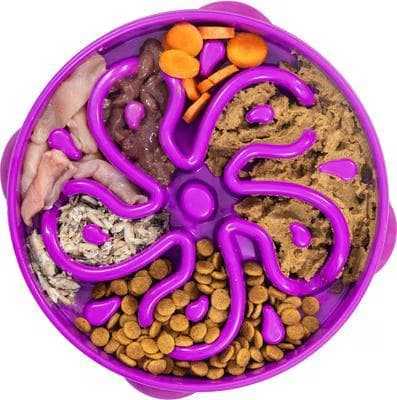
A maze-pattern slow-feeder bowl that makes fast eaters work for each bite, reducing the gulping and swallowed air that trigger regurgitation and vomiting. Holds up to 4 cups.
Webvet may earn a commission when you click through to Chewy, at no extra cost to you.
Seek veterinary help for labored breathing, blue or pale gums, collapse, severe heat exposure, a swollen abdomen, repeated retching, or panting that is new and unexplained.
 Sponsored
Vet care that's always there
Unlimited video calls and messaging with licensed vets for less than a typical vet visit. One membership covers up to five pets.
Use code Pets60
Plans start at $12/month · covers up to 5 pets
- Licensed vets in most states
- Rx for 150+ conditions
- 4.7 on Trustpilot
When a dog grin does not mean happiness
A dog can expose teeth without inviting closer contact. The key is to separate a submissive grin or appeasement display from a tense threat display, then respond to the dog's comfort rather than the expression's resemblance to a person smiling.

What is a submissive dog smile?
A submissive grin may show the front teeth while the dog lowers the body, squints, pulls the ears back, turns the head, lifts a paw, licks the lips, or approaches in a curved and tentative way. This appeasement behavior may reduce social pressure rather than express guilt or ask for punishment.
People often call this a guilty dog smile, but the expression does not prove the dog understands a past rule violation. It may reflect a response to the person's posture, voice, attention, or expectation of conflict.
Do dogs smile when stressed or when they are nervous? A submissive grin, stress panting, or tense mouth can look smile-like to a person. Why dogs smile when they are guilty is therefore the wrong frame: the observable behavior may be appeasement in response to present social pressure.
- Create room: Give the dog enough space to move away and choose whether to approach.
- Reduce social pressure: Soften your body, turn slightly sideways, and avoid leaning overhead.
- Avoid coercion: Do not force petting because the grin looks funny or photogenic.
What does a tense warning display look like?

A threat display is more concerning when exposed teeth appear with:
- A stiff body, freezing, or forward weight.
- Hard eyes, lip lifting, or a tightly closed or wrinkled muzzle.
- Low growling, snapping, or guarding.
Those cues mean give the dog space and use a safer interaction plan.
Watch for whale eye, where the white of the eye becomes visible as the dog turns away while monitoring a concern.
Tail wagging does not automatically make the situation friendly; a high, tight, rapid wag can occur with intense arousal.
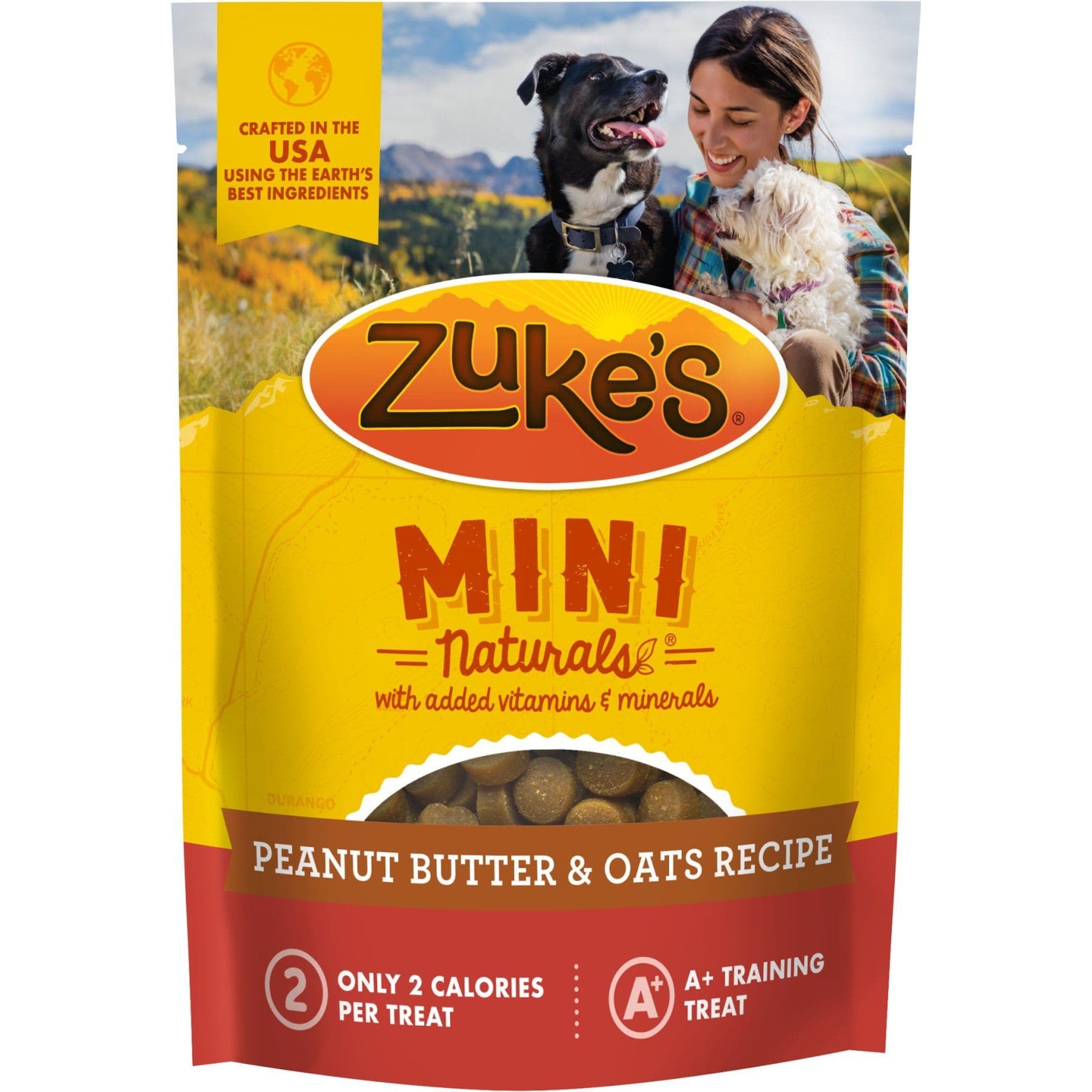
Soft, pea-sized training treats made with peanut butter and oats. Small enough to reward often while keeping treats inside the 10% of daily calories vets recommend.
Webvet may earn a commission when you click through to Chewy, at no extra cost to you.
Veterinary teams use fear, anxiety, and stress signals to adjust handling. The American Animal Hospital Association behavior management guidelines emphasize recognizing distress and reducing provocative handling rather than forcing an interaction through it.
Read the whole dog, not just the mouth

A critical review of cues to emotion in dogs highlights the need to consider multiple behaviors and context. Human observers can project familiar emotional labels onto an ambiguous canine face. A separate study of canine facial and body behavior found context-related differences during positive anticipation and frustration, reinforcing that the face is only part of the signal. Dogs can also integrate facial and vocal information in controlled tests, as shown by a cross-modal emotion-recognition study, but that does not make one grin a fixed label for emotion.
Do dogs smile like humans? The resemblance is real to an observer, but the signal system is not identical. Why does my dog smile when I pet him, see me, or provide a favorite scratch? Comfort, anticipation, learned attention, or appeasement may contribute. Dogs can learn that a behavior draws a human response, yet that does not make the expression a universal imitation of a human smile.
Why do dogs smile when they're in trouble? People often use "smile" for a submissive grin or tense expression that appears during conflict, scolding, or uncertain attention. The dog may lower the body, squint, turn away, lick the lips, or expose front teeth. It is not a confession of guilt. Read those signals as information about stress and change the interaction instead of punishing the face.
- Visible teeth: Why do dogs smile with teeth? Teeth can appear in either a submissive grin or a threat display, so exposure alone is not a verdict.
- Open jaw: An open mouth without tooth tension may accompany relaxation, play, or panting.
- Meaning: The dog smile meaning comes from the full cue stack, and the table below keeps those possibilities separate.
The repeatable cue stack compares mouth, eyes, ears, posture, movement, context, and the safest response.
- The mouth, eyes, and ears.
- Posture and movement.
- Context and the safest response.
The repeatable cue stack compares mouth, eyes, and ears with posture, movement, and context to identify the safest response. The article separates a relaxed open mouth from panting, appeasement, stress, and a tense threat display. This framework combines mouth and eyes and ears with posture and movement, setting, and owner response instead of treating exposed teeth or an open jaw as a verdict.
Use the same cue stack every time:
| Expression pattern | Mouth | Eyes and ears | Posture and movement | Context | Safest response |
|---|---|---|---|---|---|
| Relaxed open mouth | Loose lips, jaw open without tension | Soft eyes, neutral ears | Loose body, curved movement, easy pauses | Comfortable rest or voluntary play | Continue gently and allow choice |
| Submissive grin | Front teeth visible, lips pulled back | Squinting, ears back, averted gaze | Lowered body, curved approach, tentative movement | Social pressure, greeting, conflict avoidance | Reduce pressure and let the dog choose contact |
| Stress panting | Open mouth, tongue may be wide or tense | Scanning eyes, ears back or restless | Pacing, trembling, inability to settle | Heat, pain, fear, nausea, unfamiliar setting | Cool or calm the setting and assess for medical concerns |
| Threat display | Lip lift, teeth exposed, muzzle tense | Hard stare, fixed attention | Freezing, stiffness, forward weight | Guarding, fear, trapped space, escalating conflict | Stop, create distance, prevent access, and seek help |
No row is a diagnosis. A dog may show a mix of cues, switch quickly, or have pain or a medical condition that changes behavior. When signals conflict, choose the lower-risk interpretation and add space.
WebVet's complete guide to reading dog body language covers posture, tail, movement, displacement behaviors, and context in more depth.
Relaxed play and positive interaction

Comfortable play is usually reciprocal and voluntary. Look for curved approaches, play bows, bouncy movement, role reversals, brief pauses, and re-engagement by both dogs or by the dog and person. A supervised plush squeaky toy can provide one play option when it fits the dog's play style. An open mouth may appear throughout without defining the interaction.
Reward calm play
Positive interaction also includes quiet choices: resting nearby, leaning in and then moving away, sniffing together on a walk, or accepting touch in a preferred area. Small training treats can reinforce a pause, check-in, or calm return when they fit the dog's diet. A dog does not need a camera-ready grin to be comfortable.
When should you stop an interaction?

Pause periodically. If the dog returns with a loose body, play can continue. If the dog turns away, hides, becomes still, repeatedly shakes off, grabs harder, or cannot disengage, lower the intensity and allow a break. Supervise toys and stop if guarding or unsafe arousal appears.
Questions about human-like interpretations arise elsewhere in dog cognition too. WebVet separately explains dog cognition myths and Down syndrome and what dogs may dream about, keeping medical and sleep questions out of this facial-expression guide.
Frequently Asked Questions
Do dogs actually smile when they're happy?
Dogs may show a relaxed open mouth when they are happy or comfortable, especially when soft eyes and loose body posture accompany easy movement and voluntary engagement. The expression alone does not prove happiness because context changes meaning. Panting, appeasement, stress, and warnings can also expose the mouth or teeth, so read the complete dog and situation before approaching.
A dog smile can be charming, but the respectful question is not only "What does that mouth look like to me?" It is "What is this whole dog communicating right now?"
Why do dogs smile?
Dogs make mouth and facial movements during relaxation, play, panting, anticipation, appeasement, stress, and warnings, so the mouth does not have one fixed meaning. A loose open mouth can reasonably be called a smile when the dog also has soft eyes, neutral ears, a relaxed body, easy movement, and freedom to disengage. Always read the eyes, ears, posture, movement, and context before deciding what the expression means.
Do dogs smile with their mouth closed?
Yes. A relaxed expression can include a closed mouth, softened cheeks, neutral ears, soft eyes and loose body posture. An open jaw is not required for a dog to look comfortable. A tightly closed mouth can also appear with tension, pain, or intense focus, so compare it with the rest of the face and body. The safest interpretation comes from the complete cue pattern and the immediate situation.
What does it mean when a dog smiles with teeth?
Visible teeth are not a verdict. A dog may show front teeth in a submissive grin while lowering the body, squinting, turning away, or approaching tentatively. Teeth can also appear with a warning when the body is stiff or tense, the eyes are hard, the muzzle tightens, or growling and guarding occur. Give the dog space when the body is stiff or tense, and do not force contact for a photograph.

Editor
The Webvet Editorial Team is the in-house group of pet-care editors and writers behind Webvet, operated by Smart Pet Collective. The team researches, writes, and maintains Webvet's pet health, behavior, and medication content. Every article follows a defined editorial process: research from reputable veterinary and scientific sources, careful drafting, mandatory review of medical content by a credentialed veterinarian, and dated publication. Health and medication articles are medically reviewed by a licensed veterinary professional before they go live and are kept current over time.


