Cat Spraying: Why It Happens and How to Stop It
Cat spraying can signal territory, stress, or illness. Learn how to tell spraying from urination, reduce repeat marking safely, and know when to call a vet.

BVMS MRCVS

This article contains affiliate links. Webvet may earn a commission when you buy through them, at no extra cost to you.
Cat spraying is a communication behavior in which a cat usually deposits a small amount of urine near a vertical or socially important surface. Because urinary disease can look similar from a distance, a new elimination change still needs veterinary assessment before it is treated as purely behavioral.
- 1Cat spraying is usually a small urine mark used for communication, not spite.
- 2A spraying cat typically stands, backs toward a surface, and holds the tail upright, sometimes with a quiver.
- 3New house soiling needs a veterinary assessment because posture and location cannot rule out pain, inflammation, urinary disease, increased urine volume, or mobility problems.
- 4Straining while producing little or no urine is an emergency, especially in a male cat.
 Sponsored
Want a vet's help with your cat's anxiety or behavior?
Talk to a licensed vet at Dutch over video, often the same day. They can recommend treatment and prescribe it when it's appropriate.
Use code Pets60
Plans start at $12/month · covers up to 5 pets
- Licensed vets in most states
- Rx for 150+ conditions
- 4.7 on Trustpilot
Spraying vs peeing: when to call a veterinarian
The comparison table pairs posture, amount, surface, context, litter-box use, medical warning signs, and next actions. Use those details to describe the pattern to a veterinarian. They cannot diagnose the cause, prove the behavior is spraying, or rule out urinary disease. Illness and behavior can overlap, so new house soiling needs veterinary assessment.
| What you notice | More consistent with spraying | More consistent with bladder-emptying urination | What to do next |
|---|---|---|---|
| Posture | Standing, tail raised or quivering, often backed toward a surface | Squatting or crouching | Record the posture, but do not use it as a diagnosis |
| Amount | Usually a small mark | Usually a larger puddle | Note the amount and frequency for the veterinarian |
| Surface | Often vertical or socially important | Often horizontal, soft, or near a litter area | Clean the site and look for a repeat pattern |
| Litter-box use | May still use the box normally | May avoid the box or visit it more often | Arrange a veterinary assessment for a new change |
| Medical warning | Spraying can coexist with illness | Pain, frequent attempts, blood, or changed urine volume raise concern | Contact a veterinarian promptly |
| Emergency warning | Behavior labels are no longer the priority | Straining with little or no urine, distress, vomiting, collapse, or marked lethargy | Seek emergency veterinary care now |
| Spraying versus urination | Either pattern may be present | Illness and behavior can overlap | Check medical red flags and choose the next action with a veterinarian |
The Merck Veterinary Manual and Cornell Feline Health Center describe urine marking as a behavior pattern, but both emphasize evaluating medical contributors to house soiling. Posture, deposit size, surface, and litter-box behavior help document the pattern; examination and testing determine whether illness contributes.
Is cat spray pee? Spray is urine used for marking, while peeing usually empties the bladder. Is cat spraying the same as peeing or urinating? No. The posture, amount, and surface often differ, but blood, pain, frequent attempts, or changed volume require veterinary care regardless of the pattern an owner sees.
The veterinarian boundary remains central because an indoor urine deposit cannot be labeled as a purely behavioral problem or product opportunity. Pain, inflammation, increased urine production, mobility limits, and lower urinary tract signs can alter elimination. A posture or location pattern guides observation, while examination and testing determine whether illness contributes.
What cat spraying looks like
Spraying often starts with a cat investigating and backing toward a socially important vertical surface such as a wall or door. The cat remains standing with the tail raised or quivering while a small urine deposit is released. Record the posture and amount, but repeated straining with little or no urine needs emergency care.
What does cat spray look like? A cat is typically backed toward a vertical household surface with the tail held upright behind the body, sometimes quivering. An upright tail posture without a visible urine stream can occur during greeting, so the image and posture cannot prove spraying. Check the surface and the wider pattern.
Male cats spraying versus peeing may show the same general differences seen in females. Spray is often a small mark on walls or furniture, while bladder emptying is often a larger amount on carpet or another horizontal surface. A blacklight can locate residue, but it cannot identify sex, posture, or medical cause.

Look for a pattern, not one clue
Several observations together are more useful than smell alone:
- The cat stands rather than settles into a full squat.
- The mark appears on a vertical or socially meaningful location.
- The amount is small compared with a normal bladder emptying.
- The cat continues using the litter box for regular urination.
- The same doorway, window, new object, or shared route is marked again.
A cat can also mark on a horizontal surface, and a cat with urinary discomfort may adopt an unusual posture. That overlap is why a video, photo, location log, and veterinary examination are more reliable than deciding from one sign.

At-home urine test strips that screen for glucose, blood, pH, and protein in seconds, so you can catch early signs of diabetes, kidney disease, or a UTI and bring real numbers to your vet.
Webvet may earn a commission when you click through to Chewy, at no extra cost to you.
A tail quiver does not always mean urine was released
Some cats raise and quiver the tail during an excited greeting or while investigating a socially important place without depositing urine. Check the surface instead of assuming. WebVet's guide to cat body language explains tail and posture signals beyond urine marking.
If you find moisture, note its location, amount, color, and odor. Do not handle urine with bare hands. Tell the veterinarian if you see blood, repeated genital licking, frequent litter-box trips, crying, or straining.
Why cats spray
Urine marking is territorial communication through scent, not spite. A cat may respond to uncertainty, intercat conflict, social pressure, mating-related hormones, or a changed environment by leaving a mark. The deposit does not show that the cat is angry, vindictive, or trying to punish a person, and it cannot identify the trigger by itself.
What does it mean when a cat sprays? The mark may reflect an outdoor cat, intercat conflict, competition, a routine change, or hormones. Cats can spray after being fixed, and both males and females may keep marking when the original trigger remains.
Territorial and social triggers
Common patterns include:
- An unfamiliar cat appearing outside a window or door
- A new cat, dog, baby, visitor, or roommate in the home
- Tension between cats that share narrow routes or key resources
- Moving furniture, remodeling, packing, or returning from travel
- A new object carrying unfamiliar animal or household scents
- Competition around litter boxes, food, water, beds, or elevated resting places
VCA Animal Hospitals explains that marked locations can reveal the trigger. Marks near windows may follow outdoor-cat sightings, while marks in shared indoor routes may reflect social conflict or insecurity.
Stress can be quiet
A cat does not need to hide all day to be stressed. Watch for blocked pathways, staring between cats, chasing away from resources, changes in sleeping areas, or one cat waiting until another leaves before eating or using a litter box.
Track what happened during the hour before each mark. A pattern tied to a window, visitor, schedule change, or specific cat is more actionable than the broad label “anxiety.” Sudden spraying still requires a veterinary check before it is treated as purely behavioral.
Indoor patterns and common misconceptions
Cat spraying inside the house may start at a Christmas tree, doorway, window, or new object and then spread if the trigger remains. If a cat keeps spraying in the house or sprays everywhere, getting rid of residue alone will not stop the pattern. Prevention begins by learning where and when marking starts.
If your cat sprayed you, the behavior is still scent communication, not revenge. Cats may spray when they are in heat, and an unneutered tom may mark around mating-related cues. Spraying a cat with water is unsafe punishment. Questions about whether calming sprays work belong with product safety, not the reason a cat marks.
Hormones can contribute
Intact males are especially likely to urine mark, and intact females can also spray. Spaying or neutering often reduces hormone-linked marking, but it does not guarantee that an established behavior will stop. Altered males and females may continue when social or environmental triggers remain.
Surgery timing, health, recovery, welfare, and cost decisions belong in WebVet's guide to cat spay and neuter costs. A veterinarian can connect the procedure decision to this cat's age, health, reproductive status, and behavior history.
SponsoredVet care that's always there
Unlimited video calls and messaging with licensed vets for less than a typical vet visit. One membership covers up to five pets.
Use code Pets60
Plans start at $12/month · covers up to 5 pets
- Licensed vets in most states
- Rx for 150+ conditions
- 4.7 on Trustpilot
How to stop a cat from spraying
To get a cat to stop spraying indoors, start with veterinary assessment before assuming behavior. Then identify the trigger, prevent exposure where practical, increase separated resources, clean marked areas, use reward-based management, and never punish the cat. Addressing both the cause and the marked location reduces the chance that the behavior simply moves elsewhere.
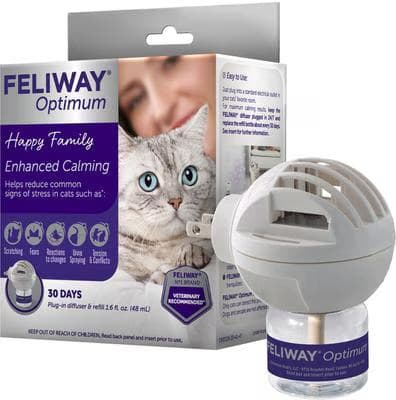
Products come later. If an examination rules out a medical cause and the pattern points to a stress-linked trigger, a diffuser may be considered alongside the steps below. It should not replace any step.
Webvet may earn a commission when you click through to Chewy, at no extra cost to you.
| Observed trigger | Humane first response | What to reassess |
|---|---|---|
| Outdoor cat visible through glass | Use privacy film or adjust access during predictable visits | Whether marking falls when the visual trigger is blocked |
| Tension between resident cats | Separate key resources and create multiple routes, hiding places, and elevated resting areas | Staring, blocking, chasing, and which cat avoids resources |
| New cat or return after absence | Use a gradual, scent-aware reintroduction instead of forcing contact | Distance at which both cats can remain calm |
| Schedule or household change | Restore predictable feeding, play, and quiet interaction | Whether marking follows specific departures or arrivals |
| Repeat marking at one site | Clean residue, restrict temporary access, and make the area calm or functionally different | Whether the cat chooses a new site, suggesting the trigger remains |
| Intact cat with hormone-linked pattern | Discuss spaying or neutering with the veterinarian | Whether environmental or social marking continues afterward |

Different triggers need different responses for outdoor cats, household changes, intercat conflict, schedule changes, resource competition, and recurring marked locations. Separated resources and gradual reintroduction can reduce social pressure. Use the log to track whether urine spraying falls or urinary signs change after each adjustment, and contact the veterinarian if the pattern worsens.
1. Arrange a veterinary examination
Tell the veterinarian when the behavior began, where it happens, how the cat stands, whether normal litter-box urination continues, and what changed at home. Bring a short video if it can be recorded without frightening the cat.
The examination may lead to urine testing or other diagnostics based on age, signs, history, and physical findings. Treatment depends on the diagnosed condition. Do not give leftover medication or use a behavior product in place of medical assessment.
2. Map the trigger
Use a simple log for one to two weeks:
- Date and time
- Exact marked location and surface
- Posture and approximate amount
- People and animals nearby
- Outdoor-cat activity
- Recent household or schedule change
- Litter-box use and any urinary signs
- Your response immediately afterward

The log can distinguish a window trigger from conflict at an indoor bottleneck. It also gives the veterinarian clearer evidence if the behavior changes, spreads, or returns after an apparent improvement.
Reduce tension between cats without forcing contact
Intercat conflict is not always a fight. One cat may stare, follow, guard a hallway, occupy the only high perch, or wait beside a litter-box exit. The other cat may change routes, delay eating, hide, or mark near the pressured area.
Compare coverage choices for your pet, then request a quote directly on Lemonade.
- Check a price for your pet
- Review available coverage choices
- See the terms before you decide
Eligibility, waiting periods, limits and exclusions apply.
Webvet may earn a commission when you click through to Lemonade, at no extra cost to you.
Create distance before trying to rebuild tolerance:
- Give each cat a separate quiet area with essential resources.
- Add visual barriers around resting and feeding places.
- Provide more than one route through busy rooms.
- Prevent one cat from trapping another at a litter box.
- Reintroduce contact gradually while both cats remain relaxed.
Do not carry the cats toward each other or hold them together. If either cat cannot eat, rest, play, or move through the home comfortably, ask the veterinarian about a structured behavior plan.
Avoid accidentally rewarding the marking sequence
An intense reaction can become part of a predictable sequence, especially when spraying immediately produces attention, food, outdoor access, or the removal of another cat. That does not make the behavior manipulative. It means consequences can help maintain a pattern that began for another reason.
Respond quietly. Move the cat away only when safety requires it, clean after the cat leaves, and provide attention or play at planned times. Reward calm behavior in an appropriate place rather than waiting for a mark to start interaction.
3. Separate essential resources
In a multi-cat home, provide more than one route to food, water, litter, rest, hiding, scratching, and elevated space. Do not place every resource in one room where another cat can control the doorway.
The goal is not merely adding objects. Each cat should be able to reach a resource without passing a rival at close range. Observe which routes are actually used, then adjust placement to reduce waiting, ambushes, and blocked exits.
4. Change access to the trigger
For outdoor-cat triggers, cover the lower portion of a window, move a perch, or use landscaping that discourages visiting cats without harming them. For indoor conflict, use doors, gates, separate rooms, and gradual reintroduction under veterinary or behavior guidance.
Avoid startling devices near the cat. A motion-triggered blast, yelling, or water spray may suppress behavior only while a person is present and may add fear to the same location.
5. Build predictable positive routines
Offer short, regular play and quiet contact at times the cat is receptive. Use food puzzles, climbing space, scratching surfaces, hiding areas, and opportunities to observe from a safe height. Rotate activities so novelty does not disappear after the first week.
Reward calm investigation, resting, scratching an appropriate surface, or moving through a shared area without conflict. The reward should follow the desired behavior. Do not lure the cat to a freshly marked site or force interaction with another cat.
When a pheromone diffuser may fit
After medical assessment and trigger-focused changes, a Feliway diffuser may be considered in a stress-linked case. Feliway for cat spraying is not a cure or diagnostic test. A cat calming spray or cat pheromones for spraying cannot substitute for separated resources, conflict management, cleaning, or veterinary care.
Before trying a calming spray or diffuser, read WebVet's safety guidance and discuss the household pattern with the veterinarian. Marketplace claims do not diagnose the trigger, prove benefit, or establish that one product is appropriate for an individual cat.
WebVet's vet-reviewed guide to cat pheromone diffuser safety explains setup, household precautions, and when to stop use. Selecting a diffuser does not prove that it will stop urine marking in an individual cat.
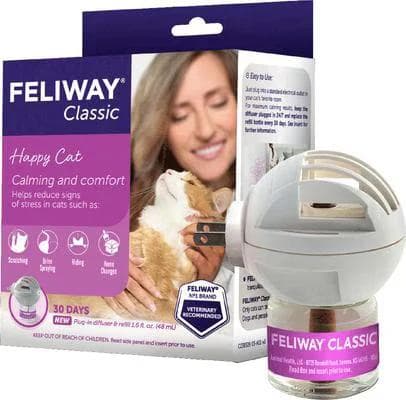
A vet-recommended plug-in diffuser that releases the drug-free Feliway Classic pheromone to reduce stress signs in cats like scratching, hiding, and urine marking. 30-day starter kit.
Webvet may earn a commission when you click through to Chewy, at no extra cost to you.
6. Reassess instead of escalating punishment
If spraying continues, ask whether the original trigger remains, another cat is blocking access, cleaning was incomplete, or medical signs have changed. A veterinarian may recommend a qualified veterinary behavior professional for persistent or complex intercat conflict.
Never yell, chase, rub the cat's face in urine, or spray the cat with water. Those responses do not explain what drove the mark and can make the person, room, or competing animal feel less safe.
How to clean cat spray and prevent remarking
Blot a fresh mark with disposable absorbent material, then clean according to the surface manufacturer's instructions. Ventilate the room and keep cats away until the area is dry and any cleaning product is used exactly as labeled.
What kills the smell of cat spray?
The goal is to remove or neutralize urine residue, not cover it with perfume. A pet-appropriate enzymatic cleaner may help break down urine residue on a compatible surface. Test an inconspicuous area first, and never mix cleaners.
Avoid ammonia-based products around a marked site because their odor may resemble urine. Follow the surface cleaner's label and do not add strong fragrances to mask the smell. If a mark soaked into padding, unfinished wood, or wall material, surface wiping may not reach the residue.
VCA's marking and spraying guidance recommends thorough odor neutralization as part of management. Cleaning cannot solve an outdoor-cat trigger, social conflict, or urinary problem by itself.
Why scent alone will not stop spraying
There is no single smell that reliably makes every cat stop spraying. Strong scents may repel a cat from one spot, irritate the cat, or move the mark elsewhere while the original trigger continues.
Change the meaning and access of the location after cleaning. A resting platform, play session, or feeding activity may help in an appropriate low-conflict area, but do not place food where another cat can guard it. Pair location changes with the broader trigger plan.
Check without turning the home into a search exercise
A black light may reveal some dried urine residue, but other household materials can fluoresce too. A cat spray black light check is a cleaning aid, not proof that a cat sprayed or that a particular cat caused the mark.
Use a compatible enzymatic cleaner as a residue remover rather than a perfume. On carpet, cat pee or spray may reach padding, so surface cleaning may not remove the source. Black light findings are clues only. The color or location cannot show whether a male or female cat produced the deposit.
Cleaning clues have limits
Home remedies to get rid of cat spray smell can mask odor, damage a surface, or expose cats to unsafe ingredients. A blacklight can help find old cat spray, but cat spray under a blacklight is not uniquely identifiable because cleaners and other residues may also glow.
If several cats share the home, a camera focused on the general area may identify timing and posture without confrontation. Protect household privacy, and never delay veterinary care while trying to capture perfect evidence.
Male, female, spayed, and neutered cats
Any sex can urine mark, so reproductive status is one clue rather than a diagnosis. Hormones affect likelihood, while health, learned behavior, and the home environment affect what happens next.
Spaying, neutering, and spraying
Male and female cats can both spray. Unneutered males are more likely to mark, while an unspayed female may spray during heat. Spraying can start near sexual maturity, but age and gender do not identify the cause. The same veterinary, trigger, cleaning, and resource plan applies to every cat.
Spaying or neutering often reduces hormone-related urine spraying, but triggers can sustain the behavior after surgery. A fixed or desexed cat may still spray once a pattern is learned or conflict continues. Surgery will not prevent every episode, so keep environmental management in place at home without punishing the cat.
Some searches use “sprayed” when they mean “spayed.” If you are asking how much it costs to get a cat “sprayed,” WebVet's cat spay and neuter guide covers procedure pricing, timing, and recovery. Here, the concern is whether reproductive status, health, social pressure, or learned behavior causes urine marking.
Why an altered cat may start suddenly
A neutered male or spayed female that suddenly starts spraying inside the house may be responding to a new cat, conflict, outdoor activity, a move, pain, or another medical change. “Fixed” status does not remove the need for an examination.
Document the first date, affected places, household changes, appetite, water intake, mobility, litter-box behavior, and any straining or blood. Sudden onset plus urinary signs deserves prompt veterinary contact.
Urinary signs that change the plan
Call a veterinarian for any new house-soiling pattern, even when the posture resembles classic spraying. Contact the clinic promptly if the cat urinates more often, produces smaller amounts, cries, licks the genital area repeatedly, has blood in urine, drinks more, or avoids the litter box.
Cornell's lower urinary tract disease guidance lists difficult or painful urination, increased frequency, blood, and urinating outside the box among important signs. These signs can overlap with what an owner calls spraying.
When the problem is litter-box urination
A cat that squats and empties the bladder outside the box needs a complete house-soiling assessment. Box size, location, litter, cleanliness, access, pain, mobility, conflict, and urinary disease can all matter.
WebVet's guide to cat peeing outside the litter box explains that broader problem. This page focuses on identifying urine marking and protecting the medical boundary between the two patterns.
A homemade spray to stop cats from peeing is not a substitute for a house-soiling assessment. So-called natural ways to stop cats from peeing in the house may mask odor while pain, litter-box access, or urinary disease remains. A cat that otherwise appears normal still needs evaluation.
Urinary signs that need veterinary care
The veterinarian may need to distinguish bladder inflammation, infection, stones, obstruction, increased urine production, mobility problems, and behavior. Testing and treatment depend on the individual cat, so this article cannot safely identify the cause at home.
WebVet's cat UTI treatment guide explains diagnosis and condition-specific care after the veterinarian identifies the urinary problem. Do not start antibiotics, pain medicine, supplements, or urinary diets without veterinary direction.
The American Veterinary Medical Association warns that a urethral blockage is an emergency. If a cat strains repeatedly and little or no urine appears, go to an emergency clinic immediately.
A Practical Seven-Day Reset
This sequence does not replace veterinary care. It organizes the information and household changes that make the next veterinary or behavior decision clearer.
- Day 1: Call the veterinarian, describe the posture and urinary signs, and schedule the recommended level of care.
- Day 1: Remove access to urgent hazards and begin a location, posture, and trigger log.
- Day 2: Clean marked surfaces thoroughly without ammonia, punishment, or strong fragrance.
- Day 2: Separate litter, food, water, rest, hiding, scratching, and elevated resources.
- Days 3 to 5: Block predictable outdoor-cat views and reduce indoor bottlenecks.
- Days 3 to 7: Add predictable play and calm individual attention without forcing cat-to-cat contact.
- Day 7: Review frequency, locations, urinary signs, and trigger patterns with the veterinarian.

Improvement means fewer marks and a calmer pattern, not simply moving the urine to another room. Return to the veterinarian sooner if signs worsen, appetite or energy changes, or the cat develops frequent attempts, pain, blood, vomiting, or difficulty passing urine.
Frequently Asked Questions
How can you tell if a cat has sprayed?
To tell if a cat has sprayed, look for a small deposit near a vertical socially important surface and a standing, tail-raised posture. Those signs are typical but not conclusive. Odor does not prove the cause. Discuss a new elimination change with a veterinarian, especially when blood, pain, frequent trips, or straining appears.
How long does cat spray smell last?
How long cat spray smell lasts depends on where urine reached and whether residue was neutralized. Odor can persist until residues are neutralized, especially in padding, unfinished wood, or wall material. Repeat marking can restore the scent. Address the trigger and hidden material instead of adding perfume or assuming one cleaning worked.
How common is spraying in female cats?
Female cats can urine mark, although spraying is associated more strongly with males and intact status. There is no single percentage for every household. Intact status and stress change likelihood, and a spayed female may also mark. New spraying in any female cat still warrants veterinary assessment and a review of household triggers.
What smells worse, cat pee or cat spray?
What smells worse, cat pee or cat spray, is subjective. Spray is urine used for marking, not a separate substance, and either deposit can smell intense. Odor alone cannot diagnose the behavior or a urinary problem, identify the cat, or replace observation of posture, amount, location, litter-box use, and medical signs.
At what age do female cats start to spray?
Female cats may start to spray when onset coincides with sexual maturity, but there is no single age for every cat. Stress-linked spraying can begin outside a fixed age window, including after spaying or years later. Sudden onset deserves veterinary assessment at any age, especially when urinary signs or household changes are present.

Editor
The Webvet Editorial Team is the in-house group of pet-care editors and writers behind Webvet, operated by Smart Pet Collective. The team researches, writes, and maintains Webvet's pet health, behavior, and medication content. Every article follows a defined editorial process: research from reputable veterinary and scientific sources, careful drafting, mandatory review of medical content by a credentialed veterinarian, and dated publication. Health and medication articles are medically reviewed by a licensed veterinary professional before they go live and are kept current over time.
Veterinarian · BVMS MRCVS
Dr. Pippa Elliott, BVMS, MRCVS, is a veterinarian with nearly 30 years of experience in companion animal practice. Dr. Elliott earned her Bachelor of Veterinary Medicine and Surgery from the University of Glasgow. She was also designated a Member of the Royal College of Veterinary Surgeons. Married with 2 grown-up kids, Dr. Elliott has a naughty Puggle named Poggle, 3 cats and a bearded dragon.


