Cat Ear Polyps: Symptoms, Removal, and Recovery
Learn how ear and nasopharyngeal polyps affect cats, why a mass needs testing, and what to discuss about removal, recovery, costs, and the possibility of recurrence.

BVMS MRCVS
Medically reviewed by Dr. Pippa Elliott, BVMS MRCVS · Last reviewed

This article contains affiliate links. Webvet may earn a commission when you buy through them, at no extra cost to you.
Cat ear polyps are benign inflammatory growths that can affect the middle ear, ear canal, or the area behind the nose and soft palate. Their location helps explain why one cat shakes an ear while another breathes noisily or struggles to swallow. An ear mass still needs veterinary assessment; a photograph cannot establish that it is a harmless polyp.
Arrange an examination for persistent ear discharge, head shaking, a visible growth, or unexplained noisy breathing. Breathing difficulty, severe loss of balance, or inability to swallow requires urgent care. Treatment usually involves removing the polyp, with the approach chosen around its origin, extent, and any previous recurrence.
Cat ear polyp symptoms and urgent warning signs
- 1Ear signs can include discharge, head shaking, head tilt, and balance changes; a polyp extending toward the throat can cause noisy breathing or swallowing difficulty.
- 2Seek urgent veterinary care for breathing difficulty, collapse, severe imbalance, or inability to swallow. Keep handling calm and brief.
- 3Do not pull a visible growth or put unprescribed drops into the ear. Diagnosis and treatment depend on what the mass is and where it begins.
For a planned examination, prepare secure transport in a carrier that fits your cat. The Frisco Travel Safety Dog & Cat Carrier, Medium is one option. Familiar bedding and a calm approach can make the trip more manageable. If breathing is difficult, call the clinic for immediate instructions and use available transport rather than delaying to obtain equipment.

Prepare secure, correctly sized transport for a veterinary examination.
Webvet may earn a commission when you click through to Chewy, at no extra cost to you.
Symptoms may resemble an ear infection at first. A cat may scratch one ear, develop an odor or discharge, or repeatedly shake the head. Blood or dark material does not identify the growth: inflammation, injury, infection, and other masses can look similar. There is no reliable home “early-stage” appearance that rules a polyp in or out.

Figure 1: Demirutku and Bektaş Bilgiç (2026), Frontiers in Veterinary Science, CC BY 4.0. These documented inflammatory aural polyps show an internal ear-canal view and an externally visible growth. Many polyps are deeper and cannot be seen by looking at the ear opening.
Are ear polyps in cats painful?
They can cause discomfort through inflammation, infection, pressure, or associated ear disease, even if the cat does not cry. Scratching, avoidance of touch, changed behavior, and reduced eating are worth reporting. Do not probe the ear or press on the growth to test for pain. The veterinarian can assess discomfort and prescribe pain relief while investigating the mass and planning treatment.
Our guide to cats scratching their ears explains other common possibilities. The ear-mite and flea comparison can help organize observations, but a visible mass or persistent problem should not be managed by repeatedly trying parasite or ear products without an examination.
Where inflammatory polyps grow
While arranging assessment, record whether food is being eaten comfortably. A shallow washable bowl such as the OurPets Durapet Premium Stainless Steel Bowl, Small can make portions and leftovers easy to check. Its 0.75-cup capacity is not a prescribed meal size. A different bowl will not solve swallowing obstruction; report coughing, gagging, or difficulty eating to the clinic.
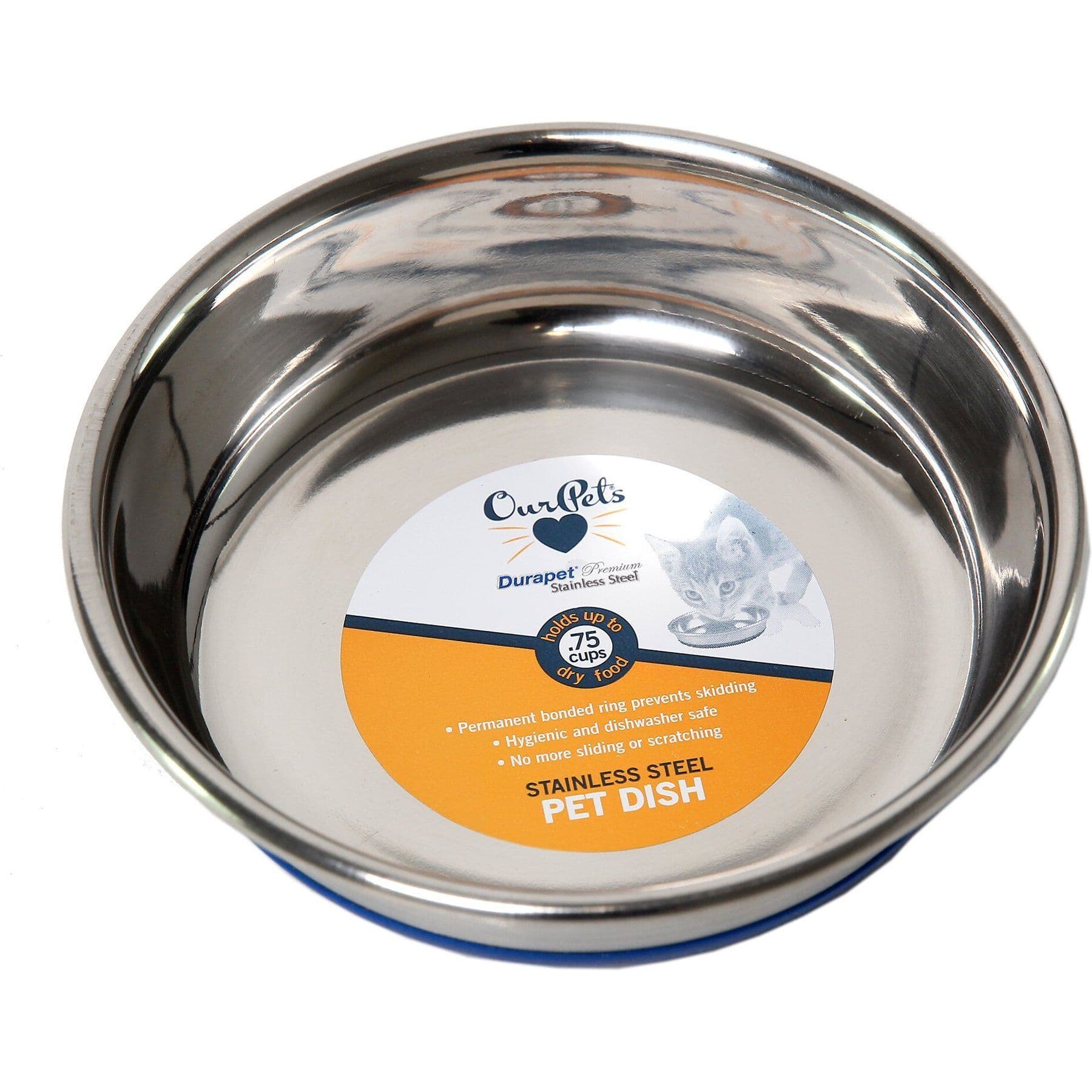
A small washable bowl for observing portions and comfortable eating.
Webvet may earn a commission when you click through to Chewy, at no extra cost to you.
Location matters more than the name an owner first hears. Aural or otic describes ear involvement; nasopharyngeal refers to the area behind the nose and above the soft palate. A growth can extend from the middle-ear region toward the ear canal, toward the throat through the auditory tube, or in more than one direction. This anatomy connects signs that may initially seem unrelated.
What are cat polyps?
In this context, inflammatory polyps are noncancerous tissue growths associated with the ear and nearby upper airway. They may be attached by a stalk and can obstruct a passage or contribute to inflammation and infection. “Polyp” describes a type of growth, not every lump found in a cat. Examination and, when removed, tissue pathology help establish the identity rather than relying on a photograph or the cat's age.
What are the causes of ear polyps?
The exact cause is not established. Inflammation and infectious triggers have been proposed, but a simple proven cause cannot be assigned to every case. Polyps are often described in young cats, yet an older cat can also have one. Do not assume allergy, poor ear cleaning, or something you did caused it. Inflammatory polyps themselves are not ordinarily treated as a disease that spreads between household cats.
VCA's nasopharyngeal-polyp overview explains the connection between the middle ear and throat. Tell the veterinarian about snorting, altered voice, nasal discharge, and feeding changes as well as the ear symptoms. A “nasal polyp” discussion may concern this connected region rather than a growth you could see inside a nostril.
 $65 · no membership
Have a health question about your cat?
A licensed vet can assess your cat over video and prescribe online when it's appropriate.
 Talk to a vet
- Licensed vets
- All 50 states
- same-day Rx
Webvet may earn a commission if you book.
Diagnosis and why an ear mass needs testing
To diagnose an ear or suspected nasal polyp in a cat, the workup starts with history and examination of the ears and relevant upper-airway structures. Otoscopy examines the ear canal; viewing behind the soft palate may require sedation or anesthesia. The team may recommend imaging to investigate deeper tissue and plan the safest approach. Ask which question each test is intended to answer.
CT or MRI can reveal deeper disease that an ordinary look into the canal cannot show. Histopathology, examination of removed tissue, helps determine whether a suspected nasal polyp is actually an inflammatory polyp or cancer. A benign polyp and a cancerous ear or nasal tumor are different problems; color and outward appearance cannot settle the distinction.
Before agreeing to the next step, clarify:
- Whether the suspected growth involves the external canal, middle ear, throat, or more than one area.
- Whether both ears and the nasopharynx need assessment.
- What imaging would change about the procedure or prognosis.
- Whether tissue pathology and any infection testing are included.
Removal options and what affects the choice
The main comparison is between removing an accessible polyp by traction-avulsion and surgery that accesses the middle-ear cavity, such as ventral bulla osteotomy. The right choice depends on the origin and extent of the growth, canal changes, previous treatment, and the cat's condition. Ask the surgeon to explain what each approach can reach in this particular case.
| Removal approach and questions for the surgeon | What the approach addresses | Decision to discuss |
|---|---|---|
| Traction-avulsion | Removes an accessible growth by controlled veterinary traction under appropriate anesthesia | Can the stalk and attachment be addressed, and what recurrence risk remains? |
| Ventral bulla osteotomy | Opens the middle-ear bulla so deeper diseased tissue can be accessed | Why is this access needed, and what are the surgical and neurological risks for this cat? |
| Tissue pathology | Examines removed tissue to confirm the type of mass | When will the result arrive, and could it change follow-up or treatment? |
| Infection assessment and postoperative care | Addresses relevant infection, inflammation, discomfort, and healing needs | Which medicines, restrictions, and rechecks are required after the chosen procedure? |
If the clinic expects ear scratching to interfere with recovery, ask which protective collar fits the procedure and your cat. The Dogswell Remedy+Recovery Rigid E-Collar for Dogs & Cats, Small is one option only when its dimensions and design match the clinic's advice. Have fit checked and confirm access to food and water; a collar does not replace pain control or reassessment.
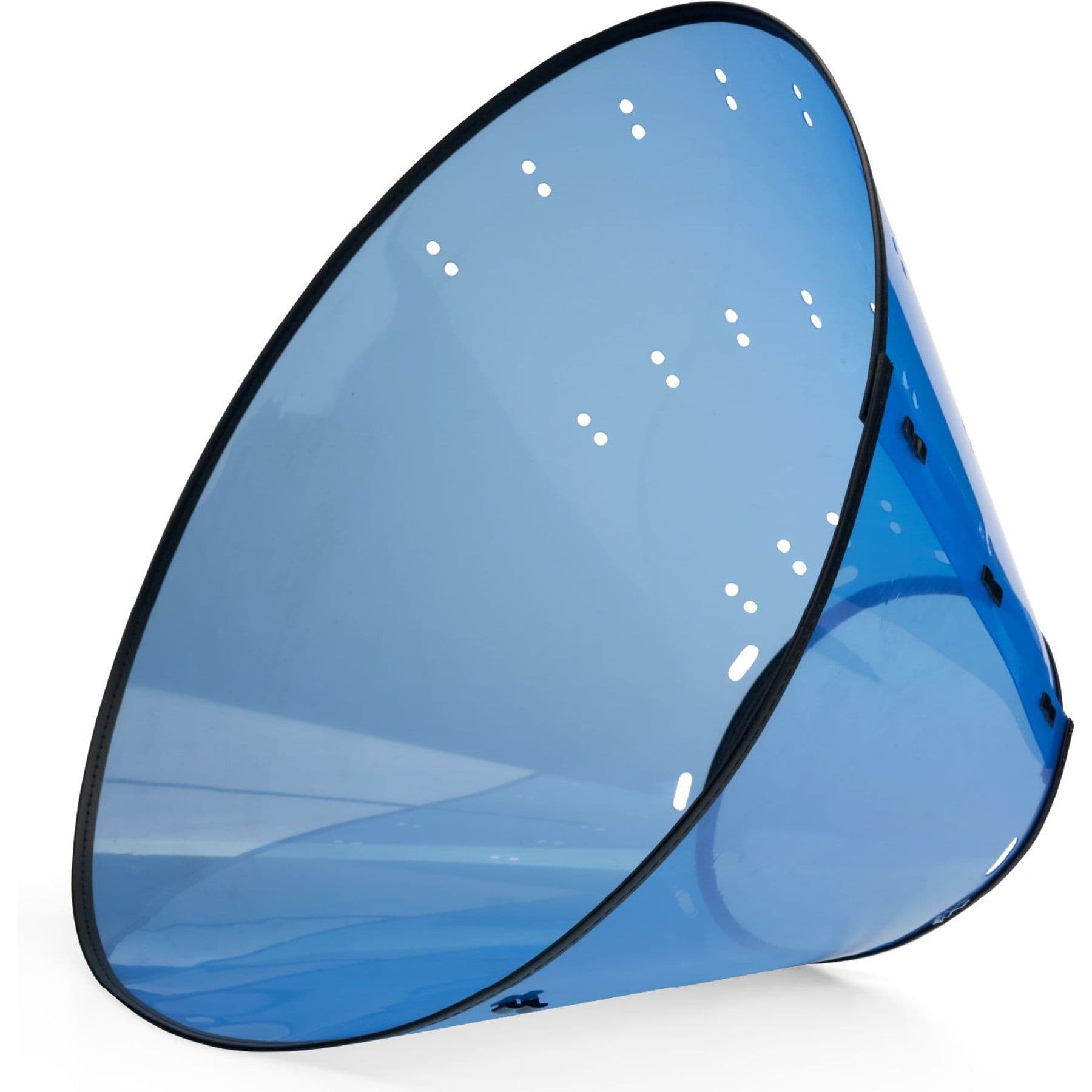
A protective collar only when its fit and design match the surgical team’s instructions.
Webvet may earn a commission when you click through to Chewy, at no extra cost to you.
How do you get rid of ear polyps in cats?
A veterinarian usually removes the polyp under anesthesia, using an approach selected for its location and attachment. Accessible polyps may be removed by traction-avulsion; deeper disease or recurrence may lead to bulla surgery or referral. Tissue pathology helps confirm the diagnosis. Never try to pull, cut, drain, or shrink a visible growth at home. The attachment and nearby structures cannot be judged from the ear opening.
Can a cat live with polyps without surgery?
Sometimes a veterinarian may discuss temporary medical management or a modified plan because of the cat's condition or other constraints. That does not mean a persistent polyp is harmless. Medication may address inflammation or infection without removing the obstructing tissue. The decision depends on breathing, swallowing, ear disease, comfort, and treatment feasibility, with an explicit follow-up plan rather than indefinite observation at home.
The American College of Veterinary Surgeons describes surgical approaches and their limitations. Antibiotics alone do not eliminate the growth. Homeopathy, oils, and household ear treatments are not established methods for removing a polyp; adding them can delay assessment or interfere with the prescribed plan. Ask before using any cleaner or drops, particularly when the eardrum may be involved.
Recovery and possible complications
Prepare a quiet, accessible recovery area and follow the clinic's activity instructions. Keep essentials within easy reach and prevent climbing if balance is affected. The linked FurHaven NAP Ultra Plush Orthopedic Deluxe Bed is the Jumbo size, so check its large dimensions against your space and your cat's ability to step on and off it. A simple suitable low bed already at home may serve the same resting purpose.
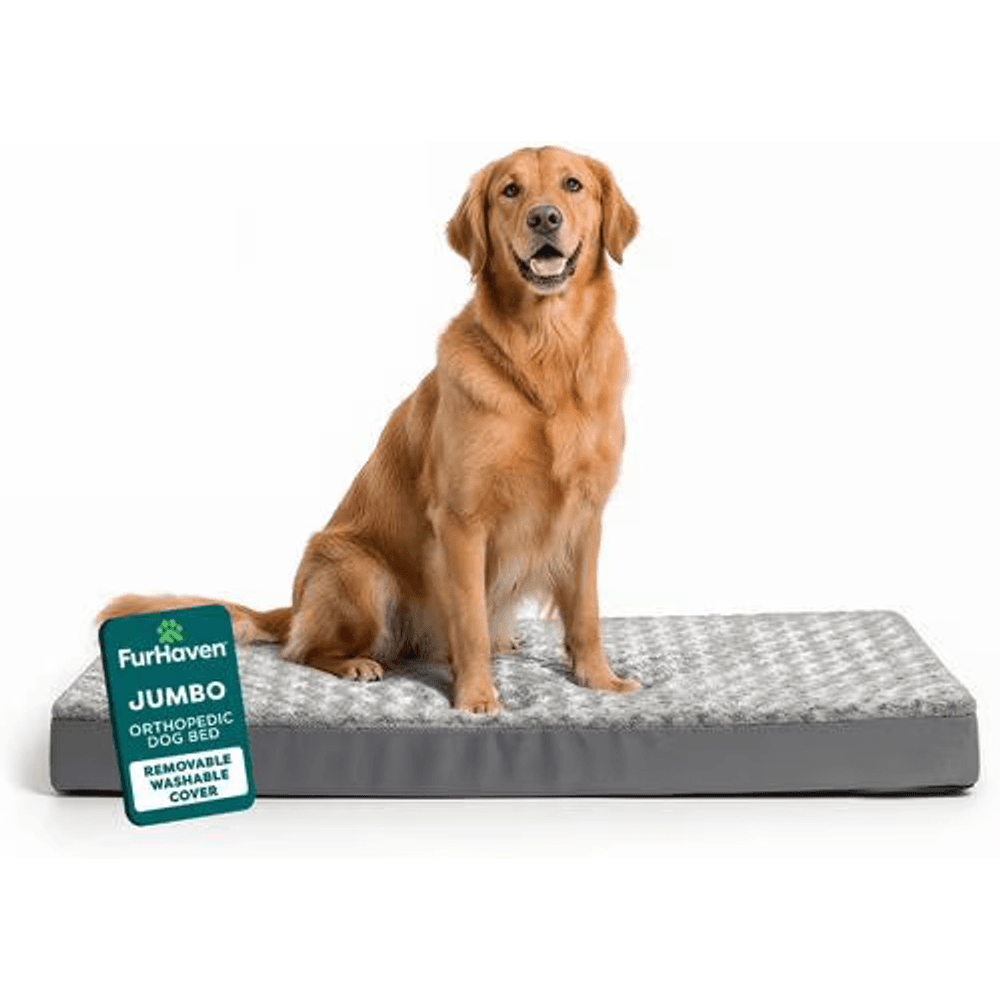
A floor-level resting option; check the linked Jumbo dimensions and easy access.
Webvet may earn a commission when you click through to Chewy, at no extra cost to you.
The discharge plan should identify expected changes and signs needing an immediate call. Possible complications include vestibular signs affecting balance, facial nerve effects, or Horner syndrome, which can change the pupil, eyelids, and appearance of the eye. Some changes improve, but do not assume a new neurological sign is an expected temporary effect. Report it to the surgical team.
Balance or eye changes do not uniquely identify an ear polyp. A cat with a sudden head tilt, falling, or abnormal eye movements needs veterinary assessment for several possibilities. Our stroke-in-cats guide explains why owners should avoid diagnosing a neurological event from appearance alone. Bring a short naturally occurring video if it can be recorded without delaying care.
Confirm the practical details before leaving:
- The next doses of prescribed pain relief and other medicines.
- Whether any ear cleaning or drops are allowed, and exactly how to use them.
- How to use a protective collar if one is prescribed.
- What the cat should eat and when inadequate intake needs a call.
- The recheck date and daytime and after-hours contact numbers.

Check eating, drinking, comfort, walking, and the incision if there is one. Do not put cotton swabs into the canal or remove material from deep inside the ear. If feeding is difficult, contact the clinic before trying to syringe food into the mouth. The guide to getting a cat to eat can support a recovery conversation, but swallowing or breathing difficulty requires specific medical advice.
An ear infection after polyp removal needs reassessment, whether it appears during recovery or much later. Discharge can reflect infection, inflammation, or recurrent tissue, and those possibilities require different care. Do not restart leftover ear drops without the clinic confirming they are appropriate.
Cost questions to ask the clinic
How much does it cost to have a polyp removed from a cat's ear?
There is no single useful price without knowing the workup and procedure. An accessible removal and surgery involving the middle ear are different services. The estimate may include consultation, anesthesia, imaging, pathology, infection testing, medicines, hospitalization, and rechecks. Ask for the expected total and what could increase it. A Florida, Texas, or UK location alone cannot establish the cost or your insurance coverage.
Request an itemized estimate before a planned procedure. Ask what is included if the first examination changes the surgical plan, whether referral is recommended, and whether postoperative visits are charged separately. Discuss financial constraints early so the team can explain clinically reasonable options. Do not assume the lowest quoted procedure includes the same diagnostics, tissue testing, or follow-up as another estimate.
Record recovery in a way the clinic can use
Make a brief daily entry with the amount eaten, medicines given, walking comfort, and any new ear or eye change. Note whether a change began before or after a dose, but do not stop or double medication based on a suspected connection without advice. Use a photograph or short video only when the cat is comfortable and the recording will not delay a call.
Keep the surgeon's expected-recovery instructions beside the log. Ask for clarification if “some discharge is normal” leaves you unsure what amount, duration, or color should prompt contact. A written description for this particular procedure is more useful than comparing your cat with another owner's recovery photograph. New breathing difficulty, inability to swallow, or rapid deterioration still needs urgent attention.
Recurrence and follow-up
An improvement after removal is encouraging, but follow-up still matters. The Merck Veterinary Manual reports regrowth in 15–50% of cats when traction-avulsion leaves the polyp's base behind. Bulla surgery can address that deeper origin and reduce recurrence, but it is a more invasive procedure with surgical and neurological risks. Ask how the location and proposed technique affect your cat's outlook. Return of ear discharge, head shaking, breathing noise, or swallowing trouble warrants reassessment. An infection after a previous removal does not automatically prove that the polyp has returned; the clinician needs to distinguish recurrent growth from other ear disease.
Ask what the tissue result showed and whether the initial imaging or procedure suggests a need for further follow-up. Keep the procedure name and pathology report with your cat's records, particularly if you move clinics. Ask whether the report confirms an inflammatory polyp, whether infection testing identified a treatable organism, and whether another appointment is needed even if the cat seems comfortable. These details help a new veterinarian interpret a later ear problem without assuming it is identical to the first one.
The Merck Veterinary Manual's inflammatory-polyp guidance discusses recurrence and treatment choices. Many cats do well after appropriate care, but neither a removal technique nor a published study can guarantee that an individual cat will never develop another problem. Repeated symptoms are a reason to revisit the plan, not simply restart leftover drops.
If the polyp returns
If recurrence is confirmed, compare the new recommendation with the original procedure: what tissue was accessible then, what has changed now, and whether referral would provide a different approach. Bulla surgery is not simply another name for removing the entire ear canal. If a more extensive operation is proposed, ask why it is needed and which part of the ear it addresses.
Cat ear polyp questions
Frequently Asked Questions
Can a cat live with ear polyps?
Yes, cats can survive with polyps, and many do well after treatment, but location and severity determine the immediate risks and care needs. A polyp affecting breathing, swallowing, balance, or ear health should not be ignored because it is benign. Veterinary assessment is needed to plan treatment and monitoring. There is no reliable life-expectancy number based only on the word polyp.
Are ear polyps serious?
They can be. Although inflammatory polyps are benign, airway obstruction, swallowing difficulty, infection, and significant ear disease can affect comfort and safety. The urgency depends on the signs and location. Seek immediate advice for breathing difficulty, inability to swallow, or major balance changes. Persistent discharge, head shaking, or a visible mass also deserves examination rather than repeated home ear treatments.
Can ear polyps be cancerous?
Inflammatory polyps are noncancerous, but an untested ear mass is not automatically an inflammatory polyp. Other growths, including tumors, may have overlapping signs. Tissue diagnosis from a removed mass can confirm its identity and guide follow-up. This distinction matters particularly when a growth looks unusual or returns; color, age, and an online photograph cannot reliably establish whether it is benign.
$65 · no membershipHave a health question about your cat?
A licensed vet can assess your cat over video and prescribe online when it's appropriate.
Talk to a vet- Licensed vets
- All 50 states
- same-day Rx
Webvet may earn a commission if you book.
Veterinarian · BVMS MRCVS
Dr. Pippa Elliott, BVMS, MRCVS, is a veterinarian with nearly 30 years of experience in companion animal practice. Dr. Elliott earned her Bachelor of Veterinary Medicine and Surgery from the University of Glasgow. She was also designated a Member of the Royal College of Veterinary Surgeons. Married with 2 grown-up kids, Dr. Elliott has a naughty Puggle named Poggle, 3 cats and a bearded dragon.
Related reading

Feline Hyperesthesia: Signs, Possible Causes, and Treatment

Pancreatitis in Cats: Symptoms, Treatment, and Recovery

Cat Asthma: Symptoms, Diagnosis, Treatment, and Home Management
