Cat Stroke: Signs, Look-Alikes, Treatment and Prognosis
A cat stroke can cause sudden balance or vision changes. Learn the emergency signs, how saddle thrombus differs, and what testing and recovery involve. Get practical, source-backed guidance for your next veterinary conversation.

BVMS MRCVS
Medically reviewed by Dr. Pippa Elliott, BVMS MRCVS · Last reviewed

This article contains affiliate links. Webvet may earn a commission when you buy through them, at no extra cost to you.
A cat stroke can cause sudden changes in balance, awareness, movement or vision. These signs need immediate veterinary advice because several other emergencies look similar. Painful back-leg weakness, collapse or breathing trouble is urgent regardless of the cause. Do not wait for a photograph or online checklist to confirm a stroke.
Signs of a cat stroke: sudden changes need urgent care
Signs of a stroke in a cat vary with the part of the brain affected. A cat may suddenly fall, circle, tilt the head, seem unable to see or behave differently. An elderly cat's symptoms should not be dismissed as normal aging, especially when the change is abrupt.
- 1Call a veterinarian for sudden neurological changes and report the onset time.
- 2Painful back legs can signal an arterial clot outside the brain, another emergency.
- 3Breathing trouble, collapse or severe weakness needs emergency care; do not wait for a stroke diagnosis.
| Sudden finding | Possible explanation | Important limit | Next action |
|---|---|---|---|
| Falling, circling or a new head tilt | Brain disease or a balance-system problem | The pattern is not specific to stroke | Keep the cat safe and call a veterinarian |
| Apparent blindness or unusual eye movements | Eye, blood-pressure or neurological disease | An owner cannot localize the cause reliably | Seek urgent assessment |
| Painful, weak or paralyzed back legs | Possible arterial thromboembolism or another serious problem | A saddle thrombus is not the same as a brain stroke | Contact an emergency hospital immediately |
| Altered awareness or abnormal movements | Possible seizure or other brain dysfunction | Quiet or subtle episodes can still matter | Note the time and safely record what happened |
| See a vet now | Labored breathing, collapse, severe pain or inability to stand | Do not wait for several signs to occur together | Arrange immediate emergency care |
Onset time and painful back legs
Record the last time your cat appeared normal and the first observed change. Tell the clinic whether your cat stayed aware, fell to one side, cried in pain or appeared unable to move the back legs. Describe any breathing change before focusing on the word stroke.
If safe, a short video can show posture, eye movements and response to your voice. Do not force walking or repeatedly test reactions. Move gently, avoid being bitten and ask the clinic how to transport a painful or unstable cat. A carrier with easy access may reduce unnecessary handling.
Breathing trouble changes the priority
Our guide to labored breathing in cats explains the emergency signs. An open mouth, obvious effort or inability to settle comfortably deserves urgent attention. Repeated handling or attempts to obtain a perfect video can add stress without helping the immediate decision.
What a cat stroke means
Ischemic stroke and hemorrhagic stroke
A stroke, or cerebrovascular accident, disrupts blood supply to brain tissue. An ischemic stroke involves inadequate blood flow, often because a vessel is blocked. A hemorrhagic stroke involves bleeding. Both can affect neurological function, but treatment decisions depend on the type and the rest of the cat's condition.
Strokes in cats are recognized, although other diseases can produce the same outward signs. A diagnosis should not be made solely from a cat's age, a head tilt or a brief period of weakness. A veterinary examination helps establish which part of the nervous system, or another body system, needs investigation.
Brain signs do not identify the cause
MedVet's feline stroke guidance describes sudden neurological changes and the need for diagnostic assessment. The same sign can arise through different mechanisms. For example, apparent vision loss can involve the brain or an eye problem, including complications of high blood pressure.
Use the words you observed: falling, circling, unresponsive, dragging a leg or missing an object. This is more useful than assuming every unusual movement proves a stroke. It also helps the clinic identify an emergency that requires stabilization before advanced neurological testing.
Stroke, saddle thrombus and other look-alikes
A saddle thrombus is a different emergency from a brain stroke. It involves obstruction of blood flow, commonly where the aorta supplies the hind limbs. Sudden painful back legs, severe weakness or paralysis can be clues. An owner should not delay care while trying to distinguish these conditions at home.

| Possible problem | Pattern that may be noticed | Why veterinary assessment is needed |
|---|---|---|
| Brain stroke | Sudden change in balance, awareness, vision or movement | Signs overlap other brain and balance disorders |
| Saddle thrombus | Abrupt limb weakness or paralysis, often with marked pain | Blood flow to the affected limbs may be compromised |
| Vestibular disease | Head tilt, falling, abnormal eye movements or nausea | Peripheral and central causes can appear similar |
| Seizure and its aftermath | Abnormal movement or awareness, followed by confusion or weakness | A seizure may have several causes, including structural brain disease |
| See a vet now | Painful paralysis, collapse, breathing trouble or repeated episodes | These need urgent care whichever diagnosis is ultimately made |
Hypertrophic cardiomyopathy and hidden heart disease
Cornell's cardiomyopathy overview explains that cats with heart disease may show few early signs. Hypertrophic cardiomyopathy can be associated with clot formation. When a clot travels into an artery, its effects depend on where it lodges.
Hypertrophic cardiomyopathy does not mean every weak cat has a saddle thrombus, and a saddle thrombus should not be casually labeled a brain stroke. Both suspected neurological injury and compromised limb blood flow need prompt care. The veterinarian examines circulation, pain, breathing and neurological function together.
Seizures and vestibular signs
Cat seizure versus stroke is not always an either-or question. A brain lesion can cause a seizure, and confusion after a seizure may persist after the movements end. Avoid the mouth, clear hazards and do not restrain a seizuring cat. Call for veterinary instructions, especially for a first or repeated episode.
Vestibular disease versus stroke in cats also requires an examination. A head tilt or loss of balance identifies a problem, not its cause. Walking after a stroke requires assessment of balance and strength.
If your cat cannot walk, do not test recovery by repeatedly placing the cat on the floor. Keep the cat supported and arrange assessment.
Mini strokes and signs that improve
Mini stroke symptoms in cats cannot be confirmed by watching a short episode resolve. An owner may use that label for fainting, a seizure, a vestibular event or another temporary change. Improvement is useful information for the veterinarian, but it is not proof of a harmless event.
Record how long the abnormal behavior lasted, whether your cat responded to you and whether walking or vision returned fully. Note earlier episodes and recent medicines. A video is helpful when obtained safely, but it should accompany the history rather than replace the examination.
- Contact the clinic even if the cat seems normal again.
- Do not start aspirin or a borrowed prescription.
- Ask what to do if the signs recur before the appointment.
An elderly cat can have several diseases at once. Intermittent symptoms deserve investigation in that context. Avoid assigning a diagnosis from the briefest or most reassuring part of the episode, especially if pain, weakness or breathing changes also occurred.
 $65 · no membership
Have a health question about your cat?
A licensed vet can assess your cat over video and prescribe online when it's appropriate.
 Talk to a vet
- Licensed vets
- All 50 states
- same-day Rx
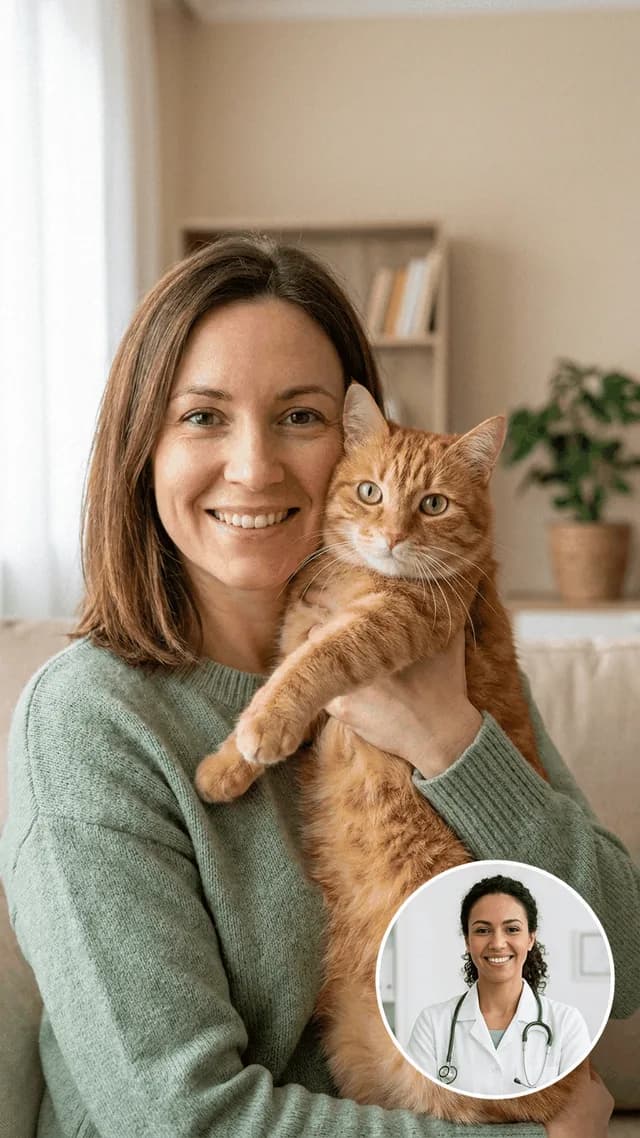
Webvet may earn a commission if you book.
Causes and associated diseases
Veterinarians may investigate high blood pressure, kidney disease, hyperthyroidism, heart disease, cancer or disorders affecting clotting. Some cats have no identifiable underlying cause. The goal is to find treatable problems that change the care plan, while recognizing that an associated disease is not always proven to have caused the stroke.
A Royal Veterinary College case series of nine cats described suspected ischemic cerebrovascular accidents evaluated with MRI. Eight cats had concurrent systemic disease. This small study supports a thorough medical assessment; it cannot establish a universal cause, breed risk or survival prediction for every cat.
Bring the medical history
Provide medicine names and doses already prescribed, recent appetite or weight changes, previous blood-pressure results and any known heart or kidney problem. Mention possible toxin exposure or trauma. The clinic decides which details point toward clotting, bleeding or another neurological disease.
If overheating preceded the episode, say so immediately. Heatstroke is a separate systemic emergency and can cause neurological signs. A search for cat stroke should not delay urgent care for a cat that is overheated, breathing abnormally or collapsed.
How veterinarians diagnose and treat a cat stroke
The team first assesses the cat's immediate stability, including breathing, circulation, pain and neurological function. Blood and urine tests, blood-pressure measurements and other investigations may identify a cause or a look-alike. A cat in respiratory distress may need stabilization before extensive handling or imaging.

MRI and diagnosis: magnetic resonance imaging
Magnetic resonance imaging, or MRI, helps assess brain tissue and identify patterns consistent with a stroke. It also helps investigate alternative causes of the signs. The Davies Veterinary Specialists fact sheet explains why routine X-rays do not diagnose a brain stroke.
MRI usually requires anesthesia. The veterinary team weighs that requirement against the cat's stability, heart and breathing status, and the information imaging may provide. Ask what can be concluded from the examination, what remains uncertain and whether referral to a neurologist would change treatment decisions.
Treatment follows the findings
Care may include hospitalization, support for nutrition and mobility, management of seizures or other complications, and treatment of an underlying disease. A saddle thrombus has a different treatment pathway that includes urgent attention to pain and circulation. Do not use a brain-stroke article to choose a clotting medicine.
Treatment for stroke in cats is individualized. Request a written explanation of the working diagnosis, the planned tests and the purpose of each medicine. If advanced testing is unavailable, discuss the remaining uncertainty and the signs that require immediate reassessment.
Recovery, survival and prognosis
Some cats recover after a stroke, while others have lasting neurological changes or a poor outcome. The extent and location of injury, serious concurrent disease and complications all matter. There is no reliable cat stroke symptoms-to-death timeline that can predict an individual cat's future from an online description.
In the nine-cat study, eight cats survived to 48 hours after admission. That is a short-term result in a small, selected referral group with suspected ischemic stroke. It should not be presented as a general survival rate or a promise of full recovery.
Track function and comfort
Ask the veterinarian which changes would show progress: eating safely, walking, using the litter box, interacting and resting comfortably. An elderly cat's recovery timeline may also reflect heart, kidney or other disease. Record both improvement and setbacks so the plan can change when needed.
- New breathing difficulty, collapse or severe pain needs urgent help.
- Report new seizures, worsening weakness or inability to eat.
- Discuss comfort and quality of life when deficits remain severe.
Death or euthanasia can occur in serious cases, but sudden neurological signs are not automatically a terminal diagnosis. Decisions should follow an examination, assessment of suffering and a realistic discussion of the options. Avoid either false reassurance or a fixed deadline based on age alone.
Caring for your cat after discharge
Cat stroke treatment at home begins with a veterinary discharge plan. It is not an alternative to assessing a new suspected stroke. Ask for instructions on medicines, feeding, movement, toileting and rechecks, along with clear thresholds for calling the clinic or returning to emergency care.

- Provide a quiet room with secure footing and no access to high furniture.
- Keep food, water and an accessible litter box nearby as the team advises.
- Support movement only in the way the veterinary team demonstrates.
- Give prescribed medicines on schedule and report difficulties.
- Avoid forced exercise, massage or supplements intended to dissolve a clot.
Keep observations useful
Record appetite, comfortable rest, walking and litter-box use. If the veterinarian recommends breathing observations, our guide to fast breathing in cats explains why context matters. A change in effort or distress is more urgent than collecting more routine measurements.
Rehabilitation exercises should be chosen for the diagnosed problem and the cat's ability. Do not copy another patient's routine. Ask for a demonstration and what to do if your cat resists, seems painful or becomes distressed. Comfort and safety come before completing a planned number of repetitions.
Check access to the resting surface
A FurHaven NAP flat bed is an optional resting surface only if the veterinary team considers its height and stability suitable. This link is the Jumbo dog-and-cat model, with a large floor footprint. Choose a size that fits the room and the cat’s needs; bedding does not replace secure footing or prescribed positioning care.
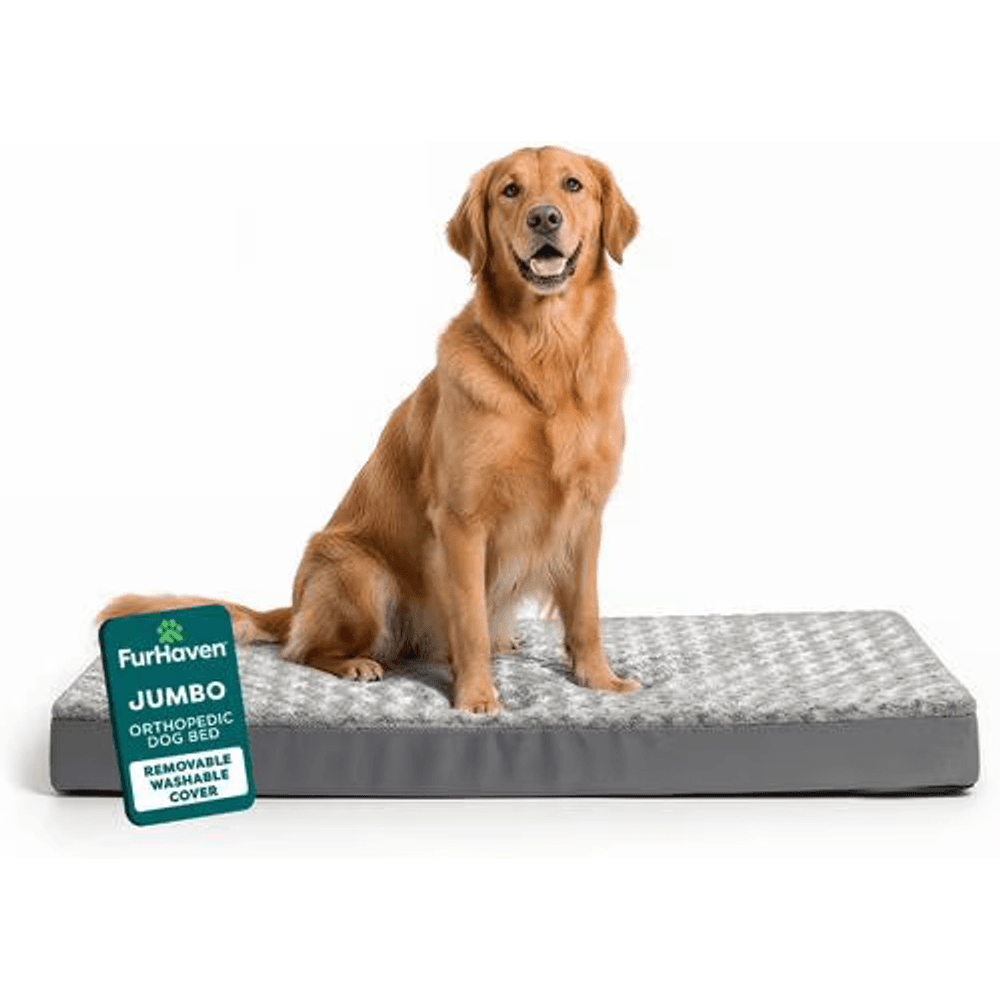
A Jumbo flat dog-and-cat bed. Use only when its height, firmness and stability suit the veterinary discharge plan.
Webvet may earn a commission when you click through to Chewy, at no extra cost to you.
Use a removable layer when helpful
A Pet Parents Pawtect blanket can provide a washable layer in the resting area if the cat can use it without slipping or becoming tangled. The linked size is Small. Follow the care label and the veterinary team’s cleaning and skin-care advice. A waterproof layer is not an absorbent toileting product or a pressure-sore treatment.

A Small washable waterproof layer for the resting area, only when it stays secure and the cat can use it safely.
Webvet may earn a commission when you click through to Chewy, at no extra cost to you.
Keep ordinary observations separate from medical monitoring
An INSTACHEW Purrsight camera may help you see ordinary activity in the recovery room between direct checks. Position it so the view is useful and cords are inaccessible. It is a household camera, not a stroke detector or a substitute for a caregiver; follow the veterinarian’s supervision and contact instructions.
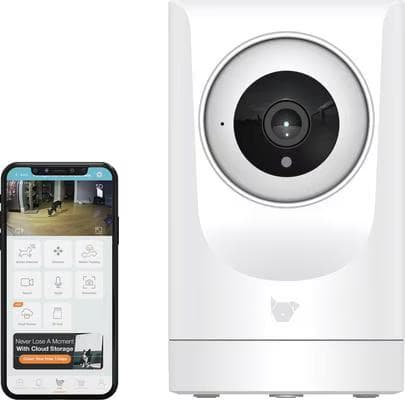
An ordinary Wi-Fi camera for viewing activity between direct checks. It does not detect a stroke or replace supervision.
Webvet may earn a commission when you click through to Chewy, at no extra cost to you.
Arrange a planned recheck
A Frisco Travel Safety carrier can support a scheduled recheck for a stable cat when its fit and access suit the cat’s mobility. The linked model is Medium. Ask the clinic to show you the appropriate way to support and transport the cat, and have the travel arrangement ready before the appointment.
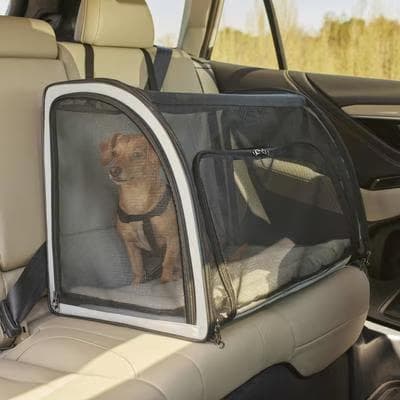
A Medium carrier for a planned follow-up when the animal’s size and mobility suit it. Follow the clinic’s transport advice.
Webvet may earn a commission when you click through to Chewy, at no extra cost to you.
Questions about stroke in cats
Frequently Asked Questions
Will a cat recover from a stroke?
A cat may recover from a stroke, but the outcome varies with the injury and other diseases. Some regain useful function; others have lasting deficits. Get veterinary advice about the individual prognosis, nursing care and follow-up. Judge stroke recovery through comfort and observed function rather than expecting every cat to meet a fixed timeline.
Can a cat have a stroke and be unable to walk?
A cat can have a stroke and be unable to walk, but other emergencies can cause that finding too. Painful back-leg paralysis may indicate an arterial clot outside the brain. Seek immediate veterinary advice and avoid forcing movement. Stroke recovery can only be discussed meaningfully after the cat's condition and likely diagnosis are assessed.
Can I treat a cat stroke at home?
You should not treat a suspected cat stroke at home without veterinary assessment. Home treatment belongs to a discharge plan after the cat is stable and the likely cause has been investigated. Get veterinary advice on medicines, feeding and safe movement. Do not give aspirin, borrowed drugs or unverified clot-dissolving supplements on your own.
Is a cat stroke the same as a saddle thrombus?
A cat stroke affects the brain, while a saddle thrombus commonly blocks blood flow to the hind limbs near the aortic branching point. Both can cause severe problems and need veterinary advice urgently. Painful back-leg weakness can suggest saddle thrombus, but an examination must assess the cause rather than relying on an owner's comparison.
$65 · no membershipHave a health question about your cat?
A licensed vet can assess your cat over video and prescribe online when it's appropriate.
Talk to a vet- Licensed vets
- All 50 states
- same-day Rx
Webvet may earn a commission if you book.

Editor
The Webvet Editorial Team is the in-house group of pet-care editors and writers behind Webvet, operated by Smart Pet Collective. The team researches, writes, and maintains Webvet's pet health, behavior, and medication content. Every article follows a defined editorial process: research from reputable veterinary and scientific sources, careful drafting, mandatory review of medical content by a credentialed veterinarian, and dated publication. Health and medication articles are medically reviewed by a licensed veterinary professional before they go live and are kept current over time.
Veterinarian · BVMS MRCVS
Dr. Pippa Elliott, BVMS, MRCVS, is a veterinarian with nearly 30 years of experience in companion animal practice. Dr. Elliott earned her Bachelor of Veterinary Medicine and Surgery from the University of Glasgow. She was also designated a Member of the Royal College of Veterinary Surgeons. Married with 2 grown-up kids, Dr. Elliott has a naughty Puggle named Poggle, 3 cats and a bearded dragon.


