All Life Stages Dog Food: What the AAFCO Label Means for Puppies, Adults, and Seniors
All life stages dog food meets AAFCO's growth and adult maintenance profiles. Learn the exact label wording, the large-breed puppy check, and how to adjust portions for seniors.

BVMS MRCVS
Medically reviewed by Dr. Pippa Elliott, BVMS MRCVS · Last reviewed

This article contains affiliate links. Webvet may earn a commission when you buy through them, at no extra cost to you.
All life stages dog food is one of the most useful and most misunderstood claims on a pet food bag. It tells you the recipe was built to the stricter of two nutrient standards, so it can feed a growing puppy and a grown dog alike.
What the claim does not tell you is just as important. Two details on the label decide how useful the claim is for a particular dog: whether it covers large-breed growth, and how the portion should change as the dog ages. AAFCO, the body that publishes the nutrient profiles behind the claim, sets the wording for the first; body condition and calorie needs settle the second.

 Sponsored
Have a health question about your dog?
Talk to a licensed vet at Dutch over video or message, including nights and weekends.
Use code Pets60
Plans start at $12/month · covers up to 5 pets
- Licensed vets in most states
- Rx for 150+ conditions
- 4.7 on Trustpilot
What Is All Life Stages Dog Food?
All life stages dog food is a complete and balanced diet formulated to meet both AAFCO dog food nutrient profiles: growth and reproduction (puppies, pregnant and nursing dogs) and adult maintenance (grown dogs). Because the growth profile sets higher minimums for protein, fat, calcium, and phosphorus, a food that meets it also meets the adult profile. Some labels shorten the claim to "all stages" or "all stages of life," and it means the same thing for any canine diet.
Get Real, Chewy's fresh dog food line, is one example. All three recipes are formulated to meet AAFCO nutrient profiles for all life stages, including growth of large size dogs (70 lb or more as an adult), and Chewy notes they are suitable for pregnant or nursing dogs. That makes the Get Real Chicken & Brussels Sprouts Recipe a single option a household can use from puppyhood onward.
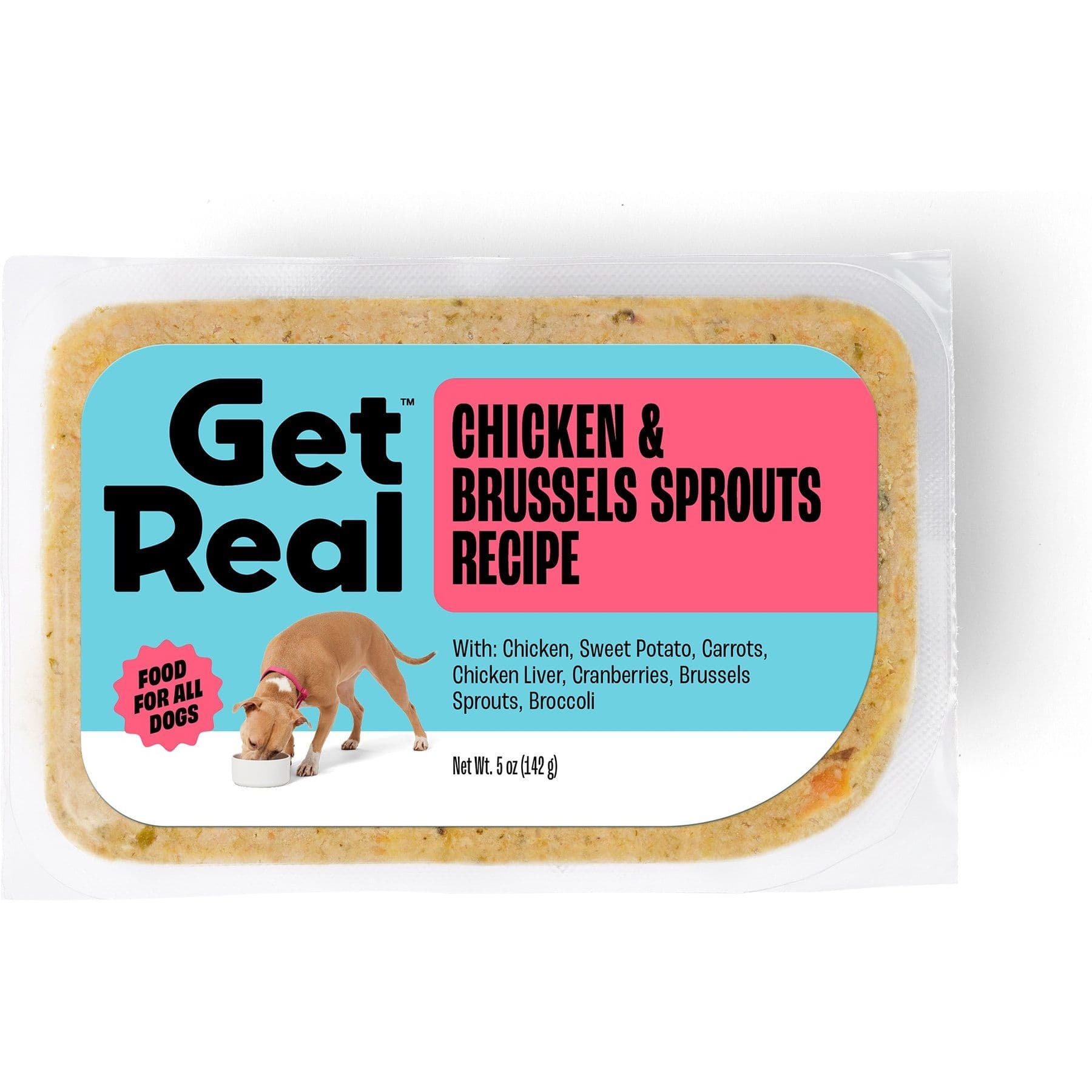
A gently cooked, then frozen recipe that meets AAFCO profiles for all life stages, including growth of large size dogs, so one food can follow your dog from puppy to adult.
Webvet may earn a commission when you click through to Chewy, at no extra cost to you.
- 1An all life stages food meets the AAFCO growth and reproduction profile, so it also satisfies adult maintenance.
- 2Run a large-breed puppy check first: the label must say it includes growth of large size dogs (70 lb or more as an adult).
- 3Pregnant and nursing dogs can eat it, because reproduction sits inside the growth profile.
- 4Seniors have no AAFCO profile, so the adjustment is the portion, not the label.
- 5A multi-dog home can share one bag, but each dog still needs its own measured portion.
What "All Life Stages" Means on an AAFCO Label
So what does it mean when dog food says all life stages? It means the manufacturer is claiming the recipe meets the AAFCO growth and reproduction profile, which automatically covers adult maintenance. The claim lives in the nutritional adequacy statement, usually a small line near the guaranteed analysis.

Is there a dog food for all life stages that skips the fine print? No. The statement is the only place the claim is formally made, so a front-of-bag "for all ages" banner means little until the back panel confirms it. Get Real states its AAFCO all life stages profile, including large-breed growth, for each recipe, which is the wording you want to see.
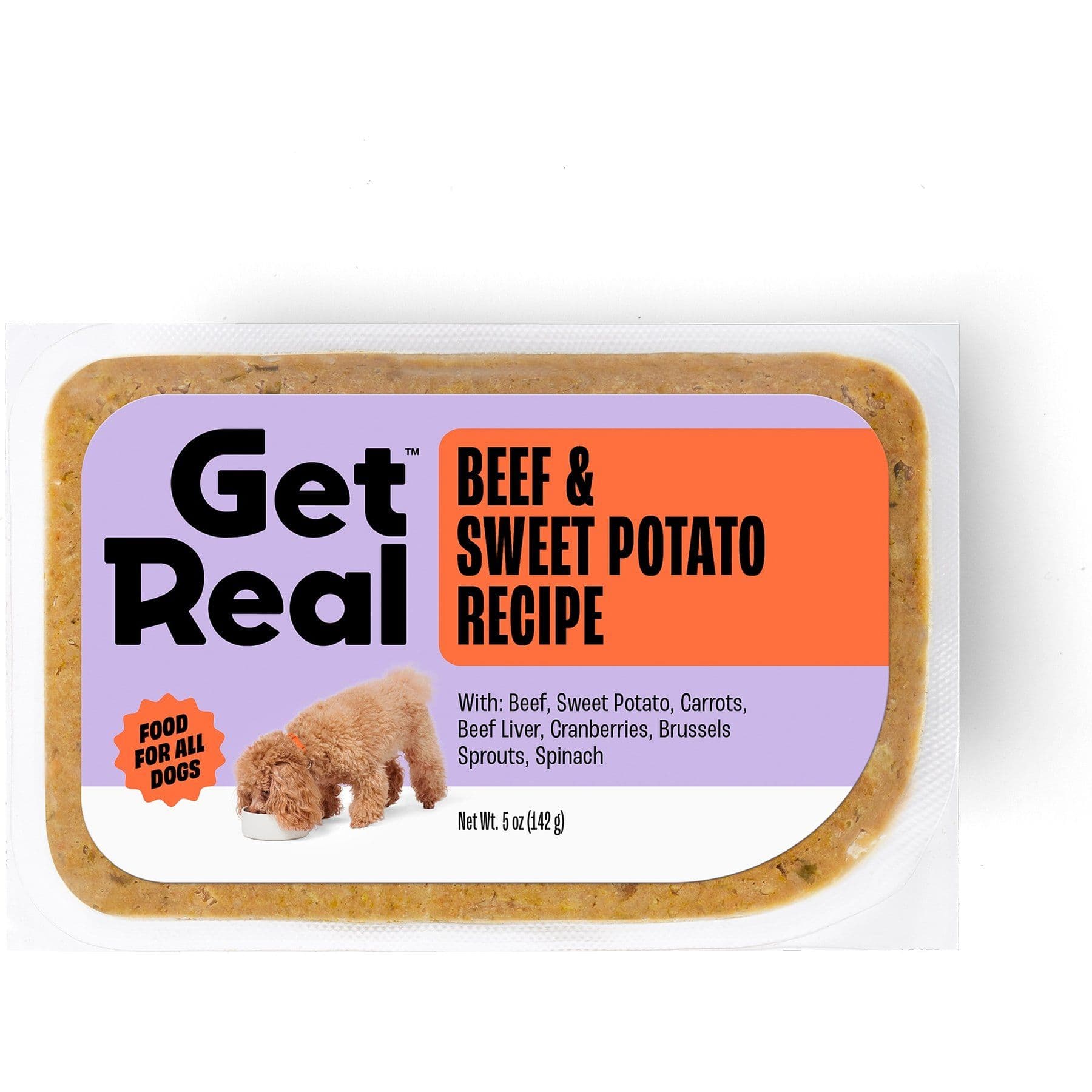
Beef & Sweet Potato carries the all life stages statement with large-breed growth, in a recipe of 10 ingredients or less plus vitamins and minerals.
Webvet may earn a commission when you click through to Chewy, at no extra cost to you.
The AAFCO guide to reading pet food labels explains that this statement can be backed one of two ways: by formulation to the nutrient profiles, or by an AAFCO feeding trial. A generic definition helps less than the exact statement wording, because the wording shows which profile the recipe meets. Look for one of these on the package:
- "(Product) is formulated to meet the nutritional levels established by the AAFCO Dog Food Nutrient Profiles for all life stages, including growth of large size dogs (70 lb. or more as an adult)."
- "(Product) is formulated to meet the nutritional levels established by the AAFCO Dog Food Nutrient Profiles for all life stages, except for growth of large size dogs (70 lb. or more as an adult)."
- "Animal feeding tests using AAFCO procedures substantiate that (Product) provides complete and balanced nutrition for all life stages."
If a bag says "for intermittent or supplemental feeding only," it is a treat or topper, not a complete diet. Our explainer on complete and balanced dog food covers that distinction in more depth, and our step-by-step guide on how to read a dog food label shows where each panel sits on the package.
Puppy, Adult, and Senior: How Nutrient Needs Change
Dog life stages are not just birthdays. A dog life stages chart from a vet clinic usually splits life into puppy, young adult, mature adult, and senior, and the WSAVA Global Nutrition Guidelines recommend a nutrition assessment at every visit across those dog ages and stages. Small breeds tend to finish growing by around 9 to 12 months, while giant breeds can keep growing until 18 to 24 months.
There is no precise canine life stage calculator, because breed size shifts every boundary. Still, the dog life cycle stages follow a predictable pattern, and the table shows how one all life stages food handles each.
| Life stage | What the dog needs | How an all life stages food handles it |
|---|---|---|
| Puppy | Puppy growth needs: more calories per pound, higher protein, controlled calcium and phosphorus | Meets the growth profile; feed more food per pound of body weight, split into 3 to 4 meals |
| Pregnant or nursing dog | Highest energy and calcium demand of any stage | Covered by the growth and reproduction profile; portions rise sharply in late pregnancy and lactation |
| Adult | Adult maintenance: enough energy for activity, no excess | Exceeds adult minimums; portion down to hold an ideal body condition |
| Senior | Senior dog needs: fewer calories for many dogs, steady protein, weight and muscle monitoring | No AAFCO senior profile exists; adjust portion and check body condition more often |
The label stays the same while the bowl changes. That is why portioning by life stage matters more than switching foods on a fixed birthday.
 Sponsored
Vet care that's always there
Unlimited video calls and messaging with licensed vets for less than a typical vet visit. One membership covers up to five pets.
Use code Pets60
Plans start at $12/month · covers up to 5 pets
- Licensed vets in most states
- Rx for 150+ conditions
- 4.7 on Trustpilot
Can Puppies Eat All Life Stages Dog Food?
Yes. Whether puppies can eat all life stages dog food is answered on the label itself: if the statement says all life stages, the recipe meets the same growth profile as a food labeled for puppies. Is all life stages dog food good for puppies? For most small and medium breeds, it is a fully appropriate all life stages puppy food.
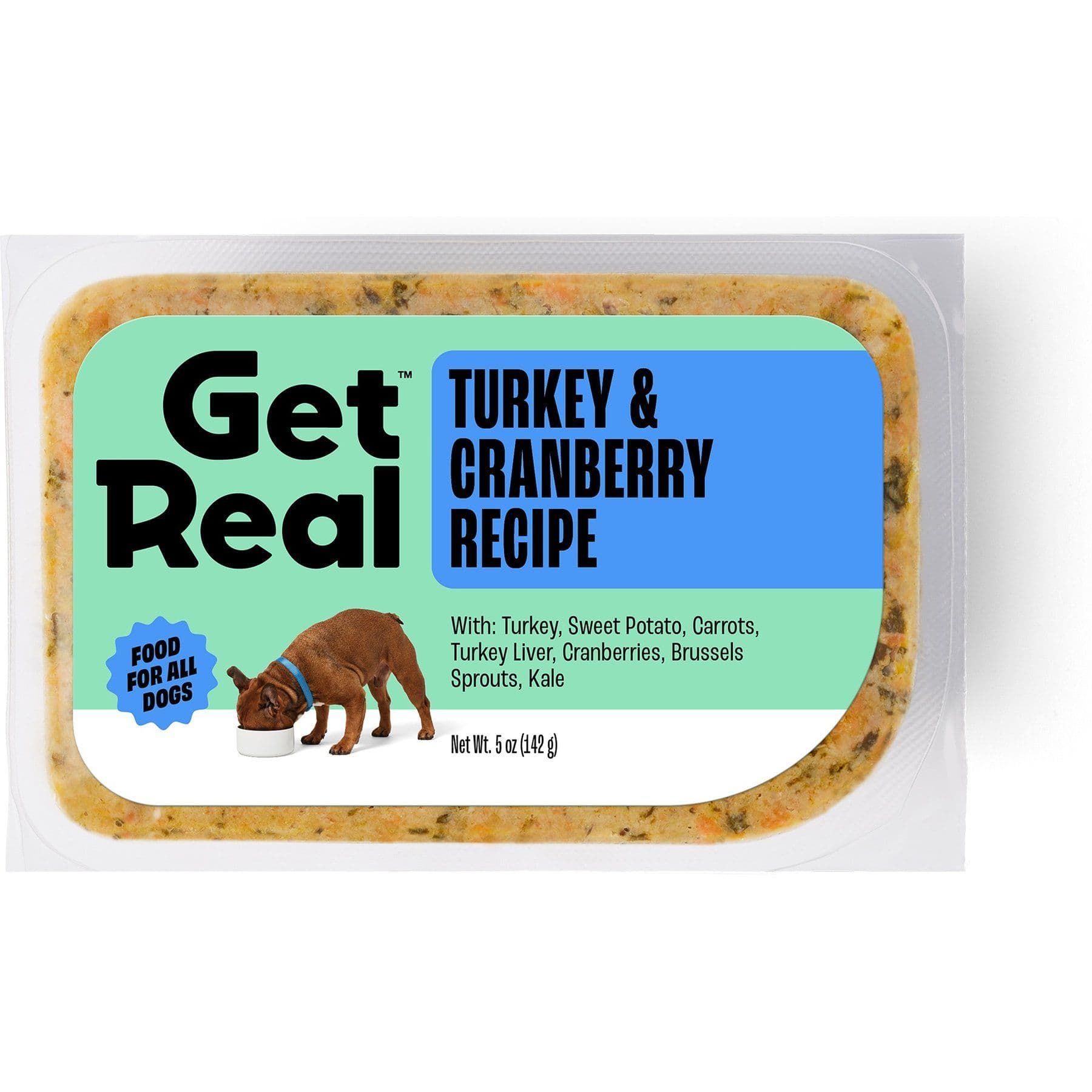
Turkey & Cranberry is formulated for all life stages including growth of large size dogs, and its listed calories per kg make it simple to scale a growing puppy's portion.
Webvet may earn a commission when you click through to Chewy, at no extra cost to you.
Across puppy ages and stages, the difference is quantity, not formula. A young puppy needs more calories per pound than an adult and does best on three to four small meals a day, dropping to two meals as growth slows. Weigh your puppy every two weeks and adjust the portion to keep ribs easy to feel but not see.
Fresh formats work well for growing dogs because portions are pre-measured. The Get Real Turkey & Cranberry Recipe provides 1,394 kcal per kg, so you can scale a puppy's portion by calories rather than guessing by scoopfuls.
Large-Breed Puppies and the Growth Statement
All life stages large breed dog food has one extra requirement. Puppies expected to weigh 70 lb or more as adults are sensitive to excess calcium and overly rapid growth, which raise the risk of developmental bone and joint disease. AAFCO addresses this with a lower calcium ceiling for the growth of large size dogs.

Small breed all life stages dog food has no equivalent restriction. Toy and small puppies can eat any all life stages recipe, though kibble size and calorie density matter more for tiny mouths and fast metabolisms. For a large-breed puppy, slow, steady growth is the goal, so measure every meal and avoid free feeding.
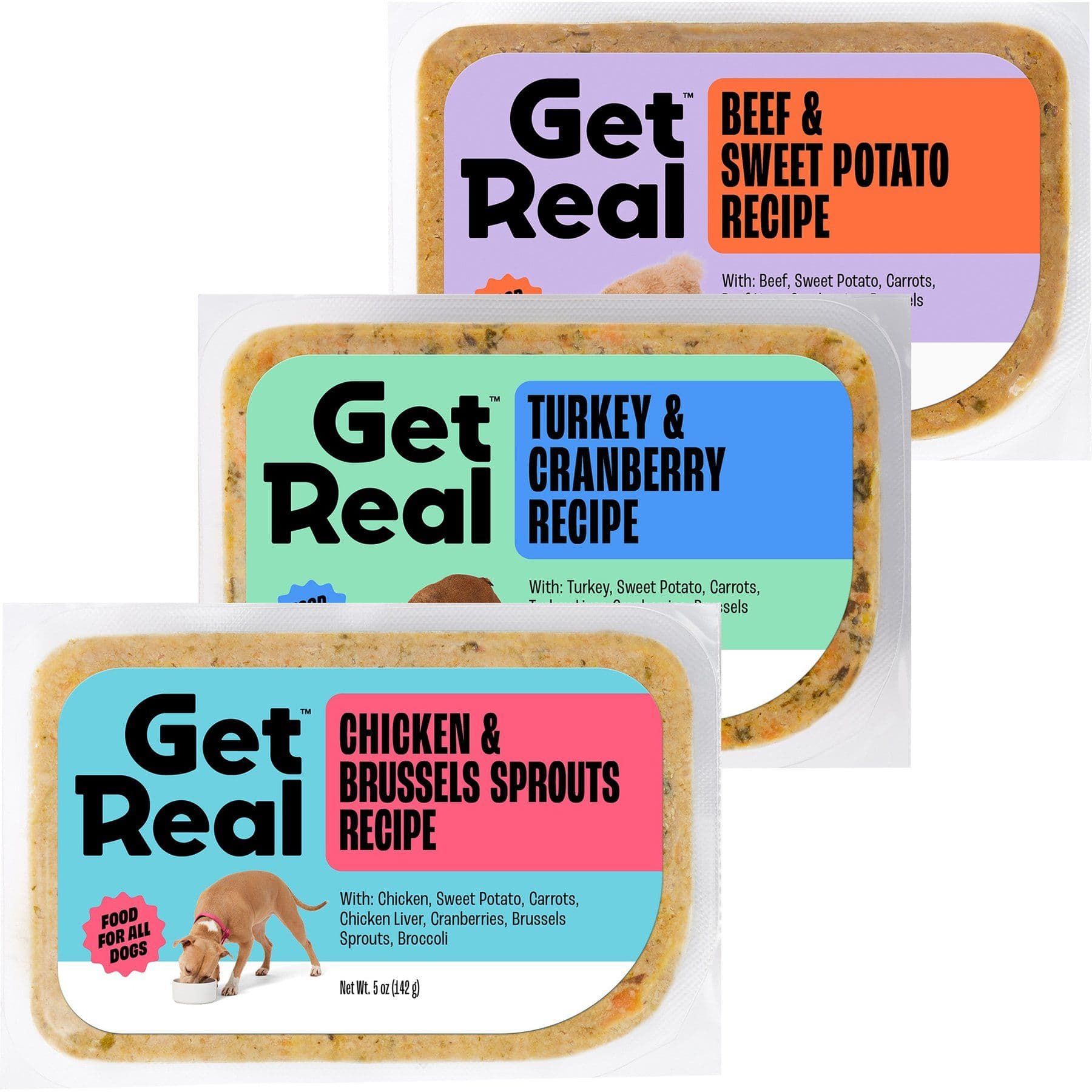
The Sampler Pack includes the beef, chicken, and turkey recipes, each formulated for all life stages including growth of large size dogs, so you can see which one your dogs prefer.
Webvet may earn a commission when you click through to Chewy, at no extra cost to you.
Get Real is labeled to include growth of large size dogs, which means it passes the large-breed puppy check. Families raising a Labrador or German Shepherd puppy alongside an adult dog can feed both from the same recipe, with separate measured portions.
All Life Stages vs. Adult and Senior Formulas
All life stages vs puppy food is mostly a labeling difference. A puppy food meets the growth profile; an all life stages food meets that same profile and is also suitable for adults. When comparing all life stages dog food vs puppy food, check the calorie density and the large-breed wording rather than the front-of-bag name.

All life stages vs senior dog food is a different question. AAFCO has no senior nutrient profile, so "senior" on a bag describes a manufacturer's own formulation choices, often fewer calories or added fiber. Many healthy seniors do well staying on an all life stages food with a smaller portion, and our guide to senior dog food covers when a dedicated senior recipe makes more sense.
One food can serve every age, but it rarely fits an older dog unchanged. Seniors do best with a concrete adjustment plan:
- Check calories first: use the calories per cup, can, or kg on the label to work out what your dog actually eats each day.
- Reduce the portion by about 10 percent if weight creeps up, then recheck weight every 2 to 4 weeks until it is stable.
- Once weight is stable, recheck weight and body condition monthly.
- Pick a senior-specific food if your dog keeps gaining weight on a reduced portion, or keeps leaving food in the bowl, or if your veterinarian recommends one.
- Keep protein steady unless your veterinarian advises otherwise; healthy seniors need protein to hold muscle.
- Ask about a therapeutic diet if your dog has kidney, heart, or liver disease, since those needs fall outside any AAFCO profile.
Dry, Wet, and Fresh All Life Stages Options
All life stages dry dog food is the most common format and the easiest to store. All life stages wet dog food adds moisture and palatability, which helps picky eaters and older dogs. Fresh, gently cooked food is the newest option and usually arrives frozen in pre-portioned packs.
You will also see all life stages salmon dog food for dogs who do better with fish protein, limited ingredient dog food all life stages recipes for dogs with suspected sensitivities, and grain-free all life stages dog food. The format does not change the requirement: every one of them still needs the all life stages statement on its label.
Get Real fits the fresh category. Each recipe is gently cooked then frozen, made with human-grade ingredients, and comes in 12 oz and 24 oz packs, plus a 5 oz pack meant as a kibble mixer rather than a full meal. Thaw packs in the fridge for 12 to 24 hours (35 to 48 hours for 24 oz) and use thawed food within 3 to 5 days. The Get Real Sampler Pack lets you try all three recipes before choosing one.
How to Choose an All Life Stages Food
Brand reviews and star ratings tell you how dogs liked a food, not whether it suits yours. The best choice is the one whose label, calorie density, and format match your household, whichever brands you are comparing:
- Confirm the nutritional adequacy statement says "all life stages," not just a front-label claim.
- For a large-breed puppy, confirm it includes growth of large size dogs.
- Compare calories per cup, can, or kg so you can portion each dog correctly.
- Choose a format your dog eats reliably, whether dry kibble, wet, or fresh.
- If you are drawn to a grain-free recipe, discuss the choice with your veterinarian first.
Is all life stages dog food good? The pros and cons come down to convenience versus precision. The pros: one food for every dog in the house, no forced switch at the first birthday, and a recipe that meets the higher standard. The cons: it can be more calorie-dense than an adult or senior dog needs, so portion control carries more weight.
Whatever food you choose, change it gradually. Mix the new food in over 7 to 10 days, or 10 to 14 days for sensitive dogs, as described in our guide to transitioning dog food. Get Real works as a full meal or a topper, and the Get Real Beef & Sweet Potato Recipe can be mixed into current food during that switch.
Questions readers ask
Frequently Asked Questions
Is all life stages dog food good?
Yes, when the label carries a valid AAFCO statement it is complete and balanced for puppies and adults. It is not a quality grade, so judge ingredients, calorie density, and how well your dog does on it separately.
Is all life stages food better than puppy food?
Neither is better by default. Both meet the same growth profile; the practical difference is calorie density and whether the label covers large-breed growth. Compare those two points before choosing.
Is grain-free all life stages dog food safe?
The FDA has investigated a possible link between some grain-free diet patterns and a heart condition called dilated cardiomyopathy, and the question is not settled. If you are considering a grain-free diet, ask your veterinarian whether it suits your dog's breed and health.
Is there wet food for all life stages?
Yes. Many wet and fresh formats carry the all life stages claim. Check the nutritional adequacy statement on the can or pack, since some wet foods are labeled only as toppers or for supplemental feeding.
Should multi-dog homes feed one all life stages food?
It is often the simplest approach for a multi-dog home, because one bag covers a puppy and an adult. Feed separate portions in separate bowls so each dog gets the right calories for its age and size, rather than defaulting everyone to puppy food.
Veterinarian · BVMS MRCVS
Dr. Pippa Elliott, BVMS, MRCVS, is a veterinarian with nearly 30 years of experience in companion animal practice. Dr. Elliott earned her Bachelor of Veterinary Medicine and Surgery from the University of Glasgow. She was also designated a Member of the Royal College of Veterinary Surgeons. Married with 2 grown-up kids, Dr. Elliott has a naughty Puggle named Poggle, 3 cats and a bearded dragon.
Related reading

Easily Digestible Dog Food: What Makes a Meal Gentle on Your Dog's Gut

Fresh Dog Food for Underweight Dogs: Safe Weight Gain, Step by Step

How to Tell if a Dog Food Is Right for Your Dog: 8 Signs Vets Check
