Why Does My Dog Sit on Me? 7 Meanings Explained
Learn why your dog may sit on your lap, chest, or feet, how body language changes the meaning, and when sudden or guarded contact needs a closer look.

This article contains affiliate links. Webvet may earn a commission when you buy through them, at no extra cost to you.
Why does my dog sit on me? Most often, your dog is seeking closeness, comfort, warmth, or attention. The position alone does not prove one motive, so look at your dog's whole body and what happened immediately before the behavior.
A loose body, soft face, and easy movement usually point toward comfortable social contact. Stiff muscles, hard staring, growling, pain, or a sudden change tell a different story and deserve closer attention.
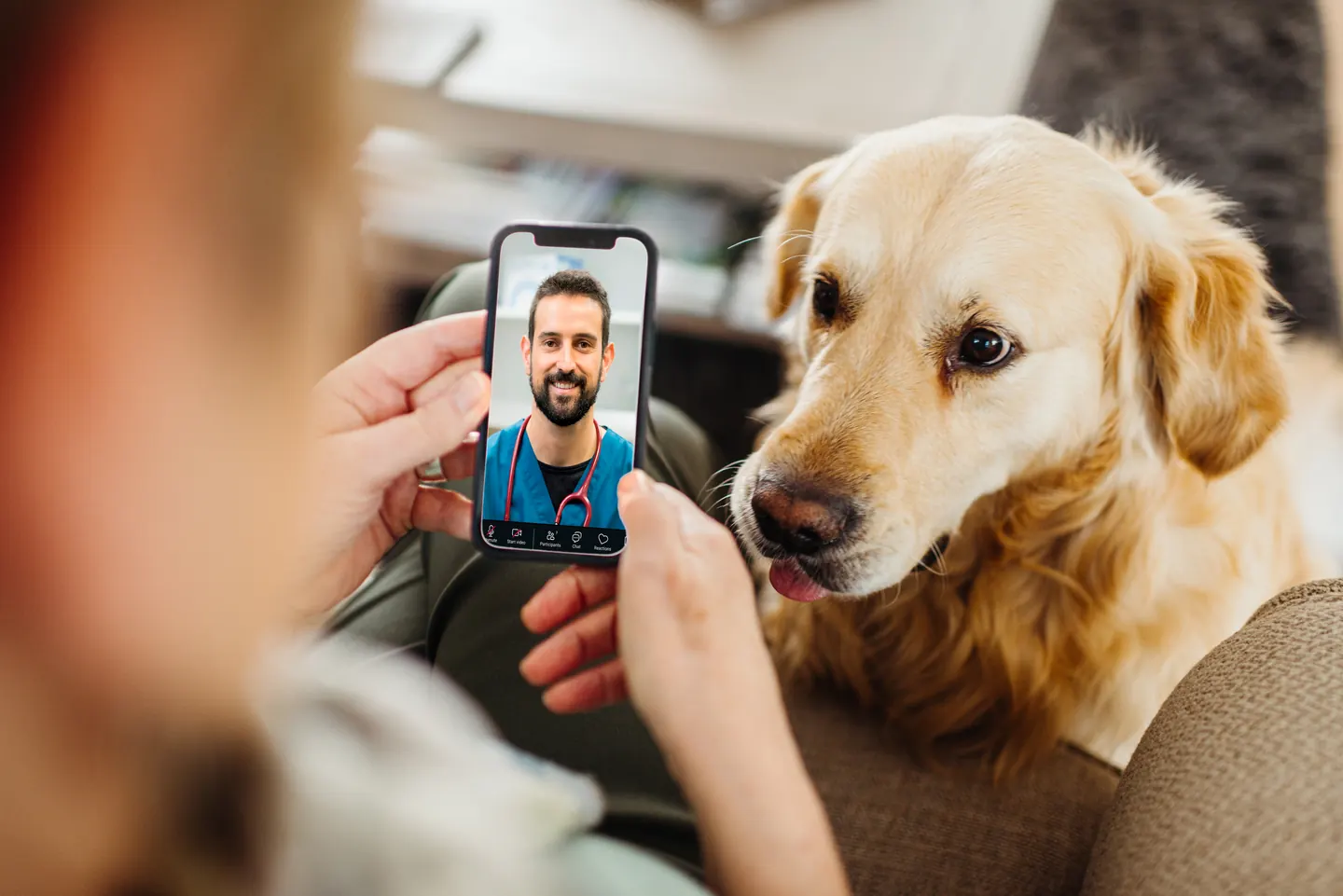
 Sponsored
Want a vet's help with your dog's anxiety or behavior?
Talk to a licensed vet at Dutch over video, often the same day. They can recommend treatment and prescribe it when it's appropriate.
Use code Pets60
Plans start at $12/month · covers up to 5 pets
- Licensed vets in most states
- Rx for 150+ conditions
- 4.7 on Trustpilot
Why does my dog sit on me?
Why does my dog sit on me, and why does my dog sit on me when I lay down? The position often reflects social closeness, comfort, warmth, or learned attention. Read posture, facial tension, ears, tail, gaze, recent events, and willingness to move. Sitting on a person does not prove dominance or anxiety.
Sitting on you is usually a normal choice for closeness, comfort, warmth, or attention. Read posture, facial tension, ears, tail, gaze, and context together before deciding what it means.

The VCA guide to canine communication explains why posture, facial expression, ears, tail, and gaze should be interpreted as a group. One signal, including where a dog sits, cannot establish a complete emotional state.
If close contact appears alongside occasional stress, ask your veterinarian whether Purina Calming Care or Greenies Calming chews belongs in a broader plan. A supplement does not explain why a dog sits on you or replace attention to body language and choice.

Probiotic supplement formulated to help dogs maintain calm behavior, with the BL999 strain. Liver-flavored powder in 30 daily sachets.
Webvet may earn a commission when you click through to Chewy, at no extra cost to you.
| Situation | Position and body-language clue | Likely meaning | Next observation or action |
|---|---|---|---|
| Dog settles loosely on your lap | Soft face, neutral ears, easy breathing | Closeness, comfort, warmth | Notice whether the dog can leave and settle elsewhere easily |
| Dog rests across your feet | Relaxed muscles, little pressure, calm gaze | Nearby resting place and social proximity | Watch where the dog faces and whether movement stays easy |
| Dog sits on your chest | Loose body, brief contact, no breathing restriction | Closeness, warmth, higher position near your face | Move the dog if the pressure affects breathing or comfort |
| Dog faces away while sitting on you | Back or side rests against you, body remains loose | Comfortable contact while watching the room | Check ears, tail, and response to ordinary movement |
| Dog wedges between you and another person or pet | Position may be loose or increasingly stiff | Attention seeking, access to space, or possible blocking | Compare relaxed versus stiff posture and watch what happens when someone approaches |
| Dog suddenly insists on sitting on you | New restlessness, sensitivity, or trouble settling | A context change or possible discomfort | Look for pain signs and contact your veterinarian if the change persists |
A position comparison adds context. A dog on your lap, chest, or feet may rest differently from one facing away or between you and another animal. Compare body language, context, likely meaning, and your next observation. Compare relaxed versus stiff posture through muscles, facial tension, easy movement, access blocking, guarding, growling, or painful pressure.
Use the table as a first read, not a diagnosis. The same place can mean something different depending on whether your dog's body is loose, tense, playful, sleepy, or painful.
1. Your dog wants social closeness
Many dogs choose direct body contact because they enjoy being near familiar people. Sitting on you creates more contact than lying beside you, and it can be a simple way to join a quiet household moment.
Voluntary contact matters. A dog who climbs up, settles softly, and later leaves without conflict is making a flexible social choice. That pattern tells you more than the sitting position by itself.
2. Your body is a comfortable resting place
A lap, hip, or pair of legs can form a supported resting surface. Some dogs fit neatly into that space, while large dogs may attempt the same position without recognizing how much pressure they create.
Comfort should work both ways. If your dog is heavy, blocks your movement, or makes breathing difficult, calmly change positions. Physical affection does not require accepting pain or unsafe pressure.
3. Your dog is seeking warmth
People produce steady body heat, so a dog may choose your lap or chest during a cool morning or after resting on a colder floor. Warmth is especially plausible when the dog curls tightly, relaxes quickly, and also seeks blankets or sunny spots.
Warmth is one clue, not a universal answer. If the room is already warm or the dog seems restless rather than sleepy, consider attention, access, recent activity, and body language too.
4. Sitting on you reliably gets attention
Dogs repeat behaviors that lead to useful outcomes. If sitting on you produces petting, eye contact, laughter, talking, or movement, the interaction may help maintain the habit.
Other comfort options include Zesty Paws calming bites and a separate FurHaven calming bed. A bed can offer another resting place, while any supplement should be cleared with your veterinarian and never used to override growling, guarding, pain, or difficulty moving away.
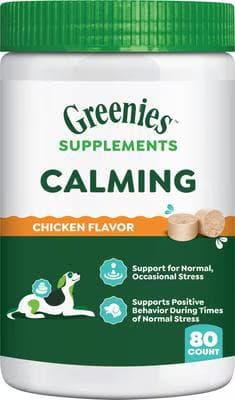
Chicken-flavored soft chew that supports normal, occasional stress and positive behavior during times of normal stress.
Webvet may earn a commission when you click through to Chewy, at no extra cost to you.
Even pushing a dog away can be socially interesting. VCA's veterinary behavior guidance notes that attention can reinforce social behavior and that dogs vary in how comfortable they are with close contact.
5. The behavior has become part of a familiar routine
A dog may sit on you after dinner, when you open a laptop, or when everyone settles on the couch. Repetition links the place, time, and expected interaction, so the behavior can become a predictable part of the day.
Routine does not mean the dog has a hidden agenda. It often means the setting has produced comfort or attention many times before.
6. Your dog wants a better view or position
Sitting on your lap, chest, or the back of a couch can raise a dog above floor level. Facing away may let the dog stay in contact while watching the room, doorway, another pet, or an interesting sound.
The orientation adds context. A soft dog leaning back against you looks different from a rigid dog planting their body between you and someone approaching.
7. Your dog may be crowding or guarding access
Sitting between people or blocking another pet is not automatic proof of guarding. First look for tension, fixed staring, freezing, lip lifting, growling, or repeated attempts to prevent someone from approaching.
When those signals appear together, the concern is the pattern of access blocking and stiff behavior, not the fact that the dog touched you. Do not test a growling dog or force a confrontation.
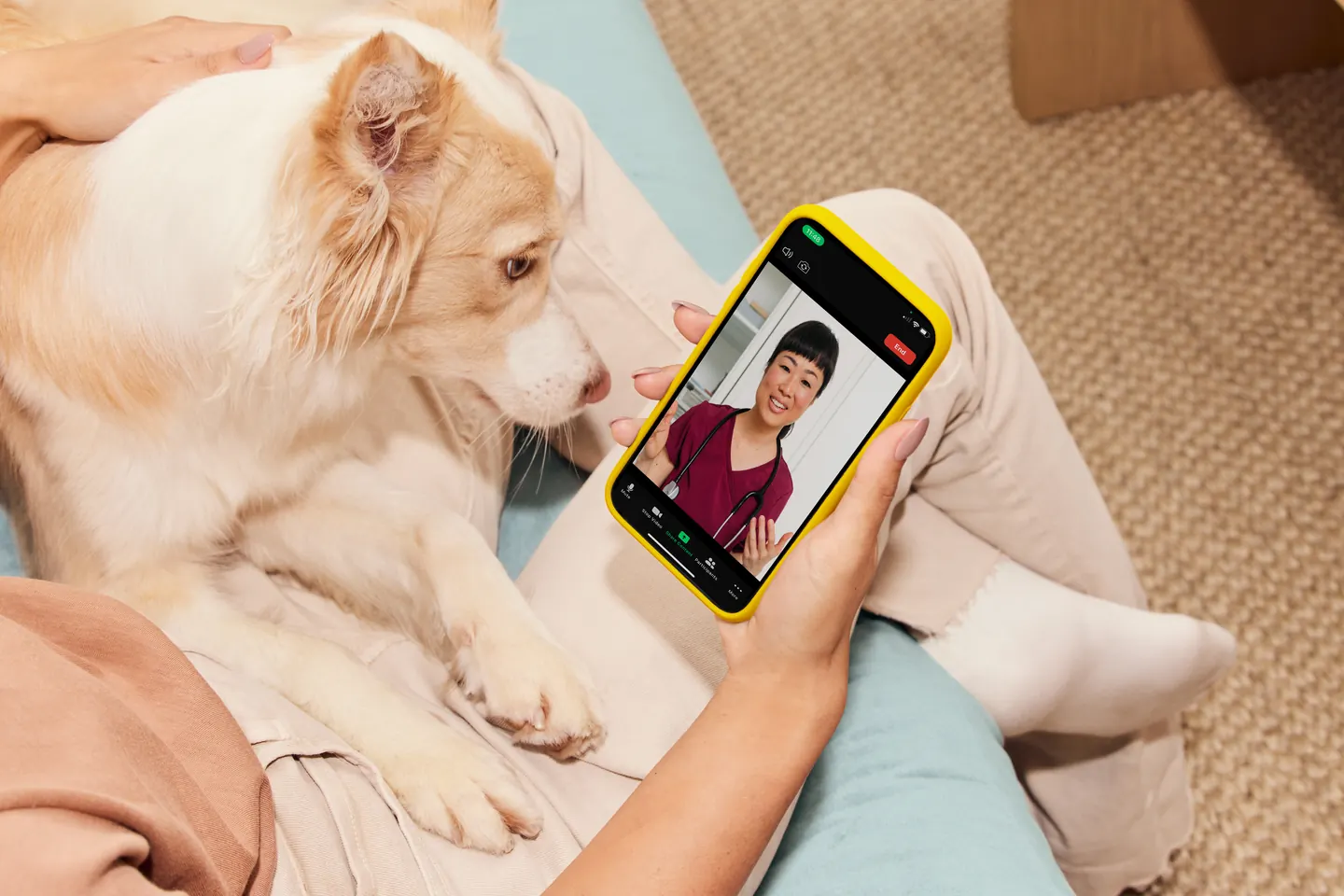 Sponsored
Vet care that's always there
Unlimited video calls and messaging with licensed vets for less than a typical vet visit. One membership covers up to five pets.
Use code Pets60
Plans start at $12/month · covers up to 5 pets
- Licensed vets in most states
- Rx for 150+ conditions
- 4.7 on Trustpilot
What the exact sitting position can add
Position can narrow the possibilities, but it still cannot prove a motive. Compare where your dog sits with muscle tension, facial expression, gaze, recent activity, and how freely the dog moves away.

Peanut-butter-flavored soft chew that supports relaxation and helps reduce hyperactivity, with L-theanine, chamomile, and ashwagandha.
Webvet may earn a commission when you click through to Chewy, at no extra cost to you.
On your lap or directly on top of you
A dog sitting in your lap often has easy access to warmth, petting, and your face. Small dogs fit naturally, but a big dog sitting on your lap may be following the same social preference despite the awkward size difference.
If your dog sits right on top of you when you lie down, check whether the dog settles, shifts comfortably, and responds normally when you move. Pressure that hurts you is enough reason to change the arrangement.
Across your feet
When an owner says, “my dog sits on my feet,” the dog may actually be leaning against the legs or resting across the shoes. This can be a nearby resting place that maintains contact while leaving the dog's head free to watch the room.
Look at the direction of the gaze and the ease of movement. Soft muscles suggest comfortable proximity. A stiff body that repeatedly blocks your path needs a different interpretation.
On your chest
Chest sitting can combine warmth, height, and closeness to your face. It does not prove that a dog is listening to a heartbeat or detecting a particular emotion.
Because the location can restrict breathing, comfort and safety come first. Move the dog if the weight feels uncomfortable. Choose side-by-side contact when the person’s size or mobility could make chest contact difficult to end safely.
Facing away from you
A dog who sits on you facing away may be comfortable enough to rest their back against you while watching the environment. This posture can still be social because the dog maintains body contact.
Check the rest of the dog. Neutral ears, soft eyes, and easy repositioning support a relaxed reading. A rigid body and fixed attention toward an approaching person or pet raise more concern.
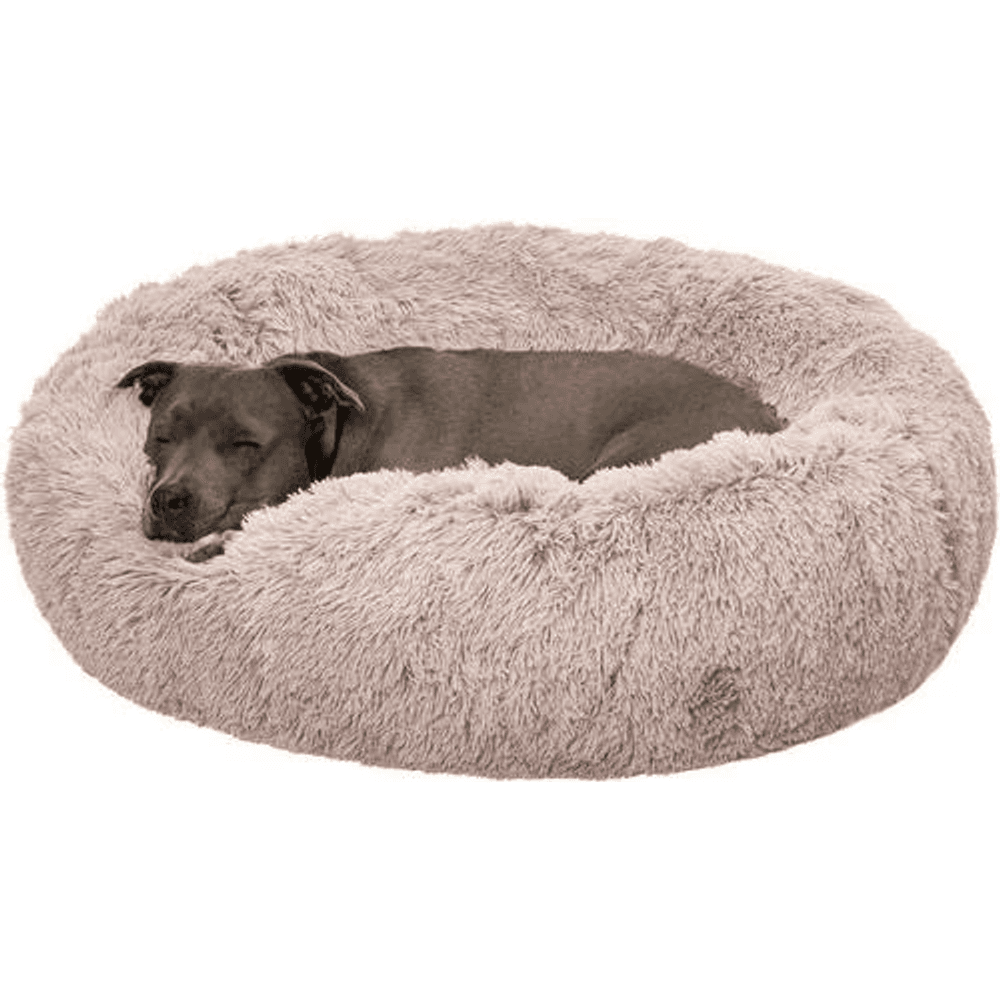
A separate bed can give a dog another comfortable resting choice. It does not explain sitting on a person or override growling, guarding, pain, or difficulty moving away.
Webvet may earn a commission when you click through to Chewy, at no extra cost to you.
Behind you or between you and someone else
Sitting behind you on a couch may provide support, height, or a tucked-away resting spot. Sitting between you and another individual could reflect attention seeking, limited space, or access blocking.
Avoid assigning one meaning before observing what follows. The key distinction is whether the dog remains loose and socially flexible or becomes stiff and controlling around access.
Affection, attention, and learned closeness
Attention can reinforce sitting on you when a person laughs, talks, pets, or moves the dog. Repeated voluntary contact may fit affection or a familiar routine, but a dog can be bonded without choosing a lap. Read the pattern across different situations instead of treating one pose as proof of attachment.
- Routine: When someone wonders why does my dog always sit on me, habit matters. The dog may have learned that this action starts an interaction every time, even when the person's response is to talk or move them.
Broader proximity has its own context. If your dog shadows you from room to room rather than only choosing your lap, read WebVet's guide to why dogs follow their people.
Comfort, warmth, and context clues
Morning sitting can follow a cool night, a familiar wake-up routine, or anticipation of the day's first interaction. Sitting on you in bed can similarly combine warmth, soft bedding, and easy access to you.
Choice is more informative than pressure
A dog who approaches, settles loosely, and later leaves without conflict is making a flexible choice. That pattern supports comfort or social closeness more strongly than contact that repeatedly blocks movement or continues after the dog becomes tense.
Watch what happens when you shift position, stand up, or stop petting. Easy repositioning suggests the dog can adapt. Freezing, hard staring, growling, or rushing back to block access changes the meaning of the interaction.
Check flexibility across the day
Also compare the available resting places. A dog may choose your lap because it is warm and familiar, yet still rest comfortably on a bed, rug, or nearby chair at other times. Flexibility is a useful part of the context.
Sudden clinginess is different from a lifelong preference for contact. Look for other changes in movement, sleep, appetite, sensitivity to touch, restlessness, or ability to settle, and contact your veterinarian when the new pattern persists.
Record whether your dog:
- Chooses other comfortable resting places
- Leaves your lap without tension or conflict
- Stays loose when people or pets approach
Flexibility across several ordinary moments is more informative than one close-contact episode. A dog can enjoy sitting on you and still cope comfortably when you move, interact with someone else, or offer another resting place.
If a dog seeks contact during a frightening event, the behavior may reflect a wish to be near a familiar person. This article does not diagnose or treat anxiety. Focus on what you can observe, and discuss intense or recurring distress with your veterinarian.
Context also includes the dog's normal preferences. Some dogs frequently choose physical contact, while others prefer to rest nearby. A sudden departure from the individual's usual pattern is more informative than a comparison with another dog.
Sitting on you is not proof of dominance
Sitting on a person does not establish social rank. The dominance myth is too broad for behavior that may reflect warmth, comfort, social contact, attention, or access to space. Keep that claim separate from the guarding boundary: stiffness, freezing, staring, growling, or snapping around access are combined signals that deserve attention.
When sitting on you needs a closer look
The photo comparison shows relaxed muscles and a soft face versus stiff access-blocking posture. Use it as an observation aid, not a diagnosis. A sudden insistence on contact, pain signs, inability to settle, hard staring, guarding, growling, or snapping deserves evaluation. This article explains meaning and observation, not training or anxiety treatment.

Most sit-on-me behavior is harmless when the dog is loose, comfortable, and easy to move around. A veterinary check becomes more important when the behavior appears suddenly or accompanies pain, restlessness, sensitivity to touch, reduced mobility, or an inability to settle.
Watch for stiff guarding or growling when another person or animal approaches. VCA safety guidance advises avoiding triggers, not testing tolerance, and not punishing aggressive behavior. Create distance and ask your veterinarian or a qualified behavior professional for guidance.
When sitting and staring is a separate behavior
A dog may sit on you and look toward your face because they expect interaction. Sustained staring, staring at nothing, or a fixed gaze has a broader set of possible contexts than sitting alone.
WebVet's guide to why a dog may sit and stare owns that separate behavior. For a wider signal-by-signal framework, learn how to read the rest of your dog's body language.
Frequently Asked Questions
How do you know if your dog is imprinted on you?
How do you know if your dog is imprinted on you? Imprinting is not a formal diagnosis for the bond between a pet dog and person. Look for repeated voluntary proximity, relaxed body language, comfortable interaction, and easy recovery after change. Sitting on you can be friendly, but does not prove exclusive attachment.
How do you tell if your dog is bonded to you?
How do you tell if your dog is bonded to you? Look for repeated voluntary social contact, relaxed posture, willingness to engage, and comfortable rest across different situations. A dog can be strongly bonded and still prefer the floor, another chair, or occasional physical contact. One sitting position cannot prove the relationship.
Why does my dog sit on my chest?
Why does my dog sit on my chest? Your chest can offer closeness, warmth, height, and access to your face. Those features can explain the choice without assuming the dog detects a heartbeat or emotion. Move the dog if their weight affects breathing or comfort, and use caution around children or vulnerable adults.
Why does my dog sit on my feet?
Why does my dog sit on my feet? Your feet provide a nearby resting place that preserves body contact while the dog watches the room. Gaze and muscle tension distinguish relaxed proximity from blocking. A loose dog who shifts easily differs from a stiff dog who prevents movement or guards access to you.
Should I let my dog sit on me?
Should I let my dog sit on me? Yes, when contact is comfortable and safe for both. You do not have to accept pressure, restricted breathing, or blocked movement. End contact calmly if the dog becomes stiff or guards access. Seek qualified help instead of testing a dog who growls or snaps.

Editor
The Webvet Editorial Team is the in-house group of pet-care editors and writers behind Webvet, operated by Smart Pet Collective. The team researches, writes, and maintains Webvet's pet health, behavior, and medication content. Every article follows a defined editorial process: research from reputable veterinary and scientific sources, careful drafting, mandatory review of medical content by a credentialed veterinarian, and dated publication. Health and medication articles are medically reviewed by a licensed veterinary professional before they go live and are kept current over time.


