Why Does My Dog Sigh? What It Means
Learn what a dog's sigh may mean by checking the trigger, posture, and next breaths, plus the pain and breathing signs that need veterinary attention.

This article contains affiliate links. Webvet may earn a commission when you buy through them, at no extra cost to you.
Why does my dog sigh? Most often, one long exhale during rest is simply part of settling down. It can fit relaxation, social attention, mild frustration, or a change in activity, so the rest of your dog's body and breathing matter more than the sound alone.
Dog sighing is not a diagnosis and does not prove one emotion. Look at what happened just before the sigh, whether your dog returns to easy breathing, and whether posture, appetite, energy, and movement remain normal.

 Sponsored
Want a vet's help with your dog's anxiety or behavior?
Talk to a licensed vet at Dutch over video, often the same day. They can recommend treatment and prescribe it when it's appropriate.
Use code Pets60
Plans start at $12/month · covers up to 5 pets
- Licensed vets in most states
- Rx for 150+ conditions
- 4.7 on Trustpilot
What does a dog sigh mean?

Dogs do sigh like humans in one visible way: a deeper breath ends in a long exhale. Do dogs sigh when they are bored or happy? Either context may fit, but the sound cannot confirm emotion. Compare settling, social interaction, frustration, discomfort, breathing difficulty, and what happens next across the whole dog.
A dog sigh usually means a deeper breath followed by a longer exhale. In four dogs, a canine respiratory physiology study measured larger tidal volume and longer inspiratory and expiratory times than control breaths. It did not test emotional meaning. Context changes the interpretation.
If a veterinarian believes occasional stress is part of the picture, Purina Calming Care and Greenies Calming chews are dog-specific options to discuss. They do not diagnose why a dog sighs and are not treatments for coughing, wheezing, or labored breathing.

Probiotic supplement formulated to help dogs maintain calm behavior, with the BL999 strain. Liver-flavored powder in 30 daily sachets.
Webvet may earn a commission when you click through to Chewy, at no extra cost to you.
| Situation | Full-body clues | Likely interpretation | Safest next step |
|---|---|---|---|
| Settling onto a bed | Loose body, soft eyes, easy breathing | Relaxation is plausible | Let your dog rest and note whether breathing stays easy |
| Being petted or sitting near you | Relaxed muscles, normal activity, calm face | Comfortable social interaction or attention | Keep reading the whole body, not the sigh alone |
| Waiting for play, food, or a door to open | Alert posture, repeated checking, otherwise normal behavior | Mild frustration or anticipation may fit | Notice the trigger without assigning a fixed emotion |
| New sighing with reluctance to move | Stiffness, reduced activity, appetite or personality change | Discomfort may be possible | Arrange veterinary advice, especially if the change persists |
| Sigh-like sound with breathing effort | Belly working to breathe, extended neck, noisy or rapid breaths | Possible respiratory distress, not routine sighing | Seek prompt veterinary care |
Compare the situation, full-body clues, likely interpretation, and safest next step for common sigh contexts. Use the table to distinguish a loose dog settling with easy breathing from frustration, discomfort, or possible breathing difficulty. The table supports observation and the next decision, not a diagnosis of emotion or disease at home.
Read the whole dog, not one sound
Dogs communicate through posture, facial expression, ear and tail position, movement, and sound. The Merck Veterinary Manual describes these signals as a combined system, which is why one sigh cannot reliably mean happiness, boredom, or annoyance by itself.
The same rule applies to other focused behaviors. WebVet's guide to how to read dog body language covers the broader system, while this article stays with sigh meaning.
A separate guide explains why dogs stare at people without treating gaze and sighing as the same signal.
Relaxation is common, but it is still an interpretation
When dogs sigh while their muscles loosen, their eyes soften, and their breathing settles into a quiet rhythm, relaxation is a reasonable interpretation. VCA's veterinary behavior guidance also emphasizes that relaxed and stressed dogs differ across the full body, not through one isolated sound.
That distinction matters when people ask what do dog sighs mean. A sigh after curling up may fit contentment, while the same sound during restless pacing may fit frustration or discomfort. Neither conclusion should come from sound alone.
Attention, anticipation, and mild frustration can look similar
A dog may sigh after looking toward a toy, food bowl, door, or person. If the body remains comfortable and normal activity resumes, the moment may reflect anticipation, a bid for attention, or mild frustration rather than a health problem.
For an otherwise healthy dog who sighs while settling, optional comfort products include Zesty Paws calming bites and a FurHaven calming bed. Confirm supplement use with your veterinarian, and assess breathing changes instead of trying to calm them away.

Chicken-flavored soft chew that supports normal, occasional stress and positive behavior during times of normal stress.
Webvet may earn a commission when you click through to Chewy, at no extra cost to you.
Avoid treating the sigh as a human sentence. When dogs sigh after waiting or being redirected, observable context is more dependable than a label such as disappointed, dramatic, or annoyed.
Why dogs sigh while resting or being petted
Why does my dog sigh when I hug her, cuddle him, or offer gentle petting? A sigh can occur during social contact, but the interaction is more reassuring when the dog stays loose, can move away, and resumes easy breathing. Tension, avoidance, pain behavior, or breathing effort changes the interpretation.
Dogs often sigh as they shift from activity into rest. Lying down changes posture and breathing mechanics, and a long exhale may occur as the body settles. A normal-looking moment includes a loose body, easy breaths after the sigh, and no sudden change in energy or comfort.
A loose body and soft eyes make a resting sigh more reassuring. New breathing effort or pain signs change the decision, even if the sound resembles your dog's usual sigh.
Sighing when lying down or going to sleep
Whether you ask, “why does my dog sigh when she lays down?” or “why does my dog sigh when he lays down?”, use the same checks. Look for soft eyes, relaxed limbs, a comfortable position, and an easy return to quiet breathing.
Sighing before sleep or while sleeping can also occur without signaling distress. The reassuring pattern is not the time of day. It is the dog's normal posture, breathing, and behavior before and after the breath.
Sighing during petting, hugging, or cuddling
People often search “why does my dog sigh when i cuddle him” or “why does my dog sigh when i pet him.” A calm sigh can fit comfortable contact when your dog stays loose and chooses to remain nearby.

Peanut-butter-flavored soft chew that supports relaxation and helps reduce hyperactivity, with L-theanine, chamomile, and ashwagandha.
Webvet may earn a commission when you click through to Chewy, at no extra cost to you.
Consent still matters. If your dog turns away, stiffens, lip-licks, shows the whites of the eyes, repeatedly gets up, or tries to leave, pause the contact. Those signals provide more useful information than the sigh itself.
A sigh aimed at you may be social, not mysterious
A dog who approaches, looks at you, sighs, and then settles may be seeking proximity or attention. Another dog may sigh after a familiar routine ends. In both cases, the sequence tells you more than whether the exhale sounds big, theatrical, or human-like.
 Sponsored
Vet care that's always there
Unlimited video calls and messaging with licensed vets for less than a typical vet visit. One membership covers up to five pets.
Use code Pets60
Plans start at $12/month · covers up to 5 pets
- Licensed vets in most states
- Rx for 150+ conditions
- 4.7 on Trustpilot
Sounds that can be mistaken for a sigh
A sigh is one deeper breath followed by a long exhale. In contrast, panting repeats, coughing is forceful, wheezing sounds higher-pitched, groaning is more vocal, and chuffing is a short puff. If the sound repeats or breathing looks difficult, record it for your veterinarian rather than guessing from the label.
Panting
Panting involves repeated open-mouth breaths, not one long exhale. Heat, activity, excitement, pain, and illness can all affect panting. Persistent panting at rest deserves attention, and WebVet has a separate guide to when nighttime panting needs veterinary attention.
Coughing and wheezing
A cough is a forceful reflex that may occur once or in repeated bouts. Wheezing is a higher-pitched breathing sound. Repeated coughs, wheezes, or increased breathing noise should not be relabeled as a personality quirk or an expressive sigh.
Groaning and chuffing
A groan is usually more vocal than an exhaled sigh and may accompany movement, settling, or discomfort. Chuffing is a short, forceful puffing sound. Sound words vary among owners, so the recording, timing, posture, and next breaths are more useful than the label.
Why does my dog sigh? A context checklist
Use this article as a meaning and observation guide, not behavior treatment or an anxiety diagnosis. Apply a count-and-context observation method: note the trigger, duration, reset, body posture, breathing, balance, and any change from the normal baseline. These details help a veterinarian interpret the pattern without turning observation into a home diagnosis.
If the sigh is new, frequent, or hard to interpret, record the trigger and duration before changing anything. The goal is not to diagnose your dog. It is to capture a useful pattern and identify any change from normal.
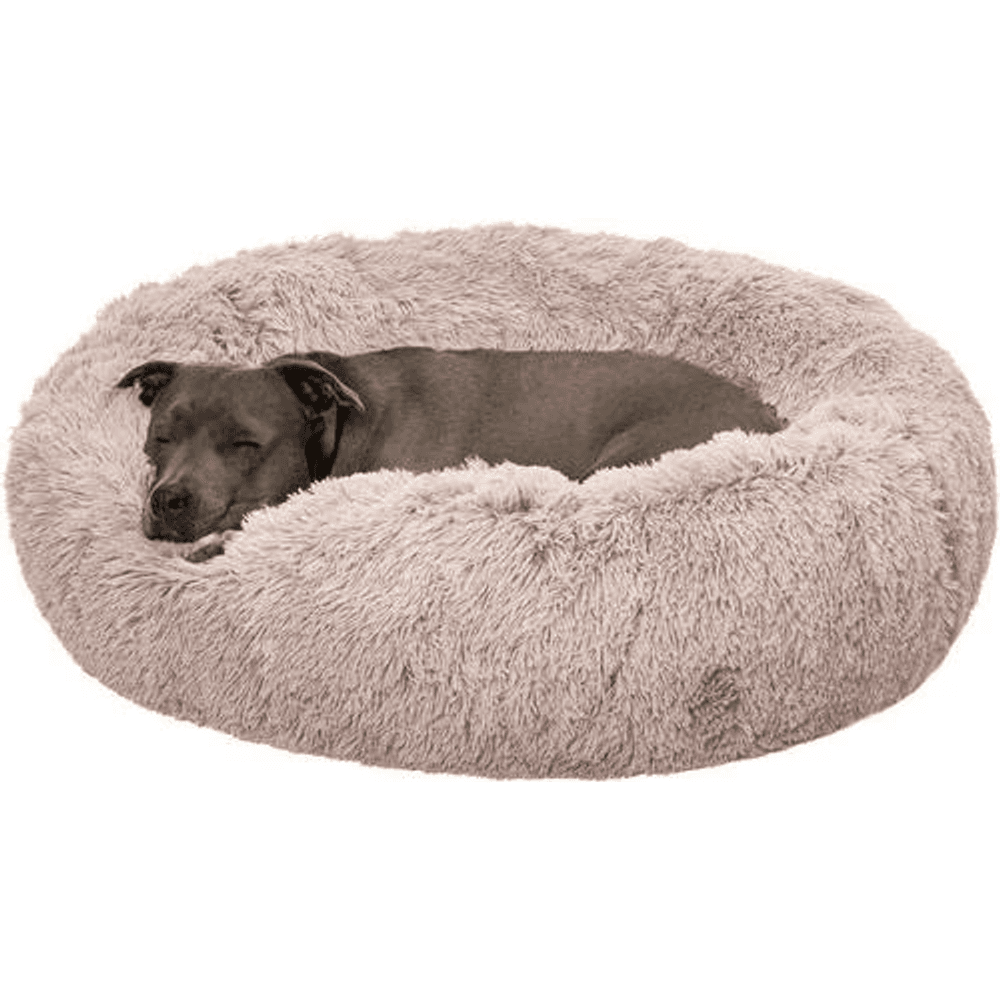
A familiar bed can support ordinary rest. It does not treat coughing, wheezing, labored breathing, pain, or any change that needs veterinary care.
Webvet may earn a commission when you click through to Chewy, at no extra cost to you.
Compare the sigh with the breaths that follow
The next several breaths are often more useful than the sigh itself. A dog who gives one long exhale and returns to quiet, effortless breathing presents a different pattern from a dog whose chest or belly continues to work hard.
Observe from a comfortable distance while your dog remains in a normal position. Do not wake, restrain, hug, or repeatedly prompt a sound just to decide what it means. The goal is to capture an ordinary episode without changing it.
What to capture on video
Notice whether the mouth stays closed at rest, whether the head and neck remain comfortable, and whether the dog can lie down without repeatedly changing position. Coughing, wheezing, gagging, or persistent panting should be recorded as separate signs.

Compare the episode with your dog's familiar baseline. A single resting sigh in a dog who eats, walks, sleeps, and interacts normally is less concerning than a new cluster of heavy breaths with reduced activity or discomfort.
A useful video for your veterinarian can show:
- The dog's full body before and after the sound
- Chest and abdominal movement during several breaths
- Posture, head and neck position, and ability to settle
- Any cough, wheeze, gag, groan, or repeated sound
Record when the episode happened and what preceded it. Include recent exercise, heat, sleep, eating, medication, pain signs, and changes in appetite or energy. That context helps a veterinarian distinguish a behavior question from a breathing or comfort problem.
If you cannot tell whether a sound is a sigh, cough, wheeze, gag, or groan, do not force a label. Record the natural episode and describe what you saw before, during, and after it when you call your veterinarian.
Note these seven details
- Trigger: What happened immediately before the sigh?
- Duration: Was it one long exhale or a repeated sound?
- Reset: Did breathing return to an easy rhythm?
- Posture: Was the body loose, tense, stiff, or restless?
- Other behavior: Were appetite, energy, movement, and sleep normal?
- Breathing: Was there panting, coughing, wheezing, noise, or belly effort?
- Baseline: Is this typical for your dog, or a clear change?
Count the episodes only if repetition is part of the concern. A short note such as “three times after climbing stairs, followed by panting” is more useful than “sighing constantly.” A video can help your veterinarian distinguish a sigh from another breathing or vocal sound.
When sighing may need a veterinarian
Repeated or newly changed sighing with other signs deserves review. Frequent, deep, loud, or heavy sighing changes the pattern, especially when a dog keeps sighing, sighs a lot, sighs all the time, or sighs and groans. Compare baseline and look for coughing, wheezing, pain, appetite change, low energy, or breathing difficulty.
New or repeated sighing needs veterinary attention when it comes with changes in breathing, comfort, activity, appetite, or awareness. The sigh is not the diagnosis. The accompanying signs and change from your dog's normal pattern are the reason to call.
Why does my dog sigh so much?
Frequent sighing may still occur around normal rest or social routines, but “more than usual” is worth documenting. Call your veterinarian if the increase persists or appears with coughing, wheezing, restlessness, reluctance to move, reduced energy, appetite change, personality change, or signs of pain.
VCA's pain-management guidance for dogs notes that pain can show through behavior change, decreased activity, appetite loss, reluctance to walk or play, increased panting, or restlessness. Those changes are more meaningful than sigh volume alone.
Breathing signs that need prompt care
Cornell describes respiratory distress as an emergency. Warning signs include rapid open-mouth breathing, visible abdominal effort, blue gums or muzzle, increased breathing sounds, weakness, and collapse. If any of these appear, keep your dog calm and contact an emergency veterinary service instead of waiting to decide whether the first sound was a sigh.
Frequently Asked Questions
Are dogs happy when they sigh?
Are dogs happy when they sigh? A sigh can fit contentment when a dog has soft eyes, loose muscles, normal movement, and easy breathing after settling. Emotion is not proven by the sigh alone. A tense, restless, or painful-looking dog gives the same sound a different meaning, so read the whole body and situation.
What does it mean when a dog sighs deep?
What does it mean when a dog sighs deep? One deep exhale followed by calm, effortless breathing can be a normal sigh. Depth alone does not reveal emotion or illness. Watch the next breaths and overall behavior. Ongoing effort, repeated heavy breaths, coughing, weakness, or a clear change from normal needs veterinary assessment.
What is chuffing in dogs?
What is chuffing in dogs? Chuffing usually describes a short, forceful puffing sound, while a sigh is a longer exhale after a deeper breath. People may use these words differently. If the sound repeats or resembles coughing, wheezing, gagging, or labored breathing, record it and ask your veterinarian to identify it.
Why do dogs let out a big sigh when they lay down?
Why do dogs let out a big sigh when they lay down? A deeper breath and exhale can accompany settling. Loose posture, soft eyes, a comfortable position, and easy breathing afterward are reassuring. The pattern needs more attention when lying down seems painful, the dog cannot settle, or breathing remains noisy or effortful.
What does it mean when dogs sigh heavily?
What does it mean when dogs sigh heavily? An isolated heavy sigh can accompany normal settling when easy breathing and ordinary behavior resume. A heavy sigh with other signs, such as coughing, abdominal effort, restlessness, pain, weakness, appetite change, or reduced energy, deserves veterinary advice. Breathing distress, blue gums, or collapse requires urgent care.

Editor
The Webvet Editorial Team is the in-house group of pet-care editors and writers behind Webvet, operated by Smart Pet Collective. The team researches, writes, and maintains Webvet's pet health, behavior, and medication content. Every article follows a defined editorial process: research from reputable veterinary and scientific sources, careful drafting, mandatory review of medical content by a credentialed veterinarian, and dated publication. Health and medication articles are medically reviewed by a licensed veterinary professional before they go live and are kept current over time.


