Why Do Dogs Tilt Their Heads? What It Means
Learn why dogs may tilt their heads during speech or sound, how to read a brief responsive tilt, and when a persistent or involuntary tilt needs veterinary care.

This article contains affiliate links. Webvet may earn a commission when you buy through them, at no extra cost to you.
Why do dogs tilt their heads? A brief tilt during speech, a new sound, or face-to-face interaction often fits focused attention. It may show that a dog is processing something relevant, but science has not proved one universal reason for every tilt.
The safest interpretation depends on the trigger, duration, and what the dog does next. A quick, responsive tilt with normal balance is different from a persistent or involuntary tilt with falling, circling, vomiting, or unusual eye movements.
 Sponsored
Want a vet's help with your dog's anxiety or behavior?
Talk to a licensed vet at Dutch over video, often the same day. They can recommend treatment and prescribe it when it's appropriate.
Use code Pets60
Plans start at $12/month · covers up to 5 pets
- Licensed vets in most states
- Rx for 150+ conditions
- 4.7 on Trustpilot
What does a dog head tilt mean?
Why do dogs tilt their heads? A brief voluntary tilt can reflect focused attention, but the trigger, duration, return to neutral, balance, eye movement, and body language determine the safer interpretation. A dog who tilts and resets normally differs from a dog with a persistent, involuntary tilt or a sudden change in balance.
A dog head tilt can mean, in plain terms, “something has my attention.” That answer is most useful when the dog responds to a voice or sound, stays comfortable, and returns the head to neutral within moments.
What does it mean when a dog tilts its head outside that familiar pattern? The behavior needs a closer look. A fixed tilt, sudden imbalance, repeated falling, or abnormal eye movement is not simply a cute communication signal and warrants veterinary care.
| What you observe | Brief, responsive pattern | More concerning pattern | Next step |
|---|---|---|---|
| Trigger | Voice, word, whistle, face, or new sound | No clear trigger, or begins suddenly at rest | Note when it started and what happened first |
| Duration | A few seconds | Persists, repeats without a trigger, or seems involuntary | Contact a veterinarian if it continues |
| Reset | Head returns to neutral | Head remains held to one side | Do not try to straighten the head |
| Balance | Standing and walking normally | Stumbling, circling, leaning, or falling | Seek prompt veterinary care |
| Eye movement | Normal gaze and tracking | Rapid, repetitive, or unusual eye movement | Treat as a medical warning sign |
| Whole body | Loose posture and normal activity | Weakness, vomiting, facial change, or collapse | Seek urgent veterinary guidance |
Read the whole dog
Dogs communicate through combinations of posture, facial expression, ear and tail position, movement, and sound. The Merck Veterinary Manual explains why one isolated gesture cannot carry the same meaning in every dog or situation.
WebVet's guide to reading dog body language covers that larger communication system. A relaxed mouth, comfortable stance, normal tail movement, and easy return to activity make a brief tilt easier to interpret as attention.
Calming products are not treatments for a head tilt. If a veterinarian has ruled out ear, balance, and neurologic problems and separately identifies occasional stress, Purina Calming Care and Greenies Calming chews are options to discuss.

Probiotic supplement formulated to help dogs maintain calm behavior, with the BL999 strain. Liver-flavored powder in 30 daily sachets.
Webvet may earn a commission when you click through to Chewy, at no extra cost to you.
A stare may occur in the same interaction, but it remains a separate behavior. See why dogs stare at people for the focused meanings and boundaries of gaze.
Brief and persistent tilts are not interchangeable
A voluntary tilt appears tied to something the dog notices. The dog can usually move the head normally before and after it. A persistent tilt stays present, may appear involuntary, and may occur with changes in balance, walking, eye movement, comfort, or awareness.
That distinction keeps a behavior question from becoming a home diagnosis. It also explains why videos that look superficially similar can call for very different next steps.
Why dogs tilt their heads when you talk

Why do dogs tilt their heads when they hear something, including speech or noises? A dog may tilt while watching you, listening to speech, recognizing a familiar word, hearing a whistle, or noticing another sound. The science behind the head-tilting study did not establish a universal cause, and it is not an intelligence test.
Why do dogs tilt their heads when you talk? Your voice may carry a familiar spoken word, tone, or expectation. The dog may orient more closely while processing the sound and watching your face, especially when the interaction has learned relevance.
What the head-tilt study found
A peer-reviewed Animal Cognition study observed 40 dogs during object-label tests. The dogs listened as their owners asked them to fetch a familiar toy by name.
For a dog with normal, brief responsive tilts, Zesty Paws calming bites and a FurHaven calming bed may fit a separate veterinarian-approved comfort plan. Neither should delay care for a fixed tilt, imbalance, abnormal eye movement, pain, or hearing changes.

Chicken-flavored soft chew that supports normal, occasional stress and positive behavior during times of normal stress.
Webvet may earn a commission when you click through to Chewy, at no extra cost to you.
The gifted word learner dogs tilted significantly more often than typical dogs in that narrow test. The authors suggested a possible relationship between tilting, increased attention, and processing meaningful verbal information.
Why dogs tilt their heads when listening
Why do dogs tilt their heads when listening? A short tilt may accompany orientation toward a relevant voice or sound. The useful evidence is the immediate response: the dog notices the trigger, briefly changes head position, and then resets without balance trouble.
Why do dogs tilt their heads at certain sounds but ignore others? Familiarity alone may not explain it. In the object-label study, typical dogs had heard the trained object names too, yet the gifted word learners tilted more often.
That result supports a meaningful-stimulus possibility in one controlled task. It does not prove that a squeak, whistle, doorbell, or high-pitched voice has the same meaning for every dog.
Why dogs tilt their heads when looking at you
Why do dogs tilt their heads when looking at you? Your face, gaze, voice, and gestures arrive together. The dog may be attending to the whole interaction rather than using the tilt as a fixed emotional message.
Owners sometimes interpret the expression as empathy, confusion, or an attempt to look adorable. Those ideas are understandable, but the available study did not test empathy or cuteness. Treat them as theories, not established explanations.
Hearing and vision theories need caution
One theory proposes that changing head position could help a dog inspect a sound. Another proposes that muzzle shape or viewing angle might affect how a dog sees a person's face. These explanations remain plausible questions, not settled answers for routine household tilts.

Peanut-butter-flavored soft chew that supports relaxation and helps reduce hyperactivity, with L-theanine, chamomile, and ashwagandha.
Webvet may earn a commission when you click through to Chewy, at no extra cost to you.
The Animal Cognition study also found that the owner's location did not determine which direction the participating dogs tilted. That makes a simple sound-location explanation insufficient for those trials.
 Sponsored
Vet care that's always there
Unlimited video calls and messaging with licensed vets for less than a typical vet visit. One membership covers up to five pets.
Use code Pets60
Plans start at $12/month · covers up to 5 pets
- Licensed vets in most states
- Rx for 150+ conditions
- 4.7 on Trustpilot
Why brief head tilts vary by dog and situation
What if a dog yawns and tilts its head, tilts when barking, or tilts while yawning? These actions can overlap with brief attention or movement. Note the trigger, duration, reset, and balance. A quick return to normal differs from a fixed or repeated tilt, especially when the dog has trouble walking.
Individual dogs vary. Some tilt left, right, or to one side after a sound. Others briefly tilt while yawning, barking, or during gentle petting, and some rarely tilt at all. None of those differences proves confusion or intelligence. Compare whether the movement is voluntary, brief, and followed by a normal reset and balance.
Why do dogs tilt their heads sideways in one moment but not another? The trigger may differ, and individual habits differ too. Some dogs tilt often during responsive interaction. Others orient their ears, shift their gaze, move closer, or remain still.
A trigger-linked tilt that ends quickly and leaves the dog acting normally is usually more reassuring. Persistence, involuntary movement, or any balance or eye change makes veterinary assessment the priority.
Why dogs tilt their heads to the side
Why do dogs tilt their heads to the side, and does the chosen side matter? In the object-label study, individual dogs showed a consistent direction across tests. The small number of gifted word learners prevented a conclusion about a universal left-side or right-side bias.
Do not assign personality, intelligence, or medical meaning to left versus right in an otherwise normal brief tilt. Direction becomes clinically relevant when the head remains fixed or the dog develops other symptoms.
Why dogs tilt their heads when confused
Why do dogs tilt their heads when confused? People often use “confused” to describe the expression, but the face alone cannot confirm the dog's internal state. A brief tilt may reflect attention to an unfamiliar sound, a known word, a changed tone, or another noticeable cue.
Look for what happens next. A dog who immediately resumes normal activity offers a different picture from one who freezes, appears disoriented, cannot walk straight, or keeps the head held to one side.
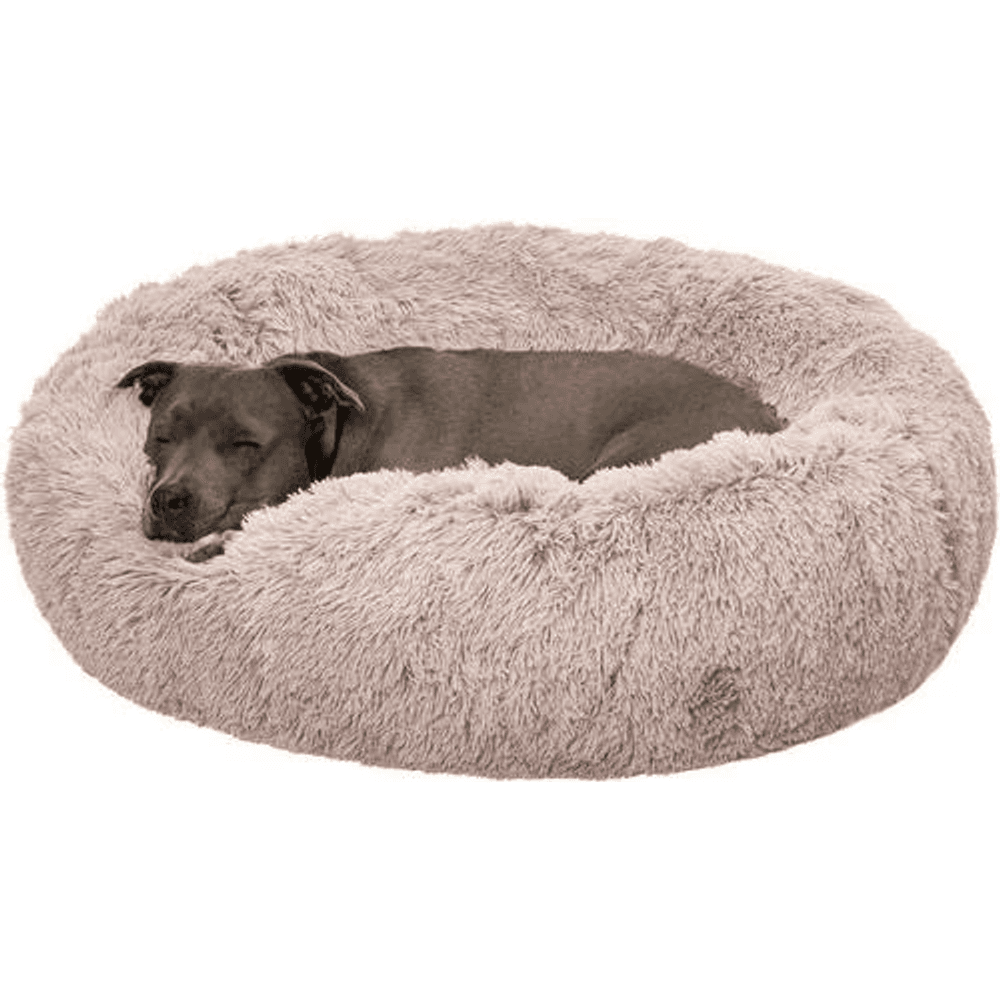
A familiar bed can support ordinary rest for a dog with brief, voluntary tilts. It does not treat a head tilt or delay care for balance, eye, ear, pain, or neurologic changes.
Webvet may earn a commission when you click through to Chewy, at no extra cost to you.
Why some dogs rarely tilt
Not all dogs use the same visible responses. A dog that does not tilt may still be listening through ear movement, gaze, posture, or approach behavior. Lack of a cute tilt does not show poor hearing, low intelligence, weak attachment, or disinterest.
Repeated back-and-forth tilting can also occur during active listening. It remains more reassuring when it is brief, trigger-linked, voluntary, and followed by a normal reset.
How to observe a head tilt without diagnosing it

Use the photo comparison of normal versus concerning head tilt patterns as an observation aid, not a diagnosis. Compare the trigger, duration, return to neutral, balance, eye movement, facial symmetry, and the dog’s normal behavior. A fixed or involuntary tilt, trouble walking, vomiting, weakness, or collapse changes the veterinary decision.
If a tilt is new or hard to interpret, record observable details. The goal is to show a veterinarian what happened, not to decide which disease may be responsible.
Compare repeatable and unprompted patterns
A repeatable tilt tied to the same word, voice, or sound is useful context because it shows a recognizable trigger. It still does not prove what the dog understands or why the head moves in that particular direction.
An unprompted tilt deserves closer observation. Note whether it appeared while the dog was resting, walking, eating, waking, or being touched, and whether the head returned to neutral without help.
Why side preference is not a diagnosis
Compare both sides without trying to make the dog perform. Individual direction can be consistent, but side preference alone does not diagnose an ear or neurologic problem. Duration, balance, eye movement, comfort, and change from baseline remain the load-bearing clues.
Repeatability helps you describe the pattern, not name its cause. A dated video of a natural episode gives your veterinarian more useful information than repeated home tests that may confuse, stress, or physically challenge the dog.
Use the trigger, duration, and reset method
- Trigger: Note the voice, sound, movement, touch, or event immediately before the tilt.
- Duration: Time how long the head stays off center.
- Reset: Record whether the dog returns the head to neutral without help.
- Posture: Look for a loose stance, stiffness, leaning, or disorientation.
- Balance: Watch walking, turning, standing, and use of stairs.
- Eyes: Note rapid, repetitive, or unusual movement without trying to label it.
- Baseline: Decide whether this differs from the dog's familiar behavior.
A short video can preserve the trigger, the head movement, the eyes, and several steps afterward. Record from a safe distance. Do not recreate a trigger that frightened the dog, manipulate the head, or delay care to collect a better clip.
Ear symptoms that need veterinary care
Ear discomfort can occur with head shaking, scratching, odor, discharge, redness, pain when the ear is touched, or a tilt. A dog head tilt with ear infection symptoms needs veterinary evaluation because the visible behavior cannot show which part of the ear is involved.
WebVet's guide to dog ear infection symptoms owns that ear-specific question. It explains signs, examination, and treatment considerations without asking this behavior article to diagnose the cause.
Do not put drops or cleaners into a painful ear unless your veterinarian directs you. A dog tilting and shaking the head may need an ear examination, especially when the behavior is new, repeated, or accompanied by balance changes.
When a head tilt needs a veterinarian
This meaning guide supports observation, not training or a home diagnosis. A persistent or involuntary tilt may involve the vestibular system, nervous system, or ear disease. Sudden onset with loss of balance, circling, falling, abnormal eye movement, vomiting, facial asymmetry, weakness, collapse, or inability to stand requires prompt veterinary care without delay.
A persistent or involuntary tilt is medically different from a quick response to your voice. Contact a veterinarian promptly when the head remains held to one side, begins suddenly, or occurs with any change in walking, balance, eyes, face, strength, or awareness.
Balance and eye changes are load-bearing warning signs
VCA's vestibular disease guidance lists sudden loss of balance, disorientation, head tilt, irregular eye movements, reluctance to stand or walk, circling, and leaning or falling among common signs.
Cornell's veterinary guidance on vestibular syndrome also describes sudden head tilt, incoordination, circling, difficulty standing, nausea, and rapid eye movement. These signs can be frightening and require veterinary assessment.
The Merck Veterinary Manual treats head tilt, abnormal eye movement, and an unsteady stance as neurologic examination findings. Their meaning depends on a professional examination, not a home checklist.
When to seek prompt or urgent care
Call your veterinarian promptly for a new persistent tilt, even if your dog can still walk. Seek urgent care for sudden tilt with falling, collapse, severe weakness, repeated vomiting, abnormal eye movement, marked disorientation, facial asymmetry, inability to stand, or suspected injury or toxin exposure.
Frequently Asked Questions
Why do dogs tilt their heads when you speak to them?
Why do dogs tilt their heads when you speak to them? A brief tilt during speech may show focused attention to a familiar word or sound. Attention does not prove full comprehension. One study found more tilting among gifted word learners during requests but did not establish a universal cause. Check reset and balance.
Are dogs that tilt their head smart?
Are dogs that tilt their head smart? Head tilting is not an intelligence test. In one narrow object-label study, dogs that learned toy names tilted more often during requests. That does not mean frequent tilters are smarter or that rare tilters understand less. Dogs can attend through gaze, ear movement, posture, or approach instead.
What does it mean when a dog tilts its head?
What does it mean when a dog tilts its head? Trigger and duration shape meaning. A brief tilt followed by a normal reset and balance can fit focused attention. It does not prove confusion, empathy, or comprehension. A persistent tilt with falling, unusual eye movement, vomiting, weakness, or facial change needs veterinary assessment.
Why do dogs tilt their heads when confused?
Why do dogs tilt their heads when confused? Confused is a human interpretation of the expression, not a confirmed canine emotion. Attention is more supportable when the tilt follows a new sound, tone, word, face, or gesture. A quick reset with normal behavior is more reassuring than disorientation, a fixed tilt, or trouble walking.

Editor
The Webvet Editorial Team is the in-house group of pet-care editors and writers behind Webvet, operated by Smart Pet Collective. The team researches, writes, and maintains Webvet's pet health, behavior, and medication content. Every article follows a defined editorial process: research from reputable veterinary and scientific sources, careful drafting, mandatory review of medical content by a credentialed veterinarian, and dated publication. Health and medication articles are medically reviewed by a licensed veterinary professional before they go live and are kept current over time.


