Puppy Crying in the Crate: Causes and How to Help
Check toileting, discomfort, and distress before responding to crate crying. Learn when to end a session, reset training, and seek help with daytime or nighttime problems.

BVMS MRCVS

This article contains affiliate links. Webvet may earn a commission when you buy through them, at no extra cost to you.
A puppy crying in the crate needs you to work out what is happening before deciding how to respond. Toileting needs, discomfort, unfamiliar confinement, and separation distress can sound similar. Check immediate needs, look at the whole puppy, and make the next session easier if crying escalates. There is no universal number of minutes that makes it safe to ignore a distressed puppy.

 Sponsored
Want a vet's help with your dog's anxiety or behavior?
Talk to a licensed vet at Dutch over video, often the same day. They can recommend treatment and prescribe it when it's appropriate.
Use code Pets30
Plans start at $11/month · covers up to 5 pets
- Licensed vets in most states
- Rx for 150+ conditions
- 4.7 on Trustpilot
Check needs before deciding why the puppy is crying
Crying is information, not a diagnosis or proof that the puppy is being difficult. A puppy who has just arrived in a new home may be learning unfamiliar sleeping arrangements while missing familiar company. Another puppy may have rested comfortably and then woken with a full bladder. The same sound can lead to different next steps, so start with the circumstances rather than a rule about never opening the door.
An eight-week-old puppy crying in the crate needs age-appropriate care and a gradual introduction, not a longer test of endurance. A six-week-old puppy is especially young; ask the veterinarian about its care needs and living arrangements. Neither age gives permission to ignore distress. Check the individual puppy and arrange the help needed to meet its needs.
Look for a change from the puppy’s usual behavior. Note whether the puppy has eaten, drunk, exercised, slept, or had a toilet opportunity, and whether the crying began when the door closed or when you left. Watch posture and movement as well as sound. A puppy who briefly grumbles and settles is different from one who repeatedly throws against the door or cannot recover when you return.
- 1Check toileting needs, discomfort, and signs of illness before treating crying as a training issue.
- 2Do not punish vocalizing, frighten the puppy, or wait through escalating panic.
- 3Reset with voluntary entry and shorter comfortable sessions after immediate needs are met.
If the puppy seems ill, injured, overheated, or in significant pain, contact a veterinarian promptly. Difficulty breathing, collapse, or serious injury requires urgent veterinary help. Do not spend time testing a new training method or shopping for equipment while an unwell puppy needs assessment. Once immediate concerns are addressed, review the ordinary setup and the training history.
Check fit without expecting a crate to fix distress
The puppy should be able to stand, turn, and rest comfortably. Inspect the door, divider, tray, and edges for damage or anything that could catch a paw or collar. A new crate cannot resolve panic by itself, and stronger bars are not a behavior treatment. The dog crate comparison separates ordinary home-use choices from chewing, panic, and transport needs.
The MidWest iCrate 36-inch double-door crate is one adjustable wire option. Its listed 41-to-70-pound category is not a fit assessment for your puppy. Follow the compatible-divider instructions and check usable space as the puppy grows. If the puppy bites the wire or tries to escape forcefully, stop the current setup and address the cause instead of assuming a larger crate will solve it.
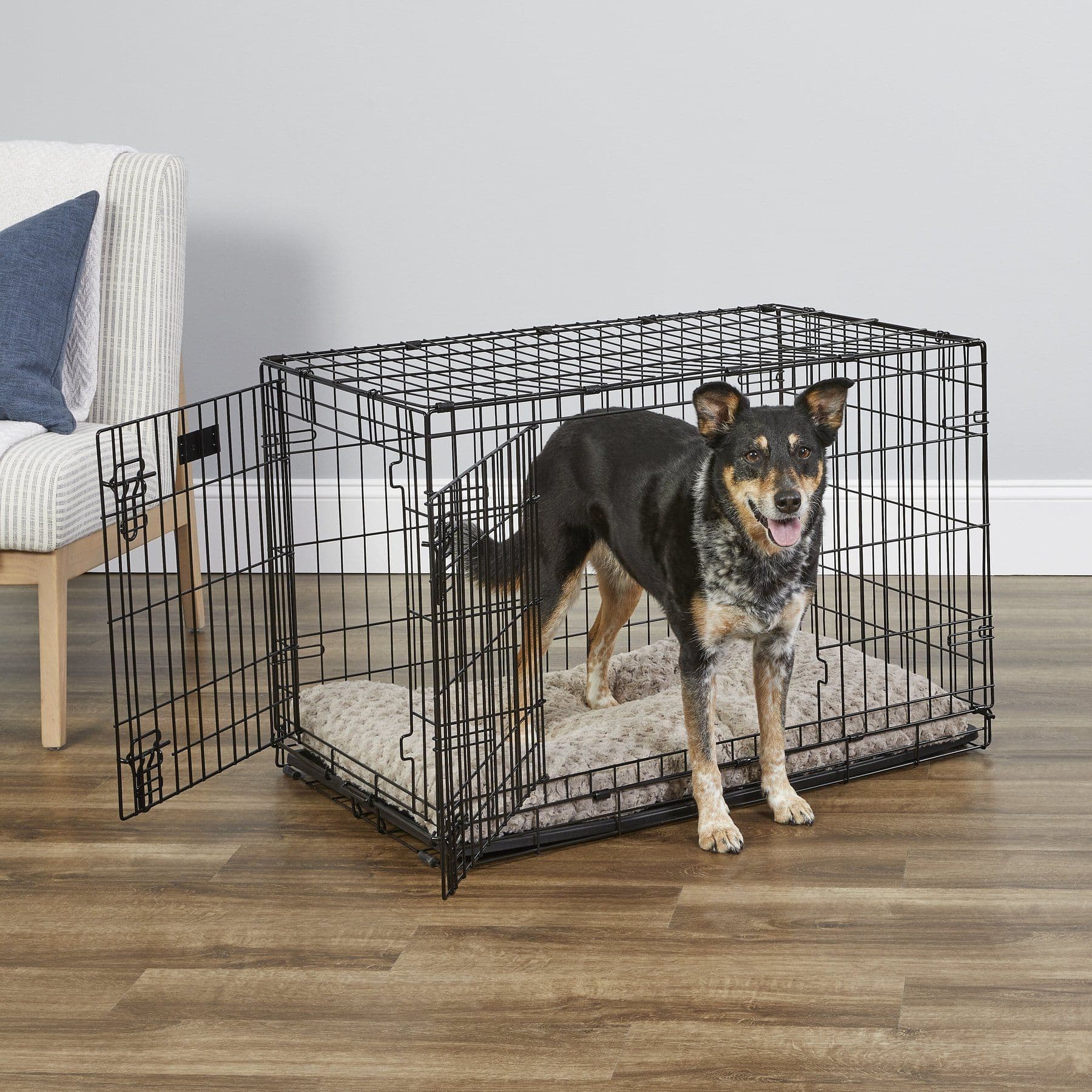
A 36-inch wire crate with a divider; choose by your puppy’s actual fit.
Webvet may earn a commission when you click through to Chewy, at no extra cost to you.
Toileting, pain, heat, and other immediate causes
A puppy who wakes from a nap, shifts around, sniffs, or vocalizes after resting may need a toilet trip. Consider the time since the last opportunity and what happened just before the crying. A young puppy may need help during the night even after a successful daytime training session. Responding to a genuine toilet need is part of care, not a failure to train independence.

Take a quiet, supervised trip to the chosen toilet area. Keep it focused, allow the puppy to eliminate, and reward appropriately before returning to the sleeping or daytime plan. If the puppy does not eliminate, that is useful information, but it does not automatically mean the crying was deliberate attention seeking. Reassess comfort and the difficulty of confinement rather than escalating punishment.
Check the environment and resting surface
Check whether the crate is in direct sun, near a heater, beside a noisy appliance, or covered in a way that restricts airflow. Look for wet bedding, a spilled bowl, an unstable tray, or fabric caught where the puppy lies. Correct an obvious problem before asking the puppy to settle again. Watch the puppy’s response afterward; a quieter environment will not necessarily resolve separation-related distress.
For a puppy who leaves bedding intact, the Frisco Swirl 30-inch crate mat is a resting-surface option to measure against the actual crate. It is not the same size as the 36-inch crate mentioned above, and the two should not be treated as an automatic set. Remove bedding if the puppy tears it or swallows pieces, and choose the resting arrangement around the individual puppy’s behavior.
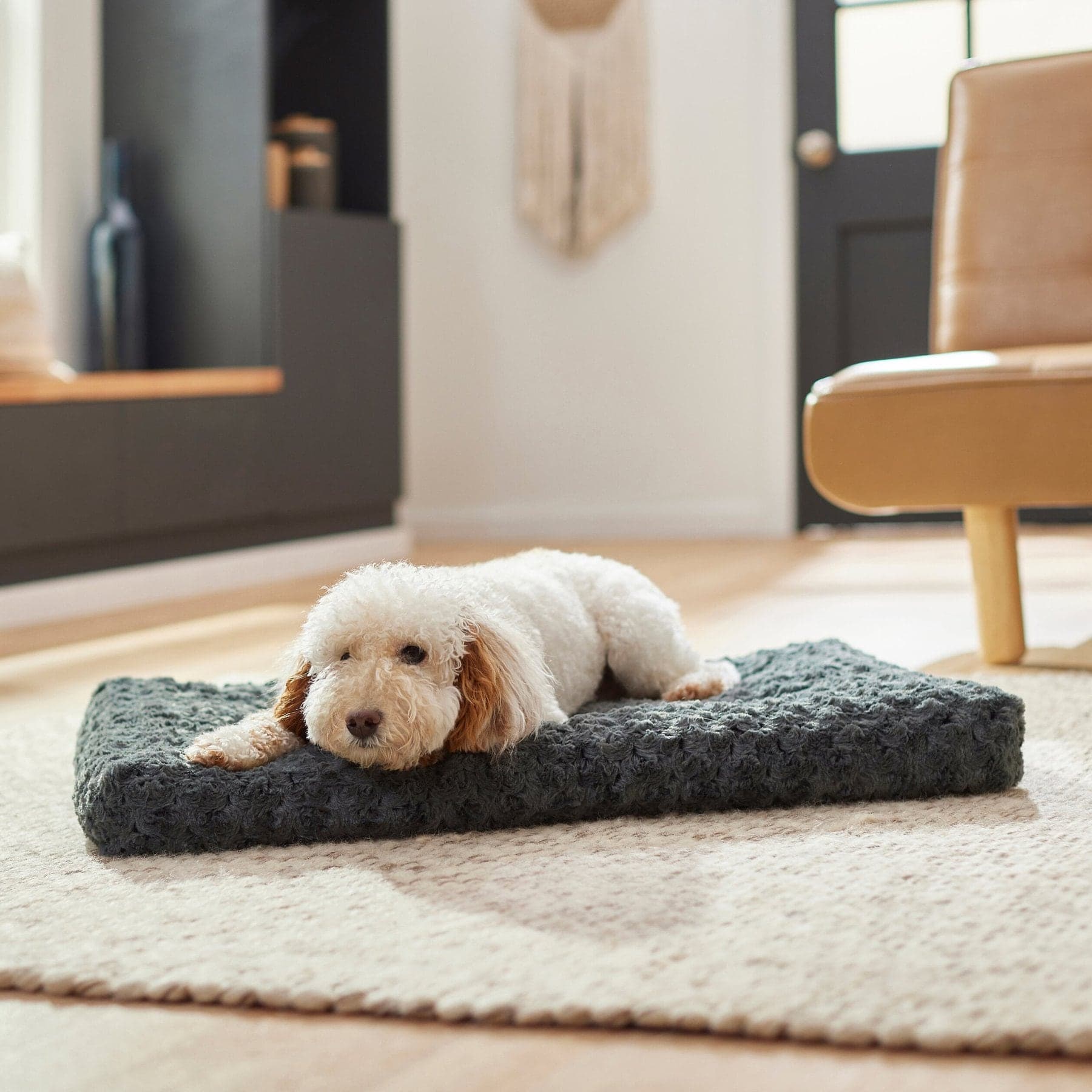
A 30-inch resting mat for puppies who leave bedding intact; measure the crate interior.
Webvet may earn a commission when you click through to Chewy, at no extra cost to you.
A sudden change deserves attention
If a puppy who usually settles begins crying suddenly, review both health and routine. Discomfort, a new environment, an interrupted toilet schedule, or an increase in confinement can all change the experience. Tell the veterinarian if there are accompanying changes in appetite, elimination, movement, or general activity. A behavior label should not replace assessment of a possible physical problem.
Keep notes that distinguish what you observed from what you suspect. “Cried after waking and urinated outside” is more useful than “was manipulative.” “Panted and scratched when I left the room” tells the clinician more than “hates the crate.” Record timing, what you did, and whether the puppy recovered so the next decision can use a clear pattern.
When a toilet break does not end the crying
A successful toilet trip does not prove that every need is now met. The puppy may still find the location, closed door, or separation difficult. Return to a calm setting and observe before starting another confinement interval. If crying resumes immediately after the door shuts, that timing is a reason to revisit door-closure training rather than taking endless outdoor trips without changing anything else.
If the puppy repeatedly strains, has accidents despite frequent opportunities, or seems uncomfortable during elimination, tell the veterinarian. Do not assume that a house-training problem explains a new pattern. Keep the description factual: when the puppy last eliminated, what you noticed, and how the behavior differs from usual. The clinic can decide whether examination or testing is needed.
 Sponsored
Vet care that's always there
Unlimited video calls and messaging with licensed vets for less than a typical vet visit. One membership covers up to five pets.
Use code Pets30
Plans start at $11/month · covers up to 5 pets
- Licensed vets in most states
- Rx for 150+ conditions
- 4.7 on Trustpilot
Fear and separation distress versus brief settling
Some puppies make a little noise during an unfamiliar transition and then relax. Others become increasingly frightened. VCA’s crate-training guidance distinguishes brief, non-escalating vocalization from distress that persists or intensifies. It advises ending a session and seeking veterinary or veterinary-behavior guidance when the dog is very distressed rather than continuing to force confinement.
Do not dismiss screaming because the puppy is a Husky or German Shepherd, or assume another breed should always be quiet. The same assessment applies: look for escalating fear, physical needs, and recovery. Breed expectations should not delay help for a puppy who is struggling, and the volume of one vocalization does not establish a diagnosis by itself.
A single yawn, bark, or change in position is not enough to diagnose anxiety. Look at the pattern: whether the puppy can pause, investigate normally, take a familiar reward, rest, and recover. Persistent salivation, frantic attempts to escape, or inability to settle make the situation more concerning. Silence alone does not prove comfort if the puppy has frozen or remains tense.
Notice what changes when you move
If the puppy stays comfortable with the door open but worries when it closes, the barrier itself may be too difficult. If the puppy settles with you nearby but becomes distressed when you disappear, separation may be an important part of the problem. These observations help you choose an easier next step; they do not establish a formal diagnosis from one episode.
Do not repeatedly provoke the response to test which explanation is right. Instead, return to a setup the puppy can manage and share the pattern with a professional if it persists. A puppy who panics in a crate might tolerate a different safe managed space better, but that alternative also needs observation and training. Being able to leave one enclosure does not guarantee comfort alone elsewhere.
Watch the early signs rather than waiting for a crisis
A puppy may first stop eating a familiar reward, remain at the doorway, pace, or repeatedly orient toward you before louder crying starts. These changes can be a cue to lower the challenge. Increase distance from a disturbance, reopen the door during an easy supervised exercise, or shorten the session. Responding early makes it easier to avoid repeated overwhelming experiences.
Normal tiredness and distress can also be confused. A puppy who is overtired may struggle with a difficult training task, but exhaustion should not be used as a way to force acceptance of confinement. Provide an appropriate quiet rest opportunity and choose a better time for learning. Exercise and play support a routine; they do not remove the need for gradual exposure and supervision.
Compare the situation, not just the volume
A puppy who sleeps comfortably beside you in daylight but cries in a distant room at night faces several new challenges at once. Reduce the distance and keep the routine familiar before expecting independent sleep. Conversely, a puppy who remains comfortable in the crate while you move around the room may be ready for a tiny increase in distance, with observation and an easy return.
A puppy who cries whenever another dog walks past may need a quieter resting location and protection from interruption. A puppy who becomes upset only when household departure cues begin may need those cues introduced in much smaller steps. These examples are ways to organize observations, not diagnoses. Their value is showing which variable to change instead of simply waiting longer.

Use rewards during comfortable practice, not to push food at a panicking puppy. Wellness Soft Puppy Bites Lamb & Salmon treats are one option to assess against age, diet, and tolerance. Offer small portions within the daily feeding plan. If the puppy will not take a normally valued reward in this situation, make the task easier and check why, rather than escalating to pressure or forced feeding.

Soft puppy treats for small rewards within the daily feeding plan.
Webvet may earn a commission when you click through to Chewy, at no extra cost to you.
What to do during a crying episode
Use the episode to choose the next safe action. First check health, environment, and toileting. Then consider whether the puppy is briefly adjusting or becoming more distressed. Stay calm, avoid startling or scolding, and do not make the next attempt longer until you understand what happened. If the current session is overwhelming, ending it safely takes priority over waiting for a perfect quiet moment.
| What you observe | What the pattern may tell you | Next action |
|---|---|---|
| Waking, shifting, sniffing, or familiar toileting cues | A toilet opportunity may be needed | Take a quiet supervised toilet break |
| Heat, wet bedding, noise, or an uncomfortable setup | An environmental problem may be contributing | Correct it and reassess the puppy |
| Brief mild noise that settles without escalation | The puppy may be adjusting to a manageable change | Remain observant and keep practice easy |
| Persistent crying, frantic escape attempts, or escalating distress | The session is too difficult or another problem needs help | End safely and seek individual advice |
| Crying after a recent increase in time or distance | Training may have advanced too quickly | Return to a shorter session at a comfortable step |
How do I get my puppy to stop crying in its crate?
To stop a puppy whining, crying, or barking in a crate or kennel, meet immediate needs and reduce the cause rather than trying to suppress the sound. A toilet break, removal of a disturbance, or return to an open-door exercise may be appropriate. Once the puppy is comfortable, reinforce voluntary entry and relaxed behavior in a shorter session. Persistent vocalizing despite an easier setup warrants a review of health and training.
A German Shepherd puppy who will not stop crying needs the same needs-first review as any other puppy. Do not substitute a breed-specific waiting rule for observing the individual. The next step should address what triggered the episode and whether the puppy can recover comfortably.
How long is it okay to let a puppy cry in a crate?
There is no safe universal waiting time for letting a puppy cry or whine in a crate. The important distinction is mild, brief behavior that settles versus sustained or escalating distress, unmet toileting needs, or illness. Do not allow a puppy to scream for hours because someone promised that crying it out would work. A fixed ten-, twenty-, or thirty-minute rule cannot account for the individual puppy’s condition and response.
If you are unsure whether the puppy is settling, stay where you can observe and choose an easier setup. A puppy who becomes more frantic as time passes is not showing readiness for a longer session. End safely, note the pattern, and ask for help if the problem repeats. Waiting for exhaustion is not the same as teaching the puppy to feel comfortable.
Do I ignore a puppy crying in a crate at night?
Do not ignore a crying or whining puppy without checking what it needs. How long it has cried in the crate at night matters less than its needs and whether distress is escalating. Nighttime crying may signal a toilet need, discomfort, or distress about being alone. Respond calmly and keep a toilet trip brief and quiet when needed. If the puppy is panicking, reset the plan and seek guidance.
Being responsive does not require turning every waking into a game. You can meet a real need with quiet handling, then return to a comfortable rest routine. This teaches a more useful distinction than treating all attention as a mistake. Consistency means using the same humane decision process, not withholding help regardless of what the puppy is showing you.
A Frisco Green training treat pouch can keep pre-portioned rewards available while you practice. Prepare the rewards first, keep the pouch out of reach, and focus on timing your response to voluntary behavior. The pouch is a convenience for the caregiver, not a treatment for separation distress or a reason to extend the session.
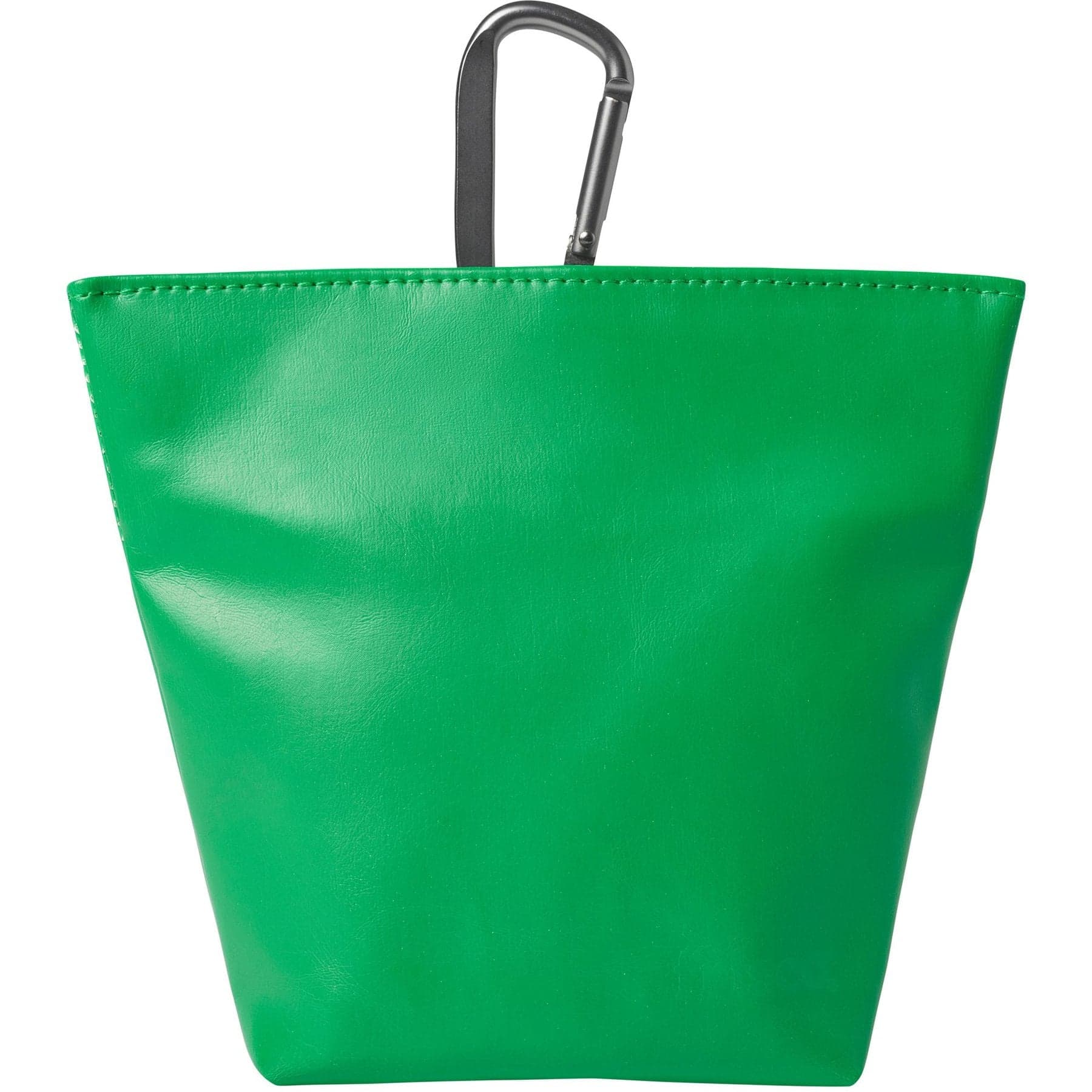
Keep rewards ready for short, comfortable crate-training sessions.
Webvet may earn a commission when you click through to Chewy, at no extra cost to you.
Reset training with shorter comfortable sessions
Respond calmly and reduce the duration when the puppy is distressed. After an upsetting episode, return to the easiest step at which the puppy can remain comfortable. That may be looking at an open crate from outside, walking in and immediately coming out, or resting inside with you nearby. Do not begin with the duration that caused the problem. Separate rebuilding confidence from a real-world absence you need the puppy to manage.
To train a puppy to rest in a crate without persistent crying or barking, reward comfortable behavior and keep the challenge below the point where distress builds. The goal is a puppy who can settle, not one who has learned that its needs will be ignored. No method can promise that a puppy will never make a sound.
If a crate-trained puppy has started whining again, or kennel training still brings distress after a month, reassess rather than assuming the earlier lesson has disappeared. Check health and routine changes, then work below the puppy’s current distress threshold. The same principle applies whether you call the enclosure a crate or a kennel: use the puppy’s response to choose a manageable step.
Change one part of the task at a time
- Start with voluntary entry while the door remains open.
- Add a small door movement only after the puppy is comfortable entering.
- Practice a brief closure with you nearby before adding distance.
- Make a very short departure and return while the puppy is still comfortable.
- Repeat successful easy sessions before increasing the challenge again.
Our gradual puppy crate-training guide explains the full sequence, fit checks, release practice, and toileting-based routine. The aim here is to identify which step became too difficult and reset it. Do not restart an entire program from a generic calendar if the puppy’s actual response tells you where the problem begins.
Use a simple observation record
Write down the setting, whether the door was open or closed, how far away you were, and what happened before the first sign of concern. Include the time since the last toilet opportunity and whether the puppy had been sleeping. After a change, record whether comfort improved. This makes it easier to notice that distance, noise, or a missed break matters more than total session length.
If several people care for the puppy, agree on the same cues and response plan. One person forcing long confinement while another rebuilds voluntary entry can create an inconsistent experience. Put the practical instructions where caregivers can find them, including when to take the puppy out and whom to contact if distress increases. A shared plan is more useful than competing theories about attention seeking.
If you need to leave before the puppy is ready
Arrange a caregiver or another suitable supervised plan rather than turning an unavoidable absence into a test. A puppy-proofed room or pen may be an option for some puppies, but it still needs a safety check and a gradual introduction. It must accommodate the puppy’s toileting, rest, and social needs. An alternative enclosure does not make a full day alone appropriate for a young puppy.
Working from home can make short practice easier, but it does not remove the need to teach brief separation. Begin with manageable movements and absences while you can observe, and avoid suddenly leaving for a long period because the puppy has been quiet while you worked nearby. Quiet with company and comfortable alone are different achievements.
Plan the next attempt before closing the door
Decide what you are practicing and how you will recognize success. For example, the goal might be a comfortable door movement while you sit beside the crate, rather than an entire nap. Arrange the toilet break and rewards first, remove obvious disturbances, and remain available to respond. If the puppy is already worried before practice starts, choose an easier activity or postpone the session.
- Identify the last step the puppy completed comfortably.
- Change only one feature of that step.
- Watch the puppy continuously during a new challenge.
- End or reduce difficulty when distress begins to build.
- Record the result so the next caregiver starts from the same information.
Neighbors, meetings, and sleep deprivation can make persistent crying stressful for people too. Arrange practical help before frustration turns into shouting, banging on the crate, or repeated forced confinement. Another caregiver can supervise while you rest or work. If the household cannot meet the puppy’s current needs, tell the veterinary team plainly so the plan accounts for the actual situation rather than an ideal schedule nobody can follow.
Nighttime setup and when to get professional help
Keep the crate close enough that you can hear the puppy and respond to changes. A nearby bedroom location may reduce the abruptness of sleeping alone in an unfamiliar home. Maintain clear ventilation and a comfortable temperature, and keep cords or hanging fabric away. The first nights are a transition, not an examination the puppy must pass by remaining silent.
How long to let a puppy cry in a crate at night depends on what is happening, not a preset allowance. Check toileting and comfort promptly, and stop escalating distress instead of waiting for a timer. Use quiet, practical responses and return to an easier rest arrangement when the current one is too difficult.

What time should you put a puppy in a crate at night?
Choose a routine that fits the household and gives the puppy appropriate activity, a toilet opportunity, and a quiet transition to sleep. There is no universal bedtime that prevents crying. Observe when the puppy is ready to rest and plan for possible overnight toilet needs. A later bedtime does not guarantee a longer safe interval without a break.
Does putting a blanket over a dog crate help?
A cover may reduce visual activity for some puppies, but it can also restrict airflow or make another puppy more worried. You do not have to put a blanket over a puppy crate. Keep ventilation clear and fabric out of reach, and watch the response during supervised practice. Remove it if the puppy becomes hotter, chews it, or seems less comfortable.
Is it cruel to crate a dog at night?
Nighttime crating is not judged by the clock alone. A suitable crate used by a puppy who is comfortable, has its needs met, and receives necessary breaks is different from forcing a distressed puppy to remain confined. If the puppy cannot cope with the current arrangement, change the plan and seek help. The goal is safe rest, not confinement regardless of welfare.
Is it cruel to crate a dog all day?
Extended confinement that prevents toileting, exercise, interaction, and other normal needs is not an appropriate care plan. VCA emphasizes that dogs need daily social contact and physical and mental activity. Organize breaks and suitable care rather than expecting a puppy to remain crated throughout a workday and again overnight. Comfortable short rest periods do not justify excessive total confinement.
Can I leave my 8 week old puppy alone for 3 hours?
Do not assume a very young puppy can manage three hours because another puppy did. Toileting needs, health, previous experience, and observed comfort all matter. Arrange help when you cannot meet those needs and build brief absences gradually. If crying starts immediately or becomes intense, the current plan needs adjustment even if the planned absence was short.
What puppy behavior is a red flag?
Red flags in puppy behavior include frantic escape attempts, injury, persistent salivation, and an inability to settle. These are reasons to pause confinement and ask for help. Sudden crying with physical illness also needs assessment. Bring your observation record and, if available, a short recording of an episode that already occurred. Do not deliberately recreate severe distress to obtain a video.
Puppy crying questions
Frequently Asked Questions
Do puppies grow out of crying in a crate?
Some puppies settle more easily as they gain positive experience and a predictable routine, but age alone does not resolve every problem. Unmet needs, fear, or separation distress can persist. Adjust the training to individual needs and seek help for repeated distress rather than waiting for a birthday to make confinement comfortable.
What is caged dog syndrome?
The phrase is often used informally for problems associated with excessive or inappropriate confinement; it is not enough to diagnose the cause of a puppy’s crying. Describe the actual behavior and daily routine to the veterinarian. The practical priorities are adequate activity and interaction, appropriate toilet opportunities, and a positive experience of short, comfortable confinement.
Are dogs happier sleeping in a crate?
Some dogs choose a familiar crate as a resting place, while others prefer a different suitable space. There is no universal happiness advantage. Judge the individual puppy’s willingness to enter, ability to settle, and overall needs. A crate should become a comfortable option through positive experience, not a place the puppy is forced to endure.
Veterinarian · BVMS MRCVS
Dr. Pippa Elliott, BVMS, MRCVS, is a veterinarian with nearly 30 years of experience in companion animal practice. Dr. Elliott earned her Bachelor of Veterinary Medicine and Surgery from the University of Glasgow. She was also designated a Member of the Royal College of Veterinary Surgeons. Married with 2 grown-up kids, Dr. Elliott has a naughty Puggle named Poggle, 3 cats and a bearded dragon.
Related reading

Puppy Socialization Checklist: Safe Experiences and a Practical Plan

How to Crate Train a Puppy: A Gradual Step-by-Step Plan

How to Stop Kitten From Biting: Play and Teething
