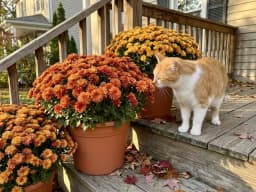
Are mums toxic to cats?
Needs a vetMums (chrysanthemums) are toxic to cats and can cause digestive upset, skin irritation, or wobbliness. Contact your veterinarian promptly after ingestion.
Contact your veterinarian or a pet poison line promptly
Describe the exposure and any signs so they can advise on care. Trouble breathing, collapse, seizures, or severe weakness needs immediate emergency care.


Medically reviewed by Dr. Athena Gaffud, DVM · Last reviewed
What to do right now
- Move your cat away from the plant and pick up any chewed flowers, leaves, or stems.
- Estimate how much is missing and note the time.
- Contact your veterinarian or a pet poison line promptly after suspected ingestion, even without symptoms.
- Watch for vomiting, diarrhea, or unsteady walking. Repeated vomiting, marked weakness, or incoordination needs urgent assessment.
What not to do
- Do not induce vomiting at home or give any home remedy.
- Do not brush off a porch mum or a bouquet as harmless because the signs are usually mild; call anyway so the vet can decide.
- Do not leave sap on the fur or skin for your cat to groom off; ask your vet how to handle skin contact.
What to tell the vet or poison line
- That the plant is a chrysanthemum (mum), and a photo of it if you can.
- How much was chewed, which parts (flowers, leaves, stems), and roughly when.
- Your cat's weight and any signs so far, including drooling, vomiting, diarrhea, or wobbliness.
- Any flea or tick products used on your cat recently, and any other plants within reach.
- 1Mums (chrysanthemums) are toxic to cats and contain pyrethrins, sesquiterpene lactones, and other irritants.
- 2Reported signs include drooling, vomiting, diarrhea, skin irritation, and incoordination. Timing and severity vary.
- 3Contact your veterinarian promptly after suspected ingestion. Repeated vomiting, marked weakness, or unsteady walking needs urgent assessment.
If you are asking are mums toxic to cats because your cat just chewed a petal, the answer is yes. Chrysanthemums can cause digestive signs, skin irritation, and incoordination. Contact your veterinarian promptly with the exposure details, even if your cat appears normal. Home monitoring should follow advice for that specific exposure.
Confirm the plant first. Garden, spider, daisy, and cushion mums are Chrysanthemum forms, while gerbera daisies and asters are different plants. Use the botanical label and photographs of the whole plant to seek identification help. A single bloom photo does not always settle the identification.

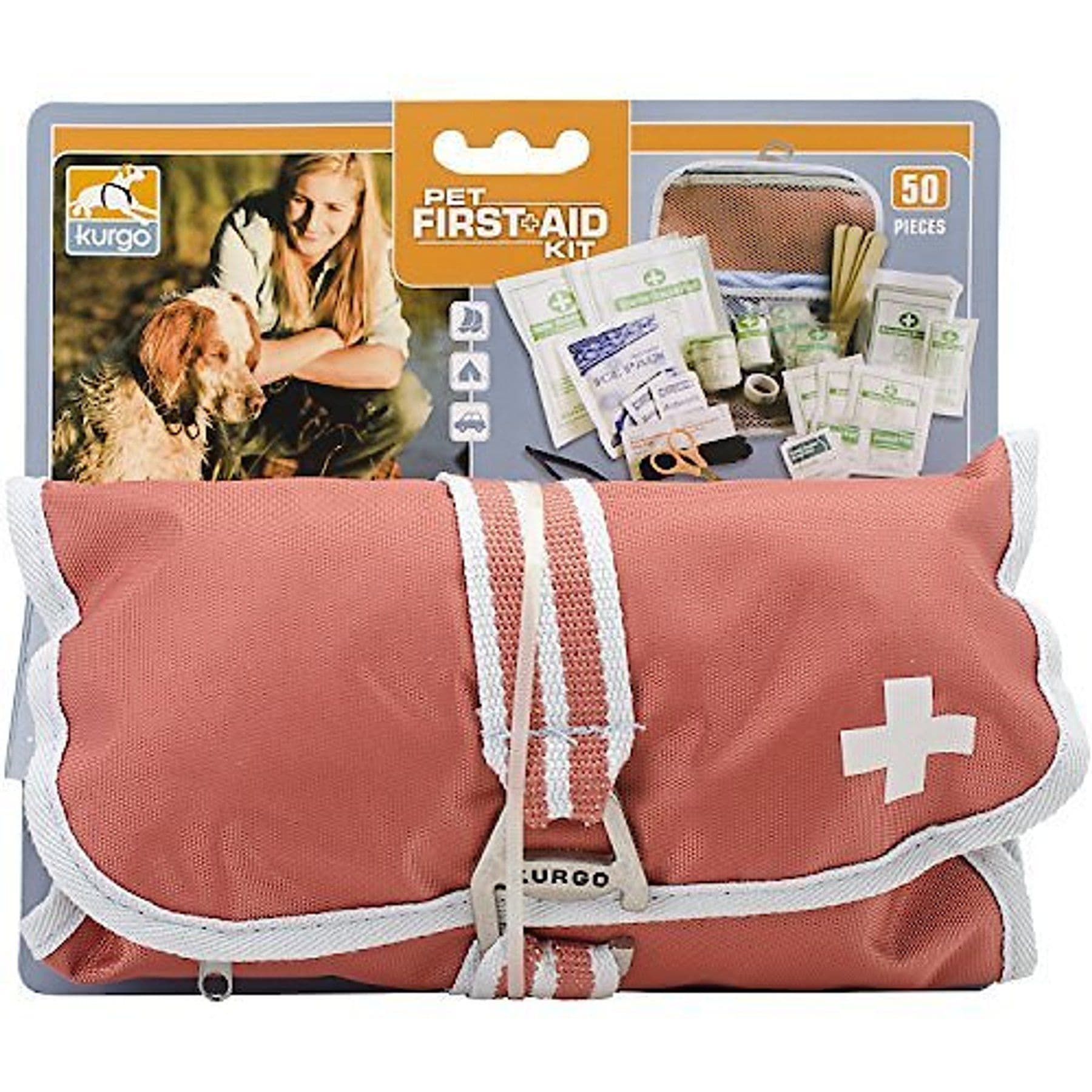
An optional kit for supplies your veterinary team recommends. It does not treat poisoning or a swallowed object; follow the clinic's instructions.
Webvet may earn a commission when you click through to Chewy, at no extra cost to you.
What to do right now if your cat ate mums
The steps above are the checklist; here is the why. A cat that vomits often goes back for another chew, so the plant comes out of reach first. A petal and half a potted mum are different phone calls, and the time you note is the onset window your vet measures against. A pet first-aid kit with gauze, saline, and a flashlight makes the mouth check quick.

Expect questions about weight, the part eaten, how much, when, and any recent flea or tick product. That last one matters: chrysanthemum pyrethrins are the insecticide family extracted for some flea products, as the Pet Poison Helpline notes. Both poison lines below answer around the clock.
What not to do
- Do not induce vomiting at home or reach for hydrogen peroxide; peroxide is not safe in cats.
- Do not reach for milk, oil, salt, or a forum remedy; none neutralize the irritants.
- Do not wait for symptoms if a lot is missing or your cat is a kitten or senior; call now.
- Do not use a dog flea product as a plant deterrent. Some contain pyrethroids such as permethrin that can seriously poison cats. These are related to, but not identical with, the plant's natural pyrethrins. A taste deterrent spray must follow its label and cannot replace keeping a toxic plant inaccessible.
- Do not assume an unchewed plant rules out contact: plant residue on the coat may be swallowed during grooming. Tell your veterinarian what contact may have occurred and ask about cleaning the fur.
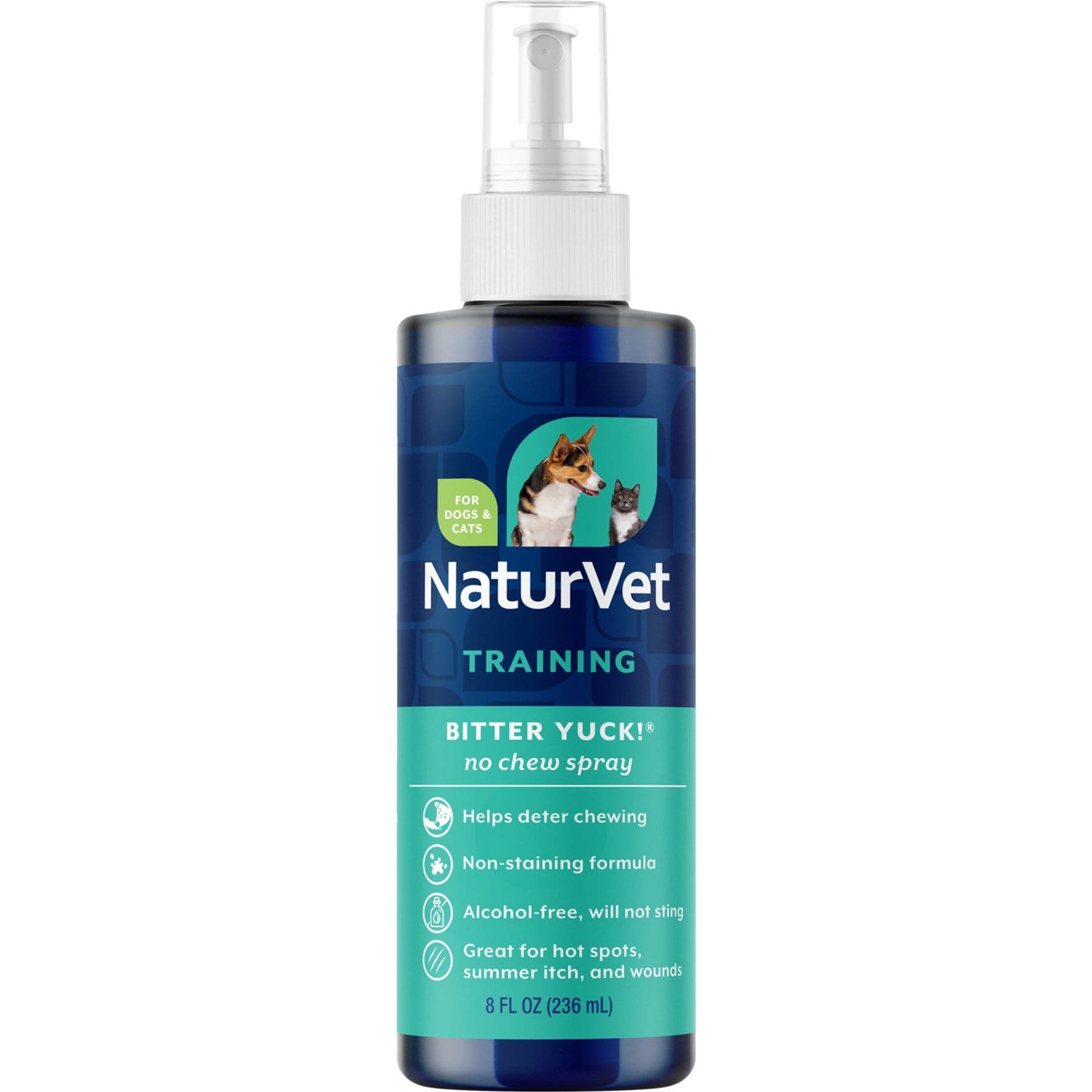
A taste deterrent is an optional preventive aid. Follow its label and keep hazardous plants inaccessible; a spray cannot guarantee chewing will stop.
Webvet may earn a commission when you click through to Chewy, at no extra cost to you.
Why mums are toxic to cats: pyrethrins and sesquiterpene lactones
Chrysanthemums carry two groups of irritants. The ASPCA Animal Poison Control lists pyrethrins, natural insecticides, plus sesquiterpene lactones as the toxic principles. The lactones cause the skin reactions florists get from handling mums and irritate a cat's mouth and gut the same way; every part of the plant carries them. That is why mild and call the vet are both true: the plant does not target the kidneys the way lilies do, but dehydration adds up fast, and UC Davis lists incoordination among the expected signs.
Symptoms and when they start
Drooling, vomiting, diarrhea, skin irritation, and incoordination are reported after chrysanthemum exposure. Timing and severity vary. Contact your veterinarian promptly after suspected ingestion; a normal appearance at first does not establish safety. Repeated vomiting or an unsteady gait needs urgent assessment. Our symptom checker can help describe signs while arranging care; it cannot diagnose poisoning.
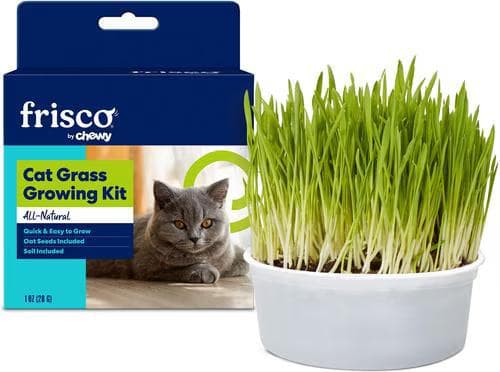
Optional equipment or enrichment for your cat. Check suitability, condition, and directions, and supervise use. This product does not treat a hazardous exposure.
Webvet may earn a commission when you click through to Chewy, at no extra cost to you.
How much is dangerous: risk factors, not doses
No number of petals is safe and none guarantees trouble: irritant content varies by variety and freshness, and cats vary. The situation sets the risk, not a figure:
- Kittens and seniors: less reserve, faster dehydration.
- Stems and leaves: tell the vet what material is missing rather than assuming a particular sap quantity or safe plant part.
- A whole bloom or several: more irritant, longer bout.
- Repeated nibbling from a porch pot: many exposures over days.
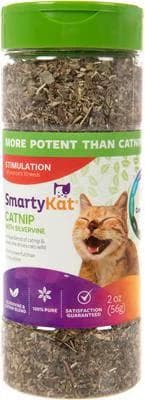
Optional equipment or enrichment for your cat. Check suitability, condition, and directions, and supervise use. This product does not treat a hazardous exposure.
Webvet may earn a commission when you click through to Chewy, at no extra cost to you.
- Sap on the coat: grooming turns contact into ingestion, worse with skin disease.
- Existing gut or kidney disease: vomiting hits harder.
The table matches what you saw to the next step; it does not replace the call.
| What you saw | Do this now | Contact | Signs to report |
|---|---|---|---|
| Licked or rubbed the plant | Prevent further contact; ask about cleaning | Contact your vet promptly | Skin redness, drooling, or behavior changes |
| Ate a petal or leaf | Move the plant; note the amount and time | Contact your vet promptly | Drooling, vomiting, diarrhea, or poor appetite |
| Chewed a stem | Save a photograph or sample | Contact your vet promptly | Mouth irritation, vomiting, or other changes |
| Ate a whole bloom or several | Note the material and amount missing | Call promptly for an individualized care plan | Vomiting, diarrhea, weakness, or wobbliness |
| Drank saucer water | Prevent further access; identify any products | Contact your vet promptly about possible product exposure | Vomiting, diarrhea, or other changes |
| Repeated vomiting, marked weakness, or wobbliness | Arrange urgent assessment | Seek urgent veterinary care | Do not wait for a monitoring period to end |
What the vet will do
Expect an examination guided by the exposure and signs. Your veterinarian may assess hydration, the mouth, abdomen, and any skin or neurological changes. Decontamination and supportive treatment are clinical decisions. Severity and duration vary; there is no guaranteed one-day recovery.
Fall porch displays: are mums safe to have around cats?
Are mums okay around cats? Keep them out of areas your cat can reach. A cat may brush the plant, groom residue, or drink from a saucer even without leaving chewed petals. Tell your veterinarian about those possible routes and any product applied to the pot or plant.

To keep both, raise the pots onto a stand or bracket the cat cannot reach, skip the saucer or empty it daily, and keep cut mums off tables a cat can jump to. For a cat that treats every pot as a snack, a taste deterrent spray on the rim beats scolding.
Chrysanthemum versus daisy lookalikes
Garden, hardy, cushion, spider, and daisy mums are common Chrysanthemum forms, but confirm the botanical label rather than relying on a sales name. Gerbera daisies and asters are different genera. Flower shape alone cannot reliably distinguish them: both single and double flower forms occur, so petal-row counts are not a safety test.
Prevention and safer alternatives
For a vase, consider confirmed non-toxic plants such as true roses or snapdragons; common named orchids offer another option. Our roses and orchids guides explain accompanying risks. Absence from a non-toxic list does not itself prove toxicity. Tulips are toxic, and true lilies or daylilies can cause life-threatening kidney injury; see the plants toxic to cats hub.
Cat grass may provide an alternative chewing outlet, and catnip or silvervine products can offer enrichment for cats that respond to them. These do not guarantee a cat will stop investigating mums. Keep toxic plants inaccessible and discuss persistent plant eating or repeated symptoms with your vet.

Frequently Asked Questions
Are mums poisonous to cats if they only lick the plant?
A lick is a smaller exposure, but the sap carries the same irritants and can cause drooling and skin redness. Contact your vet promptly and ask how to clean the fur.
My cat ate a mum petal and seems fine. Do I still call?
Yes. Signs usually take a few hours, so a normal-looking cat has not cleared the window. Let the vet decide whether home watching is enough.
Are spider mums and daisy mums toxic to cats too?
Yes. Both are Chrysanthemum varieties with the same irritants; only the bloom shape differs.
Are mums toxic to dogs as well?
The ASPCA lists chrysanthemums as toxic to dogs and horses too. This guide covers cats.
Does a flea collar or spot-on make a mum exposure worse?
Tell your vet about any flea or tick product; the plant's pyrethrins and some flea insecticides are related.
How long does mum poisoning last in cats?
Severity and duration vary. Follow your veterinarian's advice after the specific exposure. Repeated vomiting, marked weakness, or incoordination needs urgent assessment; do not wait for a full day of symptoms before calling.
More plants and cats
Sources
- ASPCA Animal Poison Control: Chrysanthemum
Lists sesquiterpene lactones, pyrethrins, and other irritants as the toxic principles of chrysanthemum and vomiting, diarrhea, hypersalivation, incoordination, and dermatitis as the clinical signs in cats.
- Pet Poison Helpline: Chrysanthemum
States that the pyrethrins used in flea and tick products can be extracted from this plant and that eating the plant material typically causes only gastrointestinal upset.
- UC Davis: Garden Plants That Are Toxic to Pets
Lists lactones and pyrethrins as the toxic compounds in chrysanthemums, with vomiting, diarrhea, increased salivation, and incoordination as the signs.
- RHS: Gerbera flower forms
Describes single and double gerbera flower forms, so a single-row petal rule cannot reliably distinguish gerberas from chrysanthemums.
- Veterinary Poisons Information Service: Feline permethrin spot-on poisonings
Reports serious feline poisoning associated with permethrin-containing dog flea products; permethrin is a synthetic pyrethroid.
Reviewed by Dr. Athena Gaffud, DVM
General guidance based on credible veterinary sources; not a diagnosis or a substitute for your veterinarian. If your pet ate something dangerous or is unwell, contact your vet or a pet poison line right away.