Mexiletine for Dogs: Arrhythmia Dosage, Side Effects, and Monitoring
Mexiletine is a prescription heart-rhythm drug vets use for ventricular arrhythmias in dogs, often in Boxers and Dobermans. This guide covers how vets dose it, side effects, rechecks, and the fainting signs that need a vet now.

BVMS MRCVS
Medically reviewed by Dr. Pippa Elliott, BVMS MRCVS · Last reviewed

Drug facts
Mexiletine· mexiletine
Mexiletine (mexiletine hydrochloride) is a class IB antiarrhythmic human drug that vets prescribe extra-label for ventricular arrhythmias in dogs, especially Boxers with ARVC and Doberman Pinschers with DCM. It is given by mouth, usually every 8 hours with food, often with sotalol or atenolol, and checked with ECG or Holter rechecks.
Treats

 Sponsored
Is Mexiletine right for your dog?
A licensed vet at Dutch can assess your dog over video and prescribe treatment when it's appropriate, delivered to your door.
Use code Pets60
Plans start at $12/month · covers up to 5 pets
- Licensed vets in most states
- Rx for 150+ conditions
- 4.7 on Trustpilot
Mexiletine for dogs: what it treats, prescription status, and whether today is a vet day
Mexiletine for dogs is a prescription human heart-rhythm drug that veterinarians use extra-label to control ventricular arrhythmias, the abnormal beats that start in the heart's lower chambers. VCA Animal Hospitals notes that its use in dogs is off label, meaning it is not FDA-approved for that purpose.
In practice, mexiletine for dogs is most often prescribed for Boxers and Doberman Pinschers. Each dose is given with food, usually every 8 hours. If a dog on mexiletine faints, collapses, or struggles to breathe, call the vet or an emergency clinic now; it is not a wait-and-see sign.
The active ingredient, mexiletine hydrochloride, is FDA-approved as human capsules, and the DailyMed label lists 150, 200, and 250 mg strengths. There is no FDA-approved veterinary mexiletine product, so every canine prescription is extra-label use of a human drug.
- 1What mexiletine does to heart rhythm: it slows electrical impulses in heart muscle and reduces extra beats from the ventricles.
- 2Which dogs vets prescribe it for: mainly Boxers with ARVC and Doberman Pinschers with dilated cardiomyopathy, often alongside sotalol or atenolol.
- 3The vet sets the dose per kilogram of body weight, usually every 8 hours, and each dose goes in with food to limit vomiting.
- 4Fainting, collapse, seizures, or breathing trouble mean calling the vet immediately.
- 5Response is checked with ECG and Holter rechecks, and liver values are tested before and during long-term use.
Whether today is a vet day depends on the signs. Mild appetite loss after starting the drug is worth a call during office hours. Fainting, collapse, or labored breathing are not: VCA tells owners to stop mexiletine and contact the veterinarian immediately for breathing difficulty, abnormal heart rhythms, seizures, or low blood cell counts.

What kind of medication is mexiletine?
In drug classification terms, mexiletine is a class IB antiarrhythmic. The DailyMed human label describes it as a Class 1B compound with electrical properties similar to lidocaine, and the MSD Veterinary Manual calls it an oral analogue of lidocaine, grouping it with lidocaine, phenytoin, and tocainide in veterinary use.
In dogs it is given by mouth as a capsule, and VCA notes it can also be compounded into a liquid. Some dogs take the capsule tucked inside a soft treat such as Greenies Pill Pockets, a cheese-flavored pocket made in a capsule size to hide the smell and taste of pills.
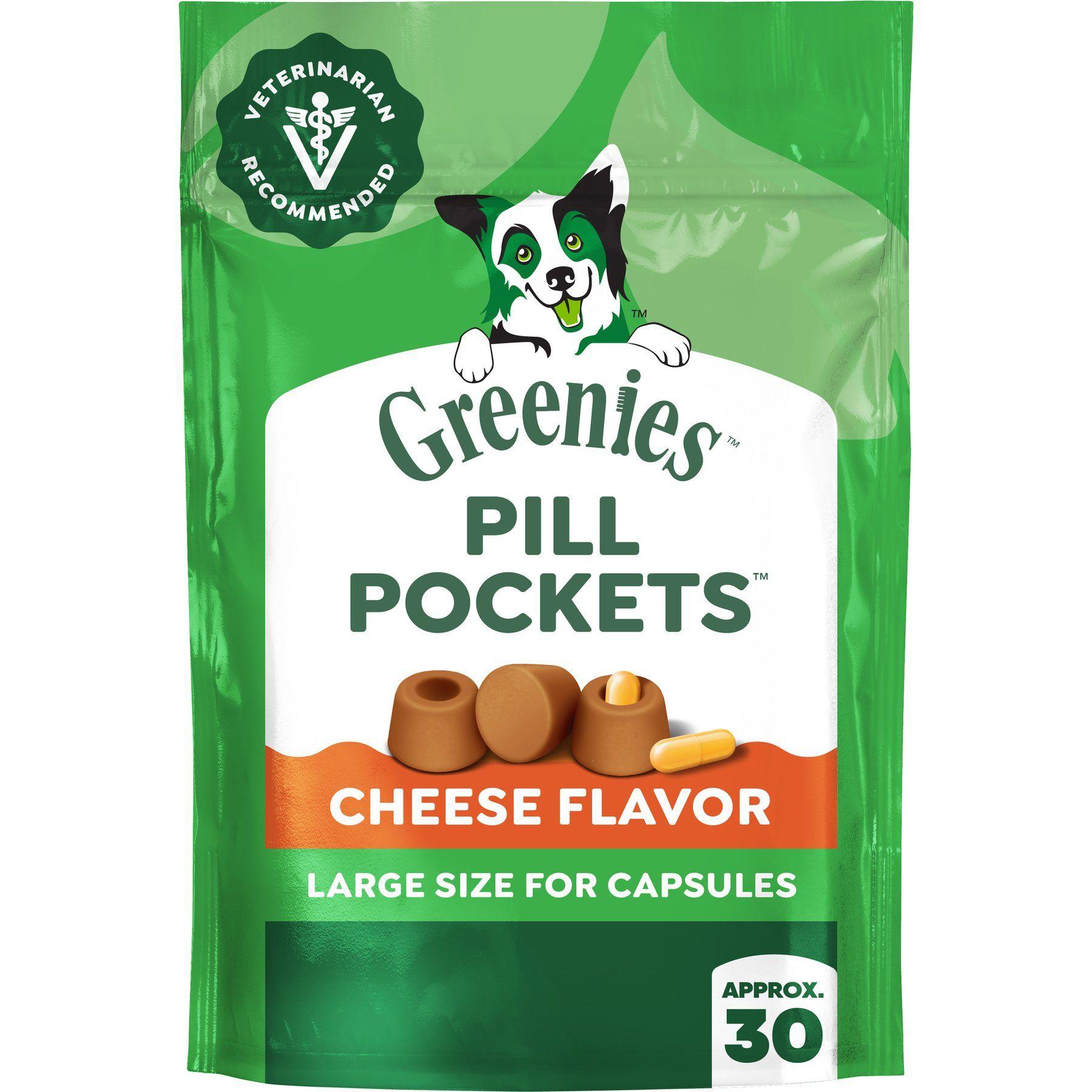
Cheese-flavored capsule-size pockets that hide the smell and taste of a capsule for dogs taking daily medicine.
Webvet may earn a commission when you click through to Chewy, at no extra cost to you.
How does mexiletine work in dogs?
Its mechanism of action comes down to sodium channels. The MSD Veterinary Manual explains that class I drugs block a share of the fast sodium channels in heart muscle cells, slowing conduction. CVCA Cardiac Care for Pets, a veterinary cardiology practice, says the drug slows electrical impulses and makes heart cells less sensitive to stimulation.
That is how mexiletine reduces ventricular premature complexes and runs of ventricular tachycardia, with less effect on heart rate and heart muscle strength than some other antiarrhythmics (CVCA). Resting beats counted at home can be compared with the normal dog heart rate range, though only an ECG shows whether extra beats are controlled.
Mexiletine dosage for dogs by weight
| Use | Weight band | Range vets work within (source) | Form | How the vet checks response |
|---|---|---|---|---|
| Ventricular arrhythmias, general (veterinary reference) | No weight band chart; the vet calculates the dose per kg of body weight | 4-6 mg/kg PO every 8 hours (MSD Veterinary Manual; Merck cardiovascular table) | capsule (150, 200, 250 mg) or compounded capsule or liquid | ECG and Holter rechecks |
| Boxer ARVC, combined with atenolol (veterinary reference) | No weight band chart; the vet calculates the dose per kg of body weight | 5-10 mg/kg PO every 8 hours with atenolol 12.5-25 mg/dog every 12 hours (Merck Veterinary Manual) | capsule | Holter recordings before and after starting |
| Dangerous ventricular arrhythmias, combined with atenolol (cardiology proceedings 2002) | No weight band chart; the vet calculates the dose per kg of body weight | 4 to 8 mg/kg PO every 8 hours with atenolol 0.5 mg/kg every 12 to 24 hours (Moise, VIN) | capsule | Baseline and follow-up Holter |
Mexiletine dosage for dogs is set by weight, but not from a printed chart. No veterinary reference publishes a weight band table for this drug. Each gives a mg/kg range, and the vet applies it to the dog's weight, then picks a capsule strength or orders a compounded one.
Why do mexiletine dose ranges differ between sources?
The figures differ by source and situation. The MSD Veterinary Manual and the Merck Veterinary Manual drug table both list 4-6 mg/kg by mouth every 8 hours. For Boxers with arrhythmogenic right ventricular cardiomyopathy, the Merck Veterinary Manual lists a higher 5-10 mg/kg every 8 hours paired with atenolol.
A 2002 cardiology proceedings paper by Moise on the Veterinary Information Network gives 4 to 8 mg/kg every 8 hours, also with atenolol. Whatever range the vet works from, the MSD Veterinary Manual says to give mexiletine at its lowest effective dose with food to limit toxic effects.

The owner's part of mexiletine dosing:
- Give exactly the amount and timing printed on the prescription label. CVCA notes it is most commonly given three times a day, and a dose one to two hours early or late to fit a schedule should be fine.
- Never raise, lower, skip, or stop doses without the vet. CVCA asks owners not to change the dose without veterinary approval.
- After a missed dose, never give two doses at once (VCA).
- Store capsules at room temperature in a tight container, protected from moisture (VCA).
Three doses a day is easy to lose track of in a busy household. A week of capsules can be set out ahead of time in a compartment box such as the Ezy Dose Weekly 7-Day Dog Pill Organizer, which keeps a dog's medicine separate from family medications and helps prevent accidental double dosing.
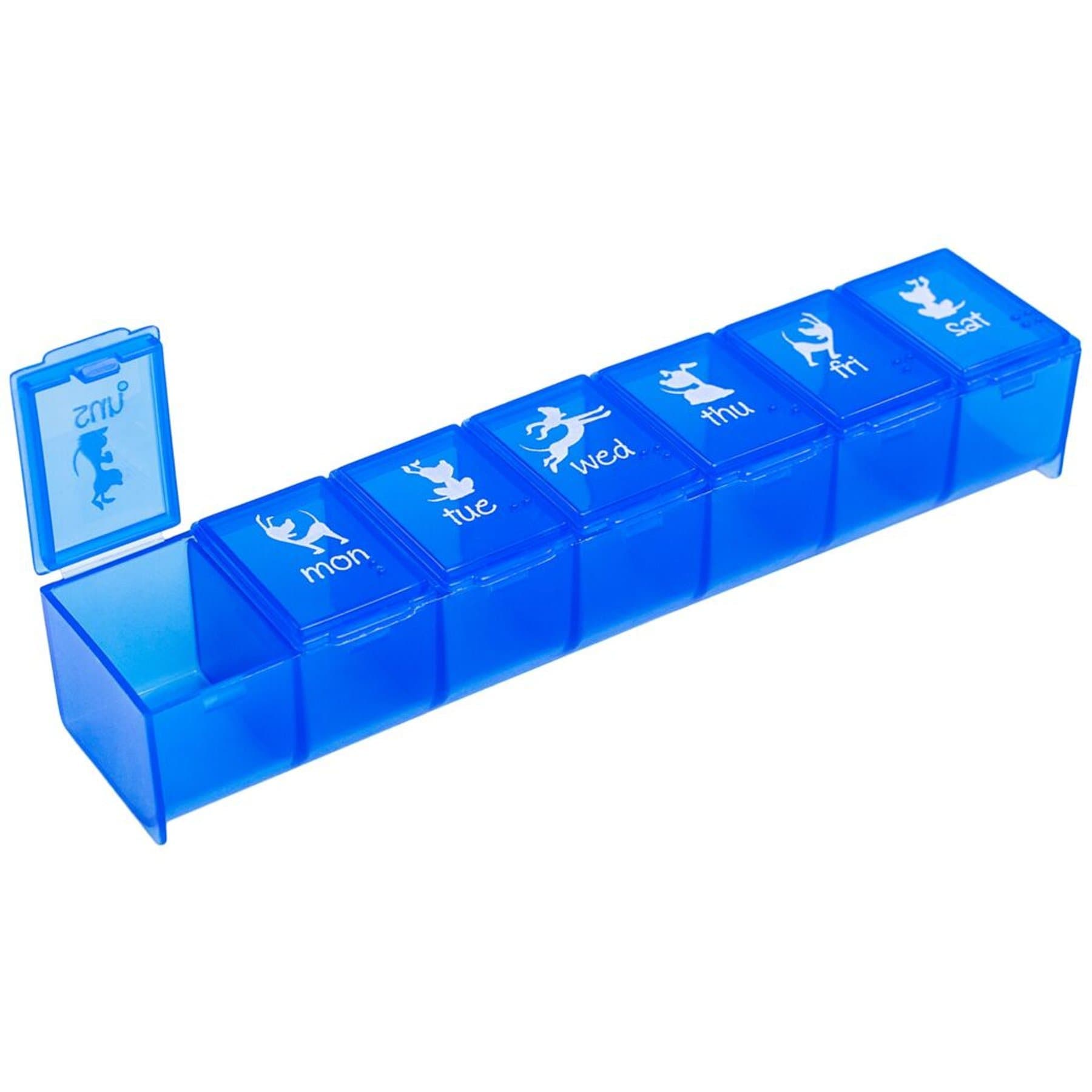
A seven-compartment weekly organizer for setting out a dog's daily doses in advance and avoiding double dosing.
Webvet may earn a commission when you click through to Chewy, at no extra cost to you.
There is no standard 100 mg mexiletine capsule. Human capsules come in 150, 200, and 250 mg, and CVCA notes the drug can be reformulated into smaller capsules or a liquid for small dogs. Wedgewood Pharmacy, a veterinary compounding pharmacy, makes capsules from 10 mg to 400 mg on prescription.
The right dose is the one that controls the rhythm with the fewest side effects, so the vet judges it against Holter results rather than the number on the label alone. Dose changes commonly follow a recheck recording or a run of stomach upset.
What mexiletine is used for in dogs: ventricular arrhythmias in Boxers, Dobermans, and other breeds
In veterinary cardiology, mexiletine is a ventricular arrhythmia drug. CVCA states that it treats ventricular premature complexes and ventricular tachycardia most commonly linked to dilated cardiomyopathy or arrhythmogenic right ventricular cardiomyopathy. VCA also notes it has been used for muscle disorders in certain breeds.

What is mexiletine used for in dogs?
Mexiletine is used to control dangerous ventricular arrhythmias in dogs. The Cummings School of Veterinary Medicine at Tufts University says it helps reduce how often the arrhythmia happens, reduce episodes of collapse, and, hopefully, prevent sudden death. Moise notes Boxers and Doberman Pinschers are the breeds that most often need long-term treatment.
The dogs vets most often prescribe it for:
- Boxers. Merck says arrhythmogenic right ventricular cardiomyopathy (ARVC), also called Boxer cardiomyopathy, occurs primarily in this breed. Its most common sign is fainting caused by very fast bursts of ventricular tachycardia above 400 beats per minute. Diagnosis rests on a Holter monitor count, with more than 100-300 premature beats in 24 hours generally considered diagnostic.
- Doberman Pinschers. The Merck Veterinary Manual on dilated cardiomyopathy says ventricular premature complexes on a routine ECG in a Doberman are highly suggestive of DCM, and antiarrhythmic treatment is frequently indicated in this breed.
- Other dogs with dangerous ventricular arrhythmias. Moise judges an arrhythmia dangerous when it causes weakness, fainting, heart failure, low blood pressure, or collapse, and notes Boxers and Dobermans are known for sudden death linked to ventricular tachycardia.
Mexiletine is a cardiac rhythm drug, not a heart failure treatment, and VCA advises extreme caution in dogs with severe congestive heart failure. The common medications for heart disease in dogs form a broader group aimed at the weakened heart and fluid buildup, which WebVet's guide to dog heart cough and congestive heart failure explains.
How long can a dog live with a heart arrhythmia?
It depends more on the underlying heart disease than on the arrhythmia itself. The Merck Veterinary Manual says Boxers with ARVC but no dilated cardiomyopathy often do well, and many live for several years on antiarrhythmic treatment. For dogs with dilated cardiomyopathy in heart failure, Merck says the outlook is poor, and most live only several months.
Mexiletine side effects in dogs
Mexiletine side effects in dogs are mostly digestive. CVCA lists decreased appetite, vomiting, and diarrhea as the most common, while trembling, shivering, dizziness, or depression occur much less often.
What are the potential side effects of mexiletine on dogs?
VCA and the MSD Veterinary Manual both list digestive upset and trembling, and MSD adds liver toxicity to the common adverse effects. Most dogs that react show stomach upset first, which is why food matters so much with this drug.
How the side effects sort out:
- Common and usually manageable: decreased appetite, nausea, vomiting, diarrhea, or constipation. Call the vet during office hours; MSD advises checking liver enzymes whenever stomach upset develops during treatment.
- Less common, call the vet the same day: trembling, shivering, dizziness, clumsiness, anxiety, or depression. Moise notes that trembling and depression resemble lidocaine effects at toxic doses.
- Emergency: seizures, breathing difficulty, fainting, or collapse.
Food is the first fix. Moise says stomach side effects can usually be limited by giving mexiletine with food, and Tufts agrees it is better tolerated that way. If vomiting or diarrhea keeps going, WebVet's guide to dog vomiting and diarrhea covers what to watch before speaking with the vet.
Dogs that eat around a capsule in the bowl can take it inside a small portion of moldable paste. Pet MD Wrap-A-Pill Cheese & Bacon Flavor Pill Paste is one option; its listing says the paste fits any size pill or capsule because the amount used is adjustable.

A cheese and bacon pill paste that molds around any size capsule for dogs on daily medicine.
Webvet may earn a commission when you click through to Chewy, at no extra cost to you.
How common are mexiletine side effects?
Across its uses in dogs, side effects are fairly common but usually reversible. In a 2025 multicentre study in the Journal of the American Veterinary Medical Association, 11 of 38 dogs (28.9%) had side effects. Ten of the 11 were gastrointestinal, they lasted a median of 7 days, and 6 dogs had their dose reduced.
Long-term side effects of mexiletine center on the liver and blood counts. The human label reports rare severe liver injury, and VCA lists low blood cell counts among the stop-and-call signs, so routine bloodwork is part of every long-term plan.
Is mexiletine a high risk medication?
Yes, in the sense that it needs close supervision. The human label's boxed warning reserves mexiletine for life-threatening ventricular arrhythmia, after other class I drugs raised the rate of death or cardiac arrest (7.7%) in a human trial. Moise notes it causes fewer new rhythm problems than the older class Ia drugs.
So is mexiletine dangerous for a dog? The warnings center on overdose, which Wedgewood says carries a significant toxicity risk, and on dogs with conditions that make the drug riskier. At prescribed doses with rechecks, the 2025 JAVMA authors found it highly effective.
 Sponsored
Vet care that's always there
Unlimited video calls and messaging with licensed vets for less than a typical vet visit. One membership covers up to five pets.
Use code Pets60
Plans start at $12/month · covers up to 5 pets
- Licensed vets in most states
- Rx for 150+ conditions
- 4.7 on Trustpilot
When to call the vet now: fainting, collapse, and stopping the drug
Fainting is the sign that matters most. Merck says fainting from very fast ventricular tachycardia is the most common sign of ARVC in Boxers, and Moise counts fainting and collapse among the signs that make an arrhythmia dangerous. A dog that faints on mexiletine needs to be seen, even if it recovers within seconds.
Fainting is not always caused by a fast rhythm. Moise warns that Holter recordings from fainting Boxers have shown pauses of more than 5 seconds, so a Boxer may faint from a slow rhythm, a fast one, or both. Only an ECG or Holter recording can tell them apart.

Stopping mexiletine is a decision for the vet, apart from VCA's stop-now signs such as seizures or breathing trouble. CVCA asks owners not to abruptly stop, skip, or lower the dose without veterinary approval. Veterinary sources do not describe withdrawal symptoms as such; the concern is that this short-acting drug stops working within 24 hours (VCA), so rhythm control wears off quickly.
How to give mexiletine with food and what the vet monitors
Every dose goes in with food, which VCA says reduces vomiting and nausea. Vetoquinol Pill Wrap for Dogs & Cats is a food-grade paste whose listing says it fits any size capsule and masks the smell and taste of medication.
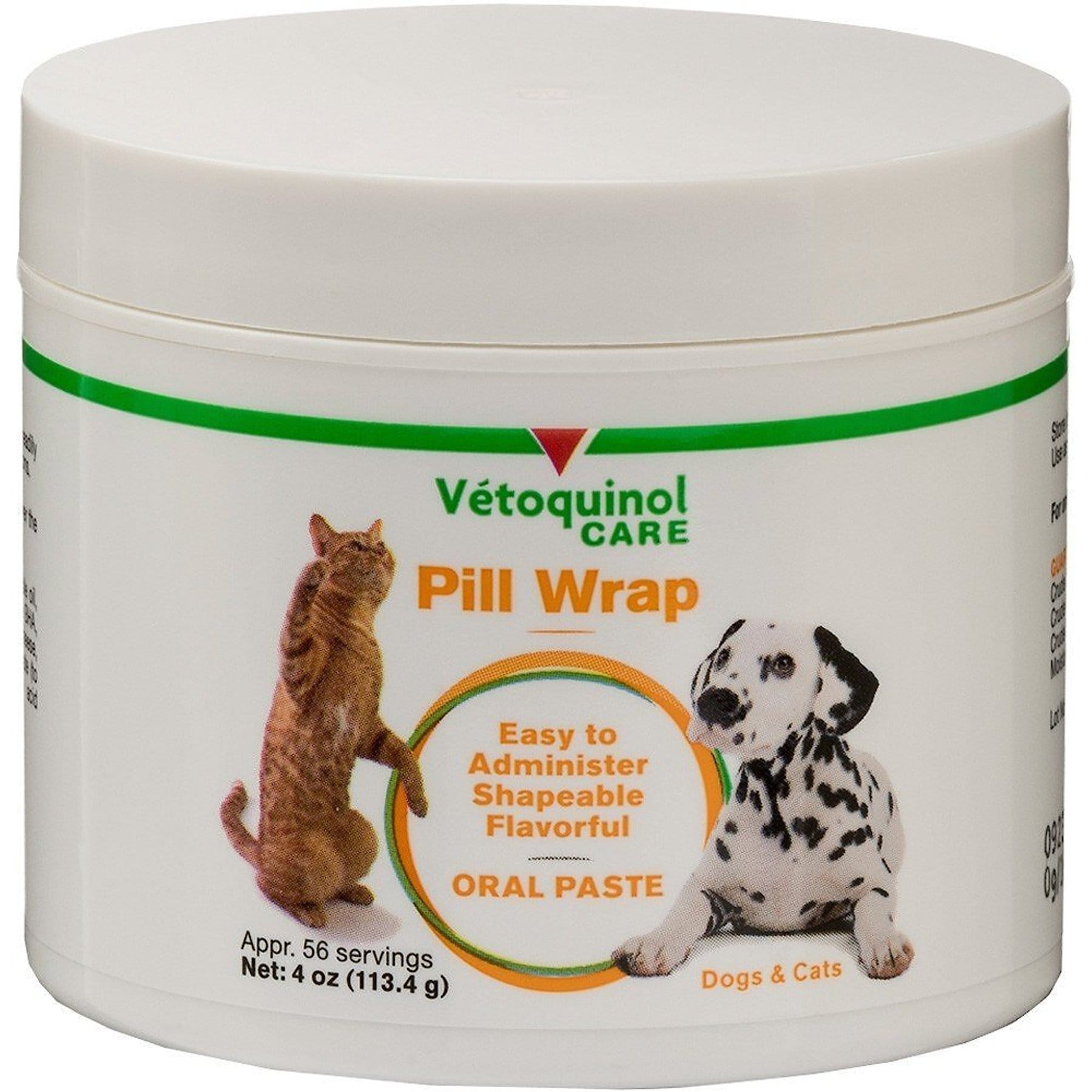
A food-grade shapeable paste that covers any size capsule and masks the smell and taste of medicine.
Webvet may earn a commission when you click through to Chewy, at no extra cost to you.
The Vetoquinol Pill Wrap for Dogs & Cats is listed at $20.99 on Chewy when we checked in November 2026. The Pet MD Wrap-A-Pill Peanut Butter Flavored Pill Paste is a peanut butter alternative, and the Vet Worthy Pill Gun for Dogs is a reusable plastic dispenser for capsules and tablets.
For more on technique, WebVet's guide to administering medicine to dogs covers pilling a reluctant dog in more detail. Some compounded forms also help here: Wedgewood makes mexiletine as flavored chewable tablets (200 mg) and chew treats (10 mg to 150 mg), an alternative the vet can prescribe instead of a capsule.

How do you know mexiletine is working?
Mexiletine takes effect within 1 to 2 hours, according to VCA, but the change usually is not visible from the outside. Whether it is controlling the rhythm is something only recordings show. Tufts says follow-up involves frequent ECGs or a Holter recording, and CVCA adds listening with a stethoscope to the checks.
A typical monitoring plan runs in this order, with the timing set by the vet:
- Before treatment: a baseline Holter monitor recording and liver enzyme tests. Moise says a drug's effect cannot be judged without a baseline Holter, and MSD advises checking liver enzymes before starting.
- Soon after starting: a follow-up Holter within a short period. Moise explains that arrhythmia frequency varies from day to day, so the longer the gap, the less the comparison means. There is no standard number of weeks; the vet sets the recheck date.
- Ongoing: periodic ECGs (VCA), potassium checks where needed because CVCA notes mexiletine works better with normal blood potassium, and liver enzymes about every 6 months during long-term treatment (MSD).
- Any time stomach upset develops: liver enzymes again, per MSD.
Success does not mean zero extra beats; Wedgewood notes complete elimination is not a realistic goal. In the 2025 JAVMA study, mexiletine counted as effective when the Lown-Wolf severity grade fell below 5 or ventricular premature complexes dropped by 85% or more, and it met that bar in 16 of 20 dogs (80%).
If a liver panel comes back high, WebVet's guide to elevated liver enzymes in dogs explains what the values can mean and what usually happens next.
What are the long-term effects of taking mexiletine?
Over months to years, the main concerns are the liver and blood counts. MSD advises liver enzyme checks about every 6 months, and the human label reports rare severe liver injury and, in 0.06% of people, a marked drop in white blood cells. Many Boxers live several years on antiarrhythmic treatment (Merck), so long-term use with bloodwork is expected.
Drug interactions and dogs that should not take mexiletine
Mexiletine interacts with several medicines, so the vet needs a full list of everything the dog takes. VCA advises caution when mexiletine is given with:
- Other heart rhythm drugs: amiodarone, quinidine, sotalol, and propranolol
- Stomach medicines: antacids, cimetidine, and metoclopramide
- Opioid pain relievers
- Phenobarbital; CVCA adds primidone and griseofulvin, which may speed up the breakdown of mexiletine and lower blood levels
- Theophylline or aminophylline; the human label says mexiletine may raise theophylline levels
- Drugs that change urine pH, such as methionine, potassium citrate, or methazolamide, which CVCA notes alter how the drug leaves the body
VCA says not to use mexiletine in dogs allergic to it, and to use extreme caution in dogs with:
- Certain abnormal heart rhythms, cardiogenic shock, or severe congestive heart failure
- Impaired liver or kidney function
- Low blood pressure
- Seizures
- The MDR1 (ABCB1) gene mutation; CVCA notes herding-type breeds with this defect may be more sensitive to the drug
The human label contraindicates mexiletine with cardiogenic shock or existing second- or third-degree AV block. VCA advises caution in pregnant or nursing dogs, and CVCA notes mexiletine is not normally used in cats because of their greater sensitivity and seizure risk.
Mexiletine vs sotalol and other heart rhythm drugs for dogs
Sotalol usually comes first. The MSD Veterinary Manual describes sotalol as the most commonly used long-term treatment for ventricular arrhythmias that affect circulation and says mexiletine is rarely given alone. It is most often added when sotalol does not control severe, chronic arrhythmias, or for dogs that do not tolerate sotalol.
Merck says the same for Boxers with ARVC: where sotalol is ineffective, mexiletine may be added. In combination, MSD advises sotalol at the lower end of its 1-2.5 mg/kg every-12-hour range; Merck lists 1-3 mg/kg every 12 hours for Boxers that faint without DCM. In the 2025 JAVMA study, mexiletine was a second-line drug added to a first-line agent.
CVCA says mexiletine is often combined with sotalol or atenolol when arrhythmias are hard to control. In Boxers, Moise reports a study led by Dr. Kate Meurs that found mexiletine plus atenolol most effective, with sotalol a fairly close second. Because sotalol already blocks beta receptors, MSD says it should not be combined with atenolol, so mexiletine is paired with one or the other.
What is an alternative to mexiletine?
The main alternatives are sotalol alone and amiodarone. Moise lists mexiletine plus atenolol, sotalol, and amiodarone as the most common drugs for canine ventricular tachycardia. Tufts reserves amiodarone for very serious arrhythmias or ones that have not responded to other treatments, and MSD names tocainide as an add-on option if mexiletine is unavailable or too costly.

How the main options compare:
- Mexiletine: a class IB antiarrhythmic given every 8 hours with food, with less effect on heart rate and heart muscle strength than some other rhythm drugs (CVCA).
- Sotalol: the most common long-term choice (MSD), given every 12 hours, and often the drug mexiletine is added to.
- Atenolol plus mexiletine: the combination Moise reports as most effective in Boxers in the Meurs study.
- Amiodarone: kept for very serious or unresponsive arrhythmias (Tufts).
Mexiletine cost, brand versus generic, and where the prescription is filled
Mexiletine has no veterinary brand. The original human brand name, Mexitil, was approved in 1985 under NDA 018873, held by Boehringer Ingelheim. VCA lists other brand names: Mexilen, Mexitilen, Myovek, and Ritalmex. The generic name is mexiletine hydrochloride, and generic capsules remain listed on DailyMed.
Why was mexiletine discontinued?
Only the Mexitil brand was discontinued, and not over safety. In a 2019 Federal Register notice, the FDA determined Mexitil 150, 200, and 250 mg capsules were not withdrawn for safety or effectiveness reasons. Generic capsules remain, though MSD notes availability is limited and cost is rising as human use declines.
No published price exists for mexiletine for dogs. What drives the cost:
- The dog's size and the dose the vet prescribes
- Whether a standard human capsule strength fits, or a compounded capsule, liquid, or chew is needed (Wedgewood makes strengths starting at 10 mg)
- Liver panels, ECGs, and Holter rechecks that come with long-term use
Mexiletine for dogs is only available to buy with a veterinarian's prescription, filled by the clinic, a local pharmacy, or a compounding pharmacy. For the testing side, WebVet's guide to dog bloodwork cost covers what repeat blood tests involve.
The giving supplies are a small part of the bill. Greenies Pill Pockets Cheese Flavor Capsule Size, 30 count is listed at $8.98 on Chewy when we checked in November 2026, and pill aids like these need no prescription.
Mexiletine for dogs questions
Frequently Asked Questions
Should mexiletine be given with food?
Yes. VCA, Tufts, and the human label all point to giving each dose with food, which lowers the chance of nausea and vomiting. If a dog refuses a meal at dose time, ask the vet how to handle that dose rather than giving it on an empty stomach.
How long does it take for mexiletine to work in a dog?
VCA says it takes effect within 1 to 2 hours, but owners rarely see an outward change. The vet confirms the effect with a recheck ECG or Holter recording compared against the baseline, and Moise advises making that follow-up Holter fairly soon after starting.
Can a dog stop taking mexiletine suddenly?
No. CVCA asks owners not to stop, skip, or lower doses without veterinary approval, and the drug wears off within about 24 hours, leaving the arrhythmia without control. The exception is a stop-now sign such as seizures or breathing trouble, when VCA says to stop and call the veterinarian immediately.
Why is mexiletine given with sotalol in some dogs?
The combination can control rhythms that sotalol cannot manage alone. MSD describes mexiletine as most often added for severe, chronic ventricular arrhythmias not well controlled by sotalol, or for dogs that cannot tolerate sotalol. CVCA notes mexiletine adds rhythm control with less effect on heart rate and strength.
Do Dobermans and Boxers take mexiletine?
Yes, they are the breeds most often treated. Wedgewood notes it may be used for inherited cardiomyopathy in the Boxer and dilated cardiomyopathy in the Doberman Pinscher, and Merck lists it for Boxers with ARVC. Moise notes both breeds are at risk of sudden death from ventricular tachycardia.
What are the side effects of mexiletine in dogs?
Mostly digestive: decreased appetite, vomiting, and diarrhea. Less often, dogs show a tremor, dizziness, clumsiness, or depression. The 2025 JAVMA authors concluded that stomach side effects were relatively frequent but reversible. Seizures or collapse need emergency care.
What is the usual mexiletine dose for dogs?
Veterinary references give ranges, not a fixed dose: 4-6 mg/kg every 8 hours in the MSD and Merck manuals, and 5-10 mg/kg every 8 hours with atenolol for Boxers with ARVC in Merck. The veterinarian calculates the exact amount, and each dose is given with food.
How much does mexiletine cost for dogs?
No current published price exists. Cost depends on the dose, the dog's size, and whether the pharmacy dispenses a standard human capsule strength or a compounded capsule, liquid, or chew. MSD notes mexiletine availability is limited and its cost is increasing, so ask the clinic or pharmacy for a quote.
Can mexiletine be combined with sotalol?
Yes, under a vet's supervision. MSD and Merck both describe adding mexiletine to sotalol when an arrhythmia is not controlled by sotalol alone, with sotalol kept at the lower end of its range. Sotalol is not also combined with atenolol, and the pairing is checked with ECG or Holter recordings.
Veterinarian · BVMS MRCVS
Dr. Pippa Elliott, BVMS, MRCVS, is a veterinarian with nearly 30 years of experience in companion animal practice. Dr. Elliott earned her Bachelor of Veterinary Medicine and Surgery from the University of Glasgow. She was also designated a Member of the Royal College of Veterinary Surgeons. Married with 2 grown-up kids, Dr. Elliott has a naughty Puggle named Poggle, 3 cats and a bearded dragon.
Related reading

Terbutaline for Cats: Asthma Rescue Dosage, Side Effects, and Safety

Azodyl for Cats: What It Does for Kidney Disease, Dosage, and Evidence

Bethanechol for Dogs: Bladder Dosage, Side Effects, and Safety
