Low Calorie Dog Treats: Calories and Portion Guide
Compare verified treat-calorie labels and manageable portions for training, vegetables, and homemade rewards. Learn how treats fit a weight-management plan and why low calorie is different from low fat.

BVMS MRCVS

This article contains affiliate links. Webvet may earn a commission when you buy through them, at no extra cost to you.
Low calorie dog treats are useful when their actual portion fits your dog’s daily feeding plan. Start with the calories on the exact label, choose a texture your dog can manage, and measure the amount you will give. A tiny training bite, a broken piece of a larger treat, and a small portion of plain vegetables can all be options, but “natural,” “grain-free,” and “low fat” do not tell you the calories in the serving.
- 1Compare calories per treat and the portion you will really feed.
- 2Count all extras toward the daily allowance; low calorie does not mean unlimited.
- 3Use part of the measured main meal when it works as a reward.
- 4Check medical restrictions before changing treats, especially during weight loss or a prescribed diet.
Compare calories per treat, then compare the portion
The best low-calorie treats for your dog are ones you can portion accurately, that your dog enjoys and tolerates, and that fit its diet.
There is no need to find a universal winning brand. A product with fewer calories per piece may simply have smaller pieces. If you feed a handful instead of a counted portion, its lower number on the front of the bag may not reduce the calories your dog receives.
For most healthy dogs, the WSAVA Nutrition Committee recommends keeping treats within 10% of daily calorie intake. That is the combined allowance for extras, not a separate allowance for every product or every person who feeds the dog. The veterinary team can set a suitable daily calorie target and explain any tighter restrictions. Our daily treat-budget guide shows how to subtract other extras and calculate the remaining number of treats.
| Exact label example | Manufacturer calorie statement | Portion decision |
|---|---|---|
| The Honest Kitchen Purely One White Fish Filets | Approximately 28 calories per fillet | A whole fillet is much larger than a mini bite. Break into a suitable portion; do not assume fragments are equal. |
| Pet Botanics regular Chicken Training Reward | 3 kcal per treat | Count the whole treats used, even when you break them into smaller rewards. |
| Zuke’s Mini Naturals Peanut Butter & Oats | 2 kcal per piece | Use this exact flavor’s label; another recipe may differ. |
| Fruitables Skinny Minis Pumpkin Berry | 3 calories per bite | Measure how many bites are given; pumpkin on the label does not make them calorie-free. |
These examples use current manufacturer information: The Honest Kitchen, Pet Botanics, Zuke’s, and Fruitables. They are comparisons of labels and portions, not a claim that we have tested the products or that one is medically suitable for every dog. Recipes and pack information can change, so check the bag in your hand before relying on a number copied from an older listing.
The single-ingredient The Honest Kitchen Purely One White Fish Filets illustrate why portion matters. Dehydrated white fish is the listed ingredient, yet the manufacturer’s approximate 28-calorie whole fillet is not equivalent to a 2-calorie mini treat. Break off a manageable amount when appropriate for your dog, and ask the manufacturer for a weight-based calorie value if you need precise accounting. The fish species can vary, which matters for a specific dietary restriction.
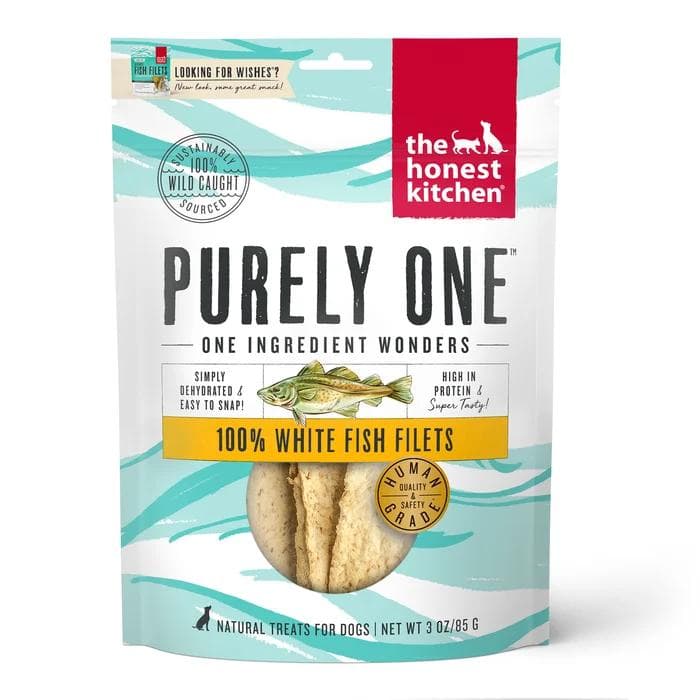
Webvet may earn a commission when you click through to The Honest Kitchen, at no extra cost to you.
Get more training rewards from the same portion

Low calorie dog treats for training work best when the reward is small enough to use repeatedly and easy for the dog to finish comfortably.
A soft treat that divides cleanly can be useful. Small dogs may need particularly modest pieces, but large dogs do not automatically need large rewards. Choose a piece the individual dog can take safely without prolonged chewing, gulping, or sharp fragments, and supervise eating.
The regular Pet Botanics Chicken Training Reward is a soft-format label example at 3 kcal per treat. Ten whole pieces account for 30 kcal before they are divided. If you split those same ten into smaller deliveries, the total remains 30 kcal. This is the regular formula, not its Mini variant; the chicken flavor also includes pork liver and other ingredients, so check the whole formula against your dog’s restrictions.
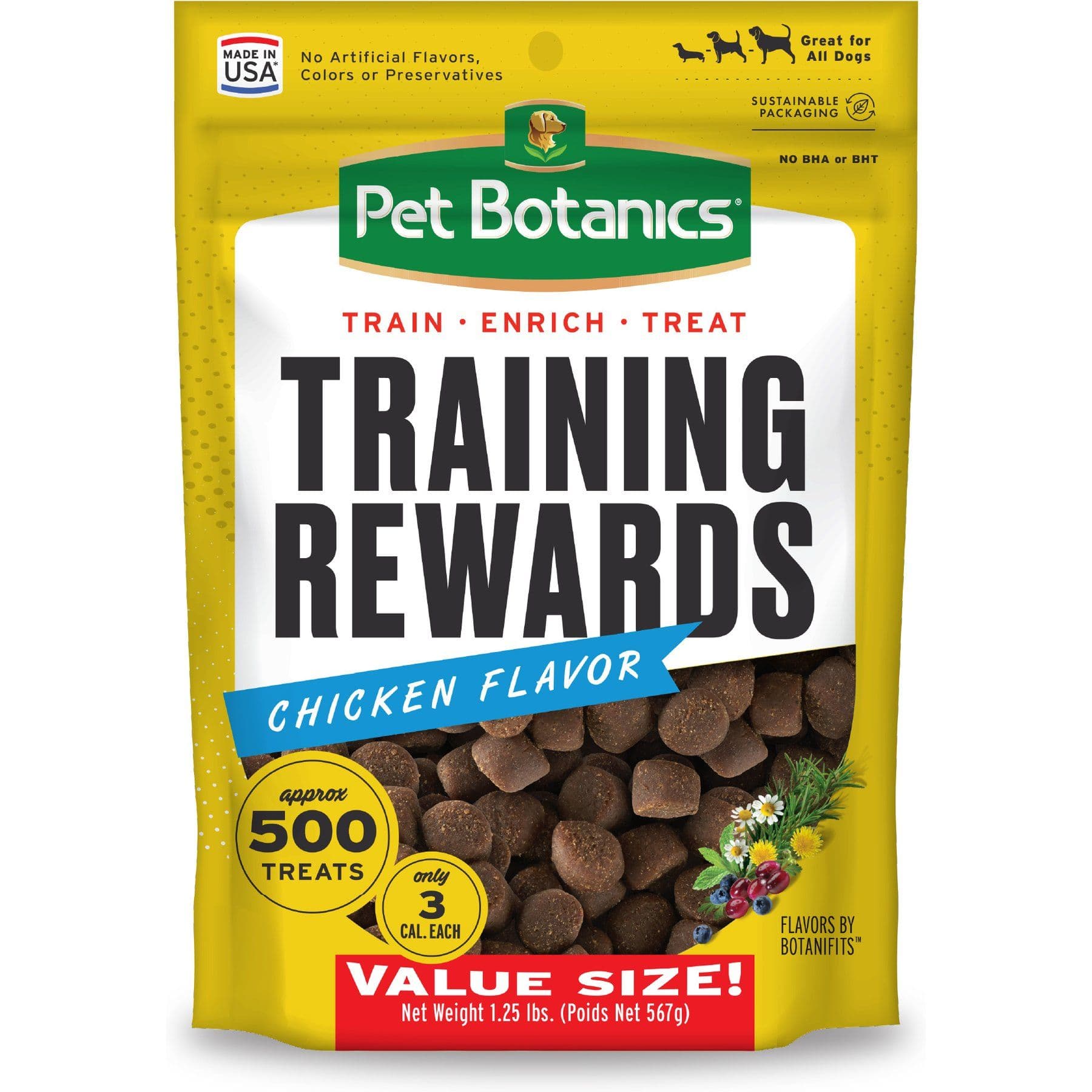
Soft chicken-flavor training rewards in a larger bag for frequent practice. Break rewards into appropriate pieces for your dog.
Webvet may earn a commission when you click through to Chewy, at no extra cost to you.
For high-value, low-calorie rewards, think about appeal per small portion rather than richness or size alone. A dog may work enthusiastically for a tiny familiar morsel in one setting and prefer a different reward in another. If a dog stops accepting food, consider distraction, fatigue, discomfort, or a task that is too hard. Escalating to larger handfuls does not solve every training problem.
- Preportion the session from the day’s allowance before practice starts.
- Try suitable pieces from the measured main meal for easy exercises.
- Reserve a small number of more exciting rewards for tasks where they help.
- Include house-training and handling rewards in the same daily total.
Count irregular training portions by weight
If a label provides kcal per kilogram, divide by 1,000 to get calories per gram, then multiply by the weight you feed. For example, a hypothetical food at 3,000 kcal/kg supplies 3 kcal/g, so a weighed 4-g portion contains 12 kcal. This is an arithmetic example, not the value of every soft treat. A small scale can help with a batch of irregular pieces when an exact per-piece value is unavailable.
Compare the portion rather than treating a label term as a shortcut. “Less than” gives an upper limit; “on average” allows for variation; “approximately” is not exact. Never turn these into a more precise claim. A bag labeled grain-free can still be calorie-dense, and a larger low-fat biscuit can contain more calories than a tiny ordinary treat. Keep the calorie statement and the portion together whenever you compare products.
At 2 kcal per piece, Zuke’s Mini Naturals Peanut Butter & Oats offer another countable small format. Fifteen whole pieces provide 30 kcal, the same total as ten whole 3-kcal treats. That comparison is about the amount delivered, not superior nutrition. The ingredient list includes dried cultured whey, so a peanut-butter flavor should not be assumed to avoid dairy or fit a food trial.
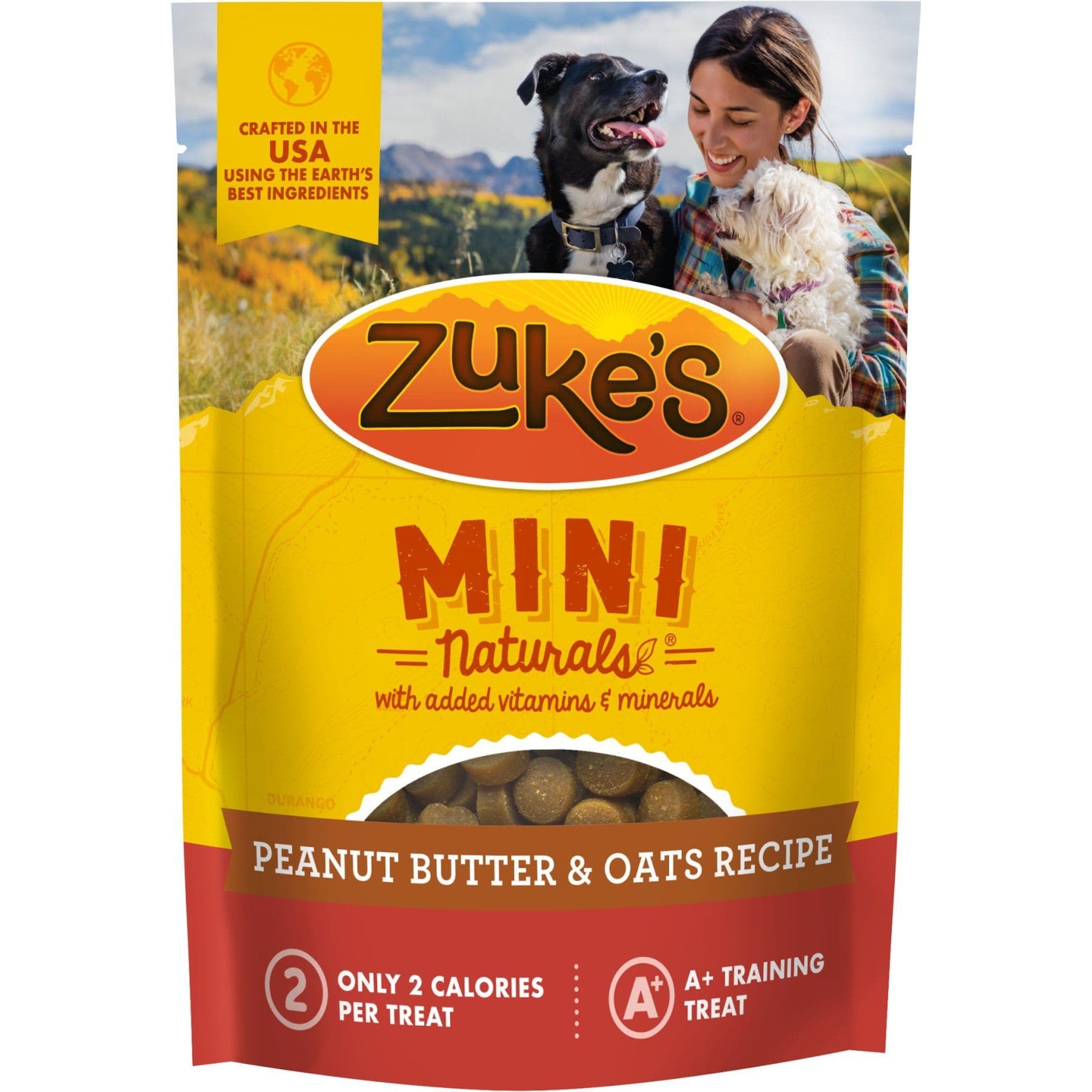
Soft, pea-sized training treats made with peanut butter and oats. Small enough to reward often while keeping treats inside the 10% of daily calories vets recommend.
Webvet may earn a commission when you click through to Chewy, at no extra cost to you.
Recheck the serving statement when buying a different bag size or recipe. If a product provides no calorie value, ask the manufacturer for calories per treat or per gram before using it for a tightly measured plan. A guaranteed analysis listing protein, fat, moisture, and fiber is not a substitute for a calorie statement.
You do not have to spend the full extras allowance in every lesson. Short practice with a clear task can be more practical than a long session with constant feeding. A toy, play, praise, sniffing opportunity, or break may also be rewarding, depending on the dog. When a trainer provides food during a class, share dietary restrictions in advance and ask how much was given so the household can keep the daily plan consistent.
Vegetables, human foods, and homemade treats

A good low-calorie snack for many healthy dogs can be a small amount of suitable plain food. AAHA lists carrots, green beans, apple slices, and blueberries among possible options. Prepare manageable pieces and remove apple cores and seeds. Plain means no butter, salty coating, sauces, or sweeteners. Choose a texture the dog can handle; a hard round carrot chunk is a different feeding challenge from a small soft cooked piece.
Vegetables are not calorie-free. Their size, preparation, and water content affect the portion, so do not use an invented “one calorie per slice” rule.
Human-food snacks still belong in the extras allowance. For a dog on a restricted diet, a vegetable can be unsuitable even when the calories seem modest. Use the approved food plan first rather than adding several new foods because they appear on a general healthy-snack list.
- Wash produce and use plain, unseasoned preparation.
- Cut or soften food to suit the dog’s size, teeth, and swallowing habits.
- Offer a small amount first and stop if it does not agree with the dog.
- Keep grapes, raisins, xylitol-containing foods, and other unsafe ingredients out of reach.
A packaged pumpkin option is Fruitables Skinny Minis Pumpkin & Berry, which the manufacturer describes as a 3-calorie bite. These are multi-ingredient treats, with pork stock among the current ingredients, rather than plain pumpkin. They can be portioned as ordinary rewards for a dog that tolerates the recipe, but neither the fruit name nor the low per-bite number makes them a digestive treatment or a food everyone can share freely.
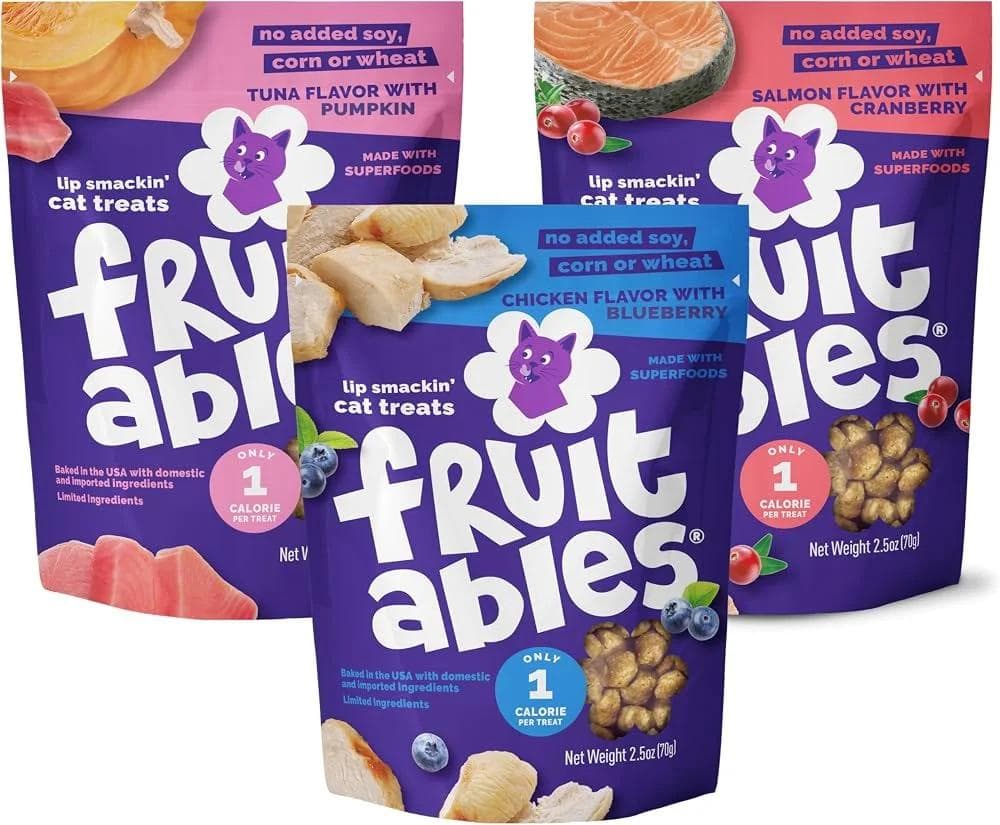
Soft training treats made with real pumpkin and blueberries, small enough to hand over often without breaking the 10% treat rule. The fruit-flavoured reward that skips the prep and the pits.
Webvet may earn a commission when you click through to Chewy, at no extra cost to you.
Homemade low-calorie dog treats need the same scrutiny. A recipe is not low calorie simply because it contains oats, pumpkin, or a natural ingredient. Oil, peanut butter, cheese, and large portions can add substantial energy. To estimate calories per piece, you need the total recipe calories and the actual number of reasonably equal pieces produced. Changing an ingredient or cutting larger biscuits changes that estimate, so do not carry a calorie number across altered recipes.
Freezing a suitable food does not remove its calories. Frozen homemade portions still need a safe size and texture, sensible storage, and ingredients that fit the dog’s plan. Avoid hard frozen chunks that the dog may try to crunch or gulp. Organic or natural labeling also does not establish a lower calorie count. For broader ingredient and processing choices, our healthy dog-treat guide explains what those claims do and do not tell you.
Choose treats for a dog on a weight-loss plan

Good treats for dogs who need to lose weight are those that fit the veterinary feeding plan while leaving enough of the complete main diet for nutritional needs. A low-calorie snack can help with portion control, but it cannot guarantee weight loss if the whole day’s intake is too high. Do not sharply cut balanced meals to make room for large amounts of treats, or copy another dog’s calorie target because the breeds look similar.
AAHA’s weight-management guidance includes treats, table foods, supplements, and food used for medication in the daily accounting. One practical approach is a single day’s reward container. Everyone who feeds the dog takes from it, rather than each person offering a fresh allowance. Portions of the measured main food can also serve as rewards when appropriate, so training does not automatically add calories on top of meals.
- 1Confirm the total calorie target and permitted extras with the veterinary team.
- 2Count other extras before allocating training treats.
- 3Use one shared daily portion for the household.
- 4Track weight and body condition at the agreed recheck, then adjust the plan with the team.
A plan should also be comfortable and realistic. Tell your veterinarian if the dog seems persistently hungry, if training requires frequent rewards, or if several family members struggle to track snacks. There may be a better food format, feeding arrangement, or reward strategy. Weighing the dog over time is more informative than judging success from a single day’s enthusiasm or from a product’s weight-control marketing.
Low calorie is not the same as low fat
Low calorie is not the same as low fat. Calories describe energy in a specified amount; fat is one part of the food’s composition.
A tiny portion of a relatively fatty food can have few calories, while a large lower-fat biscuit may contain more. Dogs prescribed a fat-restricted diet need guidance about suitable products and amounts, not simply the smallest calorie number on a shopping page.
If your veterinarian has specified a fat limit, take the full package information to the clinic. A minimum fat percentage on a guaranteed analysis is not an exact measurement of the fat your dog will consume. Products also differ in moisture and calorie density. Ask which comparison and portion apply to the prescribed diet instead of making a medical substitution from the front-of-bag wording.
Low-calorie chews also need close inspection. Look for calories in the whole chew and how much is meant to be eaten, not just a small stated serving. “Long lasting” does not mean low calorie, and chewing time does not erase energy intake. A dental or other functional chew can use a meaningful part of the day’s extras. Ask the veterinary team how it fits before adding a second treat routine.
- Check texture and size as carefully as calories.
- Avoid excessively hard items and supervise chew use.
- Stop using a chew that breaks into unsuitable pieces or encourages gulping.
- For digestive restrictions, consult the feeding plan and our sensitive-stomach guide.
If a dog has vomiting, diarrhea, or a prescribed gastrointestinal diet, buying a lower-calorie treat is not a solution by itself. The sensitive-stomach treat guide separates active symptoms, medical diet restrictions, and ordinary rewards for stable dogs. Low-calorie selection is one useful tool, but the full formula, the dog’s condition, and the total diet determine whether a treat belongs in its routine.
Low-calorie treat questions
Frequently Asked Questions
What dog treat has the least amount of calories?
There is no universal lowest-calorie treat because products and portion sizes differ. Compare the exact label and the amount you will actually feed. A tiny part of the measured meal may add no extra calories beyond the food already budgeted, but the food itself still contains calories. Do not assume a zero-calorie label or an irregular fragment has a precise value without evidence.
What treats can dogs eat daily?
A dog can have suitable treats daily if they fit its total diet, medical restrictions, and calorie allowance. There is no requirement to use the full allowance. Count chews, table food, toppers, and food used for pills as well as training rewards. A veterinary-prescribed diet may need a different rule or rewards made from the main food.
What can I give my dog instead of treats?
Depending on the dog and the task, use part of the measured meal, a toy, play, praise, sniffing time, or a break. Meal pieces contain calories but can be moved from the planned meal rather than added as extras. Use rewards the dog actually enjoys and can safely take; a more difficult training exercise may call for a different reward or an easier task.
Veterinarian · BVMS MRCVS
Dr. Pippa Elliott, BVMS, MRCVS, is a veterinarian with nearly 30 years of experience in companion animal practice. Dr. Elliott earned her Bachelor of Veterinary Medicine and Surgery from the University of Glasgow. She was also designated a Member of the Royal College of Veterinary Surgeons. Married with 2 grown-up kids, Dr. Elliott has a naughty Puggle named Poggle, 3 cats and a bearded dragon.
Related reading

Minimally Processed Dog Food: What It Means and Why It Matters

Best Soft Dog Food for Senior Dogs: Gentle, Nutrient-Dense Options

Dehydrated vs. Freeze-Dried vs. Air-Dried Dog Food: What's the Difference?
