Dog Car Sickness: What Helps and How to Tell It From Travel Anxiety
Learn to distinguish motion-related nausea from travel anxiety, prepare a secure travel setup and build comfort in small steps. Includes a before-and-after observation plan and when to call your vet.

BVMS MRCVS
Medically reviewed by Dr. Pippa Elliott, BVMS MRCVS · Last reviewed

This article contains affiliate links. Webvet may earn a commission when you buy through them, at no extra cost to you.
Dog car sickness can cause drooling, lip licking, restlessness and vomiting once a ride begins. Travel anxiety can cause similar signs before the car even moves, and a dog can have both. The most useful plan combines a secure, comfortable travel setup, trips short enough to avoid repeated distress and veterinary treatment when nausea or fear keeps returning.
Watch when the first signs appear rather than waiting for vomiting. A dog who stops throwing up may still feel nauseated, while a sleepy dog may still be afraid. Tracking comfort before, during and after the ride helps you and your veterinarian choose what to change.
Dog car sickness or travel anxiety?
Motion sickness is linked to movement and the body's balance system. Travel anxiety is an emotional response to the car, its sounds or what the dog expects will happen. Past nausea can teach a dog that getting into a vehicle predicts feeling ill, so the two problems can reinforce one another. PDSA's veterinary guidance recognizes both motion and stress as contributors.
Timing offers clues, not a diagnosis. Trembling in the driveway before moving suggests a fear component. New drooling after corners or acceleration suggests motion may contribute. A dog can also have a medical reason for vomiting, especially when the signs occur at home too.
- 1Note whether signs begin before moving, after movement starts or continue after the trip.
- 2Treat nausea and travel anxiety as separate needs that may occur together.
- 3Use secure restraint, a cool vehicle and short comfortable practice sessions.
- 4Repeated vomiting or symptoms outside travel need veterinary advice.
For a dog that fits comfortably, a secured Frisco Travel Safety medium carrier is one possible travel setup. Check the dog's measurements and follow the manufacturer's installation instructions. A carrier's name does not establish independent crash certification, and a carrier cannot itself treat nausea.
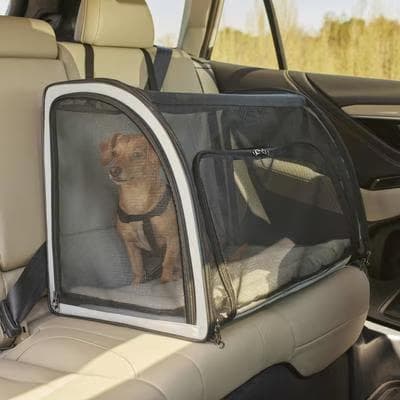
A medium travel carrier for dogs that fit comfortably. Follow vehicle installation directions; this equipment does not treat motion sickness.
Webvet may earn a commission when you click through to Chewy, at no extra cost to you.
| Observation | What it may suggest | Useful next step |
|---|---|---|
| Distress near the car or in a parked car before moving | Anticipatory travel anxiety may be involved | Practice at an easier, stationary step; discuss fear if persistent |
| Dog settles initially, then drools or lip-licks after movement | Motion-related nausea may contribute | Shorten exposure and discuss preventive nausea treatment |
| Fear begins before departure and vomiting follows movement | Both problems may be present | Combine a veterinary nausea plan with gradual behavior work |
| Vomiting, imbalance or illness continues away from the vehicle | A problem beyond ordinary car sickness is possible | Arrange veterinary assessment; use urgency appropriate to the signs |
Do not use a long drive as a diagnostic test. Write down observations from necessary travel and stop a practice session when the dog becomes uncomfortable. A passenger can watch safely; the driver should not turn around to monitor licking, adjust a restraint or offer food while moving.
Plan the trip before the engine starts
A useful setup gives the dog a familiar place to rest and lets you manage a mess without improvising on the roadside. Choose a travel carrier or vehicle restraint that fits the dog and is installed as directed. A car seat or hammock alone is not a restraint, and attaching a tether to a neck collar is not a substitute for an appropriate vehicle harness.
If your dog travels on the rear seat in a separate restraint, a KONG car seat cover and hammock can protect upholstery from drool and accidents. Keep it clear of seat-belt paths and attachment points. This is cleanup equipment, not a motion-sickness treatment or a claim of crash protection.

Prepare the practical details before loading the dog:
- Cool the cabin and maintain comfortable ventilation throughout the trip.
- Familiarize the dog with its carrier or harness at home before using it in the car.
- Pack absorbent towels, spare washable bedding, waste bags, water and prescribed medicines.
- Choose a route with safe stopping places and allow time for breaks.
- Keep the dog secured away from the driver's controls and avoid letting its head hang out of a window.
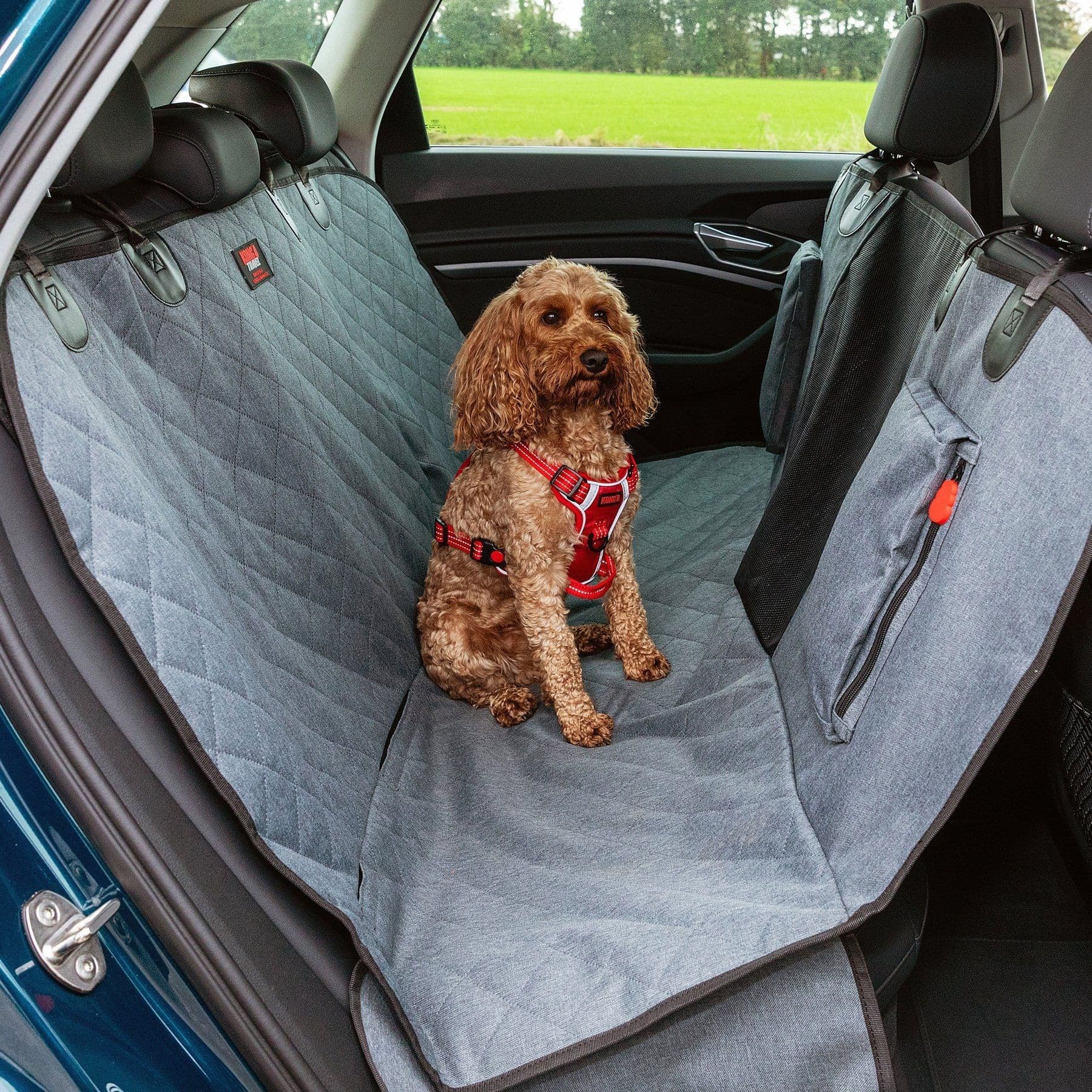
Protect rear-seat upholstery with the KONG cover and hammock while using a separate appropriate restraint. It is cleanup equipment, not nausea treatment.
Webvet may earn a commission when you click through to Chewy, at no extra cost to you.
Ask your veterinarian about food timing, especially for puppies, dogs with diabetes or dogs taking medicine with food. Published advice on fasting intervals differs, so a fixed overnight fast is not appropriate for every dog. Avoid a large meal immediately before travel unless your veterinary plan says otherwise, and do not withhold water for the whole journey to prevent a cleanup problem.
Make the first setup trial in a parked, safely ventilated car with you present. Check that the dog can use the carrier or restraint comfortably, that bedding does not obstruct ventilation and that the equipment stays correctly positioned. A dog struggling with a new harness may need training with the equipment before you can learn anything useful about its response to movement.
Choose a safe position before experimenting with the view
Some dogs appear more comfortable with a steady forward view, while a rapidly moving view through a side window may be unsettling. The AKC's car-sickness guidance discusses adjusting the view as one comfort measure. That is something to observe within an already secure travel arrangement, not a reason to put the dog loose on a seat, in your lap or where it interferes with driving. Do not force its head into a forward-facing position or compromise the restraint to improve the view.
A booster seat, carrier and harness perform different jobs. Check whether a seat includes a suitable restraint or simply raises the dog, and whether the attachment is compatible with your vehicle. Independent crash testing is a separate question from comfort or nausea. The products named here are practical equipment choices; this article has not independently crash-tested them.
Consider the whole setup before adding equipment:
- Can the dog settle without repeatedly sliding or tangling in a tether?
- Does the cover preserve access to the required belt and anchor points?
- Is ventilation clear around the carrier, without bedding blocking the mesh?
- Can you attach the leash before opening the door at a stop?
A familiar washable mat can make the space more predictable, but it should not defeat the carrier's installation instructions. Keep air fresh without directing a powerful cold draft into the dog's face. An open window is not a nausea treatment, and it should never allow the dog to put its head outside.
 $65 · no membership
Have a health question about your dog?
A licensed vet can assess your dog over video and prescribe online when it's appropriate.
 Talk to a vet
- Licensed vets
- All 50 states
- same-day Rx
Webvet may earn a commission if you book.
What to do during a nauseating ride
Drooling, repeated swallowing, lip licking, yawning, restlessness and unusual quietness can precede vomiting. Watch the pattern rather than assuming a dog is fine until it is sick. If possible, have another adult record when the signs start and what was happening, such as winding roads or stop-start traffic. That detail is more useful at the next appointment than simply reporting that the dog “hates cars.”
If the dog becomes uncomfortable:
- Pull over somewhere safe as soon as practical, keeping the dog secured until the vehicle is stopped.
- Allow a calm break and check the dog's breathing, alertness and overall condition.
- Clean any mess and replace wet bedding without punishment or a stressful rush.
- Decide whether the trip is necessary; end an optional practice drive rather than pushing through worsening signs.
If you must reach a veterinary appointment, call the clinic from a safe stop and explain what is happening. They can advise whether the symptoms change the urgency and help you plan arrival. An essential medical journey may need to continue under that advice, whereas a practice drive has no benefit once distress is escalating.
Keep the route and driving style as steady as circumstances allow. The goal is fewer abrupt changes, not deliberately driving slowly where it would be unsafe. On longer journeys, choose quiet rest stops with space to handle the dog securely. Clip the leash on before opening a carrier or door, and never release a frightened dog loose beside traffic.
Offer water at an appropriate calm stop, following any instructions from your veterinarian. A Frisco 1.5-cup collapsible travel bowl is compact equipment for that purpose. Its 1.5-cup capacity is a bowl size, not a prescribed amount for a sick dog. Do not force water or encourage frantic drinking while the dog is actively vomiting.

A collapsible 1.5-cup bowl for water at calm rest stops. Bowl capacity is not a prescribed drinking amount for a vomiting dog.
Webvet may earn a commission when you click through to Chewy, at no extra cost to you.
If your dog repeatedly drinks water and vomits, cannot retain fluids or remains unwell after the drive, contact your veterinarian. Repeatedly calling it car sickness can miss another cause. A new episode in an adult dog who previously traveled well also deserves a closer look, especially with a head tilt, loss of balance or symptoms outside the vehicle.
After arrival, check recovery before the next activity
Give the dog a quiet place to recover and observe whether its normal behavior returns. Do not move straight from a difficult journey into strenuous play, a large meal or another training challenge. Record any continued drooling, repeated swallowing, vomiting or unusual lethargy, because symptoms that persist after travel may change the veterinary assessment.
Food timing after arrival should follow the dog's condition and the veterinary plan, not a universal 30- or 60-minute rule. A comfortable dog on its normal feeding schedule differs from a puppy that has vomited repeatedly or a dog whose medicine requires food. Ask the practice how to resume meals if the dog is still nauseated or has missed a needed meal. Do not extend fasting in a vulnerable puppy simply because a general travel article recommends it.
For the return journey, decide whether the existing plan is adequate before loading up again. If the outward trip produced repeated vomiting, contact your veterinarian about the necessary return rather than assuming the dog has now “gotten used to it.” Carry a clean change of bedding and remove lingering messes so the next ride begins in a comfortable environment.
Home remedies have limits
The most useful non-drug steps are reducing triggers and making the trip manageable. Ginger treats, CBD products, essential oils, motion-sickness glasses and a “car-sickness collar” are not interchangeable with a veterinary anti-vomiting plan. The evidence reviewed for this guide does not establish a reliable dose or predictable benefit for those products in this setting.
Do not give concentrated oils or a human ginger product because its ingredients sound familiar. A calming aid, including a pheromone product when recommended, addresses a different goal from preventing motion-related vomiting. If you want to try a supplement, have your veterinarian check the exact formulation and other medicines first. Testing several remedies on one long trip makes both safety and effectiveness harder to judge.
Build comfort with gradual practice
Practice should end while the dog is still comfortable. Repeating rides that make a dog nauseated is not the same as teaching it that the car is safe. If sickness happens even on very short journeys, speak with your veterinarian about nausea control before increasing exposure. VCA's travel guidance similarly emphasizes gradual conditioning and avoiding forced exposure through visible anxiety.
Use tiny rewards while the dog is relaxed and able to eat normally. A Frisco training treat pouch keeps rewards available during stationary practice, but it does not make training effective by itself. The important choice is rewarding a comfortable step rather than using food to lure a frightened or nauseated dog further than it can cope.

Keep tiny rewards handy during comfortable stationary practice. Use this treat pouch to support gradual training, not to lure a nauseated dog through distress.
Webvet may earn a commission when you click through to Chewy, at no extra cost to you.

Try a progression based on your dog's response:
- Approach the parked car at a distance where the dog stays relaxed, then leave again.
- Spend a brief calm period near an open door without requiring entry.
- Let the dog enter its familiar travel position, secure it correctly and remain stationary.
- Add the engine sound only when the previous step is comfortable.
- Try a very short, gentle movement or ride, returning before distress starts.
- Increase duration gradually and include pleasant destinations when the dog is ready.
There is no requirement to complete one step per day. A dog who accepts food outside the car but freezes inside has shown where the current limit lies. Return to an easier step and keep the session short. Refusing treats is not always fear or nausea, but when paired with drooling, tension or escape attempts it is a reason to slow down, not offer increasingly exciting food.
Keep a simple record: starting point, longest comfortable step, first sign of difficulty and recovery after stopping. For example, “relaxed beside open door, tense when harness attached, no engine started” identifies an equipment or context issue that a road-only diary would miss. “Comfortable parked, drooling after two corners, normal again after rest” gives the veterinarian a different pattern to investigate. These are observations, not home diagnoses.
Puppies sometimes improve as they mature, but waiting for a birthday is not a care plan for repeated distress. Adults can improve with appropriate treatment and conditioning too. If progress stalls, ask about a qualified behavior professional working with your veterinarian. The aim is comfortable travel, not merely completing a longer distance without vomiting.
Decide whether to progress, repeat or step back
Judge the practice step by the dog's behavior throughout it and recovery afterward. A dog that willingly approaches the car, settles with a relaxed posture and remains comfortable gives you a different starting point from one that is motionless but tense. Quietness alone is not proof of confidence. Food acceptance can be one clue, but eating a treat does not rule out nausea or fear.
Use a simple response-based decision:
- Repeat the current step if it was comfortable but still unfamiliar.
- Add only one difficulty, such as engine sound or a short movement, after the previous step is consistently manageable.
- Return to an easier step if you see escalating tension, drooling, escape attempts or other distress.
- Ask for veterinary help if even the easiest practical step repeatedly causes significant difficulty.
Pleasant destinations can help, but the journey must be tolerable too. Driving farther to a favorite park is not useful practice if the dog becomes sick halfway there. For a young puppy, choose rewards and destinations consistent with its vaccination and health advice. You can build a positive experience beside the parked car without needing a public outing at all.
There is no established success percentage or timetable in this guide. Progress can vary with physical nausea, past experiences and how often necessary trips interrupt practice. Keep the plan flexible and tell your veterinarian when an unavoidable long journey is approaching so treatment can be arranged before the departure day.
When veterinary medicines may help
Medication for a car-sick dog should address the problem identified by the veterinarian: nausea, travel anxiety or both. A medicine that reduces vomiting does not necessarily resolve fear, and a sedating product is not proof that nausea is controlled.
Call before the next unavoidable journey if your dog repeatedly vomits, becomes intensely distressed or cannot tolerate even a short ride. The veterinarian needs the dog's age, weight, health history, current medicines and your timing observations. Mention any vomiting at home, recent dietary change or balance problem so the consultation is not narrowed prematurely to travel anxiety.
What an anti-vomiting prescription does
Zoetis' Cerenia information identifies maropitant tablets for prevention of vomiting due to motion sickness in dogs four months and older. Prevention of vomiting is not the same as resolving every sign of nausea or treating fear. The prescription, timing and feeding instructions must come from your veterinarian; the motion-sickness regimen should not be borrowed from another dog's acute-vomiting prescription.
Bring these questions to the prescribing conversation:
- Is the primary goal prevention of vomiting, reduction of anxiety or both?
- When should the medicine be given relative to departure and food?
- Should there be a supervised trial before the actual travel day?
- What side effects or continued symptoms should change the plan?
- What should we do if the dog vomits after the dose?
Our guide to Cerenia for dogs covers the medicine separately. Human over-the-counter products such as Dramamine, Gravol and Benadryl also require veterinary direction: brand families can contain different active ingredients or combinations. This article does not provide a travel dose. For diphenhydramine-specific cautions, use the Benadryl safety guide and your veterinarian's instructions.
No vomiting is only part of a successful trip
If a prescribed medicine prevents vomiting but the dog still drools, trembles or tries to escape, report those remaining signs. They may require reassessment of nausea, anxiety, the travel setup or another medical issue. Do not declare the problem solved solely because the seat stays clean, and do not add a second drug or supplement to fill the gap without advice.
Likewise, marked sleepiness is not the same as comfortable travel. Ask the prescriber what level of alertness to expect and what changes need a call. The best follow-up report describes the whole trip: willingness to enter, signs during movement, any vomiting and recovery after arrival. That gives the veterinarian a practical basis for adjusting the plan.

Dog car-sickness questions
Frequently Asked Questions
What to do when a dog gets car sick?
Stop safely, keep the dog secured until you are parked and allow a quiet recovery break. Check whether it becomes comfortable again or remains unwell. End optional practice rather than repeating vomiting, and record when symptoms began so your veterinarian can plan prevention. Persistent vomiting, inability to retain water or concerning signs away from the car need assessment rather than another trial ride.
What dog breeds are prone to car sickness?
The evidence reviewed here does not support a dependable breed ranking for car sickness. Younger dogs are commonly affected, and prior travel experiences, individual sensitivity and medical conditions can matter. Assess the actual dog rather than assuming a breed is protected or doomed to be sick. The timing of signs in a parked car versus after movement is more useful for planning help than a breed list.
What medicine can I give my dog for car sickness?
A veterinarian may prescribe maropitant, sold as Cerenia, to prevent motion-related vomiting, or choose another medicine based on the dog's circumstances. The labeled motion-sickness use of Cerenia tablets is for dogs at least four months old. Anxiety may need a separate treatment plan. Ask for exact product, timing, feeding and repeat-dose instructions rather than adapting a medicine from your own travel kit.
Does Benadryl help dogs with car sickness?
Benadryl is not a dependable default solution for a carsick dog, and making a dog drowsy does not show that nausea or fear has been treated. A veterinarian should decide whether diphenhydramine has a role for the individual dog and check the exact formulation. Combination cold products and differently formulated liquids complicate safety. Do not choose a dose from tablet color or from what another dog receives.
Is Dramamine or Benadryl better for dogs?
There is no safe brand-name shortcut to that choice. Dramamine products may contain different ingredients, and Benadryl is also sold in formulations that are not interchangeable. The better option depends on whether the target is motion-related nausea, another cause of vomiting or travel anxiety, plus the dog's health and medicines. Ask the veterinarian to specify the active ingredient and product rather than choosing whichever one causes more sleepiness.
What calming pills can I give my dog for car rides?
A veterinarian may prescribe an anti-anxiety medicine when fear is a major part of travel distress, but it needs an individualized plan and may need a trial before travel. A calming pill does not necessarily prevent motion-related vomiting, so some dogs need both issues addressed. Keep gradual practice in the plan and report sedation, agitation or continued distress instead of increasing an amount yourself.
$65 · no membershipHave a health question about your dog?
A licensed vet can assess your dog over video and prescribe online when it's appropriate.
Talk to a vet- Licensed vets
- All 50 states
- same-day Rx
Webvet may earn a commission if you book.
Veterinarian · BVMS MRCVS
Dr. Pippa Elliott, BVMS, MRCVS, is a veterinarian with nearly 30 years of experience in companion animal practice. Dr. Elliott earned her Bachelor of Veterinary Medicine and Surgery from the University of Glasgow. She was also designated a Member of the Royal College of Veterinary Surgeons. Married with 2 grown-up kids, Dr. Elliott has a naughty Puggle named Poggle, 3 cats and a bearded dragon.


