Cerenia for Dogs: Dosage Chart, Side Effects, and Cost
Cerenia for Dogs explained: see the vet-reviewed dosage-by-weight chart, side effects, safety warnings, cost, and when to call your veterinarian.

BVMS MRCVS
Medically reviewed by Dr. Pippa Elliott, BVMS MRCVS · Last reviewed

Drug facts
Rx Database sponsored by
Maropitant citrate
Maropitant citrate is the medication or medication group covered in this vet-reviewed WebVet consumer safety guide.
 Sponsored
Is Maropitant citrate right for your dog?
A licensed vet at Dutch can assess your dog over video and prescribe treatment when it's appropriate, delivered to your door.
Use code Pets60
Plans start at $12/month · covers up to 5 pets
- Licensed vets in most states
- Rx for 150+ conditions
- 4.7 on Trustpilot
Cerenia for dogs is the prescription brand of maropitant citrate, an antiemetic that veterinarians use for acute vomiting and motion-sickness vomiting under different label directions. Dose, route, age, feeding, and duration depend on the indication. The current prescription and product label control treatment, while WebVet's maropitant monograph covers the full clinical and injection guidance.
Cerenia Dosage for Dogs by Weight
| Veterinary indication and route | FDA-supported weight rule | Frequency | What the owner must confirm |
|---|---|---|---|
| Acute vomiting, injection | 1 mg/kg, equal to 0.45 mg/lb; the injection summary also equates this with 1 mL per 22 lb | Once daily | Clinic-calculated volume, age, duration, liver health, and why injection is selected |
| Acute vomiting, oral | 2 mg/kg | Once daily | Tablet strength or combination selected from the current label, age, feeding, and course length |
| Motion sickness, oral | 8 mg/kg | Once daily | Motion-sickness age threshold, travel timing, small-food direction, and maximum course on the current label |
| Continued vomiting, lost tablet, or possible extra dose | Do not calculate another amount | Do not redose without advice | Call the veterinarian with the product, weight, indication, time, and symptoms |
When considering cerenia for dogs, use the veterinarian-confirmed product and plan for that animal. Cerenia dosage for dogs is weight based, but a single pounds-to-tablets chart would be unsafe because the same dog can have different labeled regimens for acute vomiting and motion sickness. Tablets and injection are not interchangeable. Confirm with your vet before every first dose, formulation change, or early repeat.
The chart shows only the indication-specific numerical claims verified in the cited FDA label. It does not convert them into tablet counts because the current label's weight bands, age restrictions, feeding directions, and treatment duration must remain attached to the prescription.

Avoid the most common dosing mix-ups
An owner can create an error by using the motion-sickness regimen for acute illness, repeating a tablet after vomiting, assuming injection volume equals tablet milligrams, or giving medicine dispensed for another pet. Call before correcting a lost or vomited dose because some medicine may already have been absorbed.
Before administration, verify:
- dog name and current weight
- acute vomiting or motion-sickness indication
- tablet or veterinary injection route
- strength, amount, and timing
- food and travel instructions
- age and course-length limits
- liver disease, other medicines, and prior reactions
Do not use an online Cerenia dose for a cat or transfer a feline injection plan to a dog. Species and label context matter.
Why the cause of vomiting belongs beside the dose
Vomiting is a symptom, not a diagnosis. A dog may vomit from dietary indiscretion, infection, pancreatitis, toxin exposure, organ disease, obstruction, medication, pain, or motion. Regurgitation is different and can point to esophageal disease. Repeated unproductive retching with a swollen abdomen can be an emergency even when little material appears.
A veterinarian may use:
- history of food, medications, travel, and possible exposures
- physical examination and hydration assessment
- bloodwork and urinalysis
- fecal testing when indicated
- abdominal radiographs or ultrasound
- targeted testing for pancreatitis, infection, or organ disease
Cerenia can support the patient while that work happens, but response does not prove the suspected diagnosis. A dog that stops vomiting but remains painful, weak, dehydrated, or unwilling to eat still needs the underlying problem addressed.
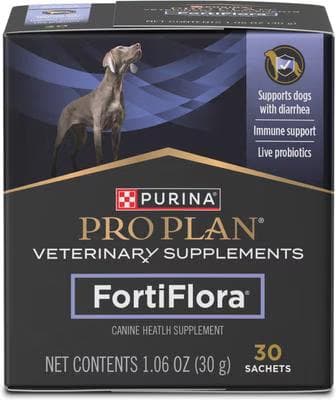
The #1 vet-recommended probiotic for dogs. Daily powder sachets with live probiotics support healthy digestion and firmer stools, and can help dogs coping with diarrhea or GI upset.
Webvet may earn a commission when you click through to Chewy, at no extra cost to you.
What Cerenia Is Used For in Dogs
- 1Cerenia is veterinarian prescribed for specific vomiting indications and is not a substitute for diagnosis.
- 2It blocks a vomiting pathway but does not remove an obstruction, neutralize a toxin, restore hydration, or treat pancreatitis.
- 3Tablets and injection have different label directions, and motion sickness is not the same regimen as acute vomiting.
- 4Collapse, breathing difficulty, facial swelling, tremors, seizures, a swollen abdomen, or continued severe illness is an emergency warning.
Cerenia blocks neurokinin-1 receptors involved in substance P signaling and the vomiting reflex. It can reduce vomiting even while the cause remains active. A dog that stops vomiting can still be dehydrated, painful, obstructed, poisoned, or affected by metabolic disease.
What is Cerenia used for in dogs? Veterinarians use the brand for treatment or prevention of acute vomiting under its label and for prevention of motion-sickness vomiting under a separate oral regimen. They may also make diagnosis-specific decisions around anesthesia or other nausea-provoking care, but those uses require a patient plan.
How quickly does Cerenia work on dogs? The cited maropitant guidance describes onset within hours, but the available primary veterinary evidence does not authorize a more precise universal number. The route, indication, whether a tablet stays down, and the underlying disease affect the visible response. Continued vomiting needs a call, not an early extra dose.


Multi-strain probiotic plus prebiotic sprinkle capsules for dogs and cats; supports digestive balance during diarrhea, diet changes, and antibiotic courses.
Webvet may earn a commission when you click through to Chewy, at no extra cost to you.
Should Cerenia be given with food?
For motion-sickness tablets, the cited clinical guidance describes giving the dose with a small amount of food and avoiding a full meal before travel. Do not wrap the tablet tightly in a large fatty portion. Acute-vomiting instructions can differ, and a dog unable to keep medicine down may need injection and fluids.
There is no single feeding rule for every vomiting case. Puppies, toy breeds, diabetic dogs, and medically fragile animals should not have food withheld without guidance. If the dog refuses food after vomiting is controlled, report it because poor appetite can reflect the illness or a medication effect.
Is there a human equivalent of Cerenia?
There is no direct over-the-counter human equivalent that an owner should substitute. Human anti-nausea medicines act through different pathways, have different contraindications, and require veterinary dosing. A familiar medicine such as ondansetron may be prescribed in selected cases, but it is not a generic form of Cerenia.
Is there an over-the-counter alternative?
There is no universal OTC replacement for a prescription antiemetic. Home antacids do not treat the same pathway, and suppressing vomiting without diagnosis can delay care for obstruction, toxin exposure, pancreatitis, bleeding, or dehydration. Call the veterinarian for a lower-cost prescription or diagnostic plan instead of replacing Cerenia from the medicine cabinet.
Motion-sickness planning beyond the tablet
Motion sickness can combine nausea with fear. Use the label-directed Cerenia plan, but also make the trip easier. Practice short stationary sessions, secure the dog safely, keep the vehicle cool and ventilated, drive smoothly, and avoid a full meal when the motion-sickness instructions say to do so.
Track whether the dog drools, lip licks, yawns, pants, vomits, refuses the car, or becomes distressed before movement begins. Signs in a parked car can point to learned fear as well as motion-triggered nausea. A behavior plan may be needed alongside the antiemetic.
Do not take a sedated or unsteady dog on a nonessential trip. If Cerenia controls vomiting but fear remains severe, tell the veterinarian rather than adding a human travel medicine.
For a practical plan around the journey, our dog car sickness guide explains what to observe before, during, and after travel, how nausea can overlap with fear, and which changes to discuss with your veterinarian.
Cerenia Side Effects and When to Call the Vet
What are the common side effects of Cerenia? Cited maropitant guidance lists drooling, reduced appetite, diarrhea, tiredness, and injection-site discomfort among effects owners may observe. Vomiting can also continue because the underlying disease remains active. Mild signs should improve rather than intensify.


Pure USDA-organic pumpkin puree, no fillers or additives. Adds gentle soluble fiber to firm up loose stool and settle a mildly upset stomach. A simple vet-favorite topper.
Webvet may earn a commission when you click through to Chewy, at no extra cost to you.
Mild effect or ongoing disease?
A quiet dog may be tired from travel, dehydration, pain, nausea, another medicine, or Cerenia. Check alertness, gum color, breathing, water intake, urination, stool, abdominal comfort, and interest in food. A responsive dog resting comfortably is different from one that cannot stand or is difficult to wake.
Call promptly for:
- continued or recurrent vomiting
- inability to keep water down
- persistent diarrhea or appetite loss
- marked lethargy or worsening weakness
- painful or spreading injection-site change
- no improvement on the veterinarian's expected timeline
The absence of vomit does not prove the dog is safe. Obstruction and pancreatitis can remain painful, and toxin or organ disease can progress after the vomiting reflex is suppressed.
Dogs needing extra caution
The cited maropitant guidance emphasizes liver dysfunction and other highly protein-bound medicines. The veterinarian should also review very young age under product-specific thresholds, pregnancy or nursing, prior reaction, and any condition where obstruction or toxin exposure is suspected.
Do not generalize that kidney disease always prolongs Cerenia. Current label-based guidance emphasizes liver metabolism and does not support that kidney-disease generalization.
Puppies, seniors, and medically fragile dogs
Current label age thresholds differ by indication and product, so the veterinarian must verify age as well as weight. Puppies and toy breeds can dehydrate or develop low blood sugar quickly when vomiting and food refusal continue. Do not withhold food or wait through repeated vomiting without pediatric guidance.
Senior dogs often have kidney, liver, endocrine, heart, or cancer-related disease that changes the diagnostic plan. A familiar episode of vomiting may not have the same cause as last time. Bring the complete medication and supplement list, including recent pain medicines.
Pregnant or nursing dogs require a veterinarian's risk-benefit decision. Do not assume a medication tolerated before breeding remains appropriate.
Possible overdose or dosing error
Call with the dog's weight, product, tablet strength or injection information, maximum amount, indication, and time. Do not induce vomiting unless a veterinary professional directs it. An owner should never attempt a Cerenia injection at home unless the veterinarian has provided explicit legal, product-specific instruction, and this consumer page does not teach injection technique.
 Sponsored
Vet care that's always there
Unlimited video calls and messaging with licensed vets for less than a typical vet visit. One membership covers up to five pets.
Use code Pets60
Plans start at $12/month · covers up to 5 pets
- Licensed vets in most states
- Rx for 150+ conditions
- 4.7 on Trustpilot
Why Cerenia Costs So Much and Where Prescriptions Are Filled
Why is Cerenia so expensive? It is a branded prescription veterinary medicine with indication-specific tablet and injectable forms, regulated manufacturing, distribution, and veterinary oversight. The price also varies with dog weight because the label may require different tablet strengths or combinations, and the total visit can include examination, injection, fluids, diagnostics, or follow-up.
An honest quote separates:
- medication strength and quantity
- clinic dispensing or injection fee
- examination or recheck
- diagnostic testing for the cause of vomiting
- fluid therapy or hospitalization when the dog is dehydrated
- another medicine or diet needed for the underlying disease
A universal current price range would be misleading. Ask the clinic for the exact prescription details before comparing pharmacies. The cheapest tablet listing is not a complete treatment quote when a sick dog also needs diagnosis and hydration.
Where can a Cerenia prescription be filled?
A veterinary clinic may dispense Cerenia directly or send a valid prescription to a licensed pharmacy. Injection is generally a clinic treatment. Availability at a warehouse, retail, or online pharmacy can change by strength and stock, and a seller that does not require a prescription should be avoided.
When comparing retail pharmacies, call with the exact strength and quantity after the veterinarian writes the prescription. Local stock and participation vary. Do not substitute a different maropitant product, strength, or formulation without prescriber approval.
Brand and active-ingredient terminology
Cerenia labels identify maropitant citrate as the active ingredient. A listing that uses an ingredient name still needs pharmacist verification of approval, strength, formulation, quality, and legal dispensing. The veterinarian should approve any substitution.
Cost discussions should include how well the medicine serves the indication. Motion sickness may require event-only use, while repeated vomiting can create diagnostic and treatment costs far beyond the antiemetic itself.

Triple-action phage, prebiotic, and probiotic capsules for everyday maintenance of a balanced gut microbiome once a dog's digestive flare has settled.
Webvet may earn a commission when you click through to Animal Biome, at no extra cost to you.
Maropitant Clinical Facts and Injection Guidance
For detailed clinical guidance about Cerenia's active ingredient, see WebVet's maropitant for dogs and cats guide, which explains dog-and-cat distinctions, injection guidance, duration, interactions, and the treatment-failure pathway. Use that guide with the current label when a formulation or clinical detail goes beyond this brand overview.
Cerenia and maropitant are not competing medicines: Cerenia is a brand of maropitant citrate. This guide covers price, access, food, and brand questions; the linked maropitant guide explains the broader clinical facts.
Monitoring After a Dose
Write down dose time, formulation, indication, food, vomiting episodes, water intake, appetite, stool, urination, pain, and other medicines. This timeline helps distinguish a lost tablet from treatment failure and a mild side effect from ongoing illness.
Seek reassessment when vomiting returns early, the dog cannot drink, appetite remains absent, pain or diarrhea worsens, or energy continues to decline. Depending on the case, the next step can include examination, bloodwork, imaging, fluids, pain control, surgery, toxin care, or a different antiemetic.
Do not judge success only by a clean floor. The treatment goal is a hydrated, comfortable dog whose underlying diagnosis is being addressed.
A home timeline that changes the next decision
Record each vomiting episode rather than estimating at the end of the day. Note whether it involved food, bile, blood, foreign material, or unproductive retching. Distinguish vomiting with abdominal effort from passive regurgitation. Photograph unusual material only when doing so does not delay care.
Also record:
- water kept down or vomited
- appetite and food offered
- urine and stool output
- abdominal shape and comfort
- energy, gait, and alertness
- every medicine and dose time
- possible access to trash, toxins, plants, or objects
This timeline helps the clinic decide whether the dog needs fluids, imaging, a different antiemetic, or surgery. It can also reveal that the tablet was probably lost before absorption.
Returning to food and activity
Follow the diagnosis-specific feeding plan. Do not assume every vomiting dog needs the same bland diet or fasting period. Puppies, diabetic dogs, pancreatitis patients, postsurgical patients, and dogs at obstruction risk have different needs.
Resume activity only as the veterinarian directs. A motion-sickness dog may return to normal life quickly, while a dog treated for pancreatitis or obstruction may need restriction, diet changes, and rechecks. If vomiting is controlled but appetite, hydration, pain, or energy remains abnormal, call before the next dose.
When Cerenia Does Not Stop Vomiting
Continued vomiting is a treatment-failure signal, not proof that the dog needs more maropitant. A tablet may have been lost, the route may be unreliable, or the disease may overwhelm symptom control. Obstruction, pancreatitis, toxin exposure, metabolic disease, internal bleeding, and other conditions require diagnosis-driven care.
Call with:
- each dose time, formulation, strength, and indication
- whether the tablet was seen in vomit
- number and character of vomiting episodes
- water intake and urine output
- appetite, stool, energy, and abdominal comfort
- every other medicine
- possible foreign-object or toxin access
The clinic may recommend examination, fluids, bloodwork, radiographs, ultrasound, hospitalization, surgery, or another antiemetic. Do not repeat a lost tablet or switch from tablets to injection at home.
Vomiting returns before the next scheduled dose
An early return can reflect progression of disease, a tablet that was not retained, or a regimen that needs reassessment. The correct response is a call. Redosing from the general once-daily language can still be wrong when the indication, route, age, course, or prior absorption is uncertain.
Vomiting stops but the dog remains sick
Watch the whole patient. Persistent anorexia, pain, weakness, dehydration, diarrhea, fever, or mental dullness can remain urgent. A clean floor is not the endpoint if the dog cannot drink, urinate, stand, or rest comfortably.
Storing Tablets and Preserving the Prescription Record
Keep tablets in the original labeled container and protect them from pets, heat, moisture, and mix-ups with other prescriptions. Do not transfer doses to an unlabeled bag for travel. Bring the package and veterinary label when another clinic evaluates the dog.
A caregiver handoff should include:
- which indication the prescription treats
- exact tablet strength and amount
- food and timing directions
- dose already given and earliest next time
- warning signs and clinic contact information
This is especially important when boarding or traveling, since motion-sickness use and acute-vomiting treatment should never be confused.
Questions to Ask Before Leaving the Clinic
The prescription should answer more than the tablet amount. Ask what diagnosis is most likely, which tests are still pending, what the antiemetic can and cannot accomplish, and what change would trigger a same-day return.
Clarify:
- when the next dose is permitted
- whether food should accompany the tablet
- what to do if the dog vomits after administration
- which side effects should be monitored at home
- whether another nausea, pain, or stomach medicine is being used
- when appetite, hydration, or stool should improve
A motion-sickness plan should identify travel timing and meal instructions. An acute-vomiting plan should identify the underlying-care and recheck pathway. Keeping those instructions separate prevents the brand name from becoming a one-size-fits-all answer.
If the dog was treated by injection, request the dose time and formulation in the discharge record. Another clinic needs that information before giving an oral tablet or additional antiemetic.
Keep the discharge plan where every caregiver can see it. Mark each dose immediately and identify the person responsible for checking water intake, appetite, urination, stool, and pain. A clear handoff reduces duplicate dosing and makes deterioration easier to recognize.
Cerenia For Dogs FAQs
Frequently Asked Questions
Is Cerenia bad for dogs?
For dogs, Cerenia is not inherently bad, and it can be valuable when a veterinarian selects it for the correct indication. It can cause side effects and can make vomiting disappear while a serious cause remains. Safety depends on label-directed age, route, dose, liver review, other medicines, and monitoring for ongoing illness or emergency signs.
Does Costco carry Cerenia for dogs?
Whether a Costco pharmacy can carry Cerenia for dogs depends on location, strength, and pharmacy policy. A warehouse pharmacy may be able to fill a valid veterinary prescription, but call with the exact drug, strength, quantity, and formulation after the veterinarian writes it. Do not switch products or buy from a seller that bypasses prescription requirements.
What is the generic version of Cerenia?
When asking about a generic version of Cerenia, start with its active ingredient, maropitant citrate, and then verify any equivalent with the veterinarian or licensed pharmacist. Ask whether an approved equivalent exists in the required tablet or injectable formulation. A listing that uses the ingredient name is not enough to prove quality, strength, legal status, or interchangeability with the prescribed product.

Editor
The Webvet Editorial Team is the in-house group of pet-care editors and writers behind Webvet, operated by Smart Pet Collective. The team researches, writes, and maintains Webvet's pet health, behavior, and medication content. Every article follows a defined editorial process: research from reputable veterinary and scientific sources, careful drafting, mandatory review of medical content by a credentialed veterinarian, and dated publication. Health and medication articles are medically reviewed by a licensed veterinary professional before they go live and are kept current over time.
Veterinarian · BVMS MRCVS
Dr. Pippa Elliott, BVMS, MRCVS, is a veterinarian with nearly 30 years of experience in companion animal practice. Dr. Elliott earned her Bachelor of Veterinary Medicine and Surgery from the University of Glasgow. She was also designated a Member of the Royal College of Veterinary Surgeons. Married with 2 grown-up kids, Dr. Elliott has a naughty Puggle named Poggle, 3 cats and a bearded dragon.


