Diabetic Dog Treats: Safe Choices and Consistent Portions
Choose rewards for a diabetic dog through its veterinary feeding plan. Compare calorie labels, repeat approved portions and timing, review homemade foods, and know when appetite or health changes need prompt advice.

BVMS MRCVS
Medically reviewed by Dr. Pippa Elliott, BVMS MRCVS · Last reviewed

This article contains affiliate links. Webvet may earn a commission when you buy through them, at no extra cost to you.
Diabetic dog treats can fit some dogs’ routines when the exact food, portion, and timing are part of the veterinary feeding plan. Start with that plan rather than a “diabetic-friendly” label. A measured portion of the main food may be the simplest reward; a separate treat needs its ingredients and calories checked. Keep the routine consistent, and ask the prescribing team what to do when appetite, meals, or health changes.
- 1Use the veterinarian’s feeding plan to choose rewards and their timing.
- 2Repeat a consistent portion and include it in the daily food intake.
- 3A low-calorie or sugar-free claim does not prove blood-glucose control.
- 4Contact the veterinary team when appetite changes; do not adjust insulin to compensate for treats.
Can a diabetic dog have treats?
Many diabetic dogs can have an approved reward, but there is no universal safe treat or count for every dog.
The appropriate choice depends on the current food, body condition, insulin plan, other illnesses, and whether the dog reliably eats its meals. Use a consistent portion that the veterinary team has accounted for. Treats should support a manageable routine rather than displace the complete and balanced main diet.
The 2026 AAHA diabetes guidelines emphasize appropriate portions, consistent feeding times, and a complete diet the dog will eat reliably. They specifically include daily treats and snacks in calorie accounting. The guidance also recognizes that concurrent diseases can change the dietary priorities. This is more useful than assuming every diabetic dog needs the same low-fat, high-fiber, or carbohydrate-free snack.
- Confirm the main food and the amount the dog should receive.
- Ask which rewards are compatible with that exact feeding plan.
- Agree on an amount and timing the household can repeat.
- Keep the practice informed about changes in appetite, weight, activity, or other illness.
Part of the measured meal may work for easy training or handling. Set that portion aside before serving the rest, rather than adding an extra handful on top. If the dog needs a more appealing reward, discuss a suitable alternative and its allowance. A dog that will eat treats but refuses its normal meal needs a call to the veterinary team, not repeated snack substitutions to make the feeding record look complete.
For a dog whose veterinarian has approved this fish reward, The Honest Kitchen Purely One White Fish Filets have one listed ingredient, dehydrated white fish. The maker gives an approximate whole-fillet calorie value, not an exact value for every small fragment. That limits precise portioning unless the manufacturer supplies weight-based information. Confirm the actual planned serving rather than assuming a single ingredient makes a whole fillet an unrestricted snack.

Webvet may earn a commission when you click through to The Honest Kitchen, at no extra cost to you.
Agree on a daily reward portion

Ask for a written reward plan with enough detail that another caregiver could follow it.
The useful number is the approved total portion within the whole day’s intake. A broad healthy-dog allowance does not establish the right treat dose for an individual diabetic dog. The veterinary team can decide whether any separate extras are appropriate, whether meal food should supply rewards, and whether another medical condition requires tighter limits.
| Part of the written plan | What to confirm | Practical record |
|---|---|---|
| Approved reward portion | Exact food, flavor, amount, and calorie contribution. | A measured daily container or weighed portion. |
| Meal and insulin timing | When rewards may be given relative to the prescribed routine. | A schedule shared with all caregivers. |
| Other extras | Chews, toppers, pill food, and snacks from visitors. | One combined daily record. |
| Appetite changes | Who to contact and what instructions to follow if the dog eats less. | Clinic and emergency contact details with the plan. |
The general treat-budget guide explains the usual calorie arithmetic. For diabetes, first confirm the individual allowance rather than automatically applying a percentage. If the clinic approves 12 calories from a particular 3-kcal treat, four whole treats supply that amount. This is an arithmetic example, not a prescription for your dog, and it does not imply that a different 12-calorie food has the same glucose effect.
If several people give rewards, use one container for the agreed day’s portion. Include food used during nail care, walks, classes, and medication routines. A countable treat can simplify the record, while irregular pieces may need a weight-based calorie value. Ask the manufacturer for missing nutrition information instead of estimating a value from the ingredient list, the size of the bag, or how light a piece feels.
The regular Pet Botanics Chicken Training Reward offers a countable 3-kcal soft format when the full recipe fits the veterinary plan. Ten whole treats are 30 kcal whether delivered whole or split. This is the regular product, not its Mini version. The formula includes pork liver and other ingredients beyond chicken, so review it in full if the dog also has a food restriction or digestive condition.
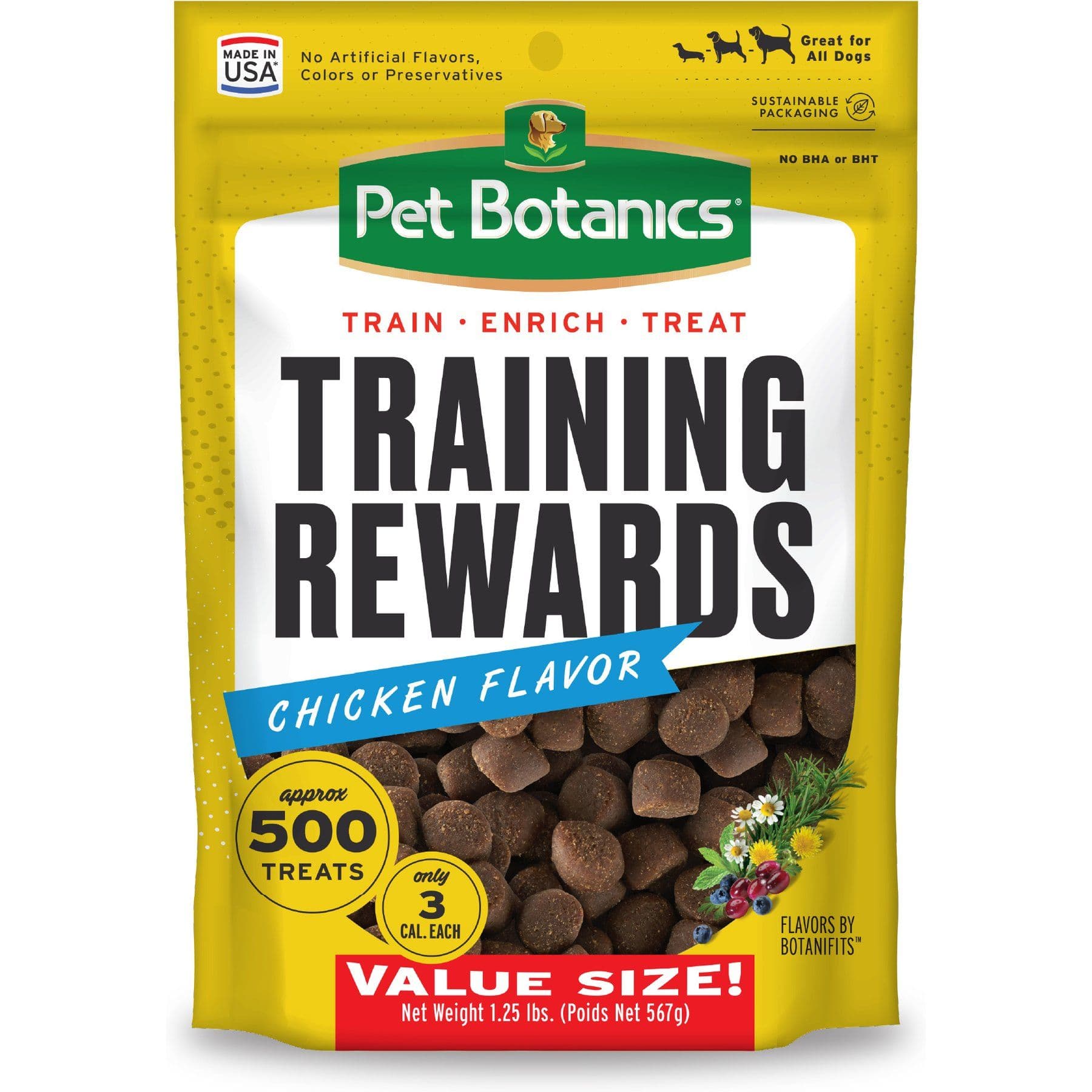
Soft chicken-flavor training rewards in a larger bag for frequent practice. Break rewards into appropriate pieces for your dog.
Webvet may earn a commission when you click through to Chewy, at no extra cost to you.
Compare calorie statements without promising glucose effects
No snack can be promised not to spike a particular diabetic dog’s blood sugar from its label alone.
Calories help account for the amount fed, but they do not measure that dog’s blood-glucose response. Compare the exact formula and actual serving. A tiny soft piece, a large dried fillet, and a vegetable fragment can have very different sizes and nutrient profiles. Two portions with equal calories are not proven interchangeable for diabetes management. Take the full label to the veterinary team when proposing a change.
| Ordinary reward example | Manufacturer calorie statement | Whole-piece arithmetic and limitation |
|---|---|---|
| The Honest Kitchen Purely One White Fish Filets | Approximately 28 calories per fillet | A whole fillet is a larger portion; unequal fragments have no verified per-piece value. |
| Pet Botanics regular Chicken Training Reward | 3 kcal per treat | Four whole treats supply 12 kcal; smaller deliveries still total the same calories. |
| Zuke’s Mini Naturals Peanut Butter & Oats | 2 kcal per piece | Six whole pieces supply 12 kcal; this does not establish an equivalent glucose response. |
| Fruitables Skinny Minis Pumpkin & Berry | 3 calories per bite | Four bites supply 12 calories; a pumpkin name does not establish medical suitability. |
The values come from The Honest Kitchen, Pet Botanics, Zuke’s, and Fruitables. These are label-reading examples for a veterinary discussion, not a ranked list of tested diabetic products. Check the current package because formulas and serving statements can change. None of these ordinary products is presented as an insulin substitute or a treatment for diabetes.
 $65 · no membership
Have a health question about your dog?
A licensed vet can assess your dog over video and prescribe online when it's appropriate.
 Talk to a vet
- Licensed vets
- All 50 states
- same-day Rx
Webvet may earn a commission if you book.
Buying diabetic treats: check the actual label
You can buy products marketed as diabetic treats for dogs, but the marketing term alone does not establish a suitable formulation or predictable response.
Look for the complete ingredient list, calories per treat or per gram, serving information, and a way to contact the manufacturer. Ask the veterinarian whether the exact product fits the dog’s food and treatment plan before using it regularly. A product name is not clinical evidence.
An ordinary small reward such as Zuke’s Mini Naturals Peanut Butter & Oats may be an option only when the full formula and portion have been approved. Its manufacturer lists 2 kcal per piece, but the recipe also contains cane sugar and dried cultured whey. Those facts belong in the review with the clinic. Do not describe it as sugar-free, a low-carbohydrate therapeutic treat, or safe for every diabetic dog.
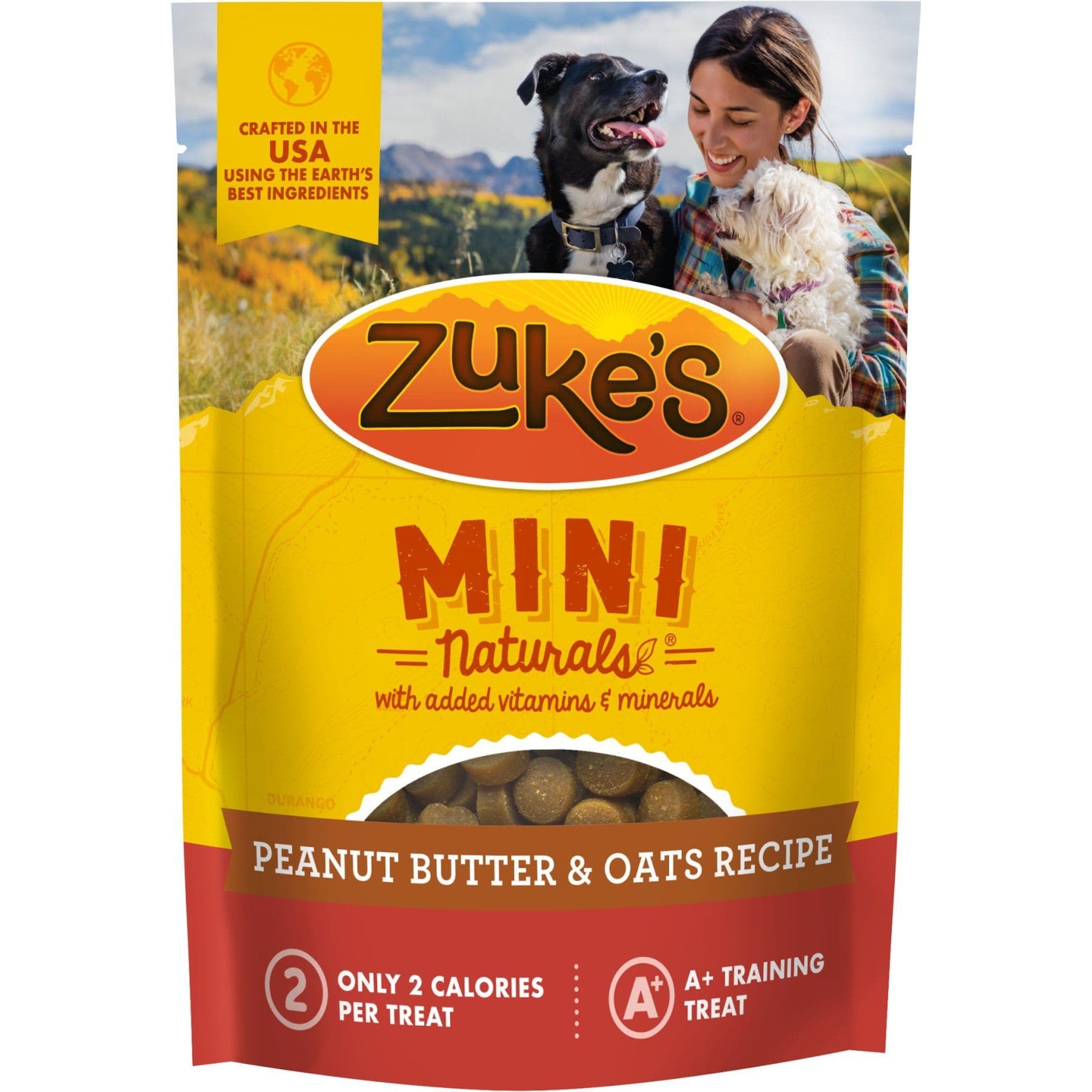
Soft, pea-sized training treats made with peanut butter and oats. Small enough to reward often while keeping treats inside the 10% of daily calories vets recommend.
Webvet may earn a commission when you click through to Chewy, at no extra cost to you.
- Match the exact product, flavor, and formulation to the approved plan.
- Record calories for the portion actually given, not just a stated serving you do not use.
- Review added sugars and the full recipe rather than focusing on one front-label claim.
- Ask before swapping products, even when their calorie numbers are similar.
All-natural diabetic dog treats still require the same checks. Natural describes an ingredient or processing claim; it does not show that the reward was tested in diabetic dogs. Low calorie also does not automatically mean low fat or medically suitable. Our low-calorie treat guide explains portion comparisons, while the healthy-treat guide covers broader label and texture decisions.
Vegetables and homemade diabetic dog treats

A small amount of a suitable plain vegetable may fit some veterinary feeding plans, but no human food should be assumed to be an unlimited diabetic snack.
Ask about the exact food, preparation, portion, and timing. Cut pieces to suit the dog’s size and eating habits, and avoid oils, sauces, salty coatings, or sweeteners. The cucumber shown here illustrates plain preparation, not a universal serving recommendation.
Pumpkin also needs context. Fruitables Skinny Minis Pumpkin & Berry are 3-calorie formulated bites, with chickpeas, peas, honey, oil, pork stock, and other ingredients. They are different from plain pumpkin or a veterinarian-directed fiber addition. Use them only if the clinic has approved the whole recipe and amount. Neither pumpkin in the name nor a small calorie count proves a beneficial glucose effect.
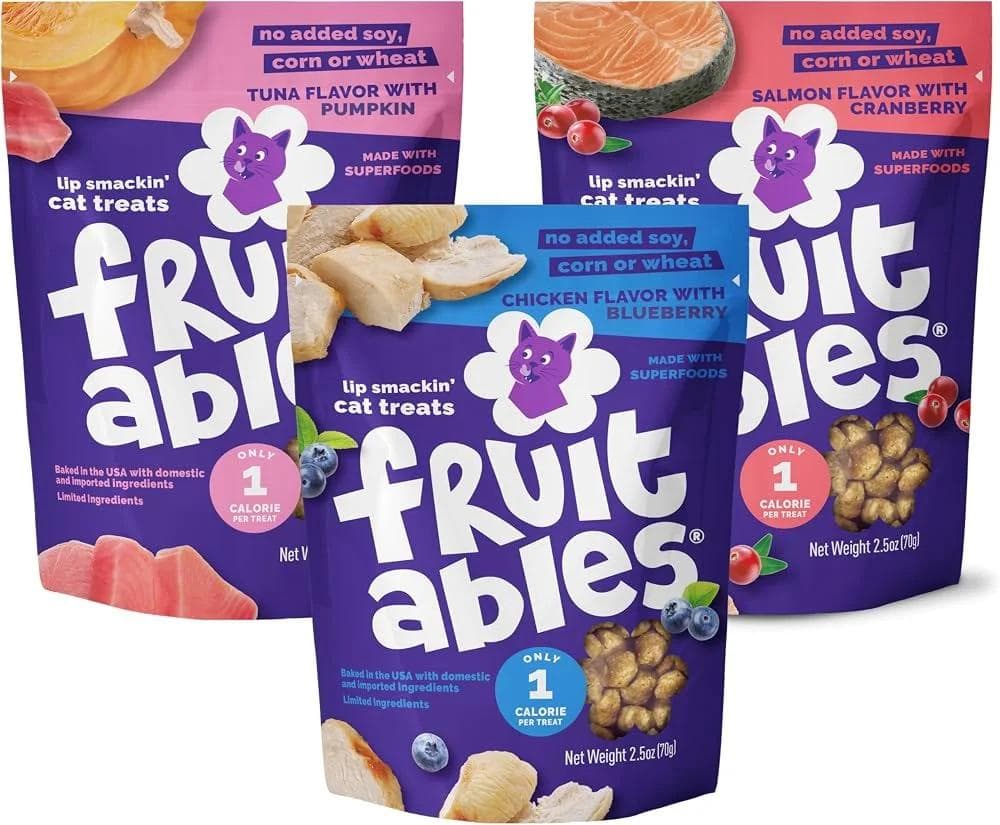
Soft training treats made with real pumpkin and blueberries, small enough to hand over often without breaking the 10% treat rule. The fruit-flavoured reward that skips the prep and the pits.
Webvet may earn a commission when you click through to Chewy, at no extra cost to you.
Homemade diabetic dog treats need more information than an appealing recipe title. Ingredients, final yield, piece size, cooking changes, and storage all affect what you actually feed. A beef-liver biscuit or pumpkin cookie cannot be declared safe for all diabetic dogs just because it is homemade. Ask the veterinary team to review the recipe and intended portion before preparing it for regular use.
- Keep the approved recipe and ingredients consistent from batch to batch.
- Estimate calories from the complete recipe and actual yield only when adequate nutrition data are available.
- Do not silently change flour, sweetener, oil, or piece size while retaining an old calorie estimate.
- Follow safe storage and discard spoiled food.
Recipes using baby food require particular label checking. The ingredient list may contain more than the food pictured on the front, including seasonings unsuitable for dogs. Do not assume that a product made for infants fits a canine medical diet. A small amount of the dog’s existing measured food may be a more repeatable option than a new homemade recipe with several changing ingredients.
Keep rewards consistent with meals and training

Consistency means following the individual plan, not improvising a universal timetable. VCA’s nutrition guidance for diabetic dogs emphasizes a predictable feeding routine. Ask when training rewards can be used and whether they should come from meal food. Keep the same approved product and portion unless the veterinary team recommends a change, and tell the team if classes, boarding, travel, or work shifts make the routine difficult.
Soft diabetic dog treats can be useful for repeated rewards when the formula is appropriate and the pieces are easy to count.
Preportion whole treats, then divide them if the dog can take the smaller pieces safely. Four 3-kcal whole treats remain 12 kcal when split into more deliveries. Do not compensate for a long training session by adding an unrecorded second handful or by changing the insulin dose.
- Give a trainer or dog sitter the permitted portion rather than an open bag.
- Record rewards used during walks, handling, and classes.
- Use toys, play, praise, or sniffing opportunities when the dog finds them rewarding.
- Keep the clinic’s instructions available for unexpected meal or appetite changes.
Make the handoff practical: tell the next caregiver what food has already been given and what remains. A written note or shared record can prevent duplicate feeding. This is especially useful when one person handles meals and another does training. The goal is a routine people can sustain, with enough information for the veterinary team to interpret changes in the dog’s condition.
Foods and claims to avoid
Avoid unapproved snacks, large unpredictable portions, and claims that a treat will stabilize blood sugar or replace prescribed care.
Sugar-free does not mean safe. Some sugar-free human foods contain xylitol, which is dangerous to dogs. A low-sugar product may also contain other energy sources, so the label cannot establish a glucose response on its own. Do not use human diabetic-food lists as a canine feeding prescription.
The FDA’s xylitol warning describes a serious poisoning risk. Keep products containing xylitol away from dogs and seek immediate veterinary or poison-control advice after suspected exposure. Do not wait for symptoms or test whether the dog tolerates a small amount. Grapes, raisins, chocolate, and other foods unsafe for dogs also remain unsafe because a dog has diabetes.
Raw treats add a separate food-safety concern. The CDC does not recommend raw pet food or treats; a raw, freeze-dried, or single-ingredient claim does not certify suitability for diabetes. If the dog also has gastrointestinal disease, review rewards with the practice and the sensitive-stomach treat guide rather than using another general label as a shortcut.
When appetite or health changes
Not every diabetic dog needs weight loss. Some dogs are overweight, while others lose weight because their diabetes is not controlled or have another condition affecting nutrition. Report weight changes rather than automatically replacing food with lower-calorie snacks. The veterinary team should assess the main diet, body condition, and treatment together. Treat selection is only a small part of that assessment.
- 1Contact the veterinary team if the dog eats less, refuses meals, vomits, or seems unwell.
- 2Follow the written plan for meal problems; ask for instructions if there is no plan.
- 3Do not adjust insulin or add extra treats to chase a glucose reading.
- 4Seek urgent care for weakness, collapse, seizures, or other concerning sudden changes.
VCA’s diabetes overview identifies low blood sugar as a potentially life-threatening complication. Keep the emergency plan from the prescribing clinic available and make sure every caregiver understands it. If the dog is weak, disoriented, trembling, collapsing, or having a seizure, contact urgent veterinary care. Do not assume that an ordinary treat is adequate treatment for an emergency.
The principles of insulin treatment depend on the dog’s prescribed food and medication routine. If a meal is missed or only partly eaten, contact the team for case-specific instructions rather than guessing a dose or feeding repeated snacks. Bring a clear record of meals, rewards, medicines, appetite, and symptoms to follow-up appointments so the plan can be adjusted using useful information.
Diabetic treat questions
Frequently Asked Questions
Can I give my diabetic dog treats between meals?
Ask the prescribing veterinary team how rewards should fit the dog’s meal and insulin schedule. There is no single between-meal rule that works for every dog and treatment plan. Use the same approved food and portion at the agreed times, and count it in the daily intake. Do not add snacks or alter insulin to compensate for a different routine without guidance.
Are sugar-free dog treats safe for a diabetic dog?
Sugar-free does not mean safe. Check the full ingredients, calories, portion, and veterinary feeding instructions. Xylitol is dangerous to dogs and must never be used as a treat ingredient. A product may also contain starch or other energy sources despite having no added sugar. The label is one part of selection; it does not prove a predictable blood-glucose response.
Can a diabetic dog have soft training treats?
A suitable soft treat may fit some dogs’ plans if the exact formula and total portion have been approved. Count the whole treats before dividing them into smaller rewards; splitting changes the number of deliveries, not the total calories. Use measured meal pieces or nonfood rewards when those fit the plan better, and tell the trainer about the dog’s feeding restrictions.
$65 · no membershipHave a health question about your dog?
A licensed vet can assess your dog over video and prescribe online when it's appropriate.
Talk to a vet- Licensed vets
- All 50 states
- same-day Rx
Webvet may earn a commission if you book.
Veterinarian · BVMS MRCVS
Dr. Pippa Elliott, BVMS, MRCVS, is a veterinarian with nearly 30 years of experience in companion animal practice. Dr. Elliott earned her Bachelor of Veterinary Medicine and Surgery from the University of Glasgow. She was also designated a Member of the Royal College of Veterinary Surgeons. Married with 2 grown-up kids, Dr. Elliott has a naughty Puggle named Poggle, 3 cats and a bearded dragon.
Related reading

Best Litter for Litter-Robot: What Works and What to Avoid

Litter-Robot 5 Pro Review: Hands-On Setup, Camera and App Test

Litter-Robot 5 Review: What Changed and Is It Worth the Upgrade?
