Cat TV: How to Tell Whether Your Cat Enjoys It
Cat TV can be one small part of indoor enrichment. Learn how to run a supervised trial, spot frustration and pair screen watching with physical play your cat can finish.

This article contains affiliate links. Webvet may earn a commission when you buy through them, at no extra cost to you.
Cat TV can give an indoor cat something interesting to watch, but a moving bird on a screen is not the same as a bird outside, a toy the cat can catch or time spent playing with you. The useful question is whether your cat chooses to watch calmly and settles afterward.
Some cats follow every movement. Others glance once and walk away. Neither response is a problem. Start with a short supervised viewing session, protect the screen from tipping, and let your cat decide whether this belongs in their day.
What cat TV can and cannot provide
Try cat TV as an optional activity. Continue when your cat remains relaxed and can disengage; stop if viewing leads to frantic screen attacks, repeated searching or agitation. Follow an interested viewing session with a real toy your cat can catch.
A cat following a moving bird tells you that the display attracted attention; it does not establish what the cat believes about the image. Some cats search behind a screen while others watch without approaching.
You cannot reliably infer that a cat knows the scene is unreal, or that every paw at the screen shows confusion. Make the practical decision from safe behavior and comfort, then give the cat an opportunity to disengage.
What counts as cat TV?
A cat TV programme is video or animation for a cat to watch, not a substitute for physical play. Whether cat TV is good or bad for your cat depends on their response, the setup and other enrichment. Here, a cat TV program or series means viewing made for pet cats.
A Frisco Plush Window Perch provides an alternative real-window viewing place. Follow its mounting instructions and keep the cat's route clear; it does not need to face a television.
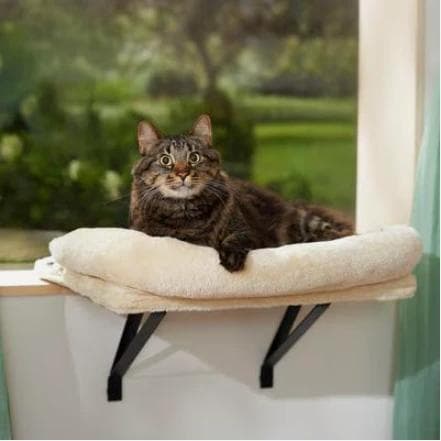
A padded window-viewing perch for a comfortable observation spot. Follow its mounting instructions.
Webvet may earn a commission when you click through to Chewy, at no extra cost to you.
The best cat TV is a specific video your cat can watch comfortably and leave voluntarily, rather than whichever clip attracts the longest stare.
Cat TV usually means videos made to attract a cat's attention, often with birds, squirrels, fish or small moving objects. The phrase can also describe a real window view. This guide concerns screens; a secure catio provides a different experience involving outdoor smells, sounds and room to move.
Consider enrichment beyond the screen
VCA's kitten enrichment guidance includes videos among possible enrichment activities. That makes cat TV an option to try, not a treatment or proof that every cat benefits. Watching does not replace opportunities to climb, scratch, explore, forage and interact with people.
- A calm observer may enjoy following a bird across a screen.
- An active hunter may need a physical game afterward.
- A nervous cat may dislike sudden sounds or rapid movements.
- A disinterested cat may prefer a cardboard hiding place or a food puzzle.
There is no established screen-time allowance that applies to every healthy cat. Instead of choosing a daily quota, offer a brief trial and observe the response. Turning the screen off after a few calm minutes is a reasonable first experiment, especially when you do not yet know whether the cat will jump at it.
Choose a video and set up the screen
Begin with a simple scene and low sound. A steady camera showing a few birds is easier to assess than a fast compilation with music, sudden cuts and loud advertisements. Preview the video yourself before the cat watches.
YouTube offers many cat videos, including birds at feeders, fish and small-animal scenes. Search for the subject your cat already notices. Availability on subscription services changes, and an Amazon Prime membership does not mean every cat-video title is included. Check the specific listing for rental charges, advertising and playback controls before starting it.
| Setup decision | Practical choice | Reason to change it |
|---|---|---|
| Screen support | Follow the manufacturer's mounting or anti-tip instructions | The screen rocks or can fall when bumped |
| Viewing place | Give the cat a stable place with room to leave | The cat must balance on a narrow console |
| Sound | Begin quietly and avoid sudden audio | Ears flatten, the cat startles or leaves |
| Session | Stay nearby for the first trials | You cannot interrupt unsafe screen contact |
| Playback | Preview advertisements and autoplay behavior | The next video is loud or unrelated |
Secure cords so they are not dangling play targets. Keep breakable objects off the approach to the screen and check that a jumping cat cannot knock the television onto another pet or child. A thin screen is not a climbing surface. Do not encourage pawing by holding a treat against it.

A tablet needs the same thought. Propping it on the edge of a table invites a fall when a paw makes contact. Use a stable arrangement appropriate to the device, keep charging cables out of reach, and supervise.
- Moving the device to a safe location is more useful than scolding a cat for approaching the moving picture.
After an interested viewing session, a supervised Frisco Bird Teaser Wand gives the cat something physical to stalk and catch. Put the wand away afterward.
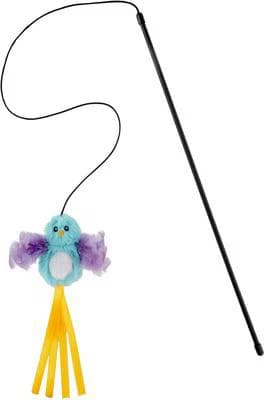
A bird teaser for supervised stalking and catching games. Put the wand away after play.
Webvet may earn a commission when you click through to Chewy, at no extra cost to you.
Compare channels and video formats
| Source or format | Concrete example | Useful first comparison | Playback limitation |
|---|---|---|---|
| Birder King | An eight-hour bird-and-squirrel recording | Wildlife movement and birdsong in a recorded scene | Preview the chosen segment and ads; length is not a session recommendation |
| Cat TV for Cats / Patsy’s Garden | Garden wildlife videos and a continuous stream | Choose a bird-table, wall, lawn or fountain setting | A live scene can change after the initial preview |
| Paul Dinning | Mice in The Jerry Mouse Hole | A mouse-focused alternative to bird scenes | Watch for screen attacks or persistent searching for the mice |
| A single recorded clip versus a playlist | Replay a known short segment instead of letting a queue run | Keep the viewing conditions similar across trials | Autoplay may introduce unrelated clips or a sudden transition |
Birder King’s bird-and-squirrel example lists birds including jays and cardinals alongside squirrels and chipmunks. It offers several kinds of movement to observe. Start with a short section; an eight-hour upload gives you a choice of footage, not a target viewing duration.
Cat TV for Cats’ theme directory groups footage by garden settings including bird tables, walls, lawns and fountains. That makes it possible to compare settings without assuming a faster or busier scene is better. The creator’s channel is a starting point, not a guarantee about every cat’s response.
Paul Dinning’s Mice in The Jerry Mouse Hole is a named cat TV mice option to compare with birds. Preview the actual clip and use a short segment. A mouse-focused video cannot provide a physical catch; stop if the cat persistently searches for the mice or attacks the display.
Compare two clips without chasing a bigger reaction
Choose one recorded scene and note the starting timestamp. At another naturally active time, offer a different scene at similarly low volume and from the same secure viewing place. Keep sessions easy to stop. Changing sound, screen position and footage together makes the response harder to interpret.
| Observation | What it supports | Next choice |
|---|---|---|
| Watches birds briefly, then leaves calmly | This clip can fit a short optional session | Keep it available alongside ordinary play |
| Watches a fountain but leaps at close-up birds | The faster target invites unsafe pursuit in this setup | Stop that clip; favor a calmer activity |
| Ignores both clips but follows a wand toy | Physical play is the clearer preference today | Use the toy rather than escalating the screen |
| Keeps searching after either clip ends | Viewing may not be a useful activity for this cat | Pause screen trials and choose another opportunity |
For food-search enrichment, the Catit Play Treat Puzzle offers another activity to try with part of the usual ration. Start at an easy level and supervise.

An easy food-search activity to introduce with part of the usual ration and supervision.
Webvet may earn a commission when you click through to Chewy, at no extra cost to you.
Save the specific clip or timestamp that worked, rather than relying on a channel’s newest upload. Recheck playback when the app or account changes. Advertising controls, playlists and live footage can alter an otherwise familiar experience.
A cat TV channel is a source of videos, not a guarantee that every upload suits your cat. Birder King publishes bird, squirrel and chipmunk footage. Cat TV for Cats offers garden-wildlife videos and a continuous stream. Preview the specific clip before offering it.
- Birds and squirrels: begin with a steady outdoor scene if your cat already enjoys watching wildlife through a window. Check for sudden sounds or abrupt changes of viewpoint.
- Fish and aquarium videos: slower continuous movement may be an option to trial, but a calm-looking scene is not automatically calming to the cat. Watch the individual response.
- Mouse, lizard, butterfly or bug videos: small moving targets can invite chasing. Keep the device stable and stop if the cat repeatedly strikes it or searches frantically for a catch.
- Strings and interactive games: touching a tablet may be part of the game design. Follow the device's handling limits, supervise contact and provide a physical toy afterward.
Check access and playback before the cat approaches
Free cat TV often means a video you can start without paying for that individual title. It may still include advertising or require an account, and the same service can behave differently on a phone and a television. Check the actual playback screen rather than trusting a search-result label such as “no ads.”
For streaming through a television app or Roku device, check that you can pause, stop, reduce sound and disable unwanted autoplay on your setup. App availability and account access can change. The controls matter more to this trial than buying a new screen or subscription simply for the cat.
- A recorded video lets you preview the full sequence and choose a quiet starting point.
- A 24/7 live stream may change scene or sound after you begin; its continuous availability is not a recommendation for continuous viewing.
- A playlist may include a suitable first clip followed by unsuitable advertisements or unrelated content. Review what happens at the transition.
Avoid choosing a special cat TV bed, box, stand or house before knowing whether viewing interests your cat. Existing stable furniture may be sufficient if it provides a comfortable observation point and a clear exit. Equipment that encourages the cat to balance beside an unsecured screen makes the setup less useful.
Keep the first session easy to end. Sit where you can use the remote without reaching across the cat, keep other pets out of a narrow approach, and have a familiar catchable toy available. These preparations make it easier to respond to the cat instead of improvising after an excited leap.
How can the screen be set up without tipping or cable hazards?

Use the screen manufacturer's approved mount or anti-tip arrangement, place a tablet securely and keep cables out of reach. Clear fragile objects from the approach and provide a stable viewing place with room to leave. Do not rely on a lightweight television stand staying still when a cat jumps against it.
Watch the cat rather than the view count
Use a before-during-after observation test. Before playback, notice your cat's usual posture and activity. During playback, look for voluntary attention rather than assuming every twitch means enjoyment. Afterward, see whether the cat can move on to an ordinary activity. These three comparisons help judge the individual session without treating attention alone as a benefit.
Signs the session may suit your cat
- The cat approaches without being placed in front of the screen.
- Their body remains loose, and they can look away.
- They pause, groom or leave rather than staying fixed on the display.
- Afterward, they engage with a toy, rest or resume their routine.
A Potaroma 3-in-1 Interactive Toy supplies moving feather and butterfly attachments for physical play after viewing. Supervise the session and put the toy away afterward; judge your cat’s response instead of assuming every moving toy will appeal.
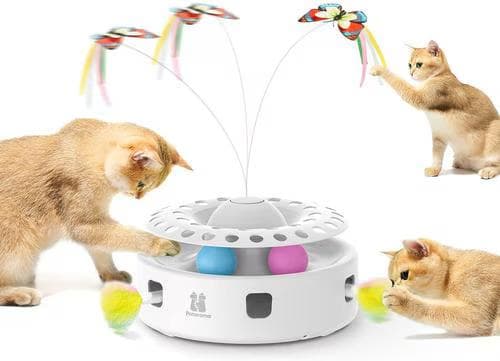
Moving feather and butterfly attachments offer a physical play option after screen time. Supervise play and put the toy away afterward.
Webvet may earn a commission when you click through to Chewy, at no extra cost to you.
These observations are useful household feedback, not a diagnostic test. A tail movement or a chattering sound alone does not tell you whether the experience is positive. Read the whole pattern and compare it with how this cat behaves during other activities.
Is cat TV too overstimulating for cats?
Cat TV can be too stimulating for an individual cat when viewing leads to unsafe screen attacks, persistent searching or difficulty settling afterward. Stop the session and offer a quieter alternative. Intense attention alone does not tell you whether the activity is enjoyable.
Signs to pause or stop
- Repeated forceful leaps at the screen or unstable furniture.
- Frantic searching behind or under the television.
- Persistent agitation after the video ends.
- Hiding, flattened ears or attempts to avoid the sound.
- Redirected swatting or biting toward a nearby person or pet.
Turn the video off and give the cat room. Avoid reaching into an excited cat's space to pick them up. When they have settled, try another form of enrichment at their preferred distance.
If a new pattern of agitation, aggression or withdrawal continues outside viewing sessions, discuss it with your veterinarian rather than blaming or treating the screen alone.
- The Feline Veterinary Medical Association's environmental-needs guidance emphasizes opportunities to perform hunting behavior and to capture prey during play. A screen cannot supply that physical catch. Offering a wand toy afterward gives an interested cat a different outlet with a tangible ending.
Do cats know cat TV isn't real?
You cannot determine what a cat believes about a screen from watching alone. Following motion or checking behind the television does not prove human-like understanding of a programme. Choose based on comfortable, safe behavior and the ability to disengage, rather than trying to make the cat understand the image.
Build a balanced enrichment routine
Place cat TV alongside activities your cat already enjoys. Our interactive cat toys guide covers physical options for the play portion of that routine. It should not become the only changing feature in an otherwise empty day. A window perch, accessible cat wall shelves, scratching surfaces, hiding places and food-search opportunities serve different needs.
For a cat that watches birds intently, try moving the Frisco Bird Teaser Wand behind a box and letting the cat stalk and catch it. For a cat that loses interest quickly, put a small part of their usual food in the Catit Play Treat Puzzle at an easy setting rather than repeatedly changing videos.
For a cat that prefers observing, keep a comfortable resting place with a view and an unobstructed exit.
- Offer one new activity at a time so its effect is easier to judge.
- Let each cat in a multi-cat household approach or leave separately.
- Keep food-based enrichment within the daily feeding plan.
- Put away strings, feather wands and damaged toys when supervision ends.
- Continue predictable social time even when a video seems popular.
If your main concern is that your cat does very little, first distinguish a familiar rest pattern from a new behavior change. Our guide to a bored cat explains what to observe. If household tension seems more relevant than lack of entertainment, start with the environment and cat stress relief, not louder or longer videos.
A useful household note can be as simple as: “Bird video, quiet volume, watched briefly, then played and rested.” Compare that with “Jumped repeatedly, searched behind the screen, remained unsettled.” The first supports trying another short session. The second supports stopping and changing the activity.

Compare it with the activity your cat already chooses
Try a practical comparison on separate ordinary days. Offer a short supervised video on one occasion and a familiar physical activity on another, at times when the cat is naturally awake. Keep your expectations modest: this is a household observation, not a scientific experiment or a test the cat must pass.
Notice whether the cat approaches, how easily they leave and whether the activity fits your routine. If a cardboard hiding place produces relaxed exploration while the video produces frantic searching, choose the hiding opportunity. If your cat watches briefly and then settles, a short screen session may fit comfortably alongside other activities.
Check unattended use and shared access
Do not leave a new video running while you go out simply because the first minute went well. Advertisements, autoplay and a later change in sound can alter the experience. Establish the response over supervised sessions, and keep unattended arrangements limited to what you know the cat can use safely.
In a multi-cat home, also watch the route to the viewing spot. One cat's favorite screen activity may draw them into another cat's resting area. Provide enough room to leave and use separate activities when the shared location creates tension.
- The video is optional; preserving comfortable access through the room matters more than having every cat watch together.
Questions about cat tv
Frequently Asked Questions
Is there a TV channel for cats?
There are video channels and streaming playlists aimed at cats, particularly on YouTube. Choose a specific video you have previewed, rather than relying on a channel name to guarantee calm content or uninterrupted playback.
Is cat TV good or bad for cats?
It depends on the individual response and setup. Calm voluntary watching can be a useful optional activity. Frantic attempts to catch screen animals, unsafe jumping or lingering agitation are reasons to stop and offer physical play or another activity.
Is Cat TV free on Amazon Prime?
Check the exact title in your account. Streaming availability, subscriptions, rental charges and advertising can change. A title appearing in search results does not establish that it is included with Prime.
Is there a TV show that cats like to watch?
Some cats attend to videos with birds, fish or small moving animals. Others prefer ordinary window watching or physical play. Start with a quiet, simple scene and judge your own cat's behavior rather than a video's popularity.
What TV shows can cats actually see?
Cats can respond to movement on screens, but the presence of a response does not prove that they understand a program as humans do. Use visible interest and comfort to choose content; there is no need to select a human television genre for them.

Editor
The Webvet Editorial Team is the in-house group of pet-care editors and writers behind Webvet, operated by Smart Pet Collective. The team researches, writes, and maintains Webvet's pet health, behavior, and medication content. Every article follows a defined editorial process: research from reputable veterinary and scientific sources, careful drafting, mandatory review of medical content by a credentialed veterinarian, and dated publication. Health and medication articles are medically reviewed by a licensed veterinary professional before they go live and are kept current over time.


