Bone Broth for Dogs: Benefits, Safety, and How to Serve It
Bone broth for dogs can add moisture and flavor to meals. Learn which ingredients to avoid, how to serve it, and when to ask your veterinarian.

BVMS MRCVS

This article contains affiliate links. Webvet may earn a commission when you buy through them, at no extra cost to you.
This article is sponsored by The Honest Kitchen. WebVet maintains editorial control and the guidance has been reviewed by veterinarian Dr. Pippa Elliott, BVMS MRCVS.
Bone broth for dogs can be a flavorful way to add moisture to a meal or encourage a reluctant eater, provided the broth is made for pets, the label fits the dog, and fresh plain water remains available. It is a supplemental food, not a complete meal, a replacement for water, or a treatment for dehydration or disease.
The useful benefits are practical rather than miraculous. Aroma and taste may improve palatability, and a prepared broth contributes water when it is poured over food. Claims about curing joint, digestive, immune, or skin problems go beyond the evidence available for ordinary broth. This guide separates those claim boundaries from label-backed ways to use The Honest Kitchen Instant Beef and Turkey Bone Broths. If you also have cats, our guide to bone broth for cats covers feline-specific considerations.
Webvet may earn a commission when you click through to The Honest Kitchen, at no extra cost to you.
- 1Pet-specific bone broth can add flavor and moisture to a meal.
- 2Broth supplements a complete diet and never replaces plain water.
- 3Avoid onion, garlic, other Allium seasonings, and cooked bones.
- 4Follow the current label and ask your veterinarian about medical diet restrictions.
Is Bone Broth Good for Dogs? The Short Answer

Product details are checked against The Honest Kitchen Instant Beef Bone Broth, while the central safety and nutrition boundaries are supported by WSAVA treat-feeding guidance.
Is it safe to give dogs bone broth every day?
Daily use is not automatically necessary or appropriate. Follow the exact product label, include supplemental calories in the daily total, keep plain water available, and monitor tolerance. A pet with disease or a prescription diet needs individualized guidance before a supplement becomes routine.
| Decision point | What to check | Why it matters |
|---|---|---|
| Pet-specific identity | Species directions and current label | Avoids guessing from a human soup recipe |
| Plain ingredient list | No onion, garlic, chives, or leeks | Allium ingredients can harm dogs |
| Moderate sodium | Sodium statement and veterinarian restrictions | Some medical diets require tighter control |
| Supplemental use | Intermittent or supplemental feeding statement | Broth does not replace complete food |
| Prepared safely | Mixing, refrigeration, and discard directions | Water-rich foods spoil after preparation |
- Confirm that the label gives directions for dogs. Prepare only the amount the dog will use within the labeled storage window. A dog image on the front does not replace reading the ingredient and feeding panels.
- Keep a separate bowl of plain water available at all times. Wash and refill that bowl even when broth is offered. Flavored liquid should never become the dog's only drinking option.
Webvet may earn a commission when you click through to The Honest Kitchen, at no extra cost to you.
What Bone Broth Can and Cannot Do for Dogs

Fresh water remains available at all times.
What are the side effects of bone broth for dogs?
Possible problems include vomiting, diarrhea, gas, refusal, excess calories, or conflict with a medical diet. Ingredient-specific risks also matter. Stop the new product and contact the veterinarian if signs are persistent, repeated, severe, or accompanied by weakness, pain, breathing changes, or dehydration.
Use broth for added moisture, aroma, and flavor according to its label. Do not rely on it for joint, gut, immune, or healing effects.
Bone Broth Safety: Ingredients to Avoid
- Scan for onion, garlic, chives, leeks, powders, stocks, and seasoning blends. Reject any broth containing an Allium ingredient. Home straining does not remove dissolved seasonings.
- Remove bones completely when making anything at home. Strain the liquid and discard all bones and fragments. Cooked bones can splinter and must never be served.
- Use an unseasoned recipe and verify every ingredient for dogs. Cool quickly, refrigerate safely, and discard promptly. Homemade broth has variable sodium, fat, calories, and nutrient content.
- Look for visible fat and consider pancreatic or gastrointestinal history. Ask the veterinarian before using rich broth for an at-risk dog. Skimming fat does not turn every recipe into a therapeutic food.
Webvet may earn a commission when you click through to The Honest Kitchen, at no extra cost to you.
How Sodium, Calories, and Supplemental Feeding Affect the Choice

- Compare sodium information and ask the veterinarian when a dog has a restricted diet. Choose a suitable pet product rather than assuming human low-sodium soup is appropriate. Low sodium is not the same as medically appropriate for every dog.
- Count the prepared serving within the dog's daily extras. Reduce other extras if broth becomes a regular topper. Liquid calories still affect weight and diet balance.
- Find the nutritional adequacy or supplemental-feeding statement. Serve broth alongside a complete and balanced food. Broth alone cannot meet essential nutrient needs.
Can dogs safely consume bone broth?
Yes, many healthy dogs can have a small amount of broth made for dogs. Check the ingredients and feeding directions, avoid onion, garlic and cooked bones, count its calories, and ask your veterinarian first if your dog has a medical condition.
How to Serve Bone Broth to a Dog

Distinguish a supplemental broth from complete and balanced food.
Prepare a bone broth powder for dogs with the exact amount of water on the current package, using a clean measuring utensil. Mix thoroughly and allow hot liquid to cool before serving. Start with a small label-directed portion and count its calories among the day’s extras. Refrigerate prepared leftovers when directed and discard them within the product’s stated window.
Webvet may earn a commission when you click through to The Honest Kitchen, at no extra cost to you.
Can bone broth be good for dogs?
It can be useful for adding aroma, flavor, and moisture to a complete meal. Those are practical serving benefits, not evidence that broth treats joint, digestive, immune, or other medical problems.
- Confirm tolerance, calories, and label directions before making broth routine. Start with a small label-directed portion and monitor stool and appetite. Daily use is optional, not a nutritional requirement.
Ways to Use Bone Broth at Mealtime
Use broth as a measured meal topper, as part of the liquid for rehydrating food when both labels permit it, or in an enrichment toy when the product directions allow freezing. A small flavored drink is another option, but keep plain water separately available. Each use still adds supplemental calories and requires the same ingredient, preparation, and storage checks.
| Use | How to serve | Main check |
|---|---|---|
| Meal topper | Add the label-directed amount to complete food | Include calories in daily extras |
| Rehydrating food | Follow both food and broth preparation directions | Measure both products accurately |
| Enrichment toy | Freeze only when product directions permit | Account for dental and swallowing limitations |
| Flavored drink | Offer separately in a clean bowl | Keep plain water available |
For more detail, read our guide to whether goat milk is good for dogs.
- Notice whether aroma helps the dog approach and finish the normal meal. Use a small amount consistently rather than flooding the bowl. Improved interest does not diagnose the reason for poor appetite.
- Follow the food label first and count broth as part of the added liquid. Keep texture consistent so intake is easier to assess. Extra dilution can change calorie intake per bowl.
- Choose a washable toy and a portion that fits the day's calories. Chill or freeze only when the product directions permit it. Frozen enrichment is not appropriate for every dental or swallowing problem.
Which bone broth is best for dogs?
Choose a broth labeled for dogs whose ingredients, sodium, calories, and preparation directions suit your dog. The Honest Kitchen Instant Beef Bone Broth is one supplemental option; use the exact package directions and keep plain water and complete food available.
- Track how long appetite has been reduced and whether other symptoms are present. Contact the veterinarian when refusal persists or accompanies illness signs. Broth can mask a symptom without correcting its cause.
- Make sure prepared broth is comfortably cool or lukewarm. Stir and test before serving. Very hot liquid can burn the mouth.
- Follow the package directions for dry and prepared product. Use clean utensils and refrigerate promptly when directed. Smell alone cannot prove a stored broth is safe.
The Honest Kitchen Instant Bone Broths
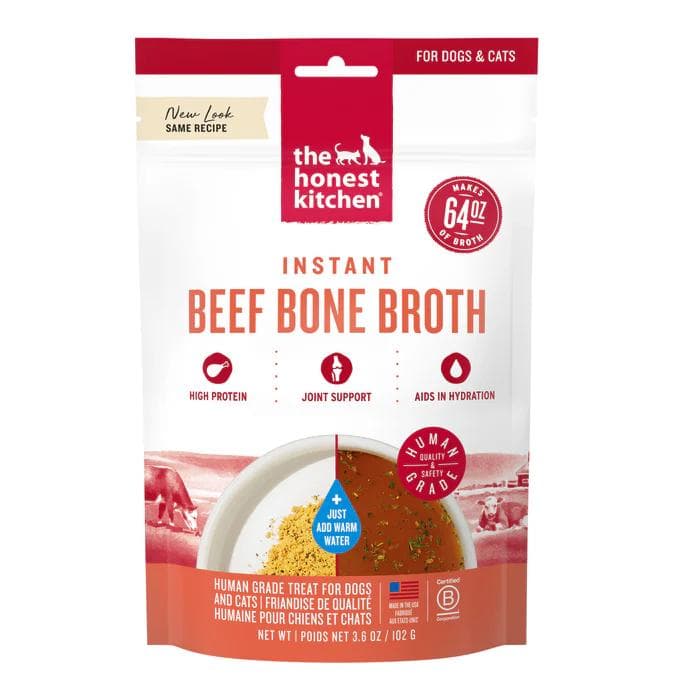
The Honest Kitchen Instant Beef Bone Broth with Turmeric and Instant Turkey Bone Broth with Turmeric are dehydrated, pet-specific supplemental broths. The current product pages describe mixing the dry product with warm water and using the prepared broth as a drink, topper, or rehydrating liquid. Check the package in hand for the current amount, calorie statement, storage instructions, and use-by window.
How much bone broth should you give a dog daily?
The right amount comes from the current package: use the scoop-to-water direction printed on the box, prepare only what the dog will use that day, and count the prepared serving's calorie statement inside the dog's daily extras. There is no universal daily amount for every dog. Ask the veterinarian before making broth routine for a dog on a restricted or prescription diet.
For more detail, read our guide to how to get a dog to drink more water.
- Read the full ingredient list rather than relying on a low-sodium claim. Prefer a labeled pet broth with transparent directions. Restaurant and soup-base recipes may contain concentrated seasonings.
- Record the amount offered, amount eaten, stool quality, and any vomiting. Stop and ask for advice if adverse signs recur. One successful serving does not prove every flavor or formula will agree with the dog.
When to Ask Your Veterinarian Before Serving Broth
Do vets recommend bone broth?
Veterinarians may consider a suitable supplemental product for a specific purpose, such as adding aroma or moisture, but they do not treat the category as universally necessary. The recommendation depends on label accuracy, diet balance, tolerance, disease, medications, and the intended use.
- Review sodium, protein, phosphorus, calories, and prescription-diet goals with the care team. Use broth only if it fits the medical plan. A general pet label cannot account for an individual disease stage.
- Watch for weakness, repeated vomiting, dry or tacky gums, collapse, or inability to keep water down. Seek veterinary care rather than trying to correct significant fluid loss with broth. Palatable liquid is not a substitute for calculated fluid therapy.
Should you give your dog bone broth every day?
Daily use is optional, not required. If you do serve it every day, keep the amount inside the label direction, watch stool quality, appetite for the complete meal, and body weight, and stop and ask the veterinarian if vomiting, diarrhea, or refusal appears.
Bone Broth for Dogs FAQ
Frequently Asked Questions
Can dogs have bone broth every day?
Daily use is not automatically necessary or appropriate. Follow the exact product label, include supplemental calories in the daily total, keep plain water available, and monitor tolerance. A pet with disease or a prescription diet needs individualized guidance before a supplement becomes routine.
How much bone broth can I give my dog?
Use the current label for the exact product and the veterinarian’s advice for the individual pet. Do not copy an amount from another formula, species, or old webpage. Start conservatively, measure the serving, count calories, and monitor the response.
Can dogs have human bone broth?
Many human broths are unsuitable because they contain onion, garlic, chives, leeks, concentrated seasoning, excess sodium, or too much fat. Use a pet-specific product with transparent directions rather than assuming a plain-looking soup or stock is safe.
Is bone broth a substitute for water or a complete meal?
No. A supplemental broth or milk product does not replace fresh plain water or a complete and balanced main diet. A wet food can serve as a meal only when its exact nutritional adequacy statement supports that use.
Can dogs with kidney, heart, or pancreatic disease have bone broth?
Ask the treating veterinarian first. Sodium, fat, protein, phosphorus, calories, fluid goals, and prescription-diet constraints can all matter. General label directions cannot account for the disease stage or full treatment plan.
Sources

Editor
The Webvet Editorial Team is the in-house group of pet-care editors and writers behind Webvet, operated by Smart Pet Collective. The team researches, writes, and maintains Webvet's pet health, behavior, and medication content. Every article follows a defined editorial process: research from reputable veterinary and scientific sources, careful drafting, mandatory review of medical content by a credentialed veterinarian, and dated publication. Health and medication articles are medically reviewed by a licensed veterinary professional before they go live and are kept current over time.
Veterinarian · BVMS MRCVS
Dr. Pippa Elliott, BVMS, MRCVS, is a veterinarian with nearly 30 years of experience in companion animal practice. Dr. Elliott earned her Bachelor of Veterinary Medicine and Surgery from the University of Glasgow. She was also designated a Member of the Royal College of Veterinary Surgeons. Married with 2 grown-up kids, Dr. Elliott has a naughty Puggle named Poggle, 3 cats and a bearded dragon.
Related reading

Minimally Processed Dog Food: What It Means and Why It Matters

Best Soft Dog Food for Senior Dogs: Gentle, Nutrient-Dense Options

Dehydrated vs. Freeze-Dried vs. Air-Dried Dog Food: What's the Difference?
