Best Soft Dog Food for Senior Dogs: Gentle, Nutrient-Dense Options
The best soft dog food for senior dogs is a complete, life-stage-appropriate food that the individual dog can chew, swallow, digest, and maintain weight and muscle on.

BVMS MRCVS

This article contains affiliate links. Webvet may earn a commission when you buy through them, at no extra cost to you.
This article is sponsored by The Honest Kitchen. WebVet maintains editorial control and the guidance has been reviewed by veterinarian Dr. Pippa Elliott, BVMS MRCVS.
The best soft dog food for senior dogs is a complete, life-stage-appropriate food that the individual dog can chew, swallow, digest, and maintain weight and muscle on. Soft texture is useful, but it is not proof of nutritional quality and it does not treat dental pain or swallowing disease.
The Honest Kitchen offers two senior-specific Wholemade recipes that become soft after warm-water preparation, plus a Slow Cooked Chicken One Pot Stew with a naturally soft texture. The right choice depends on the exact label, calorie needs, medical history, eating comfort, and the veterinarian's assessment of any new difficulty eating.
- 1The best soft dog food for a senior is a complete, life-stage-appropriate recipe the individual dog can chew, swallow, digest, and hold weight and muscle on.
- 2Use the current label for the exact product and keep fresh plain water available.
- 3Treat soft texture as one selection criterion, not proof of nutritional quality.
- 4Ask the veterinarian before changing a prescription diet or using a supplement during active illness.
What Makes a Soft Dog Food a Good Choice for a Senior?

Softness matters because many older dogs chew less efficiently, tire during meals, or avoid hard pieces. It is still only one criterion. The recipe also has to be complete for the dog's life stage, deliver enough calories and protein in a portion the dog will finish, and fit any medical plan the veterinarian has set.
Webvet may earn a commission when you click through to The Honest Kitchen, at no extra cost to you.
Food for a senior dog with no teeth still needs to be safe to swallow and nutritionally appropriate. Dental pain, bleeding, odor, or food dropping calls for an examination. Some dry and dehydrated foods can be softened, and small senior dogs also need careful calorie measurement. Choose the texture and exact recipe for the individual dog.
Product details are checked against The Honest Kitchen senior collection, while the central safety and nutrition boundaries are supported by FDA complete and balanced pet food explainer.
What is the best soft dog food for senior dogs?
The best choice is a complete recipe your senior can eat comfortably that also fits their calorie and medical needs. Wholemade's two senior recipes and Slow Cooked Chicken One Pot Stew offer different preparation routines. New pain, food dropping or swallowing difficulty requires an examination before a texture change is treated as the solution.
| Option | Preparation and texture | Nutrition and portion check | Storage check |
|---|---|---|---|
| Wholemade Chicken, Oat & Salmon Senior | Soft after the exact warm-water ratio and rest time on the label. | Check the complete-and-balanced and life-stage statements. Measure the dry amount before adding water and check its calories. | Follow both dry-box and prepared-food storage directions. |
| Wholemade Beef, Oat & Salmon Senior | Soft after label-directed rehydration; alternative recipe for individual preference and fit. | Check the exact life-stage statement and calories; do not transfer the chicken recipe serving amount automatically. | Follow both dry-box and prepared-food storage directions. |
| Slow Cooked Chicken One Pot Stew | Ready-to-serve soft wet stew; no rehydration step. | Check the exact adequacy statement, life-stage fit and calories per carton or measured portion. | Follow the opened-carton refrigeration and discard directions. |
| Veterinary therapeutic diet | Texture and preparation vary with the prescribed recipe. | Use when a diagnosed condition requires targeted nutrition; follow the veterinary feeding plan. | Follow the exact product label and veterinary instructions. |
- Read the exact life-stage statement. Choose a complete recipe for the main diet. Softness alone cannot establish adequacy.
Webvet may earn a commission when you click through to The Honest Kitchen, at no extra cost to you.
Why an Older Dog May Need a Softer Texture

Some older dogs prefer a moist texture, while others have difficulty chewing because of dental disease. Trouble picking up food, chewing, swallowing or showing pain warrants an oral examination. Soft food can reduce effort, but changing texture does not establish why eating became difficult. Coughing, gagging or regurgitation during meals also needs prompt assessment.
Is there a dog food that is soft but not wet?
Softness and moisture are related but not interchangeable. Some commercial foods are semimoist; others become soft only after water is added. Wholemade is dry in the box and soft after label-directed preparation. Judge the finished texture your dog actually eats, not the appearance of the unopened product. Check that the softer option is also a complete main diet.
- Watch for dropping food, chewing on one side, pawing at the mouth, or avoiding hard pieces. Arrange a dental examination when signs appear. Soft food can reduce effort but cannot cure dental disease.
How We Evaluate Soft Senior Dog Foods

Evaluate the food as served: its finished texture, whether water is required, its complete-and-balanced statement and life stage, calories per prepared portion, and storage after opening or mixing. Match those facts to your dog's weight, muscle condition, appetite and medical needs. Preparation that is convenient for the household also makes a consistent feeding routine easier.
What soft foods are good for elderly dogs?
A complete wet food or a properly rehydrated complete food can be suitable when its life-stage statement, calories and nutrient profile fit the dog. Table scraps and supplemental toppers cannot supply the whole diet by themselves. Dogs with diagnosed disease may need a veterinary therapeutic recipe. Include supplemental topper calories when measuring the complete meal.
For more detail, read our guide to dehydrated vs freeze dried vs air dried dog food.
- Watch for coughing, gagging, repeated attempts, nasal discharge, or regurgitation. Seek veterinary assessment promptly. Changing texture without a diagnosis can increase aspiration risk.
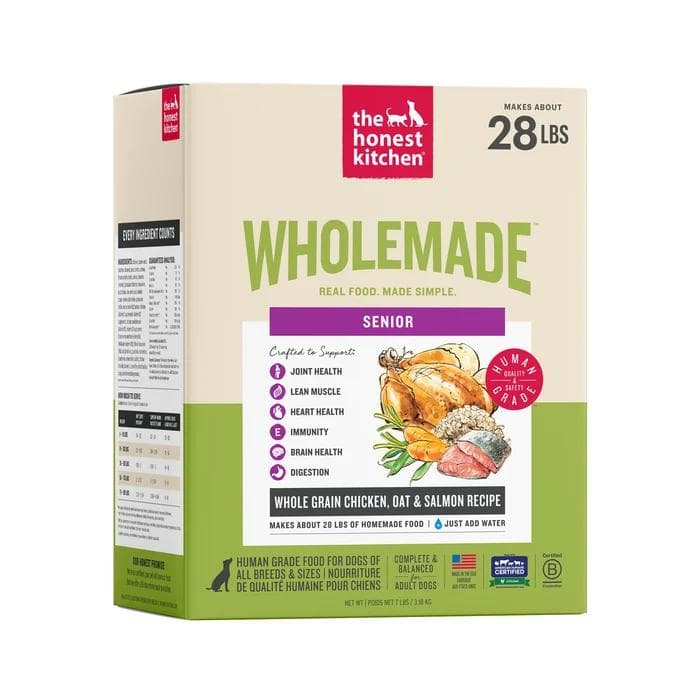
The Honest Kitchen Wholemade Chicken, Oat & Salmon Senior
Wholemade Chicken, Oat and Salmon Senior is a dehydrated recipe prepared with warm water and a three-minute rest, which turns a dry, shelf-stable box into a soft, moist meal. Measure the dry portion before adding water so the calorie count stays accurate, and verify the current label's complete-and-balanced statement, life-stage language, and calories before choosing it for your senior dog.
Webvet may earn a commission when you click through to The Honest Kitchen, at no extra cost to you.
What is the top vet recommended food for senior dogs?
There is no single best food for every senior dog. A veterinarian considers body and muscle condition, chewing and swallowing comfort, medical history, appetite and the exact recipe. A food's senior label or soft texture does not replace that assessment. Bring the current package label and a record of your dog’s usual portions to the appointment.
- Compare calories in the prepared serving. Measure portions and track weight. A larger-looking hydrated bowl does not contain fewer calories than its dry base.
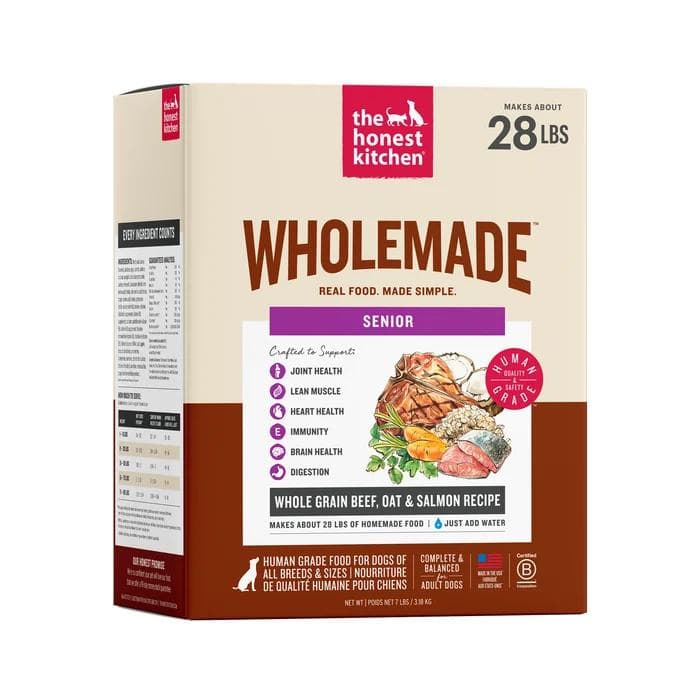
The Honest Kitchen Wholemade Beef, Oat & Salmon Senior
Wholemade Beef, Oat and Salmon Senior uses the same warm-water preparation and three-minute rest as the chicken recipe, with beef as the lead protein for dogs that prefer it or do better on it. Check the current label for the complete-and-balanced statement, life-stage language, calories, and the storage directions for both the dry box and the prepared food.
Is there a dry dog food that is soft?
Some foods have a softer dry texture, but dry kibble and rehydrated food are different formats. Wholemade becomes soft after the water and rest period specified on its label. If a dog struggles with hard pieces, ask the veterinarian whether the problem is preference, dental pain or swallowing difficulty. Do not treat a new eating problem as pickiness.
- Assess total diet and muscle condition rather than restricting protein because of age alone. Follow medical advice for diagnosed disease. Senior status by itself is not a prescription for low protein.
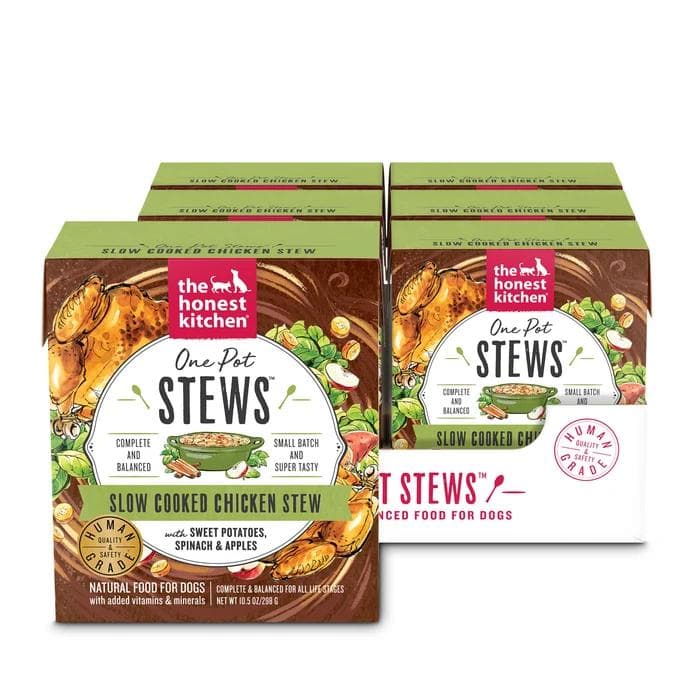
The Honest Kitchen Slow Cooked Chicken One Pot Stew
Slow Cooked Chicken One Pot Stew is a ready-to-serve wet option with a naturally soft texture and no preparation step, which suits households that want to skip measuring water. Confirm the current label's complete-and-balanced statement and life-stage language, portion it by its calorie statement, and follow the opened-container storage directions.
Webvet may earn a commission when you click through to The Honest Kitchen, at no extra cost to you.
Do senior dogs need softer food?
Only when the texture suits their needs. Many older dogs can eat their usual food comfortably. Others prefer a soft meal or have dental issues, but new chewing or swallowing trouble needs veterinary assessment. Soft food can make eating easier without treating the underlying cause. Continue checking portions, weight and muscle condition after changing texture.
- Evaluate the exact food and health plan. Ask before restricting or supplementing. Age alone does not prove a sodium restriction is needed.
How to Compare Soft Foods on a Dry-Matter Basis
Remove the effect of moisture before comparing protein, fat or fiber percentages. Dry matter is 100 minus moisture percentage; divide the nutrient percentage by dry matter and multiply by 100. For example, a hypothetical food with 8% protein and 80% moisture contains 40% protein on a dry-matter basis. This is a calculation example, not an analysis of a featured recipe. Ask the manufacturer for sodium or typical nutrient analysis when a medical decision requires it. Use these comparisons alongside hydration monitoring and your veterinarian's guidance.
What wet food do vets recommend for senior dogs?
The recommendation depends on the dog. A complete wet recipe can provide a convenient soft meal; a therapeutic wet diet may be needed for a diagnosed condition. Compare calories and nutrients for the exact product rather than assuming every wet food is suitable for every senior. Ask how its portions fit your dog’s calorie needs.
For more detail, read our guide to minimally processed dog food.
- Account for moisture before comparing percentages. Use a veterinarian or reliable calculator when the decision matters. As-fed values can make wet food look artificially low.
Dental and Swallowing Problems Food Cannot Fix
| What you notice | Next step |
|---|---|
| Comfortable eating, but a preference for softer texture | Assess a suitable complete soft food and monitor intake, portions and weight. |
| Pain, dropping food, chewing on one side, bleeding or mouth discomfort | Arrange a veterinary dental assessment; soft food does not treat the cause. |
| Coughing, gagging, regurgitation or trouble swallowing | Seek prompt veterinary assessment and ask which consistency is safe. |
Arrange veterinary assessment for pain while eating, dropping food, chewing on one side, or a new reluctance to eat hard pieces. Coughing, gagging, repeated swallowing attempts or regurgitation can indicate a swallowing problem. AAHA recommends examining senior pets that have trouble taking in, chewing or swallowing food. Do not rely on soft food to resolve dental disease, and do not attempt to scrape tartar at home.
What is the best dog food for senior dogs with bad teeth?
A complete soft food may reduce chewing effort, but painful teeth need veterinary care. Seek an examination for food dropping, chewing on one side, mouth odor, bleeding or discomfort. Ask the care team which consistency is safe while the dental problem is assessed and treated. Do not scrape tartar at home or substitute texture changes for treatment.
- Follow the label ratio and rest time. Serve at a comfortable temperature. Improvised dilution can change intake and consistency.
How to Transition and Monitor a Senior Dog
Introduce the new food gradually unless your veterinarian gives a different plan. The Honest Kitchen recommends a seven-to-ten-day transition, increasing the new food while reducing the old and monitoring digestion. Keep a simple record of portions, appetite, stool, eating comfort and weight. Check muscle as well as scale weight, and contact the care team if intake falls or discomfort appears.
What is a good soft dry dog food for senior dogs?
If you want pantry storage with a softer finished meal, a complete dehydrated recipe such as a suitable Wholemade senior formula may fit after proper rehydration. It is not fed as a soft dry food straight from the box. Confirm the label and the texture your dog can safely manage.
- Feel ribs and assess waist regularly. Adjust calories with the care team. Scale weight alone can miss fat gain and muscle loss.
Frequently Asked Questions
Is soft dog food better for senior dogs?
Not automatically. It may be easier for some dogs to eat, but the recipe still needs to be nutritionally complete and appropriate for the individual dog. New chewing or swallowing difficulty needs veterinary assessment.
What can I feed an older dog with bad teeth?
A complete soft wet food or properly rehydrated food may help with chewing effort while your veterinarian assesses the teeth. The safe consistency depends on the problem. Pain, food dropping, gagging or swallowing difficulty should not be managed through food changes alone.
Do senior dogs need less protein or sodium?
Age alone does not establish a need to restrict either. Protein intake should support the individual dog's muscle and overall nutrition. A diagnosed condition may require specific nutrient targets, so use your veterinarian's plan rather than a general senior rule.
Can dehydrated dog food be made soft enough for a senior?
Wholemade is prepared with warm water and a three-minute rest to make a soft meal. Follow the exact recipe's mixing directions and check that your dog can comfortably eat the finished texture. Swallowing disorders require individualized veterinary guidance.
How do I switch a senior dog to soft food safely?
Make a gradual change, measure portions using the new food's calories and preparation directions, and monitor appetite, stool, weight, muscle and eating comfort. The Honest Kitchen recommends seven to ten days for an ordinary transition; follow your veterinarian's directions for illness or a prescribed diet.
Sources

Editor
The Webvet Editorial Team is the in-house group of pet-care editors and writers behind Webvet, operated by Smart Pet Collective. The team researches, writes, and maintains Webvet's pet health, behavior, and medication content. Every article follows a defined editorial process: research from reputable veterinary and scientific sources, careful drafting, mandatory review of medical content by a credentialed veterinarian, and dated publication. Health and medication articles are medically reviewed by a licensed veterinary professional before they go live and are kept current over time.
Veterinarian · BVMS MRCVS
Dr. Pippa Elliott, BVMS, MRCVS, is a veterinarian with nearly 30 years of experience in companion animal practice. Dr. Elliott earned her Bachelor of Veterinary Medicine and Surgery from the University of Glasgow. She was also designated a Member of the Royal College of Veterinary Surgeons. Married with 2 grown-up kids, Dr. Elliott has a naughty Puggle named Poggle, 3 cats and a bearded dragon.
Related reading

Minimally Processed Dog Food: What It Means and Why It Matters

Dehydrated vs. Freeze-Dried vs. Air-Dried Dog Food: What's the Difference?

Is Goat Milk Good for Dogs? What the Science Says
