Dehydrated vs. Freeze-Dried vs. Air-Dried Dog Food: What's the Difference?
Dehydrated vs freeze dried vs air dried dog food is a comparison of manufacturing and serving formats, not a contest with one automatic winner. Each method removes moisture differently.

BVMS MRCVS

This article contains affiliate links. Webvet may earn a commission when you buy through them, at no extra cost to you.
This article is sponsored by The Honest Kitchen. WebVet maintains editorial control and the guidance has been reviewed by veterinarian Dr. Pippa Elliott, BVMS MRCVS.
Dehydrated vs. freeze-dried vs. air-dried dog food is a comparison of manufacturing and serving formats, not a contest with one automatic winner. Each method removes moisture differently, and the practical consequences include texture, calorie density, handling, storage, rehydration, and the questions a buyer should ask about pathogen control.
The most important checks are still the exact recipe's nutritional adequacy statement, life-stage fit, current label, quality controls, and safe handling. The Honest Kitchen Wholemade is a useful dehydrated case study because it is prepared with warm water and a short rest. The brand's Clusters are a separate scoop-and-serve format described as cold-pressed, roasted, and gently dehydrated.
- 1Dehydrated vs freeze dried vs air dried dog food is a comparison of manufacturing and serving formats, not a contest with one automatic winner. Each method removes moisture differently, and the practical consequences include texture, calorie density, handling, storage, rehydration, and the questions a buyer should ask about pathogen control.
- 2Use the current label for the exact product and keep fresh plain water available.
- 3Check the manufacturer's actual process to understand each format.
- 4Ask the veterinarian before changing a prescription diet or using a supplement during active illness.
Dehydrated vs. Freeze-Dried vs. Air-Dried Dog Food at a Glance

Dehydrated vs freeze dried vs air dried dog food is a comparison of manufacturing and serving formats, not a contest with one automatic winner. Each method removes moisture differently, and the practical consequences include texture, calorie density, handling, storage, rehydration, and the questions a buyer should ask about pathogen control.
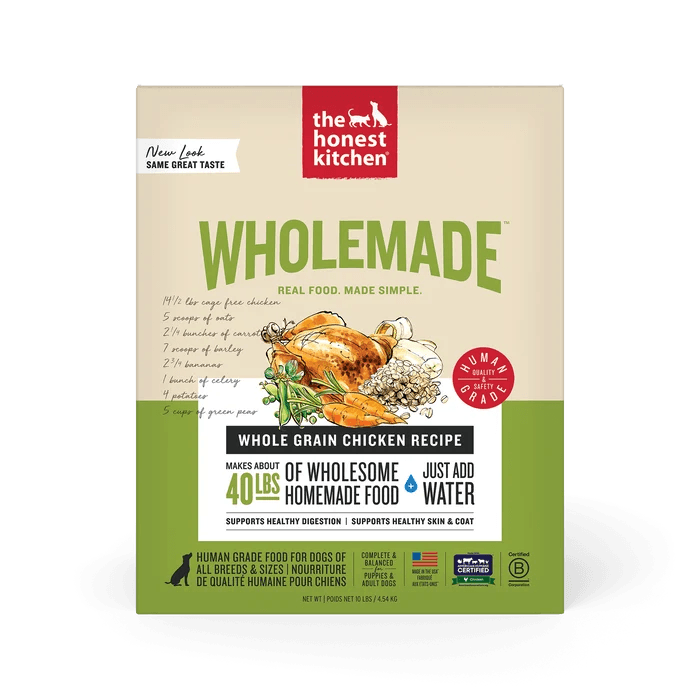
Webvet may earn a commission when you click through to The Honest Kitchen, at no extra cost to you.
Product details are checked against The Honest Kitchen dehydrated dog food guide, while the central safety and nutrition boundaries are supported by FDA raw pet food risk guidance.
Is freeze-dried or air dried dog food better for dogs?
Neither format is inherently better. Compare whether the particular recipe is a complete main diet or a topper, whether it is raw or cooked, the manufacturer's pathogen controls, and the serving directions. Then consider how well its texture, calories, storage and cost fit your dog and household. Check the nutritional adequacy statement before comparing package claims.
| Format | Process and safety question | Serving and finished texture | Calories and storage |
|---|---|---|---|
| Dehydrated | Heated drying varies by manufacturer; ask about time, temperature and pathogen controls. | Often prepared with water; use the exact ratio and rest time for the intended finished texture. | Check calories for the measured dry portion. Follow separate dry and prepared-food storage directions. |
| Freeze-dried | Frozen food dries under vacuum. Ask whether it began raw and what pathogen controls were used. | Dry pieces may be fragile; feed dry or rehydrate only as the label directs. | Small portions may be calorie dense. If water is added, follow refrigeration and discard directions. |
| Air-dried | Moving air removes moisture. Ask for the exact process rather than assuming the product was cooked. | Often dense and scoopable; texture and serving directions depend on the recipe. | Measure the label-directed portion; follow the package storage and use-by directions. |
| Clusters or baked dry pieces | A process may combine pressing, cooking and drying; appearance alone does not identify it. | Often scoop-and-serve pieces; check the exact recipe and feeding directions. | Compare calories per portion and daily cost, and follow the package storage directions. |
- Ask the manufacturer how heat, pressure, vacuum, and drying are used. Describe the exact process rather than a marketing category. Different brands can use the same term for meaningfully different workflows.
- Read the nutritional adequacy statement for life stage and use. Choose a complete recipe when it will be the main diet. A topper can be excellent without being a complete meal.
- Convert nutrients after accounting for moisture. Compare like with like. As-fed percentages can mislead when one food contains much more water.
Webvet may earn a commission when you click through to The Honest Kitchen, at no extra cost to you.
How Dehydrated Dog Food Is Made and Served

Dehydration removes moisture using a controlled drying process. Heat, time and final moisture vary by manufacturer, so confirm the actual method. Wholemade is prepared by adding warm water and waiting three minutes; the exact label sets the ratio. Other dry products may be served differently. Check whether a recipe is complete and balanced before using it as the main diet.
What are the downsides of freeze-dried dog food?
Potential drawbacks include price per day, small but calorie-dense portions, fragile pieces, and preparation or refrigeration if water is added. Some freeze-dried products are raw and need additional food-safety precautions. A topper also cannot replace a complete diet simply because it is sold in the same physical format. Follow the specific package’s handling directions after preparation.
- Read calories per cup, ounce, gram, or prepared serving. Measure the form actually fed. Dry-looking portions may be energy dense.
- Follow the label's water ratio and rest time. Measure water and food consistently. Adding water does not reduce the total calories in the dry portion.
- Ask whether a validated kill step applies to the final product. Use handling precautions that match raw or cooked status. Drying alone should not be assumed to eliminate pathogens.
How Freeze-Dried Dog Food Is Made and Served

Freeze-drying removes water from frozen food under reduced pressure. The resulting pieces can be light and porous, but the process name does not establish whether the ingredients were cooked first. Read the raw or cooked description and preparation instructions. If water is required, add the stated amount and treat the prepared food as perishable.
Do vets recommend air dried dog food?
A veterinarian can assess an exact air-dried recipe for your dog's life stage and health needs. The format alone is not a recommendation. Bring the adequacy statement, calorie information and manufacturer safety details, especially if your dog needs a therapeutic diet. A suitable complete food and a supplemental topper have different roles in the diet.
Webvet may earn a commission when you click through to The Honest Kitchen, at no extra cost to you.
For more detail, read our guide to minimally processed dog food.
- Confirm whether ingredients were raw before drying and whether they were later cooked. Handle raw freeze-dried diets with appropriate hygiene. Freeze-dried is a physical format, not a universal cooked-or-raw claim.
- Follow temperature, humidity, and package-integrity directions. Keep the bag sealed and dry. Shelf stable does not mean indestructible.
- Use the maker's refrigeration and discard window. Treat moist prepared food as perishable. The dry product's shelf life does not carry over after water is added.
How Air-Dried Dog Food Is Made and Served

Air-drying uses moving air to remove moisture, with temperature and drying time varying by manufacturer. Many air-dried foods are served directly, but the label remains the authority. Ask how the maker controls pathogens and verifies the finished product. A dry, chewy appearance does not establish that the food was cooked or that it is nutritionally complete.
How long will a 16 oz bag of freeze-dried dog food last?
Divide 16 ounces by the dry ounces fed per day. For example, a hypothetical 2-ounce daily portion would use a 16-ounce bag in eight days. Use the actual recipe's feeding directions and calorie density to set the portion; water added during preparation does not increase the number of calories in the bag.
- Observe chewing, swallowing, and willingness to eat. Select a texture the dog can comfortably manage. Preference does not establish nutritional superiority.
- Consider children, older adults, pregnant people, and immunocompromised household members. Wash hands, bowls, and preparation surfaces. Food-safety decisions protect people as well as pets.
- Compare water availability, portioning, storage, and cleanup. Premeasure food without ignoring label directions. Convenience varies by trip and format.
Moisture, Calorie Density, and Dry-Matter Comparisons
To compare nutrients, first calculate dry matter as 100 minus the moisture percentage. Then divide the nutrient percentage by the dry-matter percentage and multiply by 100. As an illustrative calculation, 10% protein at 75% moisture equals 40% protein on a dry-matter basis. A food with 30% protein at 10% moisture is about 33.3% on that basis. These are examples, not product analyses; ask for typical analysis when an exact medical comparison matters.
Webvet may earn a commission when you click through to The Honest Kitchen, at no extra cost to you.
Which is better for dogs, freeze-dried or dehydrated?
Choose by the recipe and your routine. Both formats can be used in different ways, but they are made differently and may have different raw or cooked status. Adequacy, safety controls and medical fit come first; preparation time, texture and cost help distinguish otherwise suitable choices. Follow the exact serving directions rather than borrowing another product’s water ratio.
- Calculate cost per day at the dog's actual calorie need. Include preparation and storage waste. Bag price alone does not reveal feeding cost.
- Change the diet gradually unless the veterinarian directs otherwise. Track stool, appetite, weight, and comfort. Format changes can affect intake even when ingredients look familiar.
- Ask who formulates, how batches are tested, and how recalls are communicated. Prefer clear, current answers. Ingredient aesthetics do not replace quality systems.
Food Safety and the Importance of a Validated Kill Step
Ask whether the food starts raw or cooked, what validated pathogen-control step is used, how finished batches are checked, and what handling directions protect your household. Drying or freeze-drying alone should not be assumed to eliminate pathogens. FDA warns that raw pet food can carry organisms harmful to both animals and people; take particular care around vulnerable household members.
Do veterinarians recommend freeze-dried dog food?
A veterinarian may recommend a particular complete recipe for an individual dog, but freeze-dried is not a universal veterinary endorsement. Ask whether the recipe is raw, which pathogen controls are used and whether it suits vulnerable household members. A medical diet should not be replaced on the strength of a format claim.
- Look for product-specific analysis rather than fixed percentage claims. Avoid universal statements about which drying method preserves the most. Time, temperature, ingredient, and assay method all matter.
- Keep fresh water available even when meals are rehydrated. Monitor normal drinking patterns. Food moisture contributes water but does not eliminate the need for a water source.
- Review fat, fiber, minerals, calories, and texture with the veterinarian when disease is present. Keep prescription goals primary. Processing format alone does not make a therapeutic diet.
Storage, Rehydration, and Everyday Convenience
Follow exact post-rehydration storage instructions. Nutrient retention cannot be assumed from the drying method alone.
For more detail, read our guide to best soft dog food for senior dogs.
- Recheck directions when packaging or formula changes. Use the current bag rather than an old screenshot. Brand families can contain recipes with different instructions.
- Start with adequacy and safety, then evaluate format, preference, storage, and budget. Use a consistent hierarchy. Starting with a buzzword can hide a poor fit.
- Ask the manufacturer how heat, pressure, vacuum, and drying are used. Describe the exact process rather than a marketing category. Different brands can use the same term for meaningfully different workflows.
How to Choose the Right Format for Your Dog
Start with a complete-and-balanced recipe for the correct life stage. Next check safety controls and any medical restrictions. An air-dried or freeze-dried food must meet those needs before its convenience matters. Among suitable foods, compare chewing comfort, preference, water preparation, storage, daily cost and the routine you can sustain. Introduce the chosen food gradually and monitor appetite, stool, weight and comfort.
- Read the nutritional adequacy statement for life stage and use. Choose a complete recipe when it will be the main diet. A topper can be excellent without being a complete meal.
- Convert nutrients after accounting for moisture. Compare like with like. As-fed percentages can mislead when one food contains much more water.
- Read calories per cup, ounce, gram, or prepared serving. Measure the form actually fed. Dry-looking portions may be energy dense.
Where The Honest Kitchen Wholemade Fits
The Honest Kitchen describes Wholemade dehydrated food as food with moisture removed that is mixed with warm water and rested for three minutes before serving. It describes Clusters separately as cold-pressed, roasted, and gently dehydrated pieces. Those brand-specific processes should not be generalized to every dehydrated or dry food.
- Follow the label's water ratio and rest time. Measure water and food consistently. Adding water does not reduce the total calories in the dry portion.
- Ask whether a validated kill step applies to the final product. Use handling precautions that match raw or cooked status. Drying alone should not be assumed to eliminate pathogens.
- Confirm whether ingredients were raw before drying and whether they were later cooked. Handle raw freeze-dried diets with appropriate hygiene. Freeze-dried is a physical format, not a universal cooked-or-raw claim.
Frequently Asked Questions
Is dehydrated dog food the same as freeze-dried dog food?
No. Dehydration removes moisture through a drying process; freeze-drying removes water from frozen food under reduced pressure. Neither name alone establishes raw or cooked status, nutritional completeness or safety controls.
Do all dehydrated dog foods need water?
Follow the specific label. The Honest Kitchen Wholemade recipes require water and a short rest before serving. Other products using drying as part of their manufacturing process may be scoop-and-serve, so do not generalize Wholemade's directions to every dry food.
Is freeze-dried dog food raw?
It can be, but it is not always. Freeze-dried describes how water was removed, not whether the ingredients were cooked beforehand. Confirm the exact recipe's raw or cooked status and follow its food-safety directions.
Which format is safest for a dog?
The format name cannot establish safety. Look for a nutritionally adequate recipe, documented pathogen controls, appropriate storage and preparation, and a fit with your dog's medical needs. Raw products add risks that require particular attention for pets and household members.
How do I compare protein and fat across foods with different moisture levels?
Use the same basis: subtract moisture from 100, divide the protein or fat percentage by that dry-matter percentage, then multiply by 100. Compare calorie-based nutrient information as well when your veterinarian is managing a medical diet.
Sources

Editor
The Webvet Editorial Team is the in-house group of pet-care editors and writers behind Webvet, operated by Smart Pet Collective. The team researches, writes, and maintains Webvet's pet health, behavior, and medication content. Every article follows a defined editorial process: research from reputable veterinary and scientific sources, careful drafting, mandatory review of medical content by a credentialed veterinarian, and dated publication. Health and medication articles are medically reviewed by a licensed veterinary professional before they go live and are kept current over time.
Veterinarian · BVMS MRCVS
Dr. Pippa Elliott, BVMS, MRCVS, is a veterinarian with nearly 30 years of experience in companion animal practice. Dr. Elliott earned her Bachelor of Veterinary Medicine and Surgery from the University of Glasgow. She was also designated a Member of the Royal College of Veterinary Surgeons. Married with 2 grown-up kids, Dr. Elliott has a naughty Puggle named Poggle, 3 cats and a bearded dragon.


