Best Dog Backpack Carriers: Vet-Reviewed Picks by Dog Size and Trip Length
Vet-reviewed guide to dog backpack carriers: when a carrier makes sense, how to read a weight limit, how to measure your dog, which carriers fit under an airline seat, and the ones that work on a trail.

BVMS MRCVS
Medically reviewed by Dr. Pippa Elliott, BVMS MRCVS · Last reviewed

This article contains affiliate links. Webvet may earn a commission when you buy through them, at no extra cost to you.
The right dog backpack carrier comes down to two things: your dog's weight and body shape, and the trip you have planned. Start with the maker's published weight limit. Front-facing packs suit small dogs inside the maker's size band, and any carrier you fly with must meet that airline's under-seat size rule.
Our top pick is the PetSafe Happy Ride, rated to 20 pounds, for errands and car rides. For trails, the Kurgo G-Train carries dogs up to 25 lb, and for cabin flights we pick the PetAmi airline backpack.
We compared six carriers, listed on Chewy from $26.99 to $144.95 when we checked in October 2026. We did not test them hands-on. Our picks rest on the makers' published specifications, the Chewy listings, and guidance from VCA Animal Hospitals, Cornell, the Merck Veterinary Manual, and the American Kennel Club.
| Carrier | Best fit | Design | Published weight limit | Main tradeoff |
|---|---|---|---|---|
| PetSafe Happy Ride Backpack Dog & Cat Carrier | Errands, downtown outings, and back-seat car rides | Enclosed pack with mesh windows and an interior harness tether | 20 lb (PetSafe) | PetSafe's own page lists two different sizes, so measure before buying |
| Kurgo G-Train Dog Carrier Backpack, Black | Trail days and commutes with a dog up to 25 lb | Rear pack with fiberglass support rods, hip belt, and sternum strap | 25 lb (Kurgo) | Highest Chewy listing price of the six, and at 21 inches tall it is bigger than published airline under-seat sizes |
| K9 Sport Sack Trainer Forward Facing Dog Carrier Backpack, Grey, Medium | Small dogs that ride looking forward | Fitted forward-facing pack with ventilated side panels | Up to 30 lb across Trainer sizes (PetSmart) | Sized by back length, and the brand publishes no back-length chart |
| PetAmi Airline Approved Backpack Dog & Cat Carrier, Navy | Cabin flights on a budget | Enclosed pack with sherpa bedding and a zip-up mesh window | Not stated in the listing | The listing gives no dimensions, so check it against your airline |
| Frisco Expandable Dog & Cat Backpack Carrier, Grey | Dogs that need extra room on a long ride | Expandable cargo area with a roll-down privacy flap | Not stated in the listing | No published weight limit or expanded size in the listing |
| Kurgo Nomad Carrier Dog Backpack, One Size, Blue | Little dogs up to 15 lb on short outings | Light pack with ventilated side panels and an interior safety tether | 15 lb (PetSmart) | Lowest published weight limit among the picks |
 Sponsored
Wondering why your dog seems stiff or sore?
Talk to a licensed vet at Dutch over video, often the same day. They can recommend treatment and prescribe it when it's appropriate.
Use code Pets60
Plans start at $12/month · covers up to 5 pets
- Licensed vets in most states
- Rx for 150+ conditions
- 4.7 on Trustpilot
When a backpack carrier makes sense for a dog
The fit rule is simple: your dog's weight must sit under the carrier's weight limit, and its body must fit the carrier's shape. A front-facing carrier keeps the dog looking forward from a fitted pack. An enclosed rear carrier gives the dog a compartment with mesh windows, the soft-sided, ventilated format Cornell describes for cabin travel.

- 1Our top pick for errands and car rides is the PetSafe Happy Ride, rated to 20 pounds.
- 2Front-facing or rear: pick a forward-facing pack for a small dog that likes a view, and an enclosed pack for errands, car rides, and flights.
- 3Check the weight limit, then measure: published limits run from 15 lb on the Kurgo Nomad to 25 lb on the Kurgo G-Train, and K9 Sport Sack sizes its packs by back length.
- 4For a flight, the whole carrier must fit under the seat in front of you, and each airline sets its own size.
- 5For a senior dog that tires, let your vet set the walking distance and carry the rest.
Weight is only half of the check. K9 Sport Sack organizes its carriers by the length of the dog's back, not weight alone, since two dogs of the same weight can be built very differently. JetBlue adds a practical test for any carrier: the pet must be able to stand up and move around inside with ease.
| Dog and trip | Carrier type | Weight limit to check | What else to confirm |
|---|---|---|---|
| Little dog up to 15 lb on short city walks | Light enclosed backpack | 15 lb on the Kurgo Nomad (PetSmart listing) | Interior safety tether and ventilated side panels |
| Dog up to 20 lb on errands and back-seat car rides | Enclosed backpack with mesh windows | 20 lb on the PetSafe Happy Ride | PetSafe publishes two different sizes, so measure against both |
| Dog up to 25 lb on trail days | Rear pack with support rods, hip belt, and sternum strap | 25 lb on the Kurgo G-Train | Mesh back and side panels; 13 x 21 x 10 inch body |
| Small dog that wants a forward view | Forward-facing fitted pack | Up to 30 lb across K9 Sport Sack Trainer sizes (PetSmart); K9's Small band is 5 to 25 lb | Back length, which K9 Sport Sack uses to size its packs |
| Any dog flying in the cabin | Soft-sided enclosed carrier | Airlines set a size, not a weight; Delta states no weight figure | Fits fully under the seat: Delta 18 x 11 x 11, JetBlue 17 x 12.5 x 8.5, Alaska 17 x 11 x 9.5 inches |
| Senior or recovering dog that tires | Any enclosed pack the dog fits, used for part of the outing | The carrier's published weight limit | Walking distance set by your vet |
| Dog of 40 lb or more | K9 Sport Sack's Large band starts at 40 lb; none of the six picks is rated that high | Above every pick's published limit | A stroller or mobility aid may suit better |
A backpack carrier earns its place in a few specific situations:
- Errands and city outings. PetSafe pitches its PetSafe Happy Ride Backpack Dog & Cat Carrier for running errands and meeting friends downtown, places where a small dog rides along rather than walking every block.
- A backup on the trail. The AKC notes that dogs of any size may need to be carried on a hike because of exhaustion, injury, or joint pain.
- Cabin flights. Cornell describes the carrier for cabin travel as soft-sided, well ventilated, and small enough to fit under the seat in front of you.
- Senior dogs and puppies. The AKC advises that puppies, and senior dogs with health issues such as arthritis, wear only an empty dog pack or none at all. A carrier is one way to bring them along on a longer outing without a load on their backs.
- Recovering dogs. A dog on restricted exercise can join a short outing in the carrier while walking only what the vet allows.
Are backpack carriers good for dogs?
For the right dog and trip, yes. The American Kennel Club says a vet-approved carrier lets a dog enjoy the trail and ride comfortably when it needs a rest. The limits come from the carrier itself: stay under its weight limit, clip your dog's harness to the interior tether, and choose mesh ventilation so the dog stays cool.
What is the best backpack for carrying a dog?
The best backpack is the one rated for your dog's weight and built for your trip. Our overall pick for errands and car rides is the PetSafe Happy Ride, rated to 20 pounds. On trails, the Kurgo G-Train Dog Carrier Backpack, Black carries dogs up to 25 lbs with a hip belt. For flying, choose a soft-sided pack sized to your airline.
Senior dogs are where a carrier helps most and where the vet's input matters most. VCA Animal Hospitals says regular, controlled exercise benefits most dogs with osteoarthritis, and that your veterinarian should set how far and how long an arthritic dog walks. The carrier covers the distance beyond that limit, not the whole outing.
The AKC's reasoning for keeping packs off older dogs applies here too: any extra pounds put added strain on joints and muscles that are already working hard. Our senior dog health guide covers the wider picture of aging dogs. For a senior or recovering dog, a carrier outing looks like this:
- Ask your vet how far, how long, and on what surfaces your dog should walk, which VCA says the vet should guide for an arthritic dog.
- Let your dog walk that distance on its own legs, since the controlled exercise is the part that helps its joints.
- Carry the dog for the rest of the outing, inside a pack rated above its weight.
- Choose an enclosed pack with an interior tether and a soft mat or bedding, so the dog is secure and has a soft surface to rest on.
Three ways to bring a dog along compare like this:
- A dog-worn pack puts the load on the dog. The AKC caps it at 10% of body weight for a healthy, conditioned dog, and advises puppies and arthritic seniors to wear an empty pack or none.
- A backpack carrier puts the dog's whole weight on you, so it suits small dogs and part-time carrying.
- A stroller puts the weight on wheels, which suits heavier dogs and longer distances.
A backpack carrier is the wrong tool for some dogs. A dog heavier than any carrier's limit, or one that needs support for long stretches, may do better on wheels, and our best dog stroller roundup covers that route. For a dog with weak legs, our guide to mobility aids for dogs, harnesses, ramps and more covers support options.
Our picks: the best dog backpack carriers
We matched each dog backpack carrier to a dog size and a trip, using the published weight limit wherever the maker or a retailer states one. Product details come from the makers' pages, the Chewy listings, and PetSmart's listings for the K9 Sport Sack Trainer and the Kurgo Nomad.
Each carrier was judged on the same five points:
- A published weight limit, from the maker or a major retailer, so you can check your dog against a real number.
- Ventilation, meaning mesh windows, mesh panels, or ventilated side panels named in the specs.
- An interior tether that clips to the dog's harness, or a fitted design that holds the dog in place.
- Straps for the person carrying, such as padded shoulder straps, a waist or hip belt, a chest strap, or lumbar support.
- Published dimensions, which decide whether a carrier can work for cabin travel at all.
Three of the six, from PetSafe, PetAmi, and Frisco, are sold as dog and cat carriers. If you are shopping for a cat, our best cat carrier roundup covers cat-specific designs.
PetSafe Happy Ride Backpack Dog & Cat Carrier: best overall backpack carrier
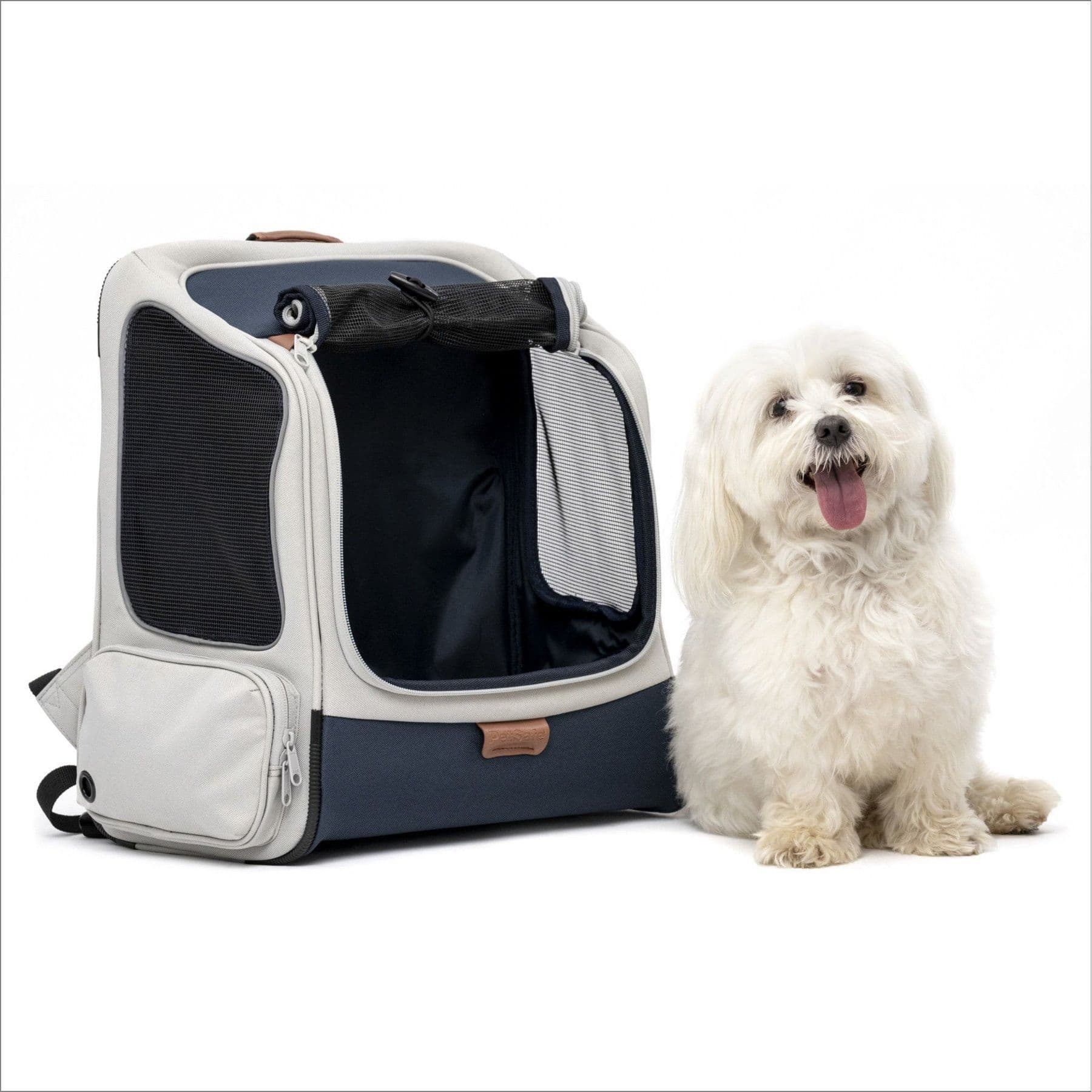
An enclosed backpack carrier rated to 20 pounds, with mesh windows, a harness tether, and padded straps.
Webvet may earn a commission when you click through to Chewy, at no extra cost to you.
The Happy Ride is an enclosed backpack carrier that PetSafe says supports cats and dogs up to 20 pounds. It is our overall pick because it covers the everyday jobs most owners have: walks around town, errands, and riding in the back seat.
It was listed at $97.46 on Chewy when we checked in October 2026. PetSafe lists these features:
- Mesh windows that provide ventilation to keep the pet cool
- A harness tether inside the pack so the pet stays put
- Padded back and shoulder straps meant for all-day comfort
- Polyester and nylon construction
- A way to secure the carrier with a seat belt in the back seat
The tradeoff is sizing. PetSafe's own page gives two different sizes: 12 x 13 x 17 in its features list and 16.0 x 10.0 x 17.5 inches in its specifications. Neither size fits inside Delta's stated 18 x 11 x 11 inch soft-sided maximum, so we do not pick it for flying.
Best for a dog up to 20 pounds whose outings are mostly errands, car rides, and walks around town. Skip it if your dog is over 20 pounds, or if the trip you are shopping for is a cabin flight.
Kurgo G-Train Dog Carrier Backpack, Black: best rear carrier for hiking
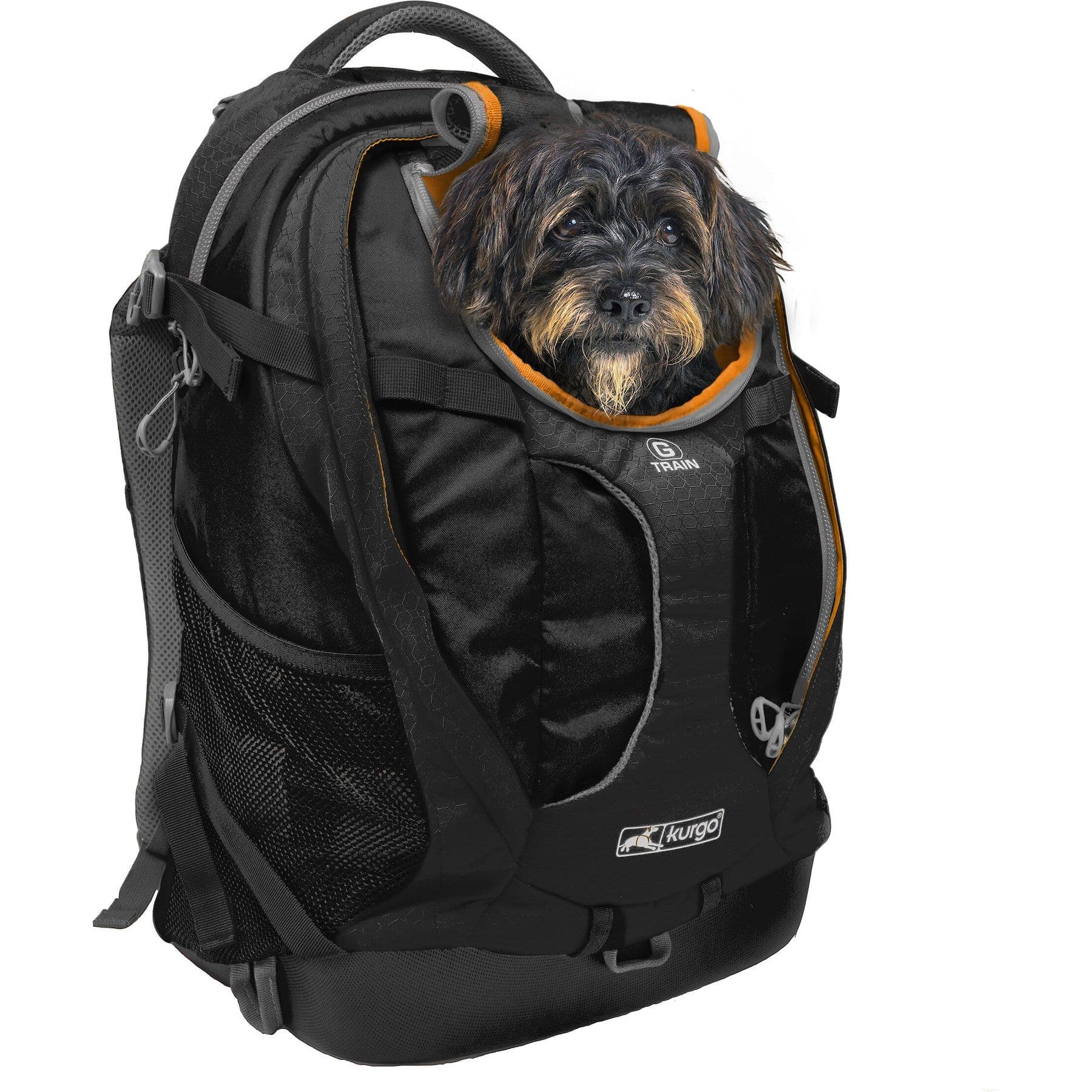
A rear pack for dogs up to 25 lb, with fiberglass support rods, a hip belt, a sternum strap, and mesh panels.
Webvet may earn a commission when you click through to Chewy, at no extra cost to you.
The G-Train is the pick built for trails. Kurgo lists it for dogs up to 25 lbs and sews fiberglass support rods into the frame. Chewy's listing describes durable, tactical-inspired fabrics meant for both rough trails and a daily commute.
It was listed at $144.95 on Chewy when we checked in October 2026, the highest price here. Between Kurgo's page and the Chewy listing, the G-Train includes:
- Ventilated mesh back and side panels, plus a ventilated air vent
- A hip belt and adjustable sternum strap that Kurgo describes for comfort on longer trips
- An interior tether to attach your dog's harness
- A waterproof, muckproof Armorsole bottom
- Dual-side compression straps, a roll-up top panel, stretch mesh pockets, and a padded laptop sleeve
- Straps that tuck away so it works as a hand carrier in tight spaces
The tradeoff is bulk and cost. Kurgo lists the G-Train at 13 inches wide, 21 inches high, and 10 inches deep. That 21-inch height is longer than any side allowed under the published cabin carrier sizes at Delta, JetBlue, and Alaska Airlines, so plan on it for trails and commutes rather than flights.
Best for a dog up to 25 pounds on day hikes, and for owners who want a hip belt carrying part of the load. Skip it if you need one carrier for flights as well as trails, or if a lighter, cheaper pack covers your outings.
K9 Sport Sack Trainer Forward Facing Dog Carrier Backpack, Grey, Medium: best value front-facing pack
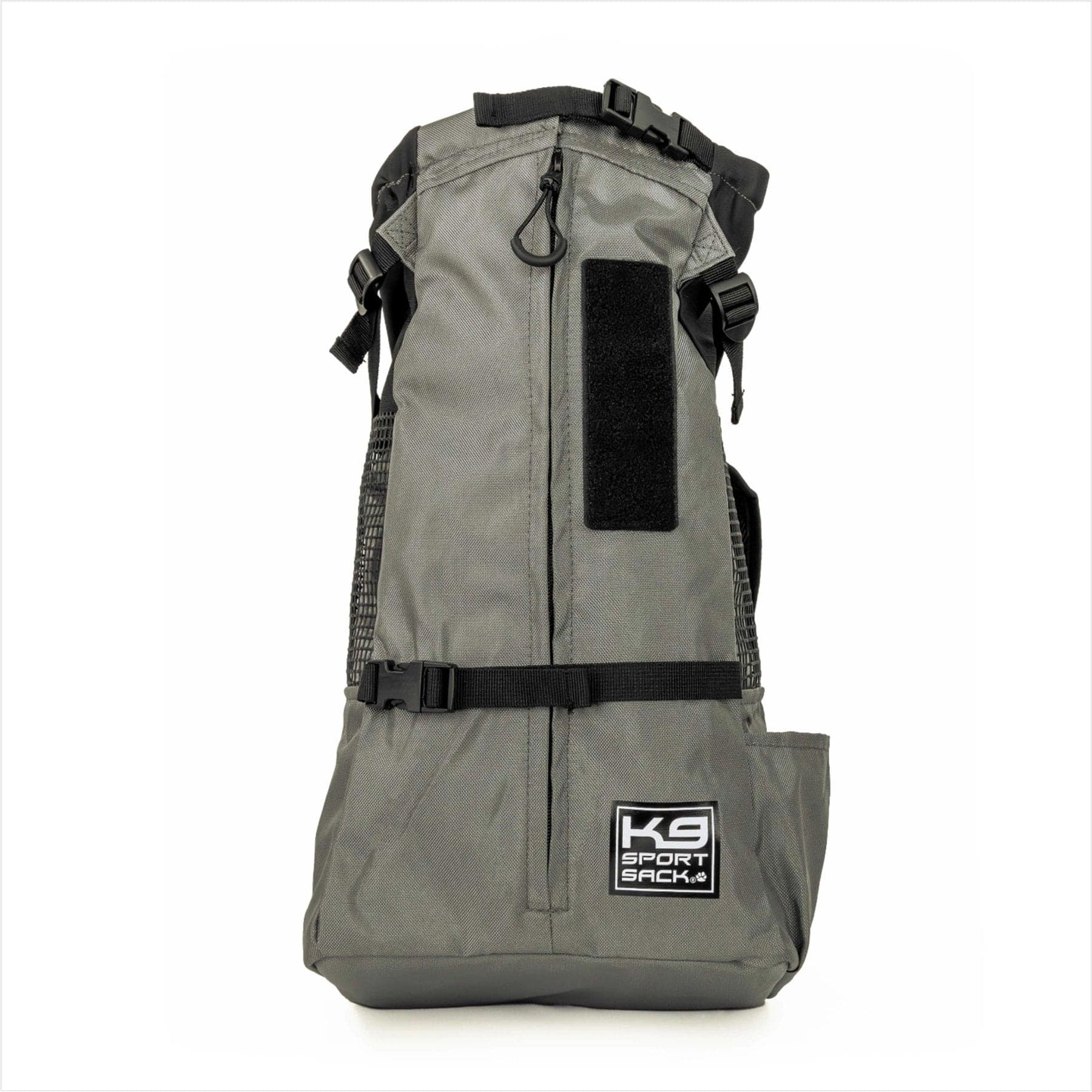
A forward-facing pack with ventilated side panels and lumbar support straps, sized by your dog's back length.
Webvet may earn a commission when you click through to Chewy, at no extra cost to you.
The Trainer is a forward-facing backpack carrier, as PetSmart describes it. Instead of sitting in a closed compartment, the dog rides looking forward. The Medium was listed at $59.95 on Chewy when we checked in October 2026, and PetSmart showed the same $59.95 on one size listing.
The Chewy listing and PetSmart list these features:
- Adjustable lumbar support straps for the person carrying, except on the X-Small
- Shoulder padding for carrying comfort
- Ventilated side panels for airflow and a view
- A side pocket for a water bottle or other essentials
- Polyester and nylon construction
- A minimalist, lightweight design
PetSmart lists the Trainer in X Small, Small, Medium, and Large for pets up to 30 lb, at 9 x 8 x 15 inches. K9 Sport Sack's sizing page sorts its carriers into Small for 5 to 25 lbs, Medium for 25 to 40 lbs, and Large for 40 lbs and up, and says to shop by length of back.
The tradeoff is getting the size right. The brand's size bands and PetSmart's 30 lb ceiling do not line up neatly, and neither publishes back-length measurements; K9 Sport Sack points shoppers to a sizing quiz instead. The Chewy listing opens with a reminder to measure for the perfect fit.
Best for a small dog that likes to see where it is going, carried by an owner who wants a light pack on walks. Skip it if you need a carrier for cabin travel, where the pet must stay inside the carrier, or if your dog prefers a covered space.
PetAmi Airline Approved Backpack Dog & Cat Carrier, Navy: best for flying
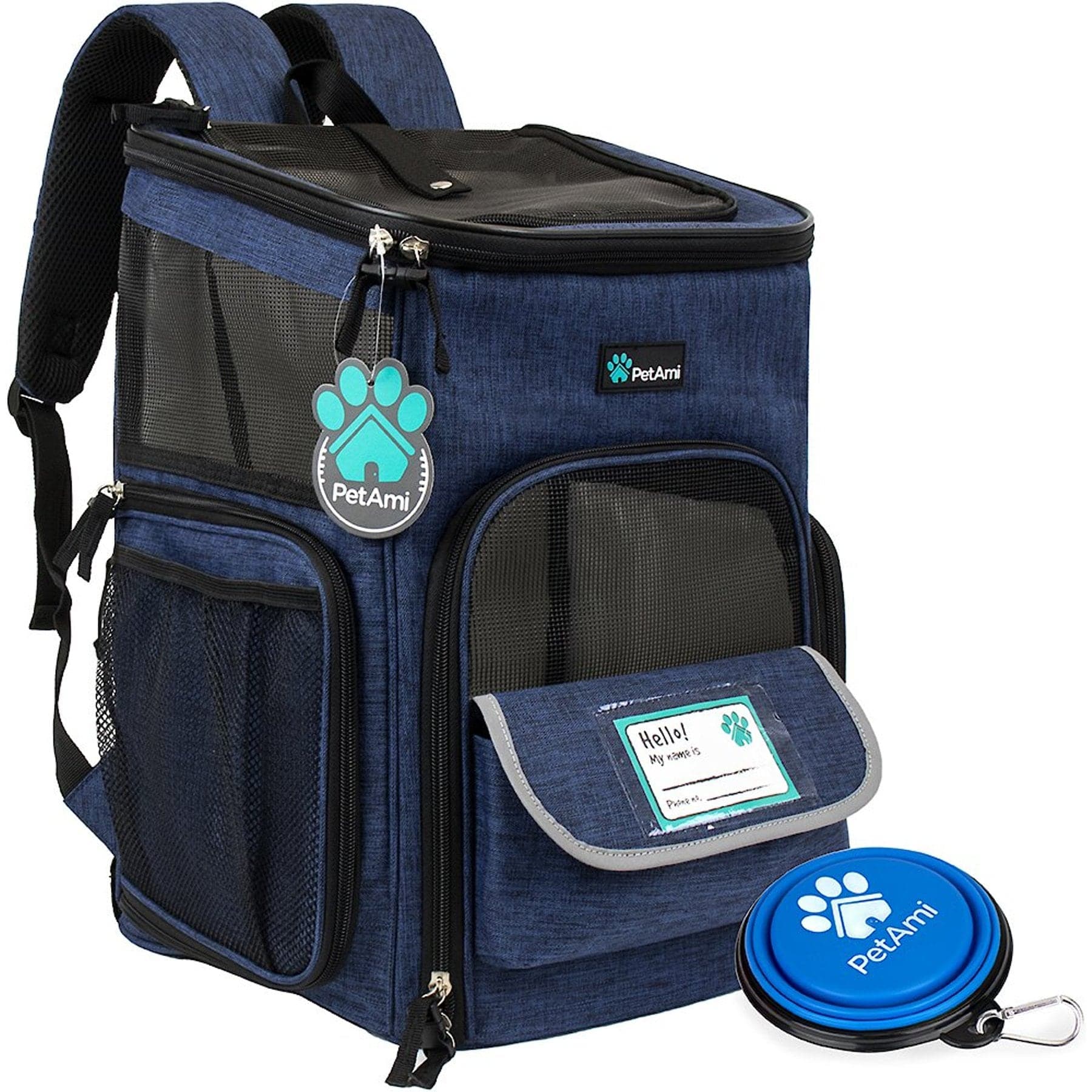
A soft-sided enclosed pack with a zip-up mesh window, sherpa bedding, and waist and chest buckles.
Webvet may earn a commission when you click through to Chewy, at no extra cost to you.
PetAmi sells this pack as airline approved, and it has the enclosed, soft-sided, ventilated shape that Cornell describes for cabin carriers. It was listed at $39.99 on Chewy when we checked in October 2026, which makes it one of the lowest-priced picks.
The Chewy listing describes:
- Soft sherpa bedding inside
- A ventilated design that helps maximize airflow
- A mesh window that zips up to give the pet extra headroom
- Waist and chest buckles, thick shoulder straps, and a padded back
- Durable 600D polyester construction
The tradeoff is missing data: PetAmi's Chewy listing gives no dimensions or weight limit. Because each airline sets its own under-seat size, measure the pack at home and compare it with your airline's published limit before you book.
Best for a small dog that flies in the cabin, and for owners who want a low-cost carrier that doubles for errands. Skip it if you need a published weight limit before you buy, or if you want a hip belt for long trails.
Frisco Expandable Dog & Cat Backpack Carrier, Grey: best for room to stretch out
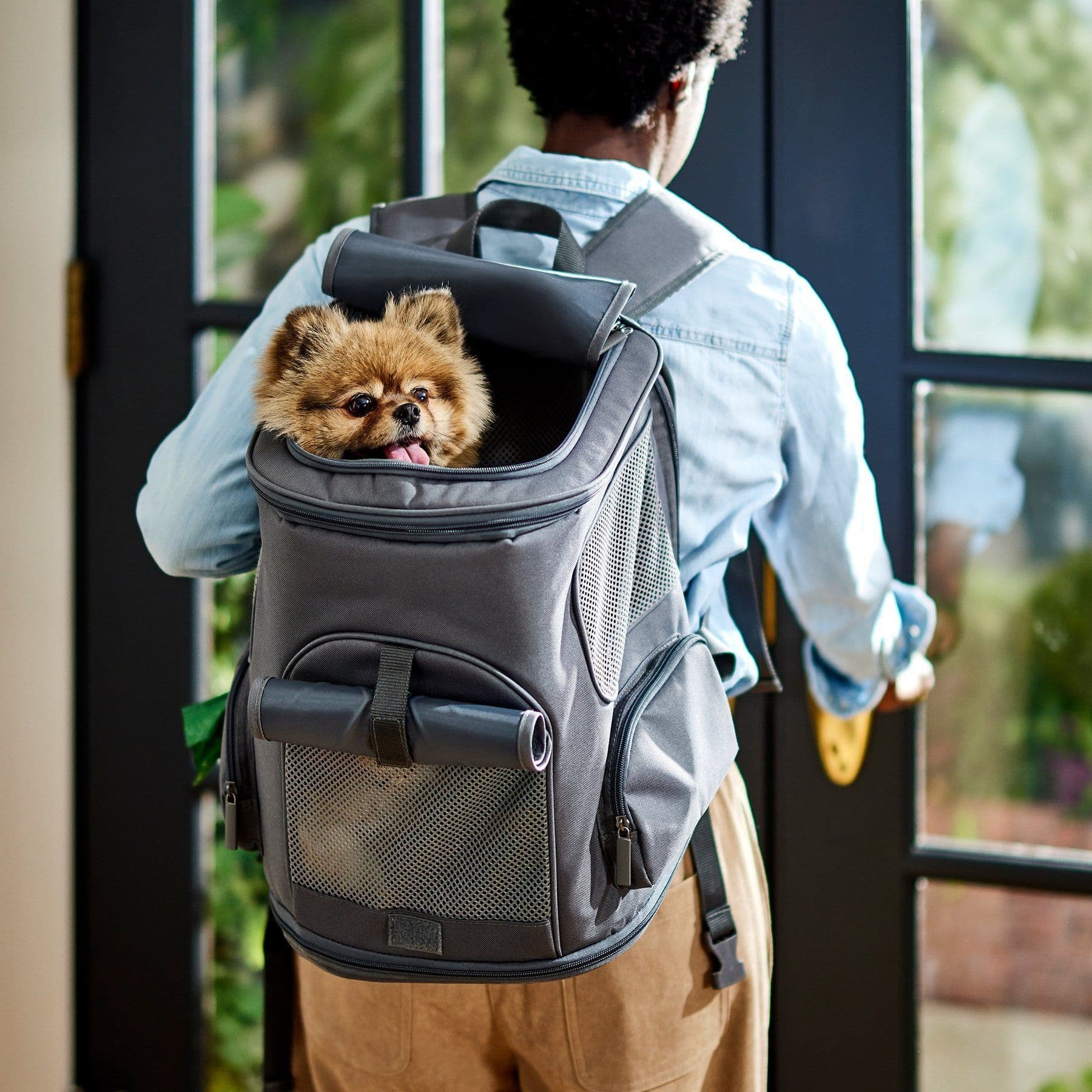
An expandable backpack carrier with a privacy flap, an interior tether, and a washable sherpa mat.
Webvet may earn a commission when you click through to Chewy, at no extra cost to you.
Frisco, Chewy's house brand, builds this carrier around a patented expandable cargo area that gives the pet additional room for the ride. It was listed at $41.99 on Chewy when we checked in October 2026.
The Chewy listing describes:
- Padded shoulder straps and a waist strap that helps balance the weight of the load
- Side pockets, one with a potty bag dispenser
- An interior tether for keeping the pet secure
- A roll-down flap that gives the pet the option of privacy
- A removable, machine-washable sherpa mat to rest on
The tradeoff is the same gap as the PetAmi. The listing does not publish a weight limit or the expanded dimensions, so confirm both with the seller before relying on it for a heavier dog or a flight.
Best for a dog that needs more room on a long ride, or one you want to give a private, covered corner. Skip it if you are flying and cannot confirm its size against your airline, or if your dog is near the top of the small-dog range.
Kurgo Nomad Carrier Dog Backpack, One Size, Blue: lowest price
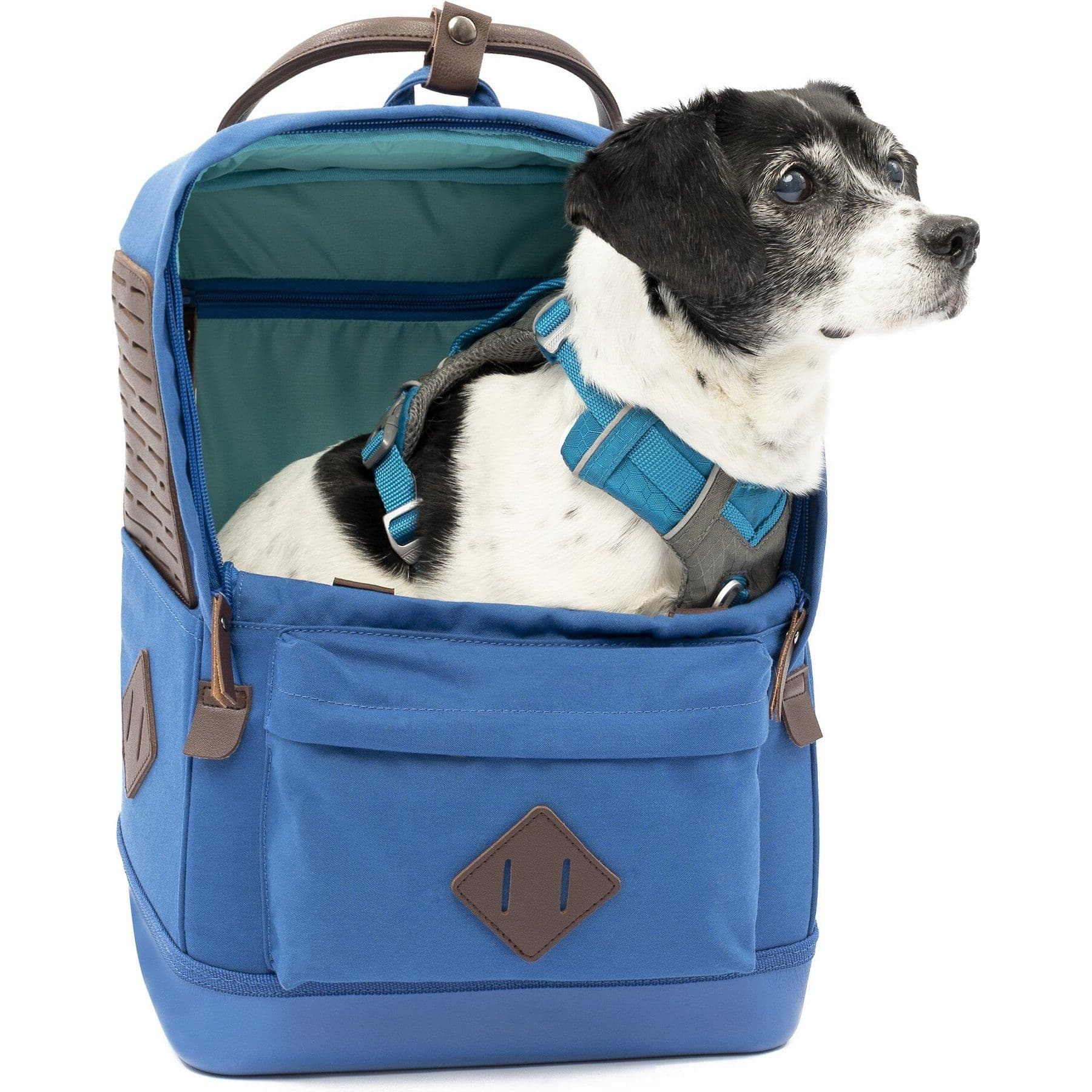
A light, low-cost pack for little dogs up to 15 lb, with ventilated side panels and an interior safety tether.
Webvet may earn a commission when you click through to Chewy, at no extra cost to you.
The Nomad is the budget pick, listed at $26.99 on Chewy when we checked in October 2026. PetSmart's listing showed it at $89.95 when we checked, so this pack's price swings widely by retailer. PetSmart rates it for dogs up to 15 lb, the lowest published limit among the picks.
The Chewy and PetSmart listings describe:
- An interior safety tether that you strap your dog's harness into
- Ventilated side panels for fresh air
- A front pouch, side pockets, and an interior sleeve for storage
- A removable, washable liner in polyester and cotton
- A lightweight build
The tradeoff is capacity. At 15 lb it suits only little dogs, and that rating is PetSmart's figure.
Best for a little dog on short walks and errands, at the lowest price we saw. Skip it if your dog weighs more than 15 lb, or if you want a frame and hip belt for hiking.
 Sponsored
Vet care that's always there
Unlimited video calls and messaging with licensed vets for less than a typical vet visit. One membership covers up to five pets.
Use code Pets60
Plans start at $12/month · covers up to 5 pets
- Licensed vets in most states
- Rx for 150+ conditions
- 4.7 on Trustpilot
Front-facing vs rear backpack carriers: which design fits your dog
Front-facing and rear carriers solve different problems. A front-facing carrier, such as the K9 Sport Sack Trainer Forward Facing Dog Carrier Backpack, Grey, Medium, keeps the dog looking forward from a fitted pack with a view out. A rear carrier holds the dog inside an enclosed compartment on your back, with mesh for air and a tether inside.
Front-facing (forward-facing) packs
- Your dog sees what you see; the Chewy listing says the Trainer's ventilated side panels allow maximum airflow and a view.
- The fitted shape is sized by back length, so measuring matters more than with an enclosed pack.
- The Trainer's lumbar support straps help the person carrying, except on the X-Small.
- They are not the enclosed format airlines describe: JetBlue requires the pet to stay inside the carrier on board, and Southwest says the pet's head and tail must stay inside at the gate.
Rear enclosed packs
- The dog rides inside a compartment; the Frisco Expandable Dog & Cat Backpack Carrier, Grey adds a roll-down privacy flap, and the PetAmi's mesh window zips up for extra headroom.
- An interior tether clips to the harness on the Kurgo Nomad Carrier Dog Backpack, One Size, Blue, the Frisco, the Happy Ride, and the G-Train.
- Mesh windows or ventilated panels keep air moving.
- The format matches the soft-sided, under-seat style that airlines and Cornell describe for cabin travel.
Veterinary guidance does not rank front-facing against rear carriers for a dog's spine or comfort. What the guidance does support is fit: a pack sized to the dog, a dog under the weight limit, and a harness attached to the tether. Choose by your dog's temperament and the trip, not by a claim that one design is gentler.
Slings and chest-worn front carriers follow the same rules. Whatever the style, check the weight limit, the ventilation, and whether the dog's harness clips to something inside, then judge how your dog handles being held close.
To choose between the two designs, match them to your dog and routine:
- Choose a front-facing pack if your dog is small, falls inside the maker's size band, stays calm when held close, and you mostly walk around town or on easy trails.
- Choose an enclosed rear pack if you also drive or fly with your dog, if your dog does better with a covered space, or if you need room for gear.
- Choose a rear pack with a hip belt and chest strap, such as the Kurgo G-Train, if your outings are long enough that your shoulders need help.
K9 Sport Sack also sells a dual-use model, the Urban 3, that works as a dog carrier and as a traditional backpack. That suits owners who want one bag for both jobs rather than a dedicated carrier.
Weight limits, sizing, and measuring your dog
A carrier's weight limit is the ceiling, not a target. Published limits on these packs run from 15 lb for the Kurgo Nomad Carrier Dog Backpack, One Size, Blue, per PetSmart, to 20 pounds for the PetSafe Happy Ride and 25 lbs for the Kurgo G-Train. PetSmart lists the K9 Sport Sack Trainer for pets up to 30 lb across its four sizes.
Weight alone does not size a dog. K9 Sport Sack organizes its carriers by the length of the dog's back, since a long-backed dog and a compact dog of the same weight can need different packs. Neither K9 Sport Sack nor PetSmart publishes back-length measurements.

That gap leaves you to measure. These steps work for any carrier:
- Weigh your dog. Weigh yourself holding the dog on a bathroom scale, then subtract your own weight.
- Compare that number with the published limit. If your dog sits right at the limit, choose a carrier rated higher.
- Measure the back length if you are shopping K9 Sport Sack, using the measurement its sizing quiz asks for.
- Measure your dog standing, from the floor to the top of the head and from chest to rump, then compare with the carrier's interior.
- Check that your dog can stand up and move around inside. That is JetBlue's rule for cabin carriers, and it is a useful fit test for any enclosed pack.
- Look for headroom. The PetAmi's mesh window zips up to add it.
Size classes differ by maker, so read each one's chart rather than assuming one standard. Here is how the published numbers sort by dog size:
- Little and toy-sized dogs: the Kurgo Nomad's 15 lb rating is the lowest published limit here, and its listing calls it lightweight.
- Small dogs: K9 Sport Sack's Small band runs from 5 to 25 lbs, the Happy Ride carries up to 20 pounds, and the G-Train carries up to 25 lbs.
- Medium dogs: K9 Sport Sack's Medium band covers 25 to 40 lbs, which is above the published limit of every enclosed pick here.
- Large and extra-large dogs: K9 Sport Sack's Large band starts at 40 lbs, and none of the six picks is rated for a dog that big.
Run your dog's weight against those published numbers and the field narrows quickly:
- A 12 lb dog fits under every published limit here, including the Kurgo Nomad's 15 lb, so the choice comes down to the trip.
- An 18 lb dog is over the Nomad's limit but under the Happy Ride's 20 pounds and the G-Train's 25 lbs.
- A 22 lb dog is over the Happy Ride's limit, leaving the G-Train and K9 Sport Sack sizes within PetSmart's 30 lb Trainer ceiling.
- A 28 lb dog is over every enclosed pick's published limit and sits in K9 Sport Sack's Medium band, so measure carefully against the Trainer size you choose.
Carrying a large dog is a different job from carrying one little dog on errands. Every extra pound lands on the person wearing the pack, so for a big dog that tires, a stroller or a mobility harness is often the more practical answer.
Where the Chewy listing gives no weight limit, as with the PetAmi and Frisco, ask the seller before buying for a dog near the top of the small-dog range. A medium dog that only just fits will have no room to shift its weight.
Airlines size carriers differently again. VCA notes that each airline sets its own guidelines for under-seat carrier size, so a dog that fits a hiking pack may still be too big for a cabin carrier.
Backpack carriers for hiking: ventilation, straps, and rest stops
A backpack carrier on a hike is usually a backup rather than the main ride. The AKC says that whether from exhaustion, injury, or joint pain, dogs of any size may need to be carried during a hike. A hiker who plans for that brings a pack that can hold the dog and the water you both need.
Three things separate a hiking carrier from an errand bag: ventilation mesh, a structured frame, and straps that move weight to your hips. Here is what to look for and which picks have it:
- Ventilation mesh. The Kurgo G-Train Dog Carrier Backpack, Black has ventilated mesh back and side panels plus an air vent; the K9 Sport Sack Trainer and Kurgo Nomad have ventilated side panels; the PetSafe Happy Ride has mesh windows.
- A frame. The G-Train's sewn-in fiberglass support rods give the pack structure.
- Hip belt and chest strap. The G-Train has a hip belt and adjustable sternum strap, the PetAmi has waist and chest buckles, the Frisco has a waist strap that helps balance the load, and the Trainer has lumbar support straps.
- A waterproof base. The G-Train's Armorsole bottom is listed as waterproof and muckproof, which helps when you set the pack down on a wet trail.
- Pockets for water. The Trainer has a side pocket for a water bottle, and the G-Train has stretch mesh pockets.

For long, flat outings where your dog cannot keep up at all, our best dog jogging strollers roundup covers wheeled options that take the load off your back. Cold-weather hikes bring their own limits, covered in our guide to how cold is too cold for dogs.
Heat is the bigger risk for a dog zipped into a carrier, since it cannot move into shade on its own. The Merck Veterinary Manual notes that dogs with thick or dark coats trap warm air and face higher risk. VCA names short-nosed dogs such as pugs and bulldogs, along with elderly and overweight pets, as higher heatstroke risk.
Before a hike, set the carrier up at home:
- Fit the straps to your own frame, including the hip belt or waist strap if the pack has one.
- Clip your dog's harness to the interior tether and walk around the house with the dog inside.
- Check the forecast and plan the route around the cooler hours.
- Ask your vet whether your dog is conditioned for the distance, or has a health condition that limits hiking, as VCA advises.
Senior dogs on the trail follow the same split as on a walk: they cover the distance the vet approves on foot and ride the rest. VCA's guidance that controlled exercise benefits most dogs with osteoarthritis applies on a trail too, so the carrier extends the outing rather than replacing the walking.
Some dogs need shorter carried stretches and more frequent stops than others. Plan extra breaks for:
- Short-nosed dogs such as pugs and bulldogs, which VCA names as higher heatstroke risk
- Elderly and overweight dogs, which VCA also lists
- Dogs with thick or dark coats, which Merck says trap warm air
- Any dog that is new to the carrier and still learning to settle
Build rest stops into the plan:
- Hike in the morning or evening hours, when temperatures are cooler, as VCA advises.
- Pack plenty of water; VCA calls it essential to preventing overheating and heatstroke.
- On hot days, bring frozen water bottles or cooling packs, which the AKC suggests to help prevent overheating.
- Stop, open the carrier, and find shade if your dog shows excessive panting or excessive drooling, the warning signs VCA lists.
- Cool an overheated dog with towels soaked in lukewarm, not cold, water, per VCA; Merck warns never to submerge an overheated pet in cold water. Then call your vet.
What is the best way to carry a dog on a hike?
Use a pack rated for the dog's weight, harness clipped to the tether, load on your hips. A rear pack with a hip belt and sternum strap, such as the Kurgo G-Train for dogs up to 25 lbs, spreads the weight, and mesh panels keep air moving. Carry in stretches, and let your dog walk whenever it can.
Is a 10 mile hike too much for a dog?
No single distance suits all dogs. VCA says that, depending on the length and difficulty of the hike, your dog may need a training routine to build muscle and stamina, and that you should ask your vet whether a health condition limits hiking. Build up to 10 miles in stages.
Airline-approved backpack carriers and travel rules
There is no single airline-approved size. Delta, JetBlue, and Alaska Airlines each publish different carrier limits, and VCA says pet travel requirements vary among airlines and with each destination, so check early. Cornell's Riney Canine Health Center sums up the common ground: a soft-sided, well-ventilated carrier that fits under the seat in front of you.

These are the published cabin carrier rules from Delta, JetBlue, Alaska Airlines' newsroom, and Southwest:
| Airline | Published cabin carrier rule |
|---|---|
| Delta | recommends a soft-sided kennel no larger than 18 x 11 x 11 inches, notes that maximum size can vary by aircraft, and requires the kennel to fit fully under the seat in front of you |
| JetBlue | carriers cannot exceed 17 x 12.5 x 8.5 inches, and your pet plus its carrier count as your one personal item |
| Alaska Airlines | its newsroom states that dogs in the cabin must fit a soft-sided carrier no larger than 17 x 11 x 9.5 inches, and its pets page says pets that fit in an under-seat carrier can travel in the cabin |
| Southwest | carriers must be stowed under the seat, but its pet policy page gives no carrier dimensions, so ask the airline before you fly |
For any other airline, read its pet page directly before you buy a carrier. Weight matters less than size here. Delta's pet page states no weight figure; it requires the pet to be small enough to fit comfortably in the kennel. JetBlue requires that the pet can stand up and move around inside the carrier with ease.
The smallest dimension is usually the one that rules a pack out. Delta allows 11 inches in two directions, while JetBlue caps one side at 8.5 inches and Alaska at 9.5. A carrier that is 10 inches deep fits Delta's numbers on paper but is over both JetBlue's and Alaska's, so measure for the strictest airline on your itinerary.
Checking our picks against those published sizes gives a clear split:
- Kurgo G-Train: at 13 x 21 x 10 inches, its 21-inch side is longer than any side Delta, JetBlue, or Alaska allows.
- PetSafe Happy Ride: neither of PetSafe's two published sizes fits inside Delta's 18 x 11 x 11 inch maximum on paper.
- K9 Sport Sack Trainer: PetSmart's 9 x 8 x 15 inch figure is small enough on paper, but the pack is built for the dog to look out, and JetBlue requires the pet to stay inside the carrier while on board.
- PetAmi, Frisco, and Kurgo Nomad: the listing descriptions give no dimensions, so measure them yourself.
For a cabin flight, our pick is the PetAmi Airline Approved Backpack Dog & Cat Carrier, Navy, with its soft sides, ventilated design, and zip-up mesh window. Measure it at home against your airline's limit first, since the listing description does not state its size.

Before you book a flight with a dog travel carrier, work through these steps:
- Read your airline's pet page early, since VCA notes that requirements vary by airline and destination.
- Measure the carrier yourself and compare all three dimensions with the airline's published maximum.
- Put your dog inside and confirm it can stand up and move around with ease, JetBlue's rule.
- Ask your vet about travel safety if your dog is short-nosed or has heart disease or anxiety, the conditions Southwest flags.
- Practice with the carrier at home first, as VCA advises for any under-seat trip.
At the airport and on board, expect these rules:
- Your dog stays in the carrier: JetBlue requires it on board, Cornell says for the whole flight, and Southwest says head and tail must stay inside at all times in the gate area.
- On JetBlue, the carrier counts as your personal item, so plan the rest of your bags around it.
- Southwest says a pet that does not meet its requirements may be denied transportation.
- Delta notes that the maximum kennel size can vary by aircraft, so a carrier that fits one flight may not fit another.
Short-nosed dogs need a vet's opinion before booking. Southwest warns that animals with heart disease, anxiety disorders, or brachycephalic (flat-faced) airways are more prone to in-flight complications, and says the owner and vet should decide whether travel is safe.
Comfort and safety: getting a dog used to the carrier
Most dogs need practice before a carrier feels normal. VCA advises practicing at home before any trip in an under-seat carrier and rewarding often with small, delicious treats your dog enjoys. Cornell recommends introducing the carrier with positive reinforcement using your dog's favorite treats.
A gradual plan for getting a dog used to the carrier:
- Set the carrier open on the floor with a familiar mat or the included bedding inside, and toss treats in.
- Reward your dog for stepping in on its own, and keep the first sessions short.
- Clip the harness to the interior tether, reward, and unclip.
- Close the carrier for a few seconds, then longer, rewarding calm behavior.
- Lift the pack and wear it around the house.
- Take short walks before you try an errand, a hike, or a flight.
Comfort runs both ways, and several picks pad the person carrying: the PetSafe Happy Ride Backpack Dog & Cat Carrier has padded back and shoulder straps, the Kurgo G-Train a hip belt and sternum strap, and the K9 Sport Sack Trainer lumbar support straps. The most comfortable carrier is the one whose straps fit your frame.
A carrier that stays clean and comfortable gets used more often. Several picks make that easier:
- The Kurgo Nomad's removable liner is washable.
- The Frisco's sherpa mat is removable and machine-washable.
- The PetAmi comes with soft sherpa bedding.
- The Kurgo G-Train's Armorsole bottom is waterproof and muckproof.
Use a harness with the tether. Kurgo's tether is built to attach to your dog's harness, and the Nomad's listing says to strap your harness into the interior safety tether. The AKC's fit check for straps on a dog-worn pack, one or two fingers under each strap, is a handy check for that harness too.
For car rides, PetSafe says the Happy Ride can be secured with a seat belt in the back seat. Cornell's standard is higher: a crash-tested harness, seat belt, or travel crate is the safest way for a dog to ride. If drives end in drooling or vomiting, our guide to dog car sickness covers what helps.
Watch your dog closely on the first few real outings:
- Keep the first trips short and close to home or the car.
- Check for excessive panting or drooling, the heat signs VCA lists, and open the carrier in shade if you see them.
- Offer water at every stop, since VCA calls water essential to preventing overheating.
- If your dog seems stressed, go back to the at-home steps for a few days before trying again.
Is it safe to carry a dog in a backpack?
Yes, when the carrier is rated for your dog's weight, your dog's harness is clipped to the interior tether, and the pack is ventilated. Watch for heat: VCA lists excessive panting or drooling as signs to stop and find shade. In the car, secure the carrier or use a crash-tested harness, seat belt, or crate, as Cornell advises.
Do dogs like being carried in backpacks?
Dogs vary, and preparation makes the difference. A dog introduced to the carrier gradually, with treats, as VCA and Cornell advise, has a better chance of settling. Some dogs enjoy the forward view of a front-facing pack, while others do better in an enclosed pack with a privacy flap. Your dog's behavior on those first outings is the best guide to which style suits it.
Dog backpack carrier questions
Frequently Asked Questions
How heavy a dog can go in a backpack carrier?
Only as heavy as that carrier's weight limit, which each maker sets. Among the packs we compared, the highest published figure is 30 pounds, PetSmart's ceiling for the K9 Sport Sack Trainer line, and the lowest is 15 pounds for the Kurgo Nomad. K9 Sport Sack's Large size band starts at 40 pounds.
Are front-facing dog carriers safe?
They can be, when the pack fits your dog's size band and your dog stays under the weight limit. Veterinary guidance does not rank one design as easier on a dog's spine, so fit is the safeguard. Lumbar support and shoulder padding on packs like the K9 Sport Sack Trainer help the person carrying.
Can I take a dog backpack carrier on a plane?
Yes, if the carrier meets your airline's under-seat size and your dog fits inside comfortably. Each airline sets its own size. VCA notes that dogs too big for the airline's size requirement must travel in the cargo compartment, so measure your dog and the carrier well before you book.
Is a backpack carrier good for hiking with a small dog?
Yes, as a way to let a small dog rest when it tires partway through. Choose a pack with good ventilation, carry water for both of you, plan the hike for the cooler hours, and stop for rest in shade whenever your dog pants heavily.
What carrier works for a dachshund?
A carrier sized to the dog's back, not just its weight. K9 Sport Sack sizes its packs by back length, so measure before choosing, and make sure the dog can stand and turn inside an enclosed pack. If your dog has had back trouble, ask your vet how much support it needs before carrying it at all.

Editor
The Webvet Editorial Team is the in-house group of pet-care editors and writers behind Webvet, operated by Smart Pet Collective. The team researches, writes, and maintains Webvet's pet health, behavior, and medication content. Every article follows a defined editorial process: research from reputable veterinary and scientific sources, careful drafting, mandatory review of medical content by a credentialed veterinarian, and dated publication. Health and medication articles are medically reviewed by a licensed veterinary professional before they go live and are kept current over time.
Veterinarian · BVMS MRCVS
Dr. Pippa Elliott, BVMS, MRCVS, is a veterinarian with nearly 30 years of experience in companion animal practice. Dr. Elliott earned her Bachelor of Veterinary Medicine and Surgery from the University of Glasgow. She was also designated a Member of the Royal College of Veterinary Surgeons. Married with 2 grown-up kids, Dr. Elliott has a naughty Puggle named Poggle, 3 cats and a bearded dragon.
Related reading

Best Dog Jogging Strollers: Picks for Runners, Seniors, and Recovering Dogs

Casper Dog Bed Review: Memory Foam, Durability, and How It Compares

Best Dog Beds for Large Dogs, XL, and Giant Breeds: Sized and Supported for Big Joints
