Why Does My Dog's Breath Smell Like Fish?
Fishy dog breath usually traces to anal gland secretions, dental disease, or digestive trouble. A veterinarian explains how to tell them apart and what actually helps.
Medically reviewed by Dr. Athena Gaffud, DVM · Last reviewed

This article contains affiliate links. Webvet may earn a commission when you buy through them, at no extra cost to you.
"Why Does My Dog's Breath Smell Like Fish?" is one of the most common odor questions a veterinarian hears, and the answer is rarely the food bowl alone. In most dogs, a fishy smell on the breath traces back to one of three sources: anal gland secretions carried to the mouth by licking, dental disease driven by sulfur-producing oral bacteria, or a digestive or medical problem that changes the chemistry of the breath itself.
This guide walks through those three causes with a simple at-home comparison, explains when fishy breath is urgent, and then narrows to a daily dental routine for the dogs whose odor genuinely starts in the mouth. It is also explicit about a boundary that matters: the PetLabCo.® dental products discussed later support only the dental-cause pathway. They do not address anal gland or digestive causes, which need a veterinary visit.
Key Takeaways
- 1Three causes explain almost every case: anal gland secretions, dental disease with oral bacteria, and digestive or medical conditions. Diet can add a fishy note, but it rarely explains a persistent smell.
- 2The anal gland route is the one most owners miss: a dog licks its rear, the fishy fluid transfers to the tongue, and the "breath" problem is really a gland problem.
- 3Dental disease is the most common true breath cause: plaque bacteria release volatile sulfur compounds that read as rotten fish, and the odor tends to build slowly rather than appear overnight.
- 4Sudden fishy breath with other signs is a same-day call: vomiting, lethargy, appetite loss, increased thirst, or a swollen rear end point to a medical cause, not a hygiene problem.
- 5A three-cause differential with an at-home comparison table sits in the middle of this article so you can narrow the source before the appointment, then confirm it with veterinary guidance.
- 6PetLabCo.® ProBright® Advanced One, ProBright® Advanced, Prebiotic Dental Sticks, and Dental Formula support the dental-cause pathway only: they help maintain a cleaner mouth and fresher breath in dogs whose odor comes from teeth and gums. They do nothing for gland or digestive causes.
- 7The evidence is brand-reported and measured, not miraculous: a 28-day study found ProBright® Advanced reduced hydrogen sulfide, a common bad-breath compound, by 40%, and individual results vary.
The short answer: three causes of fishy dog breath
Fishy dog breath usually comes from one of three sources: anal gland fluid carried to the mouth by licking, dental disease in which oral bacteria release sulfur compounds, or a digestive or medical condition such as reflux or kidney disease. Diet can add a fishy note, but a persistent smell with other signs needs a veterinary exam.
If you typed "why does my dogs breath smell like fish" into a search bar tonight, the reason the results feel contradictory is that all three answers are correct for different dogs. The trick is working out which one applies to yours, and the rest of this article is built around that question.
What does fish breath in dogs mean?
Fish breath in dogs means that volatile compounds with a fishy or sulfurous character are reaching your nose from your dog's mouth, and the compound tells you the source. Anal gland fluid is naturally fishy and transfers to the tongue during licking. Oral bacteria in dental disease produce hydrogen sulfide and related sulfur gases, which smell like rotten fish or dead fish. Digestive and metabolic conditions release amines and other compounds through the breath, including the ammonia-tinged odor of kidney disease. The smell is a clue, not a diagnosis, and it usually pairs with other signs that narrow it down.
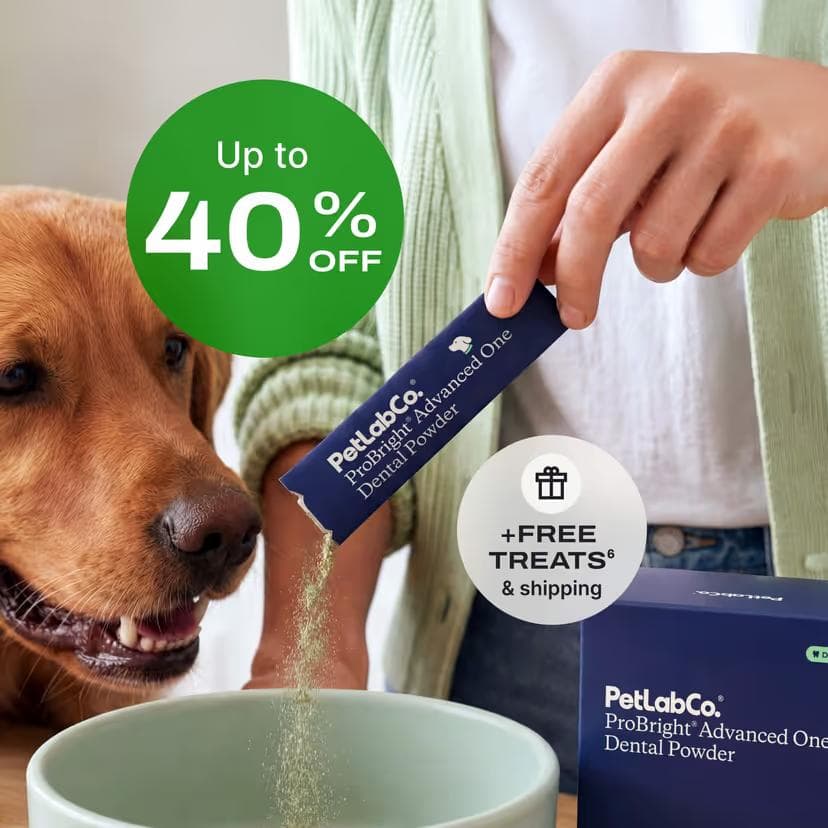
The same ProBright Advanced dental powder in single-serve daily packets. Tear open, pour over food, and target tartar buildup and bad breath with no scooping.
Webvet may earn a commission when you click through to PetLab Co, at no extra cost to you.
Owners describe the same problem in many ways. Search phrases such as "dog breath smells fishy," "dogs breath smells like fish," "dog breath smells like dead fish," "dogs breath smells like tuna," and "dog breath smells like fish food" all point to the same three possibilities, with one important exception:
- A fish-based diet or fish oil topper can make a dog's breath smell like fish food or tuna within an hour of eating. That odor fades between meals and comes with no other signs.
- A fishy dog breath cause that persists all day, or that returns even after a diet change, is not the food. It is one of the three causes above.
- A dog bad breath smells like fish complaint in a dog that also scoots, licks its rear, or drools has already told you where to look.
So, is bad breath in dogs a sign of illness? Often, yes. Merck Veterinary Manual describes periodontal disease as one of the most common conditions in adult dogs, and halitosis is frequently its first noticed sign. When dogs breath smells bad for more than a few days, something is producing that odor, and it deserves a look rather than a mint.

Forum threads asking "dog breath smells like fish reddit" style questions tend to land on anal glands, and that is a reasonable first guess. It is not the only one. PetLabCo.® covers the same ground in its own guide to fishy dog breath and its common causes, and WebVet's broader guide to dog bad breath causes covers the non-fishy odors this article does not.
Cause 1: Anal gland secretions
Every dog has two small sacs just inside the anus, one at roughly four o'clock and one at eight o'clock. They hold an oily, strongly fishy fluid that is normally squeezed out in small amounts during defecation. When the sacs do not empty properly, the fluid thickens, the sacs become full or impacted, and the dog becomes uncomfortable.
The link to the breath is simple. A dog with full or irritated anal sacs licks and bites at its rear end, sometimes for minutes at a time. The fluid transfers to the tongue and lips, and the next time your dog greets you, the fishy smell is coming from the mouth even though the problem is at the other end. This is why "excessive licking and bad breath in dogs" is such a common pairing: the licking causes the breath odor.
Signs that anal glands are behind the smell include:
- Scooting or dragging the rear along carpet or grass
- Licking or chewing at the base of the tail or under it
- A fishy smell on bedding, furniture, or your hands after petting the hindquarters
- Swelling, redness, or a visible bulge beside the anus
- Straining, discomfort when sitting, or a sudden yelp when the tail is lifted
- A wet or oily spot left behind after the dog stands up
According to Merck Veterinary Manual, anal sac disease is among the most common problems of the rectum and anus in dogs, and impaction that is not relieved can progress to infection or abscess. Small breeds and overweight dogs are overrepresented, but any dog can be affected.
Why does my female dogs breath smell like fish?
A female dog's breath smells like fish for the same anal gland reason in most cases, with one addition. Female dogs also lick the vulva, and a urinary tract infection, vaginitis, or a discharge during or after a heat cycle can carry a fishy or foul odor that transfers to the mouth in exactly the same way. A female dog that is licking her rear or vulva more than usual, urinating more often, straining, or leaving spots on bedding should have a urinalysis and an exam rather than a breath product.
How do I fix my dog smelling like fish?
You fix a dog that smells like fish by having a veterinarian or trained groomer express the anal sacs, then addressing whatever kept them from emptying, which often means a stool-firming diet change, added fiber, weight management, or treatment of an underlying skin allergy or infection. Bathing removes the fluid from the coat but does not empty the sacs, so the smell returns within days if the cause is left alone. Do not squeeze the glands yourself unless a professional has shown you how, because improper pressure can rupture an inflamed sac. Once the sacs are emptied and the licking stops, the breath odor from this cause clears on its own.
An explicit statement is warranted here because it saves owners money and time: no dental powder, chew, or water additive changes anal gland fluid or the licking that spreads it. The PetLabCo.® products discussed later in this article are not relevant to this cause. Anal glands are a veterinary problem.
Cause 2: Dental disease and oral bacteria
Dental disease is the cause that produces true breath odor, and it is the one that daily home care can genuinely influence. The process is the same in every dog. Within hours of a meal, bacteria coat the teeth as plaque. Within days, minerals in saliva harden that plaque into tartar, which shelters even more bacteria against the gumline.
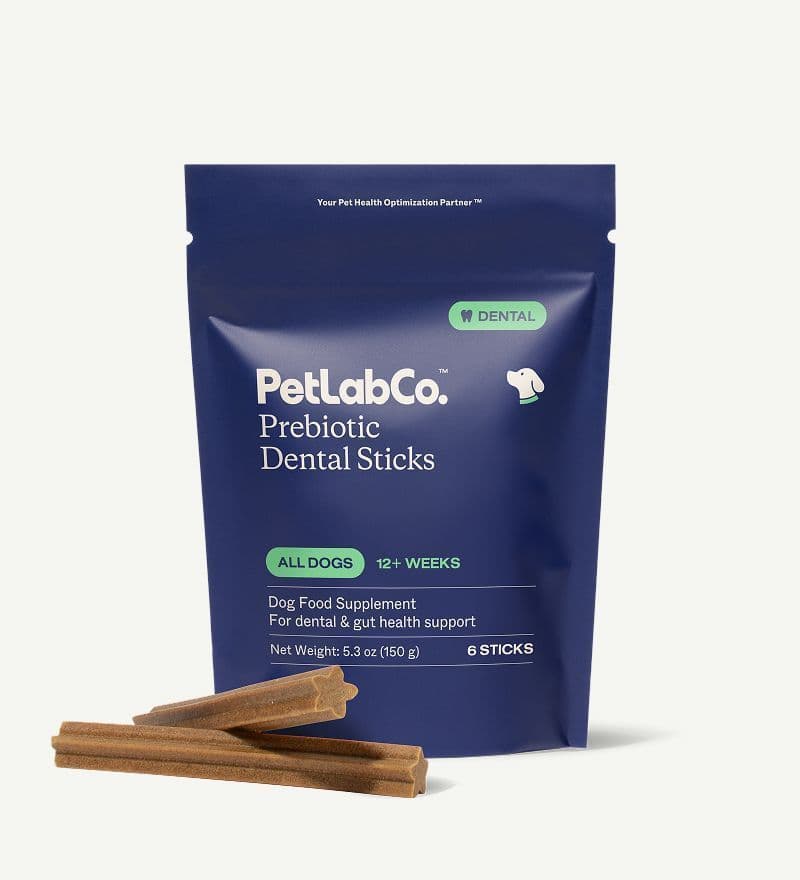
Ridged daily dental chews that use abrasive action to target plaque and tartar, with chicory root prebiotic for gut support and peppermint oil for fresher breath. For dogs 12 weeks and older.
Webvet may earn a commission when you click through to PetLab Co, at no extra cost to you.
Those bacteria break down food debris and shed tissue and release volatile sulfur compounds, chiefly hydrogen sulfide and methyl mercaptan. Hydrogen sulfide is the rotten-egg gas; in combination with other breakdown products it reads to most people as dead fish or old seafood. As gums become inflamed and periodontal pockets deepen, the odor intensifies because the bacteria are now living below the gumline where brushing cannot reach.

Why does my dog's breath smell like dead fish?
A dog's breath smells like dead fish most often because sulfur-producing bacteria are thriving in plaque, tartar, and inflamed gum tissue, and the rotting-protein smell they generate is the same chemistry that makes decaying fish so unpleasant. The odor is strongest in the morning and right after your dog drinks, when the mouth is wet and the gases release. A dead-fish smell that is paired with brown crust on the teeth, red or bleeding gums, drooling, chewing on one side, or dropped kibble is dental disease until a veterinarian says otherwise. Less commonly, a foreign object wedged between teeth, an oral mass, or a fractured tooth with an abscess produces an especially foul, localized odor that needs prompt examination.
Signs the smell is coming from the teeth and gums include:
- Yellow or brown buildup along the gumline, especially on the upper back teeth
- Red, swollen, or bleeding gums
- Reluctance to chew hard food or toys, or chewing on one side only
- Drooling, pawing at the mouth, or a head tilt while eating
- Loose or missing teeth in an adult dog
- Odor that is present all day, not only after eating or licking
Merck Veterinary Manual notes that periodontal disease is progressive, largely hidden below the gumline, and best assessed with a professional examination and dental radiographs. The American Animal Hospital Association recommends daily tooth brushing as the most effective home-care step and regular professional cleanings under anesthesia.
This is the dental-cause pathway, and it is the one place in this article where a daily dental supplement earns a mention. A once-daily powder such as ProBright® Advanced One is designed to support a healthier balance of oral bacteria and to target tartar buildup between brushings. It supports home care after the mouth has been examined. It does not remove established tartar, resolve periodontal disease, or replace a professional cleaning, and it does nothing for the two causes on either side of this section.
Cause 3: Digestive and other medical causes
The third group is broader and, in practical terms, the most important to rule out. When the smell is not on the coat and the mouth looks healthy, the odor is coming up from the gut or out through the bloodstream and lungs.
Digestive and medical causes of fishy or foul breath include:
- Acid reflux or gastritis: stomach contents and gases reach the mouth, producing a sour, fishy, or rancid smell, often with lip licking, gulping, or early-morning vomiting of bile
- Gut bacterial imbalance: poor digestion of protein produces amines and sulfur compounds that are exhaled and, frankly, passed as gas at the other end too
- Kidney disease: failing kidneys allow urea to accumulate, and breath takes on an ammonia, metallic, or "fishy chemical" character, often with increased thirst and urination, weight loss, and mouth ulcers
- Liver disease: a musty, sweet, or foul odor, sometimes with yellow gums, vomiting, and lethargy
- Diabetes: a sweet or nail-polish smell from ketones rather than a fishy one, but owners often describe any strange odor as fishy
- Oral foreign bodies, growths, or infected teeth: a localized, intensely rotten smell that arrives quickly
- Dietary triggers: fish-based diets, fish oil, and some raw feeding regimens that cause a fish odor without illness
Sudden fishy dog breath is the phrase that should shift your thinking from hygiene to health. Dental odor builds over weeks. A smell that appears over one or two days, especially in a dog whose teeth looked fine last week, is far more likely to be a gland, a digestive upset, something stuck in the mouth, or a systemic illness.
Sudden fishy dog breath: what treatment looks like
Dog breath smells like fish treatment depends entirely on which cause the veterinarian confirms, which is why "sudden fishy dog breath home remedies" is the wrong first search. Sudden fishy dog breath treatment at the clinic usually starts with a physical and oral exam, then bloodwork and a urinalysis when the mouth and glands do not explain the odor. A dog fishy breath kidney disease workup, for example, checks blood urea nitrogen, creatinine, phosphorus, and urine concentration, because early kidney disease is manageable and late kidney disease is not.
Depending on the findings, the plan may include:
- Anal sac expression and management of the reason they filled
- A professional dental cleaning with radiographs and extraction of diseased teeth
- Anti-nausea or acid-reducing medication and a diet change for reflux or gastritis
- A prescription diet, fluids, and monitoring for kidney disease
- Removal of a foreign body or biopsy of an oral mass
None of those steps is something a dental powder, chew, or water additive can do. The PetLabCo.® products described later support daily oral hygiene in a dog whose mouth is the confirmed source. They are not intended for, and should not be used as a substitute for, the diagnosis and treatment of digestive or medical causes.

 $65 · no membership
Have a health question about your dog?
A licensed vet can assess your dog over video and prescribe online when it's appropriate.
 Talk to a vet
- Licensed vets
- All 50 states
- same-day Rx
Webvet may earn a commission if you book.
Is fishy breath an emergency?
Fishy breath by itself is rarely an emergency. Fishy breath plus certain other signs is a same-day or next-morning call, because the odor is then a symptom of something that is progressing while you wait.
Call your veterinarian the same day if fishy breath comes with any of the following:
- Repeated vomiting, retching, or vomiting blood
- Lethargy, weakness, or collapse
- Refusal to eat or drink, or sudden heavy drinking
- A swollen, red, or draining area beside the anus
- Facial swelling, drooling with blood, or obvious mouth pain
- Pale, yellow, or bluish gums
- Straining to urinate, or blood in the urine, especially in a female dog
Book an appointment this week if the smell has lasted more than a few days and you see:
- Tartar, red gums, or bleeding when your dog chews
- Scooting, rear-end licking, or a fishy smell on bedding
- Intermittent soft stool, gas, or early-morning bile vomiting
- Weight loss or a duller coat in an older dog
Handle it at the next routine visit if the odor is mild, fades between meals, and your dog is otherwise eating, playing, and eliminating normally.
Here is the honest boundary, and it is the same one the label on every supplement carries. Home dental care can support a cleaner mouth and fresher breath in a dog whose odor starts at the teeth. It does not replace veterinary care, and it cannot tell you which of the three causes you are dealing with. The evidence limit for any dental product is that it addresses surface plaque and oral bacteria; it has no reach into the anal sacs, the stomach, or the kidneys. If the checklist above lands your dog in the same-day group, skip the routine and make the call.
How to tell which cause you are dealing with
Most owners can narrow the source at home in a day using a three-cause comparison built on where the smell is strongest, what other signs are present, and how quickly it appeared. The table below is the differential a veterinarian runs mentally in the exam room, laid out so you can run it in your kitchen. It also states plainly which causes the dental-cause pathway products can and cannot help.
| Cause | Where the smell is strongest | Tell-tale signs | Right next step | Can PetLabCo.® dental products help? |
|---|---|---|---|---|
| Anal gland secretions | Rear end, bedding, and the mouth right after licking | Scooting, licking under the tail, swelling beside the anus, oily spots | Veterinary or groomer expression, then fix the reason the sacs filled | No. Gland fluid and licking are unaffected by dental care |
| Dental disease and oral bacteria | Mouth, all day, worst in the morning and after drinking | Tartar, red or bleeding gums, one-sided chewing, dropped food, drooling | Oral exam and dental radiographs; professional cleaning if indicated; daily brushing | Yes, as support only, after the exam. Powder, chews, and water additive help maintain a cleaner mouth between cleanings |
| Digestive or medical condition | Mouth, but the teeth and rear end look and smell normal | Vomiting, thirst changes, weight loss, lethargy, gas, sudden onset | Same-week exam with bloodwork and urinalysis | No. These causes need diagnosis and veterinary treatment |
| Diet (fish or fish oil) | Mouth for an hour or two after eating | No other signs; odor fades between meals | Note it and move on, or discuss a diet swap at the next visit | Not needed. The odor is not a health problem |
Run the comparison in this order:
- Sniff the rear end and the bedding. If the fishy smell is there too, start with the anal glands.
- Lift the lip and look at the upper back teeth. Brown crust, red gums, or bleeding points to the dental-cause pathway.
- Time the odor. Mouth odor that is constant is dental; odor that spikes after licking is glands; odor that appeared suddenly with vomiting or thirst changes is medical.
- Check the rest of the dog. Appetite, thirst, stool, energy, and weight change all push the answer toward the medical column.
- Book the exam that matches the column, and bring the notes. Several causes can overlap, and an older dog with tartar can also have full anal sacs.
An explicit statement of which causes dental products can and cannot help belongs at the bottom of this table because it is the point owners most often get wrong. ProBright® Advanced One, ProBright® Advanced, Prebiotic Dental Sticks, and Dental Formula are all built for the middle row. They support cleaner teeth and fresher breath in a dog whose odor comes from plaque, tartar, and oral bacteria. They cannot express an anal sac, settle a stomach, or support failing kidneys, and using them for those rows delays the visit that would actually help.
A daily routine for dental-cause fishy breath
Once a veterinarian has confirmed that your dog's fishy breath starts in the mouth and has dealt with anything that needed a cleaning or an extraction, the goal becomes maintenance: slowing plaque, supporting a healthier oral bacterial balance, and keeping the smell from returning. This is where a consistent daily routine does real work.
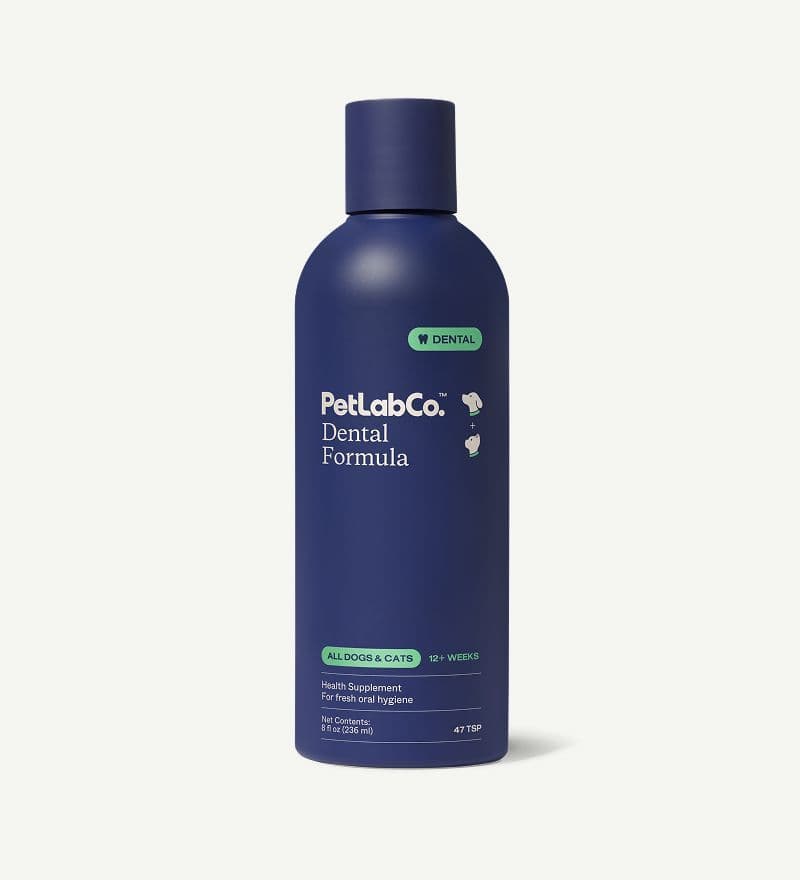
A tasteless, odorless add-to-water dental formula with stabilized chlorine dioxide that helps target tartar buildup and freshen breath. One teaspoon in 8 ounces of water daily, 47 servings per bottle.
Webvet may earn a commission when you click through to PetLab Co, at no extra cost to you.
How to get rid of fishy breath in dogs?
You get rid of fishy breath in dogs by identifying the cause first, then, for dental-cause odor, combining a professional cleaning when needed with daily home care: brushing with a dog toothpaste, a once-daily dental powder on food, a supervised dental chew, and a water additive for the days brushing does not happen. Consistency matters more than any single product, because plaque returns within hours of every meal. Expect gradual change over weeks rather than an overnight fix, recheck the mouth monthly, and go back to the veterinarian if the smell returns despite the routine, since that usually means disease below the gumline.

The routine below is how to fix fishy dog breath when the mouth is the source. Each step is support; the cleaning and exam come first.
- Start with the exam. The ProBright® powder labels and the Prebiotic Dental Sticks label recommend a veterinary examination before use, and for good reason: a powder cannot reach disease under the gum.
- Brush as often as you can manage. AAHA describes daily brushing with a pet-safe toothpaste as the single most effective home-care step. Even three times a week is far better than none.
- Add a once-daily dental powder at mealtime. ProBright® Advanced One comes as 30 pre-measured, weight-specific packets that are torn open and sprinkled over food once a day. Homes that prefer a scoop can use the ProBright® Advanced tub, which uses the same active formula in five weight bands. Both combine a proprietary probiotic blend of Pediococcus pentosaceus and Lactiplantibacillus plantarum with brown algae, sodium hexametaphosphate, rosemary leaf extract, and decaffeinated green tea to support a balanced oral environment and target tartar buildup.
- Give a supervised dental chew. Prebiotic Dental Sticks use a ridged shape for mechanical cleaning action against plaque and tartar, with chicory root inulin for digestive support and peppermint oil for a fresh scent. Watch your dog chew, and always keep fresh water available.
- Use a water additive on the days brushing does not happen. Dental Formula is a tasteless, odorless liquid: one teaspoon (5 ml) mixed into 8 ounces of fresh water once daily. Its stabilized chlorine dioxide targets the volatile sulfur compounds associated with bad breath and helps support a healthy balance of oral bacteria. If you search "dog dental water additive vet recommended," this is the category, and the right one is the one your veterinarian is comfortable with for your dog.
- Recheck monthly and at every wellness visit. Lift the lip, sniff, and note the gumline. Support products maintain a cleaned mouth; they do not undo years of tartar.
What the ProBright® Advanced studies found
PetLabCo.® reports two clinical studies of the ProBright® Advanced formula, which is the same active formula in the ProBright® Advanced One packets. In a 28-day clinical study, ProBright® Advanced significantly reduced hydrogen sulfide, a common bad-breath compound, by 40%. In a separate 90-day clinical study, dogs taking ProBright® Advanced daily had a plaque index score 25% lower than the control group, a statement attributed to Dr. Jan Bellows, board-certified veterinary dentist and PetLabCo.® consultant. The company publishes both findings on its ProBright® Advanced evidence page.
The same ProBright Advanced dental powder in single-serve daily packets. Tear open, pour over food, and target tartar buildup and bad breath with no scooping.
Webvet may earn a commission when you click through to PetLab Co, at no extra cost to you.
Two points keep those numbers in perspective:
- They are brand-reported results, and individual results vary. A lower hydrogen sulfide reading and a lower plaque index are meaningful, measurable outcomes for the dental-cause pathway; they are not evidence about anal glands, digestion, or any disease.
- Hydrogen sulfide is one contributor to odor, not the whole story. A dog with deep periodontal pockets can still smell bad on a powder because the bacteria live where the powder does not reach.
For a closer, independent look at the packet format itself, Petful's ProBright Advanced One review compares the sachets with the tub on price, portioning, and convenience.
Featured PetLabCo.® dental products at a glance
All figures below come from the current label and product listing for each item. Prices were checked September 14, 2026 and can change.
| Product | Format and how it is given | Key actives | Daily serving by dog weight | Age and key cautions | Price checked September 14, 2026 |
|---|---|---|---|---|---|
| ProBright® Advanced One | 30 individually sealed powder packets; sprinkle on food once daily at mealtime; do not add to water | Proprietary probiotic blend (Pediococcus pentosaceus, Lactiplantibacillus plantarum) 112.5 million to 1.2 billion CFU; brown algae 82.5 to 1,510 mg; sodium hexametaphosphate 14.5 to 125 mg; rosemary leaf extract 10 to 79 mg; decaffeinated green tea 1.15 to 9.3 mg | Under 4 lb: half an extra-small packet (0.5 g); 4-11.9 lb: one extra-small packet (1 g); 12-24.9 lb: one small packet (1 g); 25-75 lb: one medium packet (1.5 g); over 75 lb: one large packet (3 g) | Dogs 12 weeks and older; vet exam recommended before use; give during or after eating; safe use in pregnant or breeding animals not proven; use with caution in hyperthyroid disease; stop and consult a vet if condition worsens or does not improve | $30.95 with subscription or $38.69 one-time |
| ProBright® Advanced | Powder in weight-specific tubs with scoop; one scoop on food once daily at mealtime; do not add to water | Same active formula as ProBright® Advanced One across five weight bands (probiotic blend 112.5 million to 1.2 billion CFU; brown algae 82.5 to 1,510 mg; sodium hexametaphosphate 14.5 to 125 mg; rosemary 10 to 79.67 mg; green tea 1.15 to 9.3 mg) | Under 4 lb: one small scoop (0.75 g); 4-11.9 lb: one big scoop (1.5 g); 12-24.9 lb: one scoop (1.5 g); 25-75 lb: one scoop (2 g); over 75 lb: one scoop (3 g) | Dogs 12 weeks and older; same cautions as ProBright® Advanced One | From $28.95 with subscription or $36.19 one-time |
| Prebiotic Dental Sticks | Ridged 25 g dental chew; supervised daily chewing; supplemental feeding only | Dried chicory root (inulin, 0.5% minimum), peppermint oil, coconut oil; gelatin by-product from bovine sources; dried cultured skim milk | Under 25 lb: half a stick; 25-50 lb: one stick; 51-75 lb: one and a half sticks; over 75 lb: two sticks | Dogs 12 weeks and older; monitor chewing so the stick is fully chewed; always provide fresh water; reseal pack | $15.92 with subscription or $19.90 one-time |
| Dental Formula | Tasteless, odorless liquid for dogs and cats; mix 1 teaspoon (5 ml) into 8 ounces of fresh water once daily; shake well; 47 servings per bottle | Stabilized chlorine dioxide 7 mg per teaspoon | One teaspoon in 8 ounces of water for all sizes | Caution during pregnancy; do not use in animals with chronic diarrhea; give during or after eating; store below 86°F; stop and consult a vet if condition worsens or does not improve | $29.95 with subscription or $37.44 one-time |
Read the current label before you buy, because the daily serving for the powders changes with the weight band and the cautions are specific. Three of them deserve emphasis in a fishy-breath context:
- Dental Formula is not for dogs with chronic diarrhea. A dog whose breath is fishy because of an ongoing digestive problem is exactly the dog this water additive is not intended for, which is one more reason to sort the cause first.
- ProBright® Advanced and ProBright® Advanced One contain brown algae, a seaweed, and the label advises caution in animals with hyperthyroid disease. Ask your veterinarian if your dog has a thyroid condition or takes thyroid medication.
- ProBright® Advanced One, ProBright® Advanced, and Prebiotic Dental Sticks are for dogs 12 weeks and older, and safe use in pregnant or breeding animals has not been established for the powders.
Home remedies, breath fresheners, and what a veterinarian thinks of them
The "dog bad breath home remedy" search is enormous, and most of it is aimed at the wrong cause. Here is how the common ideas hold up for dental-cause odor specifically:
- Dog bad breath remedy yogurt: plain yogurt is a gut probiotic, not an oral one. It is harmless in small amounts for most dogs but does not change plaque bacteria. Dogs with dairy sensitivity may get loose stool.
- Dog bad breath home remedy baking soda: skip it. Baking soda is high in sodium, tastes bad, and can upset the stomach if swallowed in quantity. Dog toothpaste is safer and formulated to be swallowed.
- Dog bad breath home remedy vinegar: a splash of apple cider vinegar in water has no evidence for oral bacteria in dogs and can put some dogs off drinking, which makes breath worse.
- Dog breath freshener homemade or dog breath freshener natural recipes: parsley or mint in a treat masks odor for minutes. Masking is not the same as maintaining a cleaner mouth.
- Dog breath freshener spray: sprays are fine for a quick social fix before guests arrive. They do not stay on the teeth long enough to influence plaque.
- Dog breath freshener for water: a water additive is the one "freshener" format that also supports oral bacteria balance, because the dog is exposed to it every time it drinks. The best dog breath freshener water additive for your dog is one with a disclosed active, a clear serving, and cautions you have read.
- Senior dog bad breath home remedy: for an older dog, the best home remedy is an exam, because seniors are far more likely to have periodontal pockets, kidney disease, or an oral mass behind the smell.
A vet recommended dog breath freshener is really a routine, not a bottle: brush, a daily powder or chew, a water additive, and a professional cleaning when the gumline says it is time. The quick fix dog bad breath products that mask odor have a place before company arrives, but if the smell needs masking every day, something is producing it. WebVet's guide to home remedies for dog bad breath covers the general-odor options in more depth; "dog breath smells like fish home remedies" and "home remedies for fishy dog breath" are a narrower question, and the honest answer is that home care helps only the dental column of the table above.

Fishy breath in puppies and senior dogs
Age changes the odds. The same three causes apply at every age, but the likely culprit shifts, and so does the urgency.
Puppies: teething, trapped food, and the 12-week line
A puppy between about three and seven months of age is losing baby teeth and erupting adult ones. Teething gums bleed slightly, tiny pockets form where deciduous teeth loosen, and kibble and chew fragments lodge there. Blood plus trapped food plus a warm mouth produces a sour, metallic, sometimes fishy odor that owners describe as "dog breath smells like fish teething." It is usually mild and resolves as the adult teeth settle in.
Puppy breath that is worth a call includes:
- A retained baby tooth beside an adult tooth, which traps food and needs extraction
- A strong odor with drooling, pawing at the mouth, or refusal to chew
- Fishy smell combined with rear-end licking, since puppies can have full anal sacs too
- Vomiting, diarrhea, or lethargy alongside the odor, which points to an intestinal cause such as parasites
The ProBright® powders and Prebiotic Dental Sticks are labeled for dogs 12 weeks and older, and in a teething puppy, gentle brushing to build tolerance is more valuable than any powder. If your veterinarian agrees a puppy older than 12 weeks would benefit, ProBright® Advanced One offers an extra-small packet sized for dogs from 4 to 11.9 pounds, and a half packet for dogs under 4 pounds.
Senior dogs: when old dog breath smells like fish
When an old dog breath smells like fish, the list of causes gets longer and more serious at the same time. Years of plaque have often produced deep periodontal pockets and loose or infected teeth. Kidney function declines with age, and an ammonia or metallic edge to the breath is an early clue. Oral tumors are more common in older dogs and can produce a rapidly worsening, rotten odor from one side of the mouth. Anal sac problems also increase with age, weight gain, and reduced muscle tone.
For a senior dog, the routine should be examination-led:
- A full oral exam with dental radiographs, and a cleaning under anesthesia when the veterinarian judges it safe, with pre-anesthetic bloodwork
- Bloodwork and urinalysis at least yearly, and sooner if breath changes, thirst increases, or weight drops
- Anal sac check at every visit
- Daily home care that fits the dog: soft-bristle brushing, a powder on food for dogs that will not accept brushing, and a water additive, all after the exam
- A dental chew only if the veterinarian confirms the teeth are sound enough to chew safely
ProBright® Advanced is labeled as generally suitable for senior dogs, with the company's own advice that older dogs are more likely to have age-related health considerations and that a veterinarian should be consulted first. That is good advice for every product on this page.

Puppy, female, and sudden-onset variants in one place
Owners searching the specific variants deserve the specific answers, so here they are together:
- Puppy: teething blood and trapped food are the usual cause; a persistent odor after the adult teeth are in, or any odor with drooling or lethargy, needs a vet check.
- Female dog: anal gland licking is still the first suspect, but licking the vulva during a urinary or vaginal infection, or around a heat cycle, transfers the same fishy odor to the mouth. Look for frequent urination, straining, or discharge.
- Sudden onset: treat sudden fishy breath as medical until proven otherwise. Glands, reflux, a foreign body, or early kidney disease are all more likely than dental disease, which builds slowly.
- Old dog: assume more than one cause is possible and let bloodwork and an oral exam sort them.
Frequently Asked Questions
How do I clean out my dog's anal glands?
To clean out your dog's anal glands, have your veterinarian or a trained groomer express them. Veterinarian or groomer expression takes a minute, relieves the fullness, and lets a professional check for infection or an abscess at the same time. Do not squeeze at home unless shown the technique in person, because pressing an inflamed sac the wrong way can rupture it. If your dog needs expression more than every month or two, ask about the underlying reason, which is often stool consistency, weight, or allergy.
Why does my dog smell like fish even after a bath?
Your dog smells so bad even after a bath because the fishy smell is coming from fresh anal gland fluid on the coat, not from dirt the bath removed. Every time your dog scoots, licks, or gets startled, a little more fluid leaks onto the fur under the tail and onto bedding, so the smell returns within hours. A bath also does nothing for full or impacted sacs. Recurring leakage needs an exam, because a sac that keeps overfilling can become infected or abscess.
Why does my female dog's breath smell like fish?
Most often for the same reason as any dog: she is licking the vulva or glands and carrying the fishy anal sac fluid to her mouth. In female dogs there is a second possibility to rule out. A urinary tract infection, vaginitis, or discharge around a heat cycle can smell fishy and is also spread by licking. Urinary or vaginal infection signs include frequent urination, straining, blood, and persistent licking. A urinalysis and exam settle it quickly.
Why does my puppy's breath smell like fish?
Your puppy's breath smells like fish usually because of teething blood and trapped food. Between roughly three and seven months, baby teeth loosen, gums bleed a little, and kibble lodges in the gaps, producing a sour or fishy odor that fades as adult teeth settle. Puppies can also have full anal sacs or intestinal parasites that change breath. Persistent odor needs a vet check, especially with a retained baby tooth, drooling, refusal to chew, vomiting, diarrhea, or lethargy.
Can kidney disease make a dog's breath smell like fish?
Yes, kidney disease can make a dog's breath smell like fish. As kidney function declines, urea builds up in the blood and is released through the breath, producing an ammonia or metallic odor that many owners describe as fishy or chemical. It often comes with increased thirst and urination, weight loss, nausea, and mouth ulcers. Blood and urine testing, specifically blood urea nitrogen, creatinine, phosphorus, and urine concentration, confirms it. Early kidney disease is manageable with diet and monitoring, so do not wait on this one.
What is the fastest way to freshen fishy dog breath?
The fastest way to freshen fishy dog breath is to treat the cause first, because nothing freshens breath faster than removing what makes it. For a dental-cause smell, a professional cleaning produces the fastest change, and daily dental powder and chews, brushing, and a water additive keep it that way. For gland or digestive causes, expression or medical treatment is the fix and no freshener will hold. A breath spray can cover odor for an hour before guests arrive, but if you need it daily, book the exam.
Sources
- Merck Veterinary Manual. Periodontal Disease in Small Animals. Accessed September 14, 2026.
- Merck Veterinary Manual. Anal Sac Disease in Small Animals. Accessed September 14, 2026.
- American Kennel Club. Why Does My Dog Smell Like Fish?. Accessed September 14, 2026.
- American Animal Hospital Association. Your Pet's Dental Care. Accessed September 14, 2026.
- Veterinary Oral Health Council. VOHC Accepted Products and Protocols. Accessed September 14, 2026.
- PetLabCo.® Does PetLabCo.® ProBright® Advanced Work? Clinical study statements. Accessed September 14, 2026.
PetLabCo.® products are not intended to diagnose, treat, cure, or prevent any disease. Consult your veterinarian before starting supplements, especially if your dog has a health condition, takes medication, is pregnant or nursing, or has persistent symptoms.
$65 · no membershipHave a health question about your dog?
A licensed vet can assess your dog over video and prescribe online when it's appropriate.
Talk to a vet- Licensed vets
- All 50 states
- same-day Rx
Webvet may earn a commission if you book.

Veterinarian · DVM
Athena Gaffud, DVM, is a licensed veterinarian and writer based in the Cagayan Valley of the northern Philippines. She runs the website countryvetmom.com. Dr. Gaffud earned her Doctor of Veterinary Medicine degree from the University of the Philippines Los Baños in 2011, ranking in the top 10 and receiving the Best Undergraduate Thesis Award in Large Animals. With over a decade of experience, she has worked as a researcher, a practitioner for small and large animals, and in veterinary technical sales, marketing, and pet insurance. A published author, Dr. Gaffud promotes responsible pet ownership and combats misinformation on animal care through her platforms, including the DocAthena Facebook Page and DocAthena YouTube channel. She is a writer and editor for various pet-related websites such as Total Vet, Honest Paws, PangoVet, Dogster, Catster, My Best PH, Paw Origins, Bully Max, Not a Bully, Paws and Claws CBD, many others. She was also cited in different pet-related media articles such as The Dog People, USA Today, Newsweek, New York Post, Reader’s Digest, Smithsonian Magazine, Woman’s World, Dog Time, Patch, Kinship, Martha Stewart, and many others. Moreover, she is also a published fiction author on Kindle.
Related reading

Diabetic Dog Treats: Safe Choices and Consistent Portions

Best Litter for Litter-Robot: What Works and What to Avoid

Litter-Robot 5 Pro Review: Hands-On Setup, Camera and App Test
