Cat Yowling: Why It Happens and What to Check
Investigate cat yowling with a practical context checklist, clear veterinary escalation signs and useful changes to resources and routines, without assuming every long cry means loneliness.

This article contains affiliate links. Webvet may earn a commission when you buy through them, at no extra cost to you.
Cat yowling is a long, sustained call that can occur with social conflict, reproductive behavior, requests or distress. The sound alone cannot tell you which explanation applies. A new, persistent or noticeably different yowl deserves a health check before you try to train it away.
Start with what changed: the cat’s routine, another animal nearby, appetite, litter-box habits, movement or tolerance of touch. That information is more useful than deciding whether the call sounds sad or angry.
What counts as a yowl?
- 1Investigate new yowling, especially with changes in eating, drinking, movement or toileting.
- 2Do not punish the sound or assume an older cat is simply becoming noisy.
- 3Once health needs are addressed, a predictable routine and reduced conflict can help you understand and manage the pattern.
A yowl is usually longer and more drawn out than a short meow. “Caterwauling” is another everyday word for loud, sustained cat calling, sometimes used for reproductive or confrontational vocalizations. These descriptions overlap; none identifies a diagnosis.
The ASPCA’s meowing and yowling guide explains that calling can occur in several settings, including requests, social communication and reproductive behavior. The useful next question is therefore what the cat was doing and what happened around them.
Compare a familiar premeal call with a cat suddenly pacing and crying when normally settled. Both can sound dramatic, but the second represents a change. Equally, a call that has occurred for months still warrants assessment if no one has investigated it or if other signs have appeared.
Observe before assigning a motive
- Note whether the cat is approaching you, another cat, a door or a resource.
- Look for relaxed movement versus tension, hiding or difficulty settling.
- Check whether the episode ends when an ordinary need is met.
- Record changes elsewhere in the day, not just during the noise.
Keep a familiar retreat available
A Best Friends by Sheri Meow Hut can offer a covered resting option for a cat that chooses it; keep the entrance unobstructed.
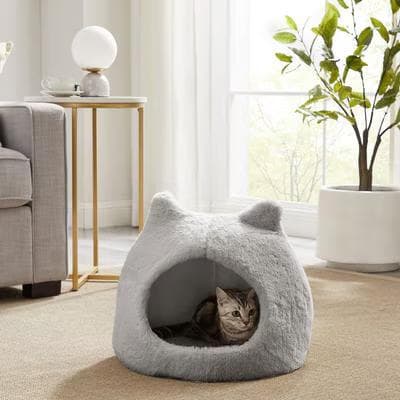
Covered bed for a cat that prefers a sheltered resting spot.
Webvet may earn a commission when you click through to Chewy, at no extra cost to you.
For an overview of other vocalizations, use the cat sounds decoder. A yowl should not be confused with a cough, gag or sound produced during labored breathing.
Check for pain or illness first
If a cat starts yowling all of a sudden, calls all the time or walks around without settling, prioritize the change over the loudness. Record when the yowling began and what the cat was doing. Persistent unexplained calling needs assessment even when no injury is visible.

Call your veterinarian when yowling is new, increasing or difficult to explain, especially if the cat is also eating differently, drinking more, hiding, losing weight, moving less comfortably or changing litter-box habits. Several problems can produce overlapping behavior, and a recording cannot replace examination.
Do not use the absence of a limp as proof that the cat is comfortable. Cats may change how they jump, rest, groom or interact before the cause is obvious to a caregiver. If touching a particular area provokes a cry, stop repeating that test and describe it to the clinic.
| What you notice | What to do next |
|---|---|
| New calling with a change in appetite, thirst, weight or movement | Arrange a veterinary assessment and describe the associated change |
| Repeated litter-box trips, straining or little to no urine | Seek urgent veterinary advice; do not wait for a behavior plan |
| Breathing difficulty, collapse or severe distress | Seek emergency care |
| Longstanding calling with no recent changes | Review routine and resources, while discussing persistent excessive vocalization with your vet |
Litter-box changes should not become a waiting game
If calling occurs during repeated trips to the litter tray, note whether urine is actually being produced. Straining and producing little or no urine can indicate an urgent problem. Cornell’s lower urinary tract guidance identifies suspected urinary obstruction as an emergency.
Do not assume the cat is constipated, unhappy with the litter or trying to get attention. Contact a veterinarian promptly and describe the repeated attempts and output. A new tray or calming product should not delay that call.
In a multicat home, uncertainty about which cat produced a clump is useful information too. Tell the clinic what you know and what you cannot confirm. Do not wait for a perfectly documented episode before seeking advice.
Older cats need the same careful investigation
Age alone does not explain a new yowl. An older cat may have changes in comfort, senses, sleep or cognition, and more than one issue can coexist. “Cat dementia howling” is a search phrase, not a diagnosis you can make from the sound.
Tell the veterinarian whether the cat appears lost in familiar places, changes sleeping patterns, hesitates at ordinary jumps or seems less responsive to familiar cues. Bring a medication list and any recent changes in food or routine. Do not start sedating products or human pain medicine to quiet the cat while waiting for an answer.
Make access easier while following veterinary advice: keep water, a suitable litter tray and comfortable resting places accessible without difficult jumps. A low entry litter tray may help a cat who struggles with a tall side, but it does not treat the underlying reason for discomfort.
Keep an established meal routine predictable
An automatic feeder such as the Petlibro Air Automatic Feeder can help separate a scheduled meal from your physical arrival, provided it reliably delivers the correct food and portion.

Automatic feeder for scheduled portions of compatible food.
Webvet may earn a commission when you click through to Chewy, at no extra cost to you.
Heat, other cats and household changes
Unneutered cats may call in connection with reproductive behavior. If that is possible, discuss reproductive care with your veterinarian and keep the cat securely indoors. Do not let the cat roam to resolve the noise; that introduces additional risks and does not address the household problem safely.
Calling can also occur when another cat is outside a window or when housemates compete over access. Watch the quiet parts of the interaction. One cat sitting in a doorway can prevent another from reaching a litter tray even without a fight.
Reduce pressure around resources
- Provide separate access to food, water, litter trays and resting places.
- Make sure a hiding spot has a usable exit rather than becoming a trap.
- Block a provocative outside view if watching it repeatedly leaves the cat tense.
- Avoid forcing two cats close together to “work it out.”
If the sound comes with hissing or growling, follow the guidance on cat warning sounds and conflict. Separate animals calmly when needed and ask for help with a gradual introduction plan.
Neutered cats can still need assessment
A neutered male or spayed female cat can still yowl because reproductive behavior is only one possible explanation. Persistent calling, walking around without settling or a sudden change in an older cat should not be dismissed because the cat has already been neutered.
Tell the veterinarian when the behavior began and whether appetite, urination, movement or orientation has changed. Do not assume a spayed female is in heat or that a male who calls constantly is simply looking for a mate.
Consider support within the household plan
A pheromone diffuser such as the Feliway Classic diffuser may be considered as an adjunct in an appropriate behavior plan, but it does not establish why a cat is yowling or replace separated resources. Judge any change by the cat’s comfort and behavior, not only whether the room becomes quieter.
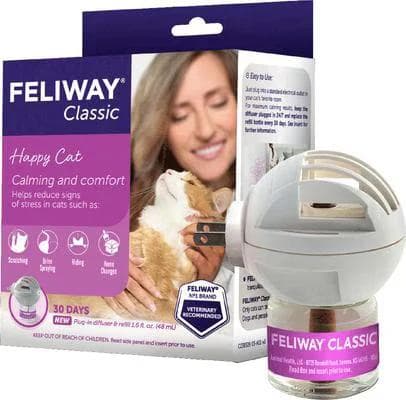
Pheromone diffuser to consider alongside a plan for a more comfortable home environment.
Webvet may earn a commission when you click through to Chewy, at no extra cost to you.
When a female or male cat calls after dark
A female cat may yowl at night during heat, and an unneutered male may call when detecting a receptive female. Sex alone does not establish the cause. A neutered male still needs the same resource, environmental and medical checks; new calling is not explained away by reproductive status.
If a cat keeps yowling at night for no obvious reason, record the time, location and what happens before and afterward. The clock does not distinguish a learned request from discomfort. Use the health checks above, then investigate resources and outside triggers.
Confirm access to water, litter and a comfortable resting place. Note appetite, urine output, movement and orientation. Arrange assessment for a new or persistent change; repeated straining with little or no urine needs urgent veterinary advice. Only adjust a learned attention routine after needs and health concerns are addressed.
Attention, meals and predictable routines
Once health concerns and essential needs have been addressed, look for a repeatable sequence. Does the cat call when you sit at the desk, shortly before breakfast or at a door that is sometimes open? Write down what happens after the yowl, including attention that feels negative to you but still creates interaction.
Change the routine before the predictable episode when possible. Offer a short play session and appropriate meal at consistent times, or make the usual resting place accessible earlier.
Choose a small number of reliable daily events: meals, a suitable play opportunity and quiet social time. Keep the order and approximate timing consistent enough that the cat does not need to escalate a request repeatedly.

Make the routine predictable without making it rigid
If your work schedule changes, use a gradual transition where possible rather than an abrupt shift in every resource and interaction.
Use the timing to choose what to check
| Calling pattern | Check before changing the routine | Useful first adjustment |
|---|---|---|
| Starts while the meal is prepared | Normal meal due, food accessible, appetite otherwise usual | Prepare the serving before the busiest household activity |
| Continues after eating | Whether the cat actually ate; signs of discomfort or another unmet need | Record the meal and subsequent behavior rather than automatically adding food |
| Begins at a closed bedroom door | Access to water, litter and an alternative comfortable resting place | Restore necessary access; practice an acceptable arrangement while awake |
| Occurs near another cat at a doorway | Whether either cat can leave without passing the other | Create separate routes or resources instead of bringing the cats closer |
For example, a cat may begin calling while breakfast bowls clatter, then eat and return to an ordinary activity. That sequence suggests a different first change from a cat who calls beside an untouched bowl. Record what happens after the opportunity is offered, not just what seemed to start the sound.
Prepare an easy activity before the busy period
For example, if calling repeatedly starts while dinner is being prepared, offer a brief appropriate activity, such as an easy supervised session with the Catit Play Treat Puzzle, before that busy period and deliver the meal through a consistent routine.

Food-puzzle toy for adding a manageable activity to a familiar meal.
Webvet may earn a commission when you click through to Chewy, at no extra cost to you.
When health concerns and unmet needs have been addressed, teach the alternative at an easy time: reward a comfortable wait away from the preparation area, serve the ordinary meal, and repeat the same arrangement. Do not prolong hunger or demand prolonged silence to test whether a yowl is “only attention.”
Prepare before the predictable calling period
An automatic feeder can support timing, but check portions, food compatibility and whether every cat can access its own meal without competition.
Watch the outcome across several ordinary days. A useful result is a cat who eats, rests and interacts comfortably, not one who becomes silent while hiding. If the plan does not fit the observed pattern, bring the record back to the veterinarian or behavior professional rather than adding more products at random.
Reward a usable alternative
If the veterinarian has ruled out health problems and the pattern is a learned request, notice and reward quieter ways of approaching. A cat sitting nearby or coming to a familiar mat gives you an opportunity to offer interaction before a long calling episode develops.
Do not turn this into a blanket rule to ignore crying. Check the need first, keep essential care predictable and change only the attention pattern you have actually identified. If the cat becomes more distressed, stop treating the problem as a simple habit and seek further advice.
Early-morning and nighttime patterns need attention to the whole daily routine. The established guide to keeping a cat quiet while you sleep covers that timing in detail. Start by noting when the yowling happens and what else has changed, then use that guide for a nighttime routine.
Food, toys and a changed household
Yowling while carrying a toy may occur during an active routine, but the toy does not prove one emotional meaning. Watch whether the cat approaches you, settles afterward or remains agitated. New persistent calling still deserves the same health and context checks.
For yowling during or after eating, record the timing, appetite and any difficulty taking food. Yowling followed by vomiting, or throwing up, is not simply a demand for another meal. Contact your veterinarian about new or repeated episodes and describe the accompanying signs.
After moving home, provide familiar resources in accessible, quiet places and watch whether the cat can use them comfortably. A stray cat calling outside your house presents a different situation: avoid handling an unfamiliar distressed cat and contact an appropriate local rescue or veterinary service for guidance.
A toy or an outdoor caller changes the context
For a cat yowling at night with a toy, note whether the sound occurs only during that activity and whether the cat settles normally afterward. The object does not establish an emotional meaning. Store toys with strings or loose parts after supervised play rather than leaving an unsafe toy out overnight.
- Offer supervised play before the usual calling period, then allow a quiet opportunity to settle.
- If calling continues without the toy, appears new or accompanies changes in eating, toileting or movement, describe that pattern to your veterinarian rather than assuming the toy explains it.
If your cat is yowling outside, check whether access home is blocked. For an unfamiliar stray or feral cat calling at night, ask a local shelter or community-cat group about caregivers and help. Report apparent illness or injury; the sound cannot establish ownership or justify handling an unfamiliar distressed cat.
The ASPCA’s community-cat guidance explains why familiar household routines do not translate directly to an unfamiliar outdoor cat.
What to record before the appointment
A short, specific record can save time. “Yowls a lot” leaves the veterinarian guessing about duration, context and change. “Started this week, calls after the litter tray, then hides” supplies a much more useful sequence.
For several nonurgent episodes, record:
- Time, approximate duration and location.
- What the cat did immediately before and afterward.
- Nearby animals, visitors, outside sounds or handling.
- Eating, drinking, urination, stool, movement and sleep changes.
- Any intervention and whether the cat returned to normal behavior.
A brief video with the cat’s whole body visible can help, if filming does not delay care or provoke another episode. Do not corner the cat, press a sore area or arrange a confrontation to demonstrate the sound.
For familiar meows that have become frequent, why cats meow so much provides the related investigation. Keep the distinction useful: name the sound if you can, but give the clinic the behavior pattern even when you are unsure whether to call it a meow or a yowl.
Bring the whole household’s observations
If more than one person feeds or cares for the cat, compare notes before the appointment. One person may notice early calling while another sees reduced jumping or a change in litter use. Combining those observations is more useful than counting only the episodes that interrupted sleep.
Include recent absences, visitors and schedule changes, while keeping the distinction between an observed event and your explanation for it.
Questions owners ask
Frequently Asked Questions
What does it mean when a cat is Yowling?
It can reflect a request, conflict, reproductive behavior or distress. A new or persistent pattern needs a health assessment, especially with changes in appetite, thirst, toileting, movement or behavior. The sound alone does not identify the cause.
What's the difference between a meow and a yowl?
A meow is often brief, while a yowl is typically longer and more sustained. These are everyday descriptions, and cats can blend sounds. Context and changes from the cat’s normal behavior matter more than choosing the perfect label.
Does cat Yowling mean they're lonely?
Sometimes social contact or an unmet activity need may be part of the pattern, but loneliness is not the only explanation. Check health, resources and interactions before assuming the cat needs more attention or another pet.
Should I ignore cat Yowling?
Do not ignore unexplained, new or distressed calling. Once health and essential needs are addressed, a clearly learned attention pattern may benefit from predictable interaction and rewarding quieter requests. That is different from withholding help from a distressed cat.
What is caterwauling?
Caterwauling is a common name for loud, drawn-out cat calling. People may use it for reproductive calls or confrontations, but the word does not prove either cause. Observe the setting and accompanying behavior.
What is cat dementia howling?
People use the phrase for loud calling associated with suspected age-related cognitive changes. Similar calling can have other causes. A veterinarian should investigate a senior cat’s new behavior instead of attributing it to dementia from the noise alone.

Editor
The Webvet Editorial Team is the in-house group of pet-care editors and writers behind Webvet, operated by Smart Pet Collective. The team researches, writes, and maintains Webvet's pet health, behavior, and medication content. Every article follows a defined editorial process: research from reputable veterinary and scientific sources, careful drafting, mandatory review of medical content by a credentialed veterinarian, and dated publication. Health and medication articles are medically reviewed by a licensed veterinary professional before they go live and are kept current over time.
Related reading

Dog Muzzles: Fit, Basket Styles and Comfortable Training

Invisible Fence for Dogs: Limits, Welfare Risks and Safer Alternatives

Electronic Dog Doors: Microchips, Collar Keys and App Controls
