Why Do Cats Hiss and Growl? How to Respond
Respond to cat hissing and growling with practical steps that reduce pressure, improve introductions and preserve escape routes, while recognizing when new behavior needs a health assessment.

This article contains affiliate links. Webvet may earn a commission when you buy through them, at no extra cost to you.
Why do cats hiss when a person, kitten or dog comes close? Usually, the sound is a warning to stop or increase distance. Fear, frustration, unwanted handling and pain can all contribute. A hiss tells you the current interaction is too much; it does not prove that a cat dislikes you permanently.
Stop the approach, give the cat an escape route and let the situation settle. Investigate a new or worsening pattern, especially when it comes with changes in movement, appetite, grooming or tolerance of touch.
A hiss or growl asks for distance
- 1Give an escape route and stop the interaction causing pressure.
- 2Do not punish the warning, hiss back or force contact.
- 3New behavior needs assessment, particularly when pain or illness may be involved.
A hiss is a forceful breathy sound; a growl is a lower, voiced warning. Either may accompany tense posture, flattened or sideways ears, a crouch or an attempt to move away. Some cats give a brief hiss before retreating. Others freeze and growl when they feel unable to leave.
Treat the warning as useful information. You can change the situation before a swat or bite occurs. Moving closer to test whether the cat “really means it” removes that opportunity and may increase danger for everyone involved.
Read the route away
- Can the cat leave without passing the person or animal approaching?
- Is someone blocking a doorway, carrier exit or narrow shelf?
- Is a child following the cat into its hiding place?
- Is another pet waiting beside the food or litter tray?
The answer can explain more than the volume of the sound. A cat with room to retreat may settle; a cat trapped in a corner cannot make the same choice. Provide distance without chasing or attempting to pick the cat up.
A covered resting spot such as the Best Friends by Sheri Meow Hut can be an option if the cat uses it voluntarily and its entrance stays clear.
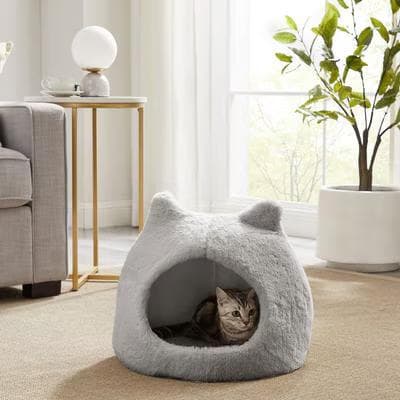
Covered bed for a cat that prefers a sheltered resting spot.
Webvet may earn a commission when you click through to Chewy, at no extra cost to you.
For comparison with meows, trills and yowls, see the cat sounds decoder. If the main problem is a long, repeated call rather than a close-range warning, the cat yowling guide follows that separate pattern.
Fear, frustration, touch and possible pain
The same cat can hiss for different reasons on different days. Look at what changed immediately before the warning. A visitor leaning over the cat is different from a familiar caregiver touching an area that previously caused no concern.
Cornell’s feline behavior guidance emphasizes the importance of investigating medical causes and recognizing fear-related body language. It also notes that physical punishment can worsen fear and aggression. Those principles support stepping back and assessing the cause, rather than suppressing the sound.
| Situation | What may be happening | Helpful first change |
|---|---|---|
| Hiss when a visitor reaches toward the cat | Unwanted close contact | Ask the visitor to stop reaching and let the cat choose distance |
| Growl during handling | Discomfort, fear or frustration | Stop handling and arrange assessment if this is new or repeats |
| Warning after seeing a cat outside | High arousal linked to the outside animal | Reduce the view and keep housemates away until calm |
| Hiss while cornered in a carrier or room | No comfortable escape option | Reduce pressure and use a planned, low-stress handling approach |

“Friendly” does not mean available for every touch
A cat may approach you, rub against your leg and still object when picked up. Approaching is not permission for every form of handling. Offer a brief interaction, pause and see whether the cat seeks more.
Watch for earlier signals: leaning away, a sudden head turn, skin rippling, tail movement or a change from loose to tense posture. No single signal has one guaranteed meaning, but a cluster of changes is a reason to pause. Our cat body language guide provides the broader context.
If the cat hisses at an apparently empty space, check subtle sounds, movement and recent events. Do not assume a supernatural cause or repeatedly provoke the reaction. New unexplained warnings warrant the same health and environment assessment as any other behavior change.
One person, one setting or an unfamiliar cat
A cat may hiss at one person because that person approaches, handles or blocks the cat differently. It may also react differently to dogs and humans. Look at the specific interaction rather than deciding the cat dislikes a whole category of people.
Offer a voluntary resting height
With a tree such as the Yaheetech 63-inch Cat Tree, check stability and routes down before placing it in a shared area.
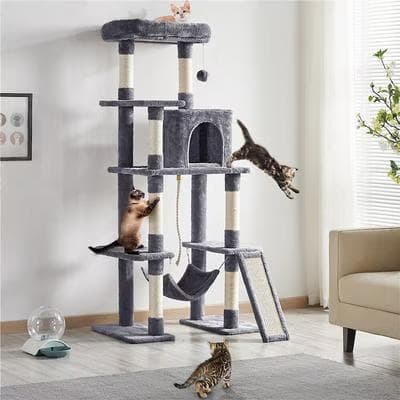
Multi-level resting and climbing space; check stability and easy routes down.
Webvet may earn a commission when you click through to Chewy, at no extra cost to you.
An unfamiliar or feral cat may hiss even when food is offered. Place resources without approaching into the cat’s space and avoid trying to touch it. Food does not make handling welcome.
Read eyes and sounds together
A cat’s narrow pupils can resemble reptile eyes: vertical slit pupils help regulate incoming light. A snake-like hiss serves a different purpose, warning you to give the cat space. Pupil shape alone does not tell you why the cat is hissing; read the whole posture and situation.
A cat that hisses and then meows may be changing its response as the situation changes. Continue reading posture and escape options.
Hissing at another cat, kitten or dog
A new kitten does not automatically feel harmless to a resident cat. The newcomer changes movement, smell and access to familiar resources. Hissing during an introduction means the current setup needs more distance or a slower pace, not that the animals should be forced together until they accept it.
Keep initial spaces separate and let each animal settle with its own resources. Follow a gradual introduction plan that allows calm exposure at a distance before closer contact. If either animal cannot disengage, eat comfortably or rest, the step is too difficult.
Make coexistence practical
- Place resources so one animal cannot guard all of them from a single doorway.
- Offer elevated resting options that the individual cat can reach safely.
- Provide hiding places and more than one route through shared areas.
- Keep dogs from chasing or hovering at the cat’s retreat.
- Supervise the stages of introduction and separate before tension escalates.
A tall cat tree can offer useful separation if its base is stable and the cat can reach and leave it safely. It is less useful when a dog can wait at the only route down. Think about movement through the room, not just buying another piece of furniture.
After a frightening encounter, do not rush the animals back together because they used to be friends. They may need a quieter setup and a gradual reintroduction. Ask your veterinarian or a qualified behavior professional for help if conflict persists, injuries occur or access to basic resources is affected.
Protect separate food access
Two bowls placed side by side may still create competition. Separate locations and unobstructed routes can matter more than simply adding another dish. A microchip feeder such as the SureFeed Microchip Feeder may help protect an individual cat’s food access in a suitable setup, but it does not prevent another animal from blocking the approach.

Microchip feeder for managing an individual cat’s food access in a suitable multi-pet setup.
Webvet may earn a commission when you click through to Chewy, at no extra cost to you.
Kittens, familiar cats and brief greetings
An older cat hissing at a new kitten needs space and a gradual introduction, not forced closeness. The same applies when familiar cats touch noses and then hiss: a brief approach does not mean either cat agreed to remain close. Separate calmly if tension rises.
A mother cat may warn people or animals approaching her litter. The ASPCA’s intercat aggression guidance describes maternal aggression and staged reintroduction. Hissing at her own kittens, especially if care or nursing changes, needs veterinary guidance rather than a blanket assumption that all maternal behavior is normal.
Male or female adult cats may object to another kitten’s approach. Do not assume a family relationship makes contact safe. Protect access to food and rest, supervise introductions and avoid forcing either animal to stay near the other.
What to do in the moment
When cats hiss at each other after a veterinary visit, separate them calmly and provide each with resources while they settle. Do not force a nose-to-nose greeting to test recognition. If tension persists, seek guidance on a gradual reintroduction and check whether the returning cat is uncomfortable.
First, stop the action that prompted the warning. If you are touching the cat, take your hands away. If you are approaching, pause and create distance. Keep your movements controlled and allow an unobstructed route to a quieter area.
Do not put your face close to the cat, lift the cat out of a hiding place or place your hands between fighting animals. Move other people and pets away when you can do so safely. An escalating situation may require advice from your veterinarian about safe separation and handling.

Avoid turning a warning into a confrontation
Hissing back, spraying water or shouting may stop a sound briefly while making your presence more threatening. Silence does not show that the cat is comfortable. Look for relaxed movement, normal access to resources and voluntary re-engagement over time.
Once the cat has settled, change the setup that created the pressure. Ask visitors to ignore the cat initially. Give a child a different activity away from the retreat. Close a blind if an outside animal reliably triggers distress. These actions address the situation rather than demanding that the cat tolerate it.
If the cat later approaches, let that interaction begin quietly. You do not need to force an apology ritual, a cuddle or immediate play. Predictable, choice-based contact is easier to build on than another test of tolerance.
Consider support for ongoing household tension
For ongoing environmental tension, the cat stress relief guide covers related adjustments. A pheromone product such as the Feliway MultiCat diffuser may be considered within a broader plan, but it does not replace distance, usable resources or veterinary assessment. Do not judge an adjunct by a single quiet afternoon.
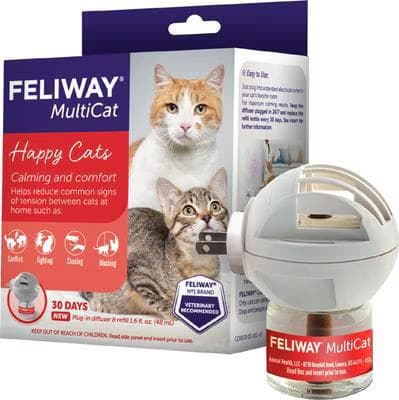
MultiCat pheromone diffuser to consider alongside separated resources and gradual introductions.
Webvet may earn a commission when you click through to Chewy, at no extra cost to you.
Repair the setup and watch for changes
Keep a brief record of repeated episodes: who was present, what happened before the warning, whether the cat could leave and how long normal behavior took to return. This helps separate a handling problem from intercat conflict or a broader change in comfort.
Bring a new pattern to your veterinarian, especially if it accompanies hiding, appetite changes, altered grooming, difficulty jumping or sensitivity around a body area. Avoid repeatedly touching the area to confirm your suspicion. A behavior plan may need to follow medical treatment, not precede it.
A new warning during familiar care deserves a closer look
Suppose a cat previously accepted a brief brush along the back but now turns, growls and moves away. Stop that interaction and arrange assessment rather than trying a firmer hold. Record where the change occurs and whether jumping, grooming or resting has also changed.
AAHA’s pain assessment principles emphasize changes in normal behavior. A cat does not need to cry continuously for discomfort to matter. At the same time, a warning does not identify a specific painful condition; the examination is what helps separate possible causes.
If the pattern only appears around a visitor, note the distance and action involved. A person leaning over the cat, reaching into a retreat or blocking the exit may be creating the pressure. Change that behavior while continuing to watch for any broader signs.
An outside trigger can affect the nearest housemate
Cornell’s guidance on feline aggression explains redirected aggression: an inaccessible trigger, such as a cat outside, can precede aggression toward another nearby animal or person.
For example, the cat at the window may turn and growl when a housemate walks past. Do not assume that the approaching cat started the problem. Avoid reaching between them; manage separation safely and reduce the original view. Resume any introduction work only after the cats can settle separately.
Review introductions in small steps
When cats are separated after conflict, use the calmer period to improve resources and routes rather than immediately testing another face-to-face meeting. Ask a qualified professional for a progression if the household is stuck. Each step should allow the cats to disengage and continue normal activity.
A quiet encounter is not automatically a successful one if one cat remains frozen or avoids the room afterward. Check what happens before, during and after exposure. That fuller view prevents silence from becoming the only measure of comfort.
Measure the change that matters
Audit the route, not just the resource count. Imagine a cat tree beside a narrow doorway: it offers height, but a housemate sitting below can still block the descent. A second bed in the same corner does not create a second usable escape route.
| Household pinch point | What to observe | Useful adjustment |
|---|---|---|
| One doorway between resting area and litter tray | Does a cat pause or turn back when the other cat sits there? | Provide separated access rather than requiring the cats to pass closely |
| Food bowls beside each other | Can each cat approach and leave without watching the other? | Offer feeding locations with enough separation and access |
| Outdoor cat visible through glass | Does the resident cat turn from the window toward a nearby pet? | Reduce the view and keep pets apart while tension settles |
| Person reaches into a covered resting place | Can the cat leave without moving toward the hand? | Stop reaching in and allow voluntary exit |
Progress means ordinary activities become easier: each cat can eat, rest, use the litter tray and move away without being followed or blocked. Count those usable choices, rather than treating the absence of a hiss as proof the cats are comfortable.
Check food access as well as the bowl count
Watch the whole route before deciding that an equipment change has solved the conflict.
Questions owners ask
Frequently Asked Questions
Is it okay to hiss back at a cat?
No. It can add threat to an already tense interaction. Stop approaching, give the cat space and change the situation that prompted the warning. Do not use imitation or intimidation to demand quiet.
What does it mean if a cat hisses at you?
The cat wants the current interaction or approach to change, usually by increasing distance. Fear, unwanted handling, frustration or pain may be involved. Stop first, then assess the context and any new health-related changes.
Can cats hiss in a friendly way?
A socially comfortable cat can still hiss when a particular interaction is unwelcome. Treat the hiss as a boundary rather than a greeting. Let the cat move away even if it was affectionate a moment earlier.
Can a cat hiss at you and still love you?
A hiss during one interaction does not erase an established relationship. Respond by respecting the boundary. Look at the cat’s broader pattern of voluntary contact and comfort rather than treating one warning as permanent rejection.
What do cats think when you hiss back at them?
We cannot know a cat’s exact thoughts. The practical concern is that an abrupt threatening sound can increase fear or arousal. There is no need to test this; calmly create distance instead.
How do cats act when they don't like you?
Avoidance, tension or warning sounds show discomfort in a situation, not a reliable judgment of your character. Give the cat choice and examine what happens before the reaction. New behavior may also require a health check.

Editor
The Webvet Editorial Team is the in-house group of pet-care editors and writers behind Webvet, operated by Smart Pet Collective. The team researches, writes, and maintains Webvet's pet health, behavior, and medication content. Every article follows a defined editorial process: research from reputable veterinary and scientific sources, careful drafting, mandatory review of medical content by a credentialed veterinarian, and dated publication. Health and medication articles are medically reviewed by a licensed veterinary professional before they go live and are kept current over time.


