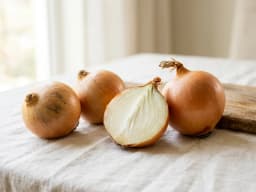
Can dogs eat onions?
Toxic: do not feedDo not give dogs onion in any form. It can damage red blood cells, so call a veterinarian or animal poison service after exposure.


Medically reviewed by Dr. Athena Gaffud, DVM · Last reviewed
Do not deliberately feed onion to dogs. Raw, cooked, fried, dehydrated, and powdered forms can expose dogs to sulfur-containing oxidants that damage red blood cells and may cause hemolytic anemia. Concentrated products can deliver more onion by weight. After a known ingestion, call a veterinarian or animal poison service with the form, amount, time, body weight, and symptoms for dose assessment.
- 1Onions are toxic to dogs in every form: raw, cooked, fried, dried, and powdered. Cooking does not make them safe, and onion powder is more concentrated than fresh.
- 2The danger is dose-dependent and cumulative. Problems can begin around 0.5% of a dog's body weight, but repeated small amounts add up and no amount is proven safe.
- 3Symptoms are often delayed by 1 to 7 days. Watch for weakness, pale gums, and red or brown urine, and call your vet or Pet Poison Helpline (855-764-7661) immediately.


Treats should stay under 10% of your dog's daily calories. JustFoodForDogs makes the rest of it.
- Recipes developed by veterinary nutritionists
- Whole-food ingredients you can recognise
- Fresh meals delivered to your door
Webvet may earn a commission when you click through to JustFoodForDogs, at no extra cost to you.
Why are onions toxic to dogs?
Onions are Allium plants. Merck identifies sulfur-containing oxidants as the suspected cause of oxidative red-blood-cell injury. Use that broader, source-backed mechanism rather than an unsourced exact compound list.
That damage clumps the hemoglobin inside the cells into structures called Heinz bodies, and the body then removes and destroys the affected cells. When red blood cells are destroyed faster than a dog can replace them, the result is hemolytic anemia (specifically Heinz-body anemia), meaning the blood can no longer carry enough oxygen. In severe cases this can be fatal without prompt veterinary care.
Powdered and cooked onion count, and they hide in everyday food
Many owners assume only raw onion is a problem. It is not. Cooking, frying, drying, and powdering do nothing to neutralize the toxin. In fact, dehydrated and powdered onion are more concentrated, so a small sprinkle of onion powder can deliver more toxin than the same weight of raw onion. That is why most poisonings come from seasoned human food rather than a dog stealing a raw bulb.
This is an optional dog treat. Review its current label, ingredients, calories, and feeding directions, and count it within the total daily extras.
Webvet may earn a commission when you click through to Chewy, at no extra cost to you.
How much onion is dangerous for a dog?
Onion toxicosis is dose-dependent, and repeated exposures can add to the risk. Merck reports clinical signs in dogs after 15 to 30 grams per kilogram of raw onion; the 5 grams per kilogram figure belongs to reported feline exposure, not dogs. Do not convert the canine report into a home safe-dose table. A veterinarian or animal poison service should assess the exact form and amount.

This is an optional dog treat. Review its current label, ingredients, calories, and feeding directions, and count it within the total daily extras.
Webvet may earn a commission when you click through to Chewy, at no extra cost to you.
Do not intentionally feed onion. After an accidental exposure, avoid assuming either that every trace has already caused injury or that a small piece is harmless. Call for assessment using the onion form, amount, timing, body weight, history, and symptoms.
Symptoms of onion poisoning in dogs
Oxidative red-blood-cell changes can begin within 24 hours and peak near 72 hours, while hemolysis typically occurs 3 to 5 days after exposure. Gastrointestinal signs may appear earlier. Watch for:
- Lethargy, weakness, or reduced tolerance for exercise
- Pale gums, or in severe cases yellow-tinged (jaundiced) gums
- Reduced appetite, vomiting, or diarrhea
- Rapid breathing and an elevated heart rate
- Red, brown, or dark discolored urine, caused by destroyed red blood cells
- Fainting or collapse in severe cases

What to do if your dog ate onions
Stay calm and act quickly. Follow these steps:
- Take the food away and note the details: how much your dog ate, what form it was in (raw, cooked, or powder), when it happened, and your dog's current weight.
- Call your veterinarian, the nearest emergency vet, or a 24/7 pet poison hotline immediately. Pet Poison Helpline: 855-764-7661. ASPCA Animal Poison Control Center: 888-426-4435. (The poison-control lines charge a consultation fee.)
- Do not induce vomiting unless a veterinary professional tells you to and walks you through it. The wrong approach can cause more harm.
- Follow their instructions. Based on the dose and your dog's size, they may have you come in right away or monitor closely at home.
- Keep any packaging, labels, or the recipe so the vet knows exactly what your dog was exposed to, and watch for symptoms for at least several days.
How do vets treat onion poisoning?
Treatment depends on form, dose, timing, examination, and laboratory findings. A veterinarian may consider decontamination after a recent exposure, but Merck states that whether activated charcoal adsorbs or prevents production of Allium-derived sulfides is unknown. Fluids, anti-nausea medication, oxygen, serial blood tests, and transfusion are used only as the case requires.
Safe vegetables to feed instead
Plenty of vegetables make safe, healthy snacks. Instead of anything in the onion family, offer plain, dog-safe produce such as carrots, green beans, cucumbers, and pumpkin, served plain with no onion, garlic, salt, or seasoning. Introduce any new food in small amounts, and skip it if it upsets your dog's stomach.

This is an optional dog treat. Review its current label, ingredients, calories, and feeding directions, and count it within the total daily extras.
Webvet may earn a commission when you click through to Chewy, at no extra cost to you.
Frequently asked questions
What happens if a dog eats a little bit of onions?
Do not deliberately feed onion, and remember that repeated exposures can add to risk. A small accidental exposure is not proof of injury or safety. Note the exact form and amount and call for a weight-based, case-specific assessment.
How much onion is toxic to a 35 lb dog?
Do not use the 0.5-percent calculation. Merck reports clinical signs in dogs after 15 to 30 grams per kilogram of raw onion, but that is not a home safe-dose cutoff and cannot be converted reliably into fractions of an onion. Call with the exact product and amount.
Can dogs eat food with a little onion?
No. Food cooked with onion, such as soups, sauces, gravy, seasoned meats, and takeout, is still dangerous, because cooking does not destroy the toxin and onion powder is even more concentrated than fresh onion. Do not share any onion-seasoned human food with your dog.
What foods are poisonous to dogs?
Common foods that are toxic to dogs include onions, garlic, leeks, and chives (the allium family), grapes and raisins, chocolate, xylitol (a sweetener in sugar-free gum and some peanut butters), macadamia nuts, alcohol, caffeine, and raw yeast dough. When in doubt about any food, check with your vet or a poison hotline before feeding it.
How much onion is toxic for a 12 lb dog?
Do not use a fraction-of-an-onion estimate for a 12-pound dog. Product form, actual weight of onion, repeated exposure, timing, patient history, and symptoms all matter. Call a veterinarian or animal poison service for the specific exposure.
How to flush onions out of a dog?
Do not induce vomiting or give a home remedy unless directed. A veterinarian may consider decontamination after a recent exposure, but activated charcoal's benefit for Allium exposure is uncertain. Other treatment and monitoring depend on the dose and patient findings.
Will my dog be ok if he ate a little bit of onions?
Possibly, but do not assume it. Many dogs that eat a small amount and get prompt veterinary guidance do fine, but the symptoms of onion poisoning can be delayed for days, and small dogs are at risk from small amounts. The safe move is to call your vet or a poison hotline immediately rather than waiting to see how your dog does.
What is the most toxic thing a dog can eat?
There is no single most toxic food, but among the most dangerous common household items for dogs are xylitol, grapes and raisins (which can cause sudden kidney failure), chocolate, and the onion and garlic family. Even small quantities of these can be serious, so keep them well out of reach and call a poison hotline if your dog eats any.

Safe alternatives
More vegetables for dogs
Sources
- Merck Veterinary Manual: Garlic and Onion Toxicosis in Animals
Supports sulfur-containing oxidants, canine reports at 15 to 30 g/kg raw onion, the delayed oxidative and hemolytic course, and uncertain charcoal benefit.
- VCA: Onion, Garlic, Chive, and Leek Toxicity in Dogs
Supports canine Allium hazards, delayed anemia, and prompt professional assessment.
- ASPCA: People Foods to Avoid Feeding Your Pets
Supports keeping onion and garlic away from pets.
Reviewed by Dr. Athena Gaffud, DVM
General guidance based on credible veterinary sources; not a diagnosis or a substitute for your veterinarian. If your pet ate something toxic or is unwell, contact your vet or a pet poison line right away.