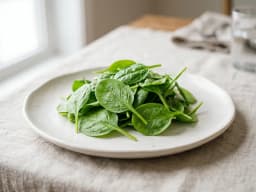
Can cats eat spinach?
Safe in moderationPlain spinach is not a recognized cat toxin, but calcium oxalate stone disease is multifactorial; urinary signs or prescription diets need veterinary guidance.


Medically reviewed by Dr. Athena Gaffud, DVM · Last reviewed
Can Cats Eat Spinach?
A small plain spinach exposure is not a recognized feline poisoning event. Spinach contains oxalates, not preformed calcium oxalate stones, and one taste cannot be turned into a dose-free claim of kidney injury, sharp urinary crystals, or obstruction.
- 1Spinach contains oxalates, not preformed urinary stones.
- 2The underlying cause of feline calcium oxalate stones is unknown in most cases.
- 3A small plain taste does not prove kidney injury or stone formation.
- 4No one-teaspoon serving or daily-stacking threshold is established.
- 5Do not change a prescription urinary or renal diet without the treating veterinarian.

Treats should stay under 10% of your cat's daily calories. Smalls makes the rest, built around the meat an obligate carnivore actually needs.
- Human-grade ingredients, protein first
- Built for obligate carnivores
- Fresh meals delivered to your door
Webvet may earn a commission when you click through to Smalls, at no extra cost to you.
Is Spinach Safe for Cats?
Calcium oxalate urolithiasis is complex, and Merck states that the underlying cause is unknown in most cats. Factors that affect urinary calcium or oxalate supersaturation can contribute, but a food exposure alone does not diagnose stone type or establish cause.

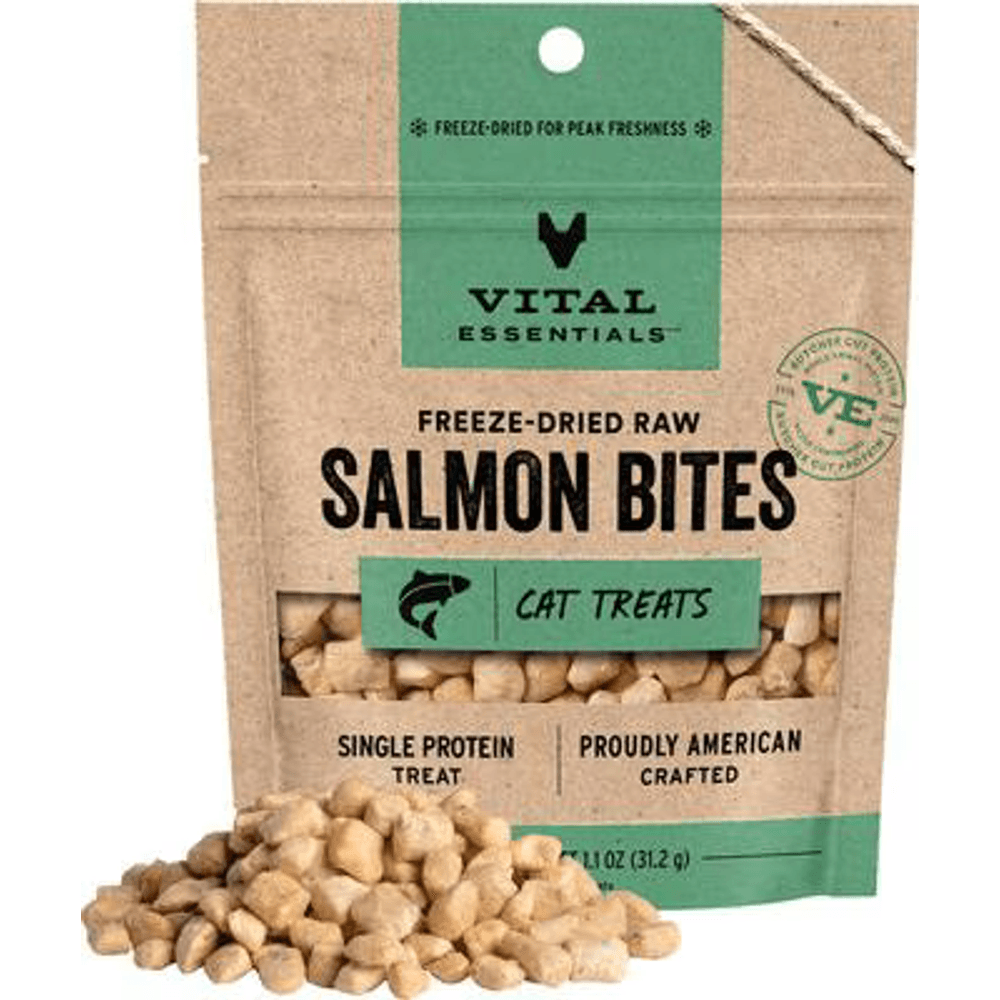
This is an optional cat treat. Review its current label, ingredients, calories, and feeding directions, and count it within the total daily extras.
Webvet may earn a commission when you click through to Chewy, at no extra cost to you.
Cats with confirmed stones, kidney disease, bladder disease, FLUTD, recurrent urinary signs, or a therapeutic diet need individual guidance. Those diagnoses are not interchangeable, so a blanket spinach prohibition for every urinary history is not evidence based.
Oxalate and feline urinary disease: what is established
Do not alter a prescription urinary or renal diet without the treating veterinarian. Outside food can change calories and nutrient targets even when it is not proven to cause disease. Plan integrity is a valid reason to avoid extras without inventing a one-teaspoon toxicity rule. Feline urinary signs require prompt attention and cannot be classified from one ingredient. Frequent litter-box trips, straining, vocalizing, blood, genital licking, urinating outside the box, or producing little to no urine warrants veterinary assessment; a cat unable to urinate has an emergency. Urinalysis, imaging, culture, stone analysis, blood work, diet, water intake, and individual history help distinguish causes. Cats on a prescription urinary diet should receive only approved foods and treats because unplanned extras can interfere with the formulation's intended effect.
Stone prevention depends on confirmed mineral type, urine characteristics, hydration, metabolic findings, diet, and the individual cat. Household ingredient lists cannot replace urinalysis, imaging, stone analysis, or veterinary assessment.

Complete feline nutrition and optional plant ingredients
Obligate carnivory describes required nutrients; it does not mean cats cannot digest or use every plant-derived nutrient. Spinach is still optional, and a cat eating complete feline food does not need it for vitamins, minerals, fiber, or antioxidants.
A nutrient list does not establish urinary, immune, digestive, or coat benefits from a taste. Complete feline food should meet essential requirements, and therapeutic additions should be formulated for the diagnosis.
Assessing an optional plain spinach exposure
No evidence-based feline spinach serving or daily-stacking theory exists. If an exact plain amount is approved for a healthy cat, count it with all extras and use a texture the cat can manage. Do not force interest.

This is an optional cat treat. Review its current label, ingredients, calories, and feeding directions, and count it within the total daily extras.
Webvet may earn a commission when you click through to Chewy, at no extra cost to you.
| Situation | Evidence-calibrated response |
|---|---|
| Small plain taste | Monitor the individual cat |
| Confirmed stones | Use stone type and veterinary testing |
| FLUTD or kidney disease | Follow the diagnosis-specific plan |
| Prescription diet | Add nothing without approval |
| Obstruction signs | Seek urgent veterinary care |
When a medical or prescription diet changes the answer
Plain spinach differs from dip, quiche, creamed spinach, salad, and seasoned leftovers. Check mixed foods for garlic, onion, chives, excessive sodium, rich sauces, raisins, nuts, packaging, and other ingredients. Review spinach-containing dishes as complete recipes. Dips, creamed spinach, quiche, pasta, smoothies, curries, salads, and frozen meals may include onion, garlic, dairy, sodium, fat, raisins, sweeteners, skewers, foil, or plastic. Record whether the leaves were raw, cooked, spoiled, or part of a larger exposure. Repeated vomiting, abdominal pain, pronounced lethargy, weakness, tremors, collapse, urinary straining, or refusal of normal food warrants veterinary advice. Cats should not receive hydrogen peroxide or other dog vomiting methods after a mixed-food raid.
What to Watch For After Feeding
Repeated unproductive urination, straining, pain, blood in urine, vomiting, marked lethargy, or abdominal distress requires urgent veterinary assessment. These are important obstruction signs but are not an expected consequence of a small spinach taste. Male cats and cats with a previous obstruction need especially prompt attention when urine output changes, but do not wait for sex or history to seek help when a cat repeatedly strains without producing urine. Record the time and size of the last normal urine clump, appetite, vomiting, hiding, vocalizing, and any licking at the genital area. Do not press the abdomen, give leftover medication, add urinary acidifiers, force water, or attempt to express the bladder at home. If spinach came from a salad, dip, quiche, omelet, pasta, or frozen meal, save the complete ingredient list and packaging. Onion, garlic, chives, raisins, xylitol, chocolate, alcohol, medications, skewers, and wrappers can matter more than the spinach. For a cat with known stones, tell the veterinarian the stone type, current prescription diet, supplements, medications, and recent laboratory or urine results. Calcium oxalate, struvite, urate, and other conditions require different plans. During an elimination diet, any unplanned spinach mixture can also introduce other proteins or ingredients. Keep the regular food and water routine stable while following professional advice. A normal litter-box visit after a taste does not prove spinach prevents stones, and urinary signs later do not establish that the taste caused them. Clean litter boxes make urine output easier to observe, but do not delay transport to collect a perfect sample. If the veterinarian wants a urine sample, follow the clinic's collection instructions. Do not use home test strips to rule out obstruction or stone disease. Store mixed spinach foods, toothpicks, wrappers, and compost where the cat cannot access them.

Choosing another optional cat treat
No vegetable is a household urinary treatment. Choose optional treats by complete diet, calories, texture, medical plan, and tolerance rather than calling another plant lower-oxalate therapy.
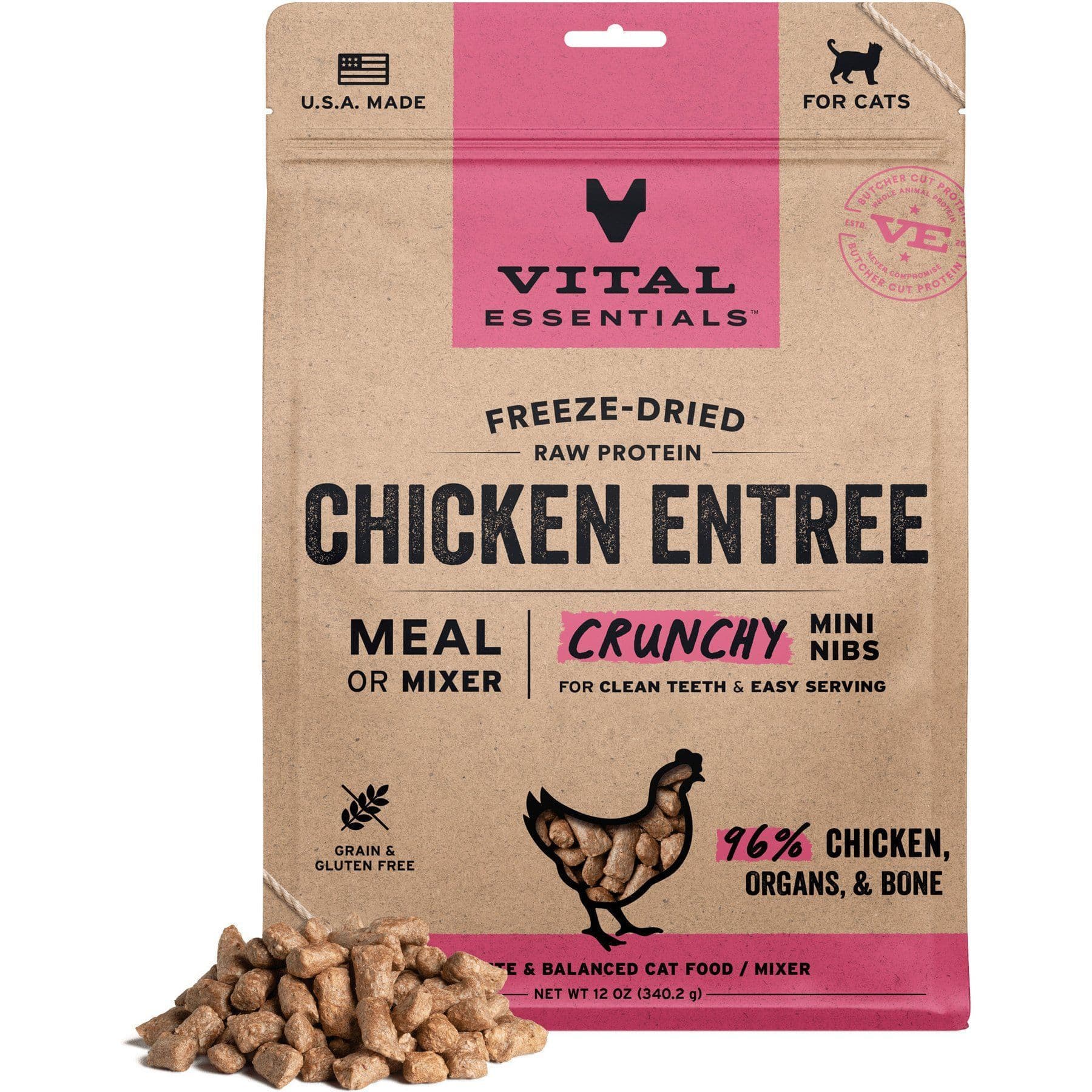
This is an optional cat treat. Review its current label, ingredients, calories, and feeding directions, and count it within the total daily extras.
Webvet may earn a commission when you click through to Chewy, at no extra cost to you.
A measured portion of regular complete cat food is easiest to track during calorie control, elimination trials, or disease management. Ask the treating veterinarian before adding any outside food to a prescription plan. Store frozen spinach bags and dip containers securely, including clips, foil seals, and packets that a curious cat might swallow.
Frequently Asked Questions
How much spinach can I give my cat?
A small plain spinach exposure is not known to cause urinary stones in every cat.
Can cats eat raw spinach?
Spinach contains oxalates, not preformed calcium oxalate stones.
Why does my cat love spinach?
The underlying cause of feline calcium oxalate stones is unknown in most cases.
What leafy greens are safe for cats?
No evidence-based one-teaspoon serving or daily stacking threshold exists.
Is spinach in cat food safe?
Urinary obstruction signs require urgent care but are not expected from every spinach taste.

The accurate message is narrow: spinach contains oxalates, feline stone disease is multifactorial, and a small exposure is not proof of stone formation. Urinary signs still demand prompt care. Track urine output, litter-box frequency, water intake, appetite, and vomiting when urinary disease is suspected. Photographs of clumps or discolored urine can help describe change, but they cannot identify a stone type. Preserve the prescription diet and seek urgent care if the cat strains without producing urine, becomes painful, vomits, or grows weak.
More safe treats
More vegetables for cats
Sources
- Merck Veterinary Manual: Urolithiasis in Cats
The cause of feline calcium oxalate stones is unknown in most cases, and management depends on stone type, patient factors, and testing.
- Merck Veterinary Manual: Nutritional Requirements of Small Animals
Complete diets control nutrient intake; limited-ingredient home mixtures can be inadequate, and processed plant ingredients can be digested and used.
- Cornell Feline Health Center: Feeding Your Cat
Cats require complete feline nutrition, treats should remain limited, and dairy tolerance varies among adult cats.
- Merck Veterinary Manual: Gastrointestinal Obstruction in Small Animals
Foreign-body risk depends on the object, amount, and patient rather than being guaranteed by a shell, hull, skin, seed, or bone.
Reviewed by Dr. Athena Gaffud, DVM
General guidance based on credible veterinary sources; not a diagnosis or a substitute for your veterinarian. If your pet ate something toxic or is unwell, contact your vet or a pet poison line right away.