
Can cats eat garlic?
Toxic: do not feedDo not give cats garlic. Cats are especially susceptible to Allium-related red-blood-cell injury, so call a veterinarian promptly after exposure.


Medically reviewed by Dr. Athena Gaffud, DVM · Last reviewed
Can Cats Eat Garlic?
Do not feed garlic to cats. Cats are especially susceptible to Allium-associated oxidative red-cell injury, which can lead to hemolytic anemia. Raw, cooked, dried, and powdered forms differ in concentration, and no universal trace-dose rule is established. After an exposure, call with the product, form, amount, time, body weight, and signs for case-specific advice.
Garlic is an Allium plant and is approximately 3 to 5 times more toxic than onion by weight. Cats are the most susceptible domestic species described by Merck, but body-size rhetoric does not establish a trace-dose threshold. Do not use garlic as food or flea treatment, and obtain case-specific advice after an exposure.
- 1Do not intentionally feed garlic in any form; dried and powdered products can be more concentrated than the fresh plant.
- 2Cats are more sensitive to allium poisoning than dogs because their red blood cells are especially fragile.
- 3The danger is hemolytic anemia, where red blood cells are destroyed faster than the body can replace them.
- 4Symptoms are often delayed and may not appear for two to four days after ingestion.
- 5After a suspected exposure, obtain prompt case-specific advice and seek emergency care for weakness, pale gums, breathing difficulty, collapse, or red-brown urine.


Treats should stay under 10% of your cat's daily calories. Smalls makes the rest, built around the meat an obligate carnivore actually needs.
- Human-grade ingredients, protein first
- Built for obligate carnivores
- Fresh meals delivered to your door
Webvet may earn a commission when you click through to Smalls, at no extra cost to you.
Why garlic is toxic to cats
Merck describes sulfur-containing oxidants as the suspected cause of oxidative red-blood-cell damage. That damage can produce Heinz bodies and hemolytic anemia. Use this broader, source-backed mechanism instead of presenting an exact compound sequence as certain.
Cooking does not make garlic an appropriate cat food, and dried or powdered forms are concentrated. Avoid using an undefined pinch as a threshold. Check labels on bread, sauce, seasoned meat, gravy, stir-fries, and baby food, and report the actual product and amount after an exposure.
Why cats are more sensitive than dogs
Cats are especially susceptible to Allium toxicosis because feline red blood cells are vulnerable to oxidative injury. This species susceptibility is sufficient; an imagined large-dog comparison is not evidence and could falsely reassure dog owners. Age, health history, product form, dose, and symptoms belong in case-specific triage.
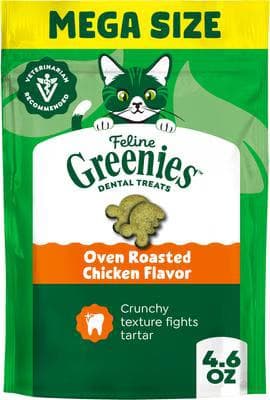
This is a dental cat treat. Follow the current label and ask your veterinarian how it fits alongside tooth brushing and professional dental care.
Webvet may earn a commission when you click through to Chewy, at no extra cost to you.
Garlic is not needed in a complete feline diet and should not be used for flea control. Merck does not establish a safe, effective feline garlic dose for parasite prevention. Use a veterinarian-recommended feline flea product instead.

Which forms of garlic are dangerous
Garlic should not be offered in any form, and products differ in concentration. The table shows common exposure forms; report the exact product and amount rather than assuming that an undefined trace predicts injury.
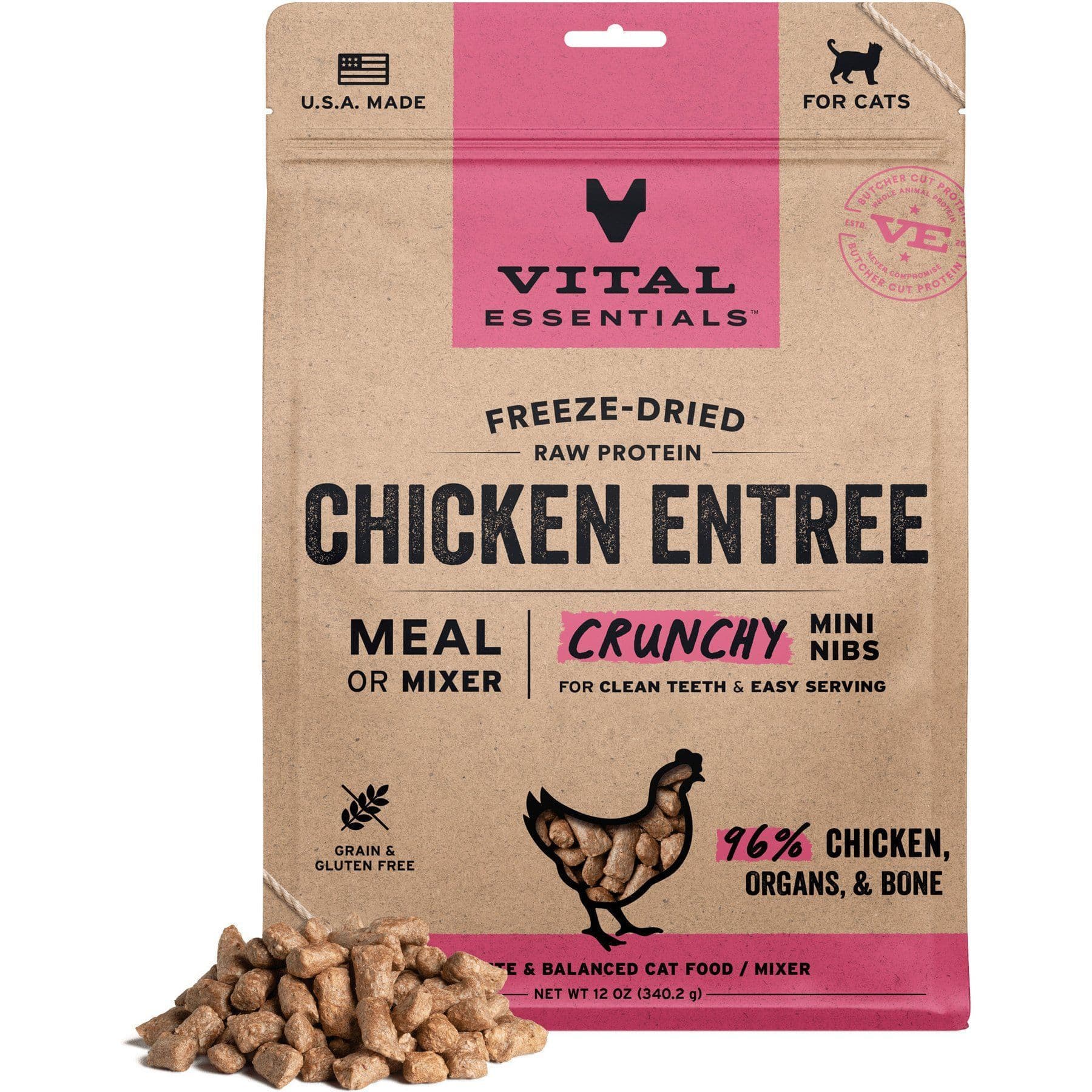
This is an optional cat treat. Review its current label, ingredients, calories, and feeding directions, and count it within the total daily extras.
Webvet may earn a commission when you click through to Chewy, at no extra cost to you.
| Form of garlic | Where cats encounter it | Risk level |
|---|---|---|
| Garlic powder or granules | Seasonings, spice blends, chips, baby food | Very high, most concentrated |
| Dehydrated or roasted garlic | Snack mixes, jarred spreads | Very high |
| Raw or cooked cloves | Pasta sauce, stir-fries, garlic bread | High |
| Garlic butter, oil, or sauce | Licked plates, buttered bread, dips | High, easily licked |
| Garlic supplements or flea remedies | Pet products marketed as natural | Very high, avoid entirely |
How much garlic is dangerous for a cat?
Do not deliberately feed garlic. The reviewed Merck source does not establish a universal single-clove or pinch threshold for cats. For an accidental exposure, save the product information and call with the garlic form, measured or estimated amount, timing, body weight, health history, and symptoms.
Symptoms of garlic poisoning in cats
Oxidative red-blood-cell changes can begin within 24 hours and peak near 72 hours, while hemolysis typically occurs 3 to 5 days after Allium exposure. Possible signs include drooling, vomiting, diarrhea, appetite loss, lethargy, pale or yellow gums, rapid breathing, increased heart rate, and red-brown urine. The monitoring plan should come from the veterinarian assessing the case.

What to do if your cat eats garlic
Remove access, save the packaging, note the form, amount, and time, and call a veterinarian or animal poison service. Do not induce vomiting at home. Examination, decontamination, serial blood tests, fluids, oxygen, and transfusion depend on the case. Activated charcoal may be considered, but its ability to prevent Allium-derived sulfide exposure is unknown.
Safe treats to give your cat instead
If an optional animal-food treat fits the cat's complete diet, one possible choice is a little plain cooked chicken, a small amount of cooked egg, or a flake of plain cooked fish such as salmon all make far better rewards than anything off your dinner plate. The golden rule is that these foods must be plain: no garlic, no onion, no salt, no butter, and no seasoning of any kind. Cook the meat yourself rather than sharing a portion from a seasoned dish, so you can be certain it is safe.

This is an optional cat treat. Review its current label, ingredients, calories, and feeding directions, and count it within the total daily extras.
Webvet may earn a commission when you click through to Chewy, at no extra cost to you.
Keep portions tiny. Treats of any kind should make up no more than a small fraction of your cat's daily calories, so think of a bite-sized piece or a teaspoon, offered occasionally, not a bowlful. A proper commercial cat treat is also a reliable choice, since it is formulated for feline needs and free of the aromatics that harm them. Whatever you pick, the point is the same: garlic and the rest of the onion family have no place in a cat's diet, and there are plenty of delicious, meat-based ways to spoil your cat safely.
Frequently Asked Questions
Will a little bit of garlic hurt a cat?
Merck does not establish a universal taste or pinch threshold. Cats are especially susceptible, so report the exact product, form, amount, timing, and body weight for case-specific advice rather than assuming a trace proves injury or safety.
How long until garlic poisoning shows in cats?
Oxidative changes can begin within 24 hours and peak near 72 hours, while hemolysis typically occurs 3 to 5 days after exposure. Follow the veterinarian's monitoring plan and seek urgent care for weakness, pale gums, rapid breathing, collapse, or red-brown urine.
Can cats eat garlic bread or food cooked with garlic?
No. Garlic bread, pasta sauce, stir-fries, gravies, and anything cooked or seasoned with garlic are all unsafe for cats. Cooking does not destroy the toxic compounds, and dishes like these often contain onion as well, which is also toxic. Do not offer these foods, and wipe down plates before a curious cat can lick them.
Isn't garlic a natural flea remedy for cats?
There is no reliable evidence that garlic controls fleas in cats, and garlic exposure can injure feline red blood cells. Use a veterinarian-recommended feline flea preventive instead. Never give garlic or garlic supplements to a cat for fleas or any other reason. Use a flea preventive recommended by your veterinarian instead.
My cat ate garlic and seems fine, do I still need to worry?
Do not rely on an early normal appearance. Oxidative red-cell changes and anemia can be delayed, so follow the veterinarian's exposure-specific monitoring advice. Call your veterinarian or a pet poison line, describe how much and what form your cat ate, and follow their advice on monitoring or bringing her in.

Safe alternatives
More vegetables for cats
Sources
- Merck Veterinary Manual: Garlic and Onion Toxicosis in Animals
Supports feline susceptibility, the broader sulfur-oxidant mechanism, 3-to-5-times garlic relative toxicity, delayed hemolysis, and uncertain charcoal benefit without a single-clove or pinch threshold.
- ASPCA: People Foods to Avoid Feeding Your Pets
Supports keeping garlic and other Allium foods away from cats.
Reviewed by Dr. Athena Gaffud, DVM
General guidance based on credible veterinary sources; not a diagnosis or a substitute for your veterinarian. If your pet ate something toxic or is unwell, contact your vet or a pet poison line right away.