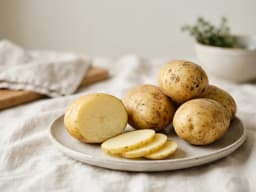
Can cats eat potatoes?
Safe in moderationGreen or sprouted potatoes and potato plant material pose the clearest glycoalkaloid concern. An ordinary non-green raw bite is not equivalent.


Medically reviewed by Dr. Athena Gaffud, DVM · Last reviewed
Can Cats Eat Potatoes?
Potato exposures differ. Green or sprouted tubers and potato plant material have the clearest glycoalkaloid concern; a non-green raw bite, plain cooked potato, fries, and seasoned leftovers require different assessments.
- 1Green or sprouted tubers, sprouts, leaves, and stems deserve the greatest concern.
- 2An ordinary non-green raw potato bite is not equivalent to green or sprouted material.
- 3Peeling and some processing can reduce glycoalkaloids, but cooking effects vary by method.
- 4No feline piece count or toxic dose is established here; identify form, amount, cat, and signs.
- 5Butter, milk, oil, and salt are not one toxin category; onion and garlic are separate hazards.

Treats should stay under 10% of your cat's daily calories. Smalls makes the rest, built around the meat an obligate carnivore actually needs.
- Human-grade ingredients, protein first
- Built for obligate carnivores
- Fresh meals delivered to your door
Webvet may earn a commission when you click through to Smalls, at no extra cost to you.
Which potato exposures concern cats?
Potato glycoalkaloids can cause gastrointestinal and neurologic illness at sufficient exposure. Concentrations vary with cultivar, storage, damage, greening, sprouting, and plant part, so the exact material matters. Greening indicates light exposure, but the green pigment itself is not the toxic principle and visual inspection cannot measure glycoalkaloid concentration. Levels may vary within one tuber. Since owners cannot test a potato at home, discard green, heavily sprouted, damaged, or bitter tubers and prevent access to the growing plant, peelings, garden trimmings, and compost.

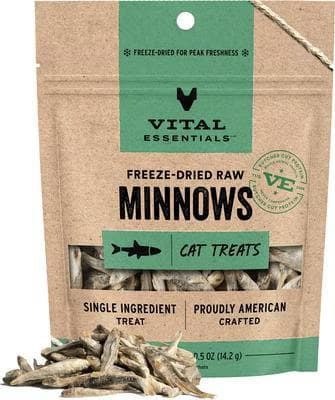
This is an optional cat treat. Review its current label, ingredients, calories, and feeding directions, and count it within the total daily extras.
Webvet may earn a commission when you click through to Chewy, at no extra cost to you.
EFSA assessed glycoalkaloid risks in food and animals, but the dog and general sources on this topic do not provide a feline home threshold. A feline toxic dose is not established here, so do not convert broad toxicology into a pea-size rule.
Raw, green, sprouted, and cooked are not synonyms
A green or sprouted tuber, sprout, leaf, or stem warrants prompt veterinary or poison-service guidance. An ordinary non-green raw bite is not automatically ideal, but it is not the same exposure. Examine the exact plant material. Green peel, sprouts, eyes, bitter or damaged tubers, leaves, stems, and berries deserve more concern than a bite of an ordinary non-green grocery potato. Photograph what the cat reached, save the remainder, and report the maximum amount missing. Kitchen exposure may also include fertilizer, pesticide, soil treatment, or another houseplant. Peeling or cooking may lower some glycoalkaloid exposure, yet visibly green or sprouted potatoes remain avoidable rather than becoming suitable through a household preparation step.
Peeling, boiling, and frying can reduce glycoalkaloids by variable amounts. Avoid visibly green or sprouted tubers instead of claiming that cooking always destroys most solanine or that peeling is the only safety step. Do not taste a suspect potato to decide whether it is safe for the cat. Human taste and tolerance cannot establish a feline dose. Discard questionable tubers and keep a photograph or sample only if a clinician requests it.

Can cats digest cooked potato starch?
Cats have species-specific nutrient needs, but obligate carnivory does not mean every properly processed starch is unusable. Plain cooked potato remains optional because complete cat food should provide the required nutrient balance. Commercial cat foods may include processed potato or potato starch as one part of a formulated recipe. That is not equivalent to adding kitchen potato to every bowl, because the finished diet is designed around nutrient balance, calorie density, processing, and feeding instructions. Likewise, a cat's ability to digest processed starch does not tell an owner how much plain potato to offer as a treat.
A nutrient list does not prove a treat benefit, and meat is not automatically the right substitute for every cat or prescription diet. Use the individual calorie and medical plan.
How much plain cooked potato can a cat have?
There is no evidence-based feline potato serving by body size. If a veterinarian agrees that a plain cooked taste fits the cat, count it within all other treats and do not displace complete feline nutrition.
| Potato form | How to assess it | Key question |
|---|---|---|
| Sound non-green, cooked | Optional extra for some cats | Calories, diet, and tolerance |
| Ordinary non-green, raw | Not equivalent to green material | Amount and any clinical signs |
| Green, sprouted, or plant material | Prompt exposure assessment | Part, amount, time, cat, and symptoms |
| Fries, chips, or mashed | Recipe-specific | Fat, sodium, dairy, alliums, and calories |
| Large piece or packaging | Separate foreign-body question | Object size, swallowing, and signs |
Prepared potato products vary

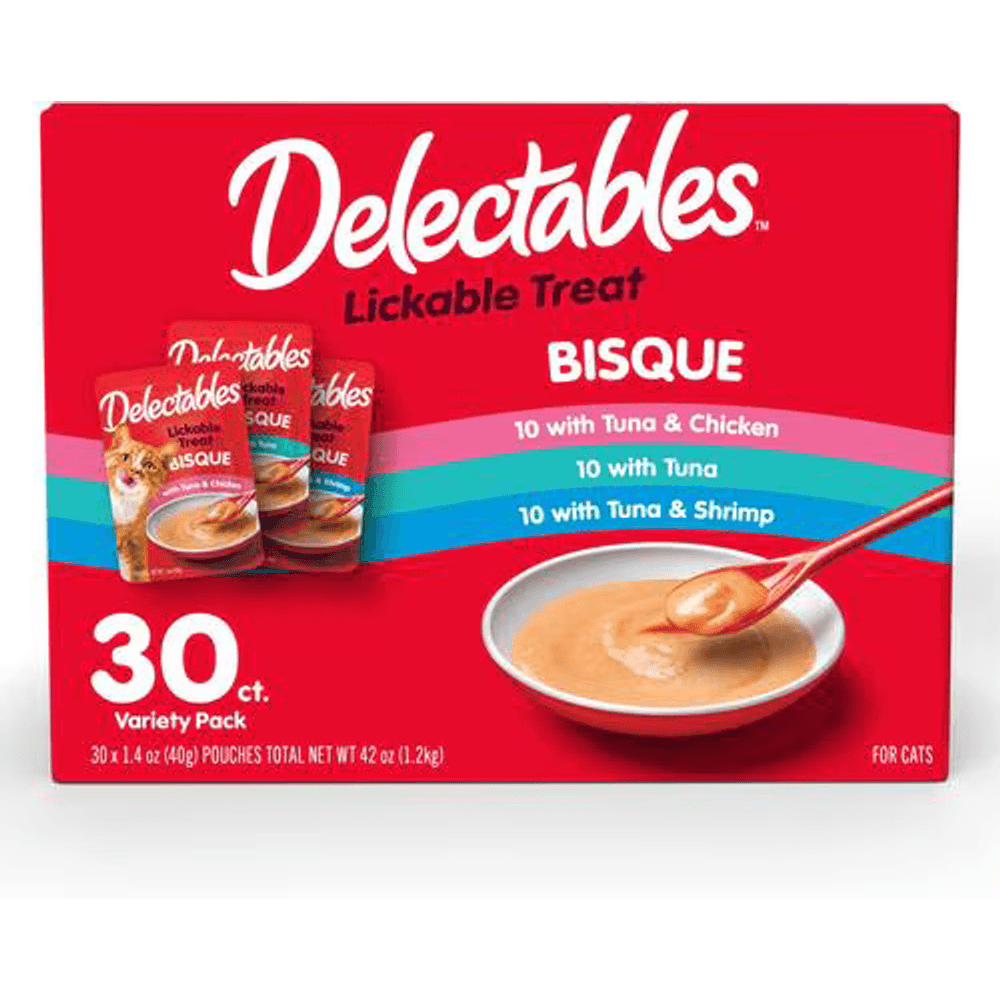
This is an optional cat treat. Review its current label, ingredients, calories, and feeding directions, and count it within the total daily extras.
Webvet may earn a commission when you click through to Chewy, at no extra cost to you.
Butter, milk, cream, oil, and salt may add calories, sodium, or gastrointestinal intolerance, but they are not automatically toxins. Confirm onion or garlic and assess lactose tolerance, amount, and symptoms separately. A lick of buttered potato, a spoonful of gratin, a serving of fries, and raw green peelings are different exposures. Prepared foods may also contain chives, onion powder, garlic, bacon, cheese, sauces, foil, or plastic. Save the recipe and package, separate ingredients that are confirmed from those merely possible, and report the amount as accurately as practical. Mixed potato foods need their own label or recipe review. Chips, fries, mashed potatoes, soup, casseroles, dumpling fillings, and seasoned leftovers may add sodium, fat, dairy, onion, garlic, or chives. Report the product, missing amount, timing, cat's weight and health conditions, and any vomiting, diarrhea, drooling, weakness, tremors, abnormal behavior, or collapse. Cats should not receive hydrogen peroxide, salt, oil, milk, or other home emetics. A small plain cooked exposure in a normal cat is handled differently from green plant material, a heavily seasoned dish, or swallowed foil, plastic, or packaging.
If a cat ate potato
After a small ordinary non-green exposure, remove access and observe the individual cat. Obtain prompt advice for greening, sprouts, plant material, a concerning amount, repeated vomiting, diarrhea, weakness, tremors, disorientation, or breathing changes. Cats often hide illness, so observe more than vomiting alone. Appetite loss, hiding, unusual vocalization, weakness, drooling, tremors, poor coordination, dilated pupils, or behavior change can add urgency. Normal behavior after a small ordinary non-green exposure is reassuring but does not create a universal wait-at-home rule for green tubers or plant material.
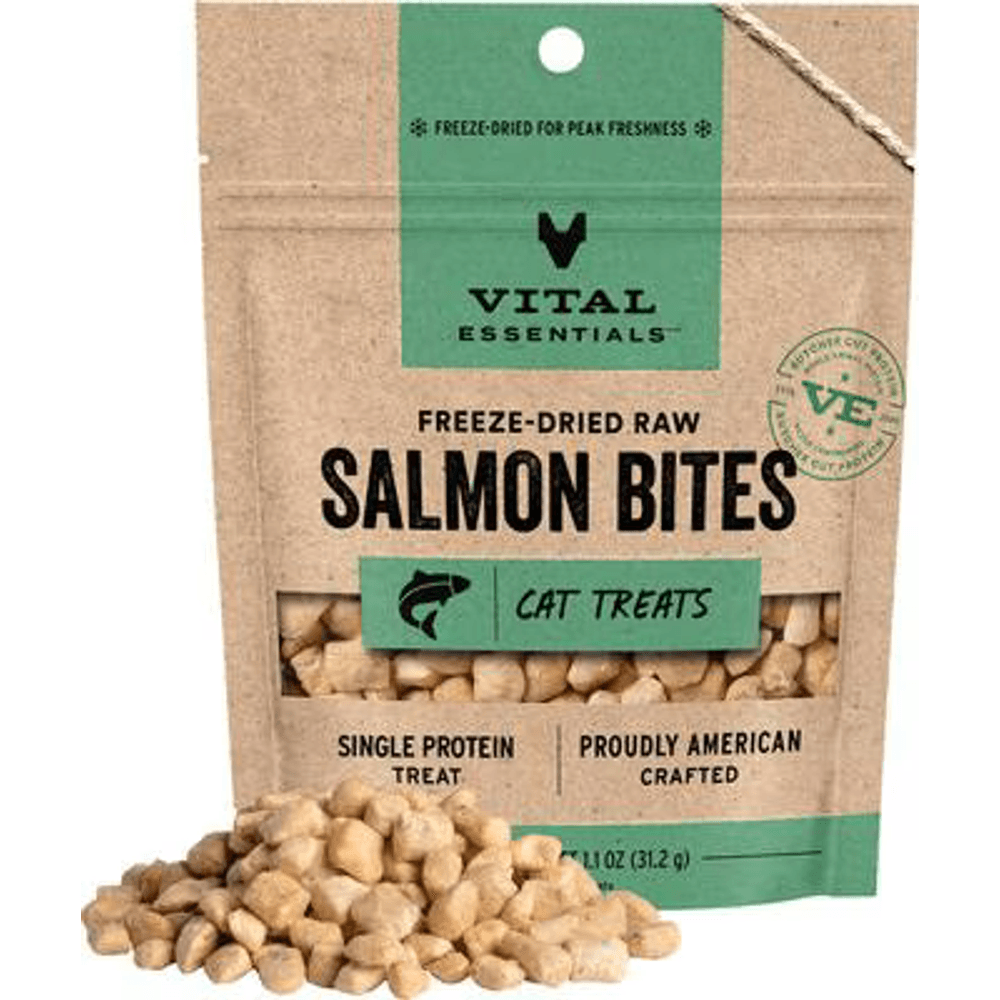
This is an optional cat treat. Review its current label, ingredients, calories, and feeding directions, and count it within the total daily extras.
Webvet may earn a commission when you click through to Chewy, at no extra cost to you.
The bottom line
The safest household rule is to prevent access to potato plants and green or sprouted tubers. Plain cooked non-green potato can be considered only as an optional, calorie-counted extra for an individual cat. Store potatoes in a cool, dark place and secure garbage and compost. Indoor cats can still reach peelings, grocery bags, sprouting pantry potatoes, or houseplant-like shoots growing from a forgotten tuber. Prevention depends on those ordinary access points, not only garden exposure. If a veterinarian approves an occasional plain cooked extra, keep skins, sprouts, green sections, butter, salt, gravy, and seasoning out of that preparation. A cat that refuses potato has no dietary need to be persuaded, and the usual complete feline food should remain unchanged.

Frequently Asked Questions
Can cats eat raw potatoes?
An ordinary non-green raw bite is not equivalent to green potato, sprouts, leaves, or stems. Identify the form and amount and monitor for signs.
Can cats eat mashed potatoes?
Plain cooked non-green potato may fit some cats as an optional extra. There is no evidence-based pea-size serving.
Can cats eat french fries or potato chips?
Potato skin is not uniformly toxic. Greening, sprouting, damage, and total exposure are more informative than a blanket peel rule.
Can cats eat potato skin?
Butter, milk, oil, and salt are not automatic poisons. Check the recipe, amount, lactose tolerance, sodium, and allium ingredients.
Can cats eat potatoes every day?
Call promptly for green or sprouted potato, plant material, a concerning amount, or gastrointestinal or neurologic signs.
More safe treats
More vegetables for cats
Sources
- EFSA: Glycoalkaloids in Potatoes
Potato glycoalkaloid concentration and reduction vary; peeling, boiling, and frying can reduce exposure, while green or sprouted tubers warrant avoidance.
- Merck Veterinary Manual: Range Plants of Temperate North America
Solanum plant leaves, shoots, and green material are relevant glycoalkaloid hazards; that evidence does not make every non-green raw potato bite equivalent.
- Cornell Feline Health Center: Feeding Your Cat
Cats need complete feline nutrition; treats should remain limited, and dairy tolerance varies because many adult cats are lactose intolerant.
- AAHA: Nutritional Risk Factors
Noncomplete foods above 10 percent of daily calories can dilute essential nutrients; individual medical and life-stage factors require assessment.
- Merck Veterinary Manual: Garlic and Onion Toxicosis
Allium risk depends on the actual ingredient, concentration, amount, species, and patient rather than a food category alone.
- Merck Veterinary Manual: Salt Toxicosis in Animals
Salt toxicosis is dose-dependent and strongly influenced by fresh-water access; sodium's presence alone does not establish poisoning.
Reviewed by Dr. Athena Gaffud, DVM
General guidance based on credible veterinary sources; not a diagnosis or a substitute for your veterinarian. If your pet ate something toxic or is unwell, contact your vet or a pet poison line right away.