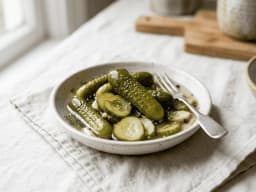
Can cats eat pickles?
Not recommendedA plain pickle is not an intrinsic feline poison. Check sodium, ingredients, amount, water access, and any confirmed garlic or onion.


Medically reviewed by Dr. Athena Gaffud, DVM · Last reviewed
Can Cats Eat Pickles?
Pickles vary in sodium and ingredients. They are unnecessary cat treats, but the risk of an accidental exposure depends on the product, sodium concentration, actual ingredients, amount, water access, cat, and symptoms. Confirm garlic or onion rather than assuming it is present, and do not treat dill, vinegar, or every lick as equivalent to a toxic dose. Keep the label available for a case-specific assessment.
- 1A plain pickle is not an intrinsic feline poison; the product and dose determine risk.
- 2Check the product's sodium and ingredient label and record the amount eaten.
- 3Salt toxicosis requires excessive sodium exposure and is influenced by water access.
- 4Garlic or onion, if actually present, requires a dose-based assessment; cats are especially susceptible.
- 5Call for veterinary advice for a meaningful confirmed exposure or significant symptoms, not automatically for more than a lick.

Treats should stay under 10% of your cat's daily calories. Smalls makes the rest, built around the meat an obligate carnivore actually needs.
- Human-grade ingredients, protein first
- Built for obligate carnivores
- Fresh meals delivered to your door
Webvet may earn a commission when you click through to Smalls, at no extra cost to you.
Why pickles are the wrong snack for a cat
Pickles do not fill a feline nutritional need, but that does not determine toxicity. Product sodium and ingredients, amount eaten, water access, the cat's weight and health, and symptoms determine the assessment. Do not assume dehydration from a lick or allium toxicity without confirming the ingredient and exposure. Keep the product label available for review.

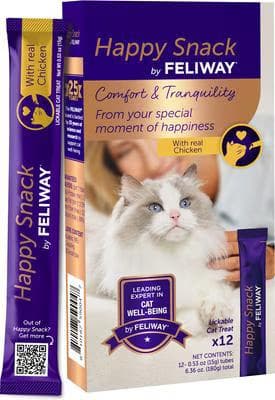
This is an optional cat treat. Review its current label, ingredients, calories, and feeding directions, and count it within the total daily extras.
Webvet may earn a commission when you click through to Chewy, at no extra cost to you.
It starts as a cucumber, then the brine changes everything
A pickle begins life as a cucumber, and on its own a plain slice of cucumber is one of the more harmless human foods a curious cat might sniff at. The trouble is what happens during pickling. To turn a cucumber into a pickle, it soaks in a brine that is mostly water, vinegar, and a heavy dose of salt, and most recipes then add garlic, onion, dill, mustard seed, sugar, or a blend of spices for flavor. That transformation is the whole problem. The mild, watery vegetable becomes a sodium-dense, acidic, seasoned snack, and every one of those added ingredients moves it further from anything a cat should eat. So while you might read that cucumbers are fine for cats and wonder whether pickles get a pass, the honest answer is that the brine erases the safety. A pickle is essentially a delivery system for salt and seasoning, and neither belongs in a cat's bowl.
The salt problem in a small body
Sodium is the single biggest reason to keep pickles away from cats. Pickle brine is extremely salty, often in the range of eight hundred to twelve hundred milligrams of sodium per hundred grams, and a cat needs only a tiny fraction of the salt a person does. Because a healthy adult cat weighs roughly eight to ten pounds, the same bite that would barely register for you can push a cat toward trouble. In smaller amounts, too much salt makes a cat thirsty and can cause vomiting or diarrhea as the body tries to flush it out. In larger amounts, sodium can climb to toxic levels, and salt poisoning is serious: it can bring on tremors, weakness, disorientation, and in extreme cases seizures. Water access is clinically relevant to salt toxicosis, but one lick does not generically dehydrate a cat; quantify sodium and volume before predicting harm. There is simply no safe way to work a genuinely salty food like a pickle into a cat's day.

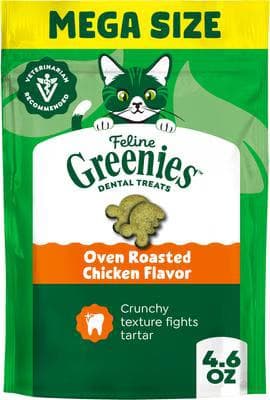
This is a dental cat treat. Follow the current label and ask your veterinarian how it fits alongside tooth brushing and professional dental care.
Webvet may earn a commission when you click through to Chewy, at no extra cost to you.
| Assessment | Plain cucumber | Pickle |
|---|---|---|
| Sodium | Usually low | Varies; read label |
| Ingredients | Usually one food | Check for garlic, onion, sweeteners, and seasonings |
| Exposure | Record amount | Record amount and brine volume |
| Decision | Fit within calorie plan | Use label, amount, water access, history, and symptoms |
| Clinical follow-up | Use symptoms and patient history | Seek case-specific advice for a meaningful exposure or signs |
Garlic, onion, and dill: the seasoning danger
Beyond the salt, the seasonings on a pickle can turn a bad snack into a toxic one. Garlic and onion both belong to the allium family, and alliums are more dangerous to cats than they are to dogs. These compounds damage red blood cells and can lead to a condition called hemolytic anemia, where the body destroys its own oxygen-carrying cells. What makes this especially concerning is that it does not take much: even the garlic or onion powder dusted onto a dill pickle or a batch of pickle chips can be a problem for a cat, and the effects can show up a day or more after the meal rather than immediately. Signs of allium trouble include weakness, lethargy, pale gums, rapid breathing, and reddish or brown urine. Dill itself is not toxic, but it is a marker that you are looking at a seasoned, salted product rather than a plain vegetable. The bottom line is that the more a pickle has been flavored, the more reasons there are to keep it away from your cat.
What about pickle juice or a quick lick?
Pickle juice is, if anything, worse than the pickle itself, because it is the concentrated brine where all the salt, vinegar, and dissolved seasoning lives. Some cats are drawn to the strong sour-salty smell and will lick a drop off a plate or a finger. A single small lick of plain brine is usually just a stomach-upset and drooling risk rather than an emergency, but there is no good reason to offer it and every reason to wipe up spills quickly. The same logic applies to a cat that licks a plain pickle: one lick is very likely fine, but you should still watch for vomiting, drooling, or lethargy over the next day. Where the calculation changes is with garlic or onion pickles and with any real quantity. If your cat licks the residue off a garlic-dusted pickle chip, or eats a chunk, that moves from watch-and-wait into call-your-vet territory. When in doubt, it is always safer to phone a professional than to guess.

What to do if your cat ate a pickle
Start by figuring out what your cat actually got into: a plain slice, a seasoned pickle, or a mouthful of brine. For a single lick or nibble of a plain pickle, offer fresh water, take the food away, and keep an eye on your cat for the rest of the day. Most cats will show nothing worse than a little tummy upset. If your cat ate a seasoned pickle, drank brine, or swallowed a real amount, do not wait for symptoms to appear before acting. Call your veterinarian, or reach the Pet Poison Helpline at 855-764-7661 or the ASPCA Animal Poison Control Center at 888-426-4435, and have the pickle label or ingredient list handy so you can tell them whether garlic or onion was involved. Note your cat's weight, how much you think was eaten, and when. Try not to induce vomiting on your own unless a professional tells you to, since the wrong approach can cause more harm.
Better treats for a curious cat
Because cats are meat eaters, the best treats are protein rather than produce. A small amount of plain cooked chicken with no salt, butter, garlic, or onion is a favorite for good reason, and a little plain cooked egg or a flake of plain cooked fish makes an occasional treat your cat's body actually recognizes. A lick of plain meat-only baby food (again, with no onion or garlic powder) is another easy option, and a proper commercial cat treat is formulated to be both safe and appealing. If your cat is really after the crunch and the cool of a pickle, a tiny piece of plain, unsalted cucumber gives the texture without the brine, though most cats will happily trade it for a bite of chicken. Whatever you choose, keep treats to a small share of the day's calories so your cat's balanced cat food stays the main event.
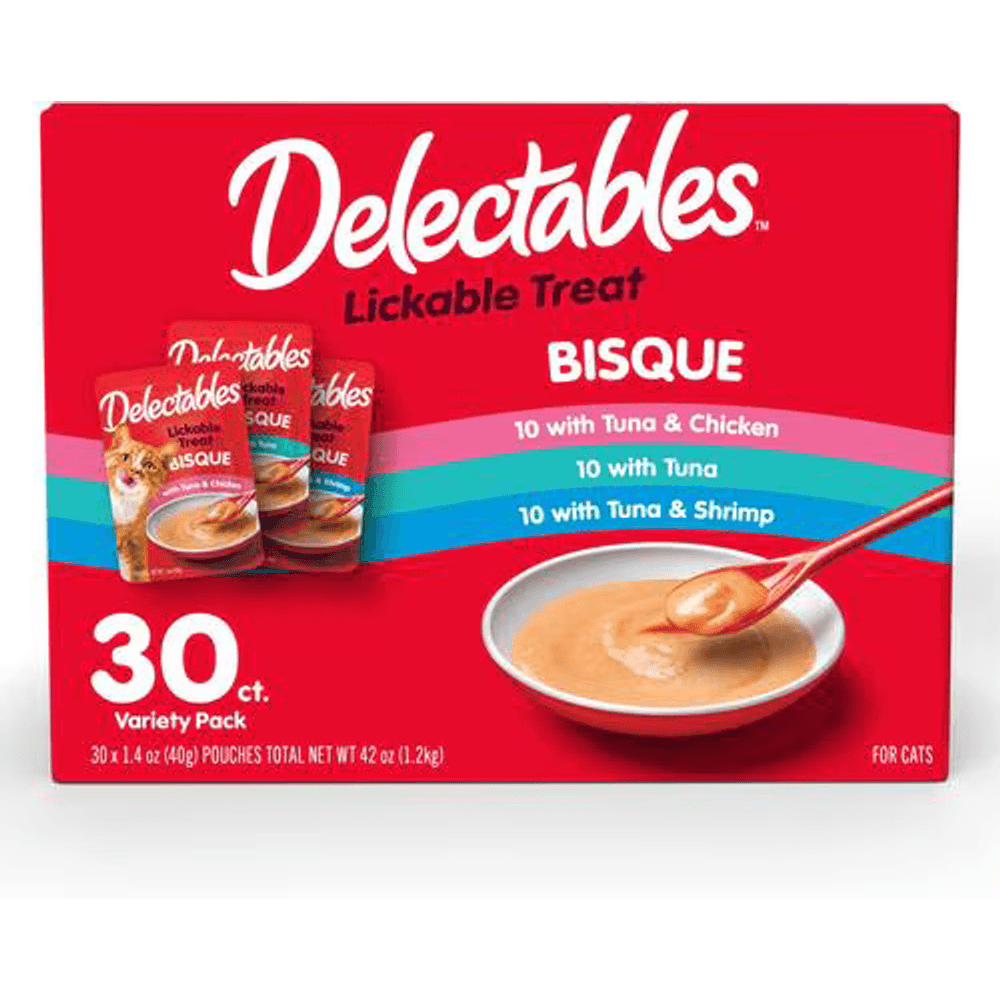
This is an optional cat treat. Review its current label, ingredients, calories, and feeding directions, and count it within the total daily extras.
Webvet may earn a commission when you click through to Chewy, at no extra cost to you.
Frequently Asked Questions
What happens if my cat eats a pickle?
A single lick or small nibble of a plain pickle usually causes nothing worse than mild stomach upset, drooling, or thirst, and most cats recover on their own with fresh water. If your cat ate a seasoned (garlic or onion) pickle or a real amount, the salt and allium seasoning can be dangerous, so call your vet or the Pet Poison Helpline at 855-764-7661.
Can I give my cat a little pickle on purpose?
No. There is no benefit to offering your cat any amount of pickle. Cats are obligate carnivores and gain nothing from it, while the salt, vinegar, and possible garlic or onion only add risk. If you want to treat your cat, choose a bit of plain cooked chicken, egg, or fish instead.
Can cats have pickle juice or brine?
Pickle juice is the concentrated brine, so it carries the most salt, vinegar, and dissolved seasoning of anything in the jar. A single small lick is usually just an upset-stomach and drooling risk, but it should never be offered, and any garlic or onion in the brine makes it more concerning. Wipe up spills before your cat finds them.
Can cats eat dill pickle chips?
No. Dill pickle chips are salty and are often coated with garlic or onion powder, both of which are toxic to cats and can damage red blood cells. Even the residue a cat licks off one chip can be a problem, so keep them away and call your vet if your cat gets into a garlic-seasoned chip.
My cat licked a pickle, should I worry?
One lick of a plain pickle is very unlikely to hurt a healthy cat. Offer water, take the pickle away, and watch for vomiting, drooling, or lethargy over the next day. If garlic or onion is confirmed, use the label, amount, and cat's weight for a dose-based assessment. Call promptly for a potentially meaningful exposure or symptoms; more than a lick is not itself a toxic dose.

Safe alternatives
More pantry & other for cats
Sources
- Merck Veterinary Manual: Salt Toxicosis in Animals
Salt toxicosis requires excess exposure and is influenced by water access.
- Merck Veterinary Manual: Garlic and Onion Toxicosis
Cats are highly susceptible to alliums, but exposure form and dose still matter.
- 2021 AAHA Nutrition and Weight Management Guidelines
Treat advice should be based on the complete diet and individual patient rather than plant-inferiority rhetoric.
Reviewed by Dr. Athena Gaffud, DVM
General guidance based on credible veterinary sources; not a diagnosis or a substitute for your veterinarian. If your pet ate something toxic or is unwell, contact your vet or a pet poison line right away.